

Key Takeaways
Turn local scrap and a stubborn question into working power.
A need became a design brief. In rural Malawi, electricity was scarce, and darkness meant the family’s day ended early. William wanted light for studying, but he also saw that a windmill could power a pump and help his family grow more food. The wind was a resource already moving above his village; the challenge was converting it into something useful.
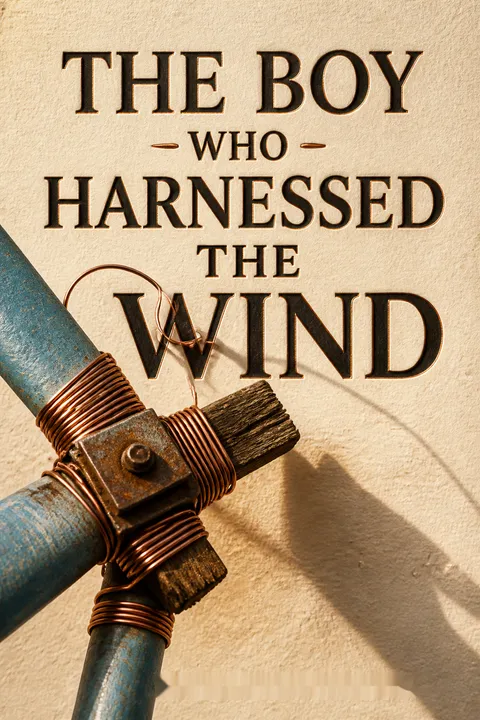
His first large windmill rose from a broken bicycle, discarded tractor parts, plastic pipe, and a bicycle dynamo. When its bulb finally lit, a crowd that had called him foolish saw the machine work. The invention did not erase poverty, but it showed that local materials and learned principles could address a local need.
What's striking is how closely the invention begins with a constraint that can be observed, named, and worked on: no reliable light. That makes the windmill more than a symbol of optimism. It is a practical response shaped by its setting, using a resource that costs nothing to gather and materials that are available nearby. The story also resists a neat tale of individual triumph. A homemade turbine can meet a household need, but it cannot substitute for public infrastructure across a country. Its achievement is both real and limited, which makes the ingenuity more, not less, impressive.
Treat books as blueprints, then test each idea against reality.
Curiosity became a method. William and his cousin Geoffrey first took apart broken radios to understand why they worked. They tested what happened when they disconnected a transistor, improvised a way to power a radio with used batteries, and repaired circuits with heated wire. At first, these were practical experiments, not lessons labeled science.
After famine forced William out of secondary school, he borrowed science books from a small library. Diagrams helped him connect what he had seen in a bicycle dynamo to electricity generation in a windmill. He learned about magnets, motors, and current, then used those ideas to imagine a machine that could generate power. The library did not hand him a finished solution. It gave his questions a technical language and a direction.
This is a vivid example of knowledge moving between formal and informal learning. The books supplied concepts, while radios, batteries, and bicycle parts gave those concepts something to explain. That back-and-forth is a powerful way to learn because it ties abstract ideas to visible consequences. The account also exposes an uncomfortable divide: William’s ability is not the scarce resource, access to schooling and materials is. Self-teaching deserves respect, but it should not become an excuse to deny students teachers, laboratories, or sustained education.
Build a first version small enough to teach you what fails.
Small tests reduced uncertainty. Before attempting a tower-sized windmill, William and Geoffrey built a modest model from a plastic jar, reshaped pipe, bamboo, and a motor taken from a broken cassette player. They added a piece of rubber cut from a discarded shoe to keep the parts turning together. When the model spun in the wind, it powered a radio. That success showed that the basic idea could work before William spent months assembling a larger machine.
The full version still required a bicycle frame, a tractor fan, a shock absorber, bearings, blades, and a dynamo. William found much of it in a scrapyard and learned how the pieces might fit by examining them. Each scale of the project answered a different question: first, can wind generate current; then, can a sturdier machine produce enough to be useful?
The prototype is valuable because it turns a grand ambition into a series of answerable questions. Instead of arguing about whether the whole machine is possible, the boys check whether a small rotor can drive a motor and power a radio. That logic resembles careful experimental design: isolate a claim, test it, and use the result to choose the next step. A small prototype cannot reveal every problem of scale, however. The larger tower introduces forces, wear, and hazards that a tabletop model cannot reproduce.
Name the systems behind scarcity before blaming those trapped inside it.
Hunger had more than one cause. A failed growing season began with late rains, floods, and then drought. At the same time, fertilizer had become harder for small farmers to afford after subsidies were cut. The book also describes government grain reserves being sold away, amid pressure to reduce debt and decisions by officials that left the country without an adequate emergency supply.
As maize prices climbed, William’s family sold goats, stretched its grain, and eventually ate one small meal a day. Other families sold household goods or worked for tiny amounts of food. William left school when fees became impossible. These details show how one poor harvest can cascade through food, health, education, and family security. The famine was not simply a test of personal determination; it was worsened by policy choices and failures of public protection.
The famine narrative is strongest when it connects the household pantry to the policy environment. Weather creates a shock, but subsidies, reserves, markets, and relief determine who can withstand it. This is a useful systems lens: hardship often accumulates through several linked vulnerabilities rather than one dramatic cause. It also guards against a familiar mistake in inspirational stories, where exceptional resilience is mistaken for an adequate social safety net. Personal ingenuity matters, but families should not have to invent their way out of preventable institutional failure.
Invite collaborators who supply what your hands and knowledge lack.
The project was shared work. Geoffrey helped William explore radios and later returned to assist with the windmill. He and Gilbert helped build the tower and raise the heavy machine. Gilbert bought crucial nuts and bolts, then paid for the dynamo when William could not afford it. Geoffrey also brought back the pulley idea that helped solve the windmill’s recurring chain problem.
William’s parents mattered in less technical ways. His father eventually lent him the broken bicycle and gave him room to work; his mother tolerated a bedroom full of parts, even when she worried he had lost his senses. A librarian supplied books, and Dr. Hartford Mchazime took William’s work seriously and pushed for his education. The invention depended on curiosity, but also on people providing trust, tools, access, and advocacy.
The story offers a useful correction to the lone-genius myth. Different people contribute different forms of capital: a friend supplies cash, another shares mechanical knowledge, a parent grants permission, and an educator recognizes potential. None of those contributions replaces William’s own effort; together, they make effort more effective. This is especially important in resource-poor settings, where a small missing component can stop an otherwise sound idea. Collaboration is not merely encouragement around the work. It is often part of the technology itself.
Make the machine serve water, food, and time, not just applause.
Electricity was a means, not the end. The first windmill produced light, allowing William to read after dark. With more wiring and a battery, the family gained lights in several rooms, and neighbors began bringing phones to charge. William also built a transformer to raise voltage for a phone charger, extending the machine’s usefulness beyond the original bulb.
His larger ambition was agricultural: use wind power to pump water and reduce dependence on rain. With outside support, the family later gained a borehole, water storage, and irrigation equipment. A windmill-driven pump also served a garden. These improvements supported another crop and gave nearby women access to clean water. The progression matters: a visible invention attracted attention, but its deepest value lay in practical services that changed daily life.
The windmill becomes more compelling as it moves from spectacle to infrastructure. Light is immediately legible, but irrigation can affect harvests, household labor, and food security at once. This is a reminder to evaluate technology by the problem it solves and the people who can use it, not only by whether it works in a demonstration. The later water projects also depended on money, equipment, and outside expertise. The book celebrates local invention without implying that local invention alone can supply every part of a functioning system.
Persistence needs safe engineering, not just courage.
Every success carried a risk. In an early test, the windmill’s dynamo sent too much power to a radio, which began smoking. William tried to control the voltage by using wire to dissipate some of the energy. Later, improvised wiring ran across a roof weakened by termites. When part of the ceiling collapsed, wires crossed and melted, narrowly avoiding a fire. He built a homemade circuit breaker, which disconnected power during a later storm-related short circuit.
The machine also hurt its builder. The chain repeatedly snapped or jumped loose, and spinning blades cut William’s knuckles when he climbed the tower to repair it. A pulley system eventually reduced the chain trouble. These episodes show invention as a process of learning from failure, but also make clear that unsafe prototypes can injure people and destroy homes.
The book’s rough experiments make engineering feel tangible: voltage, friction, structural weakness, and weather all push back against the idea. That honesty improves the story. It also calls for a distinction between admirable persistence and preventable exposure to danger. William’s improvised circuit breaker reflects ingenuity, but it does not make bare wiring or an unstable tower safe by modern standards. A strong inventor learns from failure; a strong design process also asks which failures should never be allowed to happen.
Turn recognition into education, resources, and benefits others can use.
Visibility opened practical doors. After a librarian connected William with Dr. Mchazime, journalists reported on the windmill. The story reached people who helped him attend a TED conference, return to school, and obtain materials for better electrical and water systems. Recognition did not simply reward the completed machine; it connected an isolated young inventor to education, mentors, funding, and a wider technical community.
William used that support for more than himself. His family received safer lighting and clean water, while relatives and neighboring children received help returning to school. The village gained access to water for household use and irrigation. The story ends not with one machine solving everything, but with a young person gaining the tools to continue learning and to share benefits with the people around him.
What's striking is that recognition becomes valuable when it changes access. A newspaper story and a conference matter here because they lead to schooling, technical support, and useful equipment. That is a sharper model of opportunity than fame as an endpoint. Yet the chain is contingent: a librarian notices, an educator advocates, and media coverage travels. Many capable students may never receive the same sequence of attention. The story therefore celebrates a remarkable opening while also showing why institutions should create reliable routes for talent to be supported.
Analysis
The memoir is built around a change in how William explains the world. As a child, invisible forces are understood through stories of magic, ancestors, and witchcraft. Later, curiosity shifts toward mechanisms that can be opened, tested, and repaired. The change is not a simple victory of reason over culture. The stories of his village remain part of his identity, while scientific understanding gives him tools to act on material problems. The windmill is the book’s central image because it joins three scales. At the smallest scale, it is a boy asking why a bicycle lamp lights. At the household scale, it becomes illumination, phone charging, and a route toward water. At the national scale, it exposes the fragility of a society where weather, fertilizer prices, and political decisions can decide whether children eat or attend school. The invention is inspiring precisely because it does not make those structural failures disappear.
That distinction matters when reading the book as an account of innovation. William’s ingenuity is extraordinary, but the project is not a clean case of self-sufficiency. He learns from library books, relies on friends for parts and money, receives support from an educator and journalists, and later gains resources that allow safer systems and irrigation. The story therefore challenges both fatalism and the myth that exceptional individuals can replace functioning institutions.
Its most useful lesson is not merely to persevere. It is to notice a concrete need, learn the principles that might address it, make a testable first version, and recruit people who can extend the work. At the same time, the narrative leaves readers with a civic question: how can communities make access to books, schooling, tools, and support ordinary, rather than dependent on one unusually visible success? The memoir’s hope is strongest when personal initiative and shared infrastructure are treated as partners.
Review Summary
The Boy Who Harnessed the Wind is a highly inspirational true story about William Kamkwamba, a Malawian boy who built a windmill to bring electricity to his village. Readers praise the book for its powerful message of perseverance, ingenuity, and the importance of education. Many found it emotionally moving and appreciated its portrayal of life in rural Africa. While some felt certain technical sections were challenging, the overall narrative was engaging and thought-provoking. The book is recommended for both young readers and adults, offering valuable lessons in resilience and problem-solving.
People Also Read
Glossary
magetsi a mphepo
electricity from windA Chichewa phrase William uses for his windmill, meaning electricity from wind. He applies it to a homemade machine whose blades turn in moving air, driving a bicycle dynamo to produce current. The phrase gives the invention a local name before it becomes familiar to people in his village.
ganyu
piecework for food or payShort-term labor done for another person, often in exchange for food or a small payment. In the memoir, families facing food shortages seek ganyu by working in fields or doing other jobs. The work can help someone survive the day, but it does not necessarily provide enough food or security to escape the wider crisis.
nsima
maize-flour stapleA thick, doughlike porridge made by stirring maize flour into hot water. It is eaten in portions and used to scoop up relish, such as beans or leafy vegetables. In the memoir, nsima is treated as the core of a meal, so its absence signals severe deprivation even when other foods are available.
dowe
tender green maizeMaize picked before the kernels have fully matured and dried, then commonly cooked and eaten on the cob. During the famine, the first ready dowe provides William’s family with food before the main harvest. Its arrival brings immediate relief, although it does not yet restore normal food supplies.
walkman
small individual food rationA small portion of flour or maize sold in a plastic bag, named after the portable cassette player. As grain becomes scarce, people buy these individual portions instead of a family-sized supply. The term captures how the famine changes food purchasing from storing grain to securing just enough for one person or one meal.
FAQ
What is The Boy Who Harnessed the Wind by William Kamkwamba about?
- Story of resilience and innovation: The memoir follows William Kamkwamba’s journey from a famine-stricken village in Malawi to becoming an inventor who brings electricity to his community by building a windmill from scrap.
- Cultural and historical context: The book provides insight into Malawian culture, the impact of drought and famine, and the challenges faced by rural communities.
- Personal and community transformation: William’s invention not only changes his family’s life but also inspires hope and progress in his village and beyond.
Why should I read The Boy Who Harnessed the Wind by William Kamkwamba?
- Inspiration from adversity: William’s determination and creativity in the face of poverty and hunger offer a powerful message of hope and perseverance.
- Insight into rural African life: The book gives a vivid, personal account of daily struggles, cultural traditions, and the effects of famine in Malawi.
- Lessons in self-education and innovation: Readers learn the value of curiosity, resourcefulness, and the transformative power of science and technology.
What are the key takeaways from The Boy Who Harnessed the Wind by William Kamkwamba?
- Power of self-education: William’s story shows that learning can happen outside formal classrooms through books, experimentation, and persistence.
- Importance of community and family: The support and sacrifices of William’s family and friends are central to his journey.
- Innovation as a tool for change: The book demonstrates how simple, locally-sourced solutions can address big challenges like electricity and water access.
What challenges did William Kamkwamba face in The Boy Who Harnessed the Wind?
- Famine and hunger: William’s family and community suffered from severe food shortages, malnutrition, and disease during the 2001-2002 famine.
- Lack of formal education: Unable to pay school fees, William was forced to drop out and pursue self-education through library books.
- Skepticism and social pressure: Villagers initially mocked and doubted his windmill project, associating it with witchcraft or foolishness.
How did William Kamkwamba learn about electricity and windmills in The Boy Who Harnessed the Wind?
- Self-taught through library books: William discovered books like Explaining Physics and Using Energy, which introduced him to concepts like electromagnetism and wind power.
- Hands-on experimentation: He learned by observing bicycle dynamos, wiring circuits, and building small models before attempting a full-scale windmill.
- Collaboration and community knowledge: William sought advice, borrowed parts, and worked with friends to gather materials and refine his invention.
How did William Kamkwamba build his windmill in The Boy Who Harnessed the Wind?
- Resourceful material gathering: He scavenged scrap metal, bicycle parts, PVC pipes, and a tractor fan from junkyards and neighbors.
- Applying scientific principles: Using knowledge from books, he constructed and wired the windmill to generate electricity, adapting a bicycle dynamo as a generator.
- Trial, error, and perseverance: William built a small prototype, then a larger windmill, overcoming technical setbacks and skepticism until he succeeded in powering lights and radios.
What scientific concepts are explained in The Boy Who Harnessed the Wind by William Kamkwamba?
- Electromagnetic induction: William learned that spinning a coil of wire inside a magnetic field produces electricity, a principle he used in his windmill.
- Magnetism and electromagnets: The book explains how magnets and electric currents interact, helping William understand motors and generators.
- Alternating current (AC) vs. direct current (DC): William distinguishes between AC (used in homes) and DC (used in batteries), adapting his windmill to charge batteries for storage.
How does The Boy Who Harnessed the Wind by William Kamkwamba portray education and its importance?
- Education as empowerment: William’s relentless pursuit of knowledge is shown as the key to overcoming poverty and improving his community.
- Barriers to schooling: The book highlights issues like school fees, poor infrastructure, and hunger that prevent many Malawian children from continuing their education.
- Value of self-learning: William’s success demonstrates that curiosity and resourcefulness can lead to innovation, even outside formal education systems.
What role do family and community play in The Boy Who Harnessed the Wind by William Kamkwamba?
- Family support and sacrifice: William’s parents and siblings endure hardship together, sharing food and supporting his education and projects.
- Friends and collaborators: Friends like Gilbert and Geoffrey provide encouragement, materials, and help with building the windmill.
- Community skepticism and eventual pride: While initially doubtful, the community comes to embrace William’s invention after seeing its benefits and media recognition.
How does The Boy Who Harnessed the Wind by William Kamkwamba describe the impact of famine and disease in Malawi?
- Widespread hunger and malnutrition: The 2001-2002 famine led to severe food shortages, weight loss, and deaths in William’s village.
- Disease outbreaks: Cholera and malaria further devastated the community, with limited access to medical care worsening the crisis.
- Social and economic consequences: Families lost savings, possessions, and sometimes split apart under the pressure of survival.
What are some important cultural practices and beliefs described in The Boy Who Harnessed the Wind by William Kamkwamba?
- Respect and family roles: The book details customs such as children kneeling to receive money and strict separation of eating arrangements by gender and age.
- Magic, folklore, and rituals: Stories of witches, secret societies like the Gule Wamkulu, and agricultural rituals are woven into daily life, influencing behavior and beliefs.
- Community cooperation: Traditional ceremonies, hunting parties, and survival rituals emphasize the importance of working together and respecting nature.
What are the best quotes from The Boy Who Harnessed the Wind by William Kamkwamba and what do they mean?
- “I try, and I made it.” Reflects William’s belief in persistence and self-empowerment through effort.
- “With God on your side, they have no power.” Expresses faith as a source of strength against fear and superstition.
- “No fees. No school.” Highlights the harsh reality of educational barriers in Malawi.
- “Electric wind!” William’s joyful exclamation upon generating electricity, symbolizing hope and innovation.
- “The boy has done it.” Marks the moment of triumph when William’s windmill lights up his home, representing the power of ingenuity.
Download PDF
Download EPUB
.epub digital book format is ideal for reading ebooks on phones, tablets, and e-readers.








