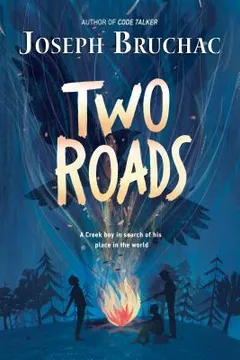


Plot Summary
The Hobo Code Tested
Twelve-year-old Cal Black and his father, Pop, walk Southern roads after the bank takes their farm and Cal’s mother dies. Pop’s war memories sometimes pull Cal into visions of battles he never witnessed. A veteran named Red Campbell directs them to his friend Miz Edith Euler, who welcomes them after Pop proves they are honest workers.
At supper, Cal realizes Edith’s home has been marked unsafe for hoboes because a thief has been stealing from her. Pop tracks the thief, Jack, through the woods, recovers the stolen knife and kettle, and makes him pay for the chickens. The next morning, Pop and Cal clean Jack’s abandoned camp before catching a freight train. Their road life has rules, but it cannot replace the home they lost.
The opening makes care practical: Pop notices Edith’s fear, Cal follows his lead, and the stolen goods return to their owner. The hobo code gives the pair dignity without making their poverty romantic. It also distinguishes them from Jack, whose theft harms not only Edith but other travelers who depend on trust. Cal’s visions complicate his role as observer. His father’s pain becomes something Cal experiences bodily, suggesting that inheritance can reach a child before he has language for it. The road is both refuge and a life imposed by economic loss.
A Name Beneath Blackbird
In a boxcar, Pop reads that jobless veterans are heading to Washington to demand the payment promised for their wartime service. He decides to join them, but says Cal cannot face the march alone with him. Instead, Cal will attend Challagi, a federal Indian boarding school that offers food, shelter, and agricultural training.
The plan forces Pop to explain what he and Cal’s late mother kept hidden: Pop is a Creek Indian, and Cal is half Creek and half Armenian. They had passed as white to protect their prospects, but Pop now believes Cal needs both an education and knowledge of his heritage. Cal resists being separated and does not know what his identity means. Pop offers him a choice, but Cal agrees to go because he trusts his father.
The decision joins two histories of institutional coercion. Pop seeks public recognition for veterans whose service has not protected them from poverty, while sending Cal into a school built to reshape Native children. His choice is not simple hypocrisy: he sees the school as a temporary source of education and safety, even as he knows its harms. Concealing ancestry once seemed protective, but the Depression has made passing an unreliable shield. Cal’s shock is therefore both personal and political. His father has not merely withheld a fact; he has chosen when Cal must begin interpreting himself through it.
The Sheriff’s Torch
At Fairville, Cal warns Corporal Esom Dart, a Black veteran, that the train has stopped in a dangerous town. Dart escapes into a hidden hobo camp, where Pop and Cal meet Cap, the camp’s informal mayor.
That night Sheriff Boyle arrives with armed men and a hound, demanding Dart and threatening the residents. Pop steps into the torchlight and identifies himself as a Creek veteran, redirecting the sheriff’s attention from Dart. Boyle accepts Pop’s papers and lets him and Cal leave for Challagi, while the other hoboes put out a burning shelter.
Dart has already slipped away. Cal finds the French medal Dart left for him, a token of gratitude for the warning that helped save him. The encounter makes Pop’s concealed identity a protection rather than a secret.
The scene turns racial classification into immediate danger. Boyle is not merely prejudiced in principle: he has brought weapons and a hound to hunt a Black man from a camp. Pop survives the encounter by choosing which part of himself to disclose and by using his veteran status as evidence. His response does not undo the sheriff’s violence or rescue the destroyed shelter, but it buys Dart time to escape. The medal gives Cal a tangible reminder that solidarity can cross racial lines even when the law is organized to enforce them.
The Arch at Challagi
On the train west, Pop and Cal help cowboys load six retired cavalry horses, then calm two more difficult animals through patience and Pop’s familiar horse song. They ride with the horses to Arkansas City and walk the final miles to Challagi.
The school’s scale and military parade unsettle Cal, who glimpses tanks in a vision before he understands why that image frightens him. Superintendent Morrell recognizes Pop as a former student and admits Cal, citing his Creek enrollment and interest in farming.
Morrell praises the school’s livestock and trades, but his language about civilizing Native students exposes the institution’s purpose. Cal is accepted, yet the polished buildings and marching ranks make clear that safety here will come with strict control.
The horses offer Cal a brief bridge between the life he shared with Pop and the place he is entering. Their trust is earned through attention rather than force, a contrast to the school’s drills and imposed uniformity. Morrell’s welcome is materially useful, since it secures Cal a place, but it is framed by an ideology that treats Native identity as a defect to correct. Cal’s vision of tanks plants a warning inside an otherwise orderly arrival. The school can provide opportunity and still demand submission.
A Friend in the Dorm
At the infirmary, Nurse Wilton cuts Cal’s long hair, scrapes his scalp with a kerosene comb, vaccinates him, and records him as a full-blood Creek, though he is half Creek. The loss of his hair hurts partly because his mother taught him to care for it. His guide, Charles Aird, nicknamed Possum, eases the shock with jokes, shares food, and shows Cal a hidden tree cache for keeping his French medal safe.
When Possum tells him the story behind a Cherokee rose, Cal sees an ancestor carrying an elder along the Trail of Tears. After Morrell shows Pop the dorm, Pop leaves Cal in Possum’s care. Cal gives his mother’s comb to his father for safekeeping, then watches him go, facing his first separation without knowing when they will meet again.
The haircut condenses the school’s larger project into an intimate violation: Cal loses something linked to his mother under a procedure that treats his body as a problem to be processed. The nurse’s record also shows how institutions simplify identity, assigning a category that does not fit him. Possum counters that power through practical care, humor, food, and a private place for treasured objects. Cal’s vision of the forced march gives ancestry an emotional form before he can fully explain it. His father’s departure turns the school from an idea into a lived abandonment.
The Circle in Red Dirt
After Pop leaves, Cal receives government clothes and is brought before Bear Meat’s Creek gang. Bear Meat tests him by asking for his jackknife, then challenges him to wrestle for it. Cal cannot overpower the larger boy, but he keeps trying until the head disciplinarian interrupts and insults Pop. Cal refuses to blame Bear Meat, who has helped him up, and the gang accepts him at their table.
The welcome does not make Challagi easy. Cal wakes to bugles, learns close-order drill, and makes mistakes that earn punishment. During one march, he breaks into a sprint and outruns Sergeant Ray Chapman, who urges him to join the track team. Cal’s speed wins respect, but he is still counting the days until he can leave.
Cal’s first belonging is not granted by an adult or an official record. It comes through a test in which he protects his knife and refuses to betray the boy who wrestled him. The gang’s rules create a counter-community inside a school that organizes children through rank and punishment. Cal’s restraint matters as much as his courage: when the disciplinarian seeks someone to blame, Cal declines the easiest route to safety. His sprint briefly lets his body express a freedom the institution cannot schedule, though he remains emotionally attached to the road and to Pop.
White, Creek, and Watched
As Cal settles into classes and exhausting trade work, he learns that Challagi students are not divided neatly between Native and white. Some look white but claim Creek identity, including Tommy Wilson, whose father is Creek and mother Norwegian.
In English class, Cal uses his knowledge of a poem to help Tommy answer the teacher, then sees how quickly students mark Tommy as an outsider. Cal also watches Superintendent Morrell stop disciplinarian Bayner from striking Grasshopper, though humiliating punishments remain part of school life.
Work in the harness shop wears at Cal’s hands and ruins his issued shoes. Possum helps him discover that Pop left money in a school account, allowing him to buy sneakers. The small purchase makes his absent father feel briefly present.
Cal encounters identity not as a private label but as something negotiated among ancestry, appearance, and other people’s judgments. Tommy’s position unsettles Cal’s earlier assumption that belonging follows visible traits. Meanwhile, Morrell’s intervention against Bayner reveals a school in transition: some abuses are curbed, yet discipline still relies on surveillance and humiliation. The account Pop left is an understated act of care. It does not erase separation, but it gives Cal evidence that his father anticipated his needs and arranged support within the institution he mistrusted.
A Song in the Woods
Away from the watched campus, Cal’s gang hunts, cooks, and holds stomp dances in the woods, despite rules against Native dancing. Cal learns the steps and helps tend the fire, feeling closer to the Creek boys than he has to anyone his age. When Tommy appears at their gathering, Bear Meat challenges his claim to belong.
Tommy stands his ground, identifies himself as Muskogee, and leads a song his father taught him. The group lets him dance, and Cal follows Tommy into the circle. Around this time, Cal receives Pop’s first letter from Washington. Pop describes a growing camp of veterans and says he may return when school ends. The letter reassures Cal that his father is alive, but gives him no address for writing back.
The stomp dance shows how students make a Native community inside a school designed to suppress Native practice. The gathering does not require everyone to share the same appearance or fluency; Tommy earns space through memory, insistence, and participation. Cal’s acceptance is similarly embodied. He does not resolve his identity by thinking harder, but by moving with others and learning their traditions. Pop’s letter sustains the bond between father and son across distance, while its lack of a usable address preserves the uncertainty that keeps Cal waiting.
The Dream Becomes a Warning
When the school year ends, Pop sends a second note asking Morrell to keep Cal at Challagi through the summer because the Bonus Army needs him in Washington. Cal stays, works on the school farm, and learns from his Creek friends how government policies stripped Native families of land.
One night he wakes from a vision of soldiers firing on veterans on a bridge, with Pop among them. Deacon interprets the dream as a warning, not an unavoidable prophecy. The friends conduct a sweat ceremony for Cal, who tells them what he saw and decides he must find his father.
With Possum and Little Coon helping, he slips into the stable, takes Dakota, and rides across the prairie toward the rail yard. He leaves the school without permission, carrying his medal and a small travel pack.
Cal’s vision turns his supernatural sensitivity into an ethical burden: he must decide whether seeing danger obligates him to act. Deacon’s distinction between warning and fixed fate preserves agency without dismissing the vision. The sweat ceremony gives Cal a communal setting in which to name what he has kept private, and his friends respond by helping rather than questioning his sanity. His escape reverses Pop’s earlier decision to send him away. This time Cal chooses the road himself, not because he rejects his new identity, but because he believes his father is in danger.
Dakota Takes the Dark
Cal leaves Dakota at the town livery and catches a freight toward Washington. In the boxcar, Gale, a woman hobo who treats injured travelers, feeds him, replaces his torn shirt, and explains that President Hoover and General MacArthur are preparing to clear the veterans from the capital. She has seen the Bonus Army’s camps and fears the peaceful protest will become a battlefield.
After Gale changes trains, Cal continues alone, avoiding a hobo camp because he is vulnerable without Pop. In Washington, he meets Esom Dart, the veteran he once helped escape Sheriff Boyle. Dart tells him Pop is nearby and leads him toward the camps. Cal has crossed the distance that separated them, but the soldiers are already moving against the veterans.
Gale functions as a road companion whose care is both physical and informational. Her warning makes the threat legible before Cal reaches the capital, while the journey tests skills he learned with Pop: choosing trains, staying alert, and knowing when not to trust a camp. Cal’s decision to travel alone marks a new competence, but also exposes the cost of independence. Dart’s reappearance connects the early encounter with the final crisis, showing how one act of help can create a path back through a sprawling country.
Tanks Across the Bridge
Dart takes Cal through Washington as mounted troops, infantry, and tanks force veterans from Camp Glassford. Cal and Dart escape the tear gas and cross the Anacostia River to Camp Marks, where Cal finds Pop negotiating with police and camp leaders. The earlier vision has brought him to the place where he can prevent Pop from standing alone against the army.
After the veterans receive an hour to evacuate, Cal and Pop help a pregnant woman and an ailing veteran reach the hills. They watch soldiers burn the camps and drive out the residents. Once the sky clears, they follow back roads to a Maryland rail yard and catch a westbound train. The Bonus Army has been dispersed, and Pop’s demand for his promised payment remains unresolved.
The climax makes the government’s violence visible in concrete bodies and damaged homes: cavalry drives civilians, gas blinds protesters, and soldiers burn shelters. Cal’s arrival changes the private meaning of his vision. He cannot halt the attack, but his presence draws Pop away from a fatal stand and helps them protect others during evacuation. The camps had briefly brought Black and white veterans together around a shared claim; the assault exposes how little that solidarity can shield them from state power. Their escape is survival, not victory.
Two Roads Rejoin
Back on the road, Cal tells Pop about his friends, the school’s harsh routines, and the visions he once kept secret. Pop listens, then reads the letters Cal had written but could never send without an address, keeping them close. They travel west together, work when they can, and use a few found coins to see a Tom Mix film. Near Santa Fe, Pop asks what Cal wants to do next.
Cal decides to return to Challagi when the next term begins, even though he still dislikes its rules and labor. He misses Possum, Deacon, Little Coon, and the Creek dances, and wants to keep learning farming. Pop agrees to accompany him and explain his absence. Cal now understands that life with his father and life as a Creek boy can belong to the same future.
The ending does not solve the Depression or secure Pop’s bonus. Instead, it resolves the question Cal has carried since his father left: whether returning to Challagi means surrendering the road or choosing a place within his heritage. He recognizes the school’s coercion without reducing its Native students to victims, because the friendships and practices they built there matter to him. Pop’s letters and Cal’s letters become reciprocal acts of witness. Their reunion changes care from a father’s duty into a shared responsibility.
Analysis
The novel’s two roads are not simply freedom versus confinement. The freight lines give Cal and Pop mobility, but their movement begins with foreclosure, bereavement, and a country that has failed its workers. Challagi is restrictive, yet it offers food, education, and a community that Cal could not have found alone. The story asks readers to hold these truths together rather than treating either setting as wholly redemptive or wholly destructive.
Cal’s changing understanding of identity follows the same pattern. His parents’ decision to pass as white was an act of protection in a racist society, not evidence that his Creek heritage was unimportant. At Challagi, appearance, ancestry, language, and belonging do not align neatly. Cal learns that identity is partly inherited, partly taught, and partly made through relationships and practice. The students preserve dance, friendship, and language in spaces the institution does not control, turning a school meant to erase Native culture into a place where Native community can grow.
The Bonus Army plot widens the family story into a critique of national obligation. Pop and other veterans served the country, yet poverty leaves them asking for compensation already promised. Their interracial solidarity briefly models a public community broader than the racial hierarchy around them. The violent eviction shows that shared sacrifice does not guarantee protection from state power. Cal cannot prevent the government’s assault, but he can recognize danger, reach his father, and help others escape.
The ending’s hope is modest and earned. Cal does not choose between being Pop’s son, a hobo, and a Creek boy. He chooses to carry those identities together, returning to Challagi because the friendships and knowledge there matter, while remaining alert to the system’s harms. Growing up means gaining the ability to choose a road, not pretending that every road is safe.
Review Summary
Two Roads receives mixed reviews, with an average rating of 3.85/5. Readers appreciate the historical context, including hobo culture and Indian boarding schools, as well as the themes of identity and friendship. Some praise Bruchac's storytelling and character development, while others find the pacing uneven and certain plot elements rushed. Critics note potential inaccuracies in Creek language and culture representation. The book is generally recommended for middle-grade readers interested in Native American history and Depression-era America.
Characters
Cal Blackbird
The listening road boyCal is a quiet, observant twelve-year-old who reads eagerly, remembers details, and learns practical skills by watching. His deepest attachment is to his father, whose example gives him a code for treating strangers and animals with care. Cal is often more comfortable listening than speaking, but his silence conceals intense thought and a vivid capacity for imagining other people’s experiences. He wants security without losing independence, and he measures new places against the freedom and companionship of the road. His growing self-understanding is shaped by how he acts toward others, not simply by what he learns about his ancestry.
Pop, William Blackbird
The veteran fatherPop is Cal’s devoted father, a former soldier whose limp and partial deafness testify to the First World War. Skilled at tracking, working with horses, and reading people, he teaches Cal through stories, shared labor, and a demanding but humane road code. He is affectionate without being sentimental, and his steady attention helps strangers feel respected. War memories can pull him into dark moods, while poverty has forced him to reconsider what protection means for his son. His central motive is to give Cal choices and a future, even when the means he chooses require painful separation.
Possum, Charles Aird
The joking Creek guidePossum is Cal’s first close friend at Challagi, a quick-witted Creek boy with a facial scar and a talent for turning hardship into comedy. His jokes are not mere deflection: he uses them to soften frightening transitions and make room for trust. He reads adventure stories, makes useful things from scraps, and maintains a hidden tree cache for objects students need to protect. Possum is loyal to his gang but receptive to outsiders who act with honesty. His friendship gives Cal a way into school life that neither the institution’s rules nor its adult staff can provide.
Mary Blackbird
Cal’s remembered motherMary, Cal’s late mother, was an Armenian orphan adopted by a Polish couple and trained as a practical nurse. Her humor and warmth shaped the intimate habits Cal misses most, including the way he cares for his hair. She loved Pop and Cal fiercely, even as illness weakened her. Her family history gives Cal another strand of inheritance, one marked by displacement and survival.
Little Coon, Louis Oliver
The teasing Creek friendLittle Coon is a Creek student in Possum’s gang, funny and perceptive in equal measure. He uses jokes to interrupt tension, but he also notices when someone is frightened or excluded. His humor never cancels his loyalty; he acts as a reliable companion when Cal needs help and treats friendship as something proved through shared effort.
Deacon
The thoughtful dance leaderDeacon is a quiet Creek boy who knows tribal history and leads the gang’s stomp dances. He thinks carefully before speaking and carries teachings passed down by his grandfather. At school, his knowledge gives the boys access to practices the institution forbids. He offers Cal a calm, culturally grounded way to understand experiences that might otherwise feel isolating.
Bear Meat
The gang’s testing leaderBear Meat leads the Creek gang with a stern manner and a strong sense of group loyalty. He tests newcomers according to the boys’ rules rather than simply demanding obedience. His assumptions about who belongs can be rigid, but he respects courage and fairness. He embodies the gang’s protective force as well as its capacity to exclude.
Esom Dart
The decorated Black veteranCorporal Esom Dart is a Black First World War veteran whose French decorations testify to his service. He remains warm and courteous despite the racism that blocks him from ordinary opportunities. His connection with Pop rests on shared military experience, and his gratitude to Cal reflects a willingness to recognize help across generations.
Superintendent Morrell
The reform-minded superintendentMorrell runs Challagi and believes in discipline, vocational education, and the institution’s civilizing mission. He has improved some practices and respects Pop’s abilities, but his language still reflects the assimilationist assumptions of federal schooling. He is neither a simple villain nor a neutral administrator: his reforms operate inside a system whose basic purpose remains controlling Native children.
Tommy Wilson
The white-looking Creek studentTommy is a Creek boy with a white mother and a father who has taught him about their heritage. His appearance makes some students question his belonging, but he knows songs and traditions from home. His experience helps Cal understand that Native identity cannot be judged reliably by complexion or fluency.
Ray Chapman
The demanding student sergeantRay is a Cheyenne-Arapaho student sergeant who takes drill seriously and pushes his company to perform well. He can be severe in uniform, yet he also recognizes Cal’s speed and encourages him to run. His authority is complicated: he enforces a militarized routine while remaining a student subject to the same institution.
C.B.
The former-student adviserC.B. is a Cherokee graduate who advises the boys in Cal’s dormitory. Because he has lived through Challagi’s routines himself, he understands the students’ resistance without treating every rule as sacred. His presence reflects the complicated role of former students who work inside the institution while retaining ties to the boys.
Ironhand Bayner
The feared disciplinarianBayner is Challagi’s imposing head disciplinarian, feared by students for his temper and capacity for punishment. He represents the coercive side of the school’s military order. His authority is checked by Morrell’s newer rules, but the students still have reason to watch him carefully.
Mr. Handler
The demanding shop teacherHandler teaches harness making and shoe repair and coaches boxing. A former Challagi student, he expects careful work and bluntly corrects mistakes, but his craft knowledge and occasional practical kindness distinguish him from indifferent academic staff. He wants students to learn usable skills, even within a system that often treats their labor as cheap.
John Adams
The horsewise Creek veteranJohn Adams is a Creek stable worker and veteran who knew Pop as a student. His war injury has left him with a damaged leg, but he remains skilled and attentive around horses. He offers Cal a connection between Pop’s past at Challagi and the work Cal is beginning to learn.
Mrs. Tygue
The attentive English teacherMrs. Tygue is an older English teacher who expects more from her students than many of Challagi’s academic staff. She encourages knowledge when it appears and donates books to the school library. Her classroom gives Cal a rare chance to use his reading and memory as strengths rather than having them dismissed.
Sheriff Boyle
The racist lawmanBoyle is the Fairville sheriff, a lawman who treats Black travelers as threats and uses force to control the local hobo camp. He describes himself as fair while enforcing a racial order that makes Black men unsafe. His public authority contrasts with the mutual aid practiced by the people he targets.
Gale
The hobo healerGale is a woman who rides the rails and tends injured hoboes as an informal healer. Practical, generous, and well informed, she feeds Cal, repairs his torn shirt, and explains the danger gathering around the Bonus Army. Her presence broadens Cal’s picture of road life beyond the male travelers he usually meets.
Red Campbell
The veteran road guideRed is a veteran Cal and Pop meet on a Southern road. Recognizing Pop through their shared military service, he directs them to a safe meal at his wife’s home and treats them as fellow travelers rather than beggars.
Edith Euler
The guarded war widowEdith is a veteran’s widow living alone on a small farm. After a thief steals from her, she keeps a rifle ready for strangers, including honest hoboes. Pop’s recognition of her late husband lets her lower her guard, and her hospitality reveals both her loneliness and her resilience.
Cap
The jungle’s informal mayorCap is an older veteran who helps govern the Hard Times hobo camp. He welcomes Pop and Cal, organizes a shared stew, and protects residents from thieves. His authority comes from service and trust rather than an official title.
Jack
The dishonest trampJack is a large, drunken thief who steals from Edith and pretends to have served in the war. Pop sees through him and recovers the stolen goods. His conduct shows how one person’s selfishness can endanger the reputation and safety of other travelers.
Skinny
The Creek football playerSkinny is a broad, serious Creek student who works in the tailor shop and plays football. He helps Cal find clothes that fit and welcomes him through the school’s Creek handshake, combining practical generosity with quiet pride in his community.
Charlie Cornsilk
The remembered dormitory boyCharlie is a younger student whose death becomes part of a frightening story Pop recalls from his own time at Challagi. His memory gives Cal an early sense of the grief and fear that can linger in the school’s dormitories.
Sam Euler
The absent veteran friendSam was Edith’s husband and Pop’s fellow soldier. Gas injuries from the war shortened his life, but he managed to build a farm and leave Edith secure in her home. Pop remembers him as a strong man who once carried him to safety.
Plot Devices
The Hobo Code
A roadbound moral compassThe code distinguishes migrant workers who accept honest labor from tramps and thieves, and it gives Pop and Cal rules for mutual aid, respect, and responsible camping. It shapes concrete choices: Pop investigates Edith’s theft, the pair clean Jack’s abandoned site, and Cal learns to judge people by conduct rather than appearance. The code also gives Cal a portable sense of home as he moves from the road into Challagi.
Cal’s visions
Memory that warns aheadCal sometimes experiences the past through another person’s senses and, more rarely, glimpses events that have not yet happened. The visions connect him to Pop’s wartime trauma and to Native history, including the forced removal of ancestors. A later vision of soldiers firing on a bridge turns his gift into a reason to leave Challagi and search for Pop. The story treats such seeing as a warning that can prompt action, not a certainty that fixes the future.
Challagi’s military routine
Discipline as assimilationUniforms, bugles, drills, inspections, and demerits structure the students’ days. The system aims to make Native children obedient and prepare them for trades, while also suppressing language and cultural practice. Its meaning remains contested: the school offers Cal shelter and agricultural learning, but the students build their own community through friendship, shared work, and nighttime traditions beyond the institution’s reach.
The Bonus Army
A promise turned protestPop’s compensation certificate represents money veterans were promised for service but could not yet claim. News of veterans gathering in Washington gives Pop a reason to leave Cal at school and join a peaceful campaign. The protest brings veterans together across racial lines, but the government’s response exposes how little their service protects them from poverty or state force. The march links the family’s private hardship to the Depression’s national crisis.
Creek community practices
Belonging made through practiceThe Creek handshake, stomp dances, a hidden tree cache, and a sweat ceremony give students forms of trust and cultural learning outside the official curriculum. These practices are not decorative background: they make room for Cal to be accepted, keep meaningful objects safe, and share experiences he has been afraid to describe. Their quiet persistence contrasts with the school’s rules against Native language and dance.
About the Author
Other books by Joseph Bruchac

Download PDF
Download EPUB
.epub digital book format is ideal for reading ebooks on phones, tablets, and e-readers.








