

Plot Summary
Østgård's Dark Secret
In 1991, fourteen-year-old Martine Eckhoff spends the summer at Østgård with the Salvation Army community. Robert Karlsen, a playful older boy, flirts with her and crosses a boundary in the barn before his brother Jon interrupts. Later, someone waits outside the girls' toilet and attacks Martine with a knife. She recognizes the assailant, but terror keeps her silent.
The assault becomes a secret she carries into adulthood, bound up with the belief that speaking would damage not only her but the close-knit Army families around her. The boys' rivalry, her first experience of desire, and the threat of exposure all begin at the same summer gathering, though the identity of her attacker remains concealed.
The opening makes silence an action with consequences. Martine's inability to report the assault is not presented as simple passivity: she is a child inside a community where belonging, reputation, and religious duty are tightly braided. The scene also plants a crucial contrast between Robert's teasing boundary-pushing and the later, violent assault, discouraging the reader from treating adolescent sexuality as a single moral category. Her private fear becomes a structural secret, shaping adult relationships long before its source is named. The attack's religious setting sharpens the conflict: a language of protection surrounds Martine, yet does not protect her.
The Little Redeemer
The novel follows a Croatian gunman whose childhood in besieged Vukovar ended with his father's death after an amputation. As a boy, he carried messages for Captain Bobo and destroyed Serbian tanks; Bobo gave him the battlefield name Mali Spasitelj, the little redeemer. The name carries the burden of a rescue he could not repay when Bobo was captured and killed.
Years later, the gunman works across Europe, killing a target in Paris before travelling to Oslo for what he believes will be his last assignment. He carries a red neckerchief, a false identity, and a carefully rehearsed escape plan. Returning home, he imagines, will let him leave the catacombs of violence behind.
The assassin's history makes violence more than a professional skill. His childhood courage was praised as salvation, but it grew from a world in which children were sent through fire because adults had run out of options. The code name therefore functions as both honour and injury: it offers him an identity while reminding him of the person he failed to save. His planned retirement does not signal moral change so much as exhaustion and a wish to exchange one controlled life for another. By placing this story beside a Salvation Army community, the novel sets competing meanings of redemption in motion before their collision.
The Container's First Death
Oslo detective Harry Hole delivers the news that young heroin user Per Holmen has been found dead in a container, apparently by suicide. The scene looks settled, but Harry notices the missing logic: Per has drugs and injection equipment, yet his blood contains almost no narcotics. After a guard dog bites Harry at the terminal, he returns to investigate and learns that Per's father, Birger, had searched for him there before.
Harry confronts Birger with the evidence of dog bites and discovers that the father shot Per after the young man threatened his mother and returned to addiction. Birger had hoped death would end his family's suffering. The case is solved, but Harry leaves with no clean distinction between love and violence.
This case gives the novel its moral grammar. Birger's act is neither excused nor reduced to malice: he believes he is ending a suffering that the available institutions cannot relieve. Harry recognizes the love inside the crime without mistaking it for lawful justice. That distinction matters because the larger investigation will repeatedly offer rescue as a justification for killing. Harry's reaction to the grieving parents also exposes his own unease with consolation; he cannot promise faith, an afterlife, or repair. The dog attack makes the case bodily, while its resolution makes clear that understanding motive does not undo harm.
Robert Takes Jon's Shift
As Harry struggles with sobriety, separation from Rakel, and the new demands of his boss Gunnar Hagen, Salvation Army officer Jon Karlsen and his girlfriend Thea Nilsen arrange a private dinner. Jon has asked his brother Robert to cover his Christmas kettle shift in Egertorget. A gunman arrives among the shoppers, approaches the uniformed volunteer at the donation pot, and kills him with one shot to the forehead.
The victim is Robert, not Jon, but the assassin does not know the brothers have exchanged shifts. At the same moment, Jon and Thea celebrate their engagement, unaware that Robert's death has begun a hunt aimed at Jon. Snow and the crowd erase the killer's exit before anyone can identify him.
The mistaken victim is built from ordinary acts: a brother covering a shift, a uniform that makes two men appear interchangeable, and a crowd that looks without seeing. Fate is not an outside force here; it is the product of people and systems that make substitution possible. Jon's happy evening and Robert's public death occur in parallel, giving the plot its sharpest emotional split between private commitment and sudden loss. The Salvation Army kettle turns charity into a visible landmark, while the killer's efficiency strips the scene of spectacle. The result is an apparently random murder with a hidden personal design.
A Scarf in the Snow
Harry leads the murder inquiry with Beate Lønn, a forensic specialist with extraordinary facial memory, and young officer Halvorsen. Witnesses offer little, so Harry studies photographs from the concert and spots a man whose position shifts in a way that suggests he was scouting the site.
The man wears a red neckerchief tied in a distinctive Croatian style. Gunnar Hagen's explanation of the knot's history gives Harry a clue, and Europol links similar contract killings across Europe to a Croatian suspect.
A false passport identifies the missing traveller as Christo Stankic. The hotel staff remember his ugly camel-hair coat, and a waiter later reports seeing him with a gun covered in soap, narrowing the search to a man who can change his appearance.
The investigation advances by treating small observations as evidence without confusing intuition with proof. Harry relies on Beate's visual expertise, Halvorsen's follow-through, and even Hagen's historical knowledge, though he resists Hagen's command style. The neckerchief is a revealing object because it carries a history of borrowed identities: a national marker retained by soldiers serving under another army. Here it helps connect a present-day killer to a European pattern, but it cannot yet identify a face. The section also establishes the novel's central investigative problem: the clue is visible, while the person behind it refuses to stay visually stable.
Bullets Through Jon's Door
Harry and Beate question Jon about Robert's hidden life and learn he lent his brother thirty thousand kroner for an unexplained trip abroad. During their visit, a stranger arrives at Jon's flat wearing a neckerchief.
Harry recognizes the clue too late: the visitor fires through the door, knocking Jon unconscious as Harry drags him to safety. The gunman escapes before police arrive. At the hospital, Thea learns that Jon has survived with concussion, while Harry's team finds the attack used the same weapon as Robert's murder.
Meanwhile, the case's apparent suspect remains difficult to describe. Beate's comparison of photographs suggests the killer's face has changed, turning a straightforward pursuit into a search for someone who can pass as almost anyone.
The attack converts an abstract pattern into immediate danger, and it also confirms that Robert's death was not the gunman's final act. Harry's delayed recognition makes his method vulnerable: intuition can be fast, but a single missed second can leave a colleague or witness exposed. Beate's hypothesis about facial change unsettles the assumption that identity is a fixed visual fact. In a story already concerned with brothers who can be mistaken for each other, the mutable face becomes more than a disguise; it questions how recognition is produced, and what happens when police procedure depends on a stable image.
An Eye in the Vacuum
After Harry finds a human eyeball in the dust bag of Jon's vacuum cleaner, caretaker Sverre Hasvold discovers a woman's body jammed headfirst in the building's refuse chute. The victim is Ragnhild Gilstrup, a wealthy investor and Jon's secret lover.
She had entered the flat to clean away traces of their affair, but someone attacked her, removed one eye, and forced her into the chute. The mutilation is unlike the gunman's clean executions, suggesting a different kind of violence.
Harry now has to consider whether the killer is improvising, searching for something, or acting from rage. The body also links the Salvation Army's financial adviser to Oslo's wealthy property interests, widening a case that had appeared to concern only two brothers.
The discovery turns the domestic tools of maintenance into instruments of exposure. Ragnhild enters to erase evidence, yet the effort to restore order produces the most grotesque evidence in the book. Her eye, separated from the body, literalizes the problem of seeing: investigators possess fragments, not a complete account. The refuse chute makes disposal part of the crime's meaning, but its failed function ensures the violence returns to public view. Because this killing departs from the assassin's established method, Harry must resist the easy assumption that every violent act belongs to one hand. The case grows more complex precisely when a clue seems most shocking.
Sofia's Hidden Injury
Harry learns that Robert travelled to Zagreb in October and asks Jon about Sofia Miholjec, a fifteen-year-old Croatian girl in a Salvation Army apartment. Sofia first refuses to speak, concealing a bruise and a pregnancy she recently ended.
Her family depends on the Army for housing, and she fears losing that refuge if she tells the truth. Eventually she reveals that Robert helped her through the crisis, while someone else had been exploiting her dependence and threatening her family. Robert had confronted that person and promised to stop him.
His supposed private project, his money request, and his trip to Zagreb now look less like reckless romance than an attempt to intervene. Harry's suspicion shifts from Robert's character to the people who controlled Sofia's choices.
Sofia's silence is shaped by material vulnerability, not merely fear of disclosure. Housing, immigration, family security, and sexual coercion are joined in a single threat, making consent impossible to discuss as though it existed apart from power. Robert's help complicates the easy portrait of him as a charming but dangerous young man, while the earlier reports of his behaviour still leave room for doubt. Harry's investigation becomes more ethical when he asks what choices were genuinely available to Sofia. The section also shows why institutions can fail vulnerable people without openly rejecting them: a roof can become leverage in the hands of someone entrusted to allocate it.
The Hostel Escape
Harry traces Stankic to a Salvation Army hostel after the false passport's hotel trail and a call to Zagreb point to the area. The gunman has taken refuge among people seeking warmth, but he notices the police closing in and slips past them. When an officer blocks his way, Stankic shoots the patrol car's windscreen and escapes through a snow-covered park.
Harry pursues him with an MP5, only to discover its magazine is empty. He fires nothing, and Stankic vanishes into the dark. The failed arrest leaves Harry responsible for a dangerous man still at large, while the gunman's familiarity with escape routes and his calm under pursuit confirm that Oslo is now his hunting ground.
The failed raid tests the difference between institutional force and actual control. Police have numbers, radios, and weapons, yet Stankic's observation and improvisation keep him free. Harry's empty weapon is not simply a comic mishap: it makes his confidence in procedure suddenly material and fragile. The chase also exposes Hagen's inclination to turn danger into a test of discipline, while Harry thinks in terms of consequences on the ground. The hostel setting refuses to separate the hunt from social care. The same institution shelters the destitute and, unknowingly, the man who preys on others.
The False Corpse
Stankic shelters near the container terminal, where a guard dog attacks him and he kills it. He later trades his blue jacket with Kristoffer, a drug user he had once helped, then returns to hiding. When police raid the terminal, a badly damaged body in the jacket is identified as Stankic, though the real killer has escaped in different clothes.
Before that apparent death can be questioned, Stankic attacks Harry's team when they bring Jon back to his flat. He stabs Halvorsen repeatedly, takes his wallet and phone, and flees. Jon survives; Halvorsen is left in a coma. The team believes the gunman is dead, but the borrowed clothing and mismatched evidence leave a crack in the official certainty.
The false corpse is a brutal demonstration of how institutions identify people through external markers. A jacket, a damaged face, and a convenient narrative combine to make a stranger legible as the suspect. The failure is not just forensic; it is moral, because a raid kills someone who was already vulnerable and then declares the danger over. Stankic's assault on Halvorsen also changes the emotional stakes for Harry, whose professional pursuit now includes grief and guilt. The chapter's governing irony is that the police possess increasingly sophisticated tools, yet an exchange of clothes can undo their most consequential conclusion.
A Promise in Zagreb
Harry travels to Zagreb despite Hagen's orders and meets Maria, the mother of the assassin he knows as Stankic. She explains that an anonymous client offered an extraordinary sum for a killing in Oslo and that Robert Karlsen delivered the instructions and advance payment in October. Maria cannot call her son back, but she gives Harry the facts behind the contract.
In return, Harry promises to try to keep the police from killing him. The bargain is personal: Harry risks his career and carries the memory of Oleg's near-abduction, while Maria risks confronting a son's chosen violence. Her account seems to make Robert the architect of the attack, but the identity of the person behind Robert's role remains untested.
Harry's trip makes his moral practice resemble the shadow economy he opposes: he offers a promise beyond his authority in exchange for information. Yet he does so because formal procedure has already failed to protect people, including his own family. Maria's position mirrors his, as both have loved someone whose violence cannot be controlled by affection. The exchange is not a clean alliance; it transfers risk to Harry and offers no guarantee that Stankic will stop. The chapter asks whether a promise has value when it cannot be enforced, and answers provisionally through Harry's willingness to make it anyway.
The Dead Man Returns
Harry returns from Zagreb to find Halvorsen still unconscious, then learns that his colleague has died. DNA and blood evidence show the body from the container raid was not Stankic, overturning the police's public claim that the killer is dead. During the same bleak stretch, Mads Gilstrup, devastated by Ragnhild's murder, kills himself with a hunting rifle and leaves an apology to his father.
A message he had left on Halvorsen's phone hints that he knew more about the Salvation Army property deal than he first admitted. Harry is now grieving, deceived by the raid's false certainty, and aware that Stankic remains armed. The investigation must resume while the institution tries to protect its reputation.
The presumed death and Halvorsen's real death create a painful asymmetry: the person the police announce as dead is alive, while the colleague they hope to save is not. The reversal strips official language of its reassuring authority. Mads's suicide extends the damage beyond the murder inquiry, showing how shame and family power can turn wealth into confinement rather than security. Harry's grief does not simplify his judgement; instead it sharpens his sense that an institution may prefer a completed story to an accurate one. The dead man's voice message becomes both evidence and an accusation waiting to be understood.
Jon's Borrowed Name
A coin found near the attack on Halvorsen links Jon to Zagreb, despite his claim that he has never travelled there. Harry learns that Jon could access Robert's flat, passport, and work schedule, then pieces together the plan: Jon travelled under Robert's identity, arranged a contract that made him appear to be the intended victim, and ensured Robert would cover his shift at the Christmas kettle.
Robert's intervention on Sofia's behalf had made him a threat. Martine finally tells Harry that Jon raped her at Østgård in 1991, then used his position and her fear to keep her silent.
Sofia confirms that Jon also abused her. Mads's recorded confession supplies the financial link: Jon demanded five million kroner from the Gilstrups in exchange for steering the Salvation Army property sale.
Jon's respectable public identity is revealed as an instrument of control rather than a mask hiding one isolated crime. He converts the Army's housing authority, Robert's passport, and a duty roster into parts of a murder plan. His scheme depends on treating people as interchangeable: a brother can be substituted, a refugee family can be threatened, and a victim's silence can be counted on. Martine and Sofia's accounts reconnect a long-buried assault to the present case, showing how violence persists when institutions reward discretion over disclosure. The revelation also reframes the plot's central question: the apparent target has been manufacturing his own innocence.
The Airport's Last Promise
Jon flees toward Bangkok with five million kroner and Robert's passport, while Stankic follows him to Gardermoen. At a Christmas concert, Harry and Martine identify the assassin among the audience, but Jon is absent; Thea reveals he has gone to the airport. Harry reaches the airport as Stankic corners Jon in a toilet and holds him at gunpoint.
Jon confesses to arranging the contract, killing Halvorsen, and abusing Sofia, pleading that Harry stop the assassin. Harry lowers his revolver and leaves. Stankic shoots Jon, then escapes with the money. Harry has kept his promise to Stankic's mother by preventing a police execution, but he has allowed a murderer to deliver his own version of justice.
The climax refuses the clean satisfactions of rescue, arrest, or revenge. Harry's decision is shaped by his promise, his grief for Halvorsen, and his knowledge that Jon has used the language of redemption to excuse domination. Yet by leaving the room, Harry crosses from investigator into judge, even if he will later refuse that description. The airport intensifies the choice: a place built for departure becomes a sealed moral chamber where Harry can still act but chooses not to. Jon's death is not presented as a lawful sentence, and Stankic's escape does not restore balance. The promise saves one man from police fire by abandoning him to another killer.
Epilogue
After Christmas, Harry tells Beate that Jon arranged the contract and that Stankic killed him. Beate is furious that Harry withheld the truth and let events reach the airport, but Harry insists he acted for his own redemption, not hers. He parts from Martine, visits Rakel and Oleg, and later returns to Bergen to find Bjarne Møller.
Møller admits that he belonged to a secret police network that began as an attempt to counter organized crime, then became corrupt through arms dealing, gifts, and murder. The expensive watch he gave Harry was a coded request for help. Harry cannot arrest his former boss. In the mist, Møller disappears, leaving Harry to call after him.
The ending refuses to treat exposure as repair. Harry has solved the private mystery but cannot turn his choices into a lawful resolution; Beate's anger ensures that compassion does not become automatic absolution. His brief return to Rakel and Oleg offers connection without restoring the family life he lost. Møller's confession then widens the book's moral field: corruption began under the banner of protection, just as Jon's abuses hid beneath service and Stankic's violence carried a rescue myth. The watch passes from gift to signal, binding time, complicity, and trust. Harry's failure to arrest Møller repeats the novel's central danger: personal loyalty can make a justifiable exception look indistinguishable from corruption.
Analysis
The novel's central investigation is also an inquiry into the uses of mercy. Birger Holmen kills his addicted son believing he is ending suffering; Jon uses religious duty and institutional authority to conceal sexual violence; Stankic understands himself through a battlefield name that once celebrated rescue; Harry ultimately allows a killer to carry out a private sentence. These actions are not morally equivalent, but each exposes the danger of treating intention as permission. The novel makes readers follow motives closely, then denies the comfort of assuming that understanding can absolve.
Identity is equally unstable. The Karlsen brothers can trade places because they share features and institutional clothing, while Stankic can alter his face through practiced muscle control. A uniform, passport, photograph, or official report offers the illusion of certainty, yet each can be manipulated. Beate's forensic work becomes essential because she knows that faces are evidence, not truth. The false identification at the container terminal shows the cost when authorities mistake a convincing surface for a verified person.
The Salvation Army provides the story with more than religious atmosphere. Its shelters, housing, jobs, and hierarchies make compassion materially real, but those same structures create opportunities for control. Jon can threaten Sofia because he influences her family's housing. The institution's desire to preserve its reputation can discourage disclosure. Against that background, Harry's scepticism is not simply disbelief in God; it is resistance to any authority that demands trust without accountability.
Harry's emotional movement is deliberately incomplete. He seeks connection with Martine, remains tied to Rakel and Oleg, and grieves Halvorsen, yet he repeatedly confuses self-sacrifice with a right to decide for others. His final choice may spare Stankic from a police bullet, but it also abandons lawful judgment. Møller's confession extends that danger into the police itself: a secret group began with an argument about protecting society, then converted necessity into profit and murder. The novel's bleakest insight is that corruption often begins not with declared evil, but with people convinced their cause deserves an exception.
Review Summary
The Redeemer receives mostly positive reviews, praised for its complex plot, intriguing characters, and unexpected twists. Readers appreciate Nesbø's skillful writing and Harry Hole's flawed yet compelling character development. Some find the Norwegian names and multiple subplots challenging, while others enjoy the intricate storytelling. The book's exploration of themes like redemption, justice, and human frailty resonates with many readers. Overall, fans of Nordic noir and detective fiction find The Redeemer a satisfying addition to the Harry Hole series.
People Also Read




Characters
Harry Hole
The stubborn detectiveHarry is a gifted Oslo homicide detective whose intelligence works through patient observation, instinct, and a willingness to follow uncomfortable leads. He is tall, abrasive, and socially isolated, with a history of alcoholism that he manages through routines and cautious attendance at recovery meetings. His separation from Rakel and her son Oleg has left him doubtful that he can remain close to anyone without endangering them. Harry's work gives him purpose, but it also feeds his tendency to descend into other people's worst moments and emerge carrying their guilt. He distrusts easy moral explanations, including his own, and is drawn to cases where mercy and punishment refuse to stay in separate categories.
Jon Karlsen
The dutiful Army officerJon is a Salvation Army officer, Robert's older brother, and a capable administrator whose modest manner conceals intense ambition. He has been trained to value discipline, service, and the institution's reputation, and he often presents himself as the small, self-effacing son of a distinguished officer. His relationship with Thea is shaped by long familiarity and by expectations about marriage within the Army. Jon is observant of other people but guarded about himself, and he feels the weight of family comparison, professional competition, and religious obligation. His public identity as a careful servant makes him central to the novel's questions about authority, respectability, and what institutions choose not to see.
Christo Stankic
The Croatian gunmanStankic is a Croatian contract killer shaped by the siege of Vukovar, where childhood survival taught him to run messages, read danger, and suppress fear. He is methodical about weapons, disguises, and escape routes, and treats each assignment as work that can be completed and left behind. His battlefield name, the little redeemer, links his sense of self to a rescue he could not make good on. He rarely allows emotion to interfere with a task, but memories of war and lost companions remain close beneath his discipline. Stankic's presence gives the investigation an international reach while embodying the dangerous appeal of turning violence into a profession with rules.
Martine Eckhoff
The watchful SalvationistMartine works for the Salvation Army and is Commander David Eckhoff's daughter. Quietly perceptive, she notices how people move through a room and remembers details others overlook. Her calm, low voice and composed manner can make her seem more secure than she feels. Martine cares about the Army's work but is not blind to its hierarchies, social compromises, or the way its language can comfort some people while silencing others. She has known Jon and Robert since childhood and shares their history at Østgård. Her capacity for attention makes her an important presence in Harry's investigation, while her independence complicates the expectations attached to her family and faith.
Robert Karlsen
The unruly younger brotherRobert is Jon's younger brother, a charismatic Salvation Army worker who helps run practical services for people living with addiction and poverty. He is funny, impulsive, and talented at drawing people toward him, but his charm coexists with a troubling curiosity about other people's reactions and pain. As a young man he was a source of both affection and anxiety for Jon, who often tried to restrain him. Robert's work brings him close to people whom more respectable members of society avoid, and he is not easily reduced to the Army's public image of a volunteer. His complicated character makes the question of who he might have harmed, and whom he might have tried to protect, difficult to answer.
Jack Halvorsen
Harry's earnest partnerHalvorsen is a younger detective assigned to share an office with Harry. He is conscientious, curious, and more socially open than his senior colleague, though Harry's teasing sometimes tests his patience. His father tried to toughen him as a boy by snapping his fingers in front of his eyes, a ritual that left Halvorsen with a distinctive habit and a lasting fascination with goalkeeper Lev Yashin. He wants to become a good investigator rather than merely imitate Harry. Their working relationship grows through arguments, shared cases, and small acts of trust, giving Harry a rare daily companionship inside the police force.
Beate Lønn
The forensic face-readerBeate leads the forensic department and has an unusually powerful memory for faces. She is methodical and intellectually confident, though she once disliked the attention her talent attracted. Beate's careful analysis gives Harry evidence that intuition alone cannot supply, and she is willing to challenge his assumptions when the images do not fit. Her professional reserve does not mean emotional distance: she cares about colleagues and the human consequences of forensic work. She is romantically involved with Halvorsen, and their relationship gives her a life beyond the department without diminishing her independence or expertise.
Thea Nilsen
Jon's longtime companionThea is Jon's girlfriend and the sister of Salvation Army officer Rikard Nilsen. She grew up around Jon and Robert and is familiar with the Army's expectations for officers and their spouses. Thea is intelligent, self-possessed, and attentive to what people leave unsaid. Her closeness to Jon is built on years of shared community life, while her own choices are shaped by illness, faith, and the desire for a stable future. She is not simply an emblem of romantic loyalty; her perceptions and decisions matter to the people around her.
Ragnhild Gilstrup
The ambitious investorRagnhild is a successful financial professional married to Mads Gilstrup, heir to a wealthy Oslo family. She is strategic, persuasive, and skilled at reading power, qualities developed through her work in finance and her difficult passage into elite social circles. Her marriage provides wealth and position but little intimacy, and she manages the family fortune with greater competence than her husband. Ragnhild is also shaped by a past relationship that left a lasting emotional imprint. Her interest in the Salvation Army's properties brings commercial ambition into direct contact with the organisation's obligations to tenants.
Mads Gilstrup
The fragile heirMads is Ragnhild's husband and the son of a powerful investor. He is sensitive, withdrawn, and overshadowed by a father who prizes strength and control. Wealth has given Mads access to comfort, but it has not given him confidence or a clear sense of purpose. His attachment to the past and difficulty speaking directly make him vulnerable to shame and resentment. Mads's presence connects the Salvation Army property negotiations to the private pressures inside the Gilstrup family.
Sofia Miholjec
The refugee teenagerSofia is a Croatian teenager living with her family in Salvation Army housing. She is guarded, angry, and alert to the risks created by depending on people with authority over her family. Her appearance and manner can invite adults to underestimate her, but she understands the stakes of speaking and the costs of being disbelieved. Sofia's connections to Robert and the Karlsen brothers place her close to the case's most private conflicts. She represents a young person trying to retain some agency in circumstances shaped by displacement and dependence.
Rikard Nilsen
The anxious Army candidateRikard is Thea's brother and a Salvation Army officer competing for a senior administrative post. Serious, hardworking, and eager to please, he often struggles to speak with confidence around Commander Eckhoff and people he admires. He is attentive to the Army's practical needs and to the expectations placed on its officers. Rikard's relationship with Martine is marked by affection that he finds difficult to express, while his friendship with Jon reflects years inside the same institutional family.
David Eckhoff
The Salvation Army commanderDavid Eckhoff is the senior Salvation Army commander in Norway and Martine's father. Warm, confident, and skilled at public speaking, he believes the organisation must pair practical service with religious conviction. His authority is paternal as well as administrative, and his teasing can become a test of the people around him. David values the Karlsen family and sees Jon as a promising professional resource. His leadership brings the Army's humanitarian mission into contact with political influence, property decisions, and institutional self-protection.
Bjarne Møller
Harry's departing mentorMøller is Harry's longtime boss, a patient senior investigator who has protected him from the consequences of his drinking and insubordination. He appreciates Harry's ability even when Harry makes his life difficult, and their affection is usually expressed through teasing rather than open sentiment. Møller is preparing to leave Oslo for Bergen and hopes for a quieter life, though he carries more than he tells his colleagues. His loyalty and experience make him a crucial point of reference for Harry's understanding of police work and moral compromise.
Rakel
Harry's former partnerRakel is Oleg's mother and Harry's former partner. She loves Harry but fears the danger and emotional absence that accompany his work. Her decision to separate from him is an attempt to protect herself and Oleg, not a denial of their past. Rakel is direct, practical, and willing to challenge Harry's self-justifications. Her continued presence gives him a measure of connection and a reminder that his choices affect people outside the cases he solves.
Oleg
Rakel's observant sonOleg is Rakel's young son, who formed a close bond with Harry through games, visits, and the experience of surviving a frightening abduction. He is bright, curious, and more perceptive than Harry sometimes expects. Oleg's attachment to Harry makes the detective's choices personal in a way professional cases cannot. His wish to keep talking with Harry offers a small opening toward renewed trust.
Josef Karlsen
The absent Salvationist fatherJosef is Jon and Robert's father, a former Salvation Army officer who left Norway after a crisis of faith. He was respected for his missionary work and for the strength of his convictions, yet his experiences in China forced him to confront the limits of religious certainty. Josef is a distant presence in the Oslo story, remembered through his sons' contrasting temperaments and Commander Eckhoff's loyalty to him.
Albert Gilstrup
The formidable family patriarchAlbert is Mads's father and a powerful financier accustomed to controlling negotiations. He is sharp, unsentimental, and protective of the Gilstrup family's standing. Albert treats wealth as a tool for solving problems and expects other people to understand its influence. His relationship with Mads is marked by high demands and little tenderness, while his interest in Salvation Army property gives him leverage beyond the family.
Mathias Lund-Helgesen
Rakel's new partnerMathias is a doctor who begins a relationship with Rakel and hopes to become part of her and Oleg's life. He is warm, polished, and accustomed to being liked, though Harry's presence leaves him uncertain of his place. Mathias represents the stable domestic life Harry believes he cannot provide.
Astrid
Harry's AA acquaintanceAstrid is a long-sober member of Harry's recovery group. She is candid about the compromises required to live with addiction and has little patience for self-pity. Her brief intimacy with Harry gives him company without pretending that loneliness or alcoholism can be cured by a single encounter.
Maria
The assassin's motherMaria is a Croatian woman connected to the network that arranges contract killings. Educated, controlled, and deeply attached to her son, she believes violence can be bounded by rules and carefully chosen targets. Harry's meeting with her reveals the cost of loving someone whose work cannot be recalled by a simple plea.
Plot Devices
The Red Neckerchief
A clue that changes identityThe neckerchief is both a practical disguise detail and a historical marker associated with Croatian soldiers. Harry notices that the man in crowd photographs ties it in a distinctive way, and Hagen's account of the knot helps connect the Oslo murder to contract killings elsewhere in Europe. Its visibility does not make the wearer easy to identify, since the gunman can alter his face and clothing. The scarf therefore works as an imperfect anchor: it ties scenes together while reminding investigators that a recognizable sign does not guarantee a recognizable person.
The Borrowed Passport
A false trail to innocenceRobert's passport allows Jon to travel to Zagreb under his brother's name and construct a false account of who arranged the contract. Their resemblance, access to Salvation Army schedules, and Robert's replacement of Jon at the Christmas kettle make the deception credible. The passport's age and the brothers' shared features help the lie survive ordinary checks, while the Croatian coin eventually gives Harry reason to question Jon's travel history. The device is central to the murder's design: an identity document turns family resemblance into an alibi and makes the intended victim appear to have arranged his own danger.
The Changing Face
A body made hard to recognizeBeate explains that Stankic can manipulate his facial muscles so extensively that photographs appear to show different people. The technique frustrates the team's use of witness descriptions and ordinary image matching, allowing him to move through Oslo without a stable public face. It also provides a thematic counterweight to the Karlsen brothers, whose resemblance enables Jon's impersonation of Robert. In both cases, identity is treated as something that can be performed. Beate's expertise prevents the police from mistaking photographic uncertainty for proof that there are several assailants.
The Ticking Watches
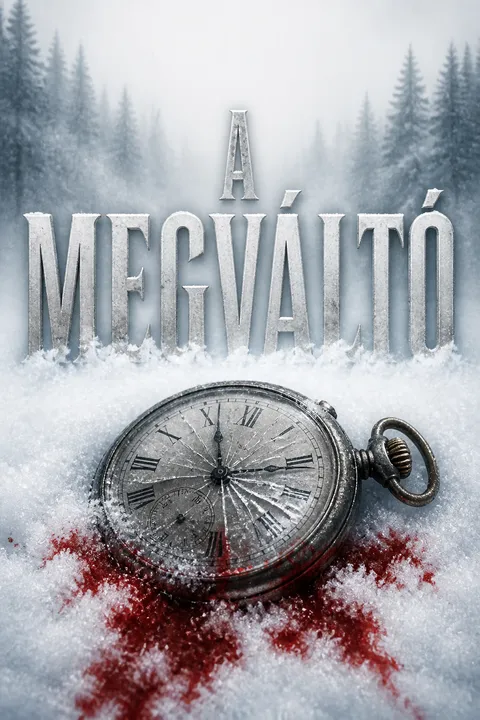
Time becomes evidence and debtHarry's grandfather's watch, Møller's parting gift, and the costly watch associated with Tom Waaler turn timekeeping into a recurring clue. Møller gives Harry a watch as a farewell present, and its persistent ticking unsettles him while he investigates. In the epilogue, its craftsmanship and value help Harry understand that the gift carried a coded message about police corruption. The watches connect inheritance, guilt, and delayed recognition: a present can be an act of care, a sign of complicity, or a request for help, depending on what the recipient eventually learns.
The Redeemer's Name
Mercy used to justify violenceThe assassin's childhood code name and the Salvation Army's religious language give redemption several competing meanings. The gunman is praised as a boy for battlefield acts that save others, while later characters describe killing as a way to end suffering or restore justice. Harry's work exposes how easily mercy becomes a respectable explanation for violence. The title's religious resonance does not point to one saviour; it asks who claims the power to decide that another person's life should end. The motif connects the Per Holmen case, the contract killing, and Harry's final choices without making their moral situations identical.
Download PDF
Download EPUB
.epub digital book format is ideal for reading ebooks on phones, tablets, and e-readers.








