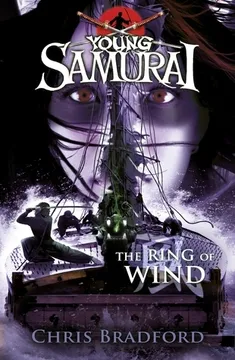


Plot Summary
Prologue
In a letter to his sister Jess, Jack Fletcher recounts how he reached Japan with his father, lost him to a ninja attack, and was taken in and trained by the samurai Masamoto. Jack has recovered his father’s navigational logbook, the rutter, but war and the Shogun’s hostility toward foreigners have made him a hunted fugitive.
He is travelling south toward Nagasaki, hoping to find a ship home to England. Since writing, he has also learned ninja techniques and the Five Rings, though his father’s murder still makes it difficult to trust the people who taught him.
The letter makes home both a destination and a measure of what Jack has lost. Jess represents an ordinary family life he can still imagine, while the rutter carries his father’s practical knowledge and their shared bond. Yet the letter also complicates Jack’s identity: he has been shaped by Japanese teachers and friends, even as the Shogun’s laws mark him as an outsider. His reluctance to embrace the ninja way is not simply a question of technique. It is grief made into a moral problem, since the people who might help him survive belong to the world that took his father from him.
Arrows in the Forest
In spring 1615, Jack is already a wanted fugitive, blamed for fighting against the Shogun at Osaka Castle and forbidden to remain in Japan. He travels south toward Nagasaki with Miyuki, a ninja, Saburo, a fellow samurai, and Yori, a Buddhist monk. Miyuki spots signs of soldiers surrounding their forest path, but the group realizes the trap too late.
They fight through the ambush, protecting one another as arrows and swords close in. Jack uses his blade to flash sunlight into an archer’s eyes, buying the others time to flee. They escape into the trees with the patrol still pursuing them, and the chase drives them toward the coast.
The opening makes loyalty physical: each friend takes a position around Jack, and each risks injury to keep the others alive. That mutual protection counters the political logic of the hunt, which reduces Jack to a foreign body and a treason charge. Jack’s improvisation with the reflected sunlight also shows that his training is becoming broader than swordsmanship. He survives not by overpowering the patrol but by reading the situation and using what is available. The escape is therefore both a tactical victory and a first sign of the flexible judgment he will need at sea.
Pilgrims at Tomo
The pursuit pushes the four friends into Tomo Harbour, where alleys and warehouses leave them boxed in by samurai. Jack refuses Miyuki’s suggestion to burn the saké brewery because civilians could be harmed. Instead, they drug four arriving pilgrims with enough powder to make them sleep, then borrow their white clothes, prayer beads, travel books, and staffs.
Yori teaches the others the proper pilgrim customs, while Miyuki helps hide their weapons. At the jetty, a soldier collides with Jack, but Jack answers with the ritual expected of a pilgrim and receives an offering rather than suspicion. They board a boat as the soldiers search the harbour, escaping only when the turning tide carries them out.
The disguise depends on social knowledge, not merely costume. Yori’s understanding of pilgrimage gives the group a credible performance, while Jack’s refusal to endanger harbour workers sets a boundary on what survival may cost. The scene makes deception morally mixed: they drug strangers and take their belongings, yet leave food and money in return. Their escape works because they understand that a community’s customs can offer protection where force cannot. Jack is learning to move through Japan by adapting to its practices rather than treating every obstacle as an enemy to defeat.
A Boat to Imabari
At sea, a suspicious ronin notices one of Jack’s prized Shizu swords and challenges Yori to a duel. Yori agrees, then rows the ronin ashore and leaves him stranded, proving that a fight can be won without a sword. The incident earns the friends respect from the passengers and sharpens their decision to continue by water rather than risk samurai checkpoints on the roads.
A deckhand gives them a route toward Nagasaki, though pirates make it dangerous. At Imabari, Miyuki finds a captain willing to take them south aboard the overloaded Golden Tiger. Its patched sail, worn rigging, and low-sitting hull alarm Jack, but the patrols are closing in, so the friends board before they lose their chance.
Yori’s deception is a practical expression of his nonviolent commitments, not a retreat from courage. He understands that the ronin wants a public contest and denies him the terms of it. Meanwhile, the decision to travel by sea gives Jack’s maritime childhood new importance. His friends are not simply carrying him toward home; they are entering a world where his knowledge may be the difference between passage and disaster. The shabby Golden Tiger marks the cost of their urgency: they choose an imperfect vessel because waiting for safety would leave them exposed to capture.
The Wind Demons Strike
At Omishima Island, Yori leads the group to Oyamazumi Shrine. Jack sees an old man fall from a cliff and rushes down to help him; the stranger survives by yielding to the water and teaches Jack an image of the Ring of Wind. The others later explain that the figure was Taira Rock, leaving Jack unsure whether he met a spirit or misread the landmark.
When the Golden Tiger sails without them, the friends leap aboard just in time. That night, a black-spider-sailed ship overtakes them. Its crew, the Fuma Wind Demons, drive the Golden Tiger toward a cave, where fire erupts from a dragon-shaped vessel and destroys their mast. The pirates board and take the friends alive.
The island episode plants the book’s central survival principle before Jack needs it under pressure. The old man’s lesson is not about passivity; it is about remaining responsive when resistance would make a person brittle. The apparent dragon then turns that teaching into a sharp contrast: the creature seems supernatural, but the danger is engineered by people. Jack’s uncertainty about Taira Rock preserves a rare opening for wonder in a story increasingly governed by machinery, weapons, and political violence. Capture follows because the group has been forced into a narrow channel with no room to maneuver.
The Pirates’ Cruel Games
The Wind Demons lock the captives in a cage and use the Golden Tiger’s surviving crewman as live bait for sharks. Their cruelty makes clear why Miyuki distrusts them, despite their ninja name. Captain Kurogumo inspects Jack’s Shizu swords, recognizes his fighting skill, and sends the prisoners into a deadly guessing game with fugu, a poisonous fish.
One slice kills a sailor; Saburo and the Golden Tiger’s captain also show signs of poisoning. Miyuki forces Saburo to vomit, gives him charcoal, and uses a ninja healing technique to help him keep breathing. While she and Yori tend him, the pirate boy Cheng secretly brings Jack fresh water and fish, offering the first sign that not every person aboard has surrendered to the crew’s brutality.
The fugu game reduces human life to an audience’s wager, and Jack’s helplessness is especially painful because his usual response is to protect his companions through action. Miyuki’s care gives the scene its counterforce: she treats knowledge as a means of preserving life, not controlling it. Cheng’s quiet help introduces a different kind of courage, one expressed through a small risk taken inside a violent system. The episode also tests the group’s bonds at their most intimate level. Saburo’s survival depends on trust in Miyuki’s skill and on friends who stay beside him when they cannot promise an outcome.
The Champion’s Fall
While Miyuki and Yori work to keep Saburo alive, Skullface forces Jack to fight Manzo, the pirates’ enormous champion. Jack cannot match the man’s strength and first botches an advanced kick, drawing laughter from the crew. He then uses a ninja strike to disorient Manzo and climbs the rigging, where the heavier fighter loses his balance and crashes to the deck.
Before Jack can escape, Sea Samurai ships ambush the Black Spider. He knocks out a guard and frees his friends as the two fleets exchange cannon fire. Saburo is still paralyzed but can signal that he accepts the dangerous escape. The group carries him toward the barrels, then has to fight through the chaos to find their confiscated weapons.
Jack’s victory comes only after failure strips away his pride in polished technique. The missed kick makes him vulnerable to ridicule, but it also forces him to improvise with skills he had nearly forgotten. That blend of samurai discipline and ninja adaptability is becoming his distinctive strength. The battle’s arrival changes escape from a plan into a deadline. Jack does not simply decide for Saburo; he asks him to choose, preserving his friend’s agency even when paralysis prevents speech. Their loyalty is not sentimental protection. It is a difficult practice of including one another in decisions that carry real risk.
A Raft Among Sharks
The Sea Samurai’s attack breaches Captain Arashi’s battleship and floods the bilge where Jack’s group has been imprisoned. Miyuki picks the lock with the gold pin from Akiko’s pearl, and Jack helps force the door through the rising water. They escape the sinking vessel, then swim through the hull breach and surface amid a sea fight between the samurai and the dragon-shaped ship.
A broken piece of deck becomes their raft. With no land in sight and their food and water gone, they paddle toward an island after following an albatross. A great white shark attacks, smashing the raft apart. Just as it closes on Yori, a cannon blast kills it. The Black Spider has returned, and the pirates haul the exhausted friends aboard.
The escape strips the group of nearly everything except their interdependence. Jack’s prized pearl becomes a tool for Miyuki’s lock-picking, while the friends’ bodies become the means of keeping Saburo afloat. Their raft offers no illusion of mastery: even after escaping the ship, they remain at the mercy of currents, hunger, and a predator. The albatross provides a fragile direction rather than guaranteed rescue. The final cannon shot is a reprieve with a cost, since the Black Spider saves them only to return them to captivity. Survival repeatedly changes form without becoming freedom.
The Pirate Queen’s Bargain
The friends meet Tatsumaki, the Fuma’s Pirate Queen, who recognizes Jack as the fugitive wanted by the Shogun. She orders Miyuki thrown from the citadel balcony because of an old war between the Fuma and ninja. Jack offers his father’s rutter and its navigational knowledge in exchange for Miyuki’s life. Tatsumaki accepts a blood oath, but keeps the group under guard.
The pirate boy Cheng is revealed as Li Ling, a Chinese girl who disguised herself to join the crew, and Tatsumaki welcomes her ambition. Jack learns the Queen’s crew claims to raid wealthy traders and tax ships to help poor coastal villages. She nevertheless forces him into a raid, keeping his friends as leverage. Jack agrees, hoping to discover a way off the island.
Jack’s bargain is an act of loyalty that also violates a promise to his father. The rutter is both a practical route home and a piece of family inheritance, so surrendering its knowledge cannot be made emotionally clean. Tatsumaki understands this and uses the friends’ lives to turn affection into leverage. Her account of pirate redistribution complicates Jack’s moral categories, but her own coercion prevents the claim from becoming an easy absolution. Li Ling’s disguise offers a parallel struggle over identity: she has entered a world that denies her place, but her courage does not erase the danger of the role she has chosen.
The Red Seal Raid
Tatsumaki’s target is a Shogun-backed Red Seal ship, and Jack joins the attack because refusal would endanger his friends. The Wind Demons board the vessel in darkness, but the supposed cargo of rice tax proves to be gold, silver, silk, and luxury goods. A guard raises the alarm, Captain Kurogumo is shot, and Jack climbs the mast to free the jammed mainsail.
With Sea Samurai ships in pursuit, he uses a chart and compass to steer into thick fog, then orders the crew to silence the ship and let the enemy pass. His navigation brings the prize back to Pirate Island. Tatsumaki rewards him with treasure and declares him a Wind Demon, but Jack refuses the money and uses the chart to begin planning an escape.
The raid puts Jack inside the violence he once condemned, while the missing rice exposes the gap between Tatsumaki’s political language and the actual prize. His reluctance to kill does not stop the operation, but it shapes how he fights and what he notices. The fog escape is a major shift in his usefulness: navigation, inherited from his father, now gives him influence over people who hold him captive. Yet that influence is ambivalent. The pirates reward him by absorbing him into their ranks, while he treats each new privilege as a chance to regain autonomy.
The Wind Witch’s Warning
While exploring Pirate Town with Li Ling, Jack locates the emergency skiff he hopes to use. A Wind Witch takes a lock of his hair and gives him an ominous fortune about death, courage, and a returning dragon. Before he can rejoin his friends, Skullface and his men knock him unconscious and carry him to a barren island.
They intend to sell him to the Sea Samurai for the bounty and blame Li Ling for his disappearance. Their plan is interrupted by a masked ninja who calls himself Dragon Eye, apparently the assassin Jack believed dead. Dragon Eye kills Skullface’s men and tortures the surviving pirate for Pirate Island’s location. Bound and helpless, Jack is handed over to the ninja and a samurai escort.
The prophecy converts Jack’s earlier lesson about yielding into a warning whose meaning he cannot yet control. It also gives the return of Dragon Eye an uncanny charge before the story can explain it. Skullface’s betrayal grows from resentment: Jack’s competence has cost him status, and he treats the Shogun’s reward as a way to reclaim it. The episode reverses the apparent safety of Jack’s new position among the pirates. He has earned respect, but respect is not protection when authority is fractured and personal envy can become a death sentence.
The Dragon Returns
Chained aboard the Sea Samurai ship, Jack sees Dragon Eye and relives his father’s murder. The ninja’s survival also revives a fragile hope that Yamato, who fell with him at Osaka, might have lived. Before the samurai can deliver Jack to the Shogun, Tatsumaki attacks with the Koketsu, a Korean-built warship shaped like a fire-breathing sea dragon.
Its cannon and armored hull explain the monster the Wind Demons used to frighten their enemies. Tatsumaki cuts Jack free, and he warns her that Dragon Eye has learned the route to Pirate Island. The ninja escapes during the fight, leaving the Queen to order an immediate return. Jack’s new hope about Yamato and his fear of Dragon Eye now travel together.
The return of Dragon Eye reopens grief that Jack had tried to treat as settled fact. His hope for Yamato shows how quickly survival can become entangled with the desire to undo loss, even when evidence is thin. Tatsumaki’s rescue is strategically self-interested, but it is also real: she risks a ship and crew to recover an asset she values. The mechanical dragon turns folklore into military theater, demonstrating how fear can be manufactured through design. Yet the revelation does not make the threat less serious. The human enemy behind the illusion remains more dangerous than the legend.
The Nihon Maru Falls
Daimyo Mori’s fleet finds Pirate Island with the enormous Nihon Maru at its center. Tatsumaki leads the outnumbered Wind Demons into battle, and the Koketsu’s guns, fire ships, and Jack’s tactical advice damage the samurai fleet.
When the Nihon Maru proves too heavily protected to sink by cannon, Jack notices the troops massed on one side have made the floating fortress dangerously unbalanced. The Wind Demons fire tethered arrows into its upper keep, then row the Koketsu away, pulling the structure sideways until it capsizes.
The first wave breaks, but a second fleet appears. As the pirates scramble to flee, the Killer Whale turns its guns on Pirate Town. Jack reaches his friends and retrieves their gear, the key, and the rutter before Dragon Eye blocks their escape.
Jack’s decisive insight depends on seeing structure rather than simply force. The Nihon Maru is formidable precisely because its builders have trusted its size and defenses; its weight distribution becomes the weakness that turns strength against itself. The victory is therefore an achievement of observation, collaboration, and timing, not a solitary heroic blow. But the second wave denies the pirates a clean triumph. Their command over the sea has not become security, and the destruction of Pirate Town exposes the cost of building power around a single hidden refuge. Jack must again choose between the group’s escape and the enemy demanding his attention.
The Shadow Warrior Falls
Jack fights Dragon Eye long enough for Miyuki, Saburo, and Yori to flee toward the hidden cave, then both enemies fall from the collapsing balcony. Jack survives by relaxing into the water instead of fighting the fall.
On the shore, he discovers the dead ninja is not Hattori Tatsuo but a kagemusha, a double trained to carry on Dragon Eye’s identity. The revelation leaves Jack believing Yamato died in the earlier fall. His friends recover his Shizu swords, and together they escape as Pirate Town collapses into the lagoon.
Li Ling has left the emergency skiff stocked with supplies. Saru keeps the black pearl, but Jack recovers his father’s rutter. With Miyuki, Saburo, and Yori beside him, he sails west toward Nagasaki and the long route home.
The final escape completes a change in how Jack meets danger. Instead of treating the fall as an opponent he can defeat through force, he survives by applying the Ring of Wind and the lesson of the water. The kagemusha revelation gives the recurring enemy a disturbing institutional dimension: Dragon Eye can return because a role can outlive any one body. Jack’s grief over Yamato remains unresolved, but his friends keep him from carrying it alone. Recovering the rutter restores his route home; losing the pearl leaves a quieter reminder that rescue does not return every bond or possession intact.
Analysis
The novel makes survival a problem of judgment rather than strength. Jack repeatedly faces enemies who appear to control the terms of a situation: samurai patrols, pirate captains, poisoned food, a storm, sharks, and finally a naval fortress. His most consequential victories come when he changes the terms instead of meeting force directly. He uses a pilgrim’s ritual to evade arrest, reads the wind to save the Black Spider, and notices the Nihon Maru’s unstable distribution of weight. The Ring of Wind gives these actions a shared logic, but the narrative insists that adaptation is learned through relationships as much as through technique.
Those relationships also complicate the story’s moral landscape. The Wind Demons describe themselves as protectors of poor coastal communities, and Jack recognizes the cruelty of the samurai authorities. Yet pirate claims of justice coexist with extortion, torture, and spectacle. Tatsumaki can condemn exploitation while exploiting Jack’s attachment to his friends. The book refuses a clean division between lawful violence and outlaw violence. Jack’s task is not to find a faction without wrongdoing, but to retain moral agency while moving among factions that all want to use him.
The rutter concentrates that conflict. It is a route home, a father’s inheritance, and a source of power that could redirect trade across the world. Jack gives away some knowledge to save Miyuki, then risks himself to reclaim the logbook. His choices suggest that inheritance is not preserved by guarding an object at every cost; it is preserved by deciding what its knowledge is for. At the same time, his journey does not erase grief. Dragon Eye’s return unsettles his belief that justice has been done, and the revelation of a successor leaves the possibility of violence larger than one enemy. Jack reaches the end of this book with his friends and the rutter, but not with a completed passage home. The ending offers direction rather than closure, matching the sea voyage that has shaped his growth.
Review Summary
The Ring of Wind is the seventh book in the Young Samurai series, receiving mostly positive reviews. Readers praise its action-packed plot, character development, and historical details. Some criticize the excessive violence and repetitive storyline. The book follows Jack Fletcher's sea adventures as he encounters pirates and faces old enemies. While some fans consider it the best in the series, others find it less engaging than previous installments. Overall, the book maintains the series' exciting pace and continues Jack's journey to return to England.
Characters
Jack Fletcher
The fugitive navigatorJack is an English teenager trained as both samurai and ninja, travelling through Japan with a bounty on his head and his father’s rutter in his care. He wants to return to his sister, Jess, but the voyage continually tests what he owes his friends and what he must preserve from his father. His seafaring knowledge is as important as his fighting skill: he reads currents, trims sails, and makes decisions under pressure. Jack’s deepest struggle is not choosing one discipline over another, but combining them without losing his moral judgment. He tries to protect others without turning survival into an excuse for cruelty, even when doing so puts his own freedom at risk.
Miyuki
The watchful ninjaMiyuki is a skilled ninja whose alertness often detects danger before the others see it. She is resourceful with disguises, weapons, locks, and healing techniques, and she is willing to act decisively when a friend’s life is at stake. Her blunt practicality can clash with Jack’s instinct to take risks for others, but her loyalty is just as fierce as his. She understands that affection can be exploited, which makes her wary of Tatsumaki’s bargains and Jack’s promises. Miyuki’s courage is not fearlessness; she recognizes the cost of each choice and moves anyway. Her friendship with Jack carries a tenderness she rarely allows to outrun her judgment.
Saburo
The steadfast samuraiSaburo is Jack’s loyal samurai companion, a capable fighter with a generous appetite and a gift for easing tension with humor. He is not as agile or technically gifted as Jack, but his reliability makes him essential in a crisis. Saburo repeatedly chooses to stand beside his friends, even when fear or physical weakness would make retreat understandable. His courage is grounded in loyalty rather than a desire for glory. He accepts help without surrendering his dignity and continues to contribute when he can barely move. His warmth keeps the group human amid pursuit, captivity, and violence.
Yori
The monk with a planYori is a Buddhist monk whose small stature and reluctance to fight conceal a sharp strategic mind. He knows pilgrim customs, understands the spiritual language around him, and often finds solutions that avoid unnecessary bloodshed. His apparent gentleness is not passivity: he can deceive a hostile ronin, negotiate with guards, and remain beside a friend in danger. Yori’s reflections help the group interpret loyalty as a chosen bond rather than mere duty. He is also willing to act when peace is no longer possible. His courage grows through practical care, patience, and a steady attention to what others need.
Tatsumaki
The calculating Pirate QueenTatsumaki commands the Fuma Wind Demons from a hidden settlement built into a volcanic island. Elegant, perceptive, and politically ambitious, she understands how to turn a person’s loyalties into leverage. She presents piracy as a response to poverty and samurai exploitation, and her claims have some force, but her own authority rests on coercion and unequal power. She admires capability, especially Jack’s navigation and judgment, while expecting others to serve her plans. Tatsumaki is neither a simple villain nor a generous outlaw: she can spare a life, make a binding bargain, and still place her ambitions above the promise that bargain seemed to offer.
Li Ling
The aspiring pirateLi Ling is a young Chinese woman who dreams of adventure and a place among the Wind Demons. She is resourceful, observant, and eager to prove herself, but her ambition does not erase her sympathy for people in danger. Her friendship with Jack grows through shared peril and practical help. Li Ling is drawn to the pirate life’s freedom and excitement, while the violence around her tests what she is willing to become. She makes her own choices rather than simply following Jack, and her loyalty has limits shaped by her personal dream.
Dragon Eye
The returning assassinDragon Eye is a feared ninja assassin tied to the murder of Jack’s father and to the deepest wound in Jack’s memory. His skill, secrecy, and pitiless use of violence make him a threat beyond ordinary combat. He treats fear as a weapon, controlling others through uncertainty as much as through the blade. For Jack, Dragon Eye embodies the impossibility of simply declaring grief finished; the past can return in a new form and demand attention again. His presence forces Jack to examine whether courage means eliminating fear or learning how to act while fear remains.
Captain Kurogumo
The ruthless shipmasterCaptain Kurogumo commands the Black Spider, a Fuma pirate vessel, and prizes discipline, profit, and reputation. He recognizes Jack’s unusual value as a warrior and sailor, but treats captives as bargaining pieces and expects loyalty from his crew. His authority is personal and volatile, balancing genuine respect for competence with the suspicion that any advantage might be taken from him. Kurogumo’s ambition makes him a dangerous ally as well as a captor.
Skullface
The resentful pirateSkullface is a brutal Fuma pirate whose skull tattoo reflects the intimidation he cultivates. He enjoys humiliating captives and resents Jack’s growing influence among the crew. His ambition is not merely to survive but to rise in rank, and he sees Jack’s praise and success as obstacles to his own advancement. That grievance makes his allegiance unreliable even within a pirate crew built on shared danger.
Captain Arashi
The samurai enforcerCaptain Arashi leads daimyo Mori’s naval forces and enforces authority through spectacle and punishment. His treatment of captured pirates makes him a frightening figure even to people who are not his targets. He assumes the young fugitives are guilty because they are found fighting aboard a pirate ship, revealing how readily his justice follows power rather than evidence. Arashi represents the Shogun’s system at sea: orderly in appearance, merciless in practice.
Cheng
The compassionate cabin boyCheng is introduced as a young Chinese cabin boy serving the Wind Demons. He knows the hardships that draw poor villagers toward piracy, but the crew’s cruelty troubles him. He secretly gives the prisoners fresh water and food and later helps Jack retrieve the group’s belongings. Cheng’s compassion is quiet rather than grand, expressed through small choices made under threat. His position among the pirates gives him access, but not safety.
Captain Kujira
The gunner captainCaptain Kujira commands the Killer Whale and takes pride in its powerful cannon. He views naval combat as a matter of firepower and practice, and he is willing to use helpless captives as targets. His confidence reflects the Wind Demons’ capacity to challenge the Sea Samurai, but also the cruelty that Jack cannot accept as simply another form of warfare.
Jess
Jack’s sister at homeJess is Jack’s sister in England and the person he hopes to find when he finally reaches home. Though absent from the voyage, she gives his goal a family shape beyond mere escape.
Akiko
The friend’s keepsakeAkiko is Jack’s close friend, associated with the Shizu swords and black pearl he carries. Those gifts connect him to affection and home even while he is separated from her.
Yamato
Jack’s absent allyYamato is Jack’s fellow warrior and a friend whose fate remains bound to the memories of Osaka Castle. Jack’s sense of brotherhood with him shapes how he remembers sacrifice and loyalty.
Plot Devices
The rutter
A map toward homeJack’s father’s coded navigational logbook records routes and observations that can make ocean crossings safer. For Jack, it is both a practical instrument for reaching England and the last substantial link to his father’s work. Its value makes him a target for the Shogun and a bargaining asset for Tatsumaki. Jack’s decision to reveal some of its secrets to save Miyuki creates a conflict between familial duty and loyalty to his friends. The rutter repeatedly shifts the balance of power, but it is useful only when paired with the knowledge and judgment of a navigator.
The Five Rings
A flexible way to surviveThe Five Rings give Jack a framework for adapting to danger, especially through the Ring of Wind. Its lesson is to remain responsive rather than meet every threat with force. The idea first appears in Jack’s encounter at Taira Rock, returns in the Wind Witch’s warning, and becomes essential when Jack survives a fall into the lagoon. The Rings are not a supernatural power that guarantees victory. They are a discipline of attention, movement, and judgment, allowing Jack to combine the training he received as a samurai with what he has learned from the ninja.
Pilgrim disguise
Custom becomes coverWhen the fugitives are trapped in Tomo Harbour, they borrow the clothing and travel papers of pilgrims to pass through the samurai search. Their disguise works because Yori can explain the customs and rituals that make the clothing credible. The episode demonstrates that survival depends on social fluency as much as stealth. The papers also help the group board a boat, briefly turning a religious journey into a practical escape route. The disguise is not effortless: Jack must keep his face hidden, observe how pilgrims behave, and perform rituals correctly when challenged.
The sea dragon
A warship disguised as mythThe Wind Demons use the image of a fire-breathing sea monster to terrify their enemies. The apparent dragon is revealed as the Koketsu, a Korean-built warship with an armored roof, cannon, oars, and a dragon-shaped prow that launches flaming shot. The deception explains how the pirates can appear to control a supernatural creature while also giving them a tactical advantage: opponents hesitate, misread what they are seeing, and do not know how to attack it. The reveal turns folklore into military engineering without making the danger any less real.
The black pearl
A bond carried closeAkiko’s black pearl is a small personal keepsake that Jack keeps near his heart. It helps identify what he values beyond survival and the rutter, and its golden pin becomes useful when Miyuki needs a tool to pick a lock. The pearl passes into Saru’s possession and becomes part of Tatsumaki’s hoard, bringing Jack’s private attachment into the pirates’ world of bargaining and theft. Its role is intentionally modest: it cannot guide the ship or win a battle, but it gives emotional weight to what Jack loses and what he tries to recover.
Young Samurai Series


Download PDF
Download EPUB
.epub digital book format is ideal for reading ebooks on phones, tablets, and e-readers.








