

Plot Summary
Prologue
Emily Sterling is on her knees in a desert hut, blindfolded, exhausted, and waiting for her captor to shoot her. When the gun stays silent, she pulls off the blindfold and finds herself alone.
A soldier bursts in moments later and carries her to safety, but rescue cannot undo the question that has hollowed her out: why did her father not pay the ransom? The story opens on the wound that will shape Emily’s distrust, her fear of captivity, and the danger her family will face again.
The prologue makes rescue emotionally incomplete. Emily survives, yet her first response is not relief but the conviction that her father chose not to save her. That belief gives her trauma a relational shape: the danger is not only what her captors did, but what she thinks her family’s choices meant. The scene also establishes a useful tension between physical safety and psychological safety. A soldier can carry Emily out of the hut, but he cannot restore her trust. Her experience will make later protection difficult, because every promise of safety must compete with the memory of being left behind.
Paintballs and a Gold Badge
At Buddyguard headquarters in Wales, fourteen-year-old Connor Reeves runs a simulated ambush with his friend Amir posing as the Principal. Connor assesses the shooters, gets Amir behind a wheeled bin, and rolls it toward their pickup vehicle to create moving cover.
They reach safety, but a paintball has struck Amir’s goggles, so the exercise counts as a failure. The result stings because Connor recently protected the US President’s daughter, Alicia, and now worries that his reputation rests on luck.
His team’s teasing sharpens the doubt. That night, Charley, the team’s operations leader, finds him shaken by a recurring nightmare about Alicia being shot. She reminds him that training is where mistakes can be learned before real danger arrives.
The exercise separates improvisation from success. Connor invents a resourceful tactic, yet the hit on Amir shows that cleverness cannot substitute for complete protection. His self-doubt comes less from incompetence than from an impossible standard: he judges his worth against one dramatic success and his father’s legacy. Charley offers a more useful frame by treating practice as a place where failure has consequences, but not final ones. This turns training into a moral rehearsal. Connor is learning that a bodyguard’s pride can be as dangerous as fear if it prevents him from seeing what actually happened.
The Sterling Twins
Colonel Black briefs Alpha team on Operation Gemini, a month-long protection assignment for Chloe and Emily Sterling, fifteen-year-old twin daughters of media billionaire Maddox Sterling. Emily’s earlier kidnapping left her anxious, especially in dark or confined places, while Chloe is sociable and impatient with restrictions.
Their father’s journalism and aggressive business dealings have created enemies, including jailed executive Joseph Ward and disgraced politician Harry Gibb. Somali piracy also appears on the threat list, though the planned yacht route seems far from the main danger zone.
Colonel Black assigns Ling as Connor’s second-in-command because a female bodyguard will attract less attention around the girls. Amir, disappointed not to deploy, will support the mission from headquarters with communications and technical equipment.
The assignment’s apparent simplicity is undermined by the family’s history and public profile. Protection is not merely guarding two bodies; it means working around Emily’s trauma, Chloe’s desire for independence, and Maddox’s unusually visible power. The briefing also makes risk statistical, then immediately personal. The team calculates that a pirate attack is unlikely, but a low probability cannot reassure people whose work concerns catastrophic outcomes. Ling’s appointment exposes another pressure within the group: competence is not enough if teammates do not understand why roles are assigned. The operation begins with both external threat and internal coordination already in play.
Gibb’s Quiet Bargain
Facing public exposure over corrupt mining deals, Harry Gibb blames Maddox Sterling’s newspapers for wrecking his career. He meets an unseen intermediary and pays for a campaign against Sterling’s family, though he recoils when the plan turns toward the daughters. Soon afterward, a grey-suited operative confronts Gibb in his office, wipes his computer, and takes the paper file he kept as insurance.
The operative has poisoned Gibb’s flask; Gibb collapses and dies while the man watches without intervening. The scene establishes that the family’s danger has more than one source. Gibb wants revenge, but the colder organization behind his dealings is already removing evidence and people who might expose it.
Gibb’s decision shows how a person can mistake retaliation for control. He imagines he is commissioning a campaign that will restore leverage over Sterling, then discovers that the violence belongs to people whose purposes exceed his own. His hesitation does not undo his complicity; it only reveals that he still wants to see himself as less ruthless than the system he has entered. The operative’s calm murder presents a different psychology: where Gibb reacts from humiliation, the assassin treats human life and documentary evidence as equivalent liabilities. The contrast warns that private grievance can become an entry point for machinery far more disciplined than the person who first opened the door.
A Father’s Measure
Connor tells Colonel Black he is not ready for another assignment, convinced that protecting Alicia was a lucky break. Black counters with the story of Connor’s late father, Justin, who disobeyed orders in Afghanistan to rescue two captured soldiers.
One was Black, whose scar remains from the operation. The memory gives Connor a model of courage based on choosing responsibility despite uncertainty, rather than matching a heroic reputation. Connor also learns his mother’s multiple sclerosis is worsening and she may soon need a wheelchair.
Buddyguard’s care package helps support her and his grandmother, which makes Connor’s dangerous work feel like a family obligation as well as a career. Charley begins teaching him to swim for the coming sea assignment.
Connor’s father functions as both inspiration and burden. The story of Justin’s rescue reframes legacy: Connor need not reproduce his father’s abilities or temperament, only confront the same basic question of whom he is willing to protect. At the same time, the care arrangement for Connor’s mother makes his service morally complicated. His secrecy protects the family materially while withholding the truth that would let them understand his risks. Charley’s swimming lessons offer a gentler counterpoint to Black’s martial example. Preparation becomes relational, a way of accepting help rather than proving that he can manage every danger alone.
Manly Beach Ambush
In Sydney, Connor and Ling meet Chloe and Emily at lunch. Emily resents having teenagers assigned to protect her, while Chloe doubts their credibility. During a walk along Manly Beach, Connor spots men watching the twins from a pickup truck, but cannot prove they are dangerous.
Then two rollerbladers attack: one grabs Emily’s handbag and knocks her down, while the other charges Chloe. Connor shields Emily, and Ling uses a borrowed surfboard to stop the first thief before tackling the second.
The attackers escape, but the pickup disappears too. Police later identify the men as violent criminals recently released from prison, confirming that the assault was not ordinary opportunistic theft. The twins begin to take their protection seriously.
The attack converts abstract security advice into bodily evidence. Connor can explain vigilance, but the twins only begin to believe him when violence arrives inside an ordinary public afternoon. The scene also gives each buddyguard a distinct form of competence: Connor absorbs the initial impact and keeps Emily close, while Ling makes the decisive intervention that prevents escape. Their cooperation works even as their relationship remains strained. For Emily, the assault risks confirming that strangers are dangerous and that she has no control over what happens to her. For Chloe, it interrupts the assumption that safety is a matter of appearance or status.
The Orchid’s Blind Spot
As Connor and Ling prepare to leave for the Seychelles, pirate leader Oracle receives a large payment and a photograph of the Sterling yacht, the Orchid. His lieutenant Spearhead and the computer-skilled Mr WiFi study the yacht’s speed, layout, radar blind spot, communications, and possible safe room.
They acquire powerful engines, weapons, and an RPG, while Oracle receives unusually current information about the yacht’s movements from the anonymous investor. Meanwhile, Connor and Ling board the Orchid and meet Captain Locke, security officer Brad Harding, and the crew.
Brad begins intensive maritime training, teaching them radar limits, rescue procedures, and how the crew will detect, deter, and resist boarders. The yacht’s luxury offers comfort, but its high stern and limited defenses make it vulnerable.
The Orchid’s elegance disguises a structural weakness: it is designed for pleasure, not siege. The pirates’ research turns that mismatch into a tactical advantage, while the security training gives Connor and Ling a language for noticing vulnerabilities before they become crises. Yet the anonymous investor’s real-time information disrupts the assumptions underpinning Brad’s preparations. The yacht is not simply at risk because the sea is dangerous; someone is actively narrowing the gap between target and attacker. This section’s tension comes from unequal knowledge. The pirates know the ship as a plan on a screen, while the people aboard are still learning how its systems behave under pressure.
A Current Takes Emily
On a quiet Seychelles beach, Emily falls asleep on an inflatable lilo and drifts into a rip current. Connor swims after her, remembers Charley’s advice to move parallel to shore, and brings her back exhausted but alive. The incident shows Emily that his vigilance is more than a performance. Later, while exploring a cave with the twins, she panics in the dark and repeats words associated with her captivity.
Connor guides her out without forcing her to explain. Emily gradually tells him that isolation during her kidnapping was worse than she expected and that she felt abandoned by her father. The two recognize a shared experience of captivity, though Connor’s lasted only days and hers lasted months.
The rescue builds trust through action rather than reassurance. Connor does not simply tell Emily she is safe; he spends his strength getting her out of the current, then respects her limits when the cave revives her fear. That distinction matters because trauma often makes care feel like control. Emily’s disclosure about her father complicates the family’s public image: wealth and protection have not prevented emotional abandonment as she understands it. Connor’s own brief captivity lets him empathize, but he does not claim equivalence. Their connection rests on recognizing difference without using it to dismiss the other’s pain.
Ling Leaves the Yacht
A jet ski carrying Ling suddenly explodes after its throttle sticks. She survives with minor injuries, but an inspection finds a similar fault in the second new machine, raising the possibility of sabotage.
When Chloe posts a holiday photograph with its location data intact, Ling warns that strangers could track the family; Chloe dismisses her as overprotective. Their conflict deepens after Ling throws an uninvited visitor, Matt, overboard, mistaking him for an intruder. Maddox responds by removing Ling from the assignment, despite Brad’s objections.
He also leaves the yacht after editor Ruth McArthur dies in what appears to be a mugging, interrupting her inquiry into Gibb’s death. Connor is left to guard both sisters while a threat, a missing teammate, and an absent father converge.
This turning point strips away layers of protection. Ling’s dismissal is not simply a staffing change; it removes Connor’s partner just as a possible sabotage pattern emerges. Maddox’s authority proves double-edged: he can hire the team, but his judgment of Ling is shaped by his daughters’ complaints rather than the security facts. Chloe’s wish for ordinary freedom is understandable, yet location-sharing converts intimacy and self-expression into intelligence for anyone watching. Ruth’s death further suggests that the danger extends beyond the yacht. Connor is now responsible for protecting a family whose own decisions and relationships make protection harder.
The Citadel Fails
While Connor watches over the sisters at sea, a Somali boy named Cali is discovered hiding in the Orchid’s bilge. He says pirates killed his father and forced him to serve them; Emily urges the crew to help him. Soon six armed skiffs attack. The Orchid’s crew fights back, ramming one skiff and using flares, a shotgun, and improvised firebombs, but Jordan is shot and a pirate boards.
The attackers appear to retreat, then exploit a Mayday from a second yacht, the Sunriser, to lure the Orchid close. The pirate Spearhead kills Brad and the Dutch captain, while Connor is shot and falls from sight. The surviving crew and family seal themselves inside the steel citadel as the pirates take control.
The attack exposes the limits of procedure without invalidating its value. Brad’s citadel plan saves the people who reach it, but Connor’s absence shows how quickly a single missing person can turn a defense into a breach. Cali’s story places a humanitarian appeal beside a security problem, forcing Emily and Connor to weigh compassion against uncertainty. The pirates’ use of the Sunriser makes rescue itself part of the trap: a distress signal can summon help, but it can also compel a vulnerable vessel to change course. The crew’s courage cannot erase the informational advantage their attackers possess.
The Boy in the Bilge
Connor awakens injured beneath the stairs, alive because his protective clothing and phone absorbed the bullets’ force. He hides in the foul bilge while pirates search the yacht, then uses the tender’s radio to send a Mayday. A Filipino fishing boat relays part of the message, allowing Buddyguard headquarters to know Connor is alive, but the pirates’ false cancellation of the Orchid’s emergency beacon has already diverted the search toward the Sunriser.
The pirates force the crew from the citadel and sail the Orchid toward Somalia. Connor moves through the vessel cautiously, confirms the hostages have been taken aboard a tanker, and realizes he must act without waiting for a rescue force that may not know where to look.
Connor’s survival is neither triumph nor escape. The damaged phone, intended as communications equipment, becomes a shield, while the bilge turns him into the hidden stowaway he once distrusted. His Mayday matters because it reconnects him to a team, but the garbled transmission cannot restore control. The false beacon demonstrates how infrastructure can be manipulated: rescue depends not only on courage but on trustworthy signals and accurate location. Connor’s decision to keep moving reflects his central development. He no longer needs to believe he is invulnerable; he needs to use limited resources intelligently and remain responsible for people beyond his immediate reach.
Emily’s Impossible Betrayal
After reaching the tanker, Connor sees Emily with the pirates and tries to free her. Instead, she locks him inside a storage room and returns to them. He later learns that she has been sending location data, apparently helping the hijackers track the Orchid. A white-suited investor arrives and orders Oracle to hand the family to the extremist group Seven Sabres after the ransom is paid, rather than release them.
Connor is captured and forced to tell Buddyguard that he has one day to live. He struggles to reconcile Emily’s actions with her fear and earlier pleas to her father. The pirates’ demands rise to one hundred million dollars, while Maddox resists paying and the hostages remain in immediate danger.
Emily’s apparent betrayal destabilizes the story’s most intimate bond. Connor has to consider whether a person can be both frightened and dangerous, and whether loyalty can be judged from behavior alone when coercion or trauma may be involved. The investor’s plan makes the ransom a false promise: payment would not secure release, only finance another transfer. Maddox’s bargaining instincts, effective in business, become ethically perilous when applied to loved ones. His refusal is not simply greed or courage; it is an attempt to impose familiar rules on a situation designed to defeat them. Connor must act without certainty about Emily’s agency.
The Escape from Golden Phoenix
Cali returns Connor’s Go-bag and reveals that the pirates plan to give the family to Seven Sabres, following orders from the investor. Connor trusts him enough to overpower a guard and reach Captain Takayama, whose tanker crew has also been held for months. They free Chloe and Amanda, while Takayama leads his crew toward the skiffs.
During the escape, Connor leaves Chloe with Cali and turns back for Emily. A flare ignites fuel drums, setting the tanker ablaze. The investor shoots Oracle, then vanishes into the smoke. Connor carries the unconscious Emily through the fire and reaches the Orchid, where Cali and Chloe are waiting. They launch the tender and escape as the Golden Phoenix erupts behind them.
Connor’s rescue depends on a deliberately limited trust. Cali has been unreliable under coercion, yet his return with the Go-bag and warning gives Connor grounds to act with him. Connor also corrects his earlier certainty about Emily: he refuses to abandon her simply because her behavior appears damning. The burning tanker turns the rescue into an ethical triage, requiring Connor to split the group and delegate Chloe’s safety to Cali. His success is therefore collective, not solitary. Takayama, Cali, Chloe, and Connor each take risks that no single heroic gesture could replace.
Flare Against Spearhead
As Connor radios the Australian warship HMAS Melbourne from the escaping tender, Spearhead pursues in a pirate skiff and fires on them. The tender’s radio is damaged, so Connor activates the search-and-rescue transponder sewn into his Go-bag. Under fire, he tells Cali to aim a flare at the pursuers’ fuel supply. Cali hits it, and the skiff explodes, ending Spearhead’s attack.
A Seahawk helicopter arrives soon afterward and takes the survivors to safety. The crisis has cost Brad and the Dutch captain their lives, and Jordan has been wounded, but the Sterlings and the crew are rescued without paying the ransom. Connor returns to Buddyguard headquarters burned, bruised, and no longer certain that his first success was luck.
The final pursuit pays off the equipment and training introduced before the voyage: the transponder, the flare gun, and the Mayday procedure all become practical tools rather than decorative expertise. Yet the decisive act belongs to Cali, whose formerly constrained survival skills now serve a chosen purpose. Connor’s leadership is visible in giving him a precise task instead of trying to control every action himself. The rescue does not erase the deaths or make the outcome clean. Its emotional force comes from survival purchased through shared competence, and from Connor learning that protection is not the same as doing everything alone.
The Island Party Bomb
A week later, Maddox hosts a celebration on Shark Island for his marriage to Amanda and the family’s safe return. Emily is recovering and describes feeling clearer, while Cali has arrived in Australia after Maddox arranged a visa. Connor reunites with the twins and the Alpha team. When Chloe suggests a speedboat ride, the group heads onto Sydney Harbour, where Connor spots the same criminals involved in the earlier attacks: Todd Logan and Doug Carter.
He then notices a bomb attached beneath their boat. Ling accelerates while she and Connor pull the girls into the water. The speedboat explodes behind them. The reunion has become a fresh emergency, showing that survival from the hijacking has not yet ended the threat to the family.
The party offers a public image of restored family life, but the bomb tears through that image before it can settle. The danger returns in a familiar form, attached to the same criminals who attacked the girls in Sydney and sabotaged the jet skis. Connor’s vigilance is now sharper, while Ling’s rapid response demonstrates that their partnership has survived the conflict that separated them. The scene also complicates celebration: the Sterlings can commemorate survival, but cannot treat safety as permanent. The bodyguard’s work is defined by attention to what remains unseen, even in a setting designed to make everyone relax.
The Net Tightens
After the speedboat blast, police capture Todd Logan and Doug Carter near Broken Hill. The two men confess to planting the bomb and sabotaging the jet skis, revealing that imprisoned businessman Joseph Ward hired them to retaliate against Maddox.
Ward’s route to the pair ran through Long Bay Prison, where he was held; Harry Gibb supplied the money. The investigation does not establish who organized the pirate hijacking, and Buddyguard suspects the earlier kidnapping and the sea attack may be connected without claiming proof.
Emily’s doctors believe conditioning during her first captivity shaped her actions, though she remembers little of it. At headquarters, Connor resumes sparring with Ling and prepares to face the next challenge without measuring himself against his father.
The resolution separates what can be proven from what remains frighteningly uncertain. Ward and Gibb’s responsibility for the attacks on the family is established, but the hijacking’s deeper sponsorship remains unresolved, resisting the satisfaction of a single culprit who explains everything. Emily’s recovery also avoids reducing trauma to a solved puzzle: conditioning may account for her actions, yet her memory remains incomplete. Connor’s return to sparring with Ling is a modest but meaningful ending. He does not emerge as a flawless protector; he returns to practice, where mistakes can still teach him and confidence remains something he must choose.
Analysis
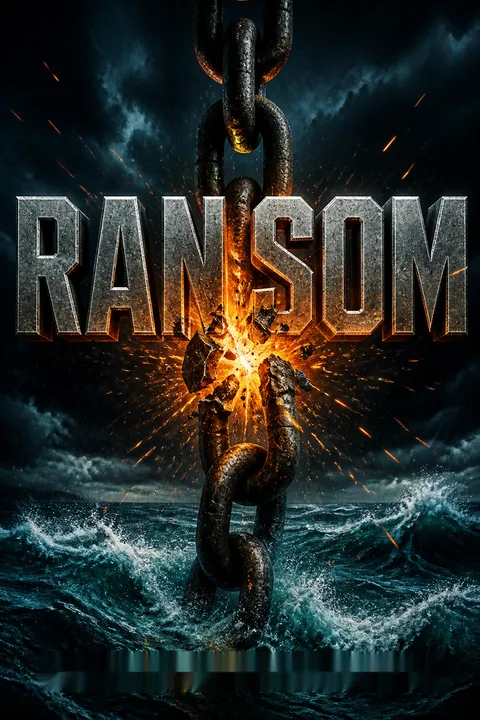
Ransom treats protection as a negotiation between safety and agency. Connor’s task is not simply to defeat attackers; he must guard teenagers who dislike restrictions, interpret fear without mistaking it for incapacity, and decide when uncertainty is too dangerous to ignore. Emily’s trauma and Chloe’s rebellion are different responses to the same family system. One withdraws from the world after captivity, the other presses against the limits imposed in its aftermath. Neither response is irrational, but both complicate the work of keeping them safe.
The novel also contrasts two forms of power. Maddox Sterling uses money, media, and negotiation to shape events, while the anonymous investor uses secrecy, surveillance, and violence. Gibb’s grievance links these worlds: a personal desire for revenge becomes useful to actors whose aims exceed his own. The pirates, meanwhile, recast kidnapping as a business, exposing the moral emptiness of treating people as leverage while dressing the practice in financial logic.
Connor’s development is less a transformation from weak to strong than a correction in how he understands competence. He begins by treating one successful assignment as suspicious luck and every training failure as evidence against himself. The voyage teaches him that protection is distributed across people and tools: Amir’s equipment, Ling’s judgment, Brad’s preparation, Cali’s local knowledge, and Connor’s own willingness to revise his assumptions all matter. He cannot control every outcome, and he cannot always know whom to trust. He can, however, keep assessing, adapt, and choose responsibility without confusing it with certainty.
The ending preserves unease. Ward and Gibb are connected to the attacks on the family, but the hijacking’s deeper sponsorship remains unresolved. Emily’s behavior is explained through conditioning without being reduced to a neat recovery story. Safety returns as a fragile achievement, not a permanent state. Connor’s return to sparring is therefore the right final image: protection is an ongoing discipline, and confidence is something practiced rather than inherited.
Review Summary
Ransom received mostly positive reviews, with readers praising its action-packed plot, surprising twists, and engaging characters. Many found it more exciting than the first book in the series. Readers appreciated the realistic portrayal of teenage bodyguards and the detailed descriptions of settings and combat techniques. Some criticized the slow build-up and occasionally flat writing. Overall, the book was considered a thrilling read that kept readers engaged, with many looking forward to continuing the series.
People Also Read



Characters
Connor Reeves
The rookie bodyguardConnor is a fourteen-year-old trainee in Buddyguard, an organization that places young protectors beside vulnerable or famous children. His father was an SAS soldier, and Connor measures himself against the courage people expect him to have inherited. He is observant, resourceful, and physically trained, but his fear of being merely lucky can make him hesitate or overcorrect. His work also supports care for his mother and grandmother, giving his secrecy a personal cost. Connor’s strongest instinct is to place someone else’s safety ahead of his own, though he must learn that effective protection depends on judgment, teamwork, and accepting uncertainty rather than trying to be invulnerable.
Emily Sterling
The guarded twinEmily is the quieter of Maddox Sterling’s twin daughters. A previous kidnapping has left her vulnerable to panic, confinement, and the feeling that she has been abandoned by her family. She prefers nature and reading to the social life expected of a billionaire’s child, and she is often painfully aware of the contrast between her own temperament and Chloe’s. Emily’s reserve is not indifference; it is a defense against experiences she does not know how to explain. She wants to be understood without being treated as fragile, and her relationship with Connor grows from his willingness to respect both her fear and her capacity to act.
Chloe Sterling
The restless twinChloe is Emily’s outgoing twin, older by twelve minutes, and more comfortable with parties, friends, and attention. She resents the restrictions imposed after Emily’s kidnapping and often mistakes security advice for a lack of trust. Her confidence can become entitlement, especially when she treats Ling as a servant rather than a professional. Beneath that friction is a teenager trying to reclaim ordinary independence inside an unusually protected life. Chloe cares deeply for Emily, even when she is impatient with her, and her loyalty is strongest when she must choose between personal freedom and her sister’s safety.
Ling
The fearless second-in-commandLing is an accomplished young Buddyguard and martial artist whose speed and surveillance skills make her formidable in the field. She is direct, competitive, and sometimes tactless, particularly when she thinks people are ignoring obvious risks. Her childhood on the streets of Shanghai taught her to depend on herself, and that history feeds both her resilience and her impatience with privilege. Ling wants her ability recognized on its merits, not treated as a novelty. She respects teammates who can withstand honest criticism, and beneath her sharp manner she is fiercely protective of the people assigned to her.
Charley
Alpha team’s steady leaderCharley leads Alpha team’s operations and is one of its most experienced Buddyguards. A former surfing champion and martial artist, she uses a wheelchair but refuses to let others confuse disability with helplessness. Her advice to Connor is practical rather than sentimental: training is where errors can be corrected, and belief affects performance. Charley combines tactical judgment with emotional perception, noticing when Connor’s confidence is faltering and when the team needs to hear an uncomfortable truth. Her own injury has made her sensitive to the difference between helping someone and deciding their limits for them.
Colonel Black
Buddyguard’s commanding founderColonel Black founded and commands Buddyguard. A former SAS soldier and a colleague of Connor’s father, he is disciplined, strategic, and deeply invested in the young protectors he trains. He expects mistakes to become lessons, not excuses, and he understands that an operation depends on planning as much as courage. Black’s relationship with Connor is complicated by his knowledge of Justin Reeves and by the trust he places in the boy. He can be stern with clients and recruits alike, but his authority rests on experience and a genuine commitment to keeping his team alive.
Amir
Alpha team’s technical mindAmir is Connor’s friend and a gifted member of Alpha team, particularly skilled with computers, communications, and equipment. He wants a chance to prove himself in the field, so being assigned to technical support initially disappoints him. His expertise is not an accessory to the action; the team depends on his research, secure communications, and carefully adapted gear. Amir uses humor to cover disappointment and anxiety, but he is generous with the tools he designs and proud when they help his friends. His work demonstrates that protection is a collective task, even when only one bodyguard is visible beside a Principal.
Maddox Sterling
The powerful media fatherMaddox Sterling is a wealthy Australian media magnate whose newspapers and investigations have made him influential and widely resented. He values control, privacy, and decisive negotiation, habits that serve him in business but can make family crises more difficult. His daughters matter deeply to him, yet his demanding work and emphasis on Chloe’s future role in the company leave Emily feeling overlooked. Maddox hires professional protection after Emily’s kidnapping, but his authority over the family can conflict with the judgment of those tasked with guarding them. He is most unsettled when events cannot be managed like a corporate negotiation.
Brad Harding
The yacht’s security officerBrad is the Orchid’s ship security officer and a former Australian SAS soldier. Physically imposing and easygoing, he teaches Connor and Ling the unfamiliar disciplines of maritime security, from radar limitations to the safe room’s role. His confidence comes from preparation rather than bravado; he wants the crew to understand exactly what to do before a crisis begins. Brad is willing to joke with the teenagers, but he remains alert to the yacht’s weaknesses and to the responsibility he carries for everyone aboard.
Cali
The Somali stowawayCali is a Somali boy who hides aboard the Orchid while trying to reach a safer future. He is undernourished, watchful, and eager for food, but his quick smile conceals a life shaped by violence and coercion. Cali speaks English because his father was a teacher, and he has learned how to survive among people who hold power over him. He is difficult for Connor to assess because fear can make him appear compliant or evasive. Emily responds to his vulnerability first, while Connor must decide how to balance compassion with the safety of the people he protects.
Oracle
The pirate commanderOracle leads a Somali pirate gang with the manner of a businessman and the instincts of a ruthless commander. He manages investors, plans hijackings, and understands that information can be as valuable as weapons. His polished appearance contrasts with the violence his organization uses, and he is skilled at presenting criminal choices as ordinary commercial decisions. Oracle wants a profitable operation and expects loyalty from his men, but he is also willing to adapt when an outside patron changes the terms.
Spearhead
The pirates’ first attackerSpearhead is Oracle’s imposing enforcer and the pirate most likely to lead an assault himself. He is physically powerful, aggressive, and drawn to the charged excitement of boarding a vessel. His confidence comes from experience, but it is joined to a taste for dominance and risk. Spearhead understands the practical demands of an attack and expects his men to follow orders. To his crew, he is a source of fear as much as leadership.
Amanda Ryder
Maddox’s glamorous fiancéeAmanda is a swimsuit model and Maddox Sterling’s much younger fiancée. Her polished appearance attracts attention wherever she goes, but she is not part of the security team and is unused to being treated as a potential target. Her relationship with Maddox complicates the twins’ sense of family, especially when his attention shifts toward her. Amanda is socially poised and accustomed to navigating public scrutiny, yet she is less prepared for the physical danger that surrounds the Sterling name.
Harry Gibb
The cornered politicianHarry Gibb is an Australian politician under scrutiny for financial misconduct involving mining rights. He is anxious about losing his career and sees Maddox Sterling’s newspaper coverage as a personal attack. Gibb has learned to protect himself through political alliances and documentary leverage, but humiliation makes him vulnerable to people offering revenge. His fear does not prevent him from making harmful choices; it only reveals how readily self-preservation can become a justification for them.
Mr Grey
The elusive operativeMr Grey is a controlled, highly secretive operative who handles sensitive work for an organization operating through concealed financial interests. He relies on digital intrusion, intimidation, and carefully managed appearances rather than public authority. His manner is cool enough to make ordinary conversation feel like an interrogation. Mr Grey regards loose ends as practical problems to eliminate, a perspective that distinguishes him from people motivated by anger or profit alone.
Captain Thomas Locke
The Orchid’s shipmasterCaptain Locke commands the Orchid and insists that safety aboard his vessel ultimately falls under his authority. He is proud of the yacht and protective of its passengers and crew, while also mindful of maritime law and the consequences of carrying an unauthorized stowaway. Locke understands the limits of his control once violence reaches the ship, but he continues to make decisions for the people who depend on him.
Captain Takayama
A captive tanker captainCaptain Takayama commands the chemical tanker Golden Phoenix and has endured a prolonged captivity aboard his own vessel. He is courteous, observant, and careful not to mistake politeness for surrender. His experience gives him knowledge of the tanker and its crew that proves valuable when a chance to escape appears. Takayama remains responsible for his people even while imprisoned, and he sees leadership as a duty that does not vanish when command is taken away.
Joseph Ward
Sterling’s imprisoned rivalJoseph Ward is a former corporate executive jailed after Sterling’s media company exposed his fraud. He believes Sterling destroyed his business and family, and he turns that resentment toward the magnate’s daughters. Ward’s revenge is indirect, relying on hired criminals rather than personal confrontation.
Ruth McArthur
The investigative editorRuth McArthur is editor-in-chief of Maddox Sterling’s Australian Daily. She is persistent, skeptical of official explanations, and willing to pursue gaps in the account of Harry Gibb’s death. Her reporting instincts lead her toward dangerous information, but she approaches the investigation with the discipline of a journalist who knows that suspicion must be supported by evidence.
Mr WiFi
The pirates’ hackerMr WiFi is a technically skilled member of Oracle’s gang who gathers vessel information and supports pirate operations with satellite tracking and computer research. His academic appearance contrasts with his chosen work. He prefers planning and data to physical confrontation, making him essential to attacks that depend on knowing where a target will be and how its systems function.
Jason
Connor’s blunt teammateJason is a muscular Australian member of Alpha team, confident in training and fond of teasing Connor. He is competitive but not simply hostile, and his jokes sometimes conceal genuine concern for his teammates. His knowledge of Australia becomes useful, though his sense of humor can distract Connor at the worst possible moment.
Plot Devices
The Buddyguard Method
Protection without noticeBuddyguard trains teenagers to act as unobtrusive companions for young people who may attract threats. Their age and appearance allow them to stay close without looking like conventional security staff. The method requires more than fighting skill: recruits assess surroundings, anticipate danger, communicate discreetly, and adapt when a Principal resists protection. In the story, the method is tested by Emily’s trauma, Chloe’s impatience, Ling’s conflict with her Principal, and Connor’s doubts about his own competence. It provides the novel’s central measure of duty: a protector must keep someone safe while preserving as much of that person’s freedom as circumstances allow.
The Orchid’s Citadel
A refuge inside dangerThe yacht’s citadel is a reinforced room in the crew’s quarters, designed to shelter passengers and crew if pirates breach the outer defenses. It contains supplies and communications equipment, and its steel door can be locked from within. Brad teaches Connor and Ling that the room only works if everyone reaches it before the pirates do. The attack tests that limit: the crew makes it inside, but Connor remains outside, and the pirates eventually cut through the door. The citadel represents a sound plan whose success depends on timing, coordination, and not leaving anyone behind.
The Go-Bag
Tools for the unexpectedAmir builds Connor and Ling waterproof Go-bags for a sea assignment. They contain medical supplies, covert communications, protective clothing, night-vision sunglasses, a disorienting light, a flare gun, and a compact search-and-rescue transponder. Several features later become essential when Connor is cut off from headquarters and must move through the yacht and tanker without normal support. The equipment does not solve problems by itself; Connor must remember its limits, improvise with it, and use it under pressure. The bag turns Amir’s technical work into a material link between the support team and the isolated bodyguard.
Location Metadata
A holiday trail for pursuersPhotographs posted by the Sterling sisters carry location and time information that can reveal where the yacht is and where it is heading. Ling warns that social media can expose a Principal’s movements to people beyond the intended audience, but Chloe initially sees sharing the holiday as harmless. The pirates’ investor uses the data to follow the Orchid with unusual precision. The device transforms an everyday habit into an intelligence leak and makes the story’s security conflict intimate: the girls are not merely being watched from outside; their own public traces can help the threat find them.
False Distress Signals
Rescue becomes a trapThe pirates exploit maritime distress procedures to manipulate where the Orchid goes and where rescuers search. A Mayday from the Sunriser draws the yacht toward a waiting attack, while a false cancellation of the Orchid’s emergency beacon diverts the search-and-rescue effort. Connor’s own damaged, partially received Mayday is the counterpoint: a weak signal still gives Buddyguard evidence that he is alive. The story makes communications both lifeline and weapon. A distress signal is only useful when its source, location, and status can be trusted, and the pirates understand how quickly rescuers must act on uncertain information.
Bodyguard Series


Download PDF
Download EPUB
.epub digital book format is ideal for reading ebooks on phones, tablets, and e-readers.








