

Plot Summary
Uranium Under the Crocodiles
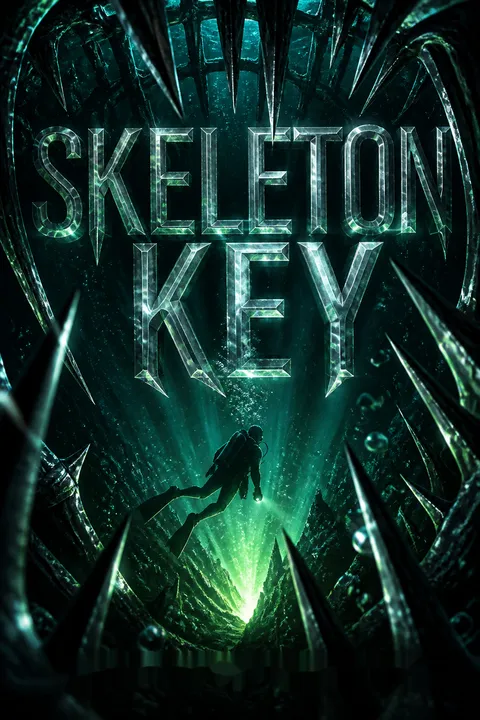
On Skeleton Key, Russian General Alexei Sarov buys a kilogram of weapons-grade uranium from two smugglers. When they demand more money, he redirects their plane into the mangrove swamp, where crocodiles finish the job and leave him with the uranium.
Weeks later in London, MI6 administrator John Crawley approaches fourteen-year-old Alex Rider after a school football match. A break-in at Wimbledon has disabled the alarms, yet nothing was stolen, and Crawley suspects sabotage.
He offers Alex a ballboy position that will keep him inside the tournament for two weeks. Alex resents being pulled back into espionage after his dangerous French mission, but accepts the chance to watch tennis. The stranger’s careful preparation and Sarov’s new acquisition are about to converge.
The opening pairs a hidden geopolitical threat with Alex’s ordinary wish to be left alone. Sarov’s composure turns the uranium deal into a demonstration of control: he treats both the smugglers and the island as pieces in a private calculation. Alex’s recruitment offers a smaller version of the same problem. Crawley frames surveillance as a harmless opportunity, while Alex knows that MI6’s invitations often conceal obligations. The tennis courts promise order, rules, and spectators; the unexplained break-in suggests that this polished public world can be manipulated from beneath its surface.
Strawberries and Librium
At Wimbledon, Alex spots a Chinese security guard with a red-circle tattoo watching players and using a fake mobile phone. Two favourites, Jamie Blitz and Owen Bryant, lose to the unexpected French contender Jacques Lefevre after drinking water from dispensers the guard has monitored.
Alex follows him beneath Court One, where the guard tries to crush him with a forklift and then attacks him hand to hand. Alex survives by blasting gas from a cylinder into the man’s eyes and driving him into a strawberry freezer.
MI6 later finds Librium concealed in the dispensers. The Big Circle triad had been drugging opponents so Lefevre would win and its members could profit from bets. The officials hush up the scandal, but the injured guard’s allies now have reason to target Alex.
Alex’s investigation begins with small inconsistencies: a guard watching rather than working, a phone with no real function, and champions losing their focus. His strength here is not invulnerability but attention. Once discovered, however, he has to trade observation for improvisation, using the club’s own supplies to survive. The officials’ concern for Wimbledon’s reputation contrasts with Alex’s immediate danger; they praise him, then prioritize secrecy. Their response shows how institutions can absorb a crisis by protecting their image, while the personal cost of exposing it follows Alex beyond the tournament.
The Cribber's Wake
In Cornwall, Alex stays with Sabina Pleasure and her family, briefly enjoying the home life he has never had. Sabina presses him about his absences, and Alex admits that MI6 has used him as a teenage spy; she answers with affection rather than disbelief. The next morning they head to Fistral Beach as an enormous wave called the Cribber rises offshore.
Alex rides it, but a Chinese man on a jet ski comes after him with a gun. Alex dodges the attacker and is dragged under when the wave breaks. Sabina finds him, pulls him ashore, and revives him. MI6 identifies the assailant as another Big Circle member, sent because Alex disrupted the Wimbledon betting scheme. The triad’s reach makes an ordinary summer unsafe.
Sabina’s importance is practical as well as emotional: she recognizes danger before Alex can explain it, then acts when he disappears beneath the surf. Their closeness offers him a glimpse of belonging without requiring him to pretend he has an ordinary past. The attack destroys that refuge. Alex’s skill lets him evade the jet ski for a moment, but it cannot protect him from the sea or from a criminal network pursuing revenge. His survival depends on someone who is not part of espionage, a reminder that connection can be more than a weakness for an operative.
A Family on Paper
MI6 tells Alex that the Big Circle may keep hunting him, then uses the danger to justify sending him out of Britain. The CIA needs a child to make two agents seem like tourists entering communist-controlled Cayo Esqueleto, so Alex is assigned to pose as their son.
He resents being lent to another intelligence service, especially when the adults call the trip safe. At gadget-maker Smithers’s office, Alex receives a fingerprint-locked phone, explosive bubblegum, and a footballer figurine that functions as a stun grenade.
In Miami, CIA agents Tom Turner and Belinda Troy greet him with open mistrust. Their superior Joe Byrne explains that General Sarov lives on the island and that they intend to investigate his estate before Russian President Boris Kiriyenko arrives. Alex senses they are withholding something.
The invented Gardiner family gives Alex the appearance of the belonging he has long wanted, but the role is another instrument designed by adults. MI6 treats his safety and usefulness as compatible, even when its choices leave him little agency. Turner and Troy’s suspicion intensifies that imbalance: they need Alex’s age to pass inspection, yet regard him as a liability. The gadgets offer him a small counterweight. They are designed to look like ordinary boyhood objects, making the same camouflage that hides Alex’s identity a source of practical power.
Mayfair Lady Burns
In Miami, Turner leaves Alex and Troy to meet a weapons-and-drugs broker known as the Salesman aboard his yacht, the Mayfair Lady. When the yacht unexpectedly pulls away, Troy realizes Turner’s cover may be exposed.
Alex races after it on a borrowed skateboard, leaps from the dock, and catches the stern rail. He discovers Turner bound and beaten, with the Salesman preparing to kill him. Alex ignites petrol at the stern to draw the crew away, then uses Smithers’s phone to stun the Salesman and cut Turner loose.
Gunfire drives both agents overboard. The yacht explodes in a second blast and breaks apart; Turner accuses Alex of causing the deaths. Alex has set a fire, but he does not know that Sarov’s aide Conrad planted the charge that destroys the boat.
Alex’s rescue exposes the difference between bravery and control. He sees Turner’s danger and acts before the adults can agree on a response, but his improvised fire creates consequences he cannot predict. Turner’s accusation lands because Alex himself is unsure what the blast means. The later explanation that Conrad planted a separate charge does not erase the moral discomfort of the scene; it clarifies how quickly blame attaches to the person whose actions are visible, while the hidden mechanism remains unknown. Alex saves Turner but receives neither trust nor gratitude.
The Game Boy's Warning
Turner and Troy take Alex through Santiago airport into Cayo Esqueleto, where surveillance cameras and fingerprint checks quietly record the supposed family. At the hotel, Alex tests the Game Boy Turner gave him and discovers that its screen reacts to the radioactive face of an alarm clock.
The CIA has smuggled in a Geiger counter, so the agents are not conducting simple surveillance: they believe Sarov has acquired nuclear material. When Alex confronts them in Puerto Madre, Turner and Troy explain that the Salesman supplied Sarov with uranium and that a bomb may be hidden at the Casa de Oro.
Their local contact, Garcia, knows a submerged cave and an old smuggler’s ladder called the Devil’s Chimney. Alex insists on joining their boat trip, fearing that being left behind will attract suspicion.
The Game Boy turns an apparently trivial object into evidence, allowing Alex to infer what the adults withheld. The discovery also changes the scale of his assignment: a covert inspection is now tied to nuclear material and a presidential visit. Turner and Troy’s secrecy was intended to protect him, but it has instead made him the least informed person in a dangerous operation. Alex’s demand to join the boat is partly tactical and partly a refusal to be managed as a child when the risk is already present.
The Devil's Chimney
Turner and Troy dive toward the cave while Alex waits with Garcia, but neither agent returns. Alex borrows scuba gear and dives alone, despite knowing the risk. A great white shark circles him near the cave entrance.
When it pursues him inside, hidden metal spears spring from the walls and kill it, revealing that Sarov has booby-trapped the Devil’s Chimney. Alex surfaces to find Garcia stabbed and Sarov’s men waiting. They drug and abduct him.
At an abandoned sugar mill, Conrad, Sarov’s scarred assistant, questions Alex while a conveyor carries him toward crushing rollers. Alex reveals the CIA’s search for a bomb, but Conrad refuses to stop the machine. Sarov arrives at the last moment, saves Alex, and takes him to the Casa de Oro as a prisoner.
The cave turns the agents’ presumed route into a weapon, showing that Sarov anticipates intrusion rather than merely guarding against it. Alex’s solo dive is reckless, but his choice follows the disappearance of the only people who might still be alive. The shark trap and sugar crusher echo one another: both systems reduce living bodies to objects caught in machinery. Sarov’s intervention complicates the threat. He protects Alex from Conrad, but that rescue places the boy inside the general’s estate and does not restore Alex’s freedom.
Sarov's Borrowed Son
At the Casa de Oro, Sarov explains that his son Vladimir died as a teenage soldier in Afghanistan. During a horseback ride through the former sugar plantation, he tells Alex that the boy resembles Vladimir and presses him to accept a place as his adopted son.
Alex refuses the emotional bargain, especially because Sarov will not explain what he is planning. Russian President Kiriyenko arrives with bodyguards, and Alex finds a control room where technicians edit footage of the president drinking and flirting with young women.
Sarov intends to use the recordings against him. Alex knocks out his guard, hides in a limousine’s trunk, and tries to escape, but a sensor at the gate detects his heartbeat. Sarov catches him and uses the amplified sound to frighten him into submission.
Sarov’s appeal rests on a real wound, but he turns grief into a claim of ownership. By comparing Alex to Vladimir, he offers intimacy only on terms that require the boy to serve Sarov’s political future. The surveillance suite reveals the same possessive logic at a national scale: the president’s private behavior is recorded, selected, and rearranged into a weapon. Alex’s escape attempt shows that he understands the danger before he understands its full design. The heartbeat detector makes his fear audible, converting an involuntary bodily response into a tool of control.
Thirteen Places at Dinner
Sarov invites Alex to a formal dinner with Kiriyenko and the president’s entourage. After the guests drink their toast, they collapse from a sedative Sarov has arranged, leaving the president helpless. Guards bring out a silver chest containing the nuclear bomb and load it into a truck.
On the private plane, Sarov finally explains his plan: he will detonate it beside abandoned nuclear submarines in Murmansk, disguise the blast as an accident, and use the disaster to discredit Kiriyenko.
Edited footage will make the president appear drunk and indifferent while Sarov presents himself as the leader who can restore Russia’s power. He promises Alex a place beside him in the new regime. Alex listens, concealing Smithers’s remaining gadgets, and knows he must escape before they reach the shipyard.
The banquet turns hospitality into a mechanism of seizure. Sarov does not need to defeat Kiriyenko publicly; he incapacitates him, controls the images that will represent him, and carries him toward the scene of a manufactured catastrophe. The plan depends on both physical destruction and narrative manipulation. Sarov intends the bomb to kill, but also to make the president appear responsible for a failure he did not cause. His offer to Alex therefore joins paternal fantasy to political recruitment: the boy is invited to inherit not just power, but a false account of how it was won.
Edinburgh's Open Door
During a refuelling stop at Edinburgh, Alex activates Smithers’s footballer figurine and throws himself from the plane as the stun grenade goes off. He reaches an office telephone and calls emergency services, but airport guard George Prescott stops him and refuses to believe his account of Sarov’s bomb.
Sarov arrives, claims Alex is his troubled son, and takes him back aboard. Conrad later kills Prescott. Yet Prescott’s radio transmitter had captured the exchange, and the recording reaches the authorities after his body is found.
MI6 connects Alex’s warning to the flight, and Mrs Jones alerts Russian officials. As Sarov’s plane reaches Murmansk, the authorities prepare a force to stop him. Alex has failed to get free, but his warning has travelled without his knowing it.
The Edinburgh sequence makes credibility a life-or-death resource. Alex tells the truth, but his age and extraordinary claim give Prescott reasons to dismiss him; Sarov then exploits the same disbelief by presenting a conventional family explanation. The guard’s insistence on procedure delays the warning, yet the transmitter preserves the evidence that his judgment rejected. This is not a simple triumph of technology over human error: the recording matters only because officials later reinterpret it after Prescott is killed. Alex’s failed escape nevertheless creates the narrow channel through which intervention becomes possible.
The Murmansk Countdown
At the abandoned submarine yard, Sarov’s soldiers seize the harbour and kill the sailors who resist. They chain Alex to a railing while Conrad carries the armed bomb toward a submarine with a magnetic crane. Alex chews Smithers’s explosive gum, packs it into his handcuff, and breaks free.
After Conrad attacks him, Alex uses the crane’s magnet to lift the metal pinned through Conrad’s damaged body, then drops him into the water. Alex removes the bomb’s activation card, stopping the countdown as Russian forces storm the yard.
Sarov returns wounded and demands the card, claiming he can still trigger the device. Alex throws it into the harbour and refuses Sarov’s offer of a family and power. Sarov fires one final shot, killing himself as the bomb is secured.
Alex’s survival depends on inventions and adaptations introduced earlier, but the decisive action is ethical rather than mechanical. He can save himself by restoring Sarov’s control, yet instead makes the bomb unusable even at the cost of risking his own life. The magnet turns Conrad’s surgical reconstruction into a vulnerability, reversing the bodily violence he has inflicted on others. Sarov’s last appeal collapses the distinction he has tried to impose between love and obedience. Alex rejects the inheritance because it requires complicity, not because he has stopped wanting a father.
A Life After Sarov
Back in London, Alex returns bruised, silent, and unable to tell Jack Starbright what happened. Mrs Jones argues that MI6 should stop using him, but Alan Blunt treats his success as a reason to call on him again.
The agency resolves the Big Circle threat by arranging the release and return of imprisoned gang members. Alex refuses a medal and walks alone, feeling less like a hero than a ghost who no longer belongs to ordinary life. Sabina finds him on the street with her parents nearby.
She reminds him that she saved him in Cornwall and invites him to join their family’s summer trip to France. Alex accepts the invitation. The ending does not erase the damage of the mission, but it gives him a place among people who want his company rather than his usefulness.
The coda refuses the usual equation between saving the world and feeling restored. Alex has prevented catastrophe, but secrecy leaves him unable to share the experience with Jack or explain why he is changed. Blunt’s readiness to use him again makes the institution’s gratitude feel conditional, while Mrs Jones recognizes the developmental cost that the agency prefers to discount. Sabina’s return offers a modest alternative to Sarov’s coercive fatherhood: she invites Alex into an existing family without demanding that he become someone else. His acceptance is a small act of choosing connection.
Analysis
Skeleton Key builds its suspense around the difference between what people appear to be and what institutions decide they are. Alex passes as a child when the CIA needs family camouflage, yet adults repeatedly treat his competence as permission to expose him to adult dangers. His skill grants agency inside situations he did not choose, but it cannot correct the unequal power that put him there. That contradiction gives the adventure its emotional pressure: the more capable Alex proves himself, the easier it becomes for intelligence services to justify using him again.
Sarov’s political scheme extends the same problem from the individual to the state. He plans to manufacture a disaster, then control its interpretation through edited footage and a staged explanation. His conviction that he is restoring Russia makes him more dangerous, not less; he has fused genuine grief and historical grievance with a willingness to sacrifice people who cannot consent. His attempt to make Alex his son repeats that logic on an intimate scale. He offers love only if Alex accepts a role in Sarov’s design.
Against these forms of coercion, the novel places relationships that do not require performance. Sabina’s family gives Alex a brief sense of ordinary belonging, while Jack’s care remains present even when secrecy keeps him from explaining himself. The final invitation from Sabina cannot undo the violence or guarantee Alex a normal life. It does, however, offer a different model of attachment: companionship that asks him to come along, not to become an heir, weapon, or symbol. The story’s resolution is therefore emotional as well as political. Alex stops Sarov’s catastrophe, then chooses a human connection that does not depend on obedience.
Review Summary
Skeleton Key is the third book in the Alex Rider series, receiving mostly positive reviews. Readers praise its thrilling plot, character development, and action-packed scenes. Some criticize the far-fetched elements and slower pacing compared to previous books. The story follows Alex's mission at Wimbledon and subsequent adventure on Skeleton Key island. Reviewers appreciate the deeper exploration of Alex's emotions and the nuanced portrayal of the villain. While some find it the weakest in the series, others consider it a strong continuation of Alex's spy adventures.
People Also Read





Characters
Alex Rider
Reluctant teenage operativeAlex is a fourteen-year-old schoolboy repeatedly pulled into intelligence work he never chose. His training, quick observation, and physical courage let him act under pressure, but none of these make danger feel ordinary. He is alert to the ways adults disguise coercion as opportunity, especially when MI6 calls a mission safe or presents it as a holiday. Beneath his self-control is a persistent longing for family and ordinary companionship. That desire makes him vulnerable to people who offer belonging as a bargain, yet it also helps him recognize when affection is being used to claim power over him.
Alexei Sarov
Exiled Soviet idealistSarov is a former Russian general who lives on Skeleton Key and remains devoted to the authority and stature of the Soviet era. His discipline is nearly theatrical: he controls his appearance, his estate, and the people who enter it. The loss of his son Vladimir has fused private grief with a political conviction that Russia must be remade. Sarov does not see himself as a villain; he believes that force and sacrifice can repair a country he considers broken. His attention to Alex exposes the tenderness and possessiveness that coexist in him, as he struggles to separate the boy before him from the son he lost.
Sabina Pleasure
Brave summer confidanteSabina is an athletic, funny teenager with a close bond to her parents and a direct curiosity about Alex. She likes him without requiring him to perform a normal life, and she notices when his explanations do not fit what she sees. Her confidence does not make her careless: when the surf becomes dangerous, she recognizes the threat and acts. Sabina represents a kind of intimacy outside espionage, built from shared time, honest questions, and practical care.
Mrs Jones
MI6's protective deputyMrs Jones is the deputy head of MI6 Special Operations, measured and professional but more attentive to Alex’s welfare than her superior is. She understands the operational logic behind using him and also sees the emotional cost that logic leaves behind. Her concern does not free Alex from the agency, but it gives her a moral perspective that challenges its habit of treating a capable child as an adult asset.
Alan Blunt
MI6's unsentimental chiefBlunt directs MI6 Special Operations with a bureaucrat’s calm and a strategist’s willingness to accept risk. He sees Alex’s effectiveness clearly, but tends to measure the boy through what he can accomplish for the agency. His emotional distance is not mere coldness; it is part of a worldview in which consequences are managed as operational facts. That perspective puts him at odds with those who insist that Alex’s youth matters even when he performs like an experienced operative.
John Crawley
MI6's quiet recruiterCrawley handles MI6 arrangements and approaches Alex with the Wimbledon opportunity. His mild, slightly awkward manner makes the recruitment seem casual, but he is skilled at presenting a risky request in reassuring terms. He embodies the agency’s administrative face: less glamorous than a field agent, yet essential to placing people where intelligence work needs them.
Smithers
Inventive gadget makerSmithers designs unusual equipment for MI6 and takes pleasure in disguising useful technology as familiar objects. His cheerful manner and oversized gadgets contrast with the austere agency around him. He wants Alex to be prepared, even when official orders restrict what the boy may carry. His inventions are not invincible solutions; they give Alex options that still require judgment, nerve, and improvisation.
Tom Turner
Guarded CIA operativeTurner is an experienced CIA agent who favors procedure and initially resents having a teenager in his operation. He is committed to his work and wary of anything that could expose his cover. His pride makes it difficult for him to accept help from Alex, particularly when the boy’s improvisation unsettles the agents’ plans.
Belinda Troy
Hard-edged CIA partnerTroy works closely with Turner and shares his distrust of involving a child in field operations. She is sharp, cautious, and protective in ways she rarely expresses warmly. Her initial hostility comes partly from fear of what could happen to Alex and partly from concern that his presence may compromise the mission. As pressure rises, her practical judgment begins to outweigh her resistance.
Conrad
Rebuilt hired killerConrad is a former terrorist whose body bears the damage of an earlier explosion and extensive reconstruction. He now serves as Sarov’s aide and enforcer, with a loyalty shaped by dependence and the promise of future reward. His physical condition does not soften his methods; instead, he treats violence as a form of control and interrogation as entertainment. His divided appearance mirrors a life pieced back together around a single purpose.
Jack Starbright
Protective housekeeperJack is Alex’s housekeeper and closest adult companion, though their relationship is closer to family than employment. She worries when he withdraws and tries to care for him through familiar routines, including meals and company. Because Alex cannot tell her what he has endured, her affection offers comfort but cannot fully reach him. She represents the ordinary home life he wants to protect.
Joe Byrne
CIA operation chiefByrne oversees the CIA operation from Miami and serves as its uneasy coordinator. He recognizes Alex’s ability but knows that recruiting a child crosses a boundary his own agency would normally avoid. He tries to reassure Alex while managing agents who distrust the arrangement, and his incomplete explanations help create the very mistrust he hopes to contain.
Garcia
Island boatman and guideGarcia is an elderly islander whose knowledge of the coast comes from generations of local familiarity. He works with the CIA for money, not ideological commitment, and regards the agents’ confidence with dry skepticism. His boat and knowledge of the Devil’s Chimney make him valuable, but his cautious pragmatism cannot protect the group from Sarov’s preparations.
Boris Kiriyenko
Russian head of stateKiriyenko is Russia’s president and Sarov’s old childhood friend. He arrives on Skeleton Key expecting a holiday, apparently unaware of how Sarov views the visit. His casual public manner contrasts with the authority of the office he holds, making him vulnerable to anyone who can control the story told about him.
The Salesman
Underworld brokerThe Salesman is a Miami criminal who supplies whatever illegal goods clients can afford, from drugs and weapons to identities and information. He presents himself as a businessman who merely meets demand, a self-justifying view that hides the violence behind his trade. His dealings connect the intelligence operation to Sarov’s purchase.
George Prescott
Airport security guardPrescott is an Edinburgh airport guard who takes his authority and procedures seriously. His suspicion of Alex is understandable in a restricted area, but his certainty that the boy is lying prevents him from hearing an urgent warning. He is a small but consequential example of how official rules can fail when they leave no room for the improbable.
Plot Devices
The radioactive Game Boy
Finds hidden radiationTurner gives Alex a Game Boy that appears to be an ordinary handheld game. When Alex activates it near a hotel alarm clock, its screen reacts to radiation, revealing a concealed Geiger counter. This small discovery overturns the claim that the CIA team is merely observing Sarov: they are searching for nuclear material. Its familiar shape also suits the child cover that gets Alex through the island’s security.
Smithers's disguised gadgets
Turns toys into toolsSmithers equips Alex with technology disguised as commonplace objects: a secure phone with a tranquilizing needle, gum that expands with force, and a football figurine that functions as a stun grenade. The devices give Alex ways to escape or incapacitate an opponent without carrying conspicuous weapons. Each still depends on timing and judgment, so the gadgets support his resourcefulness rather than replacing it.
The Devil's Chimney
Turns an entrance into a trapThe Devil’s Chimney is a submerged cave linked to an old smuggler’s ladder leading toward the Casa de Oro. Garcia’s knowledge makes it seem like an overlooked route into Sarov’s estate. In reality, Sarov has installed a concealed defense system that uses moving metal spikes to kill anything entering the cave. The passage reverses the agents’ expectation: their secret way in is precisely where Sarov expects intruders to arrive.
Sarov's edited recordings
Manufactures political disgraceCameras throughout the Casa de Oro record Kiriyenko’s behavior, while technicians assemble and edit the footage. Sarov plans to pair images of the president drinking and socializing with a selectively altered interview, making him appear indifferent to a nuclear disaster. The recordings allow Sarov to prepare public blame before the catastrophe happens, turning control over images into a weapon alongside the bomb.
The Murmansk bomb
Makes neglect a weaponSarov’s bomb is built from uranium acquired through the Salesman and is intended to explode among abandoned nuclear submarines at Murmansk. He plans to make the blast appear to be an accident caused by Russia’s neglected fleet, then exploit public anger to seize power. A magnetic card activates the countdown, while the shipyard crane’s electromagnet moves the chest toward a submarine. Alex’s final task is to remove the card before the bomb reaches its target.
Alex Rider Series
About the Author
Other books by Anthony Horowitz







Download PDF
Download EPUB
.epub digital book format is ideal for reading ebooks on phones, tablets, and e-readers.








