


Plot Summary
Prologue
Alex Rider returns to London believing his years of dangerous work for MI6 are over. While he flies home with his guardian and closest friend, Jack Starbright, two girls posing as fundraisers bring a poisoned muffin to retired politician James Clifford.
The cyanide kills Clifford, whose funeral will draw London’s leaders together. The killers belong to Nightshade, a secret organization preparing a major attack on the city in three weeks. Alex sees none of it from the plane. The threat begins beneath his ordinary homecoming.
The opening makes safety feel like a story people tell themselves. Alex has survived Scorpia and returned to a life with Jack, school, and plans for the future, yet Nightshade exploits the ordinary trust Clifford places in children selling baked goods. The muffin is effective because it turns domestic innocence into a delivery system. At the same time, Clifford’s death is not an isolated act of revenge. It is a piece of political staging, designed to gather a crowd at a later memorial. The prologue therefore joins two kinds of vulnerability: the personal hope that danger has ended and a public security system that cannot imagine menace wearing a child’s face.
The Order to Forget
At the Foreign Office, permanent undersecretary Dominic Royce confronts MI6 chief Mrs. Jones with Alex’s service record and condemns the agency for using a schoolboy as an operative. He orders her to cut contact with Alex, threatening the department’s standing if the boy’s past becomes public.
Mrs. Jones recognizes that Royce has a point, even though Alex’s missions have repeatedly saved lives. She returns to work intending to obey. Alex, meanwhile, has returned to school and wants homework, friends, and an ordinary future. The ban gives the story its first tension: the boy most capable of meeting the coming threat is precisely the person his superiors have been ordered not to use.
The ban is not merely bureaucratic obstruction. It exposes the ethical injury beneath Alex’s competence: adults have treated his adaptability as permission to place him in danger. Royce’s criticism is morally credible, which makes the later conflict more difficult than a simple contest between a good spy and a bad official. Mrs. Jones has to weigh institutional obedience against the knowledge that Alex may be uniquely useful. Alex’s return to school gives that dilemma a human scale. He wants routine not because he is cowardly, but because childhood has already been repeatedly interrupted by decisions made for him.
A Spitfire Takes Blood
MI6 deputy John Crawley travels to Rio de Janeiro to meet Pablo, an agent whose cover has been exposed. Pablo arrives wounded and warns that a powerful group is planning something in London. Before he can explain, a child guides a radio-controlled model Spitfire past them; a blade concealed in its wing slashes Pablo’s throat.
The boy and a girl escape on a scooter, using smoke to block pursuing agents, then reach a waiting helicopter. The boy is caught when his shirt snags on the airport fence, while the girl flies away. Before dying, Pablo identifies the organization as Nightshade. Crawley is left with a captured teenage assassin, no clear target, and only a name to carry back to London.
The model aircraft condenses Nightshade’s method into one image: familiar childhood play becomes a precise instrument of killing. Its success depends on adults seeing children as harmless, not on some exotic weapon alone. Pablo’s death also creates an information bottleneck. He knows enough to confirm a threat, but not enough time remains for him to explain it. Crawley’s helplessness matters because the failure is not a lack of training or care. The enemy has shaped the setting, the disguise, and the escape route so that conventional security reacts only after the decisive act.
The Boy Called Freddy
Brazilian police hold the captured boy at BOPE headquarters, where he remains silent until he asks to use the bathroom. He kills the guard with a concealed drug syringe, then uses blades hidden in his glasses and a stolen pistol to fight through the building. Crawley is wounded before officers finally knock the boy unconscious.
Back in London, facial records and blood tests lead MI6 to Sir Christopher and Lady Gray, whose son Freddy vanished at age four in a boating accident and was presumed dead. They identify the prisoner as their child despite his refusal to recognize them. His return solves one mystery but makes another worse: someone has spent ten years turning a missing child into a trained killer.
Freddy’s violence is terrifying partly because it appears to leave no room for hesitation. Yet his parents’ recognition forces the reader to hold two truths together: he has committed lethal acts, and he was shaped by an abduction he could not consent to. The story resists reducing him to either monster or innocent. His silence protects the system that made him, but it also signals how thoroughly that system has displaced his earlier identity. The parents’ certainty contrasts with Freddy’s blankness, placing memory and kinship in conflict with conditioning.
Jones Recognizes a Face
At an MI6 briefing, Mrs. Jones and Crawley explain that Nightshade is a paid force for hire, not a movement with a political creed. The group has acquired VX nerve agent in exchange for assassinations in Brazil, and Pablo’s final warning points to London. When Crawley shows Mrs. Jones a photograph of the girl who escaped Rio, she recognizes her as her missing daughter, Sofia.
The resemblance turns a national-security briefing into a personal crisis. Mrs. Jones orders Freddy moved to MI6’s secure Gibraltar facility, but keeps the identification secret from Royce. Nightshade is no longer only an unknown threat: it may hold the children Mrs. Jones lost years ago.
Mrs. Jones’s recognition changes the emotional geometry of the mission. She is not simply a commander seeking intelligence; she is a mother forced to confront evidence that her children may be alive inside the machinery she is trying to stop. Her secrecy is both protective and isolating. By withholding Sofia’s identity from Royce, she preserves control of sensitive information, but she also narrows the circle of people who can help her. The threat’s impersonality begins to fracture: the operation in London now touches a family history that Mrs. Jones has spent years trying to live around.
Paint, Pepper, and Trust
When two men sent to collect Alex wait outside Brookland School, he tricks them away from their car and fills its air vents with black paint powder and pepper. The men emerge choking, and Mrs. Jones soon appears at Alex’s home to explain why she came. Alex initially refuses her request to impersonate Julius Grief and enter Gibraltar, where Freddy is held.
Then Mrs. Jones reveals that her husband, Hans, was a Russian spy who fled with their children after she warned him of his arrest. She believes Sofia and William may be with Nightshade. Alex accepts because the VX threat endangers London and because he understands what it means to lose family. Jack objects, but Alex chooses to go.
Alex’s school prank is more than a comic display of ingenuity. It shows how his old training has become reflex, even as he insists he wants a life beyond espionage. Mrs. Jones’s confession gives him a reason that is intimate rather than merely patriotic. Her story echoes his own experience of adults withholding truths, but it also reveals the cost of treating love and duty as mutually exclusive. Alex’s choice is compassionate, yet not uncomplicated: he again takes responsibility for a crisis created by powerful adults, while Jack sees the danger more clearly than he does.
The House of Dolls
Crawley takes Alex and Jack to an MI6 safe house hidden behind a toy shop, where he explains that the mission is unofficial and Alex will have no direct way to contact London. Alex must pass as Julius Grief, a former Gibraltar prisoner who was his exact double, and win Freddy’s confidence. Dr. Rosemary Flint, the prison psychiatrist, agrees to help despite believing the plan is dangerous.
Alex studies the inmates, the routines, and Julius’s history, then boards a transport plane in chains. Owen Andrews, Royce’s assistant, overhears that Mrs. Jones has involved Alex and reports it to his boss. The mission begins under two threats: the prisoners may expose Alex, and someone outside MI6 is watching the agency.
The safe house gives Alex a controlled rehearsal for an operation whose real danger is psychological. He must not merely imitate Julius’s appearance; he must perform a personality that once frightened the people he is trying to deceive. Dr. Flint’s warning recognizes that role-play can alter the actor, not just convince the audience. Meanwhile, Andrews’s surveillance establishes that secrecy is porous inside the government itself. Alex is being asked to survive among hostile prisoners while the adults responsible for the operation cannot be certain who else knows about it.
Seven Cells, One Stranger
At Gibraltar, the prison governor greets Alex as Julius with open hostility, then assigns him to share a cell with Freddy. Alex tries to provoke Freddy into responding, but the boy remains distant and watches him with unnerving attention. At meals, assassin Mr. Someone hints that Julius once planned an escape with him, while Henry Mellish threatens Alex over an old grievance.
Jayne Chomley and the Miller siblings add other volatile presences to the compound. Alex has to remember each prisoner’s history while acting as if he already knows them. The routine is tightly controlled, but it does not make the place safe. It leaves Alex trapped among dangerous people with no reliable channel to his handlers.
Gibraltar turns Alex’s performance into a test of social memory. A wrong fact can expose him as surely as a wrong face, so intelligence becomes a burden he must carry in every conversation. The prison’s routines create an appearance of order while its inhabitants bring private rivalries into every shared space. Freddy’s silence is especially difficult because it denies Alex the ordinary feedback that would help him adjust. He cannot tell whether the boy is withdrawing, calculating, or preparing to strike. The uncertainty makes intimacy itself feel hazardous.
Benjamin and the Key
Dr. Flint gives Alex Freddy’s old stuffed monkey, Benjamin, hoping it will reach memories Nightshade failed to erase. Freddy finally responds when Alex describes the toy’s connection to childhood and Instow. Later, during a film screening, Freddy knocks Henry Mellish unconscious as Mellish tries to strangle Alex. Freddy then reveals that he belongs to a group of twenty-five children and calls himself Number Nine.
Meanwhile, Alex discovers a handmade key hidden inside Julius’s unfinished metal submarine. Mr. Someone recognizes it as part of their old escape plan and becomes suspicious when Alex cannot explain its purpose. Benjamin has opened a human connection, but the key and the prison’s escalating threats make escape unavoidable.
The monkey works because it bypasses argument. Freddy can reject Alex’s explanations, but the worn object carries a material link to a self that existed before Nightshade’s imposed story. His rescue of Alex is the first visible sign that obedience is not total. The hidden key offers a different kind of inheritance: Alex uncovers a plan made by Julius without knowing what it was meant to unlock. Both objects are fragments of the past, one emotional and one practical. Each gives Alex leverage, but neither guarantees that he understands the person or place he is entering.
The Roof Becomes a Ramp
When Freddy proposes killing guards and prisoners to break out, Alex rejects the slaughter and persuades him to attempt a quieter plan. During a joint session with Dr. Flint, they overpower guard Diego without killing him and use Julius’s key to enter the governor’s office. An alarm sounds, and guards fire through the villa’s windows.
Alex takes apart the governor’s wheeled chair, carries it into the attic, and uses the roof’s upward slope as a launch ramp. He and Freddy ride the chair over the electric fence and perimeter wall, landing in trees outside. The escape is reckless and painful, but Alex has prevented Freddy’s original plan from becoming a massacre.
Alex’s central achievement here is not escape itself but the restraint he imposes on its terms. Freddy’s proposed route treats other lives as disposable because Nightshade has trained him to see violence as a normal tool. Alex instead converts furniture, architecture, and timing into a way out that does not require a body count. The chair becomes an improvised technology of refusal. Yet the escape also deepens Alex’s complicity: by helping Freddy leave, he risks losing the only source of information about Nightshade and takes responsibility for a fugitive who may still be dangerous.
La Máquina’s Crossing
The boys descend Gibraltar’s dark slopes while police search the roads and helicopters sweep the trees. Freddy seems to know which paths and gates will lead them downhill, though he has never been there before. He brings Alex to an abandoned cinema, where two smugglers from La Máquina arrive to collect him. Freddy refuses to leave Alex behind, so the gang takes them both by speedboat toward Tangier.
A police interceptor catches up, and one smuggler prepares an anti-tank rocket. Alex punctures the boat’s inflatable hull with broken glass, spoiling the shot and forcing the police to fall back. The crossing gets them out of Gibraltar, but Freddy’s mysterious knowledge points to Nightshade’s reach beyond the prison.
The escape shifts from physical danger to epistemic unease. Freddy’s accurate directions imply that someone is guiding him, but Alex cannot yet identify the channel or its limits. That uncertainty makes the rescue feel less like liberation than a transfer between systems of control. Alex’s sabotage of the boat protects the police as well as himself, showing that he has not accepted the gang’s violence as inevitable. Still, the boys arrive in Tangier because Freddy’s network is stronger than Alex’s. The apparent freedom of the sea carries them deeper into the organization they hoped to expose.
The Family of Numbers
From Tangier, Freddy is flown to a former Greek military camp on Crete, now disguised as a charity home for children orphaned by war. Alex is brought before four American leaders who call themselves the Teachers. They admit him provisionally because Freddy insists he is a friend.
In the camp, children from different countries live as Numbers, trained in languages, combat, weapons, and obedience. Alex recognizes Mrs. Jones’s missing children, Sofia and William, as Numbers Six and Seven, though neither remembers their former life.
Freddy explains that the Teachers rescued the Numbers from parents who supposedly abandoned them. The camp feels comfortable rather than guarded, because its children have been conditioned to believe they have nowhere else to belong.
Nightshade’s most effective prison has no visible bars. The Numbers eat, study, and train in a self-contained village, but their social world has been narrowed until obedience feels like family. The charity’s cover exploits a genuine moral impulse to protect displaced children, then turns care into ownership. Alex’s recognition of Sofia and William gives the institution a specific human cost, but he cannot simply announce the truth without risking his cover. His task becomes less about extracting a location than about distinguishing what the children believe from what they have been taught to believe.
A Fingerprint Made of Sugar
Alex notices that the Numbers bear similar scars and hears disembodied voices that seem to guide Freddy. To enter the Teachers’ restricted Temple, he takes Brother Mike’s fingerprint on a latex glove coated with sugar solution, then uses the impression at the scanner. Inside, he finds maps, London weather charts, photographs of St Paul’s, protective suits, and a laboratory warning for dangerous chemicals.
He also overhears the Teachers discussing a parachute operation named Leap of Faith, with a bus bringing Number Six near a gallery inside the cathedral. A wealthy client has paid millions for the attack. Alex learns enough to know the plan is imminent, but not enough to stop it or safely reach MI6.
The fingerprint trick repeats Julius’s ingenuity in a new form: Alex turns an ordinary material into a key to a system that assumes bodies can be securely classified. His discoveries expose a deeper contradiction. Nightshade preaches submission while relying on sophisticated engineering to make that submission feel supernatural. The voices seem divine to the children because the technology is hidden from them. Yet Alex’s knowledge remains incomplete. He can see the operational pieces, including the cathedral and parachutes, but has no dependable way to transmit what he has learned. Insight arrives before power.
Royce Closes the Door
In London, Owen Andrews hacks into Crawley’s files and discovers that Alex entered Gibraltar disguised as Julius Grief. He reports the operation to Royce, who uses the information to accuse Mrs. Jones of defying orders. Royce sends police to MI6, removes Jack from the meeting, and shuts down Special Operations, placing Jones and Crawley under house arrest.
They cannot contact Alex or organize his extraction. In Crete, the Numbers continue training, unaware that Alex’s support has vanished. The timing leaves him isolated just as Nightshade prepares its attack. The crisis is no longer only whether Alex can discover the plan; even if he does, the official network that might act on his warning has been dismantled.
The institutional collapse makes the story’s moral conflict concrete. Royce’s objection to using a child is not wholly false, but he turns that concern into a weapon against the very agency trying to prevent mass murder. Andrews’s ambition supplies the mechanism, while the state’s hierarchy supplies the force. Alex’s isolation is therefore not simply a spy-thriller inconvenience. It shows how systems can become vulnerable when authority values control and reputation over timely judgment. Mrs. Jones’s earlier secrecy now has a cost, but Royce’s intervention makes clear that obedience would not have protected the city.
The Parachute Rescue
During Nightshade’s final parachute training, Alex boards a plane with Freddy, William, and other Numbers. William’s static line fails, leaving him unconscious and dangling beneath the aircraft. The pilot gives Alex a knife and orders him to cut William loose, which would kill him. Instead, Alex climbs down the line, wraps himself around William, and cuts through the damaged connection while keeping hold of him.
He pulls William’s reserve parachute, and both boys land in the sea. William survives with a broken arm and cannot join the London operation. Nightshade rewards Alex by naming him Number Twenty-Six, but the recognition brings him closer to the group’s final mission rather than offering a way out.
Alex’s rescue places an immediate human life above the mission’s convenience. The pilot treats William as expendable when saving him threatens the aircraft, and Nightshade’s training has prepared the Numbers to accept that calculation. Alex refuses it even though he risks falling with William. The act also changes his standing among the children: competence earns him a place, but the group interprets compassion as usefulness rather than dissent. Recognition becomes another form of capture. Alex is more trusted than before, yet that trust may carry him directly into the operation he is trying to stop.
Number Twenty-Six Tested
After his promotion, Alex is summoned to the Temple and offered a place on the London mission. The Teachers then demand that he shoot Freddy, testing whether he has truly accepted their rules. Alex refuses, and they reveal they know he is Alex Rider, not Julius Grief.
They explain that Royce’s government has shut down MI6 Special Operations and that they intend to use Alex as a public diversion, drawing police away from their attack. Brother Lamar drugs his coffee, and Nightshade transports him to England, leaving him on Brighton beach in the Nightshade uniform. The operation has shifted from infiltration to entrapment: Alex is meant to be recognized, hunted, and unable to warn anyone.
The murder test is designed to make Alex’s moral limit legible. He can perform cruelty, hide fear, and imitate Julius, but he cannot make killing Freddy a proof of belonging. Nightshade reads that refusal as evidence to exploit rather than a reason to reconsider its own methods. Drugging Alex and assigning him the role of public threat turns identity into an engineered weapon. The false name that once protected his cover is now imposed on him as a public accusation. The institution’s power lies not only in violence, but in its ability to decide what others think they see.
Brighton’s Wanted Boy
Alex wakes near Brighton Pier and sees newspapers identifying him as Julius Grief, a teenage killer. With police searching the beach, he steals a hoodie, creates an explosion by heating an aerosol can at a chestnut brazier, and slips through the station while officers rush to help the injured.
A delayed train brings him to Blackfriars, where a newspaper report about Lord Clifford’s memorial at St Paul’s connects the cathedral to Nightshade’s maps. Alex borrows a phone from a blind passenger and alerts Tom Harris, who brings Jack to the House of Dolls. Jack has evaded a car following her, and the three reunite at the safe house. They have little time, no official backup, and a target packed with national leaders.
The false newspaper image makes Alex’s identity a public trap. He cannot ask the authorities for help without risking arrest, so survival depends on small acts of improvisation that carry real costs, including a dangerous explosion in a crowded station. His deduction at Blackfriars is the moment scattered evidence becomes actionable: Clifford’s death, the cathedral photographs, and the scheduled memorial align. Tom and Jack restore a fragile human network where official channels have failed. Their reunion does not remove the danger, but it gives Alex witnesses who know his real name.
The Leap to St Paul’s
At the Shard, Alex sees Freddy and Number Eleven preparing to parachute toward St Paul’s, the Shard’s height matching the figure in Nightshade’s training. Tom knocks out a maintenance worker, giving Alex access to the roof. Freddy jumps before Alex can stop him.
Alex incapacitates Number Eleven, hides his VX container, and uses the second parachute rig to follow. He lands on St Paul’s Ornamental Gallery, where Freddy and Sofia are preparing to release the nerve agent over the memorial congregation.
Alex switches on Crawley’s radio-frequency jammer, silencing the voices that have guided Freddy. He persuades Freddy to hand over the canister, but Freddy turns on him. Alex dives into the cathedral with the VX, opening his reserve chute and landing hard among the guests.
The climax makes Alex’s physical risk inseparable from his attempt to interrupt Nightshade’s psychological control. The jammer does not magically undo Freddy’s conditioning; it creates a brief silence in which Freddy must act without borrowed authority. Alex uses that interval to appeal to memory and choice, not force. His fall with the VX is a desperate refusal to let the weapon reach the congregation, while the reserve chute turns prior training into a narrow chance of survival. The cathedral, designed as a place of public mourning, becomes the stage where two competing claims about faith and obedience collide.
A Few Lives Returned
The VX canister remains intact, Freddy and Sofia are taken into custody, and Alex survives the fall. Mrs. Jones returns to power and confronts Royce with evidence that he hired Nightshade, arranged Clifford’s murder, and meant to kill the politicians at the memorial so he could force a political reset.
Royce is sent to the Gibraltar facility. Jones keeps Sofia’s identity secret from him, and the girl begins treatment without yet recognizing her mother. Five weeks later, Alex visits Freddy at a military hospital.
Freddy accepts that Alex is not his enemy and asks him to return. William and twenty other Numbers are still missing, while the Teachers have escaped and are studying Alex’s file. The immediate attack is over, but the danger has not disappeared.
The resolution refuses the comfort of a total victory. Alex prevents the planned mass murder and helps recover Freddy and Sofia, but William and the rest of the children remain outside reach. Mrs. Jones regains professional authority without regaining a complete family; healing will require time, not a single revelation. Royce’s motive exposes a familiar political temptation: destroying people in the name of improving institutions. The final image of Nightshade studying Alex reverses the usual ending of a case. He has stopped one operation, but his success has made him a target, and the next conflict is already being prepared.
Analysis
Nightshade’s central weapon is not VX, a parachute, or even the technology hidden in the children’s bodies. It is the ability to make a child experience imposed obedience as chosen purpose. The Numbers have been given a complete social world: names replaced by numbers, an invented origin story, a ritual language, disciplined training, and a group that appears to be a family. Because this structure supplies belonging as well as orders, its control cannot be undone by simply revealing one fact. Alex’s successes depend on creating small interruptions in it: Benjamin recalls an earlier self, the radio jammer interrupts an authoritative voice, and his protection of William offers an alternative model of loyalty.
The book also questions institutions that claim to act for the public good. MI6 uses Alex because he is effective, despite his age. Royce condemns that practice, but his concern becomes another form of control when he shuts down the people trying to stop an attack. Nightshade’s Teachers invoke a better world to justify murder, while Royce imagines political renewal through mass death. Their motives differ, but both replace the consent of living people with a future designed by someone who believes he knows best. Alex’s refusal to treat others as expendable is therefore more than personal decency. It is a rejection of the logic shared by his enemies and, at times, his employers.
The ending offers recovery without pretending that recovery is complete. Freddy can begin to recognize Alex as a friend, and Sofia can receive care, but William and the other missing children remain beyond reach. Mrs. Jones regains authority yet must wait for her daughter’s memories to return. Alex is back at school, though Nightshade has already marked him for retaliation. The novel’s hope lies in acts of recognition and protection, not in a clean victory: people can be helped out of a system of coercion, but the harm does not vanish when its machinery is exposed.
Review Summary
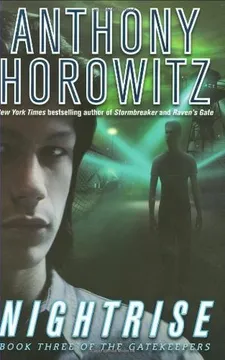
Nightshade, the 12th Alex Rider novel, continues the teenage spy's adventures with a new criminal organization. Readers praise the thrilling action, character development, and maturity of the series. Some note the familiar formula but appreciate the evolving storyline. The book is seen as a strong addition to the series, with many fans excited for future installments. Critics mention predictable elements and a desire for higher stakes, but overall, reviewers find it an engaging and fast-paced read that maintains the spirit of the Alex Rider series.
Characters
Alex Rider
Reluctant teenage spyAlex is a schoolboy with exceptional athletic skill, tactical intelligence, and an instinct for reading danger. MI6 repeatedly draws him into operations because his age lets him pass where adults would attract attention, but he wants school, friends, and a life he has chosen himself. He is not fearless so much as practiced at acting while afraid. His strongest quality is a refusal to treat other people as expendable, even when that choice makes a mission harder. That moral resistance distinguishes him from the trained killers around him, while his frustration with adults reflects a deeper need to reclaim control over his own future.
Freddy Gray
Conditioned young assassinFreddy is a skilled, guarded teenager whose early childhood was taken from him and replaced with Nightshade’s ideology. He is physically controlled and emotionally difficult to read, yet small responses to familiar objects reveal that the child he once was has not entirely vanished. Freddy’s prayers and obedience are sincere because the Teachers have shaped his entire understanding of family, morality, and authority. His bond with Alex develops through action before trust: he protects Alex when he could have remained indifferent. Freddy embodies the painful distinction between responsibility for an act and responsibility for the conditions that formed the person who committed it.
Mrs. Jones
MI6 chief and grieving motherMrs. Jones leads MI6 Special Operations with discipline, strategic patience, and a practiced command of her emotions. Her career has required her to weigh individual lives against national security, a calculation made more difficult by her history as a wife and mother. She knows the compromises of intelligence work from the inside and has learned to hide vulnerability behind procedure. Alex unsettles that distance because she sees both his usefulness and the cost of repeatedly placing him in danger. Her central drive is protection, but the story tests whether protecting a country and protecting a family can remain separate obligations.
Jack Starbright
Alex’s steadfast guardianJack is Alex’s closest adult ally and legal guardian, though she understands their relationship as a friendship built on mutual care rather than service. She is practical, outspoken, and unafraid to challenge MI6 when its plans put Alex at risk. Her own ambitions, including returning to legal study, matter to her, and she resists being reduced to the role of caretaker. Jack often sees the emotional cost of a mission before the professionals do. She supports Alex’s choices without pretending those choices are safe, making her a grounding presence in a world that repeatedly asks him to sacrifice ordinary life.
John Crawley
MI6 field coordinatorCrawley is Mrs. Jones’s deputy and a careful intelligence officer who manages agents, information, and operational risk. His unassuming appearance conceals field experience and a willingness to act decisively. Pablo’s death affects him personally because he recruited the agent and arranged their meeting. He trusts Alex’s abilities but understands that trusting a teenager with the mission is an ethical compromise, not a simple solution. Crawley’s loyalty to Special Operations is strong, yet he is not blind to its failures or the danger of leaks inside the institutions meant to protect its agents.
Dr. Rosemary Flint
Prison psychiatristDr. Flint is a psychiatrist who has worked with the prisoners at Gibraltar and understands that apparent silence can conceal a carefully constructed psychological defense. She worries that Alex’s impersonation of Julius will damage him, even as she helps him prepare. Her approach is grounded in curiosity and empathy rather than force. Benjamin the monkey reflects her belief that memory and emotional attachment may reach Freddy where interrogation cannot. She is willing to assist MI6, but she does not confuse institutional authority with moral certainty.
Tom Harris
Alex’s loyal school friendTom is Alex’s closest school friend and one of the few people who knows about his secret work. His home life is unsettled, and he dreams of leaving England to live with his brother in Italy. Tom can be impulsive and unreliable in ordinary matters, but when Alex asks for help he acts without demanding a full explanation. His friendship gives Alex a connection to adolescence that is not based on a mission or a chain of command. Tom’s courage is informal and improvised, which makes it a useful counterweight to the trained violence surrounding them.
Sofia Jones
Nightshade operativeKnown within Nightshade as Number Six, Sofia is a composed and capable teenage operative who can move through public settings without attracting attention. She is observant and socially adept, with a greater readiness than some of the other Numbers to question how a newcomer fits into their group. Her closeness to Freddy and her relationship with William shape the small world Nightshade has built around her. Like the other children at the camp, she has been taught to understand obedience as belonging, leaving her apparent confidence in tension with the life she has not been allowed to remember.
William Jones
Nightshade’s guarded Number SevenWilliam is a highly trained teenage member of Nightshade whose physical strength and suspicion make him quick to challenge outsiders. He is especially wary of Alex, whose questions unsettle the rules that hold the Numbers together. William’s hostility is not simply aggression; it reflects the danger of noticing inconsistencies in a worldview that permits no open doubt. His training gives him confidence in combat, but his life has been structured by other people’s decisions. He represents the gap between a child’s capacity and the adult systems that have claimed that capacity for their own ends.
Dominic Royce
Foreign Office powerbrokerRoyce is the permanent undersecretary for Foreign Affairs, a powerful civil servant who prizes control, secrecy, and institutional authority. He is cold in manner and accustomed to making decisions without public visibility. His objections to MI6’s use of Alex have a defensible ethical basis, but his certainty that he alone should direct the response reveals how easily concern for order can become a claim to unchecked power. Royce’s presence complicates the story’s distinction between responsible oversight and dangerous interference.
Owen Andrews
Royce’s ambitious aideAndrews is a young Foreign Office assistant who is eager to prove his value to Royce. He is observant, technically capable, and socially isolated, so professional approval becomes his main source of identity. Rather than building trust with MI6, he searches its systems for information to pass upward. His choices show how ambition can turn access into surveillance and obedience to a superior into personal advancement.
Brother Lamar
Nightshade’s chief TeacherLamar is the public-facing leader of Nightshade’s Teachers, a persuasive organizer who presents control as care and violence as a route to improvement. He is less interested in doctrine than in what doctrine can make children do. His language of family and purpose gives the Numbers a place to belong while concealing the transactional system beneath it. Lamar’s composure makes him dangerous: he can discuss children’s lives as operational resources without appearing to experience the contradiction.
Mr. Someone
Prisoner and hired assassinMr. Someone is a professional assassin held at Gibraltar, outwardly genial and conversational but physically formidable. He sees prison life as a strategic game and expects old agreements to survive even when circumstances change. His attention to Alex is both a threat and a test of how well the boy can sustain his disguise. He understands the inmates’ informal power better than the guards do.
Henry Mellish
Vengeful Russian spyMellish is a former Russian spy whose resentment of Julius Grief turns prison routine into an opportunity for revenge. He is physically unimposing, but his patience and willingness to exploit moments of darkness make him dangerous. His fixation on past humiliation shows how grievance can become a private permission to harm others.
Sir Christopher and Lady Gray
Parents awaiting answersSir Christopher Gray is a retired military officer, direct and controlled, while his wife, Susan, is more willing to trust the intuition that their missing son may still be alive. Their grief has lasted for years without a body or a satisfying explanation. Together they reveal the human cost of a disappearance that official records had closed as an accident. Their different ways of enduring uncertainty make them more than witnesses to Freddy’s case.
Pablo
Compromised MI6 agentPablo is a deep-cover operative whose changing identities have helped him survive across borders. He is skilled at staying invisible, but Nightshade’s reach has compromised his security before he can deliver what he knows. His loyalty to Crawley and his effort to warn MI6 initiate the investigation into London.
Plot Devices
Julius Grief’s identity
A borrowed faceAlex and Julius are near-perfect physical doubles because Julius was altered to resemble Alex. MI6 uses this likeness to send Alex into Gibraltar under Julius’s identity, where the other prisoners already know and fear Julius. The disguise forces Alex to reproduce not just a face but a history, manner, and reputation. It gives him access to Freddy, but it also makes every social mistake potentially fatal. Later, Nightshade turns the same identity into a public accusation, showing that a name and image can be used to control how strangers respond to someone.
Benjamin the monkey
A memory’s anchorDr. Flint gives Alex the old stuffed monkey that belonged to Freddy before his abduction. She hopes the object can connect Freddy to early memories Nightshade could not erase. Alex uses it carefully, presenting it as his own childhood possession rather than an interrogation tool. Freddy’s response is small but decisive: he begins to treat Alex as a possible friend and later intervenes when Alex is attacked. Benjamin makes memory tangible, allowing an emotional bond to form before Freddy can fully understand why it matters.
The Numbers’ voices
Control disguised as faithNightshade uses concealed communications technology to send voices to its child operatives, reinforcing the Teachers’ authority as if it came from a supernatural source. The children hear instructions and interpret them through a manufactured religious system. Their neck scars and the audio equipment in the Temple foreshadow the mechanism. Alex’s portable radio-frequency inhibitor blocks the signal at St Paul’s, briefly leaving Freddy without the guidance that has governed his decisions. The device explains both Nightshade’s reach and the fragility of its control.
Leap of Faith
Aerial nerve-agent attackNightshade’s plan combines the memorial service for Lord Clifford, a bus entry route, parachutes, and VX nerve agent. The Teachers train children to jump from the Shard to St Paul’s Ornamental Gallery, where a canister can be released over the congregation. A second parachutist provides backup, while a public search for Alex is intended to divert police attention. Every element receives an earlier clue through weather charts, cathedral photographs, parachute practice, chemical protection suits, and the Shard’s measured height.
The sugar fingerprint
A homemade access keyAlex coats a latex glove with sugar solution and presses it against Brother Mike’s hand during a staged fight. Once the coating dries, the glove holds an impression of the Teacher’s fingerprint, which Alex uses to fool the Temple’s scanner. The method echoes the handmade key he discovers inside Julius’s metal submarine: in both cases, Alex turns ordinary materials into access tools. The trick allows him to enter the operational center and find evidence of Nightshade’s London plan, but it does not solve the harder problem of getting that information out.
Alex Rider Series


About the Author
Other books by Anthony Horowitz





Download PDF
Download EPUB
.epub digital book format is ideal for reading ebooks on phones, tablets, and e-readers.








