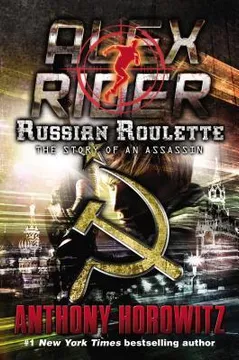


Plot Summary
Prologue
In a King’s Cross hotel, assassin Yassen Gregorovich receives an encrypted order to kill fourteen-year-old Alex Rider. The boy has wrecked Scorpia’s Stormbreaker operation, and Yassen accepts that the organization expects punishment.
But Alex is John Rider’s son, and John once mattered to Yassen. Before leaving to carry out the killing, Yassen opens a hidden memory stick and reads the diary he has kept since childhood. Its first pages return him to a Russian village that the authorities would later erase.
The frame sets up a conflict between professional obedience and private memory before the reader knows what binds Yassen to Alex. The hidden diary becomes more than an explanation of a killer’s past: it is the evidence of a self he has tried to suppress. The hotel’s meticulous security habits show how thoroughly he has become a predator, while the decision to read his own history suggests that some part of him is still searching for an alternative to the order he has accepted.
Estrov Burns
Fourteen-year-old Yasha Gregorovich lives with his parents in Estrov, a poor village where he dreams of becoming a helicopter pilot and spends his days with his fearless friend Leo. His father’s unease about new factory investors gains meaning when an explosion and gunfire send smoke above the hills.
His parents return in a bullet-riddled car. They reveal that the factory secretly produced biological weapons, that a fast-acting anthrax strain has escaped, and that officials will erase witnesses rather than admit the disaster.
Yasha’s mother injects him with the stolen antidote. His wounded father and infected mother send him toward Moscow with money, documents, and instructions to find their friend Misha Dementyev. Military helicopters then fire missiles into the village, destroying Yasha’s home and family.
The destruction begins as a political cover-up, but its force is intimate: a child’s ordinary world is erased because adults with power value secrecy over lives. Yasha’s parents are implicated in the weapon’s creation, yet they use their remaining freedom to save him. That contradiction gives his escape a burden of inheritance. He survives not because he understands the system, but because his parents act decisively before it can consume him.
Under the Forest
Yasha finds Leo while fleeing and persuades him to run as the helicopters approach. The boys escape into the forest, where Yasha spots an unfinished water pipe and leads Leo through it beneath soldiers searching for survivors. They emerge after hours of crawling, but Leo is already struggling to breathe.
Yasha breaks into a construction hut, lights a fire, and tries to feed and warm him. By morning, diamond-shaped sores cover Leo’s body. The antidote saved Yasha; his parents had no dose for his friend. Leo dies beside him. Yasha burns the hut with Leo’s body inside, hoping the fire will contain the infection, then continues alone toward Kirsk.
The pipe offers survival through an unplanned use of the same modernization that has failed Yasha’s village. But escape does not undo contamination or grief. Leo’s death makes Yasha’s immunity feel less like a gift than a dividing line between the saved and the abandoned. Burning the hut is a child’s attempt to impose order on catastrophe, an act of care carried out with no adult left to guide him.
A Ticket to Moscow
At Kirsk station, two policemen stop Yasha and suspect he is one of the boys who escaped Estrov. He realizes they fear infection more than they want to arrest him, so he smears crushed lingonberries around his mouth and pretends to cough blood. They retreat, leaving him free to avoid the watched ticket hall.
Yasha buys a porter’s jacket and cap, carries second-hand suitcases, and follows a well-dressed couple onto the Moscow train. In the capital, he meets a streetwise teenager named Dima, who offers directions to the university. Dima’s friends bump into Yasha on the Metro and steal nearly all his money. With his parents’ savings gone, Yasha still heads for Professor Dementyev, trusting the last promise his mother gave him.
Yasha’s first successful deceptions are improvised from fear and observation, not formal training. Clothes and imagined illness become tools because adults read appearances faster than they investigate them. Yet the city offers no uncomplicated refuge: Dima’s theft teaches Yasha that vulnerability attracts exploitation, while his decision to keep seeking Dementyev shows that grief has not yet displaced his need to trust someone.
The Professor’s Betrayal
Professor Dementyev recognizes Yasha and explains that his parents once researched anthrax at Moscow State University. After they accidentally created a more dangerous strain and refused military orders, the government imprisoned them, threatened their young son, and forced them to work at the Estrov factory.
Dementyev claims he will arrange help, but approaching police sirens expose his real choice: he has reported Yasha to the authorities. When Dementyev pins him down, Yasha uses his mother’s jewellery to distract the professor, tears an arm from a display skeleton, and clubs him until he can escape. He leaves the university with no money, no guardian, and no reason to believe anyone in Moscow will protect him.
Dementyev’s betrayal gives Yasha a second version of the same institutional crime: people who once knew his parents preserve themselves by handing a child back to the system that destroyed them. Yasha’s escape is resourceful, but the skeleton arm turns education into a weapon against its supposed protector. The episode sharpens his suspicion without making him wholly self-sufficient; he still needs a place to sleep and a person who might accept him.
Tverskaya’s Bargain
Back at Kazansky Station, Yasha finds Dima again and offers his mother’s jewellery as rent. Dima takes him to a derelict flat shared with Roman and Grigory, then helps pawn an earring while keeping most of the money. Yasha earns his keep begging and stealing groceries.
When a policeman catches Dima during a theft, Yasha hurls chilli powder into the officer’s face and helps his friend escape. Dima admits that he and the others stole Yasha’s money, but Yasha chooses to remain with him. As their group runs short of food, Roman proposes burglary. Dima takes the idea to Fagin, an information broker in their building, who supplies addresses and targets.
Yasha does not confuse kindness with innocence. Dima has robbed him, yet the risks they take for one another create a bond that the stolen money could not. Their friendship grows through shared danger rather than declarations. At the same time, survival keeps narrowing Yasha’s choices: begging becomes theft, and the next step is a burglary planned by an adult who profits from children’s desperation.
The Open Window
Fagin directs the boys toward a wealthy man’s apartment near Gorky Park. Yasha climbs the building and squeezes through a small open window, expecting the owner to be away. Instead, Vladimir Sharkovsky returns with a woman. Yasha’s attempt to threaten him with a bread knife ends with Sharkovsky beating him unconscious.
His bodyguards carry the boy to the oligarch’s guarded estate, where he is cleaned, dressed, and brought before his captor. Sharkovsky gives him a revolver with one bullet in six chambers and forces him to pull the trigger to prove obedience. The chamber is empty. Sharkovsky then reveals the dead food taster whose vacancy Yasha is to fill. Hearing his bruised name as Yassen, the boy lets the new name stand.
The break-in turns Yasha’s criminal apprenticeship into captivity. Sharkovsky’s game makes obedience physical: the boy must experience survival as something granted by another person, not secured by his own choices. The mistaken name also marks a quiet fracture with his former identity. Yassen is not yet an assassin, but the conditions that will shape him have already begun: coercion, danger, and the need to adapt without being seen.
Three Years Behind Walls
Yassen tries twice to escape Sharkovsky’s estate, first setting off an infrared alarm and then hiding in a delivery van. Each attempt earns a beating. He spends the next three years cleaning, carrying, and tasting food for the man who owns his labor. Sharkovsky’s son Ivan adds daily humiliations, while housekeeper Nina makes the servant’s life harder.
The English tutor Nigel Brown teaches Yassen languages and, over drinks, explains Sharkovsky’s rise through Russia’s post-Communist wealth. Helicopter pilot Arkady Zelin becomes a rare companion, though he keeps his private life guarded. Yassen watches the aircraft and holds onto his childhood ambition to fly, even as routine and fear begin to make the estate feel permanent.
The estate turns time into an instrument of control. Yassen is not merely confined; repeated work and humiliation train him to anticipate commands before they arrive. Brown’s lessons preserve an inner capacity to imagine other worlds, while the helicopter sustains an older desire that predates violence. The coexistence of these small hopes with near-total subjection explains why Yassen can endure captivity without fully accepting that it is all he is.
The Investor’s Name
While delivering tea to Sharkovsky’s study, Yassen overhears the oligarch and business associate Mikhail Brodsky discuss journalists investigating the Estrov disaster. Brodsky says that Sharkovsky pushed the factory to raise production and weaken safety measures; Sharkovsky dismisses the deaths as a problem already covered up.
The conversation connects the man who has enslaved Yassen to the destruction of his family and village. That night, while serving dinner, Yassen watches Sharkovsky eat and decides he will kill him. He considers weapons scattered throughout the estate, but the bodyguards make a direct attack almost certainly fatal. Instead, he returns to the possibility he had once rejected: escape.
The revelation collapses the distance between Yassen’s private suffering and the catastrophe that began it. Sharkovsky is not simply a cruel employer but a beneficiary of the machinery that erased Estrov. This knowledge gives Yassen a motive stronger than survival, yet his first response is not a reckless attack. He understands that revenge without a way out would merely repeat the estate’s logic by turning his life into another disposable cost.
The Helicopter Escape
Yassen studies Zelin’s sudden expensive watch and the arrival of Rykov, a supposed mechanic who cannot explain basic helicopter controls. He discovers Nina dead and realizes Rykov has entered the estate to kill Sharkovsky, with Zelin arranging the getaway. When Rykov shoots Sharkovsky and bodyguard Josef, Karl confronts him.
Yassen knocks Karl unconscious with an axe, takes his gun, and forces Rykov to take him along. They reach the helicopter as guards begin firing. Zelin lifts off under gunfire and flies them to Boltino, where Rykov reveals a waiting seaplane. Yassen gives him the gun and argues that he saved Rykov from Karl. Zelin supports taking the boy, and the three leave Russia for Venice.
Yassen’s escape depends on reading behavior rather than overpowering the adults around him. He recognizes Zelin’s lie, then uses the assassin’s own urgent need to flee as leverage. His choice to save Rykov is not moral approval; it is a calculated opening that also reveals Yassen’s capacity to act under pressure. For the first time since Estrov, he chooses a route instead of merely following one imposed on him.
The Widow’s Offer
In Venice, Rykov takes Yassen to Julia Rothman, a young member of Scorpia’s executive board. She reveals that Rykov failed: Sharkovsky survived the shooting and is in hospital. Then she shoots Rykov for that failure. Yassen explains his journey from Estrov to the dacha, and Julia sees an opportunity in the fact that official records of his village and family have been destroyed.
She offers to train him as a contract killer, promising money and a new professional life while warning that he can instead leave with nothing. Yassen accepts. On Malagosto, Scorpia’s isolated training centre, headmaster Sefton Nye welcomes him and orders him to bury Rykov in the old plague cemetery.
Julia converts Yassen’s erasure from a state crime into a marketable asset. The offer sounds like freedom because it replaces forced labor with skill, travel, and pay, but its terms lead toward a new form of ownership. Rykov’s execution demonstrates Scorpia’s governing principle before Yassen has time to mistake the organization for a refuge: usefulness earns a place, and failure removes it.
Malagosto’s First Test
On Malagosto, Yassen studies weapons, martial arts, languages, disguise, and the polished manners needed to approach wealthy targets. He grows close to fellow student Colette, who is preparing for her first assignment, but she leaves before him. After five months, Julia sends Yassen to New York to kill lawyer Kathryn Davis, who is bringing a case against a mining company.
He studies Davis’s movements and prepares a staged mugging in Central Park. When Davis turns and confronts him, Yassen cannot draw his gun. He lets her walk away. Scorpia’s agent Marcus then shoots her himself. Back on the island, Nye grants Yassen another chance and assigns John Rider, code-named Hunter, to train him in the field.
Yassen’s refusal is not a failure of preparation but a collision between technique and moral recognition. Davis’s presence as a person interrupts the abstraction Scorpia has tried to build around targets. Marcus’s killing makes the result brutally clear: hesitation does not save the victim when an organization has already decided on death. Still, Yassen’s resistance survives the test, and Scorpia responds by treating conscience as a flaw to be corrected.
Hunter’s Hard Lessons
Hunter introduces himself as John Rider and gives Yassen the code name Cossack. Over dinner, he probes the boy’s attachments and warns that familiar tastes, gestures, and keepsakes can make an assassin identifiable. Yassen resists the lesson, but he follows Hunter into the Amazon to target drug lord Gabriel Sweetman. As they wait for Sweetman, a black widow crawls onto Yassen.
Hunter fires one shot that kills the target and removes the spider, leaving a wound across Yassen’s neck. Six of Sweetman’s men pursue them through the jungle; the two escape after returning fire. Hunter distinguishes killing in self-defense from an execution for hire and urges Yassen to reconsider Scorpia before his first deliberate murder.
Hunter teaches by combining practical discipline with an unsettling alternative: he can kill efficiently and still question what killing makes of him. His single shot saves Yassen while completing the assignment, binding the two men through both violence and care. The visible scar becomes a counterweight to Scorpia’s demand for invisibility. Yassen has learned that skill can serve survival, but he has not yet decided whether it must serve murder.
The Knife in Paris
In Paris, Hunter and Yassen wait for corrupt police officer Christophe Vosque to return from a training course. During the delay, Yassen sees Hunter reunite with a pregnant woman, but Hunter keeps the meeting private. Once Vosque is home, the two infiltrate his building disguised as religious visitors, incapacitate the guard, and bind the officer in his apartment.
Hunter gives Yassen a tiny knife and orders him to carry out the organization’s punishment killing. Yassen cannot bring himself to cut Vosque. Hunter shoots the officer instead and lets Yassen leave with him. Yassen decides to abandon Scorpia and build an ordinary life, while Hunter directs him toward Berlin as a safer place to disappear.
The Paris test strips away the easy moral distance of a sniper’s shot. Yassen must confront a helpless, breathing person at arm’s length, and his refusal confirms that New York was not a single lapse. Hunter’s own choices remain ambiguous: he both enforces Scorpia’s order and helps Yassen escape its reach. Their friendship is real, but the organization has made trust inseparable from danger.
The Battery Betrayal
At Charles de Gaulle Airport, Yassen notices a Power Plus battery in Hunter’s bag, a device he recognizes from Scorpia’s lessons as a British intelligence transmitter. Hunter has also left his wallet behind while claiming to fetch coffee, then appears making a secret phone call. Yassen concludes that Hunter is an MI6 double agent who has been undermining Scorpia and steering him away from becoming a killer.
Rather than board the flight to Berlin, Yassen takes a bus and train route back to Moscow. He keeps Hunter’s secret, partly because Hunter saved his life, but no longer trusts his advice. The betrayal redirects him toward the man whose power first set his life on its violent course.
The discovery recasts Hunter’s mentorship without making its emotional value disappear. Yassen believes that even their most intimate moments were shaped by a hidden mission, so he responds by protecting himself rather than asking for confirmation. His decision to spare Hunter’s secret is a rare act of loyalty chosen freely. Yet he cannot accept the escape Hunter offered, because returning to Sharkovsky has become the only way to confront the origin of his identity.
The Final Roulette
Yassen returns to the Silver Forest estate by hiding in its regular laundry delivery, then slips inside using his detailed knowledge of the guards’ routines. He enters Sharkovsky’s study and finds the oligarch alive but confined to a wheelchair after Rykov’s attack. Yassen disables the alarm and places a revolver on the desk with five bullets in its six chambers, reversing the odds Sharkovsky once imposed on him.
He pulls the trigger against his own head and survives. Then he shoots Sharkovsky. Ivan arrives and recognizes him, so Yassen kills him too. The boy who once escaped the estate as a helpless servant leaves having taken revenge, but also having become the killer he once hoped not to be.
The reversed game gives Yassen a moment of apparent control, but its structure remains Sharkovsky’s: survival is still measured by a weapon and a chance outcome. Yassen’s final shot is both revenge and an admission that escape did not return him to the boy he was. Killing Ivan extends the violence beyond the original architect of Estrov’s destruction, showing how retaliation can reproduce the very disposability it seeks to punish.
Epilogue
Back in London, Yassen receives the order to kill Alex Rider and scouts the boy’s home, but a new message sends him to the Thames. Herod Sayle, hiding from the police after the Stormbreaker plot, has trapped Alex on a rooftop and aims a gun at him.
Yassen fires from his helicopter and kills Sayle. He tells Alex that he has no instruction concerning him, though he knows that is untrue. Because Alex is John Rider’s son, Yassen lets him live and urges him to return to childhood. Then he flies away, leaving Alex alone beside Sayle’s body.
The epilogue answers the prologue’s order while showing that Yassen’s history has not made him entirely predictable. He kills Sayle for a reason of his own, then withholds the violence Scorpia expects him to inflict on Alex. His restraint is not redemption: he remains an assassin and continues to serve the organization. But the choice marks a limit he draws himself, shaped by the memory of John Rider and by recognition of a boy standing at the same dangerous threshold he once crossed.
Analysis
Russian Roulette traces how a child can be shaped by violent institutions without making his eventual choices inevitable. Yassen’s path begins with an authoritarian cover-up, continues through street poverty and oligarchic captivity, and ends inside a criminal organization that calls coercion opportunity. Each system offers survival on terms that demand a piece of his identity. The village is erased; the estate renames him; Scorpia turns his adaptations into professional qualifications.
The book’s repeated tests of identity are concrete. Yassen learns to pass as a porter, a student, a worker, and eventually an assassin. He also learns the costs of being legible: Hunter warns that habits and attachments can expose him, while the Pobeda watch binds him to a family and history he is expected to abandon. His eventual act of throwing the watch away signals an effort to sever that history, but the diary itself proves the severance incomplete.
The novel resists a simple account of moral corruption. Yassen’s refusal to kill Kathryn Davis and his failure to butcher Vosque show that training does not erase conscience. Hunter recognizes this, though his own mentorship is compromised by secrecy and conflicting loyalties. Yassen’s final revenge against Sharkovsky is therefore not a triumphant return to innocence. He rejects the role of servant, but uses the same machinery of lethal force that defined his captivity.
The frame with Alex Rider leaves that contradiction open. Yassen has become a professional killer, yet he chooses not to kill a boy whose circumstances echo his own. The choice cannot undo his past or make him harmless. It does, however, preserve a narrow space for agency: even after institutions have trained him to obey, Yassen can still decide that one order will not be carried out.
Review Summary
Russian Roulette is a prequel in the Alex Rider series, focusing on assassin Yassen Gregorovich's backstory. Readers highly praise Horowitz's skillful character development, making Yassen sympathetic despite his profession. The book explores themes of survival, moral choices, and the path to becoming a killer. Many fans consider it one of the best in the series, appreciating the emotional depth and connections to the main storyline. Some criticize inconsistencies with previous books, but overall, it's widely regarded as a compelling and tragic origin story.
People Also Read


Characters
Yassen Gregorovich
The erased village boyBorn Yasha in the isolated Russian village of Estrov, Yassen begins as a clever, physically slight teenager who loves mathematics, helicopters, and his friendship with Leo. His parents’ work and the state’s cover-up force him into flight before he understands the adult world. He is observant and adaptable, but his survival depends on a stubborn capacity for attachment: to Leo, to Dima, and later to Hunter. The story follows his struggle to distinguish the skills that keep him alive from the identity Scorpia wants to impose on him.
Alex Rider
The boy assassin’s targetAlex is a fourteen-year-old British boy drawn into intelligence work after the death of his uncle. His connection to John Rider makes him more than a name in Yassen’s assignment: he represents another child being pulled into an adult conflict. In the brief encounter that closes the story, Alex faces danger with composure and refuses to be reduced to a passive victim.
Anton Gregorovich
The silenced scientistYassen’s father is a gifted scientist who once worked in Moscow and later becomes a research chemist at the isolated Estrov factory. Thoughtful and dissatisfied with the secrecy around his work, he carries the knowledge of choices made under political coercion. His love for Yassen appears in his urgent efforts to give his son a chance to survive.
Eva Gregorovich
The protective motherYassen’s mother works in the factory office and shares the burden of secrets that shape the family’s life. Warm and fiercely practical, she turns rapidly from comfort to action when danger reaches their home. Her determination to protect her son gives him the information, antidote, money, and direction he needs to begin alone.
Leo Tretyakov
Yasha’s fearless friendLeo is Yasha’s closest companion in Estrov: funny, loyal, and far less interested in school than in military games and adventure. His fearlessness makes him an energetic presence in Yasha’s childhood, while his attachment to his family grounds him in the village they both know. Their friendship is built from shared mischief and a deep familiarity with one another.
Dima
The streetwise survivorDima is a teenage street child who has learned to read strangers and exploit opportunities before they exploit him. His broken nose and swagger conceal the damage of an abusive childhood and a brutal orphanage. He is capable of theft, affection, and gratitude, often in the same relationship. To Yasha, Dima offers a rough kind of belonging in a city where kindness is rarely free.
Misha Dementyev
The compromised professorDementyev is a biology professor who worked with Anton Gregorovich on anthrax research. He understands both the scientific history behind the weapon and the government pressure that shaped Yassen’s childhood. His anxious manner reflects a man who has learned to survive by accommodating power, a survival strategy that makes him unreliable precisely when Yassen needs protection.
Vladimir Sharkovsky
The guarded oligarchSharkovsky is a wealthy Russian businessman whose paranoia is matched by extensive security and a willingness to use people as instruments. He treats trust as a weakness and obedience as proof of ownership. His control of Yassen rests not only on guards and walls but on the boy’s need to remain alive. Sharkovsky’s polished wealth masks the violence behind his power.
Ivan Sharkovsky
The privileged tormentorIvan is Vladimir’s son, educated abroad and accustomed to having servants obey him. He uses Yassen’s low status as permission for casual cruelty, turning small tasks into opportunities to humiliate him. His behavior reflects a household where power is modeled as the right to injure someone weaker without consequence.
Julia Rothman
Scorpia’s calculating recruiterA senior figure in Scorpia, Julia is poised, perceptive, and unsentimental about the organization’s work. She recognizes that Yassen’s erased identity makes him valuable and frames recruitment as a choice between a dangerous career and a life with few resources. Her charm does not soften her authority; she treats people as assets and expects them to understand the price of failure.
John Rider
The soldier called HunterJohn Rider is an experienced British operative who becomes Yassen’s field partner and mentor. He is physically capable, watchful, and skilled at turning practical details into lessons about survival. Beneath his discipline is a private life he keeps separate from his work. His relationship with Yassen combines instruction, challenge, and an unusual concern for the younger man’s future.
Colette
The guarded traineeColette is a French recruit at Malagosto, serious and self-contained. She shares time in Venice with Yassen and pushes back when he treats her as someone whose path into Scorpia needs explaining. Her guardedness is both personal boundary and survival skill in a school where intimacy can become a liability.
Sefton Nye
Malagosto’s severe headmasterNye runs Scorpia’s training centre with theatrical confidence and a clear sense of the danger his students are being prepared to embody. He oversees their discipline and evaluates their usefulness to the organization. His manner makes the school’s promise of transformation inseparable from a warning about the lonely life waiting beyond it.
Nigel Brown
The language tutorBrown is an English former headmaster hired to tutor Sharkovsky’s children. His drinking and reflective manner make him an imperfect guide, but he takes Yassen seriously enough to teach him English, French, and German. He also gives the boy a clearer account of Sharkovsky’s business and the political world surrounding the estate.
Arkady Zelin
The solitary helicopter pilotZelin is a former Soviet Air Force pilot employed by Sharkovsky. Quiet and self-contained, he shares Yassen’s interest in helicopters and sometimes plays cards with him. He keeps his family life and financial troubles private, making him difficult for Yassen to read even after years of close confinement.
Mr Grant
Scorpia’s field assassinGrant is a professional assassin who enters Sharkovsky’s estate under a false identity. He is controlled and capable, but his judgment is not infallible. His brief connection with Yassen exposes the ruthless standards Scorpia applies to its own agents.
Plot Devices
Yassen’s hidden diary
Reveals the erased pastThe diary frames the narrative as a record Yassen reads while preparing for an assignment in London. It carries the story from the trained assassin of the prologue back to the boy who fled Estrov, allowing his adult habits to be measured against the experiences that formed them. The diary also makes memory an active choice: Yassen has tried to live without his past, yet he preserves it and returns to it when an order touches the Rider family.
The anthrax antidote
Separates survival from lossYassen’s parents steal and use a small amount of antidote after the factory releases a lethal anthrax strain. It allows Yassen to survive exposure, while Leo, who receives no injection, becomes ill and dies. The antidote gives the flight from Estrov a concrete reason Yassen can continue, but it also leaves him carrying survival that his closest friend was denied. Later, Yassen wonders whether the injection has protected him from other illnesses as well.
Russian roulette
Makes obedience measurableSharkovsky uses a revolver with one bullet in six chambers to force Yassen to demonstrate obedience under the threat of death. Years later, Yassen returns to the same weapon and reverses the odds by loading five bullets. The repeated game links captivity to revenge, but it does not create a clean escape from violence: Yassen survives both tests and still ends by killing Sharkovsky.
The Power Plus battery
Unmasks Hunter’s missionA battery from Scorpia’s training sessions conceals a British intelligence transmitter activated by a hidden mechanism. At the Paris airport, Yassen recognizes it in Hunter’s bag and connects it to Hunter’s secret phone call and evasive behavior. The device triggers Yassen’s belief that his mentor is an MI6 double agent. It transforms their relationship from trust into suspicion, even as Yassen chooses not to expose him.
Alex Rider Series

About the Author
Other books by Anthony Horowitz





Download PDF
Download EPUB
.epub digital book format is ideal for reading ebooks on phones, tablets, and e-readers.








