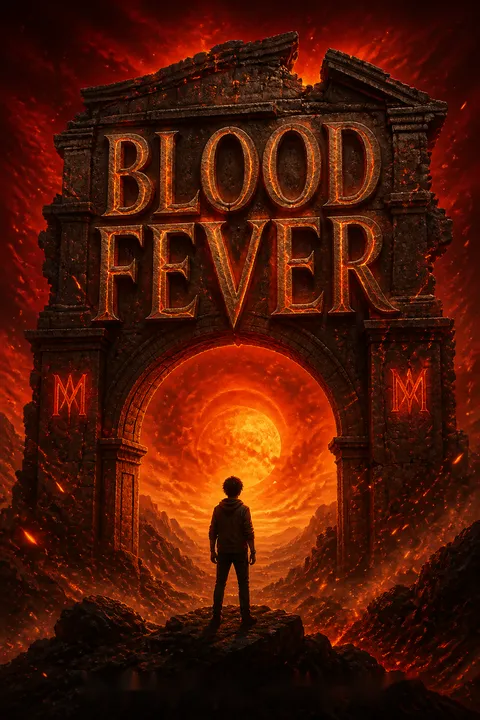


Plot Summary
Prologue
Amy Goodenough, a fourteen-year-old sailor on her father’s yacht, watches the tramp steamer Charon enter their quiet harbour. Its captain, Zoltan the Magyar, boards with armed men, steals a treasured bronze siren, and kills Amy’s father and first mate when they resist.
Amy dives back to the ship and drives a knife into Zoltan’s shoulder, but his crew captures her. As the Charon sails away, Zoltan orders the yacht sunk and its men killed. Amy has struck him, but she is now trapped aboard the ship that took her family from her.
Amy’s attack gives the story an early image of resistance that is brave without being powerful enough to secure freedom. Zoltan’s response establishes the book’s central moral complication: he is a violent predator, yet he recognizes courage and later becomes fascinated by the girl who wounded him. The stolen statuette is not merely loot. It connects Amy’s family to the larger conspiracy and gives the violence a material object around which competing appetites gather. The prologue also establishes the sea as both Amy’s element and Zoltan’s private terror, a contrast that will shape their relationship.
Bond Beneath Eton
At Eton, James Bond finds the rules of school easier to endure when he can slip beyond them. He builds a hidden route through the washroom floor and rooftops to attend the Danger Society, a club whose members seek risk for its own sake. When a search party scatters the boys, James loses his familiar route and drops into an ivy-covered courtyard.
There he hears two men speaking Latin, then discovers a cellar holding crates marked with double M symbols, Roman books, and a shrine stained with blood. A portrait bears the initials UCMM. James escapes back to his room just before his housemaster searches it, carrying questions he cannot yet connect.
James’s ingenuity is both a talent and a defense. His escape route gives him control in an institution that treats obedience as virtue, but the detour into the courtyard shows how curiosity can turn private rebellion into exposure to genuine danger. The secret room also makes Eton’s classical authority suspect: Latin is not simply a school subject here, but a living code used by adults with concealed purposes. The clues remain fragmentary, preserving James’s limited perspective. He has enough knowledge to recognize that something is wrong, but not enough to know whether his discovery is an isolated eccentricity or the edge of a larger threat.
Mark Takes the Roadster
On Eton’s Fourth of June, Mark Goodenough, a fellow member of the Danger Society, demands James’s car keys. News has reached him that wreckage and bodies from his father’s yacht have been found, while his sister Amy remains missing. Mark breaks into the garage and drives away, overwhelmed by the thought of seeing other boys celebrate with their families.
James and Perry Mandeville catch up with him on the road. James climbs into the passenger seat and keeps talking as Mark drives recklessly, eventually swerving around a bus and spinning into a field. James tells him about losing his own parents; Mark’s fury gives way to grief. Their teacher, Mr Haight, takes Mark into care and lets James off for the stolen drive.
The roadster episode turns James’s appetite for danger into an encounter with another boy’s despair. He does not rescue Mark through superior force or clever planning, but by recognizing the emotional logic of his recklessness and disclosing a loss of his own. The accident brings their cars to a halt and their isolation with it. Mark’s grief becomes legible rather than merely disruptive, while James learns that his experience can be useful when offered without performance. Haight’s compassionate response further complicates the school’s authority: a master can be a source of safety, not only surveillance.
The Double M Returns
After James defends his friend Pritpal Nandra from a mob and identifies the abandoned courtyard again, he spots John Cooper-ffrench, Eton’s Latin master, nearby. A scarred man with an M tattooed on each hand appears at the same building. James later learns from his aunt, Charmian, that double M can signify two thousand and that the scars mark a criminal punished for informing.
At an archaeological lecture, Peter Haight mentions a string of art thefts and finds a silver bracelet bearing the same symbol. James’s tutor, Merriot, explains that the Millenaria was a secret society devoted to reviving Roman power. Haight invites James on a Sardinian school trip, where the clues may finally converge.
The clues become more dangerous as they acquire context. A mark that first looked like a private initial is linked to criminal punishment, then to a political society with an imperial fantasy. James’s defense of Pritpal matters alongside the investigation: he is willing to challenge inherited status when it licenses cruelty, a principle that will later distinguish him from those who invoke Rome to justify domination. The invitation to Sardinia promises explanation, but also places James inside the very world he is trying to understand. His curiosity is no longer safely retrospective; it is becoming a choice about where to go and whom to trust.
The Tower Nearly Takes Him
In Sardinia, James joins Haight’s archaeological party at the ancient Nuraghe of Sant’ Antine. Cooper-ffrench arrives as the second supervising master, and James’s unease about him deepens. After drinking bitter water Haight offers from his ever-present bag, James becomes dizzy inside the tower, sees Cooper-ffrench below, and pitches toward the edge.
Haight catches him before he falls. Once recovered, James learns that Cooper-ffrench joined the trip late and concludes that staying near him is intolerable. He arranges to leave the school party early and travel to his cousin Victor Delacroix’s villa in the north. His decision removes him from the group, but carries him closer to the people and objects behind the Eton clues.
The near-fall is a physical crisis whose cause remains uncertain to James, so suspicion accumulates before proof. His body registers a threat that his reasoning cannot yet name, and his decision to leave is partly an attempt to recover agency after an experience of helplessness. Haight’s rescue appears to confirm his benevolence, while Cooper-ffrench’s presence becomes an easy target for suspicion. This asymmetry is important: the scene trains both James and the reader to mistake proximity for guilt. The Sardinian tower, built from ancient stones whose purpose is uncertain, mirrors the investigation itself, a structure assembled from fragments that can support more than one interpretation.
The Octopus Villa
James reaches La Casa Polipo, an eccentric villa shaped like an octopus and filled with surrealist paintings, where Victor lives with artist Salvatore Poliponi and the guarded young Sardinian Mauro.
Poliponi’s eerie number reading unsettles James, while Victor’s warmth gives him the rest and freedom he wanted. Victor shows him a Roman statue of Mithras, a god associated with secret rites, then warns him against discussing the Millenaria. Soon Count Ugo Carnifex arrives by seaplane with his sister Jana.
Ugo’s white clothing, silver tooth, armed guards, and fixation on cleanliness make him both theatrical and threatening. He invites Victor’s household to a carnival at his mountain palazzo, and James recognizes Ugo from the portrait in the Eton cellar.
The villa offers a counterworld to Eton: its rooms bend around the landscape, its art welcomes irrationality, and Victor values pleasure over status. Yet the retreat is not outside history. The Mithras statue links its garden to the cultic imagery James found at school, while Ugo’s arrival turns the art collection into a point of contact with power. His polished persona depends on control of surfaces, from his immaculate clothes to his monumental buildings. Poliponi’s surrealism and Ugo’s staged grandeur both distort reality, but in different ways: one exposes absurdity, while the other uses spectacle to make domination look like destiny.
Amy Behind the Iron Bar
While James settles at the villa, Amy and her tutor, Grace Wainwright, are moved from a guarded hotel toward Ugo’s mountain compound with Zoltan’s stolen art. Amy throws a drunken Sardinian, Salvatore, from their truck when he threatens Grace; Zoltan beats him and enforces his authority over the convoy.
At the mine, Ugo takes Amy for himself and frees Grace, only to shoot her as she leaves. His guards lock Amy in a high room with an iron bar across its window. Kitchen worker Stefano secretly brings her food and chocolate, but cannot risk helping her escape. Ugo tells Amy he wants an aristocratic wife. Alone and believing rescue impossible, Amy cuts off her growing hair with a hidden knife.
Amy’s captivity shows how the language of possession can disguise itself as protection, romance, or civil order. Zoltan treats her as his prize, while Ugo recasts that possession as a future marriage and demands that she conform to his image of cleanliness and femininity. Amy resists both men through concrete acts: she protects Grace, refuses Ugo’s gifts, and alters the appearance he is trying to dictate. Yet the killing of Grace reveals the limits of defiance under absolute power. Cutting her hair is not a successful escape, but a reclaiming of bodily choice when every other decision has been taken from her.
Mauro Chooses James
At the beach, James tries to impress Mauro and Luigi with a dangerous dive from the rocks. He lands safely, then steps on a sea urchin; Mauro carefully removes the spines and treats the wound, replacing suspicion with practical care. That evening, armed bandits break into Casa Polipo and steal Victor’s paintings and sculptures.
James and Mauro fight back, but Mauro is clubbed and James knocked unconscious. They find Isabella bound but alive, while Horst has fled. With the villa stripped bare, James and Mauro drive through the night toward Ugo’s carnival to warn Victor. Mauro tells James about his impoverished mountain home and the family he supports. Their friendship grows out of shared danger, not easy conversation.
Mauro and James become allies through reciprocal vulnerability. James’s reckless dive is an attempt to force acceptance, but the resulting injury makes him dependent on the boy he has misjudged. Mauro’s treatment of the urchin wound is an ethic of competence: he helps without asking James to earn care through status or language. The robbery then tests that trust under violence. Their overnight drive transforms Mauro from a hostile household presence into a person with a history, obligations, and a home beyond Victor’s villa. The theft also binds the personal plot to the conspiracy, showing that art is being moved through the same network that endangers Amy.
Fitzpaine Enters the Ring
At the crowded carnival in Sant’ Ugo, James reunites with Perry and the Eton boys. Perry recognizes a painting of Saint Boniface as one stolen from his family, confirming that the robbery at Victor’s villa belongs to a wider series. Ugo turns the gathering into a public contest and chooses James to box Tony Fitzpaine, the aristocratic bully James once shoved into the Thames.
Ugo secretly weights Fitzpaine’s gloves. James absorbs the heavier blows, waits for his opponent to tire, and knocks him down. Fitzpaine accepts the defeat and apologizes, while Ugo’s sister Jana gives James a silver ring. The victory briefly settles their school feud, but James sees how Ugo uses ceremony to conceal cheating.
The boxing match makes the carnival’s political logic visible in miniature. Ugo controls the spectacle, chooses its participants, and secretly alters the terms, expecting the audience to mistake outcome for merit. James wins by adapting rather than matching brute force, an important contrast with Ugo’s belief that power means arranging an unbeatable contest. Fitzpaine’s apology gives the fight a human consequence beyond victory: rivalry can change when humiliation gives way to mutual recognition. But Ugo’s rigging prevents the scene from becoming a simple triumph. Public honor is shown as something manipulable, and the silver ring that follows will matter because appearances at this carnival cannot be trusted.
The Temple of Criminals
James follows the scarred criminal Smiler up the funicular and hides above a temple where Ugo gathers international gang leaders. Ugo calls the gathering the Millenaria, proposes a shared criminal empire, and explains that war between nations would let his network profit from chaos. He demands that the men drink bull’s blood beneath a statue of Mithras.
James also sees the statue stolen from Victor’s garden, confirming the connection between the cult and the art thefts. On his way out, he is nearly caught, but Stefano hides him and leads him to Amy’s barred window. James learns who she is and promises to return. Before he can free her, guards find him and drive him into the palazzo maze.
James’s investigation crosses from clues into political comprehension. The Millenaria is not simply an antiquarian cult: its Roman imagery gives criminal ambition a grand narrative, while its leaders plan to turn existing national hatreds into a market for violence. The ritual of bull’s blood makes that abstraction bodily, asking men to perform unity through a symbol of sacrifice. Stefano’s rescue offers a countermodel of solidarity, based not on coercion or shared profit but on personal risk. James’s promise to Amy creates a new obligation that is more immediate than exposing the conspiracy. He now has a person to save, not merely a mystery to solve.
Haight’s Bracelet
Peter Haight finds James inside the palazzo and offers to guide him out. A glimpse of the silver bracelet on Haight’s wrist makes the earlier clue fall into place: the bracelet had belonged to him, not Cooper-ffrench. Haight leads James to Ugo, who destroys Poliponi’s portrait of James and orders him imprisoned.
Meanwhile, Cooper-ffrench reaches the dam believing Haight has warned him of danger. Haight pretends to share his concern, then pushes him over the parapet and throws his brandy flask after him. Ugo’s men later tell James that Cooper-ffrench died in an accident. James understands that the teacher who once seemed protective has been arranging the danger around him.
The bracelet reverses the moral map without changing the evidence. James did not lack clues; he misassigned them because Haight’s kindness made him seem safer than Cooper-ffrench. The betrayal exposes trust as a judgment formed from behavior, not a reliable certificate of character. Haight’s access to James’s school life allowed him to convert familiarity into surveillance, while the art expedition supplied cover for criminal logistics. Cooper-ffrench’s death makes the reversal irreversible: suspicion has not merely identified the wrong man, it has left the true conspirator free to act. James’s developing discernment now depends on testing benevolence against consequences.
Mosquitoes as Executioners
Ugo has James tied in a mosquito-infested marsh and waits for the bites to weaken him. Haight visits in protective netting and admits that he joined Ugo for money and power, using his position at Eton to learn about wealthy families and their art collections. He also confirms that he drugged James at Sant’ Antine to make his fall look accidental.
James refuses to betray the person who helped him. During the night, Mauro’s sister Vendetta cuts James free after killing the guard, then guides him through the dark toward mountain shepherds. Feverish and covered in bites, James collapses; the men carry him to a hidden Nuraghic cave, where Vendetta treats him with herbs and paste.
The mosquito trap is an unusually intimate form of torture: James is immobilized while tiny, ordinary creatures do the work, making his body feel both exposed and irrelevant. Haight’s confession reveals that his betrayal was ideological as well as financial. He resented Eton’s privileged boys, then chose to imitate the ruthlessness he associated with Roman power rather than challenge the hierarchy that angered him. James’s refusal to name Stefano protects another person at the cost of his own safety. Vendetta’s rescue interrupts the trap through local knowledge and care, replacing Ugo’s staged empire with a community whose healing practices are imperfect but responsive.
The Cave Fights Back
In the cave, Stefano explains that Vendetta is Mauro’s sister and that the surrounding shepherds have reason to hate Ugo, who exploited their labor and killed Mauro. Vendetta nurses James through two days of sickness while the villagers prepare for a fight. Ugo’s soldiers attack the cave with guns and a Thompson sub-machine gun.
The villagers resist, but their leader Calogero is killed and several others fall. Vendetta nearly charges the machine gunner; James pulls her behind cover. Zoltan’s crew arrives, Tree-Trunk kills Smiler with a harpoon, and the surviving attackers surrender. Zoltan admits Ugo will never pay him and asks James to help find Amy. James refuses to hand her over and plans to reach her alone.
The cave turns the island’s marginalized people into political agents rather than picturesque background. They have been used as labor, dismissed as backward, and now organize around shared grievance and kinship. Their resistance exacts a brutal cost, especially in Calogero’s death, so the victory cannot be mistaken for liberation without loss. Zoltan’s intervention is useful but morally unstable: he is fighting Ugo because he has been cheated, not because he has renounced his own violence. James refuses to let Amy become the prize in another contest between men. His plan is an attempt to protect her agency, even as it risks repeating his own impulsive habit of acting alone.
Amy Breaks Through
With Vendetta guiding him, James reaches the aqueduct at night and swims through its canal wearing Victor’s goggles, snorkel, and fins. He climbs into the palazzo and reaches Amy’s cell, then breaks through the floor with a pickaxe as Zoltan’s attack begins at dawn. James and Amy escape through the panicked compound, dodge Jana, and reach the piazza.
From a funicular car they climb toward the dam, then cut its cable to prevent pursuit. James realizes Zoltan intends to blast the unstable rock ledge Victor warned about. They find him above the lake with Tree-Trunk and try to stop him, but Zoltan detonates the charge. The ledge collapses, a wave destroys the dam and palazzo, and Ugo’s empire is swept away.
This climax joins James’s practical resourcefulness to the story’s larger argument about power and its physical limits. The aqueduct, built to display Ugo’s grandeur, becomes the route by which a captive can escape; the dam, another monument to control, is undone by the unstable geology beneath it. James saves Amy through preparation and timing, yet he cannot control the scale of Zoltan’s revenge. The flood destroys the criminal theater along with its inhabitants and possessions, but it is not a clean moral victory: innocent people are endangered, and destruction answers domination with more destruction. The scene makes consequence larger than intention.
The Mask Comes Off
After escaping the flooded mountain on horseback, James and Amy are pursued across the open plain by a rider wearing the carnival’s blank female mask. Tree-Trunk charges with his harpoon but is killed when the rider strikes him with a sword. Zoltan, despite his failing health, takes up the harpoon and meets the attacker head-on.
The rider is Haight, who has survived the destruction and is trying to kill the children. Zoltan impales him, but the broken sword lodges in Zoltan’s chest. Haight dies; Zoltan is left gravely wounded. The mask’s carnival pageantry has become a final disguise for the teacher who built his career on appearing trustworthy.
The masked pursuit strips away the last separation between public performance and private violence. The same figure who entertained the carnival crowd now uses its ceremonial costume to hunt children, making the festival’s spectacle inseparable from the conspiracy’s brutality. Zoltan’s decision to confront Haight is protective, but it does not erase his history; the act is meaningful precisely because it costs him and does not purchase absolution. The duel also completes James’s relationship with Haight through action rather than another explanation. The teacher’s mask can hide his face, but not the consequences of the choices that brought him here.
A Pirate Leaves the Sea
James and Amy take the badly wounded Zoltan down from the mountain and find an old fishing boat. Zoltan has already offered them money and a way toward the coast, then leaves with Tree-Trunk’s body behind. Now, on the water, his lung wound worsens. He speaks of the Hungarian plain where he grew up and admits that he should have stayed there.
Though he once feared the sea and could not swim, he asks James and Amy to let him die in it rather than drown in his own blood. James resists, unable to accept another death, but Zoltan’s suffering ends with a splash. Amy does not explain what happened, and James does not ask.
Zoltan’s final choice is not redemption by confession; it is a limited act of relinquishment. He cannot undo Amy’s father’s death or the years of predation that made him powerful, but he can stop claiming Amy as property and ask for an ending on his own terms. His childhood memory of the grassland reframes the pirate as someone who left home seeking freedom and gradually became captive to the life he built. James’s refusal to decide what happened at the water’s edge preserves the moral discomfort of mercy. The silence between him and Amy recognizes that some acts cannot be made clean by explanation.
Jana’s Last Ambush
James and Amy sail north to Victor’s villa, exhausted but free, and climb from the harbour expecting safety. Victor appears with his hands tied and a bruise on his forehead. Jana, disheveled and armed, has taken him hostage and threatens to kill them all. James pushes Amy backward off the steps into the sea, then follows.
Jana slips on the rocks and falls among the sea urchins below. Their poisonous spines pierce her as she thrashes in the water; she dies before James can reach her. James helps Amy climb out, where she discovers a spine in her foot. Remembering Mauro’s treatment of his own injury, James tells her he knows how to remove it. The ordeal ends with care replacing pursuit.
The final confrontation returns the story to the coastline and the sea, but the setting now offers a means of escape rather than abduction. James’s choice to jump with Amy is an act of trust in her swimming ability and his own knowledge of the rocks, not a victory secured by force. Jana’s death comes through the same natural hazard that injured James and Amy, a consequence rather than a deliberately executed punishment. The closing echo of Mauro’s care is crucial: James survives by carrying forward a practical kindness learned from a friend he has lost. Home is not restored to innocence, but it becomes possible again through mutual reliance.
Analysis
Blood Fever makes power look like a performance assembled from old symbols, expensive objects, uniforms, and architecture. Ugo borrows Rome’s language of order and greatness, yet his authority rests on stolen art, unpaid labor, bribery, and the threat of violence. The Millenaria’s fantasy is not simply that history can repeat itself; it is that history can be used to excuse the present. Haight’s betrayal sharpens this idea. He resents the privilege surrounding Eton, but instead of resisting its hierarchy, he seeks access to its wealth and imitates the ruthless imperial models he admires. His grievance becomes a route into domination, not a critique of it.
James’s development is less about becoming fearless than about learning what fear can and cannot tell him. He is brave from the beginning, but repeatedly mistakes impulse for control: he joins risky escapades, dives to impress Mauro, and enters dangerous places without a complete plan. His strongest choices arise when he attends to another person’s need. He stays with Mark in grief, protects Pritpal from a mob, refuses to trade Stefano’s identity for his own safety, and returns for Amy because he promised her. These acts do not make him invulnerable. They make his courage relational, answerable to people who are not props in his adventures.
The adults offer competing versions of care. Victor gives James room to grow, Mauro tends his injured foot, Vendetta nurses him through illness, and Stefano risks himself for the captives. By contrast, Zoltan and Ugo treat people as possessions, while Haight turns a teacher’s access into surveillance. The book does not flatten its villains into identical monsters: Zoltan’s late restraint matters, but it cannot undo his crimes. The flood likewise offers no pure justice. Ugo’s palace collapses, yet people die and the damage exceeds any single intention. Against these grand projects, the ending places a small act of knowledge: James remembers how Mauro treated an urchin wound and uses that care for Amy. Survival depends less on empire or mastery than on what one person learns from another.
Review Summary
Blood Fever receives mostly positive reviews, with readers praising its action-packed plot, well-developed characters, and engaging writing style. Many appreciate the young James Bond's character development and the book's ability to appeal to both young and adult readers. Some reviewers note the gruesome elements and complex vocabulary as potential drawbacks for younger audiences. Overall, the book is seen as an exciting continuation of the Young Bond series, with many readers eager to continue the series.
People Also Read


Characters
James Bond
Restless Eton adventurerJames is a bright, agile Eton pupil who treats rules as obstacles to map and escape. Orphaned young and raised by his aunt Charmian, he is fiercely protective of his independence, yet he is not indifferent to other people’s suffering. His courage often begins as appetite for risk or impatience with confinement, and that impulsiveness can put others in danger. He notices patterns, remembers details, and learns quickly under pressure, but he must also learn that bravery is not the same as control. His friendships with Mark, Mauro, and Amy draw him beyond solitary daring toward responsibility. He resists cruelty even when doing so complicates his own survival.
Amy Goodenough
Defiant young sailorAmy is a fourteen-year-old swimmer whose confidence comes from knowing her own body and trusting the sea. After her mother’s death, she is especially close to her father and lives with a freedom unusual for a girl of her class and time. She has cut her hair short, dislikes being treated as fragile, and meets danger with direct resistance rather than meekness. Her courage is not invulnerability: captivity, grief, and isolation wear her down, but they do not erase her judgment or will. Amy’s relationship with James grows from shared peril and practical trust, not romantic idealization. She remains a person with her own loyalties and choices.
Zoltan the Magyar
Pirate with a codeZoltan is a Hungarian-born sailor, smuggler, and pirate who commands the Charon and a multinational crew. Physically formidable but unable to swim, he has built his life around mastering the sea from the safety of a ship. His pale eyes, theatrical manners, and love of storytelling conceal a calculating criminal mind, yet he is capable of admiration and attachment. Amy’s resistance unsettles his usual habit of treating people and objects as possessions. His rivalry with Ugo is driven by betrayal and unpaid debts, while his longing for a settled life reveals a man who cannot easily imagine leaving violence behind.
Ugo Carnifex
Self-made imperial showmanUgo is a Sardinian magnate who presents himself as a cultured ruler and surrounds himself with Roman architecture, guards, art, and ritual. He is ambitious, theatrical, and obsessed with cleanliness, order, and public recognition. His grand projects let him imagine that private wealth can become historical greatness, while his treatment of workers and captives exposes the coercion beneath that image. Ugo regards people as instruments in a plan larger than themselves and sees fear as a more dependable bond than trust. His relationship with Zoltan is shaped by long familiarity and mutual exploitation, a partnership in which each expects the other to betray him.
Peter Haight
Beloved history masterHaight is a charismatic young Eton master whose lively lessons range from Roman history to Sardinian archaeology. He is popular with pupils because he appears warm, capable, and curious about the world beyond school. His ease with boys such as James gives him unusual access to their private lives and family circumstances. Haight’s interest in antiquity is more than academic: he is drawn to the image of power and achievement that Roman history can provide. His relationship with James begins with sympathy and encouragement, which makes his authority difficult to question and his influence unusually consequential.
Victor Delacroix
Retired engineer and hostVictor is James’s older cousin, a retired engineer who has chosen an unconventional life in Sardinia. He shares his villa with the artist Poliponi and local staff, and values conversation, art, comfort, and personal freedom more than public status. His engineering eye allows him to see structural weaknesses others ignore, while his reluctance to engage with politics reflects a desire to protect the peace he has made. Victor offers James a welcoming refuge without demanding that he conform to conventional schoolboy expectations.
Mauro
Guarded Sardinian companionMauro is a young man from the Sardinian mountains who works for Victor and sends money home to his mother and sister. He is initially suspicious of James and protective of Victor, shaped by a childhood marked by poverty and family violence. His reserve is not coldness so much as caution; he trusts competence and loyalty more readily than charm. Mauro’s knowledge of the sea, the island, and ordinary survival makes him a practical ally, while his attachment to his village remains stronger than his comfortable life at the villa.
Vendetta
Mountain healer and fighterVendetta is Mauro’s younger sister, a small, watchful girl raised among the shepherd communities of the Barbagia. She is fiercely protective, skilled with a knife, and familiar with local herbs and healing practices. Her first response to danger is physical action, and she has little patience for hesitation or outsiders’ assumptions about what she can manage. Beneath her fierce independence is a capacity for care, expressed through tending the sick and watching over those she accepts as her own.
Stefano
Quiet kitchen allyStefano is a Sardinian kitchen worker at Ugo’s compound who speaks English and understands how much servants notice while powerful people assume they are unseen. He helps Amy with small comforts and later becomes a vital link between James and the mountain villagers. His fear is real, but so is his conscience; he weighs the danger of helping against the certainty that silence protects an unjust order. Loyalty to Mauro and concern for others guide his choices.
Sir Cathal Goodenough
Amy’s sailor fatherSir Cathal is a retired admiral whose life has always been shaped by the sea. He is proud of his naval service and devoted to his daughter Amy, whose company eases his loneliness after his wife’s death. His discipline is softened by the freedom of life aboard his yacht, where Amy can swim and explore. The bronze siren he keeps aboard carries family meaning as well as artistic value.
Grace Wainwright
Amy’s devoted tutorGrace is Amy’s young tutor, initially serious and nervous, but capable of adapting when circumstances demand it. She tries to preserve ordinary routines during frightening confinement and depends on Amy’s encouragement when despair overwhelms her. Their relationship shifts from teacher and pupil toward mutual support, revealing Grace’s vulnerability without diminishing her care for the girl in her charge.
Victor’s Aunt Charmian
James’s worldly guardianCharmian raised James after his parents died and combines affection with respect for his independence. An anthropologist who has travelled widely, she introduces him to cultures and histories that unsettle conventional assumptions. She does not try to make him safer by making him smaller; instead, she offers knowledge and trusts his capacity to use it.
Salvatore Poliponi
Surrealist villa artistPoliponi is an Italian surrealist painter whose elaborate art and eccentric manner fill Victor’s villa with dreamlike images. He treats the subconscious and the absurd as serious artistic territory, yet his grand personality can make him self-absorbed. His fascination with Ugo’s palazzo reflects a susceptibility to spectacle that contrasts with Victor’s skepticism.
Tree-Trunk
Zoltan’s towering lieutenantTree-Trunk is Zoltan’s enormous, tattooed Samoan lieutenant, a veteran sailor whose size and strength make him an intimidating presence. He is more observant and capable than his rough appearance suggests, especially when reading the sea and handling the Charon. His blunt manner and loyalty to Zoltan make him a steady presence within the pirate crew.
Smiler
Scarred criminal enforcerSmiler is a Scottish criminal marked by scars at the corners of his mouth and Millenaria tattoos on his hands. His apparent grin makes his expressions difficult to read, matching a life built on self-preservation and betrayal. Once part of Zoltan’s crew, he now serves a more ambitious criminal network. His past training for the priesthood sits uneasily beside his casual violence.
Jana Carnifex
Ugo’s jeweled sisterJana is Ugo’s sister, a heavily adorned woman who uses costume, perfume, and theatrical gestures to command attention. She is perceptive about weakness and enjoys testing the discomfort of those around her. Beneath the display lies a hard attachment to family loyalty and the code of vengeance familiar in the mountain culture from which she comes.
John Cooper-ffrench
Eton’s stern Latin masterCooper-ffrench is a red-faced, pompous Latin teacher and amateur archaeologist who takes classical history seriously. He is brusque with pupils and proud of his expertise, but his concern for historical objects and his suspicion of criminal activity distinguish him from the school’s more complacent adults. He represents the possibility that old institutions can still produce conscientious people.
Mark Goodenough
Grieving Eton schoolmateMark is Amy’s older brother and a member of the Danger Society. He is usually a lively presence among the boys, but his family’s disappearance leaves him exposed to grief he cannot manage alone. His attempt to escape through reckless driving shows how pain can turn motion into a substitute for hope. James’s willingness to stay with him begins a significant friendship.
Perry Mandeville
Reckless club founderPerry founded the Danger Society and urges its members toward increasingly risky adventures. He is energetic, talkative, and prone to dramatizing events, but his impulsiveness coexists with genuine loyalty. He recognizes the social cruelty around him and becomes one of James’s closest school companions.
Pritpal Nandra
James’s thoughtful friendPritpal is one of James’s messmates at Eton, an intelligent and observant boy who prefers safety to the Danger Society’s escapades. He listens closely to James’s accounts but is willing to challenge his recklessness. His experience of prejudice at school gives James a concrete reason to confront inherited privilege.
Tony Fitzpaine
Arrogant school rivalFitzpaine is an older Eton boy who relies on aristocratic status and physical size to intimidate others. His rivalry with James exposes how easily privilege becomes permission to bully, though he is capable of recognizing a fair contest.
Andrew Carlton
Danger Society memberAndrew is an older member of the Danger Society who first recognizes James as a fellow pupil bored by routine. He is sociable and more measured than Perry, often reminding the group that real danger is not the same as an exciting story.
Perry’s family servant
Robbery victimThe servant at the Mandeville home is injured during the earlier art theft that haunts Perry’s family. His experience reminds the boys that burglary is not an abstract adventure when real people are caught in its path.
Calogero
Mountain village leaderCalogero is a respected shepherd chief whose physical courage and authority help unite the villagers against Ugo. He is known for his knife throwing and carries himself with the confidence of a man accustomed to defending his community.
Horst
Victor’s muscle-bound caretakerHorst works at Victor’s villa, tending the grounds and exercising obsessively. His polished muscles and theatrical posing make him seem more imposing than his courage proves to be when violence arrives.
Plot Devices
The Double M
A clue through the plotThe double M appears on crates, a bracelet, tattoos, and objects connected to Ugo’s circle. James first encounters it without understanding its meaning, then learns that it signals the Millenaria, a secret society invoking Rome’s imagined imperial reach. Repetition lets the mystery move from scattered visual detail to a network of people, stolen goods, and political ambition. The symbol’s familiarity is also a source of misdirection: James associates it with the wrong adult before recognizing the bracelet on Haight. It rewards close attention while showing that a clue can be visible and still misunderstood.
The Millenaria
Crime dressed as empireUgo’s secret society brings international criminals together under Roman symbols, Mithraic ritual, and the promise of a shared empire. Its plan is not to conquer Europe through conventional armies, but to exploit divisions between nations and profit from the chaos of another war. The society explains how art thefts, smuggling, espionage, and political theater belong to one enterprise. Its classical language gives greed a historical costume, allowing Ugo to present criminal power as a grand civilizing project. The device links James’s school lessons to the adult world’s capacity to weaponize history.
Stolen Art
A trail of criminal evidencePaintings, sculptures, and the bronze siren connect the separate strands of the story. The siren draws Zoltan to Amy’s father’s yacht, while stolen works from wealthy families reveal the Millenaria’s reach and provide the material for Ugo’s ambitions. Perry recognizes his family’s Saint Boniface painting at the carnival, confirming that the thefts are connected rather than isolated. The artworks also expose the difference between cultural value and the criminals’ use of objects as wealth, leverage, and proof of status. Their movement helps James follow the conspiracy from Eton to Sardinia.
The Dam and Aqueduct
A monument turned vulnerabilityUgo’s dam, aqueduct, mining tunnels, and funicular railway give his mountain compound the appearance of a self-contained empire. Their engineering also determines how people can enter, escape, and move through the palazzo. Victor recognizes that the water and mining have weakened a limestone ledge, information that later shapes Zoltan’s attack. The aqueduct provides James with a hidden route to Amy, while the unstable rock makes Ugo’s monumental project vulnerable to the landscape it was meant to master. The device turns architecture into both plot mechanism and evidence of the difference between display and durable power.
The Sea Urchin
A small danger returnsThe sea urchin first wounds James after his reckless dive, forcing Mauro to treat him with careful local knowledge. Its brittle poisonous spines make the injury painful and memorable, and Mauro’s method later becomes an expression of their growing friendship. The same coastal hazard returns during the final confrontation, when Amy steps on a spine and James knows how to help. The urchin therefore carries both threat and care: danger does not disappear, but experience can change how a person meets it. Its recurrence ties James’s earliest bond with Mauro to the final moment of survival.
James Bond - Extended Series Series
Download PDF
Download EPUB
.epub digital book format is ideal for reading ebooks on phones, tablets, and e-readers.








