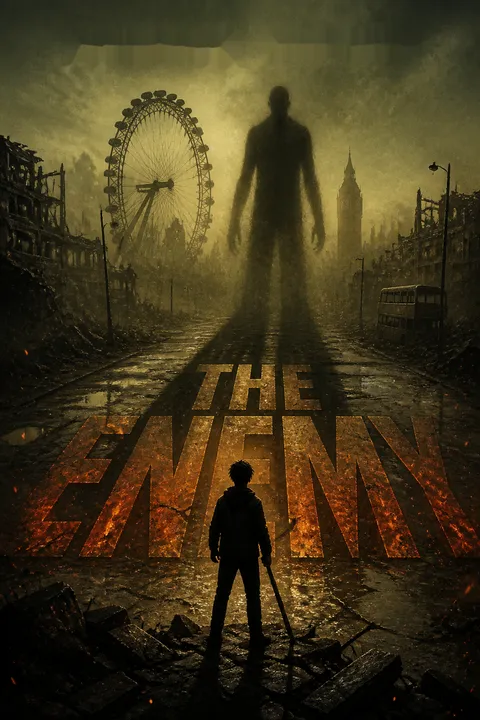


Plot Summary
Small Sam Disappears
Eighteen months after a disease has killed or ravaged London’s adults, children survive in rival supermarket strongholds. At Waitrose, nine-year-old Small Sam is playing outside without a guard when diseased adults seize him and carry him off in a sack. His sister Ella is left behind.
Maxie, the capable second-in-command, blames herself for failing to protect him, while the boastful Josh insists the grown-ups are nothing to fear. The attack has followed other recent losses, and the scavenging party is away under Arran, Waitrose’s leader. With food dwindling and the little ones exposed, the community’s apparent refuge begins to look less like a fortress than a place slowly being picked apart.
The Pool Turns
Arran’s scavenging party has found a dead dog after fighting off a pack of strays, but a search for more food brings the five boys into an abandoned swimming pool. Freak and Deke wade toward a submerged vending machine; the stagnant water erupts with adults concealed beneath it.
The group fights toward the exit, but Deke is pierced by broken glass and dragged under while Freak tries to save him. Arran, bitten on the neck, freezes when the adult attacking him seems to recognize him. Achilleus and Ollie pull the survivors clear, but the loss of Deke and the sight in the pool leave Arran shaken. The adults’ trap suggests they may be learning to hunt.
Jester Brings a Palace
Back at Waitrose, Arran finds that Maxie has also lost Small Sam to a raid. He refuses to blame her, but the two losses convince him their camp cannot hold out much longer. That night, adults attack the shop while a ragged boy begs to be let inside. Arran leads a rescue party through the barricade, saving the stranger and bringing the Morrisons children into the fight.
The boy calls himself Jester and claims Buckingham Palace offers clean water, medicine, food, and shelter. His Polaroids show children farming and living safely behind the palace walls. Maeve argues for escaping London, but Arran wins the vote to follow Jester. Blue commits the Morrisons crew too, and the combined group prepares to leave.
Sam Escapes the Stadium
At the Arsenal stadium, Small Sam slips out of the sack while his captors sleep among the dead. He threads through the hospitality suites, but a huge adult catches him on the stairs and carries him back into the pack. Sam lights the adult’s beard and coat with a cigarette lighter, setting off a fire that gives him a path to flee.
After hiding overnight in an attic, he finds a bicycle and rides back to Waitrose, only to discover the gates closed and the children gone. Callum, the lookout who chose to remain behind, explains that the others have left for the palace. Sam refuses to stay alone or abandon Ella, pumps up his tires, and sets off after the group.
Arran Loses the Line
As the children cross London, Arran’s infected bite brings fever, confusion, and visions of his mother among the diseased adults. He hides his worsening condition because the group depends on him, and comforts Freak, who is grieving Deke, by giving him spray paint to preserve their shared tag. The march reaches Camden, where a vast, unusually coordinated horde blocks the road.
The children retreat, but panic scatters the youngest, and Arran’s fighters are forced into a desperate defense. Blue returns in a stolen BMW, breaking through the press of adults. As the attackers withdraw, Arran pursues them in a fevered rage and is struck by an arrow fired by Sophie, a girl whose hidden group has mistaken him for an adult.
Maxie Takes Arran’s Place
Maeve cannot safely remove Sophie’s arrow, and Achilleus pulls it out when the group has no time to wait. Arran briefly revives, then dies in Maxie’s arms, mistaking her for his mother. Maxie insists on burning him and the other dead children rather than leave them for the adults; Freak paints Arran’s name on a wall and urges the survivors to stay united.
Maxie takes Arran’s club and leads the column onward. That night in Regent’s Park, diseased apes drop from the trees and attack the children. Josh is lost while trying to help, and Joel dies after chasing his puppy, Godzilla, into the grass. Maxie returns the surviving children to the group, carrying grief without letting it stop the march.
Sam Enters the Tunnels
Separated from the march, Sam rides through streets thick with adults until a fall wrecks his bicycle near Camden. He escapes into the Underground and crawls through flooded tunnels, using his flashlight and butterfly pin to evade the pursuing creatures.
At King’s Cross, a clean-shaven man named Nick saves him with a shotgun and carries him to a train hidden below the City. Nick and his partner Rachel welcome Sam, feed him soup, and promise care; their cozy carriage seems like a rare pocket of safety.
Then Sam wakes handcuffed in a bare car with Rhiannon and weak twins. Rhiannon explains that children disappear when their health improves, and Sam sees that the adults’ kindness may be a way to keep their captives alive until they can be eaten.
The Kid Breaks In
A wiry boy known as the Kid slips into the train and cuts Sam and Rhiannon free. The twins are too weak and frightened to leave, so the three escape through broken windows and the train’s storage cars. In the last carriage they find hooks, bones, and the remains of children, confirming Rhiannon’s fear.
Nick and Rachel discover them; Rhiannon is wounded by Nick’s shotgun and stays behind to hold him off while Sam and the Kid climb toward the surface. In daylight, Nick’s adult illness erupts violently through his skin, and he collapses before he can kill Sam. The boys cannot return for Rhiannon. Lost and exhausted, they reach the Tower of London, where a group of armed children takes them in.
Selfridges Offers a Detour
After the park attack, Maxie refuses to risk the remaining children by returning for those missing. The survivors detour through Oxford Street to scavenge clothes, then search Selfridges for supplies. Sophie saves Maxie from an adult with an arrow, but Maxie’s anger over Arran’s death keeps them estranged.
Inside, Achilleus and other fighters find a group of harmless, bewildered adults dressed in scavenged finery. Achilleus taunts them and throws one from a balcony; Maxie and Blue stop the violence before it spreads.
The incident unsettles the group: these adults are not attacking anyone, yet some children treat them as guilty by category. At Piccadilly, the children fight off a dangerous gang and rescue a badly injured girl from the Natural History Museum.
The Palace Has a Price
Buckingham Palace is real: its children grow crops, keep animals, and have medicine. David King, a polished sixteen-year-old, welcomes the newcomers with a lavish feast, but Ollie discovers that the kitchen staff eat thin stew while guests receive food made with dog meat.
David’s show of plenty hides shortages and unequal treatment. He also reveals the diseased remnants of the Royal Family, kept in the Throne Room as symbols for a planned new order.
He wants Blue to command an army and help seize St. James’s Park from children who refuse to join him. Maxie and Whitney object to making war on other children, while Achilleus favors action. The rescued museum girl remains silent in the sick bay, listening as David’s plans divide the newcomers.
St James’s Becomes a Battlefield
Blue leads an armed party into St. James’s Park to confront the squatters, whose leader is Just John. Negotiations collapse when Achilleus strikes John, and the palace fighters begin wrecking the camp. Blue rescues two babies from a collapsing shack, but a falling beam knocks him unconscious. Maxie tries to stop the fight; Freak rushes in to protect her and is stabbed from behind by John.
Freak dies in Maxie’s arms. She takes Arran’s club, disarms John, and forces the fighting to stop, then gives the squatters until evening to negotiate or face another attack. Back at the palace, David treats the conflict as a route to control, while Maxie sees that the promised refuge is asking children to become soldiers against one another.
A Duel Seals the Truce
David makes the squatters’ return of John conditional on a duel between their champion and Achilleus. Maxie opposes a fight to the death, but David accepts John’s terms, and Achilleus enters the ring.
John’s longer weapon and greater reach cut Achilleus badly before the smaller fighter breaks two blades and exploits John’s blind side. Achilleus wins, then spares him, securing the alliance without another death. As Maxie, Blue, and Ollie recover, the wounded museum girl reveals that David concealed the existence of other organized children, including her community.
Maxie and Blue decide they would rather leave than help David build an empire. Ollie stays close to David, apparently siding with him, while secretly preparing for a possible break from the palace.
Callum’s Kingdom Falls
Callum’s refusal to leave Waitrose once looked like a claim to independence. Alone, he uses hoarded food, batteries, and music to build a private routine, but the quiet only sharpens his loneliness. A new adult commander in an England vest gathers a growing force outside.
Callum hears the barricades breaking and stays inside, listening to ABBA and eating his last chocolate while the attackers force their way through. In the palace, the weakened Royal Family escape their room, sending David’s guards into confusion.
Whitney uses the distraction to move the children outside, while Achilleus and Lewis free Maxie and Blue. Ollie joins the breakout after ensuring the others know what is happening. The group leaves together, but Callum’s isolated refuge is overrun.
The Children March West
The palace escapees regroup on the road, and Achilleus adds a tribute to Freak beneath the memorial for Arran. He admits he blamed Freak unfairly and now accepts that their survival depends on standing together.
Maxie leads the children west, with Blue beside her and Ollie bringing up the rear; they pass adults eating a dead dog, and the creatures flee rather than face the armed column. Elsewhere, Sam and the Kid find the Tower’s children, a separate refuge where Sam can hope to reach Ella again.
The final viewpoint belongs to the adult commander in the England vest. He remembers himself as Saint George, rallies the diseased adults, and marches them toward the place where the children defeated them. The escape offers direction, not safety.
Analysis
The novel’s central reversal is not simply that adults become predators. It is that children inherit the work of adulthood without inheriting its protections. Arran, Maxie, Blue, and the others must distribute food, manage fear, weigh individual lives against group survival, and make decisions whose consequences they cannot fully understand. Their makeshift institutions are recognizable: a lookout post, medical supplies, rules for scavenging, a vote. Yet each depends on people who are themselves frightened children. The collapse does not erase politics; it makes politics immediate.
The competing refuges expose different versions of safety. Waitrose is materially limited but built through shared labor. Buckingham Palace appears abundant, yet David’s feast conceals scarcity and his plan turns protection into a claim on other children’s obedience. The squatters preserve independence but cannot easily provide food or security. None of these arrangements is wholly sufficient, so the question is not whether order is good or bad, but who controls it, who pays for it, and whether the vulnerable have any say.
Sam’s parallel journey gives the larger conflict a child-sized measure. He survives through hiding, imagination, and improvised tools, but he cannot make the world safe for Ella simply by wanting to. The Kid and Rhiannon show that survival is often collective, while their escape also exposes its limits: the weakest may be left behind even by people trying to help. Callum’s retreat into private comfort makes the same point from another angle. Self-sufficiency cannot answer loneliness or stop an organized threat.
The ending offers movement rather than resolution. Maxie’s group escapes the palace, Sam finds another refuge, and the adults acquire a commander of their own. The children have learned to unite, but the enemy is learning too. Their victory is therefore provisional, and the final march warns that every new society must keep deciding whether its methods protect children or merely reproduce the violence they fled.
Review Summary
The Enemy is a thrilling zombie apocalypse novel set in London, following children surviving after adults become infected. Readers praised its fast-paced action, gore, and complex characters, though some found it difficult to connect emotionally due to frequent deaths. The omniscient narration and large cast divided opinions. Many compared it to Lord of the Flies and The Walking Dead, appreciating its unique take on the genre. While some felt it was too familiar, most found it engaging and looked forward to continuing the series.
People Also Read

Characters
Arran
Reluctant young commanderThe athletic, fair-haired leader of the Waitrose children, Arran is competent enough to organize scavenging parties and protective enough to feel personally responsible for every loss. His authority rests less on force than on composure: the other children trust him because he keeps making decisions when nobody else wants the burden. Beneath that control is a boy exhausted by the demand to act like a parent. His bond with Maxie is close but largely unspoken, and he relies on Ollie’s judgment and Achilleus’s fighting skill. Arran’s central conflict is the gap between the childhood he remembers and the adult responsibilities catastrophe has imposed.
Maxie
Waitrose’s steady secondMaxie organizes the children, earns their cooperation, and becomes the practical counterweight to Arran’s leadership. She is neither the strongest fighter nor the most confident person in the room, but she understands how frightened children behave and can turn panic into tasks. Her feelings for Arran intensify the cost of watching him suffer, though she rarely lets private longing interfere with the work of protecting the group. Maxie tends to mistake responsibility for personal blame, especially when children are hurt. What drives her is a stubborn commitment to keep people safe without surrendering her judgment to whoever claims authority.
Small Sam
The smallest survivorSmall Sam is nine, physically slight, and far more observant than the adults who underestimate him. He uses imagination, patience, and whatever objects he can carry to navigate dangers that would overwhelm a larger child. His thoughts keep returning to Ella, his younger sister, because he promised to protect her after their parents left. Sam is scared often, but fear does not erase his capacity to act: he hides, improvises, and keeps moving when rescue seems unlikely. His adventure shows how a child’s limited understanding can coexist with genuine courage and practical intelligence.
Ollie
The watchful strategistQuiet, red-haired, and sharp-eyed, Ollie is the group’s best planner and a reliable marksman with his slingshot. His reserved manner comes partly from a family life shaped by arguments and loss; he learned to observe before speaking, and Arran respects his advice. Ollie is pragmatic enough to doubt promises and recognize political maneuvering, but he is not indifferent to the people around him. He often weighs the survival of the many against the needs of an individual, a habit that makes him useful and morally difficult to read. His loyalty is expressed through preparation rather than grand declarations.
Achilleus
The ruthless fighterAchilleus is the strongest close-combat fighter among the Waitrose children, quick-minded and dangerous with his handmade spear. He enjoys the status his skill brings but avoids the responsibility of leadership, preferring decisive action to prolonged debate. His sarcasm and aggression protect a more complicated dependence on the group: he knows others need his abilities, and he needs their trust even when he pretends otherwise. Achilleus treats violence as a practical tool, which can make him effective against immediate threats and reckless when the target is another child. He is shaped by a childhood spent caring about his ill mother and by the need to survive without adults.
Blue
Morrisons’ battle-tested leaderBlue leads the children from Morrisons and carries himself like a hard, confident fighter. That persona conceals a bookish, formerly overweight boy who survived early chaos by watching, learning, and avoiding fights until he had to enter them. He values security and the authority needed to provide it, which makes David’s organized palace attractive even as he resists being controlled. Blue’s relationship with Maxie shifts from rivalry and teasing toward candor; with her, he can admit insecurity without losing face. His practical instincts make him a useful leader, though he sometimes mistakes toughness for the only language others will respect.
Freak
The grieving graffiti artistFreak, whose real name is David, is inseparable from his best friend Deke and often uses jokes to keep fear at bay. The pair’s shared graffiti tag gives them a small piece of their former lives to carry into the ruined city. When grief makes Freak withdraw, he struggles to find a reason to keep helping the others. He is impulsive, loyal, and more emotionally open than the harder fighters around him. Arran’s encouragement helps him turn remembrance into a way of supporting the group.
Callum
The rooftop recluseCallum is the Waitrose lookout, most at ease in the supermarket’s rooftop crow’s nest, where its walls let him watch danger without meeting it. He has stayed inside for nearly a year and values quiet, routine, and the chance to escape the demands of other children. His self-reliance is real, but so is his fear of the outside world. He hides supplies and keeps his preferences private, building a small sense of control in a life where nearly everything has been taken from him.
Jester
The ragged palace envoyJester crosses London to recruit children for Buckingham Palace, carrying Polaroids that make his account tangible. His patchwork coat remembers the children he has lost, and his humor helps him keep moving through grief. He is persuasive and politically alert, but he does not reveal everything about the palace’s ambitions at once. Jester believes that scattered groups can become safer by joining forces, though his willingness to adapt his story to his audience makes him difficult to trust completely.
Ella
Sam’s steadfast sisterElla is Small Sam’s younger sister and one of the smallest children at Waitrose. She is grieving the disappearance of her brother but refuses to accept that he is beyond help. Ella is frightened by the new world and often needs older children to reassure her, yet her attachment to Sam gives her a persistent hope that the more hardened survivors have lost. She finds comfort in Godzilla, a puppy who becomes a shared responsibility among the children.
Sophie
The wary archerSophie is a skilled archer who has survived by moving between temporary refuges with a small band of children. She is watchful, self-contained, and accustomed to treating mistakes as matters of life and death. A tragic accident makes her an outsider among the Waitrose children, especially Maxie, but Sophie wants practical cooperation more than easy forgiveness. Her caution comes from repeated losses and from knowing that good intentions do not undo consequences.
David King
The palace’s polished rulerDavid is a confident, educated teenager who has organized life inside Buckingham Palace. He presents himself as a practical administrator, assigning work and cultivating symbols that might persuade other children to follow him. Beneath his composure is a strong appetite for control and a conviction that order justifies coercion. David is not simply a bully: he has made a functioning refuge where many children feel safer. The tension between that achievement and his political ambition defines how others judge him.
The Kid
The tunnel-born escape artistA small, wiry boy who survives in the Underground, the Kid is fast, inventive, and fond of elaborate slang. He uses humor as camouflage and can turn scraps of wire, tape, or cardboard into tools for escape. Beneath the performance is a child shaped by isolation and repeated loss. He is brave but knows the limits of his strength, which forces him to choose whom he can realistically save. Meeting Sam gives him a partner rather than another temporary companion.
Rhiannon
The captive who sees through kindnessRhiannon is an older, physically weakened girl held in Nick and Rachel’s underground train refuge. Her illness makes adults treat her as a dependent, but she is perceptive about the danger hidden beneath their hospitality. She warns Sam to distrust explanations that cannot account for missing children. Though exhausted and often doubtful that escape is possible, she retains the judgment to recognize a chance when it appears.
Whitney
Morrisons’ formidable organizerWhitney is a confident, physically imposing thirteen-year-old who helps keep the Morrisons children organized. She is direct, protective of younger kids, and unwilling to let others mistake her size for a lack of judgment. Her respect for Blue comes from having seen him lead through earlier crises, but she does not follow him blindly. Whitney often notices when Maxie is close to breaking and offers support without disguising the danger around them.
Maeve
The children’s practical medicMaeve is a country girl stranded in London who serves as the closest thing the children have to a doctor. She learned basic care from her physician parents and is honest about the limits of her knowledge. Maeve tends to argue for long-term survival, including leaving the city to farm, while recognizing that the group’s immediate fears shape every decision. Her calm presence gives frightened children a person who can assess injuries without pretending they are harmless.
Nick
The dangerous underground hostNick is a capable adult who lives with Rachel in the Underground and can still speak, plan, and use weapons. His composed manner sets him apart from the mindless adults roaming above, making him seem trustworthy to children in need. He believes he can control the risks of survival by controlling the people around him. His home’s locked doors and carefully managed supplies reveal how easily protection can become captivity.
Rachel
The train’s kindly keeperRachel is Nick’s warm, domestic partner and helps maintain their underground train home. She offers food and comfort to frightened children, creating the appearance of a substitute family. Her kindness is bound up with the couple’s need to control their young guests, and she can turn from soothing to forceful when they resist. The contrast between her welcoming manner and the train’s locked, hidden spaces makes her especially unsettling.
Just John
The squatters’ hard-edged chiefJust John leads the children camped in St. James’s Park. He is suspicious of David’s authority and values independence over the palace’s promises of order. His insults and weaponized confidence make negotiation difficult, while his followers’ dependence on the camp gives every confrontation real stakes. John’s idea of strength is personal dominance, a view that collides with the organized power David is trying to build.
Saint George
The adults’ emerging commanderA diseased father in an England vest marked with Saint George’s cross, he shows more organization than the adults the children have learned to evade. Pain and damaged memory have not erased his ability to gather followers or pursue a purpose. He represents a new kind of threat: not merely a hungry individual, but a leader capable of giving a scattered horde direction.
Godzilla
The children’s shared puppyGodzilla is a tiny puppy carried by the youngest children. He offers Ella and the others a living creature to nurture, giving them a task that is not about fighting or fleeing. His vulnerability makes the children’s protective instincts visible, and his presence briefly restores a small, ordinary rhythm to their improvised family.
Plot Devices
The age-bound disease
Makes adulthood a threatA disease has devastated everyone over sixteen, leaving children to survive among adults whose bodies and minds deteriorate. The age boundary shapes the novel’s central social reversal: children must scavenge, govern, defend, and care for one another without the adults who once performed those tasks. The illness is not uniform in its effects. Some adults remain more capable than others, and the possibility that the disease can advance later creates uncertainty even for the oldest children.
The supermarket fortresses
Turn shops into rival societiesWaitrose and Morrisons provide food, walls, and recognizable territory, allowing children to form distinct communities with leaders, rules, lookouts, and scavenging routines. Their supplies are finite, however, and nearby buildings are already stripped. The supermarkets therefore serve both as shelters and as traps: staying preserves familiar defenses, while leaving exposes children to street attacks and forces them to decide whether a larger coalition is worth the risk.
Jester’s photographs
Make hope tangibleJester’s Polaroids show children farming and living behind Buckingham Palace’s walls. Because the images are physical rather than digital, the skeptical survivors accept them as evidence that a more stable refuge may exist. They give Arran a reason to move the group before starvation and repeated raids destroy it. The pictures are also incomplete evidence: they show the palace’s surface without revealing its shortages, political ambitions, or unequal distribution of food.
The royal household
Lend power an old symbolDavid keeps the surviving, diseased members of the Royal Family in the palace and imagines using them as a public symbol of continuity. Their presence lets him frame his own authority as service to an established order, even though the royals cannot meaningfully govern. This device exposes the political function of ceremony: frightened children may accept hierarchy if it promises stability. It also reveals that the palace’s danger comes not only from outside attackers but from the people shaping its internal rules.
Sam’s butterfly pin
Make smallness a weaponSam takes a decorative butterfly pin from a diseased adult and keeps it as a makeshift weapon. Its small size suits the way he survives: he hides in narrow spaces, watches before moving, and strikes only when an opening appears. The pin helps him escape the stadium and later defend himself in the tunnels. It is not a magical solution; it gives a frightened child one practical choice when size and strength belong to someone else.
FAQ
Synopsis & Basic Details
What is The Enemy about?
- Dystopian London Survival: The Enemy depicts a post-apocalyptic London where a disease has turned adults into zombie-like creatures, forcing children to fight for survival.
- Children's Journey: The story follows a group of kids as they journey from a supermarket refuge to Buckingham Palace, seeking safety and resources.
- Leadership and Conflict: The narrative explores themes of leadership, trust, and betrayal as the children face external threats and internal conflicts.
Why should I read The Enemy?
- Intense Action and Suspense: The book offers a thrilling and suspenseful narrative with constant threats and battles, keeping readers engaged.
- Complex Characters: The story features well-developed characters who grapple with moral dilemmas, loss, and the burden of leadership, making them relatable and compelling.
- Exploration of Human Nature: The Enemy delves into the darker aspects of human nature, exploring themes of survival, trust, and the struggle for power in a dystopian world.
What is the background of The Enemy?
- Viral Apocalypse: The story is set in a world where a virus has killed most adults, turning them into violent, zombie-like creatures.
- London Setting: The events unfold in a post-apocalyptic London, with familiar landmarks transformed into dangerous and desolate places.
- Children's Struggle: The background emphasizes the children's struggle for survival in a world where they are constantly threatened by the diseased adults.
What are the most memorable quotes in The Enemy?
- Maxie's Determination: "We can't go on like this. Soon we're all going to be dead. I can't stand it anymore." This quote highlights Maxie's despair and her determination to change their situation.
- Achilleus's Bravado: "Grown-ups won't get me." This quote showcases Achilleus's overconfidence and his belief in his own invincibility, which is later challenged.
- Arran's Despair: "I can't kill them all. We can't go on like this. We're getting weaker every day." This quote reveals Arran's internal struggle and his growing sense of hopelessness.
What writing style, narrative choices, and literary techniques does Charlie Higson use?
- Fast-Paced Action: Higson employs a fast-paced, action-oriented style, using vivid descriptions and intense scenes to create a sense of urgency and danger.
- Multiple Perspectives: The narrative shifts between different characters' viewpoints, providing a comprehensive understanding of the events and their emotional impact.
- Foreshadowing and Symbolism: Higson uses subtle foreshadowing and recurring symbols to create tension and enhance the thematic depth of the story.
Hidden Details & Subtle Connections
What are some minor details that add significant meaning?
- The Butterfly Pin: Small Sam's possession of a silver butterfly pin, initially a seemingly random object, becomes a symbol of his resilience and a tool for survival.
- The Vending Machine: The vending machine in the swimming pool, initially a symbol of hope for food, becomes a trap, highlighting the deceptive nature of the world.
- The Graffiti Tag: The "Freaky-Deaky" tag, initially a symbol of youthful rebellion, becomes a memorial to Deke and a reminder of the lost world.
What are some subtle foreshadowing and callbacks?
- Callum's Isolation: Callum's preference for the roof and his desire to be alone foreshadow his eventual decision to stay behind at Waitrose, highlighting his detachment.
- The Mother's Eyes: The description of the mother's eyes at the pool foreshadows Arran's internal conflict and his struggle to reconcile the humanity he sees with the monstrous exterior.
- The Vending Machine: The recurring mention of the vending machine foreshadows the danger and disappointment that the group will face at the swimming pool.
What are some unexpected character connections?
- Maxie and Arran: The subtle romantic tension between Maxie and Arran, though never explicitly stated, adds an emotional layer to their leadership dynamic and Maxie's grief.
- Ollie and Achilleus: The grudging respect and understanding between Ollie and Achilleus, despite their contrasting personalities, highlights the importance of diverse skills for survival.
- Freak and Deke: The deep bond between Freak and Deke, often expressed through their shared jokes and actions, underscores the devastating impact of loss and the importance of friendship.
Who are the most significant supporting characters?
- Ollie: Ollie's intelligence and strategic thinking make him a crucial advisor and a voice of reason, influencing key decisions and actions.
- Whitney: Whitney's strength and nurturing nature provide stability and protection for the younger children, highlighting the importance of care and compassion.
- Lewis: Lewis's fighting skills and loyalty make him a valuable ally, showcasing the importance of diverse talents for survival and defense.
Psychological, Emotional, & Relational Analysis
What are some unspoken motivations of the characters?
- Maxie's Desire for Approval: Maxie's actions are often driven by her desire to prove herself as a capable leader, stemming from her insecurities and grief over Arran's death.
- Achilleus's Need for Validation: Achilleus's aggressive behavior and constant need to prove his strength stem from a deep-seated need for validation and recognition.
- David's Fear of Losing Control: David's manipulative tactics and desire for power are driven by his fear of losing control and his need to maintain his position as a leader.
What psychological complexities do the characters exhibit?
- Arran's Internal Conflict: Arran's struggle to reconcile his humanity with the violence he must commit highlights the psychological toll of leadership and survival.
- Maxie's Guilt and Self-Doubt: Maxie's internal conflict between her desire to lead and her feelings of inadequacy and guilt over Arran's death reveals her psychological vulnerability.
- Freak's Grief and Trauma: Freak's emotional withdrawal and reckless behavior after Deke's death showcase the psychological impact of loss and trauma on his character.
What are the major emotional turning points?
- Arran's Death: Arran's death is a major emotional turning point, forcing Maxie to confront her grief and take on the burden of leadership.
- The Swimming Pool Attack: The attack at the swimming pool is a major emotional turning point, highlighting the vulnerability of the children and the devastating impact of loss.
- The Fight with Just John: The fight with Just John is a major emotional turning point, showcasing the characters' internal conflicts and their struggle to reconcile their values with the need for survival.
How do relationship dynamics evolve?
- Maxie and Blue: The relationship between Maxie and Blue evolves from initial distrust to a grudging respect, highlighting the complexities of leadership and the need for cooperation.
- Ollie and David: The relationship between Ollie and David evolves from a sense of mutual respect to a growing distrust, highlighting the dangers of unchecked power and manipulation.
- The Waitrose Crew: The bond between the Waitrose crew is tested by loss and internal conflicts, but their shared experiences ultimately strengthen their loyalty and unity.
Interpretation & Debate
Which parts of the story remain ambiguous or open-ended?
- The Cause of the Disease: The exact cause of the disease that turned adults into monsters is never fully explained, leaving room for interpretation and speculation.
- The Nature of the Grown-Ups: The extent to which the grown-ups retain any semblance of their former selves is left ambiguous, raising questions about their humanity and the nature of evil.
- The Future of the Children: The ending leaves the future of the children open-ended, with no clear resolution to their struggle for survival and the challenges they face.
What are some debatable, controversial scenes or moments in The Enemy?
- The Fight with Just John: The brutal fight between Achilleus and Just John raises questions about the morality of violence and the justification for revenge.
- David's Leadership: David's manipulative tactics and desire for power spark debate about the nature of leadership and the dangers of unchecked authority.
- The Decision to Leave Waitrose: The decision to leave Waitrose and embark on a dangerous journey to Buckingham Palace is a controversial moment, highlighting the risks and rewards of hope and change.
The Enemy Ending Explained: How It Ends & What It Means
- Escape from the Palace: The children escape from Buckingham Palace, rejecting David's oppressive rule and seeking a new path.
- Uncertain Future: The ending leaves the children's future uncertain, with no clear resolution to their struggle for survival and the challenges they face.
- Hope and Resilience: Despite the bleakness of their situation, the ending emphasizes the children's resilience and their determination to find a better future, highlighting the enduring power of hope.
Download PDF
Download EPUB
.epub digital book format is ideal for reading ebooks on phones, tablets, and e-readers.








