

Plot Summary
Cabbage Field of Teeth
Sam is touring the fields with Edilio, Albert, and sixth-grader E.Z., searching for crops that might keep Perdido Beach fed. The cabbage rows look promising until E.Z. reaches down and the soil erupts with black, toothed worms. They invade his body and kill him before Sam can reach him. The creatures stay inside the field, but the remaining cabbage may be the town’s only substantial food source.
Sam burns E.Z.’s remains, then returns carrying a dead worm and the guilt of having watched a friend die. Astrid studies the specimen, finding an animal built to bore through flesh. The missing birds now seem less like a curiosity than a warning about what is already hunting the children.
The first crisis binds the novel’s two scarcities together: food is necessary for survival, yet harvesting it has become lethal. Sam’s hesitation before E.Z. dies is not simple cowardice; he must weigh one life against a field that could feed hundreds. His grief then becomes politically consequential, because the children depend on him to make choices that no child should have to make. The worms also establish a world where familiar categories fail. A cabbage field is no longer merely farmland, and a creature called a worm has become a predator.
Caine Wakes With a Leash
At Coates Academy, Caine emerges from three months of fevered delusion, pale, weak, and haunted by the word gaiaphage. His madness has already left another boy badly injured, so Diana has kept Caine isolated and cared for him despite fearing Drake. She tells him that Sam controls Perdido Beach, that food is scarce, and that Drake has seized what he could.
Caine’s old ambition returns with his strength: rather than attack the town directly, he orders Bug to scout the nuclear power plant. Electricity, he reasons, is leverage Sam cannot ignore. Yet Caine hides what happened in the desert, where the mutant coyotes follow a presence they call the Darkness. He is recovering, but not entirely in command of himself.
Caine’s return to strategic thought looks like recovery, but his missing memories and involuntary use of power make that appearance unstable. He instinctively conceals the name that frightens him, even from Diana, whose care has earned a degree of trust. His plan to seize electricity reveals his preferred form of control: he wants to make others dependent on what he possesses. The scene also places intimacy beside coercion. Diana stays because the alternatives are dangerous, not because she feels safe, and Caine’s charm cannot erase the unequal power between them.
Duck Below the Pool
Duck Zhang has found a private swimming pool, cleaned it, and made it his refuge from the hunger and noise of the FAYZ. When Zil and two boys invade, Duck’s anger triggers a power he does not understand: he sinks through the pool floor and the earth beneath it. He wakes in a dark tunnel, follows the sound of water, and reaches a vast cave whose only exit lies underwater.
Blue, winged creatures pour into the sea around him, driving him through a terrifying swim toward the beach. Duck survives, but returns to town with no clear explanation for what happened. His ability has appeared at the moment he feels powerless, turning the ground itself into both escape route and threat.
Duck’s first experience of power is not triumphant. It begins with humiliation and nearly ends in drowning, so the gift initially feels like another way the FAYZ has taken control from him. The episode makes fear physical: his body can pass through solid earth, but he cannot yet choose where it takes him. His private pool matters because it represents a small territory he has made safe through effort. Losing it to bullies, then losing the ground beneath him, forces Duck into a world where security cannot be built simply by claiming a place.
Orc Faces the Zekes
Sam orders the children to harvest crops, but almost no one comes when the buses gather. To test whether Orc can work safely in the cabbage field, Albert and Howard offer him beer for each load he picks. The worms swarm over Orc’s stone-covered body and cannot pierce it, so he gathers cabbages while the others watch from the truck.
Then one worm finds the small patch of living skin on his face. Howard tries to pull it free; Albert punches Orc hard enough to make his own hand swell, and the worm finally comes loose. Lana heals the wound without turning it to stone. Orc asks to be called Charles, exposing how much of the frightened boy remains inside the monstrous body.
The field test converts Orc’s body into public infrastructure: his unusual toughness can feed everyone, but only by putting his remaining human flesh at risk. Albert’s beer bargain shows an emerging pragmatism that clashes with Astrid’s hope for fair, voluntary labor. The payment is not ethically neutral, especially because Orc is already vulnerable to alcohol, yet the hunger makes every available solution compromised. Orc’s insistence on his given name complicates the spectacle of his transformation. He is not merely a weapon or a laboring giant; he is a child trying to retain personhood where others see only a monster.
McClub and Gold Standard
Albert opens a dance club in the abandoned McDonald’s and charges admission in batteries, toilet paper, and other supplies that may soon be scarce. Sam and Astrid object to his taking control of useful goods, but the club gives hungry children a rare night of music and company.
Quinn independently begins fishing, brings his catch to Albert, and helps supply protein to the day-care children. Albert proposes organizing a fish trade and eventually backing currency with gold.
Meanwhile, Mary Terrafino refuses food and secretly exercises, using medication to suppress hunger as her weight falls dangerously. These efforts reveal sharply different responses to scarcity: Albert tries to build systems, Quinn finds a practical skill, and Mary turns deprivation inward.
The FAYZ has ended ordinary prices without ending the human desire to exchange, gather, and own. Albert recognizes that a supply system needs incentives, while Sam fears that incentives will create a new class of powerful children. Their conflict is not simply generosity against greed; both are trying to prevent starvation, but they imagine fairness differently. The club briefly restores pleasure without pretending the emergency has passed. Mary’s hidden eating disorder offers a counterpoint: scarcity does not affect everyone in the same psychological way, and food can become both a necessity and an object of control.
The Dreamer at Coates
Drake catches Orsay Pettijohn near Coates and discovers that her dreams let her witness the minds of people nearby. Caine sees a possible spy and makes her report what she experiences, while Diana tries to warn her that obedience will not make her safe. In Perdido Beach, Little Pete’s sleep produces monsters that change shape and struggle to communicate.
Sam and Astrid drive them back only when Pete wakes, and he links their hunger to something waiting in darkness. Orsay’s later visions of Sam reveal an exhausted boy preoccupied with food and responsibility, but the dreams that overwhelm her belong to Little Pete. They suggest that an intelligence in the mine is learning to create through the child’s imagination.
Dreams become a contested territory in which privacy, power, and vulnerability overlap. Orsay cannot choose whose inner life she enters, while Caine immediately treats that involuntary sensitivity as a tool for surveillance. Little Pete’s imagination, usually difficult for others to reach, may be the most generative force in the FAYZ, but it is also exposed to an external presence. The monsters’ changing forms suggest creation before intention: images acquire bodies before anyone understands their purpose. Astrid and Sam’s secrecy protects Pete, yet it also leaves them trying to interpret an unprecedented danger with incomplete knowledge.
The Zekes Reach Melons
When Edilio finds the worms in the melon field, he narrowly escapes after they begin chewing through his boots. Sam returns with Dekka, who lifts soil and vines into the air while Sam burns the exposed creatures. Their attack kills many worms, but Orc still draws new ones when he enters unburned ground to retrieve a melon. Photographs later show the worms turning toward Sam despite having no eyes.
Astrid suspects they act as a shared organism rather than separate animals. She proposes harvesting from vehicles on bare rims, beyond the worms’ reach, and even considers negotiating with whatever directs them. Sam dismisses that second idea. Their failed demonstration leaves the food crisis worse and the enemy less understandable.
The battle exposes the limits of force as both a practical strategy and a way of knowing. Sam can destroy visible bodies, but the coordinated turn toward him suggests that the true opponent is not located in any single worm. Astrid’s attention to photographs and behavior lets her detect a pattern that a battlefield cannot reveal. Sam, by contrast, needs an immediate, usable answer and interprets negotiation as weakness. Their disagreement is psychologically credible: under emergency pressure, leaders tend to privilege interventions they can enact over explanations they cannot yet verify.
Jack and the Human Line
Jack has repaired the phone network, but Sam refuses to activate it because Caine could use it to contact and recruit hungry children. Jack resents being asked to build something the town will not use. At the McClub, Brianna tries to draw him closer, while Zil mocks both of them for being mutants. Elsewhere, Hunter’s newly discovered ability to heat a target from within flares during an argument with Zil.
Harry steps between them and collapses with a fatal burn. Zil blames Hunter and begins rallying children without powers. Diana, disguised with cropped hair and borrowed clothes, finds Jack and promises him a greater technical challenge at Coates. Jack leaves with her, giving Caine the specialist he needs.
The crisis makes the category of mutant both a bodily fact and a political accusation. Hunter’s power is frightening partly because it acts without visible fire, leaving him himself unsure of what he has done. Zil converts that uncertainty into a clean moral divide, which offers the grieving a way to name their fear and a leader a way to gain influence. Jack’s departure grows from an older wound: he wants his expertise recognized, not merely managed. Diana exploits that need, demonstrating how belonging can be offered as bait by people who understand a person’s insecurity.
The Lights Go Out
Sam’s suspicion that Bug has been scouting the power plant brings him out with an armed team, but Caine’s group has already broken into the facility. Taylor scouts the gate and helps Sam’s forces enter; inside, Drake and Caine take hostages while Jack works the plant’s controls. Sam cannot force them out without risking the captives.
Caine orders Jack to shut down the grid, plunging Perdido Beach into darkness. At the same time, Drake’s attack on Hunter’s house has left Harry dead, Edilio hurt, and Astrid bruised. In the plaza, frightened children demand food, lights, and protection. Sam cannot offer immediate solutions. He admits how young and overwhelmed he is, then walks away from the crowd.
The blackout is a tactical defeat that becomes a crisis of legitimacy. Caine’s control over electricity matters because it converts a technical system into a public demonstration of authority. Sam’s failure is not simply that he loses the plant; he cannot protect hostages without accepting a greater risk, and the crowd sees only the result. His public confession gives voice to a truth the community has tried to suppress: its leader is a fifteen-year-old, not a substitute parent with unlimited capacity. Yet honesty without a plan can deepen panic, especially when people already feel abandoned.
Zil’s Trial by Hunger
With the town dark and Sam distracted, Zil turns a captured Hunter into the centerpiece of the Human Crew’s growing influence. He offers venison to children willing to help punish the boy who killed Harry. Astrid confronts the crowd, but Zil recasts her defense of Hunter as loyalty to mutants over ordinary children.
He threatens to hang Hunter in the ruined church and has Astrid seized when she tries to stop him. Orc arrives before the mob can carry out the killing, lifts Zil away from Astrid, and throws him clear. The crowd scatters with stolen meat. Zil’s movement has not disappeared, but its first attempt to convert hunger into a public execution has been broken by a display of force.
Zil’s gathering is a political ritual disguised as justice. Meat functions as payment, while participation in violence is meant to bind the hungry to his faction. By calling Hunter’s death a trial, Zil gives revenge the language of procedure without granting the accused any real chance to answer. Astrid appeals to conscience and shared vulnerability, but the crowd is too desperate to be moved by principle alone. Orc interrupts the spectacle physically, showing that authority in the FAYZ is still enforced through bodies and force. His intervention protects Astrid, but it does not resolve the grievances Zil has organized.
The Monster Wants Uranium
After the blackout, Caine recognizes that his impulse to seize the power plant did not originate entirely with him. He believes the Darkness is using him to obtain uranium, the radiation source it needs. Astrid reaches a similar conclusion from Little Pete’s warnings, Lana’s note, and Duck’s account of the glowing cave beneath the hills.
She suspects that an object from the old power-plant accident brought an organism that survived on radiation. Caine orders Jack to extract a fuel rod and prepares to carry it to the mine. Lana, meanwhile, returns to Hermit Jim’s ruined settlement, loads a gas tank into his truck, and drives toward the shaft hoping to collapse it before the creature can escape.
The revelation changes Caine’s ambition from an isolated struggle for dominance into a channel through which another will may act. His self-image depends on being the strategist, so recognizing an outside influence threatens the very independence he uses to justify control. Astrid’s theory remains uncertain, but it connects previously separate anomalies: the power-plant accident, the glowing underground passage, Little Pete’s visions, and the mutations. Lana’s plan is an attempt to reclaim agency through action. Its danger lies in the fact that the creature has already learned how to turn her own resolve toward its purposes.
Drake Whips Sam
Caine’s team removes a uranium fuel rod from the reactor and flees toward the hills, while Drake stays behind to delay Sam by threatening a meltdown. Drake lashes Sam until he can barely move, believing the whip hand has settled their old score. Brianna, who has survived a reckless attempt to reach the roof, arrives in time to pull a wire across Drake’s tentacle and sever part of it.
She catches the control remote before it falls into the reactor pool and lowers the rods, stopping the immediate catastrophe. The exposed radiation has left Brianna dangerously ill, and Sam is gravely wounded. Drake escapes, but Brianna’s return prevents his threat from turning the entire FAYZ into a radioactive wasteland.
This confrontation reverses the expected hierarchy of strength. Sam’s power cannot protect him from Drake’s intimate, repeated violence, and Brianna’s speed has already trapped her on the plant roof once. Yet the qualities that seemed reckless or merely spectacular become decisive: she sees the danger quickly and acts before the reactor can reach catastrophe. Her intervention is not a clean victory. Radiation and Sam’s wounds preserve the cost of action, while Drake’s escape shows that disabling an attacker does not end the violence he has set in motion.
Lana Becomes the Weapon
Lana releases gas into the mine, but the Darkness overwhelms her with pain and compels her to abandon the fuse. She reaches the shaft again under its influence just as Edilio and Dekka arrive to seal it. Lana raises her pistol and shoots Edilio, then turns toward Dekka before the gun runs empty.
The creature has not merely frightened her; it is using her healing power as part of a plan to build itself a body. Caine reaches the mine carrying the fuel rod, while Jack and Drake follow. The radiation begins feeding the crystalline organism. Edilio lies critically wounded, Dekka is trapped among the coyotes, and Lana is left fighting for control of her own mind.
Lana’s failed attack is a devastating inversion of her public role. The person who heals the FAYZ becomes the means by which its hidden enemy can act, and she is forced to witness the harm without being able to stop her body. This is more than possession as a supernatural device: it dramatizes how coercion can colonize a person’s own capacities. Her guilt after shooting Edilio is therefore real but not equivalent to freely chosen violence. The distinction matters, because the others must respond to the damage while still recognizing Lana as a victim of the same enemy.
Duck Drills Through the Monster
At the mine, Caine turns on Drake after the whip-hand attacks Diana. The fuel rod falls into the shaft, and Caine uses his power to collapse the passage, burying the gaiaphage and Drake beneath rock. The rod has also fed the creature, however, and Lana remains trapped with it. Sam, barely able to stand, calls for Duck, whose power lets him alter his density.
Brianna carries Duck to the hillside; he sinks through the collapsed earth and reaches the chamber below. When the crystalline creature forms a reflective defense, Caine hurls Duck at it. Duck’s dense body punches through the creature and the cavern floor, dragging the gaiaphage into a seemingly bottomless fissure. Duck disappears with it.
The climax turns a power Duck once feared into an answer precisely because it violates the enemy’s model of danger. The gaiaphage has imagined elaborate bodies and defenses, but it cannot anticipate being struck by a human who can alter his density and become a falling mass. Duck’s action is courageous without being conventionally heroic: he is frightened, reluctant, and understands the risk. Caine’s betrayal of Drake and resistance to the gaiaphage also show that self-interest can fracture, though not erase, a destructive alliance. Victory arrives through cooperation among people whose strengths are radically different.
A Council, Not a Savior
Quinn reaches the cavern and finds Lana alive, then helps bring her back so she can heal Diana, Edilio, Dekka, Brianna, and Sam. She cannot erase what they remember, and Duck has no recoverable body. The damaged power plant leaves Perdido Beach without electricity.
A temporary council gives Hunter a hearing for Harry’s death and exiles him rather than allowing Zil’s mob justice. Albert begins establishing currency, Quinn continues fishing, and Astrid, Edilio, and Sam develop safer ways to gather crops by distracting the zekes.
Mary’s eating disorder becomes known, and John and Astrid try to keep her alive. These are incomplete repairs, not a return to the old world. The children have to build rules while grieving those they could not save.
The aftermath refuses the fantasy that defeating one monster restores social order. The power plant remains unusable, children still face hunger, and trauma survives even when wounds close. The temporary council matters because it replaces Zil’s improvised execution with a procedure that includes accountability and restraint. Its judgment of Hunter is not a declaration that his actions caused no harm; it is an attempt to distinguish justice from vengeance. Lana’s limits and Mary’s illness likewise keep care from becoming magical omnipotence. Survival now depends on distributing responsibility rather than asking one exhausted child to carry it all.
Epilogue
Three days later, Sam is still trying to resign from leadership, but his friends arrange a day at the beach and put his surfboard back in the water. Dekka lifts the sea and drops it into a workable wave, giving Sam a brief return to the life he misses.
The food problem is not solved, but the children have found ways to distract the zekes while harvesting. In the final image, Brittney lies buried beside Mickey with a strange slug attached to her body. Though the others believe her dead, she remains conscious in the darkness, praying for her little brother.
The closing wave does not restore the world Sam lost. It gives him a bounded pause, created by the same community whose survival has consumed him. That distinction matters: care is no longer simply a demand placed on a leader but a deliberate act his friends perform for him. The harvest strategy also converts an apparent enemy into a danger that can be managed through observation and cooperation. Brittney’s final consciousness unsettles this modest relief. Even after the gaiaphage’s apparent defeat, the body can remain a site of unresolved transformation, leaving the FAYZ’s future uncertain.
Analysis
Hunger in the FAYZ is biological, but the novel treats it as a force that reorganizes social life. Food changes what children will do, whom they trust, and what kinds of violence they can justify. The cabbage fields make this literal: a resource that should support the community is guarded by predators, so survival requires knowledge, labor, and risk distributed among children who have no adult institutions to rely on.
The central political conflict is not a clean contest between good leadership and selfishness. Sam’s instinct is to protect everyone through personal sacrifice, but his approach can make the community passive and leave him exhausted. Albert’s markets and incentives recognize that people need reasons to work, but they also risk giving one ambitious organizer control over scarce goods. Zil takes a genuine grievance, unequal power, and turns it into a story of collective innocence that licenses persecution. Each model exposes a different weakness: paternal authority, unequal exchange, and scapegoating all fail to make hunger disappear.
The supernatural plot sharpens these human conflicts rather than replacing them. The gaiaphage manipulates existing vulnerabilities: Caine’s fear of being controlled, Lana’s burden as a healer, and Little Pete’s capacity for imaginative creation. Its power is frightening partly because it does not simply attack from outside; it recruits the characters’ own talents and impulses. Duck’s decisive intervention matters because his awkward, seemingly useless ability falls outside the creature’s expectations. His action suggests that ingenuity often comes from a person whom the hierarchy has not bothered to understand.
The resolution remains deliberately partial. Lana can close wounds but not erase trauma; the power plant is lost, and the dead cannot be restored. The temporary council and the children’s experiments with harvesting and trade are modest, collective answers to a crisis no single hero can solve. Sam’s return to the surf is therefore not an escape from responsibility but a reminder that he is still a child with a body and a life of his own. The FAYZ survives, for now, by sharing the burden that had nearly broken him.
Review Summary
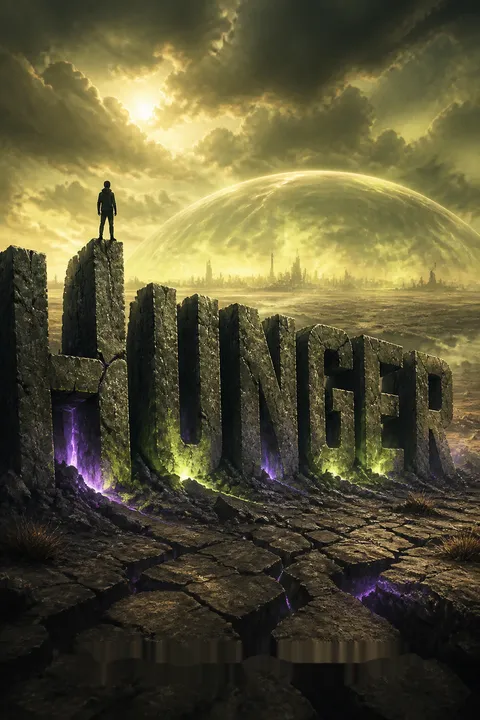
Hunger, the second book in Michael Grant's Gone series, receives mostly positive reviews with an overall 4.02/5 rating. Readers praise the gripping, action-packed plot featuring starving children in the FAYZ three months after adults disappeared. Many appreciate the realistic character development and intense survival themes, though some criticize the weak female characters and Sam's overly heroic nature. The large cast of characters occasionally confuses readers, and multiple perspectives can be distracting. While some find pacing issues, most readers find the book engaging and darker than its predecessor, eagerly anticipating the next installment.
People Also Read

Characters
Sam Temple
Reluctant town leaderSam is a fifteen-year-old surfer whose fire-producing power and quick judgment have made him the de facto protector of Perdido Beach. He cares intensely about the children in his charge, but that care becomes tangled with guilt: every death and shortage feels like evidence that he has failed personally. He is direct, impatient with abstract debate, and most comfortable when he can act on a visible danger. His relationship with Astrid offers intimacy and intellectual challenge, while his bond with Caine turns leadership into a family conflict as well as a political one. Sam’s central tension is between the ordinary adolescent life he still wants and the impossible responsibility others have placed on him.
Astrid Ellison
The FAYZ’s investigatorAstrid is Sam’s girlfriend and the older sister of Little Pete. She has no spectacular power, so she makes herself useful by observing, documenting, and testing what others dismiss as impossible. Her intelligence is disciplined, but she can use it defensively, hiding uncertainty behind technical language or keeping frightening information from Sam because she thinks he has enough burdens already. Her bond with Pete combines devotion with exhaustion; caring for him requires patience even when his inner life remains inaccessible. With Sam, she is both partner and critic, resisting the idea that leadership should excuse him from listening. She is driven by a need to make chaos legible, though evidence does not always arrive in time.
Caine
Sam’s power-hungry twinCaine is Sam’s fraternal twin and the strongest telekinetic in the FAYZ. Charming and politically perceptive, he knows how to make a plan sound like an invitation, even when its purpose is control. His ambition is partly a defense against helplessness: he wants to be the person who acts, not the person acted upon. A frightening encounter in the desert has left him vulnerable to an influence he cannot fully explain, complicating his confidence in his own motives. His relationship with Diana mixes attraction, dependence, and threat, while his rivalry with Sam carries the intimacy of brothers who know exactly where to wound each other.
Diana Ladris
Caine’s sharp-eyed adviserDiana can sense the relative strength of other mutants, a talent that makes her valuable and dangerous in a community organized around powers. She is intelligent, sarcastic, and difficult to impress, using wit to keep others from seeing how much she fears them. Her connection to Caine is genuine but not safe; she stays near him while retaining a fierce commitment to her own survival. Diana understands that loyalty can be exploited, so she rarely offers it without keeping an exit in mind. Her interactions with Jack show her skill at identifying what someone longs to hear, as well as the moral cost of using that insight.
Drake Merwin
The violent enforcerDrake is a Coates student with a tentacle-like replacement arm that functions as a whip. He is cruel, volatile, and drawn to the spectacle of other people’s fear. His attachment to violence is more than a tactic: it gives him a way to dominate situations where he might otherwise feel weak or subordinate. He presents himself as Caine’s loyal lieutenant, but their alliance is strained by his own appetite for power. Drake’s history with Sam makes their encounters intensely personal, while his contempt for vulnerable children reveals how little his idea of strength has to do with protection.
Lana Lazar
The burdened healerLana is a solitary teenager with the ability to heal injuries, a gift that has made her indispensable to the children of the FAYZ. She resists being treated as a public resource and retreats to the edge of town when constant demands threaten to erase her private life. Her past includes addiction and a painful sense that she is not the saint others imagine. Lana is courageous, but her courage is not fearlessness; it often takes the form of continuing toward a danger she knows may overwhelm her. Patrick, her Labrador, offers companionship without the expectations that come with being the Healer.
Edilio Escobar
Sam’s steady secondEdilio is Sam’s closest ally in practical matters and one of the few children consistently willing to take responsibility for the group. He drives, organizes guards, and faces dangers without needing to be the center of attention. Having grown up with poverty, he is less shocked by hunger than some of his peers, though that experience does not make the FAYZ’s brutality easy. Edilio’s loyalty to Sam is grounded in friendship rather than worship, which lets him challenge Sam while remaining at his side. He is attentive to the less powerful children and understands that a workable plan must account for ordinary human limits.
Albert Hillsborough
The resourceful organizerAlbert first earns trust by reopening the McDonald’s and organizing food, then begins thinking about labor, exchange, and long-term resources. He is practical, ambitious, and unusually willing to study how systems work. His proposals can look greedy because he wants currency and incentives where Sam and Astrid hope for communal duty. Yet Albert is not indifferent to the starving children; he believes survival requires structures that work even when people are tired or selfish. His growing authority unsettles him as much as it excites him. He wants to matter, and that desire can make him underestimate the risks of concentrating control.
Quinn
The wary fishermanQuinn is Sam’s old friend, a boy who often uses humor to cover insecurity and grief. He has made mistakes that damaged his standing with the others, and he continues to carry shame from the battle and from his past choices. Fishing gives him a task that is quiet, concrete, and separate from politics; his catches become an important source of food. Quinn is not naturally confident, but he can act when someone he cares about is in danger. His bond with Sam is marked by affection and disappointment, while his growing friendship with Lana offers him a chance to listen rather than perform.
Little Pete
The unknowable childLittle Pete is Astrid’s five-year-old autistic brother. He communicates selectively and often seems absorbed in a world no one else can enter. His Game Boy, routines, and familiar objects help him navigate a crisis that has removed every ordinary source of security. Astrid’s care for him is tender but strained, especially because she cannot always tell what he understands or what he needs. Pete’s imagination has an unusual relationship to the FAYZ’s changing reality, making him both vulnerable and consequential. The adults who once structured his care are gone, leaving Astrid and Sam to protect him without knowing the full nature of his influence.
Duck Zhang
The reluctant drifterDuck is a small, often overlooked sixth-grader who loves swimming pools and comic-book heroes. His power affects his density, allowing him to sink through earth or float, though learning to control it is frightening. Duck is not eager to fight or to be labeled a mutant, and he worries that a moment of anger could trap him underground. His humor helps him manage fear, but it also gives others an excuse to dismiss his experiences. He wants privacy and friendship more than status. When a crisis forces him to choose between self-preservation and helping others, his reluctance makes his choices feel earned rather than automatic.
Brianna
The high-speed messengerBrianna, known as the Breeze, can run at extraordinary speed and has fashioned a superhero identity around that ability. She is bold, funny, and impatient with being treated as less capable than the boys around her. Her speed makes her an invaluable messenger, but it also tempts her into stunts that outrun her judgment. Past cruelty at Coates has left her angry at Caine’s circle and protective of other mistreated mutants. She has an awkward, developing connection with Jack, whose intelligence attracts her even as his uncertainty frustrates her. Beneath the bravado, Brianna wants recognition without having to surrender her independence.
Computer Jack
The reluctant super-strong geekJack is a gifted computer specialist whose new physical strength feels foreign to him. He values technical problems because they reward concentration and skill, unlike the unpredictable social conflicts surrounding him. Jack wants his work to be respected, and that need makes him susceptible to people who promise him a serious challenge. His history with Diana complicates his trust, while Brianna draws out feelings he does not know how to manage. He is not naturally brave, but he can act when another person is in immediate danger. Jack’s conflict is between the identity he understands as a brain and the moral demands of the body he now inhabits.
Zil Sperry
The normals’ agitatorZil is a boy who was never especially popular before the FAYZ, but hunger and fear give him an opening to become a leader. He interprets mutant powers as unfair privilege and turns that suspicion into a movement against the children he calls freaks. Zil is not a disciplined political thinker; he borrows the language of justice to make revenge and control sound legitimate. Attention and the approval of a crowd excite him, while the responsibility of actually governing remains beyond his grasp. His resentment is real, but he repeatedly uses it to justify choices that endanger children who have little power to defend themselves.
Hunter Lefkowitz
The frightened new mutantHunter is a quiet boy whose power can heat targets from within. He does not understand its danger when it first emerges, and his terror after hurting someone is compounded by the community’s hunger for a culprit. Before the crisis, he had been part of Zil’s circle, which makes the sudden division between them especially painful. Hunter wants to be treated as a person rather than as a threat, but fear and shame leave him poorly equipped to explain himself. His story asks how a frightened child can be held accountable without reducing him to the worst thing he has done.
Orsay Pettijohn
The unwilling dream witnessOrsay grew up isolated at a national park with a ranger father and a mother whose addiction made family life unstable. Her ability draws her into nearby people’s dreams, whether or not she wants to see them. She has learned to live with loneliness, but the dreams provide an intense form of connection that can become compulsive. Orsay is observant and easily frightened, yet she is not passive; she knows that what she sees can place her in danger. Caine’s interest in her power forces her to distinguish her own curiosity from the uses others would make of it.
Dekka
The gravity controllerDekka can alter gravity within a limited area, giving her the ability to lift objects and change how people move. She is self-contained, watchful, and wary of being read too easily. Her time at Coates taught her to notice cruelty before it becomes open violence, and she tends to respond with steadiness rather than display. Dekka’s attraction to Brianna is private and complicated by the younger girl’s brashness and uncertain interest. She respects courage but does not romanticize it. In a crisis, she is willing to take charge, though she would rather not have others mistake composure for fearlessness.
Mary Terrafino
The day-care caretakerMary runs the day care with her younger brother, John, and shoulders much of the daily work of feeding and calming the smallest children. She is organized, dependable, and accustomed to placing other people’s needs before her own. The collapse of familiar routines intensifies a preexisting struggle with body image and food, which she hides behind care for others. Mary’s relationship with John is protective, but her promise to remain with him also carries guilt and fear. Her character shows how competence can conceal serious distress, especially when a community rewards self-sacrifice and has little access to treatment.
John Terrafino
Mary’s watchful brotherJohn is Mary’s younger brother and a dependable helper at the day care. He pays attention to the needs and moods of the small children, even when he is tired and frightened himself. The disappearance of their parents leaves him especially dependent on Mary, and her promise not to abandon him becomes a source of security. John can be blunt when panic gives way to anger, but his concern is rooted in attachment rather than cruelty. He is one of the children learning adult responsibilities before he is ready, with few models left to show him how.
Orc, Charles Merriman
The stone-skinned giantOrc is a large boy whose body has become coated in gravel-like stone after a coyote attack. He is strong and hard to injure, but the small areas of living skin on his face leave him vulnerable. Before the FAYZ, he used the name Orc as a way to project menace; as his body becomes monstrous, he asks others to remember the human name Charles. His intelligence is limited, but his emotional responses are direct and often more generous than people expect. Howard manages him, while Sam’s willingness to bargain with him earns a measure of trust.
Bug
The camouflaged scoutBug, whose given name is Tyler, can camouflage himself until he nearly disappears into his surroundings. He is a skilled observer but has learned to survive by shifting loyalties toward whoever seems most likely to protect or feed him. His childhood involved neglect and violence, which helps explain his caution without excusing his betrayals. Bug is hungry for security as much as food, yet he distrusts promises and prefers to keep several options open. His ability makes him useful as a spy, while his history makes genuine loyalty difficult for him to recognize.
Brittney Donegal
The determined young guardBrittney is a young guard at the power plant who takes her assignment seriously because she remembers the children lost in the earlier battle. She is not naturally confident, but she has built courage through training and a promise to protect the people who depend on her. Her faith and memories of her younger brother, Tanner, give her a private source of steadiness. Brittney is easily underestimated because of her age and appearance, yet she is willing to remain at her post when others flee. Her character connects the abstract idea of duty to the very concrete fear of being left alone with a weapon.
Howard Bassem
Orc’s ambitious managerHoward manages Orc’s work and tries to turn their partnership into influence within the hungry community. He is socially alert and opportunistic, often testing whether people with resources might become allies. His ambition can make him seem calculating, but he also has an unusual loyalty to Orc and understands how others exploit the boy’s strength. Howard’s humor and casual bravado mask a sharp interest in status. He sees that power in the FAYZ comes not only from mutant abilities but also from food, labor, and the ability to persuade people to follow.
Taylor
The teleporting scoutTaylor can teleport by concentrating on a destination, making her one of the fastest ways to carry information across the FAYZ. She is younger than Sam and admires him, partly because he helped rescue her from the brutal treatment at Coates. That gratitude can make her too willing to risk herself for his approval. Taylor is brave without pretending to be invulnerable, and she often recognizes when a situation needs immediate action. Her loyalty is an asset, but she is still learning that serving someone does not require surrendering her own judgment.
Plot Devices
The FAYZ barrier
A sealed world for childrenThe FAYZ is an isolated zone in which everyone older than fourteen has disappeared, leaving children to build their own society. Its boundary cannot be crossed, and the older children who reach fifteen face a mysterious choice to remain or leave. The barrier makes every shortage immediate because there is no dependable outside help, while the age limit gives each birthday the weight of a possible disappearance. It also forces children into roles that normally belong to adults: governing, farming, medicine, policing, and caring for younger children. The setting’s central pressure is not merely confinement, but the sudden transfer of responsibility to people still growing up.
Mutant abilities
Power made personal and politicalChildren in the FAYZ develop abilities that range from Sam’s burning light and Caine’s telekinesis to Brianna’s speed, Dekka’s gravity control, and Lana’s healing. Powers often emerge under stress, so the moment of discovery can also be dangerous to bystanders. Their uneven distribution creates a social divide: some children treat mutants as protectors, while others see them as a privileged group that can dominate everyone else. The abilities are practical tools in fights and survival, but they also become identities that children did not choose. The story repeatedly asks whether power creates responsibility, resentment, or both.
The zekes
Predators guarding the harvestThe zekes are mutated underground worms with teeth and tiny paddling structures that let them bore through living bodies. They defend fields as if they were territory, making crops dangerous to gather just as the children’s food stores run low. Their apparent coordination leads Astrid to suspect that they are connected to a larger intelligence. Conventional attacks can destroy individual worms but do not make the fields safe. The children eventually discover that they can distract the creatures with other animals while harvesting nearby, turning observation into a fragile working arrangement. The zekes keep the food crisis active even after the immediate threat in the mine is confronted.
The gaiaphage
An intelligence beneath the mineThe entity the children call the Darkness, and Caine names the gaiaphage, lives in a cavern beneath an abandoned mining settlement. It influences people who have encountered it, exploits their fears and abilities, and uses Little Pete’s imagination to develop possible forms. Its need for radiation connects it to the old power-plant accident and gives Caine a reason to seek uranium. Lana’s healing power is central to its attempt to shape a body capable of escaping the mine. The creature’s nature and limits are gradually inferred through dreams, mutations, and the characters’ experiences rather than explained by a reliable authority.
Gold and improvised currency
Trade beyond shared rationsAs stored food disappears, Albert argues that voluntary cooperation alone will not organize the labor needed to harvest, preserve, and distribute supplies. He begins using batteries and paper goods as club admission, develops a fish trade with Quinn, and searches for gold to support a larger currency. Gold gives him a scarce backing material, while McDonald’s Monopoly pieces can serve as smaller exchange tokens. The device reflects the community’s argument about fairness: Sam fears that markets will concentrate power, while Albert believes exchange can motivate specialized work. The scheme is not a simple cure for hunger; it is an attempt to make cooperation continue after goodwill runs thin.
Gone Series

About the Author
Other books by Michael Grant

Download PDF
Download EPUB
.epub digital book format is ideal for reading ebooks on phones, tablets, and e-readers.








