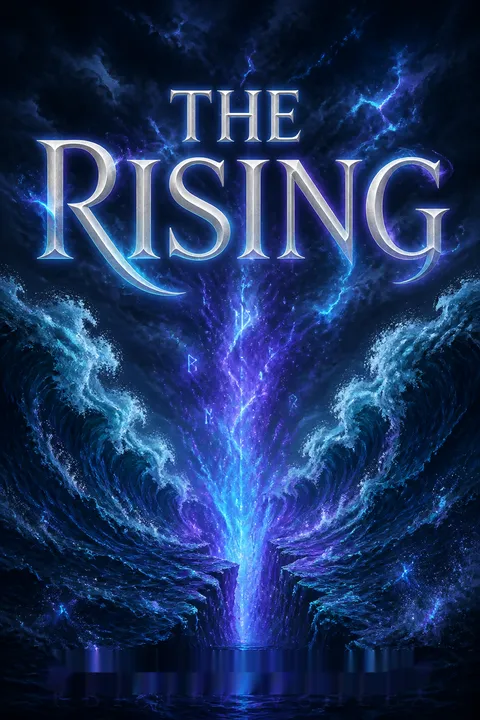


Plot Summary
The Beast Takes Form
At a remote farm, Marian lies injured beside a dead child while the Beast kills the child’s parents. She had helped him rise from beneath the ancient ritual ground, believing him gentle, misunderstood, and bound to her. Now he admits he joined forces with the priest Jellan and needed Marian’s magic to ascend.
The killings were not an accident of his transformation: the Beast wanted a human meal, and he tells Marian that his larger purpose is to destroy the gods and take their kingdom. He leaves her behind, hurt and horrified, while Jellan prepares to follow. Marian understands that the creature she loved has been using her, but she is still trapped in the danger she helped unleash.
Marian’s shock comes from more than discovering a monster’s violence. She must revise the meaning of her own choices: what felt like compassion for an injured, isolated being has also served a calculated plan. The Beast exploits a familiar human vulnerability, the wish to be the one person who understands someone dangerous. By making Marian’s magic necessary to him, he has turned intimacy into leverage. Her sudden moral clarity does not erase her complicity, and that unresolved guilt gives the opening its force: she is both a victim of manipulation and a person who helped make catastrophe possible.
Unicorns Cross the Miles
Far from the Night Heights, King True and King Mars each fear they cannot reach Prince Cassius and Queen Elena before a rebel force overwhelms them. A unicorn appears to True’s company; a second finds Mars’s. The creatures lead both armies into a passage of purple light, carrying them across vast distances in moments. At the same time, the Great Coven senses a disturbance in the magical Veil.
Melisse, newly summoned to join the witches, refuses to remain for the ceremony and returns to the front. The unicorns deposit the kings and their riders near Cassius’s embattled troops. Their impossible arrival changes what had seemed certain: Cassius and Elena may yet have help, though they still face an army many times their size.
The unicorns turn distance from a fixed military fact into a magical problem the story can temporarily solve. Their intervention does not make the coming fight easy; it makes survival conceivable. That distinction matters. The kings still arrive at a battlefield where their allies are outnumbered and exposed, so rescue cannot substitute for judgment or courage. Melisse’s abrupt departure also marks the cost of treating ritual order as more urgent than immediate danger. Across these events, power is presented not as a personal possession but as a network of timely obligations, connecting people who would otherwise be too far away to help.
The Heights Hold
Cassius and Elena attack before the twelve thousand rebel militia can prepare. Nadirii archers bring down the poorly armored first line, while cavalry drives through the camp and deserters flee into the forest. Trolls and sheer numbers soon threaten to overwhelm them.
The Zees strike the left flank, and Fern’s oppressed women attack from the right, forcing the rebels to divide their attention. Serena fights beside Elena and Cassius, protecting them as the melee closes in.
When the defenders are nearly surrounded, the unicorn Sky unleashes a ring of magic after Elena’s call, knocking down the soldiers nearest the royal couple and breaking the enemy’s nerve. True and Mars arrive with their forces in the final surge. The rebels retreat, and Cassius’s side survives.
The victory is won through alliances that are practical as well as moral. Archers, cavalry, Zees, and women who have been denied military standing each contribute a distinct advantage. Cassius’s refusal to use dragons against the rebel army preserves the possibility that some opponents can be spared, but it leaves his forces at greater risk. The battle therefore tests whether justice can remain discriminating under pressure. Elena’s magic and Sky’s intervention prevent defeat, yet neither makes violence clean. The scene’s political argument is embodied in the battlefield: a new order can prevail only when those excluded from the old one are allowed to act.
Victory's Dead
After the fighting, Cassius learns that Jasmine and Rosehana are dead, Antonius is mortally wounded, and other allies have fallen. Antonius dies before Cassius can give him the soldier’s poison, sparing his friend that final task.
Macrinus, shattered by Jasmine’s death, insists on carrying her to the place she had chosen for her burial. Elena seeks Cassius out and clings to him through her grief, while he admits that the losses have changed what he will tolerate.
He declares that Airen’s feudal system will end: lords will lose inherited land, and their castles will become schools, hospitals, and other public institutions. Cassius has won the battle, but the cost hardens his resolve to remake the kingdom that sent people to kill his loved ones.
Cassius’s reform is not a detached policy response. Grief supplies emotional force to a political conviction he already held, while the deaths make compromise with the old hierarchy feel morally impossible. His anger risks becoming punitive, especially when he considers dragonfire against the gentry, but his refusal to incinerate the entire rebel force shows that he still distinguishes leaders from those drawn into the conflict. Elena’s private mourning anchors the public decision in human consequence. The section shows how personal loss can sharpen justice while also making it dangerous: a ruler must transform pain into institutions rather than allow pain alone to govern.
A Brother in the Deep
In Amphite, King Aramus tries to secure an alliance with Jorie, the King of the Mer, after the Mer seize him and Ha-Lah. Jorie explains that his late father unknowingly fathered a daughter on land, and the new Queen of Firenze’s silver eyes revealed that daughter to be Silence. Once Jorie reaches the battlefield, Mars allows him to meet her.
Silence learns that the father who raised her was not her birth father, and that the Mer king is her brother. Jorie explains that she can transform in salt water and breathe beneath the sea. With him and Ha-Lah beside her, Silence dives from a ship and discovers her mermaid form, then swims among dolphins. The sea gives her a home and kinship she never knew she had lost.
Silence’s discovery reorganizes her past without cancelling it. The neglect she experienced remains real, but it is no longer the only account of where she belongs. Jorie’s arrival offers kinship through recognition rather than obligation, while Mars’s protective presence shows that she already has a chosen family. Her first swim turns identity into physical knowledge: the sea is not an abstract ancestry but a place her body knows how to inhabit. The scene’s emotional abundance is deliberately overwhelming. Silence has spent a life interpreting absence; now she must learn to receive connection without treating it as something she has to earn.
The Enchantments Burn
The allied rulers race to the Enchantments after learning that attackers are battering its protective Veil with burning missiles and siege engines. Each impact opens a breach, and flames begin to spread through the Nadirii homeland.
Farah and Silence notice a line of sorcerers sustaining the assault, then charge them before the warriors below can respond. Silence hurls fire; Farah discovers that she can command wind and sends the sorcerers flying through the trees.
As the enemy’s machinery burns and prisoners are taken, the forest fire grows beyond the reach of ordinary rain. Farah draws wet leaves up from the forest floor and smothers the blaze, saving the Enchantments and much of the forest. The effort drains her magic and leaves her unconscious in True’s arms.
Farah and Silence step into powers that their royal roles had not required them to name before. Their magic is not a convenient inheritance that removes risk: each woman must recognize what she can do while the danger is already unfolding. Farah’s use of the forest itself to extinguish fire turns protection into a relationship with place, not merely an act of force. The aftermath matters as much as the triumph. Her collapse makes visible the bodily cost hidden by the spectacle of magic, while True’s pride, rather than anger, confirms that care need not mean confinement. The section expands what leadership can look like without pretending its costs disappear.
Seven Women Follow
Teddy, a former acolyte who escaped the Beast’s ritual site, shelters seven abducted women in an abandoned stable. Moira, who helped free the others, insists they travel with him toward Notting Thicket so he can report what happened.
They walk hungry through the forest, stealing food only when necessary, and avoid roads because the women fear being captured again. At last, Faunus and Saturn find them with a company of Firenz warriors.
Their reunion gives the women food, baths, and protection, but Teddy still insists on reaching the authorities so the missing victims can be identified and their killers pursued. He tells Faunus that the Beast has risen. The rescued women choose to remain with Teddy, whose care has become the first safety they can trust.
Teddy’s leadership is built from attention rather than rank. He lets the survivors share decisions, records where they are going so their families can find them, and treats their fear as information instead of weakness. Moira’s insistence on continuing with him complicates the idea that rescue restores a person to her previous life; safety can also mean choosing a new direction. Teddy’s own history of moral failure gives his actions added weight. He does not claim innocence or authority. He earns trust through repeated acts of protection, showing that a person can become responsible by doing the work that responsibility requires.
The Missing Girls Count
At Birchlire Castle, the injured counsellor Alfie receives a report that thirty-two women have been found murdered in the Lesser Thicket, with earlier missing-person notices ignored or dismissed by the crown. He demands the records and confronts King Wilmer, who admits he barely attended to the warnings.
Alfie’s investigation connects the victims to a hidden ritual site and to the wider danger of the Rising. At the same time, Bronagh refuses to let Alfie reduce his life to his duties and disability.
She presses him to leave the castle, enjoy food, and accept companionship. After he listens to her, Alfie begins to imagine a future beyond work. Their growing intimacy gives the investigation a personal counterpoint: attention, withheld by the crown, is offered freely between two people.
The murders expose a political failure that is measured not only in bodies but in the time authorities had to act. Wilmer’s negligence is not a single dramatic betrayal; it is a routine disregard for people whose suffering does not inconvenience the powerful. Alfie’s diligence offers an ethical alternative, though his tendency to equate usefulness with worth makes him vulnerable to a quieter form of self-erasure. Bronagh challenges that equation without denying his injury or duty. Her insistence that his life contain pleasure as well as service makes care reciprocal: she helps him imagine a future, and he must allow himself to inhabit it.
The Arbor Loses Its Lord
Johan Mattson’s wife, Vanka, discovers him with a prostitute in a brothel, where he has also placed women to spy on King Mars and Queen Silence. Vanka petitions to dissolve their household, and the constabulary arrests Johan for treason.
Once Silence’s true parentage is known, True strips Johan of his title and land, then holds the Arbor for Silence’s future family. In Sky Bay, the returning rulers find citizens openly displaying the colors of a reformed Airen, and the old citadel is being brightened under Elena’s influence.
Silence later faces Vanka and names the choices that kept her from knowing her real family. She allows her mother a place in her life, but refuses to take responsibility for her mother’s dependence. Her new position does not erase the harm done to her.
Johan’s downfall joins private entitlement to public misconduct. His assumption that marriage, rank, and political access are his to use becomes visible in the same room where Vanka finally sees the pattern for herself. Silence’s confrontation with her mother is more difficult because the injury comes wrapped in genuine affection. She can acknowledge that Vanka loved her and still refuse the bargain that love requires her to become a caretaker. This is a psychologically mature boundary: compassion is preserved, but responsibility is returned to the person who must bear it. Airen’s public change and Silence’s private change both depend on ending inherited arrangements that excuse harm.
Serena Chooses Her Sister
After the battle, Serena guards Jasmine and Rosehana’s shrouded bodies and refuses Chu’s attempt to comfort her. She believes their earlier intimacy was manipulation and insists that duty, not romance, now defines her.
Yet she begins to grieve openly with him, and they acknowledge how pride and hurt kept them apart. Elena asks Serena to become her leading general in the war for Airen, and Serena accepts without hesitation.
She also confronts Heloise when her former companion insults Serena’s gnome allies, making clear that loyalty to the queen and respect for those allies are conditions of service. Serena and Chu reconcile, but she does not surrender her ambitions or voice. Her growing trust in her sister’s love lets her choose both family and her own future.
Serena’s development is not a simple movement from hardness to softness. She remains decisive and martial; what changes is her understanding of vulnerability. Grief finally permits her to admit that Chu matters, while his apology does not require her to pretend the earlier injury was harmless. Her appointment as general gives the relationship a political context: Elena’s trust is a practical responsibility, not merely an emotional reassurance. Serena’s defense of the gnomes also tests whether reconciliation has changed her values. She is no longer using distance as proof of strength, but neither does she confuse love with obedience.
The Cauldron Draws Power
At the Cauldron, the five queens and Serena form a circle to draw magic from witches who have joined the Veil, including Ophelia, Jasmine, and Rosehana. Melisse warns them to hold to one another as the ritual intensifies.
Wind, surf, smoke, heat, and living vines engulf the circle, while angmostros rise from the sea. The women keep their hands linked and name their shared purpose until the power passes into them. The ritual leaves each of them feeling more fully connected to land, sea, sky, fire, and sisterhood, but it frightens the kings watching from a distance.
Farah, Silence, and the others must now learn to carry power that may be difficult to control. Serena and Chu, meanwhile, begin to discuss marriage and the kind of family she wants.
The ritual makes inheritance collective rather than dynastic. The women do not receive power as a private reward; they ask for it from those who have already died, and the circle’s grip becomes the means of surviving its force. That physical connection offers an answer to the isolation that has shaped several of them, but it does not make the borrowed magic safe. The kings’ fear registers a genuine conflict between protection and agency: they can see the danger, yet cannot choose in their wives’ place. Serena’s conversation with Chu echoes the ritual’s central demand, which is to speak desires clearly instead of letting pride decide what a relationship can contain.
The Rainbow Wedding
Cassius and Elena marry at the Combined Cathedral in Sky Bay, surrounded by the allied rulers, their daughters, and citizens who have filled the streets with New Airen colors. Elena wears a lavish pink gown that overturns the austere expectations of Airenzian royal marriage.
The ceremony joins the former enemies of Airen and the Nadirii in a union no one could once have imagined. When Cassius kisses Elena, a rainbow of magic fills the cathedral and streams into the sky.
The display confirms that the prophesied couples have reached their full power, but it also draws the attention of forces beyond the court. Jellan sees the light from the road and hurries toward Sky Bay, while Marian and the Beast recognize that it signals the place they must reach.
The wedding turns a private bond into an event the kingdom can witness and reinterpret. Its vivid color counters Airen’s older politics of austerity and exclusion, while the public procession lets ordinary citizens claim the new order alongside its rulers. Yet the rainbow is not only celebratory. It announces the power of the couples to allies and enemies alike, converting love into a visible strategic fact. The scene’s joy therefore carries exposure: what makes Elena and Cassius powerful also alerts the remaining threat. Their union does not escape history; it gives history a different image to organize around.
Four Stones Open
At Silbury Henge, the Beast reaches the standing stones with Marian and begins tearing open the prisons that held his siblings. When Marian tries to flee, he wounds her and uses the stones to release the others. Melisse, Lena, Rebecca, and Nandra arrive with the Great Coven and attack. They manage to destroy one newly released demon, but Rebecca and Nandra die in the effort, while Melisse and Lena are left depleted.
Marian’s own life ebbs on the central slab as the remaining demons escape into the snow. The Coven confirms that four beings remain free. Their victory has prevented a larger assault, but it has cost two of the most powerful witches and has not stopped the Beast from bringing his siblings into the world.
The Henge makes the cost of partial victory impossible to soften. The Coven succeeds, but success means one enemy destroyed at the price of two witches and Marian’s life. The scene also reverses Marian’s earlier role: she once helped the Beast rise, but now her attempt to resist him cannot undo the harm already set in motion. Her fate is neither simple punishment nor clean redemption. The released demons inherit a world whose protectors are suddenly diminished, so the balance of power changes at the exact moment the heroes have reason to celebrate the first kill.
The Tomes Name Demons
Jellan reaches Sky Bay claiming he has escaped the Beast, but Cassius and the other rulers recognize his role in the Society that sought to raise it. Interrogators learn that the Society’s members hoped to control the Beast for the Rising, though Jellan pursued power for himself.
After he admits that the Society sacrificed women, the rulers imprison and kill him. Go’Doan scholar G’Ry examines the ancient books and identifies the freed beings as demons created by the gods, powerful and purposeful rather than mindless.
The rulers learn that four remain. G’Ry argues they may need to separate into pairs and hunt, while True proposes drawing the demons to the Mouth of Triton. The allies take the risk of baiting them toward a place where the Mer and dragons can help contain them.
Jellan’s exposure strips away the convenient fiction that catastrophe belongs only to a single misguided priest or rogue witch. The Society’s history shows how organized violence can borrow religious language to make domination feel sacred. The tomes offer facts, but not certainty; even learned authorities cannot fully distinguish myth from evidence. That uncertainty makes the rulers’ planning a moral problem as well as a military one. They must act on incomplete knowledge while resisting the temptation to treat old stories as instructions. The decision to lure the demons toward the Mouth is an attempt to make danger legible and bounded, though the plan cannot guarantee that anyone will emerge unharmed.
The Wraith Army Advances
As the allied rulers move into Mar-el, they discover that the demons have raised an army from people their venom has transformed. The victims remain alive but lose conscious control of their bodies, becoming attackers who feel no pain.
This reveals that earlier accounts of the demons’ powers were incomplete. The rulers divide their forces, while the queens use protective magic and the Mer, dragons, wolves, Mystics, Zees, gnomes, and Nadirii prepare to hold the approach to the Mouth of Triton.
The transformed army attacks before every group can reach its position. Fighting spreads across the cliffs, and the demons prove faster and more dangerous than the old records suggested. The plan to lure them into a trap becomes a desperate defense against a force already on the move.
The venom transforms the central problem from defeating monsters to confronting people whose bodies have been commandeered. The allies cannot treat every attacker as a willing enemy, yet the victims’ lost agency does not make them less dangerous. The book’s recurring question about power and responsibility becomes brutally physical: who bears the consequences when control is taken away? The battlefield also exposes the limits of inherited knowledge. The Go’Doan records offered reassurance about the demons’ abilities, but lived experience overturns it. Survival depends on listening to those who witness what is happening, adapting quickly, and treating every alliance as essential rather than ornamental.
The Mouth Takes Teddy
At the Mouth of Triton, the transformed army overruns the defenders, while demons and dragons clash above the abyss. The four kings’ magic finally manifests in their weapons, and Silence, Farah, Elena, and Ha-Lah combine fire, wind, earth, and water against the demons.
When Daemon seizes Faunus by the throat and threatens to kill him, Teddy sees that the rulers cannot strike without hitting his lover. He charges across the battlefield. Faunus kicks free, but Teddy collides with Daemon, sending both over the cliff into the Mouth.
Teddy dies in the fall, and a great shaft of light bursts from the abyss. Triton and Medusa rise from their confinement, while the surviving allies understand that Teddy’s act has ended the demonic threat at a cost they cannot reverse.
Teddy’s choice completes the movement from a life shaped by shame toward one defined by deliberate care. He does not act because he believes himself expendable; he acts because he sees the person he loves in immediate danger and refuses to leave the decision to someone else. That choice is heroic, but the narrative does not make it painless or pretend that love can bargain death away. The light from the Mouth gives his sacrifice cosmic consequence, yet its emotional meaning remains painfully intimate: Faunus survives, and Teddy does not. The climax refuses the comforting idea that a just cause protects its best people from loss.
A Day of Great Mourning
After the battle, the surviving rulers gather the people still trapped in their venom-stilled bodies. Ha-Lah uses a vast tidal wave to carry them into the sea and end their suffering, then collapses in Aramus’s arms. The rulers name a day of mourning for those lost across the realms, including Teddy, and the people of Mar-el answer grief with a communal vigil on the shore.
Whales and dolphins rise through the waves as the mourners sing. Triton and Medusa later offer the rulers brief reunions with lost loved ones, not a reversal of death but a chance to say goodbye. The kingdoms receive magical tridents that let them visit one another. Their alliance survives the war, and the boundaries between their peoples begin to open.
The resolution does not equate victory with emotional recovery. Ha-Lah’s act of mercy saves the living from continued violation, but it costs her strength and offers no comfort to those who mourn. The public day of remembrance prevents sacrifice from being absorbed into triumphal history as a mere price paid for peace. The gods’ brief reunions preserve the boundary of death while acknowledging the human need for farewell. Even the tridents, a practical gift of movement, extend the story’s political answer: survival is not enough if each realm retreats behind its old borders. Mourning becomes a shared civic practice, and shared grief supports a more durable peace.
Epilogue
The epilogue follows the survivors into lives shaped by both absence and renewal. Faunus, Saturn, and Moira grieve Teddy together, while Nyx and Lorenz receive his final words and keep his memory close. His sacrifice earns memorials in Wodell and Firenze.
Serena sails with Chu to face danger in his homeland, and the allied queens later raise children together. Cassius and Elena, True and Farah, Mars and Silence, and Aramus and Ha-Lah build families within the wider peace they helped win. The story closes not by erasing the dead, but by showing their names carried into homes, histories, and the next generation.
The epilogue treats family as something made through care, not simply inherited through blood or title. Teddy’s death continues to shape the people who loved him, but his memory is carried into a future that includes chosen kin, public memorials, and children who will grow up hearing what their elders endured. The gods’ gift cannot restore the dead to ordinary life, so grief remains part of the peace rather than a flaw in it. Serena’s departure also keeps the ending open: the alliances forged here have consequences beyond the immediate victory. Closure arrives as continuity, not as a claim that loss has been repaired.
Analysis
The Rising joins a political revolution to a supernatural emergency, then insists that the two cannot be separated. Airen’s rebellion against the Allied Gentry is not background scenery for the Beast plot: the same cultures that deny women education, wages, and military authority also make it easier for powerful men to treat other lives as expendable. Cassius’s reforms matter because they alter who can participate in the realm’s future, while Elena’s command and Serena’s leadership demonstrate that women’s competence was never absent, only suppressed.
The novel’s central tension concerns the difference between protection and control. Kings want to shelter their wives from danger, but the witches’ choices repeatedly prove that love cannot mean deciding another person’s limits. The Great Coven’s ritual makes that problem literal. The women accept inherited power together, hold one another through its force, and risk bodily harm for the sake of a wider community. Their strength is collective, but it is not cost-free.
The romances provide a counterpoint to the old political order. True must respect Farah’s emerging power; Mars must allow Silence to discover her own identity; Serena and Chu must confront how pride damages trust; Cassius and Elena build a union that becomes publicly transformative. These relationships are not presented as substitutes for institutions. Rather, they model forms of mutual recognition that the new laws attempt to establish on a larger scale.
Teddy’s sacrifice brings the argument to its most painful point. A man once shaped by shame becomes someone others can trust, yet his moral growth does not protect him from death. The book refuses to make virtue a guarantee of safety. Instead, it measures victory by what survives his loss: shared mourning, political alliances, new families, and histories that record the people once ignored. Its final hope is not that suffering was necessary, but that those who remain can build a world less willing to repeat it.
Review Summary
The Rising received mixed reviews, with many praising its epic fantasy elements, character development, and world-building. Readers appreciated the strong romances and intricate plot, though some found the multiple storylines overwhelming. The audiobook narration was highly praised. Criticisms included the book's length, repetitive scenes, and controversial character fates. Some felt the final battle was anticlimactic. Despite these issues, many readers found the series captivating and eagerly anticipate potential spin-offs.
People Also Read

Characters
Elena
Nadirii queen and reformerElena is a warrior and queen whose authority rests on both courage and practical judgment. She loves Cassius, trusts the women she leads, and understands that protecting her people requires more than winning battles. Her instinct is to build structures that let others act, whether by delegating command or imagining gates between formerly divided realms. Grief does not make her less decisive, but it makes the cost of every decision more visible. Elena’s strength lies in combining tenderness with political clarity: she can mourn a friend, challenge a king, and still turn toward the next responsibility.
Cassius
Airenzian prince and liberatorCassius is a capable commander whose central loyalty is to the people and companions who trust him. He is deeply protective of Elena and his daughters, yet his idea of protection broadens into political reform: he wants women educated, fairly paid, and free to make their own choices. His grief can sharpen into vengeance, so he must keep distinguishing justice from retaliation. Cassius’s emotional restraint often gives way around the people he loves, revealing a man who is not untouched by fear but is willing to act despite it. He wants a future where inheritance no longer excuses cruelty.
True
Wodell’s principled kingTrue governs through patience, conscience, and an unusual willingness to listen. He values mercy, but he is not passive: when the danger becomes undeniable, he commits his army and accepts the responsibilities of rule. His marriage to Farah makes his emotional life more open, while his old love for Elena remains part of his history without controlling his present. True’s strongest tension is between his wish to shelter others and his recognition that they have the right to choose danger for themselves. He is a ruler who treats tenderness as a source of judgment, not a weakness.
Farah
Wodell queen and witchFarah is observant, warm, and more formidable than she initially believes herself to be. Her love for True gives her a secure place from which to speak plainly, including when he must be reminded of his duties as king. She approaches conflict with an instinct for empathy, but empathy does not prevent her from using force when lives are in danger. Her emerging magic asks her to accept a kind of power she has not yet learned to control. Farah’s combination of humor, political insight, and courage makes her a mediator who can also act decisively.
Mars
Firenze’s fierce kingMars is a warrior and ruler who shows love through loyalty, protection, and direct action. His marriage to Silence softens neither his forcefulness nor his fierce devotion; instead, it gives those qualities a more personal purpose. He is protective enough to risk becoming overbearing, particularly when danger threatens the people closest to him. Mars respects strength when he sees it, even when it belongs to someone he would rather keep safe. Beneath his certainty is a man deeply afraid of loss, and his growth depends on learning that guarding someone is not the same as deciding for them.
Silence
Firenze queen and hidden heirSilence is thoughtful, perceptive, and quietly brave. She often listens before speaking, but her reserve should not be mistaken for helplessness. She loves Mars while retaining her own judgment, and her curiosity lets her meet unfamiliar parts of herself with wonder rather than shame. Silence’s gentleness is active: she notices emotional needs, builds relationships, and steps forward when danger requires it. She is still discovering what power and belonging mean to her, but she does not need to become louder or harder to claim her place. Her strength lies in knowing when to be calm and when to act.
Aramus
Sea King and pirate reformerAramus is a commanding sea king whose first instincts are action, loyalty, and protection. Ha-Lah challenges him to understand that authority carries obligations to people and creatures beyond his own fleet. He is capable of changing his laws when he recognizes their injustice, though he remains impatient and fiercely protective when danger is near. Aramus’s rough humor tempers his severity, and his love for Ha-Lah gives him a reason to reconsider what kind of king he wants to be. He is at his best when strength becomes service rather than possession.
Ha-Lah
Mar-el queen and conscienceHa-Lah is emotionally perceptive and politically influential, with a gentle manner that conceals stubborn courage. She helps Aramus see the human consequences of his rule and does not hesitate to disagree with him when his instincts outrun his compassion. Her loyalty is expansive, extending beyond her marriage and homeland to the alliances she helps bring together. Ha-Lah can be playful and warm, but she is also willing to enter danger when others need her. She understands that love is not merely affection; it is a force that can change what a ruler considers worth protecting.
Serena
Nadirii warrior and commanderSerena is disciplined, formidable, and accustomed to measuring her worth through usefulness. Her military skill and fierce loyalty make her a trusted protector, but her confidence in battle does not shield her from emotional injury. She has to learn that allowing others to care for her does not diminish her strength. Her love for Chu unsettles the self-sufficiency she has built around herself, while her bond with Elena gives her a different model of family. Serena’s development is not a retreat from command; it is an expansion of what she permits herself to want.
Chu
Trusted warrior and loverChu is a skilled and devoted warrior whose confidence can become stubbornness. He loves Serena intensely, but his pride and earlier choices damage the trust between them. When he recognizes that harm, he has to do more than insist on his feelings; he must listen to what Serena needs and respect the life she is building. His sense of loyalty extends to his king and comrades, while his past gives him reasons to keep parts of himself hidden. Chu’s appeal lies in the contrast between his physical certainty and the vulnerability he reveals when he speaks honestly.
Tedrey Swensson
Teddy, the rescued teacherKnown as Teddy to his friends, Tedrey is a teacher whose past includes serious moral failures and a long struggle to become someone he can respect. He is observant, gentle, and unusually willing to let vulnerable people participate in decisions that affect them. His courage is not theatrical; it appears in the practical work of helping others escape, survive, and find their families. Teddy’s sense of belonging is chosen and earned through friendship, particularly with Faunus, Nyx, and Lorenz. He fears being unworthy of love, even as his actions repeatedly show the care he is capable of giving.
Faunus
Trusted warrior and protectorFaunus is a powerful Firenz warrior who pairs physical confidence with fierce loyalty. He is direct, protective, and accustomed to making decisions quickly, traits that can become possessive when he fears losing someone. His bond with Teddy requires him to recognize that devotion must include respect for Teddy’s choices, not only a desire to keep him safe. Faunus is also deeply shaped by brotherhood and the codes of his warriors. His tenderness appears most clearly when he offers practical care, stands by those he loves, and allows himself to be changed by them.
Marian
Witch caught in darknessMarian is a witch whose intelligence and independence coexist with a profound desire to be understood. She can read people, negotiate with danger, and recognize when a situation is becoming worse, yet emotional attachment can cloud her judgment. Her relationship with power is complicated by the belief that she can guide or contain forces stronger than herself. Marian’s story asks what responsibility remains when affection has been manipulated and a person’s choices have helped cause harm. She is neither simply innocent nor simply cruel, but a woman struggling to recover agency after making dangerous compromises.
Daemon
The Beast’s human faceDaemon is an ancient, calculating being who can appear beautiful and vulnerable while pursuing power on a vast scale. He understands how affection, dependence, and promises can influence people, and he uses those skills without sharing their moral limits. His ambition is not merely appetite; he believes extraordinary power entitles him to remake the order that governs him. That conviction makes him more dangerous than a mindless creature, because he can plan, adapt, and charm. Daemon’s human appearance functions as a weapon: it invites trust just long enough for trust to become leverage.
Jellan
Priest seeking advantageJellan is a Go’Doan priest whose ambition has always outrun his loyalty. He is observant and opportunistic, quick to assess which powerful person might benefit him next. His interest in knowledge and magic is less scholarly than acquisitive: he wants access, status, and control. Jellan’s skill at adapting his story makes him difficult to trust, especially when danger gives him a chance to present self-interest as service. He represents the way institutions can shelter people who use belief as a cover for personal power.
Jorie
King of the MerJorie is a confident sea king with formidable magic and an unexpectedly warm attachment to family. He speaks bluntly, enjoys his power, and expects other rulers to recognize the authority of the Mer. Yet beneath his imposing manner is a generous, affectionate man who wants to make up for lost time with the people he loves. His long separation from land gives him a fresh perspective on human politics, while his loyalty to his people shapes every alliance he makes. Jorie’s humor and tenderness prevent his strength from becoming mere intimidation.
Macrinus
Cassius’s battle-hardened lieutenantMacrinus is a seasoned soldier and one of Cassius’s closest companions. His irreverence can lighten a tense room, but it does not make him careless about loyalty or duty. He is capable of great tenderness and of devastating grief, especially when love and war become inseparable. Macrinus expresses care through presence and action rather than elaborate explanation. He is also a reminder that a commander’s decisions are carried by real people, whose private attachments give military losses their human scale.
Melisse
Nadirii witch and Coven memberMelisse is a powerful Nadirii witch who values preparation, collective strength, and decisive action. She can be impatient when ceremony or hierarchy threatens urgent work, but she understands the importance of shared ritual and tradition. Her responsibility to the Great Coven places her between grief for those she loves and the necessity of using what they have left behind. Melisse’s leadership is demanding rather than soothing: she asks others to endure danger because she believes their combined power is needed to protect the realms.
Rebecca
Wodell witch and elderRebecca is a seasoned witch whose knowledge of magic is balanced by caution about its limits. She understands that power can become unreliable when taken in excess, and she is willing to voice concerns even when others are eager to act. Her presence in the Great Coven represents the accumulated wisdom of women who have protected their communities across generations. Rebecca approaches magic as an obligation rather than a personal privilege, asking not only what it can accomplish but what its use may demand.
Nandra
Firenz witch and Coven elderNandra is a powerful witch of Firenze, respected for her judgment and readiness to take responsibility. She does not mistake caution for inaction, but she also knows that some dangers require a decision before certainty is possible. Within the Great Coven, she helps turn shared knowledge into a plan. Nandra’s presence reflects the novel’s emphasis on women’s power as collaborative: her strength matters, but it becomes most effective through connection with witches from other realms.
Alfie
Wodell counsellor and investigatorAlfie is a capable counsellor whose sense of duty remains strong after a devastating injury. He is methodical, politically alert, and inclined to judge himself by how much work he can still perform. That habit makes it difficult for him to accept care or imagine pleasure as part of a worthwhile life. Bronagh challenges his self-conception without asking him to abandon his responsibilities. Alfie’s arc centers on adaptation: not pretending his body has not changed, but discovering that his future is larger than the limitations he fears.
Bronagh
Nurse who insists on livingBronagh is a nurse whose practical kindness extends beyond tending wounds. She sees when Alfie has made work his only refuge and presses him to reclaim companionship and ordinary pleasure. Her persistence is affectionate but not submissive; she can challenge a king’s insult and argue with Alfie when he tries to dismiss her advice. Bronagh’s care is grounded in experience, not sentimentality. She understands injury and loss, yet refuses to treat them as reasons to stop imagining a future.
Moira
Survivor who chooses her homeMoira is one of the women Teddy helps rescue, and she quickly becomes a steady presence among the survivors. She is practical, stubborn, and attentive to the needs of others, even when she is frightened herself. Her loyalty to Teddy grows from the care he shows her, but she is not simply a dependent seeking rescue. Moira recognizes that returning to her former life may not be safe or possible, and she has the courage to say what she needs. Her bond with the Firenz warriors grows from trust built through action.
Saturn
Trusted warrior and loyal friendSaturn is a formidable Firenz warrior whose directness can make him seem intimidating. His loyalty to Faunus and Teddy is unquestioned, and he is often the first to move when someone is in danger. His interest in Moira reveals that his blunt manner can obscure a capacity for patience and care. Saturn is not naturally subtle, but he can learn when another person needs reassurance rather than force. His place in the group is both martial and familial, shaped by friendship as much as by the codes of the Trusted.
Plot Devices
The Veil
A living magical boundaryThe Veil is the magical field that links the realms and responds to powerful spells, witch deaths, and major rituals. The Great Coven senses disturbances in it before ordinary people understand what has changed. The Veil also gives the story a way to connect private events with continental consequences: the choices of a few witches can alter the safety of whole communities. At the Enchantments, it functions as a literal protective barrier, so an assault on it threatens the Nadirii homeland. When fallen witches join it, their magic remains part of the world, making memory and power materially connected.
The Prophecy
A summons to shared powerThe prophecy binds four ruling couples to the danger posed by the Beast and ties their personal relationships to the fate of Triton. It gives the rulers a reason to work across old political borders, but it does not offer a simple guarantee of victory. The couples become stronger as their unions and alliances deepen, and Elena and Cassius’s wedding makes that power visible in the rainbow that fills the cathedral. The prophecy is both a source of direction and a burden: it draws people toward danger, but their decisions, alliances, and sacrifices determine what the prophecy can accomplish.
Unicorn Passage
A miraculous route between realmsThe unicorns Sky and Star can carry riders through a purple passage that collapses enormous distances into moments. Their appearance brings True and Mars to the Battle of the Heights and later moves the allied rulers rapidly between threatened locations. The ability does not solve the political or military conflicts; it changes who can reach a crisis in time to affect it. Because the unicorns act through a bond with their riders, the passage also expresses the novel’s view of power as relational rather than mechanical. The mounts are companions, not transport machines, and their choices matter.
The Five Stones
Ancient prisons for demonsThe standing stones at Silbury Henge hold the demons in an ancient confinement. The Beast’s return allows him to tear open those prisons and release his siblings, turning a single threat into a larger one. The Henge also concentrates magical force, making it the place where the Great Coven can attack the newly freed creatures. The stones connect the current crisis to a distant conflict between gods and their creations, while their partial failure shows how old safeguards can become vulnerable when their makers and guardians are absent. Their existence makes the past an active danger rather than a closed history.
The Venom
A weapon that steals agencyThe demons’ venom does not simply kill its victims. It leaves them alive while removing their conscious control, turning their bodies into weapons for the demons’ army. This effect makes the battle morally and tactically more difficult: the allies must stop the attackers while confronting the fact that many are victims rather than willing enemies. The venom also overturns the Go’Doan’s incomplete account of the demons, forcing the rulers to revise their plans in the middle of war. Its horror lies in the separation of a person from their own actions, making bodily survival a form of imprisonment.
The Rising Series Series


About the Author
Other books by Kristen Ashley




Download PDF
Download EPUB
.epub digital book format is ideal for reading ebooks on phones, tablets, and e-readers.








