

Plot Summary
Prologue
In New Zealand in 1994, Everleigh, a demon, is restrained by six archangels who have separated her from the man she loves. They intend to kill her so her soul will be reborn without its bond to him, believing this will prevent him from falling from heaven.
Everleigh learns that they have erased the mark he used to find her and plan to let him believe she is lost forever. As they put her to sleep, she vows that he will find her again. The scene plants the wound beneath the present-day story: a love interrupted by people who mistake control for protection.
The prologue makes intimacy politically dangerous before the reader knows the lovers’ identities. The archangels present murder as benevolence, a rationalization that turns protection into possession and strips Everleigh of the right to choose the risks of loving someone. Her resistance matters because it refuses their definition of what is good for her. The promise that she will be found gives the later romance a double charge: attraction is not merely new, but the possible return of a choice that powerful authorities tried to erase.
The Incantor’s House Call
In present-day Las Vegas, Ella Wilde, a demon who can wield magick, answers a desperate family’s call after their thirteen-year-old daughter Malia is possessed through a spirit board. Ella sends the wraith back to its realm, refusing its offer of knowledge about her soul and past lives. As Malia recovers, the creature’s warning that someone will come for Ella lingers uneasily.
At the pool hall where Ella meets her sister Mia, Viper, president of the Black Saints motorcycle club, waits for her arrival. He has spent years searching for her, keeping his distance while building a place in her world. He recognizes Ella as Everleigh reborn, but she has no conscious memory of their former life.
Ella’s first defining act is not a display of power for its own sake. She refuses to bargain with a creature offering private knowledge because a child’s safety matters more than her curiosity. This establishes a moral code based on chosen responsibility rather than obedience to supernatural authority. Viper’s parallel watchfulness complicates the idea of rescue: his devotion is sincere, but he has already arranged parts of Ella’s environment without her knowledge. The opening therefore sets up the novel’s central tension between protection and agency before the lovers even speak.
The Body in the Alley
After leaving the pool hall, Ella finds a pale, red-eyed creature looming over a dead man. It turns into a bat when she attacks with magick, and members of the Black Saints arrive to find her beside the corpse. Viper recognizes the victim as one of several missing humans and identifies the killer as a strix, a hell-born predator that can change shape and drain its prey.
The club suspects a whole colony is using its territory as a hunting ground and deliberately taunting them. Viper promises to investigate, while Ella insists the human death cannot simply be ignored. Their first close encounter leaves both aware of a sharp, inexplicable pull between them.
The alley joins the romantic and criminal plots through a concrete act of shared attention: Ella challenges a threat, and Viper takes responsibility for what happens on his territory. Their different motives matter. Ella objects to indifference toward a human victim, while Viper is angered by an intrusion and a challenge to his authority. Neither motive is wholly noble or wholly selfish. The scene lets their ethical differences coexist with attraction, giving the relationship a more credible foundation than simple physical chemistry.
The Colony Strikes Back
Viper’s tracker Dice finds a group of strix prowling a campsite and following the scent of a child who has left behind a sock. The Black Saints surround the demons before they can reach the campers, then fight with brutal, corrupted versions of celestial fire. They kill the strix, but a survivor reveals that the colony will keep coming.
Soon another missing human’s body is left behind the club, and a strix deliberately smiles at the security camera. Viper understands the bodies as taunts meant to provoke the Fallen into a public mistake. He orders the corpses concealed and the search continued, knowing the colony is testing how far it can push the club.
The strix conflict mirrors the Black Saints’ own uneasy relation to appetite. Both groups are predators, but Viper’s club has rules that distinguish feeding from slaughter, while the strix treat victims as expendable. The distinction is ethically meaningful without making the Fallen harmless: their violence is exhilarating to them, and Viper acknowledges the resemblance. The child’s sock sharpens the stakes by making the strix’s hunger specific and intimate. Their taunts also turn violence into communication, forcing Viper to defend not just territory but the boundaries that make his club different from its enemies.
Warnings Under the Wipers
Ella’s life outside the pool hall is already unsettled by an earlier psychic assault: she had interrupted a mugging, been knocked unconscious, and never identified the masked attacker. Someone has since left two typed notes on her car, each carrying unfamiliar power that might trigger a compulsion if spoken aloud. Ella and Mia cannot identify the magic or trace the paper.
At work, Ella fires Dionne for chronic absences and stealing from the till, then handles two more strange cases: an imp teenager hiding in a human attic and a supposed Bloody Mary haunting staged by a demon ex-girlfriend. Ella resolves both, but a fresh note appears at her car. The pattern feels less like a prank than a stalker testing her defenses.
These incidents show Ella’s competence as practical rather than glamorous. She reads situations, protects vulnerable people, and refuses to let supernatural spectacle distract her from ordinary causes, whether hunger drives Jacques or revenge motivates the fake haunting. The notes are frightening precisely because their purpose remains unreadable: Ella cannot convert strange power into a usable explanation. Her habit of minimizing danger protects her independence, but it also risks leaving her isolated. Mia’s skepticism and concern provide an important counterweight to that self-reliance.
The Red Rooms Kiss
Mia persuades Ella to accompany her to the Red Rooms, a club owned by the Black Saints, where Mia hopes to find casual sex. Viper approaches Ella at the bar, and their attraction quickly overwhelms her caution. They have sex in a shadowed alcove, then part with Ella insisting to herself that it was a one-time lapse. Viper does not treat it that way.
When Ella later visits his dive bar on her own terms, he meets her there and takes her to his room. Their second encounter stretches into a night of sex and conversation, and Ella begins spending time with him beyond the bedroom. Meanwhile, Mia’s strained bond with her anchor Joe makes her wary of confusing intimacy with commitment.
The first encounter exposes a conflict between Ella’s stated boundaries and her actual desires, but it does not make her passive. She chooses to accompany Mia, responds to Viper, and later finds a way to meet him halfway rather than merely answering his summons. That distinction becomes an early negotiation of power. The parallel with Mia and Joe is useful: sexual closeness can coexist with emotional uncertainty, and the sisters are alert to the cost of letting another person define what their intimacy means.
A Door Left Open
A more direct note appears at Ella’s apartment, and Viper insists on guards while asking her to share what she knows. He admits that he killed the masked mugger who attacked her, explaining why her search for that man is a dead end. Someone later tries to damage one of Ella’s door wards, setting off her magickal alarm, but escapes before she and Mia reach the hallway.
At the Red Rooms, a careless remark reveals that Viper and Dice have regular blood donors. Viper gives Ella and Mia a geas before explaining that the Fallen must drink blood to survive and risk uncontrollable bloodlust if they go without. Ella accepts the truth and offers Viper her own blood.
Viper’s secret transforms the romance from a taboo attraction into an ethical test. Ella is not asked to approve of an abstract danger; she must consider a bodily need that could make him seem monstrous while recognizing the rules he has imposed on himself. The geas protects the club, but it also exposes the imbalance between Viper’s need for secrecy and Ella’s need for trust. Her offer of blood is not proof that she has solved every doubt. It is a chosen act of intimacy that follows disclosure, consent, and an understanding of the risk.
Everleigh’s Name Returns
A new note arrives bearing the name Everleigh, and Viper’s reaction convinces Ella that the message touches a secret he cannot postpone. He shows her a vest marked as his claim, then explains that he is Samael, the archangel once known as the Destroyer and tempter. In another life, Ella was Everleigh, the woman he loved before six archangels killed her and erased his imprint from her soul.
Viper later chose to fall and spent decades searching for her. His fall made him the embodiment of wrath: his presence incites violence, draws evil, and poisons his blood. Ella absorbs the revelations without rejecting him and recognizes that her recurring dreams were fragments of their stolen past.
The revelations reframe attraction as recognition without making memory a substitute for consent. Ella’s soul may carry traces of a former bond, but she still has to decide what the present Viper means to her. The distinction protects her agency from the very history that could otherwise overwhelm it. Viper’s confession also exposes the danger of his self-understanding: he sees himself as a contaminating force, yet Ella refuses to reduce him to his curse. Their intimacy grows not from innocence, but from a shared willingness to name what is frightening.
A Future in the Womb
Mia recognizes Ella’s nausea, headaches, food cravings, and missed period as signs of pregnancy. A magickal check confirms it, and Viper is delighted, though he fears the dangers of carrying an archangelic child. An ultrasound shows a protected fetus whose psychic presence is already unusually strong.
Ella and Viper decide to move her into the Black Saints’ compound and tell the club, then reveal the pregnancy and their relationship to Mia, Luka, Ella’s mother Melodie, and her aunt Jocelyn. The family reacts with alarm and prejudice against the Fallen. Ella refuses to let them dictate her choices, while Viper stands beside her. His entity warns that the Upper Realm may target the child.
Pregnancy converts private desire into a political fact. Ella and Viper’s choices now affect a being whose safety cannot be reduced to either lover’s wishes, so protection acquires a legitimate urgency. Yet the family’s alarm reveals how quickly concern can become control. Ella’s refusal to let others choose for her is not denial of danger; she accepts stronger security and shares the news while resisting the demand that she abandon Viper. The conflict asks whether care can remain supportive when it is frightened.
The Claim Becomes Mutual
As Ella moves into the compound, Viper gives her time to consider the full consequences of a permanent soul bond. She eventually asks him to claim her, and their joined souls make them mutually dependent and able to sense one another. Ella’s demon marks Viper in return, turning his possessive language into a reciprocal commitment rather than a unilateral claim.
Viper then invites Luka to speak privately and persuades him that his hostility is hurting Ella and excluding him from the pregnancy. Luka agrees to remain civil and not attack Viper, though he still distrusts him. Melodie and Jocelyn also begin to soften after meeting the Black Saints and seeing how they help prepare for the baby.
The soul bond intensifies the book’s central question about possession. Viper’s language has often implied ownership, but the claim matters because Ella initiates it and marks him in return. Reciprocity does not erase the bond’s frightening consequences, especially their shared mortality, yet it gives Ella a meaningful role in choosing them. Luka’s partial reconciliation follows a similar shift: he is asked to notice the harm caused by his protective stance. Care becomes more credible when it makes room for the loved person’s decisions.
The Roadside Ambush
The strix launch a larger attack on the road as Ella and Mia drive near the Black Saints’ compound. The demons have learned Ghost’s movements and strike him out of concealment, drawing the club into battle. Ella and Mia fight from Ella’s car, using magick against strix while their guards Kasper and Arman are killed.
The Black Saints defeat the attackers, but the ambush proves the colony has watched them closely. Ella grieves the guards and tells Luka that they died protecting her, concealing how the strix were targeting the club. Viper heals her and asks her to stay out of future fights, but Ella insists that protecting her child does not mean surrendering her own ability to act.
This attack makes the costs of Viper’s world visible in bodies Ella knows, not merely in warnings or hypotheticals. Her grief is sharpened by the fact that she cannot save Kasper and Arman, although she is not responsible for their deaths. The concealed account to Luka shows how secrecy may protect a relationship while also creating future fractures. Ella’s refusal to remain passive is not recklessness alone; it is a defense of her identity as a capable practitioner, even as pregnancy changes what risks she can reasonably take.
Joe Opens the Gate
Joe arrives at the compound asking Mia to speak with him. His hands are burned, and Mia senses something wrong, but when she touches him he teleports her and Ella away. They land in a hidden field with dozens of strix, the archangelic slayer Ophaniel, a celestial named Freddie, and Maxine, who has supplied information to the Upper Realm for generations.
Ophaniel explains that he manipulated Joe’s resentment and used Prophet’s vulnerable surface thoughts to learn about Viper. He planted the compulsions in Ella’s notes, hoping to drive her to suicide or make her kill Viper. The child’s protective shield of unholy fire keeps the attackers back, revealing the pregnancy to Ophaniel and the strix.
Ophaniel weaponizes intimate vulnerabilities rather than relying on force alone. Joe’s jealousy makes him usable, while Prophet’s guilt makes him an unwitting source; both men’s choices are compromised by the emotional conditions in which he finds them. Maxine’s betrayal is more chilling because it is transactional and inherited, not driven by a dramatic personal grievance. Against this machinery of manipulation, the child’s shield is both a defense and an involuntary revelation. Safety has become impossible to separate from exposure.
The Trailer Park War
Viper and the Black Saints trace the sisters to an abandoned trailer park, where Ella’s shield is failing. The attackers’ apparent pastureland vanishes, exposing their real location just as the Fallen enter the circle. Ella binds Ophaniel, Freddie, and Maxine with magickal vines, while Viper and his brothers battle the strix.
The six archangels who once separated Viper and Everleigh also arrive, and Gabriel kills Ophaniel and his accomplices before joining the fight. Hellhorses, hounds, ravens, and the Black Saints help break the colony’s assault. Viper kills the strix queen with his acidic blood. The former Seven acknowledge their betrayal, but warn that the Upper Realm may still threaten the child someday.
The climax resolves more than a siege. Ella’s vines let her act rather than wait to be rescued, while Viper’s arrival answers the opening promise without repeating the original coercion. The former Seven’s intervention complicates revenge: they do not undo the harm they caused, but they recognize their responsibility and choose a different action now. Ophaniel’s death does not make the celestial system safe; the warning about the child keeps political danger unresolved. Victory is therefore real but provisional, earned through cooperation rather than a clean restoration of trust.
Lilibeth Joins the Club
Five months later, Ella and Viper are raising their newborn daughter, Lilibeth, inside the compound while limiting who can visit for her safety. Their loved ones have come closer: Luka remains protective, and Melodie and Jocelyn have begun accepting Viper through his care for Ella and the baby. Lucifer, a fallen angel and Jester’s estranged half-brother, keeps trying to visit until Ella allows him five minutes.
When he reaches into Lilibeth’s crib, she knocks him backward with a burst of power, delighting him and reassuring her parents that she can defend herself. Ella also gets a tattoo honoring Viper’s blood, matching the marks he bears for her. The family’s future remains guarded, but it is now shared.
The ending offers domesticity without pretending the dangers have vanished. The compound’s precautions remain necessary, and Lilibeth’s startling power is both comic and a reminder that her life will be shaped by forces beyond ordinary parenting. Lucifer’s visit lightens the closing mood while testing the family’s boundaries: Ella grants access on her terms, and the baby enforces her own. The reciprocal tattoos extend the novel’s motif of marks. Unlike the erased imprint in the prologue, these marks are chosen, visible signs of belonging.
Analysis
Viper turns a supernatural romance into a dispute over who has the right to define safety. The archangels kill Everleigh because they believe they understand what Viper’s fall would cost; Viper later hides information from Ella for reasons that are more defensible, but still risks repeating the same paternalism. Ella’s repeated insistence on informed choice is therefore structural, not ornamental. She accepts danger only after its terms are disclosed, and the story distinguishes chosen bonds from marks imposed or erased by others.
The book’s monsters also unsettle easy moral categories. The Black Saints need blood and enjoy violence, yet follow limits that the strix do not. Viper’s curse makes his ethical life harder rather than automatically making him evil. Conversely, celestial status does not guarantee mercy: the Upper Realm’s agents manipulate Joe, exploit Prophet’s vulnerability, and treat an unborn child as a political threat. Power explains behavior, but the novel refuses to let it excuse behavior.
The parallel relationships between Ella and Viper, and Mia and Dice, develop different models of intimacy. Ella and Viper move toward a permanent, soul-level bond through disclosure and mutual choice; Mia and Dice begin with a more limited arrangement, while Joe’s difficulty expressing hurt strains the security of an anchor bond. Their contrasts show that love is not proven by intensity alone. It requires candor, respect for boundaries, and a willingness to let another person make consequential decisions.
Finally, the story’s family structures are deliberately chosen and contested. Viper was separated from his birth family as a child, while Ella’s mother, aunt, sister, anchor, and the Black Saints form an imperfect network of care. The compound becomes a home not because it is harmless, but because its inhabitants commit to protecting one another without pretending risk has disappeared. Lilibeth’s arrival closes the circle opened by Everleigh’s stolen future: this time, the lovers build a life through consent, shared danger, and a community that has learned to stand beside them.
Review Summary
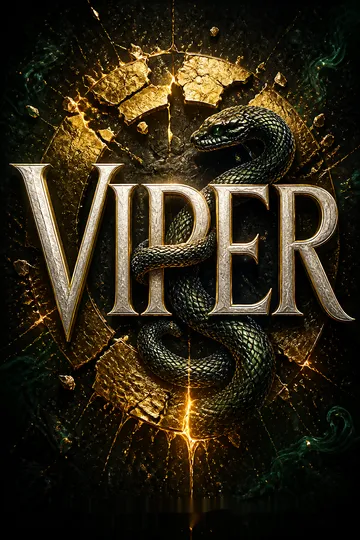
Viper by Suzanne Wright receives mixed reviews, with an average rating of 4.22 out of 5. Many readers enjoy the paranormal romance featuring Viper, a fallen angel, and Ella, a demon. The book is praised for its intriguing plot, steamy scenes, and character development. However, some readers feel it lacks emotional depth and doesn't quite live up to earlier books in the series. The introduction of new characters and elements divides opinion, with some excited for potential spin-offs and others feeling disconnected from the original cast.
People Also Read
Characters
Ella Wilde
The defiant incantorElla is a Las Vegas incantor who uses magick to handle possessions, hauntings, and other supernatural problems. She is resourceful, compassionate, and stubbornly unwilling to let powerful people define what is best for her. Her bond with her sister Mia gives her a source of frank advice and emotional steadiness, while her work keeps her in contact with both human fear and demonic danger. Ella is attracted to confidence and intensity, but she is not simply swept along by them: she questions, negotiates, and chooses. Her strength comes from combining practical judgment with a willingness to face morally complicated truths.
Viper
The fallen archangelViper leads the Black Saints, a motorcycle club made up of fallen celestials, and lives by a hard-edged code of loyalty. He is commanding, watchful, and capable of extreme violence, yet he is careful about consent with the person he loves. His devotion to Ella is entangled with possessiveness and a long history of loss, making protection both his strength and his temptation to control. He carries shame about the damage his nature can cause, but he does not retreat from the life he chose. His challenge is to offer safety without taking away Ella’s freedom.
Mia Wilde
Ella’s candid anchorMia is Ella’s older sister, business partner, and closest confidante. She is direct, funny, and magickally capable, with a protective streak that does not prevent her from making her own romantic choices. Her relationship with Joe tests her expectations of loyalty, while her connection with Dice gives her another model of intimacy, one with fewer emotional promises. Mia often sees what Ella is trying not to admit, but she respects the need to reach conclusions in one’s own time. Her steady presence makes the sisters’ bond feel like a chosen alliance rather than a mere family duty.
Dice
Viper’s steady lieutenantDice is Viper’s vice president and one of the Black Saints’ most dependable members. He is disciplined and skilled at tracking, but his composure falters around Mia, whose directness draws him into an arrangement he did not expect. His loyalty to Viper does not prevent him from protecting his own connection with Mia. Dice helps translate between the club’s secrecy and the sisters’ need for honest information, making him a bridge between two tightly bonded circles.
Luka Belinsky
Ella’s formidable anchorLuka is Ella’s psi-mate and a powerful legion demon who runs an illegal gambling den. Protective to the point of intimidation, he treats the safety of his inner circle as a personal obligation and expects to be informed when danger threatens them. His feelings for Ella are familial rather than romantic, but his closeness can make him overstep. He is a forceful presence whose loyalty is genuine, even when his instinct to control a situation collides with Ella’s independence.
Joe
Mia’s conflicted anchorJoe is Mia’s anchor and a longtime friend whose relationship with her becomes strained by unspoken expectations. He cares deeply, but struggles to communicate honestly when hurt or jealous, allowing distance to take the place of direct conversation. His bond with Mia gives the conflict emotional stakes beyond romance: anchors are meant to be sources of trust and stability. Joe’s difficulty is not a lack of feeling, but a failure to handle those feelings without making Mia carry the confusion.
Ophaniel
The weary celestial slayerOphaniel is a veteran celestial slayer whose long career has left him emotionally blunted and difficult for his superiors to control. He once knew Viper as a fellow archangel, which gives their opposition a history more complicated than simple rivalry. Ophaniel approaches violence as a task to be completed and shows little investment in the lives caught inside it. His weariness makes him dangerous in a particular way: he can treat catastrophic choices as routine, even when he understands their human cost.
Maxine
The ambitious harpyMaxine is a harpy, a businesswoman, and Dionne’s mother. She is accustomed to influence and uses relationships strategically, especially when she believes information can improve her position. Her polished manners conceal a strong sense of entitlement, and she can turn family connections into leverage. Her dynamic with Dionne is marked by pressure and disappointment, suggesting a household where affection and ambition are difficult to separate.
Prophet
The burdened club brotherProphet is one of Viper’s fallen celestial brothers. He carries regret and self-doubt beneath a dutiful exterior, making him more vulnerable to outside influence than his formidable nature suggests. His concern for Viper can turn paternalistic: he is tempted to decide what another person should know or endure. Prophet’s role reflects the club’s central tension between loyalty and autonomy, since even protective intentions can become an intrusion.
Melodie
Ella’s protective motherMelodie is Ella and Mia’s mother, a skilled maker of magickal soaps and other products. Warm and deeply attached to her daughters, she is also quick to worry and slow to reconsider beliefs shaped by her family’s history. Her protectiveness can become judgment when she fears that someone she loves is making a dangerous choice. Humor and domestic bustle soften her sternness, but they do not erase her strong opinions.
Jocelyn
The sharp-tongued auntJocelyn is Ella and Mia’s aunt, a magickal craftswoman with a dry wit and a taste for disorderly company. A past romantic betrayal has left her wary of trust, and she often covers vulnerability with sarcasm. She is loyal to her family, although her suspicion of the Fallen makes it difficult for her to separate Viper from the history attached to his kind. Her independence and humor keep her from becoming merely a voice of disapproval.
Neta
The persistent club regularNeta is a descendant demon who frequents the Black Saints’ businesses and hopes to secure a place within their circle. She is ambitious and persistent, and she mistakes proximity to power for a promise of belonging. Her interest in Viper makes her a source of romantic friction, but her motivations also include a desire to leave a difficult social situation behind.
Ghost
The unseen club scoutGhost is one of Viper’s closest club brothers and has the ability to conceal his presence. He is playful, mischievous, and fond of provoking the more serious members of the club. Beneath the jokes, he is trusted with important surveillance and security work. His irreverence makes the Black Saints feel like a lived-in community rather than a band of interchangeable fighters.
Jester
The blunt club sentryJester serves as the Black Saints’ Sergeant at Arms. He is blunt, unsentimental, and famously suspicious of other people’s motives. His lack of social softness is balanced by practical loyalty: he watches the club’s boundaries and says what others might avoid. His wary nature is partly shaped by family history, making his distrust more than a running joke.
Knox Thorne
The powerful demon allyKnox is a formidable demon and owner of the Underground, the subterranean district serving Las Vegas’s supernatural community. He is a careful judge of alliances and commands respect without needing to advertise his strength. His relationship with Harper makes his private loyalties visible, while his business decisions affect which groups can operate in the city. He represents the kind of powerful outsider whose approval can make a dangerous newcomer easier to accept.
Harper
The perceptive sphinxHarper is a sphinx, Knox’s mate, and a socially perceptive presence in Ella’s wider circle. She is warm without being naïve and understands how to use her bond and judgment to get answers from powerful people. Her friendship with Ella offers support outside the sisters’ family, while her relationship with Knox shows a partnership that combines affection with formidable influence.
Teague
The reckless hellhorseTeague is a hellhorse racer and a member of an unruly clan allied with the Black Saints. He is impulsive, competitive, and easily drawn into trouble, but he is loyal to his mate and companions. His clan’s strange humor and appetite for danger provide both comic relief and practical help when supernatural violence spills into public spaces.
Neve
Ella’s occult referralNeve is a local supernatural practitioner who understands the limits of her own abilities. She refers people with problems requiring demonic intervention to Ella, helping connect desperate humans with a specialist who can actually help them.
Jacques
The runaway imp teenJacques is a young imp who hides in a human attic after running away from his family. Hungry and angry about their plans to move, he frightens the homeowners while trying to make his protest felt. His behavior reveals the difference between adolescent rebellion and genuine malice.
PJ
The vengeful incantorPJ is a demon and an incantor who uses a glamour to frighten her former boyfriend after discovering his betrayal. She is clever and angry, but her revenge keeps her attached to the person who hurt her. Ella’s intervention gives her a chance to stop escalating the conflict.
Freddie
The uncertain celestialFreddie is an Earth-bound celestial hoping to earn a halo and return to his family in the upper realm. He is drawn into a dangerous assignment by the promise of that return, though his uncertainty suggests that obedience and conviction are not the same thing.
Lucifer
The unwelcome devilLucifer is a fallen angel with a reputation grander than his actual manner. Mercurial, socially immature, and perpetually unwelcome, he wants access to the unusual people around him and takes rejection as an invitation to try again. His half-brother Jester has little patience for him.
Plot Devices
The soul imprint
A bond across lifetimesViper’s imprint on Everleigh’s soul once let him find her and helped preserve the connection between them across reincarnation. When the archangels remove it, they also suppress her memories of him and leave him searching without a reliable trail. The imprint makes love legible as a persistent spiritual mark, but the plot also questions the ethics of marking another person. The eventual soul bond becomes meaningful because Ella chooses it herself, unlike the earlier interference that shaped her past.
The fall’s curse
Power with a corrosive costWhen celestials fall from the upper realm, their inner nature is corrupted and they become dependent on blood. Viper’s punishment is unusually severe because he was one of the Seven: he embodies wrath, provokes violence, draws evil creatures, and carries blood that is lethal to those who drink it. The curse creates the club’s rules around feeding and bloodlust, and it makes Viper’s presence a danger even when he means no harm. It also gives his decision to fall a continuing cost rather than a single dramatic consequence.
The geas
A vow that guards secretsViper binds Ella and Mia to silence before revealing the Black Saints’ need for blood. Later, he binds Ella again before telling her about his identity and history. The geas prevents them from repeating the information and shields it from psychic extraction, protecting a secret that could provoke a hunt against the Fallen. At the same time, it makes secrecy part of the lovers’ relationship, forcing Ella to weigh access to the truth against the safety of those who trust Viper.
Compulsion-inked notes
Threats disguised as warningsThe notes left on Ella’s car and at her home carry unfamiliar power designed to compel her if she reads them aloud. Their wording shifts from odd warnings to direct threats, while the sender’s access to her private spaces shows growing confidence. Ella’s ability to deactivate the snares prevents them from controlling her, but the notes succeed in raising suspicion and forcing Viper to reveal secrets sooner than planned. They turn a stalker plot into a pressure mechanism for the romance’s larger revelations.
Magickal wards and shield
Protection under pressureElla’s wards protect her apartment and alert her when someone attempts to breach them. Her magickal tripwire shocks an intruder, buying time but not identifying the attacker. Later, her unborn child creates a shield of unholy fire around Ella, Mia, and Joe, holding the strix at bay until the Black Saints can find them. Both defenses have limits: the wards can be attacked, and the child’s shield weakens. Protection buys the characters time, but it never removes the need to act.
Dark in You Series

About the Author




Download PDF
Download EPUB
.epub digital book format is ideal for reading ebooks on phones, tablets, and e-readers.








