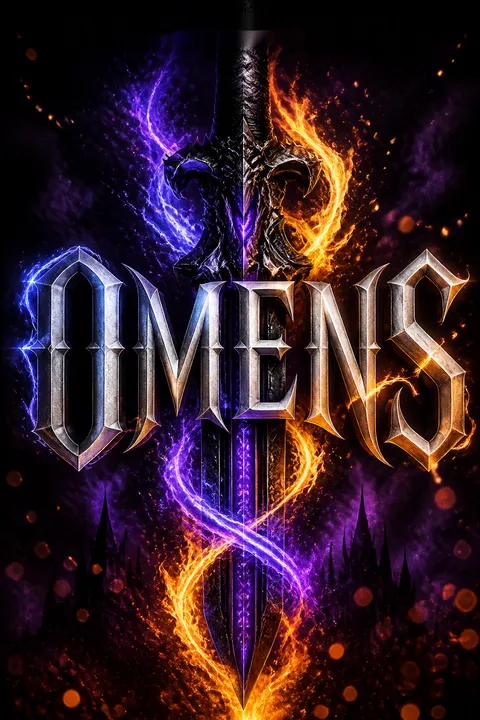


Plot Summary
A Week Without Vodka
At the Underground’s Xpress bar, Khloé Wallis jokes and drinks with her close friends while Keenan Ripley, the incubus sentinel who has wanted her for years, watches from across the room. She assumes his flask means he is dependent on alcohol and refuses to become involved with another drinker, a judgment sharpened by her mother Penelope’s alcoholism.
When Keenan escorts the drunken Khloé home, their usual teasing turns into a charged challenge: he will abstain for a week, and if he succeeds, he can feed on her without touching her. If he fails, he becomes her servant for a day. Khloé accepts, certain he will lose. For Keenan, the wager is less about proving his self-control than finding a way to approach the woman who unsettles it.
The wager converts attraction into a contest both characters can pretend is safer than emotional honesty. Khloé trusts observable evidence, and the flask looks to her like a warning drawn from her family’s history. Keenan, by contrast, trusts discipline because control has helped him survive a childhood of instability. Their bet lets him pursue intimacy through rules, while her confidence that he will fail protects her from admitting she wants him. The arrangement also establishes the story’s central tension: each mistakes self-protection for certainty, even as their bodies and demons already respond to one another.
Bodies Beneath the Basement
The morning after the bar, Khloé’s twin brother Ciaran teleports her to a basement where their grandmother Jolene, a powerful Prime, confronts Enoch. He has raised the corpses of his daughter Molly and several human children, controlling their bodies as shambling companions.
Jolene demands that he return them to their graves, but Enoch insists they remain with him and warns that his protective forcefield kills anyone who touches it. Khloé cuts through the barrier with her rare electric fire.
Enoch retaliates with a black orb that nearly chokes her to death; Ciaran joins his power with hers, driving the lethal substance from her lungs. Enoch’s body is destroyed, but as a Lazarus demon he can regenerate. In a trunk, the family also finds the corpse of Enoch’s mate, Lolita.
Enoch’s necromancy is presented as grief made coercive. He cannot accept that Molly is gone, so he treats her body as if possession could restore a relationship. Jolene insists on a boundary between loving the dead and using them, while Khloé’s power makes that boundary physically enforceable. The rescue also shows how care in this family is practical: Ciaran risks exhaustion to clear Khloé’s lungs, and Jolene makes her granddaughter part of the response because she is uniquely capable. Yet Enoch’s escape and the death-like orb leave the victory unstable, turning a grotesque discovery into an ongoing threat.
The Graves Were Not First
Jolene takes Khloé, Ciaran, and sentinel Orrin to question Enoch’s sister Abiela. Abiela explains that Enoch once reanimated their dead parents, forcing the family to share meals with the bodies and even making them attack when they resisted.
After another demon intervened, Enoch retaliated by killing people his siblings loved and setting their corpses against them. His former Prime concealed these crimes before Enoch joined Jolene’s lair, leaving her unaware of the danger.
Abiela knows no hiding place, but names David Shore, a weak familiar Enoch once manipulated, as a possible lead. Khloé’s parents also visit after the basement discovery. Penelope, still shaped by the loss of a stillborn daughter, recognizes grief in Enoch but insists it cannot excuse what he has done.
The family’s testimony overturns the comforting idea that Enoch’s actions began as a single desperate response to Molly’s death. His earlier violence reveals a pattern: he treats other people’s grief and fear as instruments for keeping control. Abiela’s account also exposes how institutions enable danger when a Prime suppresses a history to avoid dealing with it. Penelope’s response adds a painful counterpoint. She knows bereavement can break a person, but her own suffering does not make her confuse a corpse with a living child. The scene distinguishes compassion from permission, a distinction Khloé will need as Enoch tries to make his pain everyone else’s obligation.
Thea Brings Her Son
Before the yacht trip, Keenan encounters Thea, the woman he loved as a child at Ramsbrook House, outside his apartment with her four-year-old son Lane. She says her Prime, Gavril, framed her for killing her ex-mate and wants to exploit Lane’s rare ability to steal another demon’s gifts temporarily.
Keenan distrusts her because she repeatedly entered his life, promised to stay, then disappeared without goodbye. Still, his own childhood as a stray makes him unwilling to abandon a child.
He brings the request to Knox and Harper, who hear Thea’s full account and agree to shelter her and Lane if an incantor temporarily binds the boy’s power. Thea accepts. Keenan has secured protection for Lane, but Thea’s habit of withholding information keeps her story uncertain.
Keenan’s response to Thea is governed less by lingering romance than by identification with the vulnerable child beside her. He knows what it means to depend on adults who can refuse help, and that memory overrides his anger long enough for him to advocate for Lane. At the same time, he refuses to restore Thea’s former access to his trust. Knox and Harper’s conditions make sanctuary a negotiated responsibility rather than automatic forgiveness. Lane’s ability raises an ethical problem of its own: a child can be treated as a weapon before he understands what he can do. The scene plants both the novel’s concern with protection and the danger of confusing protection with trust.
The Wager Comes Due
For a week, Khloé tries to make Keenan break his wager, especially during a three-day yacht trip with their friends. She flirts, needles him, and pretends to have gone on a date, but he never reaches for alcohol.
At the appointed hour, Keenan arrives at Khloé’s home and checks that she still consents to the wager’s reward. He uses his incubus powers to build her desire and feed on the sexual energy she releases. The experience overwhelms them both; Keenan abandons the original limit and they have sex.
He leaves afterward, returning to the emotional distance he had promised himself he would keep. Khloé is satisfied by the encounter but stung by his withdrawal, while Keenan discovers that getting what he wanted has intensified, rather than settled, his need for her.
The first sexual encounter exposes the weakness of both characters’ bargains. Khloé’s wager gives desire a playful, bounded form; Keenan’s abstinence gives him a controlled route to contact. But neither rule survives the intensity between them. His departure is an attempt to restore distance after physical intimacy has made distance harder, and her hurt reveals that she wanted more than the technical terms allowed. The scene makes erotic power psychologically consequential: Keenan can shape sensation, but he cannot manage what the encounter means to either of them. Their bodies cross a boundary before either is prepared to name the attachment beneath it.
The Dead Enter Khloé’s House
That night, Enoch enters Khloé’s dream and tries to draw her into a suffocating sleep. She wakes to two reanimated corpses inside her bedroom, drops from the ceiling, and disables them with electric fire.
Enoch attacks through one puppet with a hellfire orb that burns her shoulder, but Khloé destroys the body before help arrives. Ciaran teleports Jolene and sentinels Orrin and Mitch to the scene, where they confirm the corpses came from outside their lair.
Jolene warns that Enoch may return and orders Khloé and Ciaran to call for help rather than face him alone. Khloé initially resists the order, then promises. Keenan, furious that she did not contact him, later admits that she matters to him and asks her to seek help next time; she refuses to promise him yet.
Enoch’s attack extends the invasion from physical space into sleep, so Khloé cannot treat home as a private refuge. Her instinct is to manage danger alone, partly from confidence in her own abilities and partly from a habit of keeping others outside her crises. Keenan’s anger initially sounds like control, but beneath it is a fear he has not earned the right to express openly. Khloé challenges that contradiction: he cannot claim the privileges of intimacy after insisting their encounter meant nothing. Her promise to Jolene is a first concession to collective safety, while her refusal to promise Keenan preserves the distinction between concern and a relationship.
A Jealous Sentinel Gives In
When Khloé’s anchor, Teague, returns from a trip, she tells him about Enoch and the danger hanging over her. Keenan later finds her at the Xpress bar with Deke, a friendly demon who is flirting with her.
Unable to watch another man touch her, Keenan takes Khloé aside and admits that the first night together made his feelings stronger, not weaker. Khloé reminds him that he left as if she were disposable. He answers that he wants a real, exclusive relationship, though he cannot promise how it will end.
She agrees to try, despite her belief that her maternal family is cursed to remain alone and her fear that love will repeat her parents’ failures. They begin seeing each other openly, turning private desire into a risk they both knowingly share.
Keenan’s jealousy is not itself proof of love; it becomes meaningful only when he follows it with accountability and a clear offer. Khloé refuses to accept possession as a substitute for commitment, making him state what he wants rather than letting sexual intensity do the talking. Her hesitation is not simply superstition about a family curse. She has watched addiction, infidelity, and instability shape the adults around her, so commitment feels like entering a pattern she has spent years mocking and avoiding. Their agreement is deliberately provisional. It is a small but important act of agency: neither claims certainty, but both stop using uncertainty as an excuse to retreat.
The Cabin’s Hidden Army
Jolene’s group tracks David Shore to an apartment building and forces him to reveal that Enoch is hiding at his uncle’s remote cabin. At the cabin, they find a photograph of Molly and discover a cellar containing reanimated corpses.
Enoch attacks through the dead, first striking Ciaran with the black orb and then sending human and animal puppets against the group. Khloé and Ciaran combine their powers to clear the substance from his lungs while their family fights off the corpses.
Khloé cuts through Enoch’s forcefield, allowing Jolene’s people to destroy his body, but the Lazarus demon will regenerate. Enoch’s final words reveal that demons in Jolene’s lair paid him to reanimate their dead. Vivian then identifies the black orb as death essence; particles remain in both twins and are slowly killing them.
The cabin battle turns the search for Enoch into a confrontation with the cost of secrecy. David’s reluctance to cooperate delays the group, but Enoch’s trap shows that the villain has anticipated their procedures and weaponized them. The dead bodies are not merely reinforcements; they force the living to confront how easily grief can be converted into an illicit service. The revelation that lair members commissioned the work implicates a wider community in the same refusal to let go that defines Enoch. Most consequentially, Khloé’s survival of the black orb proves incomplete: she and Ciaran have driven out its immediate force, not its residue. Victory now carries a biological deadline.
A Cure Beyond Reach
As the death essence worsens, Vivian shields the twins’ vital organs while Jolene, Knox, and their allies search for an angel. Enoch keeps attacking Khloé’s home with more corpses, so she moves into Knox and Harper’s guarded Underground penthouse with Keenan.
Incantor Ella places a magical tripwire in Khloé’s mind to wake her whenever Enoch invades her dreams. The search finally finds Eric, an angel who demands payment and agrees to treat both twins. His power restores Ciaran, but Khloé’s body rejects it; Eric says only an archangel might be strong enough.
The setback strips away the easy hope that any angel will do. Keenan and the two lairs continue searching while Khloé’s fatigue, pain, and chills worsen, and she keeps working rather than surrendering to fear.
The failed treatment changes the illness from a frightening mystery into a test of unequal survival. Ciaran’s recovery offers proof that the infection can be overcome, but it also sharpens Khloé’s isolation: the same intervention works for her twin and fails for her. Her determination to keep working is a form of self-command, though it also risks becoming denial. Keenan responds by trying to create safety around her, while Khloé insists that protection cannot be confused with control over her choices. The enchanted tripwire offers a narrower kind of agency: it cannot cure her or stop Enoch, but it prevents him from quietly owning even her dreams.
The Claim She Accepts
After Enoch’s latest assault drives Khloé into the penthouse, Keenan begins shadowing her and a hell-forged blade is secured for the eventual fight. Thea reaches the hotel disguised as Khloé’s friend Raini and tries to learn whether Keenan has truly moved on.
Khloé sees through the disguise and refuses to yield to Thea’s claim that she and Keenan once shared something irreplaceable. Keenan arrives, sends Thea away, and tells Khloé that he loves her.
He names the fear beneath her resistance: she expects people to leave because her family has offered her few models of lasting love. Khloé admits she loves him too and accepts his mating claim. Knox then warns Thea to stay away from Khloé, but the danger is already deeper than a romantic rivalry.
Thea’s visit brings the past into the present as a direct comparison: she frames love as a unique possession that Khloé might have to surrender. Keenan answers not by competing over history but by recognizing Khloé’s fear of abandonment and making a commitment in the present. His insight risks becoming pressure, yet Khloé’s choice remains hers; she accepts only after acknowledging that she has been using the family curse to make avoidance seem inevitable. The formal bond also alters the stakes of protection. Keenan is no longer merely a worried sentinel, and Khloé is no longer asked to trust a man who keeps one foot outside her life.
Thea’s Bargain with Gavril
At the racetrack, Lane suddenly uses his ability on Asher, Knox and Harper’s young son, apparently trying to steal the child’s powers. Thea seizes Khloé and teleports away while Keenan and the others are distracted. Confined in a magically sealed crate, Khloé uses her twin bond to tell Ciaran what she learns: Thea has secretly helped Gavril obtain a power he hopes to use against Knox.
Gavril intended to exploit Lane’s gift to steal Knox’s abilities, while Thea expected to escape with her son. Instead, a mysterious force from Asher has stripped Lane of his powers. Gavril now plans to hand Khloé to Enoch for money. Thea’s resentment of Keenan’s choice and her willingness to use Lane have turned a request for sanctuary into betrayal.
The kidnapping reframes Thea’s earlier vulnerability without erasing it. Her fear for Lane was real, but she also converted his dependence into leverage, demonstrating how victimhood can coexist with harmful choices. Gavril’s plan treats children as containers for power, while Thea’s participation shows that attachment can be used to justify exploitation. Khloé’s crate is designed to remove her agency, yet her twin bond lets her transmit the truth and recruit help. The unexplained power that leaves Lane also introduces Asher as more than a protected child. His intervention is not yet understood, but it disrupts Gavril’s scheme and makes the antagonists’ assumptions about control visibly fail.
The Ghost Town Breaks
Gavril’s group delivers Khloé in her crate to an abandoned western town, where Enoch waits among the dead. Asher appears in an astral form, blasts through the crate’s roof with golden power, and breaks its containment spell. Khloé escapes, attacks her captors, and uses her mind-control gift to turn Gavril against Enoch.
Crows summoned by Asher swarm the room as Ciaran, Jolene, Keenan, Knox, and their allies arrive and destroy Enoch’s corpse army. Thea later holds glass to Khloé’s throat, but Khloé takes control of her mind and kills her with electric fire. Keenan distracts Enoch long enough for Khloé to pierce his forcefield with electric fire and drive the hell-forged blade through his eye. Enoch dies, but his last death orb hits Khloé.
The climax resolves the conflict through several forms of power working together rather than a single dominant force. Asher’s astral intervention breaks the prison, Khloé’s mind control turns an enemy into temporary defense, and her electric fire makes the blade usable against Enoch. Thea’s death is especially stark because Khloé does not defeat her through superior strength alone; she acts decisively after Thea makes one last attempt to control her body. The final death orb gives the victory a cruel cost. Enoch is finally killed, yet Khloé’s existing infection makes his last attack potentially fatal, shifting the emotional center from triumph to desperate uncertainty.
A Dark Gift Saves Her
The final orb pushes the death essence through Khloé’s failing body, and she collapses as the infection overwhelms her organs. With no cure left in reach, Keenan and her family gather around her. Raini returns with her anchor, Maddox Quentin, who uses a powerful red energy to heal Khloé.
His gift works where the angel’s could not, and she wakes alive; Raini later explains that Maddox may descend from a fallen archangel, though the favor she owes him remains private. Lane, now without his powers, is returned to safety in a foster home within Knox’s lair.
The next day, Keenan gives Khloé a black diamond ring, and she asks him to wear its match. They settle into life together near her family, ending at a noisy birthday party where her irreverence survives every threat.
Khloé’s rescue does not arrive through the expected hierarchy of healing. The angel’s limited power fails, while Maddox’s dark inheritance supplies a form of life potent enough to counter death essence. That reversal complicates the assumption that moral appearance and useful power align neatly. Raini’s choice to seek him out repays an earlier uncertainty in their anchor bond, while the undisclosed favor leaves their relationship unresolved rather than magically simple. Keenan’s ring marks a future neither character can guarantee, but they choose it after surviving the cost of delay. The ending returns to family comedy, not because danger has become trivial, but because Khloé’s unruly humor is part of the life they fought to preserve.
Analysis
Omens makes the ethics of grief concrete by giving Enoch a power that can turn the dead into obedient bodies. His insistence that reanimation is a different state of life is not merely a supernatural delusion; it is a refusal to recognize other people’s autonomy, including the autonomy of the dead and the families left behind. The novel contrasts his possession with Khloé’s more demanding form of love: she protects others while gradually learning to let them protect her, too.
Khloé and Keenan’s romance is shaped by different strategies for avoiding vulnerability. She jokes, improvises, and treats her family’s supposed curse as a reason not to expect permanence. He uses discipline and emotional distance to keep his past from repeating. Their early sexual bargain exposes the limits of both strategies, while their eventual commitment comes only after each names what the other is afraid of losing. The relationship is not made safe by supernatural mating; it becomes possible because they accept uncertainty together.
The supporting conflicts widen that question of care. Thea’s fear for Lane is real, but she turns his childhood gift into leverage. Gavril’s ambition makes the exploitation explicit, while Knox and Harper’s decision to bind Lane’s power temporarily offers protection without treating the child as irredeemable. Raini’s choice to seek Maddox’s help shows a different kind of risk: trust can be necessary before every motive is known. His healing power saves Khloé, but the favor Raini owes him remains unsettled, preserving the cost of rescue.
The ending refuses a simple division between light and darkness. An angel cannot heal Khloé, while Maddox’s dangerous, mixed inheritance can. The novel’s supernatural hierarchy therefore cannot serve as a moral shortcut. What matters is what power is used to do, whom it protects, and whether the person receiving help retains a choice. Khloé survives not by becoming less unruly or less dependent, but by letting a network of imperfect people act beside her.
Review Summary
Omens received mostly positive reviews, with readers praising Khloe's humor and the chemistry between the main characters. Many found the book entertaining and enjoyed revisiting familiar characters from the series. Some readers felt it was not as strong as previous installments, citing predictable plot elements and underdeveloped characters. Overall, fans of the series appreciated the long-awaited romance between Khloe and Keenan, though a few were disappointed by aspects of their relationship development.
People Also Read


Characters
Khloé Wallis
The defiant impKhloé is an imp who works as receptionist at Urban Ink, the tattoo studio she runs with her closest friends. Mischievous, quick-witted, and unusually comfortable making other people lose their composure, she prefers a life of odd pleasures and close friendships to the rank and control most demons seek. Her rare electric fire and ability to influence minds make her more formidable than her comic unpredictability suggests. Khloé is devoted to her twin Ciaran, her grandmother Jolene, and her friends, but she often treats self-reliance as proof that she needs no help. Her skepticism about lasting relationships grows from her parents’ troubled histories and a family story of a curse. Beneath the jokes is someone who takes loyalty seriously and is learning to risk being known.
Keenan Ripley
The guarded incubusKeenan is an incubus, a sentinel serving Prime Knox, and a man whose dangerous reputation rests on discipline as much as supernatural allure. His childhood as a stray and his years in the harsh Ramsbrook orphanage taught him to prize control, loyalty, and a small circle of trusted companions. He avoids relationships that could complicate those loyalties, though his attraction to Khloé has long resisted his rules. Keenan’s protective instincts are genuine but can become possessive when fear strips away his restraint. He also understands the vulnerability of children who depend on adults, which shapes his willingness to help Lane. His growth depends on learning that love cannot be made safe by keeping it at a distance, and that concern must leave room for another person’s agency.
Enoch
The grief-bound LazarusEnoch is a Lazarus demon whose unusual power lets him control dead bodies and whose ability to regenerate makes him exceptionally difficult to stop. Quiet and socially withdrawn, he can present as merely odd while concealing a history of cruelty. His fixation on restoring the dead grows from an inability to accept loss, but he turns that pain into control over other people and their loved ones. He insists that reanimated bodies represent another kind of life, refusing to recognize the absence of the people who once inhabited them. Enoch’s conviction is frightening partly because he sees himself as compassionate. His story challenges the boundary between mourning and possession: grief may explain his actions, but it does not make the bodies he commands his to use.
Jolene Wallis
The formidable PrimeJolene is Khloé’s grandmother and the Prime of her lair, responsible for maintaining order among powerful, secretive demons. Elegant, shrewd, and capable of devastating force, she combines political judgment with a fierce sense of family responsibility. She tries to correct Enoch through authority before resorting to violence, but she does not confuse patience with permission. Jolene’s household is a refuge where lair members and children feel welcome, reflecting a warmth that complicates her formidable public position. She is proud of Khloé’s strength and frustrated that Khloé refuses to join her Force, yet she respects her granddaughter’s independence. Jolene’s leadership is tested by the crimes concealed from her and by the need to protect her family without letting outsiders dictate how her lair is governed.
Ciaran Wallis
Khloé’s twin and allyCiaran is Khloé’s twin brother, an imp whose teleportation and close psychic connection with her make him both family and an immediate source of help. He shares power with Khloé when danger overwhelms either of them, though doing so leaves them drained. Ciaran has joined Jolene’s Force and takes its protective duties seriously, but he and Khloé share a stubborn streak that makes each worry the other will face danger alone. His loyalty is expressed through action: he comes when called, helps investigate threats, and keeps trying to reach his sister when ordinary communication fails. Their twin bond is intimate without being sentimental; it is a practical channel of trust that becomes crucial when Khloé is isolated.
Thea Whitman
Keenan’s troubled pastThea is a demon who shared Keenan’s childhood at Ramsbrook and later chose the precarious freedom of life outside a lair. Her history leaves her wary of dependence and of people whose loyalties are divided by duty. She repeatedly returns to Keenan, seeking closeness while struggling to remain, a pattern that wounds the trust she says she values. As Lane’s mother, she is fiercely protective of his future and frightened that powerful demons will treat his rare ability as a resource. Thea’s choices are shaped by fear, jealousy, and a wish to regain control, but those motives do not always align with her son’s needs. She is both vulnerable and capable of causing serious harm, resisting any easy division between victim and villain.
Lane
A child with rare powerLane is Thea’s four-year-old son. His rare gift lets him temporarily take another demon’s ability, though using it exhausts him and leaves him unconscious. Too young to understand the political value other demons place on his power, he depends on his mother and the adults around him to protect him. His quietness and tablet games make him seem easy to overlook, but his existence drives the conflict between Thea and Gavril.
Raini
Khloé’s loyal succubus friendRaini is a succubus, one of Khloé’s closest friends and a co-owner of Urban Ink. Warm, observant, and more cautious than Khloé, she notices emotional shifts the others might rather joke away. Her anchor bond with Maddox unsettles her because she distrusts his reputation and does not know whether to welcome the connection. Raini is nonetheless loyal when a friend’s life is at stake, and her willingness to ask Maddox for help reveals that caution does not cancel courage.
Maddox Quentin
Raini’s dangerous anchorMaddox is a Prime and Raini’s predestined anchor, a powerful descendant demon known for secrecy and a ruthless approach to the world. The anchor bond draws him toward Raini, but neither has fully embraced it, and his attention can feel as much like pressure as protection. He is difficult to read, giving little away about his motives or abilities. His presence links Raini’s personal uncertainty to the larger supernatural politics surrounding the Primes.
Knox Thorne
The measured PrimeKnox is a Prime, Harper’s mate, and Keenan’s leader. He balances severity with deliberation, often weighing the political consequences of an action before committing his lair. His authority is respected because he is powerful and because he understands that a Prime’s choices can invite challenges from other leaders. Knox protects his family while guarding secrets about himself and his abilities. He is willing to offer sanctuary, but he sets clear conditions when a child’s dangerous gift could threaten others.
Harper Thorne
Khloé’s Prime cousinHarper is Khloé’s cousin, a powerful sphinx, Knox’s mate, and mother to Asher. She is protective, politically astute, and intensely devoted to the family she has built. Her concern for Khloé sometimes makes her impatient with Khloé’s habit of concealing danger, but their closeness survives the friction. As a Prime, Harper understands the cost of exposing a child’s abilities, and she helps balance compassion for outsiders with the need to keep her own family safe.
Teague Sullivan
Khloé’s protective anchorTeague is Khloé’s anchor, a hellhorse whose psychic bond gives both demons stability and mutual loyalty. Their connection is platonic, but he is fiercely protective and can be possessive of her attention. Teague has a strong sense of responsibility and expects Khloé to tell him when danger threatens, even when she would rather manage it herself. He is an experienced racer whose hellhorse is a celebrated competitor.
Devon
The sharp-tongued hellcatDevon is a hellcat, Khloé’s friend, and a co-owner of Urban Ink. Playful, blunt, and quick to challenge anyone who irritates her, she often gives the group’s teasing its sharpest edge. Her relationship with Tanner gives her a secure place from which to support her friends without pretending to be gentle. She is one of the people who sees Khloé’s resilience clearly, while still insisting that resilience should not become an excuse to face every danger alone.
Asher Thorne
The unusually powerful childAsher is the young son of Knox and Harper, cherished by the wider group and watched closely because of the unusual strength of his gifts. He is affectionate and mischievous, especially fond of Khloé, and his precocious control of supernatural abilities can surprise adults. His parents guard what they know about his nature, aware that information can make a child a target.
Penelope Wallis
Khloé’s grieving motherPenelope is Khloé and Ciaran’s mother. The stillbirth of one of her daughters left her with a grief she has struggled to manage, and she developed a dependence on alcohol. She remains loving and attentive to her children, but years of broken promises and harmful partners have strained her relationship with Khloé. Penelope understands how desperate grief can become without believing that pain gives someone permission to harm others.
Richie Wallis
Khloé’s resourceful fatherRichie is Khloé’s father, an imp and a resourceful fixer with a history of illegal work and violence. He has children with several women and is now mated to Meredith. Richie loves his children and is quick to offer practical protection, though his methods can be severe. His presence gives Khloé a complicated but durable connection to a parent who has eventually found a more settled life.
Gavril
The ruthless PrimeGavril is Thea’s Prime, a calculating leader who treats power as something to acquire and deploy. He is willing to threaten a child’s safety to secure a rare ability and uses accusations to isolate those who might oppose him. His polished manner conceals a readiness to turn political rivalry into personal violence.
Levi
Knox’s watchful reaperLevi is a reaper, one of Knox’s sentinels and his bodyguard. Calm, perceptive, and quietly amused by the people around him, he helps investigate threats and keeps the group’s plans grounded. His loyalty is expressed through steady attention rather than display.
Tanner
The loyal hellhoundTanner is a hellhound, a sentinel in Knox’s lair, and Devon’s mate. He is dependable in danger and affectionate beneath his teasing, often acting as bodyguard for the women in the group. His practical steadiness contrasts with Devon’s sharper temper and Khloé’s appetite for trouble.
Vivian
The incantor nurseVivian is an incantor and hospital nurse whose gift lets her see inside a person’s body. She identifies the death essence remaining in Khloé and Ciaran and uses magick to protect their vital organs.
Ella
The protective incantorElla is an incantor and friend of Levi. She uses magick to help protect Khloé from dream intrusion and can bind a child’s dangerous ability temporarily.
David Shore
Enoch’s frightened former allyDavid is a low-powered familiar who once knew Enoch and tolerated his manipulation because Enoch offered protection. His connection to Enoch gives Jolene’s group a lead, though fear makes him reluctant to cooperate.
Abiela Cohen
Enoch’s estranged sisterAbiela is Enoch’s sister, a bakery owner who has long since rejected his attempts to control the dead. Her account gives Jolene’s group the history that Enoch hid from his new lair.
Plot Devices
The demon within
A second will insideDemons share their souls with inner entities that have their own instincts and can sometimes take control of the body. These entities can be more predatory or possessive than their human-facing hosts, but they also have their own attachments and loyalties. Khloé and Keenan’s demons respond to each other with unusual intensity, amplifying attraction, jealousy, and the desire to claim a mate. The device makes inner conflict physical and immediate: a character may understand the risks while the entity presses toward action. It also complicates the idea of consent and commitment, since both characters must decide whether their shared impulses align with the choices they make consciously.
The anchor bond
A stabilizing psychic tieA demon’s predestined anchor is a psychic counterpart who helps maintain dominance over the demon’s inner entity. The bond is not necessarily romantic, but it carries deep loyalty and a protective instinct. Khloé’s connection with Teague gives her a trusted ally outside her immediate family, while Raini’s bond with Maddox creates tension because she distrusts his reputation and resists the pull between them. In the climax, Khloé’s twin bond with Ciaran serves a related but distinct purpose: it lets her communicate through a magical barrier when other psychic connections fail.
Lazarus necromancy
Grief made into an armyEnoch’s power lets him control corpses while his Lazarus nature allows his own body to regenerate after being destroyed. He uses the dead as companions, weapons, and shields, turning intimate losses into tools of attack. His puppets do not feel pain or fear, so ordinary injuries do little to stop them; the group must blind them or destroy their brains to cut off his control. Enoch also creates black orbs of death essence, a separate and more dangerous power that leaves Khloé and Ciaran with a lingering infection. The combination keeps each apparent victory incomplete until the final confrontation.
The hell-forged blade
A weapon for final deathSteel forged in the pit of hell can kill any demon permanently, making it one of the few weapons capable of ending Enoch’s regeneration. Knox’s allies locate a single blade through the black market and win it at auction. The weapon creates a tactical problem rather than an automatic solution: Khloé must carry it into a confrontation, break through Enoch’s forcefield, and strike before he can restore the barrier or attack her. Its fatal power also puts its wielder at risk, so using it demands timing as well as courage.
Stolen and hidden powers
Children become political targetsLane can temporarily absorb another demon’s ability through touch, but the act exhausts him and leaves him unconscious. Gavril wants to exploit this gift to obtain Knox’s power, while Thea agrees to help because she hopes to regain control of her future. Asher’s own unusual gifts are kept secret by his parents, and his intervention disrupts the plan in ways even the adults do not understand. The device links the family plot to the political conflict: children are at risk not because they seek power, but because adults see their abilities as instruments to borrow, control, or conceal.
Dark in You Series





About the Author






Download PDF
Download EPUB
.epub digital book format is ideal for reading ebooks on phones, tablets, and e-readers.








