


Plot Summary
Alley Hail, Missing Mother
Harper Wallis, a sphinx raised among North Las Vegas imps, is heading to an ATM when a drugged human corners her in an alley. She disarms him after he fires, then disables him with her touch, which floods a victim with soul-deep pain. A sudden hailstorm breaks over the alley before she can decide what to do with him.
Knox Thorne, her mate and the powerful Prime who had been away on business, arrives in a burst of fire. His demon sees the attacker’s intentions and burns him to ash, despite Harper insisting she had the situation handled. Knox asks Harper to call for him when she is in danger. Then he reveals the reason for his early return: her birth mother, Carla, has disappeared.
The opening establishes the tension that will govern Harper and Knox’s partnership. Harper is capable of defending herself, but her pride makes accepting protection feel like surrender. Knox’s response is not simply anger at the attacker; it is the reflex of someone who believes Harper’s safety is the condition holding his own dangerous nature in check. The missing mother immediately complicates that intimacy. Harper has built a life without Carla, yet the news exposes how little control she has over the family history she thought she had put away.
Carla's Disappearance, Crow's Vision
At Delia’s home, Harper learns that Lawrence Crow, Delia’s partner and a demon nearing the loss of control known as going rogue, took Carla. Delia says Crow stopped taking medication and became convinced that Harper and Knox would have a child powerful enough to destroy their world.
He blamed Carla for giving birth to Harper and carried her away after attacking Delia. Knox’s sentinels find surveillance footage showing Crow knocking Carla unconscious and forcing her into his car.
Harper’s half-brother Roan immediately accuses her of causing the crisis, while younger brother Kellen avoids meeting her eyes. Knox orders a search and warns Delia not to approach Crow alone. Harper cannot claim affection for Carla, but she admits she never wanted her dead.
Crow’s supposed vision makes private family history available for public blame. Roan turns Carla’s disappearance into a charge against Harper, while Harper refuses both the easy pose of indifference and the false claim that she is close to her mother. The distinction matters: compassion does not require a repaired relationship. Crow’s illness also introduces the story’s ethical problem. His deteriorating judgment makes him dangerous, but Knox treats him as a member of his lair who may still be helped, not merely as a threat to eliminate.
Urban Ink Moves Below
Knox uses the alley attack to renew his argument that Harper’s tattoo studio should leave its crime-ridden neighborhood for a space in the Underground, the demon-run district he owns with her. Harper resists because the business keeps her connected to the independent life she built before becoming his mate.
Her partners Raini, Devon, and cousin Khloë weigh lost human clients against better security, lower costs, and the freedom to work openly as demons. After inspecting Knox’s vacant former security office, Harper likes its rooms and location, then invites the others to decide with her.
They agree to relocate and begin preparing the space. Meanwhile, Roan spreads rumors that Harper engineered Carla’s kidnapping. Knox confronts him, orders him to stop, and imposes a punishment when Roan later accosts Harper in public.
The studio move is a concrete test of whether Harper can accept change without being absorbed by Knox’s wealth and authority. She does not simply accept the safer location because he wants it; she inspects it, consults her partners, and makes the decision collectively. That process preserves the authorship she fears losing. Roan’s accusations expose a different kind of pressure: the lair’s prejudice against the Wallis family can turn Harper’s independence into evidence against her. Her new status gives her protection, but it also makes every choice visible.
Harper Rides the Bull
At the Underground, Harper slips away from her bodyguards and enters a rodeo arena to ride a bucking bull. Knox watches in alarm, but Levi helps him understand that Harper is reaching for the dangerous, uncomplicated fun she knew before becoming a Prime.
She stays aboard for ten seconds, then runs clear as the crowd cheers. Her exhilaration softens Knox’s anger, and they later talk about the pressure she feels as his mate and co-Prime.
During flying lessons near the Grand Canyon, Harper calls out her newly awakened sphinx wings: broad, delicate, gold, and streaked with red and black. She can make them flap and briefly lift her, but flying remains awkward. Knox promises to teach her patiently, though he worries that hunters prize sphinx wings.
The bull ride is not a declaration that Harper rejects Knox’s care. It is a bid to remain recognizable to herself while her circumstances change. The distinction lets the scene challenge Knox’s instinct to equate safety with love. Harper’s wings deepen the same question: a new ability can be empowering and exposing at once, especially when other demons may treat her body as a valuable object. Her early lessons make that power something she can practice and understand, rather than a mysterious gift imposed by her mate.
Knox's Hotel Turns Violent
Crow appears in one of Knox’s hotels and heads for the private elevator leading to the penthouse where Knox stays. When staff approach, he panics. A sentinel catches him, but Crow drains the demon’s energy, conjures a revolver, and shoots at another guard before escaping.
Outside, he shoots a cab driver and steals the car, leaving human witnesses behind. Knox is furious that the attack happened in his building, but he delays telling Harper until their dinner, hoping to have better news first.
Harper insists that withholding danger does not protect her and makes him agree to tell her promptly if Crow targets him again. The attack confirms that Crow’s delusion can produce real violence, while the hotel’s public setting keeps Knox’s forces from using their full power.
Crow’s attack turns an alarming private theory into a public security problem. His ability to drain other demons makes ordinary restraint unreliable, and his gunfire forces Knox to weigh pursuit against exposing their hidden world. Knox’s decision to delay the news echoes Harper’s own reluctance to ask for help: each calls secrecy protection, but each deprives the other of informed trust. Harper’s response does not demand that Knox stop acting independently. She asks for information, a smaller but essential form of shared responsibility.
Rumors at the Prime Table
At the annual gathering of US Primes, Knox and Harper hear rumors that Prime Dario has disappeared from public life and may be building an army or turning rogue. Alethea, the encantada sister of Prime Jonas, argues that the reports deserve investigation and recalls the devastation caused by a past rogue.
Other Primes debate whether Crow’s claim about Knox and Harper’s future child could be true. Harper dismisses the idea as the product of a fractured mind, then challenges Alethea when she tries to enlist Knox’s power for a possible confrontation with Dario.
Alethea apologizes afterward, but Harper recognizes the attempt to use her mate as a weapon. The meeting leaves the Primes wary of one another, giving unverified stories political force.
The gathering shows how fear travels through institutions even when its evidence is weak. Primes who dismiss Crow’s vision still allow it to shape their suspicions, and Alethea’s appeal to past violence makes caution sound like a demand for lethal action. Harper’s intervention is important because it refuses to let Knox’s power become a tool detached from his judgment. Her new rank is not simply authority granted by mating; she begins to use it to contest the political habits that would reduce her partner to an instrument.
Carla Pays for a Vision
Knox tells Harper that the Force has found Carla alive in a motel, but Crow has surgically removed her reproductive organs and left her unconscious. He also made another attempt to reach Knox at a hotel, firing at people before escaping again. Harper is shaken by the deliberate cruelty and wonders whether Carla suffered because she gave birth to her.
Knox rejects that guilt, but Harper chooses not to visit until Carla herself can ask for her. When Carla wakes, Knox visits her at home. She explains that Crow drained so much psychic energy from her that she could not call for help, and she tells Knox she does not blame Harper. Soon afterward, Crow follows Knox’s car toward a hotel, but turns away when he spots the ambush. He remains free.
Carla’s survival does not resolve Harper’s relationship with her; it sharpens the difference between biological connection and chosen intimacy. Harper refuses to claim access to Carla simply because she is a Prime’s partner or daughter. Carla’s later refusal to blame her is significant, but it is not presented as instant reconciliation. Crow’s attack also gives his delusion a grotesque physical consequence, while his continued pursuit of Knox shows that the immediate rescue has not ended the danger.
The Promise Breaks Twice
At the old studio, Harper is ambushed by Crow, who binds her hands and drains her psychic energy while demanding that she summon Knox. She suspects Crow wants to lure her mate into a trap, so she delays, snaps out her wings, and strikes Crow with her pain-inducing touch. She summons bodyguard Tanner, who is shot before Knox arrives and takes control of the scene.
Harper survives, but Knox is furious that she did not call him sooner, despite her belief that refusing Crow’s trap protected them both. Their argument turns his fear into an accusation that she broke her promise. Harper leaves for her grandmother Jolene’s home rather than apologize for protecting him. Knox finds her there, but respects her refusal to return with him.
This conflict is the story’s sharpest collision between protection and autonomy. Harper’s choice is strategically sound, but Knox experiences the sight of her injured and motionless as a near-loss that overwhelms strategy. His fear does not excuse the personal accusation, and her refusal to placate him protects a boundary she has repeatedly named. The scene also reverses their usual roles: the powerful Prime must wait outside while Harper decides whether the relationship can continue on terms that preserve her agency.
An Apology, Not Surrender
At Jolene’s house, Harper considers Crow’s insistence that someone assigned him a mission, but her family cannot identify who might be behind it. The next morning Knox retrieves her after explaining that he mistook panic for justification and should not have questioned her integrity.
Harper accepts the apology without retracting her decision: if danger returns, she will still act to protect him. Knox agrees that loving her does not mean controlling her choices, even when he fears the consequences. He then questions Crow in custody.
Crow remains convinced that his mission is real and rejects his medication, but Knox decides to pursue treatment rather than punish him while he is delusional. The decision preserves Knox’s standards even as Crow’s actions have harmed his mate and lair.
Repair depends on both characters naming the cost of their behavior without pretending their values have changed. Knox acknowledges that fear made him cruel; Harper acknowledges no obligation to regret her protective instinct. Their agreement is not that they will avoid future conflict, but that conflict cannot become a demand for obedience. Knox’s response to Crow mirrors this ethic: he distinguishes accountability from vengeance and refuses to turn a sick demon into a convenient monster while treatment remains possible.
Urban Ink Opens, Crow Escapes
As the new Urban Ink is prepared, Kellen returns to Harper and admits that Roan had threatened him for keeping in touch with her. Harper tells him she blames Roan for his own cruelty, not Kellen for being afraid. The studio’s opening draws a crowd, validates the move, and gives Harper a public role beyond being Knox’s mate.
Carla and Bray attend, while Bray challenges Knox’s decision to treat Crow rather than kill him. During the celebration, the sentinels discover that Crow has vanished from a prison guarded by spells and cameras. Harper theorizes that someone may have planted the vision and used Crow to provoke Knox into losing control. Her suspicion changes the case: Crow may be the weapon, not the strategist.
The opening of Urban Ink pays off Harper’s insistence that safety should not require abandoning work, community, or self-definition. Kellen’s return adds a quieter repair, built on Harper refusing to make his fear into a moral failure. The unexplained prison escape then punctures the celebration. Harper’s theory matters because it shifts attention from Crow’s actions to the person shaping them. She reads the pattern through Knox’s vulnerabilities, a form of insight made possible by intimacy rather than by political rank.
Nora Names the Horsemen
Knox and Harper visit Dario at his island home after he calls about rumors accusing Knox of inventing Crow’s vision. Dario explains that he withdrew from public life after his longtime concubine died, fearing grief would weaken his control. In his garden, his grandmother Nora identifies a group calling itself the Four Horsemen, which seeks to make the US Primes turn against one another.
She says Crow was manipulated, not guided by a true vision, and that Isla, a former Prime, was one of the conspirators. Nora also senses that Harper and Knox will have a child someday, and warns that others will come for it. Dario accepts responsibility for the strange weather that accompanied his grief. Knox and Harper leave with a threat wider than Crow.
Nora’s revelation reframes the novel’s scattered rumors as a deliberate political technology. The Horsemen do not need to defeat the Primes directly if they can make suspicion do the work for them. Dario’s withdrawal, initially read as evidence of danger, becomes an attempt to contain his own grief. Nora’s warning about a future child partly restores the story’s uncanny uncertainty, but it does not validate Crow’s specific delusion. Harper and Knox must now distinguish genuine foreknowledge from information planted to manipulate fear.
Black Diamonds at Sea
After Kellen’s return to Harper’s life, Knox takes her away for a private weekend on his yacht, hoping to repair the time he spent absorbed in the search for Crow. They discuss their difficult childhoods: Harper’s years caring for her unreliable father, and Knox’s childhood under a controlling leader who failed to protect him.
Their shared history helps explain why Harper distrusts gifts and why Knox reaches for control when afraid. On the final night, Knox gives her two black-diamond rings, a demon’s sign of deep commitment. He lets her decide whether to wear them; Harper puts them on and asks him to wear his matching band too. Knox agrees. The rings turn an intimate promise into a visible declaration neither of them has to explain away.
The rings make commitment legible without making it coercive. Knox wants the jewelry to reassure Harper and mark their bond, but he explicitly leaves the decision to her. Her choice to wear them, and to ask him to wear his own, converts his private certainty into mutual recognition. Their conversation about childhoods also gives their recurring conflict psychological depth: his control once protected him from chaos, while her self-reliance protected her from abandonment. Neither history disappears, but each becomes something they can understand together.
Wings Over the Ravine
After Lucifer visits and confirms that powerful blood magic could have pulled Crow from his cell, Harper and Knox know the conspirators may have help from a dark practitioner. Knox returns to teaching Harper to fly before the packed anniversary event.
At the ravine, he makes her practice controlled ascents and hovering until she can stop herself in midair. Then he shoves her over the edge, forcing her to use the skill under pressure. Harper arrests her fall just above the ravine floor and, furious but exhilarated, begins flying with Knox beside her.
Their security planning assumes Crow could be brought into the Underground by another demon. Harper now has more control of her wings, while Knox prepares for danger in a crowd where demons and humans mingle.
The flying lesson converts a frightening vulnerability into trained competence. Knox’s abrupt test is an aggressive form of teaching, but it works because Harper has repeated the underlying movements until they are available under stress. The lesson also makes the earlier concern about hunted sphinx wings concrete: the wings are not only beautiful or symbolic, they are part of Harper’s capacity to survive. Lucifer’s explanation of blood magic widens the threat while reminding the couple that better preparation, not certainty, is all they can secure.
The Salvage Yard Burns
Crow abducts Harper after she leaves the spa, drains her energy, and ties her in a salvage-yard trailer, where he prepares to remove her womb. Delia arrives and tries to reach him, but Roan follows her inside and shoots her. He reveals that he is a Horseman, helped Crow escape through a dark practitioner, and wants Harper dead so Knox will lose control and expose his nature.
Crow refuses to kill her, so Roan moves in with scissors. Terror and rage finally overwhelm Harper’s demon. Its wings ignite, its power summons the flames of hell, and it frees itself from the ropes. The demon kills Crow and throws Roan into the fire. Knox follows the inferno into the wreckage and reaches Harper, calming her enough for her to return to herself.
The climax gathers the book’s planted vulnerabilities into one brutal scene: Crow’s draining power, Harper’s wings, the threat to a future child, and Knox’s fear of losing control. Roan’s betrayal reveals that the family conflict was also political camouflage. Harper’s demon becomes frighteningly powerful, but the victory is not simply a release of violence. Knox must enter the fire without meeting rage with rage, and Harper must let him reach her. Their bond works here as mutual regulation, not ownership.
The Primes Hear the Warning
Though still shaken, Harper chooses to attend the Underground’s anniversary celebration rather than let the Horsemen dictate what she can do. Before the event, Knox and his sentinels inform Carla and Bray that Roan is dead; Harper worries about facing them, but Knox stays beside her.
At the gathering, the black diamonds announce their commitment before Knox takes the stage. He celebrates the Underground’s 150th anniversary and names Crow’s manipulation, Roan’s role, and Isla’s connection to the Four Horsemen.
He warns that two conspirators remain unidentified and urges the Primes to question rumors rather than let them divide the lairs. Harper leaves the public gathering with Knox, having claimed both her place beside him and the freedom to remain herself.
The ending resolves the immediate threat while refusing a false sense of total safety. Crow and Roan are gone, but the remaining conspirators have already demonstrated how easily rumor can redirect political fear. Knox’s announcement makes secrecy harder for them, though it also risks deepening suspicion among the Primes. Harper’s choice to attend is a measure of recovery, not proof that the danger has vanished. The public celebration joins their private commitment to a shared political responsibility, with Harper present as a Prime in her own right.
Analysis
Blaze makes protection an intimate problem of power. Knox can command a lair, wealth, and infernal fire, yet his bond with Harper exposes the limits of command: he cannot keep her safe by making her less herself. Harper’s independence is not a pose of invulnerability. It is a practiced response to abandonment, and it becomes dangerous when she assumes that caring for someone means taking risks alone. Their relationship develops through specific negotiations about disclosure, safety, and the right to act, rather than through a simple conversion of possessiveness into trust. The novel’s supernatural structure sharpens this conflict. A demon’s inner entity gives protective instinct a second, less empathic voice, while an anchor bond offers stability without erasing either partner’s will. Harper and Knox are strongest not when one controls the other, but when each can recognize the other’s fear without surrendering judgment. The salvage-yard climax literalizes that balance: Harper’s power becomes destructive when rage takes over, and Knox’s task is to reach her without escalating the violence.
The political conspiracy extends the same psychology from the couple to the demon world. The Horsemen exploit what leaders already fear: rogue demons, hidden powers, and a child whose future cannot be known. Their strategy depends on making suspicion feel like prudent vigilance. Crow’s illness makes him both a victim and a danger, complicating the demand for punishment. Knox’s insistence on treatment preserves an ethical distinction between accountability and revenge, even when his own mate has been hurt.
Harper’s studio provides the grounded counterweight. Moving it does not mean leaving her former life behind; she and her partners remake the business on their own terms. Her public role as co-Prime follows that same pattern. She accepts responsibility without adopting the polished, deferential identity others expect. The ending leaves the wider conspiracy unresolved, but it resolves the couple’s central question: commitment can be permanent without requiring either person to become manageable.
Review Summary
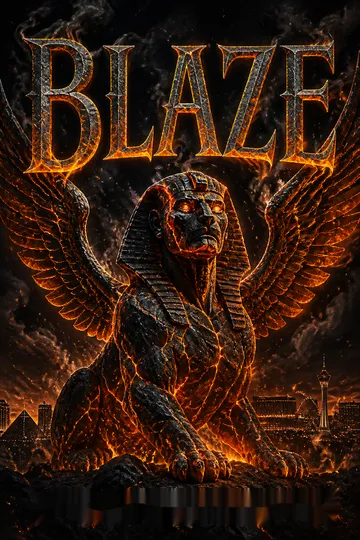
Blaze is the second book in Suzanne Wright's Dark in You series, continuing Knox and Harper's story. Readers generally enjoyed the intense romance, humor, and character development, though some felt it had less action than the first book. Many praised the strong relationship between Knox and Harper, their witty banter, and steamy scenes. Some readers noted repetitive elements and excessive focus on jealous ex-lovers. Overall, fans of the series found it a satisfying continuation, with most rating it 4-5 stars and eagerly anticipating the next installment.
People Also Read

Characters
Harper Wallis
Defiant sphinx tattooistHarper is a sphinx raised by the imp Wallis family, a tattoo artist, and a woman who prizes earned independence over inherited privilege. Her dry humor and bluntness protect a softer loyalty she rarely displays first. She has little interest in status, even when becoming Knox’s mate makes her a co-Prime, and she is wary of being cared for because her parents repeatedly failed her. Her relationship with Knox requires her to accept help without giving up the right to choose for herself. Harper’s instinct to protect the people she loves can be reckless, but it also reveals that her self-reliance has never meant indifference.
Knox Thorne
Archdemon Prime and mateKnox is a wealthy, influential Prime whose hidden nature makes him one of the most dangerous demons alive. His power, strategic mind, and desire for control have made him formidable in business and politics, but Harper reaches the feelings he has long kept buried. He is both her mate and psychic anchor, a bond that steadies his inner demon and makes her safety feel indispensable. Knox’s protectiveness comes partly from love and partly from a past in which others controlled his choices and failed to protect him. Harper challenges him to distinguish care from command, and he must learn to share power without treating vulnerability as a weakness.
Lawrence Crow
Healer near collapseCrow is a surgeon, a psi-demon who can drain emotional and psychic energy, and a member of Knox’s lair. He has previously helped other demons close to going rogue, which makes his own deterioration especially troubling. His partner Delia knows his generous, disciplined side and believes he can still be helped. As paranoia takes hold, Crow’s certainty becomes more powerful than evidence, turning his good intentions into a danger to those around him.
Carla Hayden
Harper's absent sphinx motherCarla is Harper’s birth mother, a sphinx whose history with Harper’s father left her emotionally damaged and unable to become a parent to her daughter. She built a separate family with Bray and their sons, while Harper grew up elsewhere. Their connection is defined by absence, guarded curiosity, and the knowledge that old injuries cannot be undone simply by sharing blood. Carla’s choices and silences shape Harper’s sense of family even when the two women are apart.
Roan
Resentful, status-conscious brotherRoan is Carla’s adult son and Harper’s half-brother. A successful lawyer, he values social standing and is uncomfortable with Harper’s Wallis heritage and her new authority in the lair. His loyalty to his mother is intense, though his way of expressing it is often accusatory. Roan’s relationship with Harper is strained by family history neither of them chose, and he reacts poorly when his place in the family or community feels threatened.
Kellen
Watchful younger half-brotherKellen is Carla and Bray’s younger son, a teenager more observant than forceful. He has a complicated view of his mother and a quieter connection with Harper than the rest of his family understands. Kellen tends to avoid conflict rather than compete for attention, but that caution can leave him vulnerable to pressure from Roan and Bray. His reserved manner reflects a young person trying to make independent choices inside a family where strong personalities often decide what everyone else should feel.
Jolene
Protective imp matriarchJolene is Harper’s grandmother and the matriarch of a sprawling imp family. Elegant, shrewd, and cheerfully manipulative, she protects her relatives with a force that can include setting fires or demolishing buildings. Harper trusts Jolene’s home as one of the few places where she can retreat without performing strength. Jolene’s fierce loyalty sometimes means she intervenes before Harper asks, but beneath the mischief is a clear understanding of Harper’s guardedness and emotional needs.
Delia
Loyal partner in crisisDelia is Crow’s partner and neighbor to Carla. She wants to believe Crow can recover, even as his illness makes her own safety uncertain. Her reluctance to report his worsening condition comes from fear of losing him, not from indifference to the people he may endanger. Delia embodies the painful position of loving someone whose reality is changing, and her compassion persists even when other demons believe treatment is futile.
Bray
Protective family patriarchBray is Carla’s mate and the father of Roan and Kellen. He is protective of his family and initially directs his anger toward the people and circumstances surrounding Carla’s disappearance. His instincts are understandable, but grief and fear can make him harsh toward Harper and toward Delia, who wants Crow treated rather than condemned. Bray’s role reveals how one crisis can split a family between the demand for justice and the desire to preserve someone who has become dangerous.
Levi
Steadfast reaper sentinelLevi is one of Knox’s sentinels, a powerful reaper who helps protect the lair and Harper. He is pragmatic, observant, and willing to tell Knox an uncomfortable truth when protectiveness begins to look like control. Levi understands Harper’s imp nature and recognizes that her need for risk and independence is part of who she is. His loyalty is measured rather than flattering, which makes his advice especially valuable to Knox.
Tanner
Hellhound bodyguard sentinelTanner is a hellhound and one of Knox’s sentinels, assigned to guard and drive Harper. He is a skilled tracker, a steady presence, and a frequent target of Devon’s teasing. His dry humor makes an otherwise watchful role feel less oppressive to Harper, though he takes her safety seriously. Tanner’s attraction to Devon is complicated by the instinctive hostility between hellhounds and hellcats, leaving their flirtation balanced between amusement and danger.
Keenan
Flirtatious incubus sentinelKeenan is an incubus and one of Knox’s sentinels. His natural allure affects most people, but he is more than a seducer: he takes his protective duties seriously and remains a familiar companion to Harper and her friends. He drinks more than is wise and dislikes being photographed, two vulnerabilities Khloë cheerfully exploits. His banter gives the group levity, while his patience with the imps shows a softer side beneath the sentinel’s readiness for violence.
Larkin
Vigilant harpy sentinelLarkin is a harpy and a member of Knox’s security team. She is disciplined, alert, and direct, often assigned to protect Harper when the Underground is crowded. Her presence reinforces the seriousness of the threats without treating Harper as helpless. Larkin is also comfortable among Harper’s friends, balancing her warrior’s watchfulness with an affectionate willingness to join their celebrations.
Raini
Succubus studio partnerRaini is a succubus, a senior tattoo artist, and one of Harper’s closest friends and business partners. She is socially confident, practical, and protective without mistaking Harper’s reserve for a lack of feeling. Her judgment helps the studio make the move to the Underground, and she often notices when Harper needs support before Harper will ask for it. Raini’s loyalty is expressed through concrete action, from closing the studio to standing beside Harper when family tensions rise.
Devon
Hellcat tattoo apprenticeDevon is a hellcat, Harper’s friend, and an apprentice at Urban Ink who specializes in piercings. She is emotionally perceptive, outspoken, and quick to defend Harper, sometimes before she has all the facts. Her instinctive friction with Tanner’s hellhound nature creates comic tension, but their attraction complicates that rivalry. Devon brings warmth and blunt loyalty to Harper’s circle, while her willingness to speak up helps prevent Harper from carrying every worry alone.
Khloë
Imp cousin and receptionistKhloë is Harper’s cousin, an imp, and Urban Ink’s receptionist. Small, messy, and spectacularly resourceful, she can turn a minor inconvenience into a scheme and a scheme into a story everyone hears. Her imp instincts include mischief, stealing, and fierce family loyalty. Khloë understands Harper’s reluctance to confide, but she is also willing to call her out when silence leaves friends feeling shut out. Her humor keeps the group buoyant without making her affection any less serious.
Belinda Thacker
Image-conscious event plannerBelinda is a cambion hired to organize Knox’s major events. She is efficient and polished, but her investment in status and appearances makes her a poor reader of Harper. Belinda assumes that a Prime’s mate should present herself in a conventional, elegant way, and she repeatedly tries to guide Harper toward that image. Her professional competence is real, yet her condescension reveals how easily expertise can become a means of asserting social superiority.
Alethea
Encantada political rivalAlethea is an encantada and the sister of Prime Jonas. Beautiful, socially adept, and accustomed to influence, she has a history with Knox that makes Harper wary. Alethea’s interest in political crises often places her close to the center of events, but her motives are difficult for Harper to trust. She believes presentation and power shape how others respond, and she struggles with a mate who has chosen someone who refuses to compete on those terms.
Dario
Grieving island PrimeDario is a US Prime who has withdrawn to his island home after losing a longtime companion. His absence invites rumors because the other Primes have little information about his grief or his condition. Dario is controlled, private, and willing to isolate himself when he fears his emotions may affect others. He offers a contrast to the political appetite around him: he holds power, but he does not seem eager to use it for its own sake.
Nora
Dario's prophetic grandmotherNora is Dario’s grandmother, a sharp-minded older woman whose premonitions give her an unusual perspective on the future. She is patient, mischievous, and comfortable letting others underestimate her. Nora does not claim conventional visions; she describes future events as knowledge and feeling rather than a clear picture. Her manner recalls Jolene’s ability to unsettle a room while appearing harmless, though Nora’s warnings carry a darker weight.
Jonas
Diplomatic neighboring PrimeJonas is a Prime, Alethea’s brother, and a host of the annual gathering of US Primes. He is courteous and politically connected, offering Knox help when Crow becomes dangerous. His polished manner contrasts with the warmth of Harper’s family, but he is willing to apologize when his sister oversteps.
Lucian
Harper's unreliable fatherLucian is Harper’s father, a sphinx who traveled with her for years but relied on her to manage much of their life. He cares for her in his own erratic way, yet his self-absorption and suspicion make him an unreliable source of comfort. Harper’s loyalty to him persists despite her clear-eyed understanding of what he failed to provide.
Lucifer
Irreverent infernal authorityLucifer is a powerful figure associated with Hell, but not its ruler. He is abrasive, eccentric, and fascinated by the prospect of a magically powerful child, which alarms Harper and amuses Knox. His knowledge of demonic magic can be useful, though his attention wanders quickly toward jokes and provocations. He treats Harper with an unusual familiarity that may be affection disguised as irritation.
Isla
Ambitious former PrimeIsla is a former Prime whose bid to establish a single US monarch continues to shape political conversations. Her ambition and past conflict with Knox leave other leaders alert to the possibility that power struggles are not over. Even when she is absent from current events, the memory of her challenge influences how the Primes interpret new rumors and threats.
Plot Devices
The anchor bond
Mutual psychic stabilizerDemons have an inner entity and may form a psychic bond with an anchor, whose presence helps keep that entity from taking control. Harper is both Knox’s anchor and his mate, so their connection brings emotional intimacy and practical dependence together without making them the same thing. The bond explains why Knox fears losing her so intensely, why they can sense one another at a distance, and why separation can be physically and psychologically difficult. The story tests whether dependence must become control, then shows the bond working best when both partners can act as individuals.
The inner demon
Power with a second willDemons share their souls with dark entities that possess their own drives, especially entitlement, possession, and appetite for stimulation. Knox and Harper must each negotiate with an inner self that can surface under stress, sometimes overriding judgment. This dual nature makes violence more than a choice made by a single, stable personality; it is also a struggle over who holds control. The device shapes their romance, their fear of going rogue, and the story’s central question of whether protective power can remain answerable to care.
Sphinx gifts and wings
Defense becomes transformationHarper’s sphinx abilities include compelling others, inflicting soul-deep pain through touch, and manifesting wings. At first her wings are difficult to summon and harder to control, leaving her vulnerable to anyone who might hunt sphinxes for them. Repeated lessons teach her to hover and fly, making practice a necessary part of her self-defense. Their unusual colors also connect them to Knox’s infernal power. The wings eventually become more than a means of escape, drawing the story’s personal and supernatural conflicts together.
Crow's planted vision
A delusion used as weaponCrow believes that Knox and Harper will have a child capable of destroying the demon world, and he treats this supposed future as a mission. The claim first seems like a symptom of his deteriorating mental state, but the prison escape and Nora’s revelations expose the possibility that another demon planted and exploited it. The prophecy gives Crow a rationale for violence while generating fear among the Primes. Its function is less to predict events accurately than to show how a believable fear can be turned into a weapon when people stop asking who benefits from it.
The Four Horsemen
Rumors destabilize leadershipThe Four Horsemen seek the fall of the US Primes, using rumors, manipulated loyalties, and intermediaries rather than open confrontation. Crow becomes an especially dangerous tool because his illness makes his claims easy to dismiss while his actions still threaten powerful people. The device turns political uncertainty into part of the suspense: a rumor about Dario or Knox may be false, but repeating it can still isolate leaders and provoke retaliation. The revelation identifies some of the conspiracy’s shape while leaving other participants unknown.
Dark in You Series






About the Author






Download PDF
Download EPUB
.epub digital book format is ideal for reading ebooks on phones, tablets, and e-readers.








