

Key Takeaways
Use history to escape the false choice between automatic progress and endless threat
A life and a death. In 2010, Snyder welcomed his son in Vienna while a plane carrying his friend Tomek Merta crashed in Russia on its way to commemorate the Katyn massacre. The tragedy briefly brought Russians and Poles together around historical truth. In the years that followed, political leaders turned the crash into a conspiracy story that displaced the history its victims had intended to honor. Personal grief became a warning about public memory: events do not explain themselves, and stories about them can either illuminate responsibility or erase it.
Two false clocks. The politics of inevitability treats the future as automatic progress, so people stop asking how democracy is sustained. The politics of eternity replaces progress with recurring danger, casting the nation as perpetually innocent and besieged. Both make choices seem pointless. Historical thinking interrupts them by examining evidence, causes, and alternatives.
What's striking is how the opening makes political time intimate before making it theoretical. A family learns that joy and grief can arrive together; a public learns that commemoration can be redirected by whoever controls the story. Memory is not the same as history: memory supplies a felt account, while historical inquiry tests connections and responsibility. The distinction resembles the difference between a vivid anecdote and a causal explanation. Still, historical study cannot guarantee agreement. Its democratic value is more modest and more practical: it gives citizens shared evidence with which to argue.
Study the past before a lost future is recast as permanent victimhood
A philosopher revived. Snyder traces Russia's turn toward eternity politics through Ivan Ilyin, a Russian émigré philosopher who praised fascism and rejected liberal individuality. After the Soviet Union fell, his books were republished, his remains were reburied in Moscow, and Vladimir Putin cited him. Ilyin imagined Russia as a uniquely innocent nation led by a redeemer who could restore unity by identifying enemies. In this worldview, facts and individual judgment threaten the nation rather than help it understand itself.
Ideas serve interests. Snyder argues that Ilyin's philosophy suited a governing elite that had accumulated wealth without creating fair institutions or broad social mobility. The story of an innocent Russia under attack shifted attention from domestic choices to foreign enemies. Ilyin's importance, in this account, is not only that a leader quoted him. His ideas offered a vocabulary for treating arbitrary power and inequality as patriotic necessities.
The case shows why intellectual history belongs in political analysis: concepts can legitimize arrangements that otherwise look like self-interest. A language of national redemption makes concentrated wealth appear morally elevated, while turning criticism into disloyalty. Similar mechanisms are familiar from sociology, where institutions reproduce themselves partly by making their hierarchy seem natural. Yet citation alone cannot prove that a philosopher caused a policy. The strongest version of Snyder's argument is that Ilyin supplied useful interpretive tools to leaders whose political interests already favored personal rule.
Require a lawful way to replace leaders, or the state cannot outlast them
Succession means continuity. A principle of succession is a reliable method for replacing rulers while keeping the state intact. Democracy can provide one: each election allows citizens to change leadership without treating change as catastrophe. Snyder contrasts this with personal rule, where authority depends on a leader's charisma and no accepted method exists for what comes next.
Ritual is not choice. The Soviet Union lacked a settled succession system, and each leader's death threatened the regime. Russia's post-Soviet elections offered a possible alternative, but Snyder describes how the transition from Boris Yeltsin to Putin was shaped by oligarchic interests and manufactured political drama. In 2011 and 2012, election fraud and Putin's return to the presidency provoked mass protests. Rather than restore trust in voting, the Kremlin treated elections as rituals of support. A state that empties elections of choice makes its future less predictable, not more secure.
The distinction between a leader and an institution is central here. Political science calls the process institutionalization: authority becomes durable when rules work beyond the person who first commands them. Succession also lowers the stakes of disagreement, since today's losers can compete again rather than face permanent exclusion. The argument is persuasive, though elections alone do not ensure peaceful continuity. Courts, parties, professional administrations, and acceptance of defeat matter too. The essential test is whether a losing faction can imagine a legitimate future inside the system.
Treat Ukraine's sovereignty as a test of whether law outranks imperial nostalgia
Two post-imperial paths. Snyder presents the European Union as a way for states to cooperate under shared rules after Europe's empires collapsed. Membership required democratic government, human rights, a functioning market, and the ability to apply common law. Russia's proposed Eurasian project offered a different model: closer alignment with Moscow without the same demands for political reform. In 2013, Ukraine's planned association agreement with the EU became the point where these alternatives collided.
A border is a fact. Putin's rhetoric cast Ukrainians as part of a single Russian civilization, despite Ukraine's status as a sovereign state. After Ukraine's 2014 revolution, Russia annexed Crimea and intervened in the east. Snyder argues that rejecting Ukraine's separate political existence was an imperial move: culture and historical symbols were used to override borders and law. At the time, he notes, the EU's economy was roughly eight times larger than Russia's, yet its legal order was vulnerable because it was not built to resist military coercion.
The comparison clarifies that integration is not simply a trade arrangement. Shared rules can give smaller states leverage they lack when negotiating alone, a principle also visible in federal systems and international institutions. Ukraine's case makes sovereignty concrete: it means that citizens choose their political direction, rather than a neighboring power defining their identity for them. The EU's model should not be romanticized. Its procedures can be slow, and its members have unequal influence. But those flaws do not erase the difference between negotiated constraints and imposed control.
When propaganda contradicts itself, its goal may be confusion, not belief
Denial as a tactic. Snyder calls one Russian propaganda method implausible deniability: leaders deny an evident fact so openly that the denial itself tests loyalty and distracts observers. During the 2014 invasion of Crimea, Putin denied sending Russian troops even as armed, unmarked soldiers controlled the peninsula. The performance was aimed less at convincing Ukrainians than at making Russian viewers accept a shared fiction.
Many stories, no ground. After Malaysia Airlines Flight 17 was shot down over eastern Ukraine, Russian media circulated incompatible explanations, including claims that Ukrainian forces had fired the missile or that the attack targeted Putin's plane. The conflicting accounts did not form one credible alternative. They made it harder to settle on any account at all. Snyder's point is that propaganda can succeed by exhausting attention and dissolving confidence in evidence, not merely by persuading people of one lie.
This is a useful distinction between persuasion and destabilization. In cognitive science, repeated exposure can increase familiarity without increasing accuracy, while competing claims can overload people's ability to evaluate sources. Contradiction can therefore be functional rather than a flaw. The tactic also exploits journalism's convention of presenting opposing claims side by side, even when only one side supplies verifiable evidence. The remedy is not to pretend reporters are infallible. It is to distinguish sourced facts from claims, explain how a conclusion was reached, and correct errors visibly.
Build political belonging through shared action, not inherited ethnic purity
A movement becomes a nation. The Maidan protests began in Kyiv in 2013 after President Viktor Yanukovych abandoned an agreement with the EU. When police attacked student demonstrators, people from across Ukraine joined them. Protesters spoke Ukrainian, Russian, or both; they organized medical aid, safety, legal support, libraries, and food distribution through informal networks. Many arrived as individuals or families, not as party representatives. Their cooperation made a diverse public visible through shared action rather than a single language or ancestry.
Dignity in practice. For many participants, the goal shifted from a European future to defending the rule of law and peaceful assembly. Snyder describes the Maidan as a temporary civic infrastructure, including a voluntary welfare system built through donations and practical work. Right-wing groups were present, but he argues they neither began nor controlled the movement. Its political force came from citizens risking themselves to preserve the possibility of a common future.
The Maidan illustrates a form of belonging built by participation: people become a public by taking responsibility for one another. Social capital, the trust and cooperation that make collective action possible, is not just a warm feeling here; it is visible in food kitchens, legal help, and mutual protection. Such improvisation can be powerful during a crisis, but it cannot substitute indefinitely for accountable institutions. Its lasting lesson is that a plural society needs common rules and shared civic practices, not forced cultural sameness.
Treat online outrage as infrastructure that hostile actors can manipulate
A tailored influence campaign. Snyder argues that Russia's information operations exploited American vulnerabilities during the 2016 election. Fake social media accounts and automated bots amplified divisive messages, while hacked Democratic emails were released at politically useful moments. One investigation cited in the book identified 470 Facebook pages linked to Russia's Internet Research Agency, which posed as American political groups. The operation did not need to create every grievance; it could intensify existing distrust, racism, and partisan anger.
Attention is the opening. The book connects this campaign to an American media environment where platforms reward rapid engagement and outrage. Users could mistake foreign propaganda for domestic conversation, especially when messages matched their existing views. Snyder's account presents Russian activity as one factor in Trump's victory, alongside American campaign decisions, media coverage, and institutional weaknesses. The broader warning is that digital systems can turn a society's own divisions into channels for outside influence.
The idea of an attack surface usually describes weaknesses in software. Snyder extends it to the emotional and institutional openings through which a society can be influenced. That extension is valuable because it directs attention from isolated fake posts to the systems that distribute them. Personalization can make manipulation feel like independent judgment. Still, exposure is not the same as persuasion, and online activity alone cannot explain election outcomes. Analysis should separate confirmed operations, their reach, their effects on behavior, and the many domestic forces that shaped the vote.
Make social mobility credible, or nostalgia will market itself as policy
Inequality narrows time. Snyder argues that when people cannot imagine a better future, political promises of return and revenge become more compelling. He contrasts Russia, where the wealthiest tenth held 89% of household wealth in 2016, with the United States, where the comparable share was 76%. In America, he links weakening unions, stagnant worker wages, and reduced public support for health care, education, and other services to declining confidence in the future.
Pain can become political material. The book discusses the opioid crisis, including Scioto County, Ohio, where nearly 10 million pills were prescribed in one year to about 80,000 residents. Snyder notes that communities facing health crises often shifted toward Trump in 2016. This is a relationship between patterns, not proof that addiction determined how any individual voted. His larger claim is that material insecurity can be redirected into anger at chosen enemies instead of demands for policies that improve daily life.
This argument connects political imagination to material conditions. Behavioral economics and public health both show that chronic stress can narrow attention toward immediate threats, making long-term planning harder. That does not make distressed voters irrational, nor does it mean economic insecurity automatically produces authoritarian politics. People interpret hardship through institutions, communities, and available narratives. The political question is therefore not whether voters should be lectured about nostalgia, but whether public policy can make a future feel plausible enough that grievance is no longer the only story on offer.
Defend equal votes and local reporting as foundations of a credible future
Freedom depends on institutions. Snyder's closing argument is that equality, individual judgment, truthful reporting, democracy, and international cooperation support one another. Free elections create a future in which leaders can be replaced; equal political voice makes those elections meaningful. Local journalism helps citizens connect national claims to events they can verify and experience. Without shared facts and trust, political disagreement becomes easier to portray as a permanent war between enemies.
History is a civic practice. The book elevates investigative reporters who documented corruption and the war in Ukraine, often at personal risk. Their work helped establish what was happening when propaganda tried to obscure it. Snyder's practical direction is to recover history as a way of testing political stories against evidence and alternatives. Citizens should resist both complacency about automatic progress and cynicism that declares truth impossible. Neither response is neutral: each leaves more room for unchecked power.
The book's virtues form a system rather than a menu. Equal voice without reliable information is vulnerable to manipulation; information without independent institutions cannot reliably constrain power. This interdependence echoes constitutional design, where checks work because no single safeguard carries the whole burden. The framework also clarifies why local reporting matters: democracy is easier to defend when claims can be compared with observable conditions. Yet no institutional design eliminates conflict or error. The goal is not perfect consensus, but a durable way to correct mistakes without making opponents enemies.
Analysis
The book's most powerful move is to treat political time as a cause, not merely a backdrop. Inevitability makes institutions seem self-sustaining; eternity makes threats seem eternal. Both narratives shrink the space in which citizens can deliberate and act. Snyder links that contraction to a concrete chain: Russian kleptocracy, the rehabilitation of Ilyin, the assault on Ukrainian sovereignty, and the export of political fiction into Western media systems. The result is a comparative history in which ideas, money, technology, and institutional weakness interact rather than operate in separate national boxes.
The framework also has limits. Inevitability and eternity are interpretive categories, not exhaustive descriptions of political life. Voters may support nationalism for reasons not reducible to nostalgia or manipulation, and democratic states can fail through ordinary policy choices without foreign intervention. Likewise, evidence that an influence campaign existed does not establish how many votes it changed. Snyder's strongest claims are about vulnerability and strategy: foreign actors exploit divisions, while domestic institutions and elites determine how exposed a society becomes.
Ukraine keeps the argument from becoming a story of passive victims. The Maidan shows that political identity can be made through cooperation across language, region, and background. That example complicates the book's bleakest passages: citizens are not only targets of propaganda, but creators of institutions and shared meaning. The civic forms they built were temporary, yet they reveal a practical alternative to both imperial identity and cynical distrust. The book's deepest warning is therefore not simply that lies spread. It is that people may lose the habits and institutions needed to distinguish a contestable claim from a useful fiction. Its answer is deliberately unspectacular: historical inquiry, meaningful elections, equality before law, independent journalism, and social conditions that make a future worth imagining. Those are not guarantees of freedom. They are its working materials.
Review Summary
The Road to Unfreedom is praised for its insightful analysis of Russia's influence on Western democracies, Putin's fascist ideology, and the 2014 Ukraine invasion. Snyder's concepts of "politics of inevitability" and "politics of eternity" are highlighted. The book explores Russia's cyber warfare, its role in Brexit and Trump's election, and the vulnerabilities of Western societies. While some readers find it dense and occasionally conspiratorial, many consider it a must-read for understanding current global politics. Critics argue it oversimplifies complex issues and lacks balance in its portrayal of Russia.
People Also Read

Glossary
politics of inevitability
Progress treated as automaticA view of political time in which the future is assumed to extend the present in a predictable, improving direction. Because progress seems guaranteed, citizens may stop examining how institutions work, who benefits from them, or what choices could change them. Snyder argues that this complacency weakens democratic responsibility and can leave societies unprepared for crisis.
politics of eternity
Threat treated as permanentA political outlook that replaces a shared future with recurring stories of national innocence and outside danger. Leaders present each crisis as another instance of an ancient threat, shifting attention from policy and accountability to emotion, enemies, and spectacle. Snyder argues that this outlook can preserve unequal power by making reform seem impossible and conflict seem unavoidable.
principle of succession
Lawful transfer of powerA recognized method for replacing political leaders while preserving the state. Democracy can provide succession through regular, meaningful elections, while custom or inherited rules can provide it in other systems. Snyder treats succession as essential to political continuity because citizens can accept leadership change without assuming that the whole state must collapse.
implausible deniability
Obvious lies used strategicallySnyder's term for denying an evident fact in a way that is not meant to persuade everyone that the denial is true. The denial can signal loyalty to supporters, unsettle journalists, and turn attention from events to the dispute over whether they occurred. It differs from a carefully ambiguous denial because its implausibility is part of its political function.
reverse asymmetry
Strong forces imitate the weakSnyder's description of a powerful military using tactics associated with weaker partisan forces while concealing its identity or involvement. In the 2014 invasion of Ukraine, Russian forces used unmarked uniforms and irregular methods while portraying themselves as local defenders. The tactic blurred the line between an invading army and a popular uprising, putting civilians at greater risk.
schizofascism
Fascists accuse opponents of fascismSnyder's term for a propaganda pattern in which actual fascist actors label their opponents fascists, while presenting their own aggressive politics as anti-fascist. In the Russian campaign against Ukraine, this involved using the memory of the Second World War to condemn Ukrainian opponents while promoting authoritarian, imperial, and far-right ideas. The contradiction helps weaken clear historical and political distinctions.
strategic relativism
Gain by weakening othersSnyder's term for a strategy in which a state unable or unwilling to improve its own position seeks advantage by making rivals weaker. Rather than competing through greater prosperity or more capable institutions, it damages other states' cohesion, trust, or political systems. The strategy can create a negative-sum contest in which all parties lose, but the initiator hopes to lose less.
sadopopulism
Politics that rewards inflicted painSnyder's term for a political appeal that claims to represent ordinary people while advancing policies that can harm vulnerable parts of its own constituency. Supporters may be offered the emotional satisfaction of seeing designated enemies suffer, even when their own material prospects worsen. The concept distinguishes this appeal from populism based on policies intended to expand opportunities for the majority.
FAQ
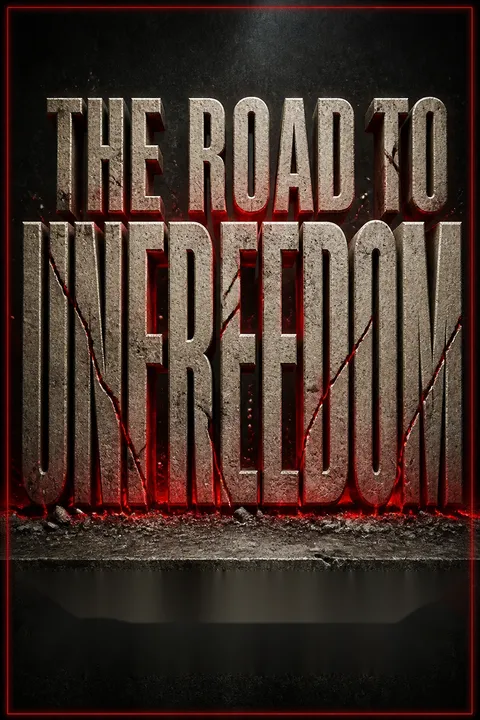
What's The Road to Unfreedom by Timothy Snyder about?
- Exploration of modern politics: The book examines the rise of authoritarianism and the decline of democracy in Russia, Europe, and America, introducing the concept of "the politics of eternity."
- Historical context: Snyder delves into historical events, particularly the legacy of 20th-century totalitarian regimes, to explain contemporary political trends.
- Interconnectedness of events: The narrative links political developments in Russia, such as the annexation of Crimea, to broader trends in Europe and the United States.
Why should I read The Road to Unfreedom by Timothy Snyder?
- Insight into current events: The book provides a critical analysis of the political landscape, especially regarding the rise of populism and the erosion of democratic norms.
- Historical lessons: Snyder emphasizes learning from history to avoid repeating past mistakes, using totalitarianism as a cautionary tale.
- Engaging narrative: The author combines rigorous scholarship with a compelling narrative style, making complex political concepts accessible.
What are the key takeaways of The Road to Unfreedom by Timothy Snyder?
- Politics of inevitability vs. eternity: Snyder contrasts the belief in linear progress with cyclical narratives of victimhood and crisis.
- Importance of truth: The book underscores the necessity of truth in politics, warning against the manipulation of facts.
- Role of individualism: Snyder advocates for individualism and civic responsibility as essential for countering authoritarianism.
What are the best quotes from The Road to Unfreedom by Timothy Snyder and what do they mean?
- “The politics of inevitability is the idea that there are no ideas.” This highlights the complacency that arises when societies assume progress is guaranteed.
- “Eternity politicians manufacture crisis and manipulate the resultant emotion.” Snyder emphasizes how leaders exploit crises to maintain power.
- “Understanding is empowerment.” This encapsulates Snyder's belief in the power of historical and political knowledge to resist authoritarianism.
How does Timothy Snyder define the "politics of eternity" in The Road to Unfreedom?
- Cyclical narratives: It relies on narratives of victimhood and crisis rather than linear progress, leading to hopelessness.
- Manipulation of truth: Leaders manipulate facts to maintain control, shifting focus from accountability to perpetual emergency.
- Impact on society: This undermines democratic institutions, making citizens passive recipients of propaganda.
How does Snyder connect historical events to contemporary politics in The Road to Unfreedom?
- Historical parallels: He draws parallels between 20th-century totalitarian regimes and current political trends.
- Lessons from the past: Snyder examines events like the Nazi-Soviet alliance to illustrate how historical narratives shape current ideologies.
- Interconnectedness of global events: He highlights how events in one region influence political developments elsewhere.
How does The Road to Unfreedom by Timothy Snyder address the concept of truth in politics?
- Necessity of truth: Truth is fundamental to democracy, and its manipulation undermines public trust.
- Consequences of lies: Leaders use lies to maintain power, creating a culture of disbelief and cynicism.
- Role of journalism: Investigative journalism is crucial for uncovering truths and holding power accountable.
What role does individualism play in The Road to Unfreedom by Timothy Snyder?
- Countering authoritarianism: Individualism is crucial for resisting authoritarianism, emphasizing civic responsibility.
- Historical context: Totalitarian regimes suppress individuality, so recognizing individual rights is essential.
- Empowerment through action: Embracing individuality empowers citizens to participate in civic life and defend democracy.
How does The Road to Unfreedom by Timothy Snyder connect the Russian invasion of Ukraine to broader global trends?
- Geopolitical strategy: The invasion is part of Russia's strategy to weaken Western democracies.
- Cultural and ideological warfare: Russia uses cultural narratives to justify its actions and reshape perceptions.
- Impact on global democracy: The Russian model poses a threat to democratic institutions worldwide.
What role does misinformation play in Snyder's analysis in The Road to Unfreedom?
- Weaponization of information: Misinformation is used to manipulate public opinion and undermine trust in democracy.
- Erosion of factuality: False narratives create confusion, hindering informed political discourse.
- Public perception and control: Controlling the narrative allows authoritarian leaders to maintain power.
How does Timothy Snyder address the concept of "hybrid war" in The Road to Unfreedom?
- Definition of hybrid war: Snyder critiques the term, arguing it diminishes the reality of conventional warfare.
- Combination of tactics: While hybrid warfare includes cyber attacks, traditional military force is also at play.
- Consequences for global security: Mischaracterizing conflicts as hybrid can lead to complacency in addressing threats.
What does Snyder suggest as solutions to the issues raised in The Road to Unfreedom?
- Reinforcing democratic institutions: Strengthening democratic practices and institutions is crucial.
- Promoting economic equality: Addressing economic disparities can restore faith in democratic processes.
- Fostering truth and trust: A commitment to factuality and transparency is essential for a healthy democracy.
About the Author


Download PDF
Download EPUB
.epub digital book format is ideal for reading ebooks on phones, tablets, and e-readers.








