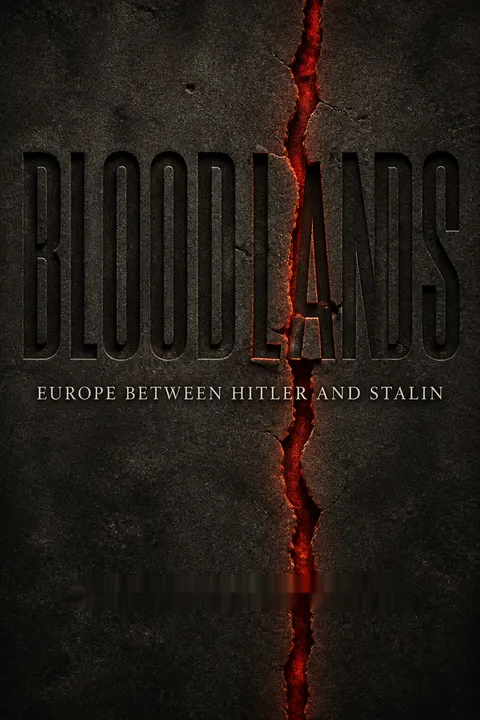


Key Takeaways
Follow 14 million deliberate deaths through the borderlands where empires collided
A region, not a battlefield. Snyder calls the territories between central Poland and western Russia the Bloodlands: chiefly Poland, the Baltic states, Belarus, Ukraine, and western Russia, where Nazi and Soviet power overlapped. Between 1933 and 1945, the regimes deliberately murdered about 14 million people there. They were civilians and prisoners of war, not soldiers killed in combat. The killings included famine, executions, mass shootings, and gassing. A quarter of the victims died before the Second World War began.
Connections change the story. The same people and places endured successive rulers, sometimes first Soviet, then German, then Soviet again. A history organized only by nation or regime can miss how one occupation shaped the next. Snyder reconstructs the region through victims’ diaries, letters, testimony, and records left by perpetrators.
The geographic frame is the book’s central intellectual move. It treats borders as changing conditions of power, rather than stable containers for separate national stories. That makes visible how the same village, family, or population could be exposed to several regimes and policies. The approach also resists a familiar distortion: treating the Holocaust as a story detached from eastern European history. Its boundary is necessarily selective, however. A regional frame clarifies connections, but should not imply that every place inside it experienced the same violence.
Read Ukraine's farmland as the prize behind two rival utopias
Land carried the promise. Stalin sought to collectivize Soviet agriculture, taking land and harvests under state control to finance industrial growth. Hitler imagined a German empire in the East, where German settlers would replace or dominate the existing population. Snyder calls Stalin’s project self-colonization, imposed within Soviet borders, and Hitler’s a colonial project dependent on conquest. In both visions, peasants were treated as instruments or obstacles, not people with claims to land and food.
Ukraine was the hinge. Its fertile soil and grain mattered to both regimes. Stalin needed Ukraine to feed workers and support industry; Hitler wanted its harvest to supply Germany and its future settlers. Nazi planners’ Hunger Plan aimed to starve tens of millions in conquered Soviet territory, while Generalplan Ost envisioned expelling, enslaving, or killing populations to make room for German rule. Neither plan was fully achieved.
The agricultural focus makes the regimes’ grand visions tangible: control of land meant control of food, labor, settlement, and political loyalty. It also helps explain why Ukraine was not merely a battlefield but a central object of competing state projects. The comparison is strongest when it distinguishes the projects’ ends. Both made people expendable, but Stalin’s program sought to transform society within the Soviet state, while Hitler’s colonial ambitions required conquest and racial hierarchy. Shared mechanisms should not erase that difference.
Call famine political when rulers control food, movement, and relief
Scarcity was administered. Soviet collectivization disrupted farming and reduced harvests, yet the state continued to demand grain from Ukraine. Officials reported starvation; Stalin privately acknowledged famine, but rejected requests for aid and continued requisitions. Authorities took seed grain, placed villages on blacklists, restricted trade, and prevented starving peasants from fleeing to cities or across borders. The state had food reserves and continued exports, but access to food was decided politically.
The human cost was enormous. Snyder estimates about 3.3 million people died of starvation and related disease in Soviet Ukraine in 1932 and 1933. Children were separated from families, and survivors recalled corpses in villages and markets. The exact total remains uncertain because records were incomplete or suppressed. Snyder’s point is not that every death followed an identical plan, but that leaders knowingly maintained lethal policies when they had alternatives.
This account directs attention from aggregate food supply to access, a distinction central to famine analysis. A crop failure may help explain vulnerability; it does not explain why authorities keep taking food, block escape, or reject relief. The documented sequence makes those decisions part of the causal story. Historical responsibility still requires careful language: the famine unfolded amid agricultural collapse, coercion, and regional variation, so intention should be assessed policy by policy rather than inferred from death totals alone.
Compare Hitler and Stalin through chronology, not a false symmetry
Their relationship changed. During the 1930s, Stalin’s government carried out the continent’s largest mass killing policies, while Nazi Germany’s prewar terror was far smaller. In 1939, Germany and the Soviet Union jointly invaded Poland and divided parts of eastern Europe. For nearly two years they were allies, deporting and killing Polish citizens in their respective zones. In June 1941, Hitler broke the pact and invaded the Soviet Union. German mass murder then became the dominant force in the region.
The boundary mattered. The Molotov-Ribbentrop line was the German-Soviet division of occupied Poland agreed in 1939. It separated occupation systems, then marked the line crossed by German forces in 1941. Both regimes rejected political pluralism and used state power against designated enemies, but their aims differed: Soviet violence was often framed as class struggle and state security; Nazi violence was driven by racial empire and the elimination of Jews.
Chronology prevents comparison from becoming either equivalence or apologetics. The pact, joint occupation, and German invasion show that the regimes could cooperate, compete, and commit different crimes at different moments. Comparison is useful because it reveals shared practices, such as defining whole groups as threats, while the sequence preserves crucial differences in motive and scale. The complication is that labels such as totalitarianism can make distinct policies seem interchangeable. A sound comparison stays close to who acted, where, when, and against whom.
Watch quotas turn invented enemies into executions by the thousands
Terror became procedure. The Great Terror is Snyder’s term for the Soviet mass arrests, executions, and deportations of 1937 and 1938. Stalin’s government portrayed peasants and national minorities as agents of foreign conspiracies. Under Order 00447, regional officials received arrest and execution targets; the initial quota of about 80,000 executions grew into nearly 387,000. In the Polish operation, Soviet authorities fabricated a vast spy network and arrested people because of Polish identity, culture, or supposed connections to Poland.
Local institutions supplied the victims. Police extracted confessions through torture, while troikas issued death sentences rapidly and without appeal. The Great Terror produced 681,692 recorded executions overall. At least 85,000 Soviet Poles were shot, despite Poles making up less than 0.4 percent of the Soviet population. Local officials had incentives to exceed targets and prove loyalty, even as the security apparatus itself was being purged.
The quotas show how mass violence can be made administratively ordinary: central authorities set targets, local officers supply names, and paperwork converts suspicion into a verdict. That structure does not make individual responsibility disappear. It helps explain how participation spread while exposing the incentives and coercion that shaped it. The process also shows the danger of elastic categories such as “enemy.” Once the state can define identity as evidence, there is no reliable procedural safeguard for people marked by ancestry or association.
Look beyond camps: starvation and bullets killed most victims
The familiar image misleads. Concentration camps were places of imprisonment and forced labor; death facilities and killing fields were designed for immediate murder. The Gulag, the Soviet camp system, held millions over time, but most prisoners survived their sentences. By contrast, German prisoner-of-war camps in the East became sites of mass starvation. About 3.1 million Soviet prisoners of war died through starvation, neglect, or execution. The siege of Leningrad killed about a million people, chiefly through hunger.
Killing was often direct. More than half of the 14 million victims in the Bloodlands died because food was withheld. Many Jews were shot near their homes; others were gassed at facilities. Auschwitz combined a labor camp with a killing center, but most Jews sent there were murdered on arrival. Western images of liberated camps revealed real horrors, yet they did not show most of the people killed by Nazi policy.
The distinction between imprisonment and a death sentence is essential to understanding the scale and methods of violence. Public images tend to privilege places that survivors and liberating armies could document. That visibility can quietly become a theory of what happened, making camps appear more representative than mass shootings, starvation zones, or death facilities. This correction is valuable, but should not turn into a contest over which victims suffered most. Different forms of persecution require distinction without ranking human worth.
Understand the Holocaust as an escalation, not a machine fixed from the start
Policy narrowed toward murder. The Final Solution was the Nazi term for removing Jews from Europe; earlier proposals centered on deportation, including plans involving occupied Poland, the Soviet Union, and Madagascar. After Germany invaded the Soviet Union in 1941, German units began mass shootings of Jews. The killing expanded to women and children, and by December Hitler’s associates understood that the policy meant killing all Jews under German control. The Holocaust, as Snyder uses the term, is that systematic murder of European Jews.
Different methods served the same end. East of the Molotov-Ribbentrop line, Jews were often shot near their communities. In occupied Poland, death facilities used carbon monoxide; Auschwitz also used Zyklon B. Operation Reinhard was the 1942 murder of about 1.3 million Polish Jews at Bełżec, Sobibór, and Treblinka. In total, Germans killed about 5.4 million Jews. The path was contingent, but the decisions and escalating actions were real.
A contingent history is not a softer account of responsibility. It rejects the comforting idea that every outcome was inevitable, showing instead that leaders and institutions made choices as military plans failed and circumstances shifted. That perspective also guards against treating genocide as a single technological process. Mass shootings, deportations, gas vans, and fixed facilities were distinct methods, developed and used in particular settings. The sequence helps explain how policy changed without suggesting that earlier persecution was harmless or that later murder was accidental.
Judge resistance within the trap of successive occupations
There was rarely a safe side. In eastern Poland and the Baltic states, Soviet rule preceded German occupation, then returned with the Red Army. Some residents welcomed the Germans as deliverance from Soviet repression; Jewish residents faced a new, immediate threat. German authorities exploited anger over Soviet prison killings to incite pogroms and blame Jews for communism. In Belarus, people faced German terror, partisan demands, and the prospect of Soviet rule returning.
Resistance took different forms. Minsk Jews built an underground, helped people escape to forests, and joined partisan groups. Tuvia Bielski’s unit prioritized rescuing Jews and saved more than a thousand. In Warsaw, Jewish fighters resisted in 1943; the Polish Home Army rose against the Germans in 1944, while Soviet forces did not provide the requested support. These histories complicate any simple division between brave resisters and passive bystanders.
The section resists judging people as if they had a stable menu of choices. Occupation changed what survival, collaboration, and resistance meant, often from one month to the next. That does not make every action morally equivalent: some people organized rescue, others aided murder. It does make context indispensable. The Minsk and Warsaw examples also remind readers that resistance was not only combat. Hiding, escape, intelligence, and protecting civilians could be forms of agency, even when they did not defeat the occupying power.
See postwar borders remade by forced migration, not peaceful settlement
Victory moved populations. After the war, Stalin backed a Poland shifted westward, with Soviet-held territory in the east and former German lands in the west. Polish communists and their allies expelled or pressured millions of Germans to leave. About 7.6 million Germans had left Poland by the end of 1947, some fleeing the Red Army, others deported. Poles were also moved from territories annexed by the Soviet Union into the new Poland. In 1947, Polish authorities forcibly resettled about 140,000 Ukrainians within Poland under Operation Vistula.
Movement served political ends. These transfers aimed to make national borders and populations align, while helping communist rule claim legitimacy through land distribution and security. They caused death and profound loss, but Snyder distinguishes ethnic cleansing from deliberate mass murder: neither should be minimized, and they are not the same policy. The new borders also tied Poland’s security to Soviet power.
The aftermath complicates any simple story in which liberation restores the prewar world. Population transfers helped create more nationally homogeneous states, but did so by uprooting people and redistributing homes. They also gave new regimes a practical stake in defending the settlement. The distinction between ethnic cleansing and mass murder matters analytically: collapsing them blurs different intentions and mechanisms. Yet separating them too sharply can obscure how wartime conquest, property theft, and postwar displacement formed a connected history.
Protect the dead from being reduced to numbers or national myths
Counting has consequences. Snyder builds the 14 million total from documented killing policies and cautious estimates, while distinguishing deliberate murder from battlefield deaths, forced labor, and indirect wartime mortality. Such distinctions make the number more meaningful, not less. He also shows how postwar states reshaped memory: Soviet accounts folded Jewish victims into a generalized story of Soviet suffering, while Western attention to camps obscured many killing sites in eastern Europe.
Names resist appropriation. The book returns to individual voices: the child who imagined harvest in famine-stricken Ukraine, the girl whose diary recorded her family’s deaths in Leningrad, and Jews who left messages before being killed. These lives cannot be recovered completely, and the totals remain uncertain. But remembering individuals alongside credible counts makes it harder to turn victims into proof of national innocence or political virtue.
The ethical strength of the method lies in holding scale and individuality together. Counts reveal patterns that isolated testimony cannot; testimony prevents a total from becoming an abstraction used in political argument. The book also makes a demanding claim: historical understanding must include perpetrators and bystanders, not only victims. That is not an invitation to excuse them. It is a safeguard against imagining that mass violence belongs to an alien category of human behavior, safely detached from ordinary institutions and choices.
Analysis
Bloodlands is both a history of mass killing and an argument about how history should be organized. Its most consequential choice is to make geography and chronology work together. The region between Berlin and Moscow is not treated as a passive stage for two dictatorships, but as the place where their projects collided, overlapped, and altered the options available to millions of people. This unsettles national histories that can explain a community’s suffering while obscuring its relation to neighboring communities and occupying powers.
The book’s comparisons are strongest when they preserve asymmetry. Stalinist and Nazi rule shared practices of exclusion, ideological certainty, and coercive administration, but their projects were not interchangeable. Soviet terror was often justified as class warfare or state security, and reached catastrophic levels in peacetime. Nazi rule pursued racial empire and the destruction of European Jewry through a war of conquest. Tracking their changing alliance and conflict prevents comparison from becoming either a false equivalence or a moral ranking exercise.
The focus on deliberate killing also imposes useful discipline. It separates murder from combat deaths, imprisonment, forced labor, and displacement, allowing the reader to see distinct policies clearly. The cost is that any sharp boundary risks understating how those categories interacted. A prisoner could be starved in captivity, a family could be deported after a relative was shot, and a battlefield decision could make civilians more vulnerable. Snyder acknowledges those overlaps, but the reader must keep them in view.
Finally, the book’s insistence on names is not decorative humanization. It is an argument against political appropriation. Numbers establish magnitude; individual records expose the limits of national stories that claim the dead as evidence of innocence, sacrifice, or progress. The work does not resolve every dispute about intention or total casualties. Its achievement is to make such disputes answerable to chronology, documents, geography, and the irreducible fact that each statistic represents lives with different histories.
Review Summary
Bloodlands is a powerful and meticulously researched account of the mass killings in Eastern Europe between 1933 and 1945. Snyder's work offers a comprehensive look at the atrocities committed by both Hitler and Stalin, focusing on the victims rather than the perpetrators. While praised for its detailed analysis and humanizing approach, some critics argue it oversimplifies complex historical events. The book's graphic depictions of violence and suffering make it a challenging but important read, shedding light on a often-overlooked aspect of World War II history.
Glossary
Bloodlands
Overlapping zone of mass killingSnyder’s name for the central and eastern European region where Nazi and Soviet killing policies overlapped between 1933 and 1945. It includes chiefly Poland, the Baltic states, Belarus, Ukraine, and western Russia. The term identifies a connected geography of victims and policies, rather than a single political territory or one national history.
Molotov-Ribbentrop line
German-Soviet occupation boundaryThe boundary dividing German and Soviet zones of influence in eastern Europe after the two powers invaded Poland in 1939. It shaped occupation and deportation policies, then became the line German forces crossed when they attacked the Soviet Union in 1941. The boundary helps distinguish the different stages and locations of the Holocaust and other mass crimes.
Great Terror
Soviet mass repression, 1937-1938Snyder’s term for the Soviet campaigns of mass arrest, execution, and deportation carried out in 1937 and 1938. The repression included operations against people classified as kulaks, alleged political enemies, and national minorities, especially Poles. Authorities used quotas and summary procedures, while fabricated conspiracy charges made identity and association grounds for lethal suspicion.
Gulag
Soviet forced-labor camp systemThe Soviet system of concentration camps and special settlements used to imprison, deport, and exploit forced laborers. It expanded alongside collectivization and industrialization, sending millions to mines, construction projects, forests, and remote settlements. Conditions were brutal and many died, but Snyder distinguishes camp imprisonment from policies designed for immediate execution or mass starvation.
Hunger Plan
Nazi plan to starve populationsGerman wartime economic planning for the occupied Soviet Union, intended to redirect food toward German forces and civilians. Planners classified some regions as food-surplus areas and others as deficits, anticipating that tens of millions of people would starve or flee. The full scheme could not be implemented, but it shaped occupation policy and the deliberate starvation of prisoners and civilians.
Generalplan Ost
Nazi eastern colonial blueprintA set of German plans for transforming eastern Europe into a colonial territory dominated by German settlers. The plans envisaged the removal, killing, enslavement, or forced assimilation of tens of millions of Slavs and other inhabitants. The intended settlement project depended on military conquest and was only partly enacted, but its assumptions informed occupation and population policies.
Final Solution
Nazi plan to remove European JewsThe Nazi euphemism for eliminating Jews from Europe. Earlier proposals focused on deportation to distant territories or reservations. By late 1941, the term referred to the policy of murdering Jews under German control. Snyder emphasizes that the method and timing developed through decisions made amid war, rather than appearing fully formed at the beginning of Nazi rule.
Holocaust
Murder of Europe’s JewsSnyder uses this term for the German policy of murdering European Jews, carried out chiefly between 1941 and 1945 through shootings, gas vans, and killing facilities. The book distinguishes this specific policy from Nazi persecution more broadly and from other German mass killing campaigns, while situating it within the larger history of the Bloodlands.
Operation Reinhard
Mass murder of Polish JewsThe German campaign in 1942 to murder most of the Jews of the General Government, the German-occupied part of central Poland. About 1.3 million Polish Jews were killed, chiefly at the death facilities of Bełżec, Sobibór, and Treblinka. The operation used deception, forced transports, Jewish police, and a small German staff supported by auxiliary guards.
FAQ
What's Bloodlands: Europe Between Hitler and Stalin about?
- Historical Context: The book examines the mass killings in Eastern Europe from 1933 to 1945, focusing on the "bloodlands" where Nazi and Soviet regimes overlapped. This region includes parts of Poland, Ukraine, Belarus, and the Baltic States.
- Mass Murder: Timothy Snyder details the systematic extermination of approximately 14 million people, including the Holocaust, the Great Terror, and the Ukrainian famine, emphasizing their interconnectedness.
- Comparative Analysis: Snyder compares the ideologies and methods of the Nazi and Soviet systems, arguing that both were responsible for immense suffering and death.
Why should I read Bloodlands: Europe Between Hitler and Stalin?
- Comprehensive Analysis: The book provides a thorough examination of the historical events that shaped modern Eastern Europe, making it essential for understanding the region's complex past.
- Moral Reflection: Snyder encourages readers to reflect on the moral implications of these historical events, urging a deeper understanding of the human capacity for violence.
- Unique Perspective: Unlike many histories that focus solely on one regime, Bloodlands offers a comparative analysis of both Nazi and Soviet atrocities, providing a more nuanced understanding of the era.
What are the key takeaways of Bloodlands: Europe Between Hitler and Stalin?
- Interconnected Atrocities: The mass murders by both regimes were not isolated incidents but part of a broader pattern of violence in Eastern Europe.
- Human Cost: Snyder highlights the personal stories of victims, reminding readers that behind the statistics are real lives lost.
- Political Implications: The ideologies of both regimes led to justifications for mass murder, showing the dangers of totalitarianism.
What are the best quotes from Bloodlands: Europe Between Hitler and Stalin and what do they mean?
- "In the middle of Europe in the middle of the twentieth century, the Nazi and Soviet regimes murdered some fourteen million people." This encapsulates the central thesis, highlighting the scale and centrality of these atrocities in European history.
- "The place where all of the victims died, the bloodlands, extends from central Poland to western Russia." This defines the geographical focus, emphasizing the specific region where these mass murders occurred.
- "The sheer numbers of the victims can blunt our sense of the individuality of each one." This reflects Snyder's concern that overwhelming statistics can overshadow personal stories, which he aims to restore through survivor accounts.
How does Timothy Snyder define the "bloodlands" in Bloodlands: Europe Between Hitler and Stalin?
- Geographical Definition: The "bloodlands" are the territories in Eastern Europe that experienced both Nazi and Soviet mass killings, primarily between 1933 and 1945.
- Historical Significance: This area includes modern-day Poland, Ukraine, Belarus, and the Baltic states, where the majority of the deliberate killings by both regimes took place.
- Interconnected Suffering: The term encapsulates the shared suffering of various ethnic groups, including Jews, Poles, and Ukrainians, under the oppressive policies of both totalitarian regimes.
What role did economic policies play in the mass killings described in Bloodlands: Europe Between Hitler and Stalin?
- Collectivization and Famine: Stalin's collectivization policies led to widespread famine, particularly in Ukraine, where millions starved as resources were redirected to support industrialization.
- Nazi Economic Exploitation: The Nazis aimed to exploit the resources of occupied territories, leading to the starvation and murder of local populations, particularly Jews.
- Ideological Justifications: Both regimes used economic rationales to justify their brutal policies, demonstrating how ideology and economic interests were intertwined.
How does Bloodlands: Europe Between Hitler and Stalin address the Holocaust?
- Central Focus: The Holocaust is a major theme, with Snyder detailing the systematic extermination of Jews in the bloodlands.
- Interconnected Events: Snyder connects the Holocaust to other mass killings, illustrating how these events were influenced by the political goals of both regimes.
- Victim Stories: The author shares personal accounts of Jewish victims, which serve to humanize the statistics and remind readers of the individual lives lost.
What was the significance of the Molotov-Ribbentrop Pact in the context of Bloodlands: Europe Between Hitler and Stalin?
- Division of Eastern Europe: The pact was a non-aggression treaty between Nazi Germany and the Soviet Union that included secret protocols for dividing Eastern Europe.
- Facilitated Atrocities: Snyder argues that the pact allowed both regimes to coordinate their actions against the populations of Eastern Europe, leading to a more systematic approach to repression and extermination.
- Historical Consequences: The pact's implications extended beyond the immediate military actions, as it reshaped national borders and identities in the region.
How does Timothy Snyder depict Stalin's policies in Bloodlands: Europe Between Hitler and Stalin?
- Brutal Repression: Snyder portrays Stalin's policies as marked by extreme brutality, including the Great Terror and the man-made famine in Ukraine.
- Ideological Justifications: Stalin used ideology to justify mass murder, framing it as necessary for the defense of socialism.
- Impact on Society: Snyder examines the societal impact of Stalin's policies, including the destruction of communities and the psychological toll on survivors.
What role did local populations play in the atrocities described in Bloodlands: Europe Between Hitler and Stalin?
- Collaboration with Occupiers: Local populations often collaborated with Nazi forces in the execution of Jews and other targeted groups.
- Pogroms and Violence: The book details instances of pogroms where local populations participated in the violence against Jews.
- Complex Motivations: Motivations for collaboration varied widely, from ideological alignment with Nazi goals to personal grievances against Jews or communists.
How does Bloodlands: Europe Between Hitler and Stalin contribute to our understanding of totalitarianism?
- Comparative Analysis: Snyder provides a comparative framework for understanding the totalitarian regimes of Hitler and Stalin, highlighting their similarities and differences.
- Human Cost: The author emphasizes the human cost of totalitarianism, illustrating how millions suffered under both regimes.
- Lessons for Today: Snyder's exploration of totalitarianism serves as a warning about the dangers of unchecked power and ideological extremism.
What are the implications of Timothy Snyder's findings in Bloodlands: Europe Between Hitler and Stalin for contemporary politics?
- Understanding Authoritarianism: Snyder's analysis provides valuable insights into the nature of contemporary authoritarian regimes.
- Ethnic Cleansing and Nationalism: The book's exploration of ethnic cleansing and nationalism serves as a cautionary tale for current political movements.
- Collective Memory: Snyder emphasizes the importance of remembering and acknowledging the past to prevent the repetition of history.
About the Author
Download PDF
Download EPUB
.epub digital book format is ideal for reading ebooks on phones, tablets, and e-readers.








