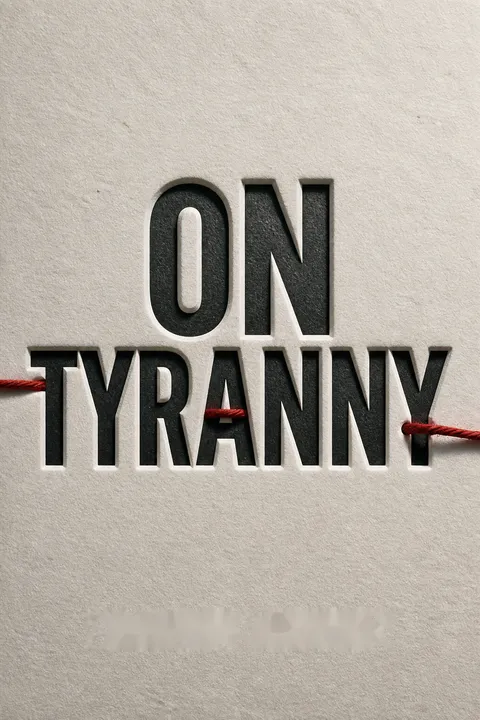


Key Takeaways
Do not pre-comply with a regime that has not yet issued its orders.
Power recruits volunteers. Anticipatory obedience is the act of adapting to a feared authority before it has demanded compliance. Snyder shows how this early surrender can teach a new regime what people will tolerate. After Hitler took power, some Austrians who were not Nazis watched Jewish neighbors being humiliated, then joined in stealing their property. These actions helped normalize persecution before the Nazi leadership had established its full machinery of terror.
Authority can feel ordinary. In Stanley Milgram’s 1961 experiment, participants believed they were delivering increasingly painful electric shocks to strangers because an experimenter instructed them to continue. Many obeyed. The point is not that everyone will commit atrocities, but that unfamiliar rules and authority can dull judgment. Pause before treating a new demand as inevitable.
The focus on the first voluntary concession is useful because authoritarian power does not begin only with spectacular violence. It also grows through small acts that make a new standard seem normal. Social psychology helps explain the danger: people often use others’ behavior as evidence about what is acceptable, especially in uncertain situations. Yet the Milgram experiment should not be treated as a complete model of political violence. Its artificial setting cannot reproduce the pressures of a real regime. Its narrower warning remains powerful: obedience is a choice that can be made visible, questioned, and refused.
Defend courts, elections, and the rules that let opposition survive.
Institutions require defenders. In 1933, some German Jews trusted that constitutional protections and other established institutions would restrain Hitler. Within less than a year, Germany had become a one-party state, and major institutions had been weakened or repurposed. Institutions are not self-protecting machinery. Their rules matter only when people insist that they still apply.
Elections can be a one-way door. Nazi victories in the 1930s, the communists’ success in Czechoslovakia in 1946, and Russia’s 1990 election illustrate how voters may not realize that a meaningful choice is disappearing. A party can use electoral success to remove its rivals and then claim that later votes confirm the new order. Snyder urges citizens to engage locally, protect fair election rules, and make voting systems reliable and recountable.
Institutions work less like walls than like shared practices: a court can issue a judgment, but it cannot make officials honor it by itself. The important insight is that democratic rules depend on people treating them as binding even when a particular outcome is inconvenient. Historical comparisons make that dependence visible, though comparisons should clarify mechanisms rather than imply that different countries or eras are identical. The practical question is specific: can opponents organize, publish criticism, contest results, and return to compete? If those conditions disappear, the existence of formal institutions offers little reassurance.
Treat dehumanizing symbols as early political acts, not harmless decoration.
Appearance prepares permission. Soviet propaganda depicted prosperous farmers as pigs during the campaign to take control of the countryside. The image made dispossession seem reasonable; once poorer farmers had been turned against richer neighbors, the state seized land more broadly. Collectivization brought mass starvation across Soviet Ukraine, Kazakhstan, and Russia between 1930 and 1933.
Labels make exclusion visible. In Nazi Germany, marking Jewish businesses helped make their owners’ removal and the seizure of their property easier to imagine. In communist Czechoslovakia, Václav Havel described a greengrocer displaying an official slogan he did not believe, simply to avoid trouble. When many people perform such rituals, public space appears to endorse the regime. A symbol is not just a picture or phrase; it can signal who belongs and what others may do to them.
Symbols matter partly because they coordinate expectations. A mark on a shop or a slogan in a window tells observers what the powerful endorse and what behavior may be rewarded. That does not mean every offensive sign directly causes violence. The stronger claim is that repeated public signals can lower the social cost of exclusion and make dissent seem isolated. This offers a practical test: does a symbol merely express a view, or does it classify neighbors as lesser, disloyal, or disposable? Attending to that distinction can interrupt normalization before the consequences are treated as ordinary.
Keep professional ethics and armed force outside a leader's personal command.
Expertise can serve cruelty. Hans Frank, Hitler’s lawyer, later governed occupied Poland, where millions of Jews and other Polish citizens were murdered. German lawyers, doctors, business leaders, and civil servants helped translate persecution into laws, experiments, exploitation, and paperwork. Professional rules matter most when leaders describe a situation as exceptional. A lawyer’s duty to fair process or a doctor’s duty to informed consent can obstruct abuses that political loyalty would otherwise excuse.
Violence needs collaborators. Nazi paramilitary groups helped intimidate opponents and undermine ordinary politics. The Holocaust also depended on regular police, not only the SS or specially organized killing units. Snyder notes that regular German policemen murdered more Jews than the Einsatzgruppen. Some feared standing apart, though refusal did not necessarily bring punishment. Law-bound institutions and personal judgment can limit violence; their collapse makes it easier to scale.
This section links two forms of power that are often considered separately: professional authority and physical force. A regime needs both the people who make harmful actions administratively possible and the people who carry them out. Professional codes are strongest when they create shared obligations, so an individual is not left to resist alone. Still, an ethical code is not a substitute for accountability. Institutions need credible protection for people who refuse unlawful orders, and armed organizations need clear civilian control. Individual courage matters, but systems can make courage less lonely and less costly.
Make principled dissent visible before conformity feels like common sense.
A visible refusal changes expectations. In 1940, with much of Europe under Nazi control and the United States not yet in the war, Winston Churchill rejected the assumption that Britain should make peace. His decision kept a major opponent of Hitler in the conflict. It looked uncertain at the time; its importance became clearer with the later Allied coalition.
Small acts can carry enormous stakes. Teresa Prekerowa, a young Pole, repeatedly entered the Warsaw ghetto in 1940 to bring food and medicine to Jewish people. She later helped a family escape. During the 1942 deportations, about 265,040 Jews were sent from the ghetto to Treblinka, while another 10,380 were killed there. Prekerowa’s actions were not easy or safe, but they show how one person can refuse the social habit of looking away.
Dissent does more than express an individual conscience. It supplies evidence that alternatives remain possible, which can loosen the pressure to conform. Churchill’s public leadership and Prekerowa’s quiet rescue are different forms of courage, but both challenge the assumption that circumstances dictate a single response. Their stories should not become a demand that everyone act heroically in every crisis. They instead invite a more usable question: what refusal, warning, or assistance is possible in a particular situation? The first visible exception can help others recognize that compliance is not the only available choice.
Protect shared reality by reading closely and verifying before amplifying.
Language shapes what can be thought. Victor Klemperer, a scholar of language who lived under Nazism, tracked how political speech narrowed meaning and turned opponents into enemies. Snyder warns that clichés and rapid-fire media can replace careful thought with a stream of disconnected impressions. Reading books and long-form reporting helps build the concepts needed to compare claims, notice contradictions, and understand events in context.
Truth needs active maintenance. The book describes propaganda working through fabricated claims, repetition, contradictions, and devotion to a leader treated as beyond ordinary evidence. Investigative journalism counters this with reporting, documents, interviews, and verification. Snyder also points to Ukrainian journalists who developed quick responses to Russian disinformation after encountering it in their own country. Before sharing a claim, check its source and whether reliable reporting supports it.
The argument is not simply that books are virtuous and screens are corrupt. It is that speed and repetition can crowd out context, while serious reporting gives claims a history and an evidentiary trail. This is an information problem and a civic one: public debate becomes difficult when people no longer share standards for deciding what happened. Independent journalism cannot eliminate error, and trust should not mean unquestioning loyalty to any outlet. The more durable habit is procedural: look for evidence, distinguish fact from interpretation, and correct mistakes when better information appears.
Turn public trust into face-to-face coalitions that can act together.
Contact weakens isolation. Under authoritarian rule, a greeting or handshake from a neighbor could reassure someone who feared being abandoned. Ordinary conversations also help people learn who can be trusted and make social divisions less abstract. Online communication can help organize action, but Snyder argues that resistance must also take place among people who share physical spaces and consequences.
Solidarity crossed social boundaries. Poland’s Solidarity movement joined workers with intellectuals, professionals, church members, and secular groups. Earlier, activists had helped workers facing state abuse, building relationships across divisions that the government had exploited. During the sixteen months when Solidarity was legal, ten million people joined. The regime imposed martial law in 1981, but in 1989 it had to negotiate with the movement, which then won elections. Cooperation had built both trust and political capacity.
Solidarity shows that a coalition is not just a list of groups with matching demands. It is a network built through repeated cooperation, including across differences in status, work, and belief. That social infrastructure can make collective action more credible than a sudden burst of online attention. Face-to-face contact is not automatically inclusive, however; local groups can reproduce the same exclusions they oppose. The meaningful measure is whether people who were previously separated gain a voice and a role in shared work. Trust becomes politically useful when it supports action beyond a familiar circle.
Protect private life and independent groups from political capture.
Privacy preserves room to act. Snyder draws on Hannah Arendt’s account of totalitarianism as the erosion of the boundary between private and public life. If personal communications can be taken out of context and released at a politically useful moment, people can be humiliated, relationships disrupted, and attention diverted from public events. He recommends treating email as exposed, improving computer security, and handling sensitive conversations in person.
Free association is part of freedom. Charities, clubs, religious groups, and other voluntary organizations give people ways to cooperate outside state control. Even activities that seem nonpolitical, such as brewing beer, can create trust and shared capacity. Authoritarian governments often seek to register, control, or absorb independent groups. Supporting a cause or organization therefore helps preserve places where people can learn, organize, and do good together.
Privacy is not merely a preference for secrecy. It protects the ability to develop relationships, test ideas, and decide when a personal matter becomes public. Voluntary associations provide a related safeguard by giving people structures for cooperation that are not owned by the state or a single leader. Neither privacy nor civil society is automatically benign: private spaces can shelter abuse, and organizations can become exclusionary. The point is not to exempt them from scrutiny, but to preserve the distinction between legitimate accountability and the wholesale exposure or control of ordinary life.
Treat every emergency as a test of limits, not a blank check.
Shock can become a governing method. In February 1933, a fire at Germany’s parliament gave Hitler’s government an opportunity to present the country as under threat. The next day, basic rights were suspended and police gained broad detention powers. After the Nazi Party’s March election victory, parliament passed a law allowing Hitler to rule by decree. Germany remained under emergency rule until the end of the Second World War.
Listen for the justification. Snyder draws on legal theorist Carl Schmitt’s idea that rulers can use an alleged exception to weaken ordinary rules. Words such as terrorism, extremism, emergency, and security may refer to real dangers, but they can also be used to label critics and make extraordinary powers seem permanent. Grief and fear are natural responses to an attack. They need not require abandoning courts, opposition, or fair trials.
Emergencies create a real tension: governments must respond to danger, yet extraordinary powers can outlast the danger that justified them. The useful distinction is between a temporary, reviewable measure and a permanent change that weakens oversight. Historical cases sharpen this question without proving that every crisis is manufactured or every security measure authoritarian. A careful citizen asks what evidence supports the response, who reviews it, when it expires, and whether dissent remains protected. Calm is not indifference to victims. It is the discipline of refusing to let fear decide every constitutional question.
Study history to reject inevitable progress and nostalgic national myths.
Two false stories trap citizens. The politics of inevitability assumes that history naturally moves toward a better, more democratic future. The politics of eternity replaces that confidence with a mythic past of national innocence and recurring victimhood. Both stories make careful attention seem unnecessary: one says decline cannot happen, the other says present problems are simply another battle against an eternal enemy.
Patriotism keeps judgment alive. Snyder distinguishes patriotism, which measures a country against its ideals and wants it to improve, from nationalism, which flatters the nation and feeds resentment toward outsiders. History offers neither a guarantee of progress nor a script that must repeat. It helps people see that political choices matter. Courage, in this account, means accepting responsibility for some part of the future rather than assuming events will fix themselves.
This distinction makes patriotism a form of criticism rather than mere praise. A citizen can care about a country precisely by refusing to confuse its ideals with its actual conduct. The contrast between inevitability and nostalgic myth is also valuable because both can disable agency: one encourages complacency, the other channels discontent into grievance. Historical analogy must still be used carefully. Similarities can reveal warning signs, but they do not make present events identical to past catastrophes. History is most useful as a source of questions and choices, not as a prediction machine.
Analysis
On Tyranny turns the history of democratic collapse into a practical account of how ordinary conduct can either normalize authoritarian power or make resistance possible. Its structure is deliberately cumulative. First, it shows how compliance begins before explicit orders. It then moves through institutions, elections, language, professional roles, public symbols, and physical violence, before widening toward privacy, association, international comparison, and historical memory. The result is not a single master cause of tyranny, but a chain of vulnerabilities that reinforce one another.
The book’s most important contribution is its attention to the civic scale between private conscience and the state. A greengrocer’s public ritual, a police officer’s decision, a journalist’s verification, or a neighbor’s greeting may look politically minor. Yet each affects what others believe is normal, safe, or possible. The strongest examples connect individual choices to collective consequences: Polish Solidarity became powerful not because its members agreed on everything, but because repeated cooperation made cross-group trust durable enough to support action.
The method carries a risk. Historical warnings can be misused if analogy becomes equivalence, or if every controversial policy is treated as a rehearsal for dictatorship. Snyder’s examples are most useful when they prompt questions about mechanisms: Are opponents still able to organize? Are emergency powers limited? Can professionals refuse unlawful demands? Can people establish independent associations? Such questions preserve the warning without flattening historical differences.
The book also resists the comforting idea that democratic institutions will defend themselves. Its implicit theory is relational: rules work when people and groups enact them, and they weaken when citizens treat them as scenery. This is both empowering and demanding. Individual acts cannot repair every structural injustice, but they can protect the conditions under which collective correction remains possible. The central lesson is therefore neither panic nor reassurance. It is disciplined attention paired with practical participation.
Review Summary
On Tyranny: Twenty Lessons from the Twentieth Century is praised as a concise, timely, and essential guide to recognizing and resisting authoritarianism. Readers appreciate Snyder's historical insights and practical advice for defending democracy. Many find the book's warnings about fascism and erosion of institutions particularly relevant to current politics. While some criticize its brevity or political bent, most reviewers consider it an important, accessible work that should be widely read and shared. The book's twenty lessons are viewed as simple yet powerful tools for civic engagement and preserving freedom.
People Also Read


Glossary
anticipatory obedience
Compliance before ordersThe voluntary adjustment of behavior to what people imagine a new or stronger authority will demand, even before explicit instructions arrive. In Snyder’s account, these early acts of conformity can demonstrate to a regime that citizens will accept more than its leaders initially expected, helping power expand rapidly.
Gleichschaltung
Institutions brought into lineThe Nazi process of weakening, coordinating, or transforming existing institutions so that they served the new political order rather than resisting it. Institutions could retain their names and outward forms while losing their independence and original function. The term captures how a regime can consolidate power without abolishing every institution outright.
politics of inevitability
Assumed automatic progressA way of imagining history as moving inevitably toward a known, desirable future, such as expanding prosperity and liberal democracy. Because the outcome seems guaranteed, citizens may stop studying history, debating alternatives, or defending institutions. Snyder argues that this confidence can leave societies unprepared for political reversals.
politics of eternity
Politics trapped in mythic pastA political outlook that treats the nation as permanently threatened and dwells on a romanticized past of innocence, victimhood, or greatness. It replaces factual history and practical problem-solving with recurring stories of national purity under attack. The sense of permanent crisis can make reform seem disloyal and authoritarian action seem justified.
state of exception
Emergency beyond ordinary rulesA situation presented as so unusual or dangerous that ordinary laws and protections are suspended. Snyder discusses how political leaders can exploit this idea, turning a temporary emergency into a lasting justification for concentrated power. The warning is not that all emergencies are invented, but that exceptional powers require limits and review.
corporeal politics
In-person civic actionPolitical participation that involves physical presence and contact with people beyond one’s usual circle. Snyder uses the idea to argue that online communication alone cannot create the social bonds and visible consequences needed for effective resistance. Protests, meetings, and shared public activity can help people build coalitions across divisions.
terror management
Power gained through fearThe exploitation of real, uncertain, or fabricated threats to increase fear and justify political changes that weaken democratic protections. Snyder uses the Nazi government’s response to the 1933 Reichstag fire as a central example. The concept directs attention to how a shock is interpreted, what powers follow, and whether those powers become permanent.
samizdat
Unofficial underground publishingThe circulation of texts outside official state publishing, often by copying and passing them from person to person. Snyder describes samizdat as a way dissidents in communist eastern Europe shared ideas that the authorities would not allow into public print. Its small, informal networks preserved discussion when official channels were controlled.
FAQ
What's "On Tyranny: Twenty Lessons from the Twentieth Century" about?
- Historical lessons on tyranny: The book provides twenty lessons from the twentieth century to help readers recognize and resist tyranny in modern times.
- Focus on democracy and freedom: It emphasizes the importance of defending democratic institutions and personal freedoms against authoritarian threats.
- Practical advice: Each lesson offers practical steps individuals can take to protect democracy and prevent the rise of tyranny.
- Historical context: The book draws parallels between past events, such as the rise of fascism and communism, and current political trends.
Why should I read "On Tyranny" by Timothy Snyder?
- Timely relevance: The book addresses contemporary political challenges by drawing lessons from history, making it highly relevant in today's political climate.
- Actionable insights: It provides clear, actionable advice for individuals to safeguard democracy and resist authoritarianism.
- Educational value: Readers gain a deeper understanding of historical events and their implications for modern society.
- Empowerment: The book empowers readers to take responsibility for their role in preserving democratic values.
What are the key takeaways of "On Tyranny"?
- Do not obey in advance: Anticipatory obedience can lead to the rise of authoritarian regimes, as seen in historical examples like Nazi Germany.
- Defend institutions: Institutions are crucial for maintaining democracy, and individuals must actively support and protect them.
- Beware the one-party state: A single-party system can lead to the erosion of democratic freedoms, as history has shown.
- Believe in truth: Upholding factual reality is essential to resisting tyranny, as propaganda and misinformation are tools of authoritarianism.
What are the best quotes from "On Tyranny" and what do they mean?
- "In politics, being deceived is no excuse." This quote emphasizes the importance of vigilance and critical thinking in political life.
- "History does not repeat, but it does instruct." It highlights the value of learning from historical events to prevent the recurrence of tyranny.
- "Do not obey in advance." This advice warns against the dangers of anticipatory obedience, which can enable authoritarian regimes.
- "Believe in truth." The quote underscores the necessity of distinguishing between facts and falsehoods to maintain freedom.
How does Timothy Snyder suggest we defend institutions in "On Tyranny"?
- Active participation: Snyder advises individuals to engage with and support institutions they care about, such as courts, newspapers, and labor unions.
- Vigilance against attacks: Institutions must be defended from the outset of any attack, as they do not protect themselves.
- Personal responsibility: By taking sides with institutions, individuals help preserve their integrity and function.
- Historical examples: Snyder uses historical examples to illustrate how institutions can be undermined and the consequences of such actions.
What does "Do not obey in advance" mean in "On Tyranny"?
- Anticipatory obedience: This concept refers to individuals preemptively conforming to what they believe a repressive regime will demand.
- Historical examples: Snyder cites instances like Nazi Germany, where anticipatory obedience facilitated the rise of authoritarianism.
- Political tragedy: Such obedience teaches those in power what they can get away with, leading to further repression.
- Personal reflection: Snyder encourages readers to reflect on their actions and resist the urge to conform without question.
How does "On Tyranny" address the importance of truth?
- Foundation of freedom: Snyder argues that abandoning facts leads to the collapse of individual freedom and democratic systems.
- Modes of truth's demise: The book outlines four modes through which truth is undermined: hostility to reality, shamanistic incantation, magical thinking, and misplaced faith.
- Historical parallels: Snyder draws parallels between past totalitarian regimes and current trends in misinformation and propaganda.
- Call to action: Readers are urged to discern facts, support investigative journalism, and resist the allure of false narratives.
What role does language play in resisting tyranny according to "On Tyranny"?
- Language as a tool: Snyder emphasizes the power of language in shaping political reality and resisting authoritarianism.
- Avoid clichés: He advises against using common phrases and encourages individuals to develop their own way of speaking.
- Historical warnings: The book references works like Orwell's "1984" to illustrate how language can be manipulated to suppress thought.
- Reading and reflection: Snyder suggests reading books to expand vocabulary and critical thinking, which are essential for resisting propaganda.
How does "On Tyranny" suggest we handle paramilitaries?
- Recognize the threat: Snyder warns that paramilitaries can degrade and transform political orders, often serving as tools for authoritarian leaders.
- Historical examples: The book provides examples like the Nazi SA and SS, which began as security details and evolved into forces of repression.
- Intermingling with official forces: When paramilitaries merge with police and military, it signals a significant threat to democracy.
- Vigilance and resistance: Individuals must be aware of the signs and resist the normalization of paramilitary forces in political life.
What does "On Tyranny" say about the importance of professional ethics?
- Ethical commitments: Snyder stresses the importance of adhering to professional ethics, especially when political leaders set negative examples.
- Historical consequences: The book highlights how professionals, such as lawyers and doctors, played roles in enabling atrocities by abandoning ethics.
- Collective power: Professions can create ethical conversations and resist authoritarian demands when members uphold their commitments.
- No exceptions: Snyder argues that ethical standards must be maintained even in exceptional situations, rejecting the notion of "just following orders."
How does "On Tyranny" suggest we practice corporeal politics?
- Physical presence: Snyder encourages individuals to engage in physical, public actions, such as protests and marches, to effect change.
- Crossing boundaries: Successful resistance requires engaging with diverse groups and forming new alliances.
- Historical success: The book cites the Solidarity movement in Poland as an example of effective corporeal politics that led to significant political change.
- Beyond social media: While social media can organize, real change happens in the physical world, where actions have tangible consequences.
What does "On Tyranny" say about being a patriot?
- True patriotism: Snyder defines patriotism as striving for the nation to live up to its ideals, rather than blind nationalism.
- Critique of nationalism: Nationalism is portrayed as self-serving and relativist, focusing on power and resentment rather than universal values.
- Historical context: The book contrasts patriotism with the failures of democracy in the past, urging vigilance against similar threats today.
- Setting an example: Snyder calls on individuals to embody the values of true patriotism for future generations, resisting authoritarian tendencies.
About the Author



Download PDF
Download EPUB
.epub digital book format is ideal for reading ebooks on phones, tablets, and e-readers.








