

Key Takeaways
Treat the strongman as a system, not a singular political personality
Power becomes personal. Ben-Ghiat uses personalist rule to describe government organized around one leader, whose personal and financial interests outweigh national ones. Loyalty matters more than expertise, and state jobs, resources, and legal protections become rewards for allies. This explains why a leader's temperament can shape public policy, not just private life. Mussolini's invasion of Ethiopia, for example, served his imperial ambitions while draining Italy's resources; Mobutu's grand projects helped leave Zaire indebted.
The system has many hands. The leader depends on party officials, business interests, security forces, foreign lenders, media allies, and followers. His power looks singular, but it is built through their cooperation, fear, and self-interest. That also makes the system vulnerable when enough supporters withdraw their backing.
What's striking is the shift from asking whether a ruler is charismatic or cruel to asking how the state is arranged around him. That perspective helps explain why replacing one leader may not repair institutions staffed through loyalty and patronage. It also resists the comforting idea that a single villain caused everything. At the same time, personal rule is not a universal template: the degree of control, violence, and public consent varies sharply across the cases. The model is most useful as a way to identify recurring mechanisms, not to claim that every leader or regime is interchangeable.
Watch who opens the door, not only who cheers at rallies
Elites made openings. Mussolini's Fascists won just 0.4 percent of the vote when they ran independently in 1921. They gained parliamentary entry through an alliance with conservatives, who wanted them to crush labor unrest. In 1922, King Victor Emmanuel III appointed Mussolini prime minister rather than risk confronting his movement's violence. The famous March on Rome was therefore less a popular seizure of power than an elite-approved transfer.
The pattern repeated. German conservatives and President Hindenburg appointed Hitler chancellor in 1933, expecting to use him against the left. They failed to contain him. Ben-Ghiat's account shows that antidemocratic movements often need insiders to grant legitimacy, access, and institutional leverage. The danger is not only a surging movement, but established actors who believe they can profit from it safely.
This account makes political access, rather than raw popularity, a crucial object of scrutiny. It directs attention to appointments, coalitions, and the quiet decisions that make an outsider governable in appearance. The elite bargain is especially revealing because its participants may not share the leader's full program; they may simply expect to control him. That distinction helps explain their miscalculation without excusing it. Still, the cases also show that elite sponsorship alone does not guarantee a takeover. Polarization, public grievance, and organized coercion help turn an opening into a durable regime.
When leaders sell national humiliation, ask who gets cast as the enemy
Grievance becomes a program. After World War I, Mussolini portrayed Italy as cheated of the territory and prestige it deserved. Hitler blamed Germany's defeat and the Versailles settlement on betrayal. Their complaints offered followers a clear story: the nation was injured, enemies caused the injury, and a forceful leader could restore its greatness.
The promise has several clocks. Strongmen invoke a shining future, nostalgia for past power, and an ongoing emergency. The future promises renewal; nostalgia imagines a return to secure hierarchy; crisis makes extraordinary action seem necessary. These stories define who counts as the real nation, often excluding people by race, religion, ethnicity, or sexuality. A grievance can name genuine hardship, but the leader's proposed cure often redirects blame toward vulnerable groups and opposition.
What's powerful here is the link between emotion and political sorting. Humiliation is not just a feeling to exploit; it helps draw a boundary around who belongs and who supposedly threatens the nation. The promised restoration can therefore feel generous to insiders while authorizing exclusion for everyone else. This account also suggests a useful test for political rhetoric: does the proposed remedy address a material problem, or does it mainly identify people to punish? One caution is that grievances themselves are not proof of authoritarian intent. The warning sign is their conversion into permanent emergency and unequal citizenship.
Repeated spectacle can make a leader feel familiar and truth feel optional
Attention is governed. Ben-Ghiat treats propaganda as more than persuasive slogans. It is repeated communication across media, public rituals, schools, and institutions, intended to shape what people notice and what they accept as real. Mussolini's state newsreels showed him threshing grain bare-chested, turning physical vigor into evidence of national strength. Nazi radio made Hitler a regular presence in German homes, while rallies made politics an emotional spectacle.
Modern channels change the delivery. Berlusconi used television ownership to dominate Italian public life; Trump used social media to command attention and flood the news cycle. Censorship and attacks on journalists help discredit inconvenient facts before they appear. Yet propaganda can lose force: repetition can breed indifference, and people sometimes seek foreign broadcasts or alternative accounts.
The chapter's most useful insight is that propaganda manages attention as much as belief. A public can be overwhelmed by repetition, distraction, and competing claims even when many people do not fully accept the leader's story. That makes the destruction of shared standards of evidence a political achievement in its own right. The comparison across radio, television, and social platforms is illuminating, but media technology does not dictate political outcomes. The same channels can circulate dissent and document abuses. The decisive issue is who controls access, credibility, and the costs of speaking.
Read machismo as a governing strategy, not merely a leader's personality
Virility signals permission. Strongmen use masculine display to present themselves as protectors who stand above ordinary rules. Mussolini's staged physical labor and Putin's shirtless photographs made the ruler's body part of his political message. Berlusconi and Trump cultivated public identities built around sexual access to women. These performances do more than entertain supporters: they normalize dominance as leadership.
Private power becomes public policy. The book connects the strongman's sexual conduct to state control over women's bodies and to hostility toward LGBTQ+ people. Mussolini used officials and police to manage sexual partners and silence women. Gaddafi's regime promoted women's education while also building a system to kidnap and abuse women for his use. The contradiction shows how selective advancement can coexist with coercion and subordination.
What's striking is the argument that gender politics belongs at the center of authoritarian analysis, not in a separate chapter on private scandal. The leader's behavior models whose consent matters, whose bodies are treated as resources, and what kinds of authority seem natural. This also clarifies why symbolic toughness can coexist with vanity, insecurity, or dependence on flatterers. The focus on male leaders is deliberate, but it should not be mistaken for a claim that authoritarian politics requires male rulers. The broader issue is how power enforces hierarchy, including through people who do not fit the leader's image.
Trace the money, jobs, and immunity that turn bystanders into collaborators
Complicity is rewarded. The authoritarian bargain is an exchange in which elites and officials receive power, security, or economic gain in return for loyalty and tolerance of repression. Mobutu's Zaire shows the scale this can reach: he amassed a fortune estimated at $5 billion while the country accumulated debt and widespread poverty. Ministers could grow wealthy within his system, yet purges and imprisonment kept them dependent on him.
The network crosses borders. Strongmen rely on banks, law firms, lobbyists, and public-relations companies to move money and soften their reputations. Inside government, family members and loyalists protect business interests and weaken oversight. Corruption is not only stolen cash. It also changes expectations, making behavior once considered unlawful or shameful seem routine, and making silence a condition of belonging.
This section shows why corruption should be understood as a political structure, not merely a list of individual scandals. Patronage creates beneficiaries, while exposure and punishment make them vulnerable to the leader. The result is a coalition held together by both opportunity and risk. The international dimension matters because domestic reform can be undermined when stolen wealth has safe destinations abroad. A further implication is that accountability needs to follow financial and professional intermediaries, not stop at the head of state. Punishment alone, however, may arrive too late if institutions have already normalized conflicts of interest.
Treat repression as policy infrastructure, not a breakdown of the regime
Violence organizes society. The book presents surveillance, detention, torture, and killing as tools that reshape public behavior and define who may safely participate in civic life. Under Pinochet, Chilean detention sites and torture centers targeted the left and helped suppress opposition. Gaddafi televised student executions to intimidate viewers, while Nazi Germany built an extensive camp system that escalated into genocide.
Methods and scale differ. Ben-Ghiat traces how techniques and ideas traveled across regimes, including through colonial rule and military training. She also distinguishes fascist mass murder from the targeted killings and large-scale detention more typical of many contemporary strongmen. That difference matters: historical comparison can reveal shared methods without suggesting that every regime produces the same degree or kind of atrocity.
The central contribution is to reject the idea that state violence is an accidental excess beside an otherwise functioning political project. Repression can recruit collaborators, isolate targeted groups, and teach the wider public to self-censor. That makes fear part of governance. The comparison across eras is valuable precisely when it preserves differences in scale, ideology, and consequence. Similar techniques do not make regimes identical, and careless equivalence can obscure specific histories. The book's strongest comparisons identify what travels, such as impunity or surveillance, while keeping the particular victims and political contexts in view.
Loyalty tests and manufactured chaos make governments weaker, not stronger
Uncertainty keeps elites dependent. Divide-and-rule is a governing tactic that keeps officials competing for the leader's favor, often through frequent reshuffles, overlapping responsibilities, and sudden reversals. Mussolini repeatedly replaced senior officials, while Pinochet reshuffled his cabinet forty-nine times. A subordinate who cannot predict whether competence will be rewarded has reason to prioritize loyalty over candor.
The cost is poor judgment. Personalist governments often surround leaders with relatives and flatterers, discourage unwelcome information, and redirect public resources toward the ruler's obsessions. This contradicts the claim that authoritarianism is inherently efficient. A leader insulated from expertise may make costly decisions, while officials spend time managing his moods and protecting him from investigation instead of serving the public.
The organizational lesson is sharp: instability can be a tool of control and a source of institutional failure at the same time. Leaders may benefit personally from keeping rivals divided, but the resulting silence deprives government of correction and expertise. This is a classic incentive problem: subordinates are judged on proximity to the ruler, not on outcomes for the public. The argument also challenges the image of a master strategist. Many strongmen appear powerful while governing through improvisation and fear. Still, disorder is not always deliberate; the key distinction is whether institutions can correct it.
Make resistance visible, organized, and broader than the ruler's target list
Small acts can travel. Georg Elser spent months preparing a bomb intended to kill Hitler, but missed him by thirteen minutes. Other resistance took less violent forms: the White Rose students circulated anti-Nazi leaflets, and Chile's CADA art collective helped turn NO+ into a public protest message against dictatorship and torture.
Coalitions can change the balance. Chile's opposition parties united as the Concertación before the 1988 plebiscite, while civic groups registered voters and trained poll watchers. The movement defeated Pinochet's bid to remain in office. In Istanbul, opposition candidate Ekrem İmamoğlu countered Erdoğan's aggressive politics with a unifying campaign and won the rerun election. Resistance can expose official lies, restore solidarity, and make public space visible as something other than the ruler's property.
These stories expand resistance beyond the dramatic image of armed revolt. Art, documentation, electoral organizing, and public presence can each weaken the sense that the regime is universally accepted. The strongest examples combine moral clarity with practical coordination: a message people can repeat, networks that carry it, and an opening where collective action can matter. This does not make resistance safe or guarantee victory. A visible protest can invite repression, and digital communication can be monitored. The cases instead show that a broad coalition can make isolation harder for both dissenters and the regime's domestic and foreign supporters.
Make accountability ordinary before strongmen make impunity normal
An exit is not a reckoning. Pinochet lost the 1988 plebiscite, but retained influence and avoided prison. Investigators later exposed secret bank accounts and illegal profits connected to arms deals. In Spain, Franco's death did not end the struggle over memory: families and researchers continued identifying victims buried in mass graves, including the mother whose baby rattle helped reconnect her remains with her son decades later.
Protect the checks early. Ben-Ghiat argues for transparency, independent journalism, anti-corruption work, and support for civic organizations. She also points beyond national borders to banks, law firms, and public-relations firms that help authoritarian leaders hide wealth or polish their image. Elections matter, but they cannot substitute for institutions capable of investigating leaders and applying the law to them.
The ending emphasizes that political transition and social repair are different tasks. A ruler can leave office while collaborators, compromised institutions, and suppressed histories remain. Archives, prosecutions, and the recovery of victims' identities help restore public knowledge, though they cannot return lost lives or undo every injury. The prevention argument is equally important: routine oversight is more durable than relying on a crisis to reveal abuses. Accountability should be impartial and procedurally credible, or it can be recast as partisan revenge. The point is not to make politics conflict-free, but to keep conflict inside rules that bind leaders as well as citizens.
Analysis
The book's main achievement is to make authoritarianism legible as a sequence of social and institutional transactions. Leaders do not simply seize a state and then impose a doctrine. They convert grievance into belonging, belonging into loyalty, loyalty into access, and access into impunity. Propaganda, masculine performance, corruption, and violence are not isolated traits in this account. They reinforce one another: spectacle attracts followers, patronage binds elites, and repression raises the cost of leaving the coalition. Resistance works in the opposite direction by rebuilding trust, circulating evidence, and making cooperation visible.
This mechanism-based approach is more durable than a portrait of any one leader. It allows the book to connect fascist dictatorships, military regimes, and elected authoritarians without pretending they are identical. The distinctions matter. Genocide, secret-police murder, mass detention, and democratic erosion have different scales and consequences. Historical analogy is most responsible when it identifies a recurring method, not when it erases those differences.
The most unsettling implication is that authoritarian resilience depends on ordinary institutions and actors. A king's appointment, a bank's services, a party's silence, or a media company's risk calculation can matter as much as a leader's rally. This widens the account of responsibility beyond the ruler, while explaining why some collaborators later describe themselves as powerless. They may have faced real coercion, but the system also offered rewards and made compliance feel normal.
The book's emphasis on male virility adds a dimension often omitted from accounts focused on elections and institutions. It shows how gender hierarchy can supply emotional legitimacy for lawlessness and shape who is treated as a full citizen. The framework is strongest as a diagnostic map. It cannot predict the exact outcome of a crisis, and recurring tactics do not prove an inevitable march toward dictatorship. Its practical value lies in noticing early changes: loyalty replacing expertise, emergency becoming permanent, truth-tellers treated as enemies, and public resources turned toward private protection. Those are not merely warning signs. They are points where institutions and citizens can still interrupt the sequence.
Review Summary
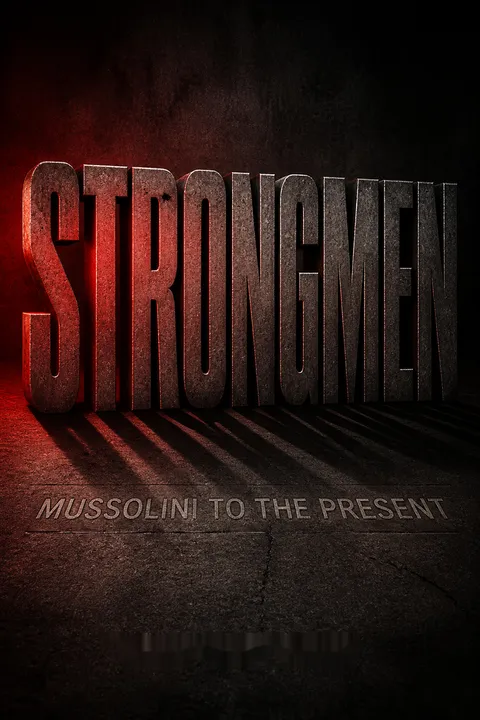
Strongmen by Ruth Ben-Ghiat examines authoritarian leaders from Mussolini to Trump, analyzing their common tactics: propaganda, corruption, violence, and toxic masculinity. The book divides strongmen into three eras: post-WWI fascists, Cold War coup leaders, and modern authoritarians. Readers appreciate Ben-Ghiat's scholarly yet accessible approach and her emphasis on resistance and downfall. Critics note the book's comparative breadth helps contextualize Trump within historical patterns of authoritarianism. Some reviewers wanted more structural analysis and criticized the omission of leftist dictators like Stalin and Mao, while others found it disorganized or rushed, though most consider it timely and essential reading.
People Also Read




Glossary
personalist rule
power centered on one leaderA political arrangement in which one ruler's personal authority dominates government and national priorities. The leader's interests, relationships, and financial needs outweigh public ones. Loyalty to the ruler becomes more important than expertise, while patronage and fear help bind officials and supporters to him.
authoritarian bargain
loyalty exchanged for advantageThe exchange through which political and economic elites support a strongman and tolerate the suspension of rights in return for power, security, or material gain. Participants may be true believers, opportunists, or fearful of losing their position. Their cooperation helps the ruler govern and makes them vulnerable to his demands.
authoritarian playbook
recurring tools of personal ruleBen-Ghiat's term for the linked tactics strongmen use to gain and retain power. These include shaping national identity, manipulating public information, using virility as political legitimacy, enriching allies and themselves, and deploying violence. The tactics recur across different periods, though their forms and consequences change.
new authoritarianism
autocracy using democratic formsA contemporary style of antidemocratic rule in which leaders use elections to gain or retain office while weakening civil liberties and institutional checks. Such rulers may manipulate voting, censor or discredit the press, and concentrate executive power without formally abolishing every democratic institution.
cult of victimhood
grievance used to build loyaltyA political narrative that portrays the leader and the nation as injured by domestic enemies or foreign powers. The ruler presents himself as the nation's defender and promises restoration or revenge. The narrative can make criticism of the leader appear to be an attack on the country itself.
divide-and-rule
keep rivals competing for favorA method of personal rule that prevents officials or elites from building independent power. The ruler changes appointments, pits subordinates against one another, and makes access to resources depend on loyalty. Competition and uncertainty discourage collective resistance and can leave the leader surrounded by flatterers.
kompromat
cooperation through threatened exposureA Russian term used in the book for leverage based on the threat of revealing damaging information, whether genuine or fabricated. Unlike a straightforward reward, kompromat pressures a target through fear of loss or exposure. It can make officials, businesspeople, and political allies easier to control.
resource curse
resource wealth sustaining autocracyThe tendency for abundant natural resources, especially oil, to help authoritarian rulers stay in power. Resource revenues can fund patronage and social benefits while reducing a leader's need to negotiate with citizens or established groups. In the book's account, this wealth can also intensify corruption and weaken accountability.
Download PDF
Download EPUB
.epub digital book format is ideal for reading ebooks on phones, tablets, and e-readers.








