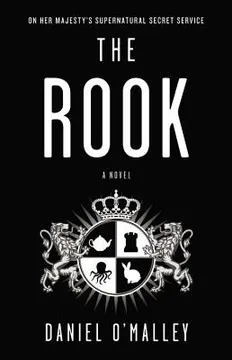


Plot Summary
Rain, Corpses, Borrowed Name
In a rain-soaked park, a battered woman wakes beside motionless men wearing latex gloves, unable to remember her name or how she got there. A letter in her coat identifies the body as Myfanwy Thomas and warns that someone wants her dead. It lists her bee allergy, provides the alias Anne Ryan, and directs her toward a hotel and a second letter.
She follows the instructions, checks into a luxury hotel, and studies her bruises in the mirror. The body is familiar only as an object: its scars and habits are facts, not memories. A vivid dream introduces Lady Linda Farrier, who recognizes the stranger as Myfanwy in Thomas’s body. The dream confirms that the amnesia has not erased every connection.
Two Keys, One Dangerous Life
The second letter offers two futures: use one bank box to disappear under a new identity, or open the other and inherit Thomas’s position in a secret British organization. Myfanwy initially chooses escape.
At the bank, a gloved receptionist and three men attack her, but her scream overwhelms their bodies and leaves them twitching on the floor. The violence exposes a power she did not know she possessed. Instead of fleeing, she opens the second box and finds letters, files, and weapons.
Thomas’s instructions lead her to an empty apartment prepared as a refuge. There she learns that the Checquy recruits people with unnatural abilities, that she is one of its senior officers, and that her body can interfere with other people’s nervous systems.
A Rookery Full of Strangers
Thomas’s letters describe a childhood cut short when the Checquy removed her from her family after her powers first appeared. At its training school, the Estate, she learned to control bodies but recoiled from using that talent; her administrative skill eventually carried her into the Court as a Rook.
Myfanwy reports to the Rookery with only a binder and borrowed confidence. Her secretary Ingrid Woodhouse quietly guides her through the building, while Colonel Hall’s nervous account of a cleanup operation reveals that her authority frightens subordinates.
Rook Gestalt arrives as two identical men controlled by one mind, then coordinates a violent raid on an antler cult through a distant sibling. The fieldwork fascinates Myfanwy and unsettles her, while she begins to understand that her new office is both a command post and a target.
The Scout Who Burned
At a subterranean interrogation, the Checquy questions Peter Van Syoc, a Dutch traveler who has been caught murdering a woman and transforming his body into a weapon. Dr. Crisp reads personal history through touch and compels Van Syoc to answer questions.
Myfanwy watches the prisoner’s sensations as flowing patterns and quietly discovers that she can reach into them. When Crisp presses for the purpose of the visit, Van Syoc identifies the Grafters and announces an invasion. His body then destroys itself from within, burning Crisp’s gloved fingertips and leaving the organization without its best witness.
Myfanwy had already interrupted the prisoner’s pain, but she could not stop the hidden mechanism. Her observations and insistence on examining the evidence make the dead scout a warning rather than a closed case.
Seven Seats, One Emergency
Myfanwy and Gestalt summon the Checquy’s ruling Court after Van Syoc’s final words reveal that the Grafters may be returning. Lady Farrier, Sir Henry Wattleman, Bishops Alrich and Conrad Grantchester, and foreign-operations officers Joshua Eckhart and Heretic Gubbins debate how much to tell the government.
Myfanwy proposes discreet screening at airports, using a Checquy agent’s unusual sense of smell to identify suspects without announcing an invasion scare. The Court accepts the plan and assigns investigations overseas and at home.
Before the meeting, Farrier has challenged Myfanwy’s abrupt competence over dinner, but keeps her secret after recognizing her resilience. Myfanwy leaves with responsibility for domestic operations, a widening list of possible enemies, and an uneasy lesson: even the highest officials make decisions through incomplete information.
Bronwyn Returns to the Street
Croatoan Bishop Shantay Petoskey arrives in London after American agents capture another Grafter operative, confirming that the threat crosses the Atlantic. While Shantay and Myfanwy compare intelligence, a young woman approaches outside the Rookery and identifies herself as Bronwyn Thomas, Myfanwy’s younger sister.
Myfanwy’s shock becomes cautious hope. She and Shantay check Bronwyn’s records, confirm her identity, and invite her to Myfanwy’s house. There, Myfanwy invents a story about illness and lost years rather than disclose the Checquy or her amnesia.
Bronwyn explains that their parents died years earlier and that she and their brother Jonathan had been told little about Myfanwy’s disappearance. The sisters embrace, and Myfanwy experiences the first bond that feels chosen and personal rather than inherited with the job.
Bath’s House of Purple Eyes
A Bath response team loses two squads inside a house covered in purple growth, where entranced residents chant in unison. Myfanwy and Shantay enter after a third team disappears, find rows of fungus-covered people, and discover Norman Goblet, the local commander, directing the crisis.
Goblet attacks them and grows quills across his body; Shantay knocks him unconscious with her metal-forming power. Myfanwy touches a chanting boy and senses that the fungus links the residents into a shared system. She studies its instructions, then collapses as spores begin to grow over her skin.
When she wakes, she disrupts the network, silences the chant, and opens the pods holding the missing Barghests. The rescued soldiers survive, and Goblet’s unauthorized experiment exposes an internal threat tied to the larger Grafter mystery.
Gestalt Turns the Reception
At a formal reception with the Croatoan delegation, Myfanwy sees Gestalt reach for a weapon and publicly accuses the Rook of treason. Gestalt tries to shoot her, but she locks the trigger finger and sends the gun flying. The other bodies and several compromised Retainers attack the Court.
Bishop Grantchester fills one side of the room with concealing smoke, while Shantay turns her skin to metal to shield Wattleman from bullets. Gubbins is killed, Farrier and other officials are wounded, and Alrich fights through the attackers.
Myfanwy restrains some Gestalt bodies, but the shared mind vanishes and returns elsewhere, allowing two bodies to escape. The survivors realize that the enemy has altered Retainers’ bodies and infiltrated their own organization. Myfanwy’s accusation prevents the coup from remaining hidden, but the Court’s trust fractures.
Camp Caius Comes Into View
At Gallows Keep, Myfanwy questions the captured Gestalt bodies and learns that someone engineered her appointment to the Court. Gestalt taunts her about powers she has shown without contact, then confirms that another Court member is involved.
During the journey, Ingrid reveals that she witnessed the original Myfanwy’s collapse and escape from the Rookery, and admits she concealed the event to protect her. Myfanwy tells Ingrid the truth about waking in the park.
The letters also preserve the earlier Myfanwy’s secret investigation: she traced missing Checquy funds to Camp Caius, an illegal Welsh training site where children without innate powers were subjected to dangerous procedures. The school, its missing money, and Gestalt’s promotion point toward a mastermind with both financial access and influence over appointments.
Alrich at the Club
Myfanwy tries a night out with Bronwyn and her friends, only to meet Alrich, a vampire colleague who is hunting for a lover without his usual bodyguards. Soon a bald, sharp-toothed operative steers Myfanwy away from the club to meet Graaf Gerd de Leeuwen, a mutilated Grafter leader floating in a fluid-filled tank.
De Leeuwen demands that she produce his missing partner, Ernst von Suchtlen, whom he believes sent a message to her. Myfanwy has no idea where Ernst is, but de Leeuwen gives her three days and threatens Bronwyn.
Myfanwy returns to the club covered in his fluid, cleans herself in a hotel pool, and hides the meeting from her sister. The threat turns a secret war into a personal one, while Myfanwy has no reliable way to protect Bronwyn.
Reading Becomes a Body
A threatening fax announces that a Grafter horror has been unleashed at a Reading police station, where officers and civilians are trapped. Myfanwy reaches the site as a five-meter cube of fused muscle, bones, organs, and partial brains anchors itself inside the building and pulls the Checquy command trailer toward it.
She refuses to sacrifice the trapped team and enters the station, but the cube reels her inside and begins crushing her into its structure. Myfanwy separates her own senses from the stolen memories flooding through the mass, then finds the central brain and overwhelms its control system with her bodily power.
Her attack makes the entire organism dissolve into corrosive fluid. She escapes alive, but several Checquy personnel dragged inside are dead. The incident confirms that the Grafters can build weapons out of people and that Myfanwy is uniquely able to disrupt them.
Grantchester’s Hidden Ledger
After the Reading crisis, Myfanwy returns to the Rookery and searches through the files scattered across her office. A family photograph and personnel records connect Gestalt’s fifth, hidden body to the child adopted by Bishop Grantchester and his wife.
The connection makes sense of the money trail the earlier Myfanwy had uncovered at Camp Caius, the illegal school, and the placement of an unusually capable administrator beside a field commander. She realizes that Grantchester had the access to divert funds and the authority to shape Court appointments.
Myfanwy calls an emergency meeting, but the room is empty except for Grantchester. Her bodyguards open fire on him and are shot by hidden guards. Myfanwy turns the attackers’ weapons against each other, then faces the Bishop alone, knowing the evidence is strong but the danger immediate.
The Needle Changes the Fight
Grantchester’s ability to release chemical clouds makes him difficult to attack, while two Camp Caius children flank Myfanwy. One boy can suppress her power through touch; the girl has lethal claws and speed. As the boy prepares to erase her mind, Myfanwy finds an epinephrine injector in her coat pocket, left there to treat her bee allergy.
She drives it into his thigh. The drug destabilizes his engineered body, and her control returns. Myfanwy makes the girl shoot the Gestalt bodies; one falls through a window, while another kills the girl before collapsing.
Myfanwy then stops the boy’s heart and calls for help. Grantchester escapes after watching the fight through a hidden camera, leaving the Checquy with captured conspirators, a wounded but surviving Gestalt body, and proof that the traitor’s network remains at large.
Ernst Arrives Unannounced
After the Court hears the night’s reports, Myfanwy returns to her office expecting only sleep. Instead, she finds a naked man behind her desk: Ernst von Suchtlen, the Grafter partner de Leeuwen demanded.
Ernst explains that the heart delivered to Thomas months earlier grew into him, a secret escape plan meant to let him approach the Checquy unseen. He says he opposed de Leeuwen’s violent coup and came to propose an alliance, not an invasion. Myfanwy understands that the Grafter threat has split between a faction seeking force and one seeking negotiation.
She cannot bind the Checquy or Croatoan to a merger alone, so she offers coffee and asks to hear his terms. Grantchester remains free, Camp Caius still needs attention, and negotiations will take months.
Epilogue
Before the amnesiac wakes, the original Myfanwy writes one final letter beside her rabbit, hoping the successor might choose to inherit her life. She admits that she cannot prevent the coming loss of memory or identify the person who arranged it.
Rather than leave only warnings, she tells the future woman that she cares for her as family, even though they will never meet. The letter ends the book by returning to the quiet act that made the story possible: one woman preparing a place for another to begin.
The final letter reframes the plot’s elaborate contingencies as an intimate act of care. The original Myfanwy cannot preserve her own identity, but she can leave practical knowledge, money, and a choice to the person who will inhabit her body. Her imagined kinship with the successor anticipates the later bond with Bronwyn: belonging is not secured by shared memory alone, but can be made through attention and responsibility. The ending also resists a simple triumph narrative. The protagonist survives and gains a future, while the woman who prepared it remains absent, remembered only through the care she managed to send forward.
Analysis
The novel makes identity a practical problem before it makes it a philosophical one. Myfanwy wakes with a body, a name, and a dangerous job, but the memories that would normally connect those facts are missing. The letters offer knowledge without continuity, so she must decide which parts of an inherited life she will actually inhabit. Her eventual attachment to Bronwyn is crucial: family becomes real through reciprocal care, not simply through shared biology or recovered memory.
The Checquy mirrors this conflict on an institutional scale. It protects the public by controlling information, recruiting gifted children, and concealing incidents, yet the same habits make coercion seem ordinary. Its ranks honor power while depending on unpowered Retainers whose contribution is indispensable but structurally limited. The Grafters sharpen that contradiction by turning bodies into weapons and treating people as raw material. Their methods are monstrous, but the Checquy’s own history of extracting children makes the moral boundary less comfortable than either side would prefer.
Myfanwy’s bodily power is therefore more than a combat advantage. It allows her to perceive the living systems that others reduce to categories, reports, or usable assets. In Bath and Reading, she saves people by entering the mechanisms that threaten them, but each use carries the risk of intrusion and overload. Her growing authority does not erase uncertainty; it makes her responsible for acting amid it.
The resolution refuses a clean victory. Myfanwy defeats immediate conspirators, but Grantchester escapes, Camp Caius remains a problem, and Ernst’s proposed alliance requires negotiations the Rook cannot settle alone. Survival gives her time, not certainty. The book’s deepest movement is from a life imposed by another woman’s preparations toward a self made through choices: whom to trust, whom to protect, and how much of a secret institution can be changed without surrendering its protective purpose.
Review Summary
The Rook received mostly positive reviews, praised for its unique premise, engaging protagonist, and blend of humor and supernatural elements. Readers enjoyed the creative worldbuilding and the clever use of letters to provide backstory. Some criticized the pacing and excessive infodumping, while others found the tone inconsistent. Many appreciated the strong female lead and lack of forced romance. Despite minor flaws, most reviewers found it entertaining and looked forward to the sequel.
People Also Read

Characters
Myfanwy Thomas
Amnesiac executive with powerMyfanwy wakes in her own body without access to the memories that once made its owner familiar. Her letters and the institution around her give her facts, titles, and responsibilities, but not an inherited sense of self. She is observant, quick with systems, and capable of dry humor, yet her choices are driven by practical curiosity rather than the original Myfanwy’s caution. Her power lets her influence bodily sensations and movement, a capacity she approaches with both fascination and ethical unease. As she learns to command, she also builds attachments that are not part of her job, especially with Ingrid, Shantay, and Bronwyn. Her central struggle is to claim a life without pretending that it was always hers.
The earlier Myfanwy
The letter-writing predecessorThe woman who occupied Myfanwy’s body before the amnesia is known through letters, files, and other people’s memories. Taken from her family as a child after her ability emerged, she grew up inside the Checquy and learned to survive by becoming an exceptional administrator. She disliked using her power and preferred research, preparation, and quiet competence to fieldwork. Her letters reveal a mind that anticipates danger without surrendering to it: she creates options, hides useful information, and tries to make the next person’s first days less lonely. Her relationship to the new Myfanwy is strange but tender, like a guardian leaving instructions for someone she cannot know.
Ingrid Woodhouse
The loyal executive assistantIngrid is Myfanwy’s executive assistant, a Retainer without supernatural powers who keeps the Rookery’s schedules, staff, and crises moving. Her competence is precise but never merely mechanical; she notices when her employer is frightened, protects information when disclosure would cause harm, and offers care through practical acts. Ingrid has a family and a life beyond the Checquy, which gives her a grounded perspective on an organization that often treats its members as assets first. She is one of the few people who recognizes how different the new Myfanwy is, but she does not reduce that difference to suspicion. Their relationship grows through mutual candor and trust.
Rook Gestalt
One mind, four bodiesGestalt is a single consciousness distributed among four siblings’ bodies, able to divide attention, coordinate action, and perform as several apparently distinct people. The Checquy trained Gestalt at the Estate, then relied on its exceptional combat record and command ability. Its unusual embodiment makes identity a practical problem as well as a spectacle: colleagues address the shared mind through multiple faces, while Gestalt can exploit that confusion. It is powerful, disciplined, and intensely competitive, with a temperament shaped by a childhood in which others often mistook its bodies for separate people. Its close working relationship with Myfanwy places two very different kinds of intelligence beside one another.
Lady Linda Farrier
The dream-walking leaderFarrier is one of the two heads of the Checquy, an aristocrat whose authority is reinforced by her ability to enter other people’s dreams. She is composed, exacting, and inclined to treat personal attachments as liabilities unless they serve a larger duty. Her history with Myfanwy begins when the child is taken into the organization, and their later relationship remains formal, wary, and shaped by an unresolved debt. Farrier values competence more than warmth, but she can recognize unexpected strength when it appears. Her presence makes the boundary between privacy and institutional power feel especially thin.
Sir Henry Wattleman
The enduring Checquy leaderWattleman shares leadership of the Checquy with Farrier and carries the old institution’s habits of ceremony, command, and national duty. He can be blunt and paternal, often assuming that authority will settle a disagreement. His long service has made him comfortable with supernatural dangers that would overwhelm ordinary officials, but he remains invested in the organization’s traditions and public secrecy.
Conrad Grantchester
The financier and strategistGrantchester is a Bishop who oversees the Checquy’s finances and administration. He came to the organization as an accomplished financier and diplomat, bringing a talent for systems, negotiation, and placing people where their abilities will matter. His power produces chemical compounds that can emerge from his skin as a dark mist. He is polished, socially adept, and attentive to practical advantage, traits that make him persuasive in a hierarchy built on secrecy. Myfanwy respects his organizational skill even as she studies the institution he helped shape. His marriage and private life sit alongside his public command, giving him more than one sphere of influence.
Joshua Eckhart
The metal-shaping commanderEckhart is a Chevalier responsible for foreign operations and a seasoned military tactician. His ability lets him soften and reshape metal, turning weapons and defenses into tools suited to the moment. His childhood was violent, but later foster carers and the army gave him structure, competence, and a strong sense of loyalty. Unlike many Checquy operatives raised at the Estate, he has a wife and children, and he remains connected to them. He is direct, practical, and trusted by the field teams he commands. Myfanwy finds in him a model of authority grounded in experience rather than ceremony.
Shantay Petoskey
The Croatoan allyShantay is a Bishop of the Croatoan, the American counterpart to the Checquy. Confident, stylish, and physically formidable, she can turn her body into metal and is comfortable entering dangerous situations herself. Her candid manner contrasts with the Checquy’s layers of protocol, and she quickly becomes Myfanwy’s friend as well as a diplomatic partner. Shantay respects competence but does not confuse caution with wisdom; she challenges Myfanwy when security or personal risk demands it. Her loyalty to her own organization remains strong even as she helps the British investigate the Grafters.
Bronwyn Thomas
The rediscovered younger sisterBronwyn is Myfanwy’s younger sister, a fashion student who finds her through patient online and family-record research. She grew up with unanswered questions about the sibling who vanished from family life, yet approaches their reunion with openness rather than accusation. Her ordinary concerns, studies, friends, and hopes for a creative career give Myfanwy an entry into a life beyond the Checquy. Bronwyn does not know the supernatural danger surrounding her sister, and their growing bond depends on the imperfect explanations Myfanwy can safely offer.
Bishop Alrich
The ancient vampireAlrich is a vampire who has served the Checquy for generations, combining a formidable intellect with a controlled, unnerving physical presence. His knowledge of the organization is immense, but he shares little about his origins or the limits of his abilities. He is a dangerous combatant and a charming social presence, moving between official duty and private appetites without explaining himself. Myfanwy finds him difficult to read, and his unpredictable proximity forces her to distinguish attraction, fear, and professional judgment.
Graaf Gerd de Leeuwen
The skinless Grafter leaderDe Leeuwen is a centuries-old Grafter who has survived through repeated alteration of his body. His current form is exposed muscle, chitin, and carefully arranged biological structures, sustained in a fluid-filled tank. He is proud, volatile, and consumed by old grievances against the Checquy. His demand for his missing partner turns diplomacy into a threat, especially when he uses Bronwyn to pressure Myfanwy. De Leeuwen represents the danger of technical brilliance governed by resentment rather than restraint.
Graaf Ernst von Suchtlen
The other Grafter founderVon Suchtlen is one of the original Grafter investors, a long-lived figure whose influence reaches back to the early development of fleshcrafting. He is more measured than his cousin and approaches conflict as a problem that can be negotiated rather than simply avenged. He has spent centuries watching the balance between the Grafters and the Checquy shift. His appearance and methods reflect the Grafter belief that bodies can be redesigned, though his strategic aims are not identical to those of his faction’s more aggressive members.
Dr. Crisp
The interrogator who reads bodiesDr. Crisp is the Checquy’s specialist in extracting information through touch. He reads physical history and compels subjects to tell the truth, but Myfanwy initially mistakes the resulting distress for pain. He is dedicated to his work, quick to defend his professional integrity, and curious about unfamiliar abilities. His presence at the Van Syoc interrogation gives Myfanwy her first close view of the Checquy’s methods and helps her distinguish bodily compulsion from the Grafter technology that ultimately kills the prisoner.
Norman Goblet
The quilled Bath commanderGoblet is a Checquy officer stationed in Bath, where he has spent years overseeing a region with fewer supernatural incidents than its history promised. He is ambitious, resentful of being passed over, and convinced that he understands what the organization needs. His altered body can produce protective spines and resist Myfanwy’s control through a network of supplementary systems. Goblet’s career illustrates how institutional disappointment can curdle into self-authorization, especially when a person believes rank has been withheld unfairly.
Heretic Gubbins
The contortionist ChevalierGubbins is a Chevalier responsible for foreign operations, known for extraordinary flexibility and an irreverent manner. He can twist and fold his body in ways that make ordinary physical limits irrelevant, and he uses humor to puncture the Checquy’s pomp. Beneath the eccentricity is a capable officer who understands how dangerous the organization’s work can be. Myfanwy finds him one of the easier Court members to approach, although his field responsibilities often keep him away from London.
Frau Steffi Blümen
The Estate’s fierce headmistressBlümen runs the Estate, the Checquy’s school for gifted children, and remembers Myfanwy from her years there. Warmly protective but blunt about potential, she treats former pupils as people she has helped raise, even when they have become senior officials. Her account of Myfanwy’s education reveals how the institution balances care with coercion. She values talent and effort, but knows that training can leave deep emotional costs.
Alan Summerhill
The junior communications PawnSummerhill is a new Pawn in the communications department who becomes caught up in Myfanwy’s effort to keep sensitive information contained. Young and nervous, he nevertheless understands the Rookery’s secure communication systems well enough to suggest a safer meeting location. His practical knowledge gives Myfanwy help when she cannot rely on more senior staff.
Jonathan Thomas
The absent older brotherJonathan is Myfanwy and Bronwyn’s older brother, a banker who became Bronwyn’s guardian after their parents died. He has helped investigate the family’s payments and the unexplained absence of his sister. Though he is away for much of the story, his place in the family gives Bronwyn a connection to the childhood Myfanwy cannot remember.
Norman
The engineered memory operativeNorman is a young operative whose body has been extensively modified to interfere with another person’s mind through physical contact. His specialized role makes him a living example of the methods used at Camp Caius. He is controlled by supervisors and trained to perform a function rather than to build an ordinary life.
Plot Devices
The letters and bank boxes
A prepared path through amnesiaThe earlier Myfanwy leaves letters in her coats, a sequence of explanations, and two bank keys that offer sharply different futures. The documents teach the successor about her body, her power, the Checquy, and the danger of staying, while allowing the new Myfanwy to decide whether to flee or inherit the office. Later letters reveal the original woman’s childhood, research, and preparations, so the device functions both as practical instruction and delayed characterization. Its emotional force comes from the fact that each message was written without certainty that it would ever be read.
The bodily power
A nervous system as commandMyfanwy can affect bodies by altering sensations, movement, and other physical processes. The ability first erupts during the bank attack, then becomes more deliberate as she learns to perceive the systems around her. It lets her interrupt interrogations, investigate the fungal network in Bath, fight the flesh cube in Reading, and resist the person trying to erase her. The power is not effortless: unfamiliar or engineered bodies can resist her, and sensing too much can overwhelm her. It also makes her consider the ethics of treating another person’s body as a tool.
The Checquy
A secret state within the stateThe Checquy is a centuries-old British organization charged with containing supernatural threats. Its Court includes powered officers, while Retainers without powers handle essential administrative, technical, and security work but cannot normally rise to the highest ranks. The organization recruits and trains gifted children at the Estate, maintains hidden bases such as the Rookery, and uses legal authority, secrecy, and elaborate protocols to protect the public. Myfanwy inherits a senior position inside this system, where office politics and supernatural crises are inseparable. The institution’s capacity to protect people is matched by its capacity to control them.
Grafter fleshcraft
Bodies rebuilt as weaponsThe Grafters use a centuries-old science of reshaping living bodies, adding structures, abilities, and communication systems. Their work produces agents such as Van Syoc, whose body can transform under threat, and the Reading cube, built from human tissue. The practice gives the Grafters military advantages but also makes their creations vulnerable to Myfanwy’s power over bodily systems. It is not a single gadget or monster but a worldview: the body is raw material that can be engineered toward a purpose. The Checquy’s fear of the Grafters arises from both their weapons and their willingness to treat people as components.
Camp Caius
An illegal army in trainingCamp Caius is a hidden Welsh facility funded through diverted Checquy money. Unlike the Estate, which trains children whose abilities emerge naturally, Caius subjects children without known powers to extensive medical alteration in pursuit of engineered capabilities. The original Myfanwy discovers the site by tracing financial irregularities and infiltrates it to copy records. Those records connect the secret school to the coup, the altered Retainers, and the Court’s compromised leadership. Camp Caius turns bureaucratic discrepancies into evidence of a parallel institution, while its students embody the human cost of treating children as military research material.
Download PDF
Download EPUB
.epub digital book format is ideal for reading ebooks on phones, tablets, and e-readers.








