

Key Takeaways
Win a quick yes only by building the behavior that survives tomorrow
Agreement is temporary. Hogan separates a short-term yes from lasting change. People can agree to a new habit, purchase, or plan, then slide back to familiar behavior. He argues that repeated action, not persuasion alone, is what gives a new behavior a chance to compete with established routines. Attitude may follow what people repeatedly do, rather than changing first and producing action afterward.
Design for repetition. A persuasive conversation can open the door, but continued practice, support, and reminders help keep it open. Someone who wants to stop smoking, for example, needs more than one motivating conversation. The book treats influence as the start of change, not proof that change has stuck.
The distinction between assent and durable behavior is one of the book’s most useful safeguards against mistaking a sale or promise for success. It connects persuasion to behavior design: a decision becomes more consequential when daily routines make it easier to carry out. The practical question is not only whether someone said yes, but what will support that choice when the conversation is over. The book sometimes presents habit formation in simplified neurological terms, so its strongest lesson is behavioral rather than biological: repetition matters, but the pace and support required vary by person and situation.
Change the environment before asking someone to change their habits
Context directs action. Hogan argues that people respond strongly to their surroundings, often without noticing. Boot camp illustrates the point: recruits face new schedules, clothing, routines, and social groups, all of which encourage different behavior. Everyday settings work similarly. People behave differently at work, at church, at a football game, and alone in a hotel room, where familiar social cues and rules may be absent.
Move the cues. If a routine is hard to change, altering the setting can make new behavior easier to begin. The book also suggests that furniture placement, room layout, and other environmental details influence how people interact. Applied ethically, the principle is to make a desired action more accessible, not to trap someone into compliance.
This insight shifts the burden from willpower alone to the conditions surrounding a choice. It is a useful lens for workplaces, homes, and services: routines often persist because the environment keeps prompting them. The boot camp example makes the power of context vivid, but its intensity also marks a boundary. A setting can support a person’s chosen goal, or it can be engineered to narrow their options. The same knowledge that helps someone build a healthier routine can be used to manipulate. Respecting the person’s ability to leave or decline is therefore part of good design.
Earn credibility before appearance and polish become your whole argument
First impressions arrive early. Hogan says people make rapid judgments from appearance, posture, and other nonverbal signals, sometimes before a conversation begins. In his speed-dating exercise, participants reported that they often knew within seconds whether they wanted another date. The book also describes research in which attractive professors were perceived more favorably, illustrating how appearance can influence judgments unrelated to actual skill.
Credibility has substance. The author identifies competence, trustworthiness, expertise, likability, composure, and sociability as elements of perceived credibility. Credentials, clear communication, relevant evidence, and a willingness to address objections can help establish it. Appearance may shape the opening impression, but it cannot reliably substitute for competence or honest follow-through.
The useful point is not that snap judgments are accurate, but that they can shape access to attention. That makes preparation and professional presentation valuable, while also exposing the unfairness of appearance-based evaluation. Hogan’s examples acknowledge that bias can influence how people rate teachers and colleagues, even when it is irrelevant to performance. A sound application is to improve signals within one’s control, such as clarity and reliability, while checking whether a judgment about someone else is actually supported by evidence.
Build rapport by learning what matters, not by mimicking mechanically
Rapport means felt connection. Hogan describes it as a perceived affinity between people. He recommends showing sincere interest, learning a client’s values and needs, and matching aspects of their pace, tone, or posture. The goal is comfort and understanding, not a theatrical imitation. Questions about what matters most to someone, and how they define it, can reveal what a useful proposal must actually accomplish.
Start from their world. Hogan illustrates this with Paul speaking to philosophers in Athens. Paul begins with objects and ideas familiar to his audience, then builds toward his own message. In business, the equivalent is connecting a proposal to the client’s priorities rather than launching into a generic pitch. Listening is the bridge between familiarity and relevance.
Rapport is strongest when it grows from attention rather than technique. Matching someone’s pace can reduce friction, but copying their gestures without genuine curiosity risks making the interaction feel staged. The Athens story captures a deeper communication principle: people can hear an unfamiliar argument more readily when it first acknowledges the concepts they already use. That does not require agreement with every belief. It requires understanding the other person’s frame well enough to explain where a proposal fits, and where it does not.
Give experts evidence and novices a clear picture of benefits
Tailor the information. Hogan distinguishes central cues, the substance of an argument, from peripheral cues, such as a speaker’s reputation or presentation. He argues that knowledgeable customers want detailed features and evidence they can assess. People with little prior knowledge are more likely to benefit from a concise explanation of what a product or service will do for them.
Make the message usable. The book also recommends placing important points early or late, repeating a memorable message, and helping listeners picture themselves using the offer. These techniques can help an audience retain information, but they cannot rescue a proposal that does not meet a real need. Before deciding how much to say, establish what the listener already understands and what decision they are trying to make.
This is a practical account of cognitive fit: the same presentation can feel informative to one audience and patronizing or confusing to another. The distinction between evidence and benefits helps communicators avoid giving every listener the same pitch. Self-relevant examples can make abstract information easier to imagine, while repetition can aid recall. Yet a vivid story may also distract from weak evidence. The best test is whether the listener can explain the offer’s consequences and limitations, not merely repeat its slogan.
Cut choice overload and frame the same facts with care
More options can stall action. Hogan cites a grocery-store jam study: 30 percent of people who encountered six varieties bought one, compared with 3 percent of those who encountered 24. He uses this to show how an abundance of choices can make people postpone a decision. Narrowing the field to a few relevant options can make comparison easier without pretending there is only one acceptable answer.
Presentation changes judgment. In a disease-treatment problem described by Kahneman and Tversky, people responded differently when the same outcomes were framed as lives saved or deaths. The book also explains loss aversion: people often react more strongly to a potential loss than to an equivalent gain. Because framing can steer a decision, present the trade-offs clearly rather than using fear or selective wording to obscure them.
Choice architecture can lower the effort required to decide, and the jam example makes that effect memorable. But fewer options are not automatically better: a narrow menu can exclude people’s needs or conceal a seller’s preferred outcome. The ethical distinction is between simplifying comparison and restricting meaningful choice. Framing deserves similar care. Since gains and losses can make identical outcomes feel different, a fair explanation should make the underlying numbers and assumptions visible, allowing the audience to inspect the frame rather than merely react to it.
Let people experience value before asking for a larger commitment
Action can precede attitude. The foot-in-the-door technique asks for a small, manageable action before a larger request. Hogan describes encyclopedia sellers offering a small set of reference books before presenting the full collection. He also discusses the endowment effect, the tendency for people to value something more once they feel it is theirs. A trial or sample can make a product concrete in a way that a description cannot.
Give something worthwhile. The book connects this approach with reciprocity, the impulse to return a favor or gift. It suggests offering useful information or a genuinely valuable item, not just a branded trinket. These techniques work best when the first step is voluntary and the larger offer remains a good fit. A small yes is not permission to pressure someone into a bigger one.
Experience can reveal value that a verbal pitch cannot, and small actions can help people learn whether a proposal suits them. The important limit is that ownership and reciprocity can create pressure as well as appreciation. A free sample should not become an obligation disguised as gratitude, and an initial agreement should not be treated as blanket consent. The most trustworthy use of these techniques is transparent: let people try, learn, and decide with a clear path to decline.
Protect freedom, then help people imagine the cost of inaction
Resistance often protects choice. Hogan calls strategies designed to reduce resistance omega strategies. A direct order can provoke reactance, a pushback when people feel their freedom is threatened. The book describes a study in which participants who considered how they might regret either complying or refusing were more likely to follow a request than participants who were not prompted to consider those consequences.
Look ahead without cornering anyone. Hogan also discusses asking people to imagine a future situation or predict how they would respond. A charity study he cites found that only 2 percent agreed when directly asked to give an afternoon, while 40 percent said they would if asked to predict their response; 38 percent of that group later agreed to help. Future-focused questions can clarify priorities, but should leave room for an honest no.
This approach treats resistance as information rather than simple stubbornness. Asking someone to consider possible outcomes can give them room to reason without an immediate command. The distinction between reflection and coercion matters: regret can illuminate a consequence, but it can also be manufactured to frighten someone into agreement. A respectful conversation compares the likely costs of action and inaction, acknowledges uncertainty, and lets the person retain ownership of the decision.
Expect memory to favor vivid endings over accurate histories
Recall is reconstructed. Hogan argues that people do not replay experiences like recordings. He cites a colonoscopy study in which patients whose procedure ended with a brief, less painful interval later remembered it more favorably, despite the extra time. The ending influenced how they evaluated the whole experience. This matters when customers describe a service, or when someone uses a remembered disappointment to judge a new opportunity.
Watch for regret and wavering. The book calls repeated movement between options oscillation. It also discusses inaction inertia: after passing up an especially attractive opportunity, people may reject a later offer even when it still has value, because it feels inferior to the missed deal. Ask what happened, what remains important, and what has changed rather than assuming a remembered verdict is a complete account.
Memory is not merely a record of experience; it is part of how people interpret current choices. The colonoscopy example shows why the final moments of a service deserve attention, while inaction inertia explains why a missed bargain can distort a later comparison. These ideas encourage better follow-up and more careful listening. They should not be used to tell someone their memory is wrong. A recollection can be incomplete and still matter emotionally, so understanding it is more useful than trying to overwrite it.
Make every influence tactic answer to credibility and the client's interests
Trust compounds through delivery. Hogan treats credibility as central to persuasion and argues that it rests on perceived expertise and trustworthiness. He recommends evidence, clear communication, relevant experience, and consistency between promise and performance. The book’s other named laws include reciprocity, consistency, association, scarcity, conformity, and power: gifts, prior commitments, trusted endorsements, limited supply, peer approval, and perceived expertise can all affect responses.
Keep the relationship bigger than the close. Hogan’s branding advice is to distinguish a service through real expertise and useful results, not promotion alone. The ethical test is whether the product helps the customer and whether any claim of scarcity or social approval is true. A first yes may open a relationship; only dependable service can make someone want to return.
The book gathers many influence levers, but credibility gives them a useful standard: does the claim deserve belief, and does the offer serve the person hearing it? Scarcity, endorsements, and reciprocity can clarify genuine value, or manufacture urgency where none exists. The distinction is especially important when a one-time sale competes with long-term trust. A durable reputation is built when expectations are accurate and delivery is reliable, not when every available psychological lever is pulled.
Analysis
The book’s enduring contribution is its attempt to move persuasion from a bag of clever lines into a sequence: understand the person, earn attention, establish credibility, frame a relevant choice, reduce unnecessary resistance, and support follow-through. Its best stories make abstract social psychology tangible. A speed-dating exercise conveys how quickly people form impressions; a jam display shows how abundance can obstruct choice; a medical procedure illustrates how memory can be shaped by an ending. Together, these examples argue that influence operates through context, emotion, memory, and social expectations, not through logic alone.
The framework also demands ethical scrutiny. Hogan often describes influence as a route to a desired yes, and several techniques can exploit asymmetries in knowledge or freedom. Reciprocity can become pressure, scarcity can become fabricated urgency, and matching another person’s behavior can slide from empathy into manipulation. The book’s repeated emphasis on genuine interest and the client’s well-being provides a counterweight, but it is not a complete ethical code. A useful standard is informed choice: disclose relevant facts, preserve viable alternatives, and treat refusal as meaningful.
Its psychological vocabulary is accessible, but the text sometimes presents the conscious and unconscious as sharply separated systems and makes confident claims about neural pathways, habit formation, appearance, and instant judgment. These are more persuasive as metaphors for automatic versus reflective processes than as literal maps of the brain. Some studies in the book are illustrative rather than universal; their findings should not be turned into guarantees about any particular customer. The strongest modern reading is therefore practical but skeptical: use the research to generate better questions, then test whether a strategy helps the actual person in front of you. Influence is not mind control. It is communication shaped by predictable tendencies, constrained by individual differences, and made trustworthy by honest intent and reliable delivery.
Review Summary
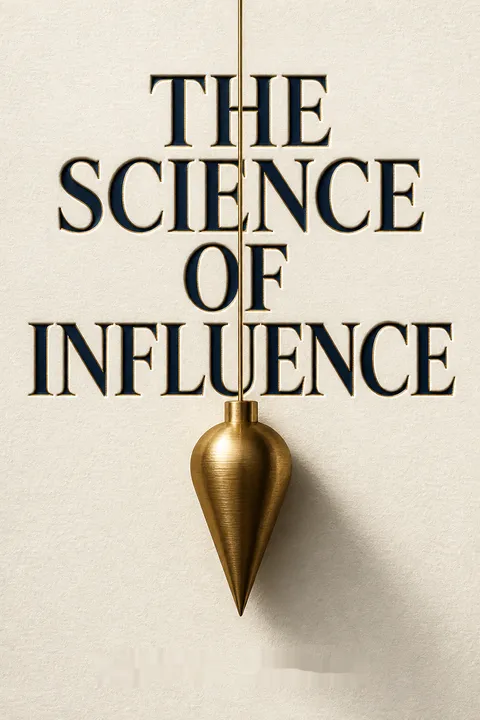
The Science of Influence receives mixed reviews. Many praise its valuable insights on persuasion techniques, psychological principles, and practical applications in sales and marketing. Some readers find it informative and influential, while others criticize its organization, repetitiveness, and potential for manipulation. The book is particularly appreciated by those in business and sales. However, some reviewers express ethical concerns about the persuasion tactics presented. Overall, readers acknowledge the book's usefulness but have varying opinions on its execution and moral implications.
People Also Read








Glossary
Delta Model of Influence
A staged persuasion processHogan’s model for organizing an influential conversation into a sequence that begins with rapport and moves through understanding needs, presenting a relevant offer, and supporting agreement. Its practical emphasis is on adapting communication to the person rather than delivering the same pitch to everyone.
Omega strategies
Methods for reducing resistanceHogan’s term for approaches intended to lower resistance to a request, rather than make the offer itself more attractive. Examples include recognizing a person’s desire for freedom, reducing the feeling of pressure, and asking them to consider future consequences before deciding.
Oscillation
Wavering among possible decisionsThe movement of a person’s beliefs or preferences between competing options. Hogan argues that this wavering can intensify as a decision approaches, particularly when the choice matters or carries risk. Agreement at one moment may not signal a settled or permanent decision.
Foot in the door
Small request before a larger oneA compliance technique that begins with a relatively small request, then follows with a larger request. The initial action can make a later commitment more likely, especially when the person has actually done something rather than merely said they might. The later request should still be appropriate and voluntary.
Inaction inertia
Rejecting a later, lesser opportunityA tendency to pass up a current opportunity after having missed an earlier, more attractive one. The person may reject an offer that still has value because it compares unfavorably with the opportunity they imagine they lost, and because accepting it could revive regret about the earlier decision.
Law of Time
Shift perspective across timeHogan’s named principle that changing a person’s time perspective can change how they feel about an issue and how they decide. A person focused on the past, present, or future may evaluate the same offer differently. The book recommends using future-oriented questions to help people consider consequences and goals.
Law of Reciprocity
Returning a perceived favorHogan’s named principle that people often feel motivated to give something back after receiving something they value. In sales and communication, a useful gift, service, or piece of information may encourage goodwill. The value is perceived by the recipient, and the gesture should not be treated as a debt that removes their freedom to refuse.
Central cues and peripheral cues
Message substance and surrounding signalsCentral cues are the substantive reasons or evidence relevant to a decision. Peripheral cues are signals around the argument, such as the communicator’s perceived expertise, appearance, or reputation. Hogan uses this distinction to explain why detailed evidence may suit an informed audience, while a less knowledgeable audience may rely more on accessible benefits and credibility signals.
FAQ
What’s The Science of Influence about?
- Focus on Persuasion Techniques: The book delves into the psychology of influence and persuasion, offering strategies to get others to say "yes" in various situations.
- Research-Based Insights: Kevin Hogan combines academic research with practical applications, making complex psychological concepts accessible.
- Behavioral Change: It emphasizes understanding human behavior to effectively influence others and change their attitudes and actions.
Why should I read The Science of Influence?
- Enhance Persuasion Skills: The book provides actionable insights that can improve your ability to persuade in both personal and professional contexts.
- Understand Human Behavior: It offers a deep dive into the psychology of decision-making, helping readers understand why people say "yes" or "no."
- Expert Insights: Kevin Hogan is a recognized authority in influence and persuasion, with insights backed by research and real-world experience.
What are the key takeaways of The Science of Influence?
- Understanding Influence: Influence is about understanding human psychology and using that knowledge to foster positive change, not just manipulation.
- Credibility is Crucial: Credibility affects how others perceive your message and your ability to influence them.
- Framing and Context: The presentation of information significantly impacts decision-making, aiding in crafting persuasive messages.
What are the best quotes from The Science of Influence and what do they mean?
- “Fear of loss is a much greater motivator…”: This highlights the principle of loss aversion, crucial for effective persuasion.
- “Once people have taken a public stand…”: This illustrates commitment and consistency, showing how public declarations solidify beliefs.
- “Everything you watch, listen to, read…”: This suggests that our environment continuously shapes our thoughts and decisions.
What is the Delta Model of Influence in The Science of Influence?
- Structured Approach: The Delta Model outlines a systematic way to present information and influence others.
- Seven Keys to Rapport: It emphasizes establishing rapport through techniques like mirroring and matching.
- Effective Communication: The model encourages tailoring messages to the audience's values and needs to enhance influence.
How does The Science of Influence define credibility?
- Core Component of Influence: Credibility is the perception of believability and trustworthiness, essential for persuasion.
- Six Factors of Credibility: Competence, trustworthiness, expertise, likability, composure, and sociability are key components.
- Building Credibility: Both actual competence and the perception of competence are necessary for successful influence.
What are Omega Strategies in The Science of Influence?
- Reducing Resistance: Omega Strategies minimize resistance to influence by presenting ideas less threateningly.
- Anticipated Regret: These strategies involve prompting individuals to consider potential regret, increasing compliance.
- Practical Application: The book provides examples of implementing Omega Strategies in various contexts.
How can I apply the foot-in-the-door technique from The Science of Influence?
- Start Small: Begin with a small request to increase the likelihood of agreement to a larger request later.
- Build Rapport: Establishing a relationship or rapport makes individuals more likely to comply with subsequent requests.
- Practical Examples: Hogan provides examples of successful use in sales and marketing.
What is the significance of framing in The Science of Influence?
- Impact on Decision-Making: Framing affects how people perceive choices and make decisions.
- Positive vs. Negative Framing: People prefer options presented positively, even if the facts are the same.
- Application in Persuasion: Crafting messages to maximize appeal and minimize resistance enhances persuasive effectiveness.
How does The Science of Influence address the concept of emotional decision-making?
- Emotions Over Logic: Emotions often drive decisions more than logical reasoning, crucial for persuasion.
- Anticipating Regret: Understanding anticipated regret can help frame proposals to alleviate fears and encourage commitment.
- Practical Strategies: Techniques like storytelling and relatable examples enhance persuasive communication.
What role does storytelling play in The Science of Influence?
- Engaging the Audience: Storytelling is a powerful tool for engaging audiences and making messages relatable.
- Illustrating Key Points: Stories help illustrate key points and make complex ideas more accessible.
- Building Trust: Personal stories build trust and credibility, enhancing persuasive impact.
How can I apply the principles from The Science of Influence in my daily life?
- Practice Active Listening: Improve listening skills to understand others' needs and emotions better.
- Be Mindful of Framing: Focus on positive aspects and potential benefits in conversations.
- Build Rapport: Establish rapport by finding common ground and showing genuine interest in others' perspectives.
About the Author

Download PDF
Download EPUB
.epub digital book format is ideal for reading ebooks on phones, tablets, and e-readers.








