

Key Takeaways
Treat falling in love as biology, not a Western invention
A feeling across cultures. Dunbar argues that romantic attachment appears across societies and centuries, even where marriages are arranged for political or economic reasons. He points to ancient love poems and accounts of couples in arranged marriages who developed affection after marrying. The intensity is not constant: the most absorbing early phase commonly lasts 12 to 18 months, sometimes longer in a milder form. Marriage customs and the feeling of love are related, but they are not the same thing.
Love has several ingredients. Psychologist Robert Sternberg’s Triangular Theory of Love describes intimacy, passion, and commitment as distinct dimensions. Their different combinations produce relationships ranging from infatuation to enduring companionate love. Research discussed by Dunbar also finds that idealizing a partner can accompany greater relationship satisfaction and longevity, though that does not make every rosy belief accurate.
Separating attachment from marriage institutions is a powerful way to avoid mistaking social rules for inner experience. It also makes room for cultural variation without assuming that every society feels or describes love identically. Historical poems show that people have voiced longing for centuries, but literary evidence cannot prove that the emotion has been universal in precisely the same form. The idealization finding is especially useful as a reminder that accuracy is not the only ingredient in a good relationship. Still, positive illusions should not be confused with ignoring coercion, incompatibility, or harm.
No single love hormone explains a bond that lasts
Chemistry is a chorus. Oxytocin gained fame as a bonding chemical after prairie voles, a monogamous rodent species, were found to respond differently to it than promiscuous montane voles. But the animal research does not reveal a simple switch for human devotion. Oxytocin and the related vasopressin may help direct attention toward a partner, while dopamine contributes to reward and motivation. These effects can be temporary, and their precise roles in people remain more complicated than popular claims suggest.
Connection needs repetition. Dunbar argues that endorphins, the brain’s natural pain-regulating chemicals, help sustain close relationships. Touch, massage-like contact, and laughter can trigger their release. In experiments, people’s pain thresholds rose after watching comedy, and laughter in conversation was associated with greater reported happiness. A study of couples also linked frequent intimacy with lower daily cortisol, a stress-related hormone.
The account is strongest when it treats bonding as a system, rather than selling one molecule as a love potion. The vole studies offer a useful way to investigate mechanisms, but a rodent pairbond is not a miniature human marriage, and short-term effects should not be mistaken for a complete explanation of lifelong commitment. The broader emphasis on repeated contact connects well with behavioral science: relationships are maintained through recurring experiences, not one dramatic chemical event. The evidence for touch and laughter is suggestive, though the effects of a specific activity can be difficult to separate from the meaning people give it.
A lasting pairbond demands more mental work than casual mating
Partnership takes coordination. Dunbar’s comparative research finds that monogamous species often have larger brains than expected, even though casual mating might seem socially more complicated. The proposed reason is that partners must coordinate their behavior and depend on each other. A klipspringer antelope pair, for example, takes turns feeding and watching for predators. Many birds also share incubation and chick-feeding duties, where one partner’s delay can endanger the young.
Minds track minds. In humans, the capacity to infer what another person believes or intends is called theory of mind. Dunbar connects this ability, and the size of people’s social networks, with brain regions involved in social reasoning. He also discusses the Scheherazade Effect, Miller’s idea that people use storytelling and verbal skill to keep a mate interested. Dunbar’s emphasis is broader: language helps maintain relationships across a social network, not just courtship.
This account makes relationship maintenance a cognitive achievement, not merely an emotional one. It clarifies why attention, timing, and sensitivity to another person’s perspective matter even when affection is strong. The comparison with birds and antelope is illuminating because it shows that coordination can be demanding without language. However, a correlation between brain structure, mentalizing, and network size does not establish which causes which. Nor does the storytelling metaphor reduce long-term partnership to entertainment: practical reliability and mutual adjustment may matter just as much as wit.
Choose with open eyes: romance is a market of imperfect trade-offs
Preferences meet competition. Dunbar describes mate choice as a negotiation among imperfect options, not a search through an unlimited catalogue. Personal advertisements commonly signal six traits: age, attractiveness, status or wealth, social skills, interests, and commitment. Women’s stated preferences tend to include more conditions, while men’s ads more often emphasize youth and attractiveness. The book connects these patterns to unequal reproductive costs, but also shows that people adjust their standards to the options available. In a Baltimore singles-bar study, both sexes rated potential partners as more attractive as closing time approached.
Signals can be strategic. Women may weigh a man’s genes, resources, and willingness to invest in children, which need not come together in one person. Hunting large game, for instance, may advertise strength and risk tolerance more than it supplies family food. In an experiment, men gave more to charity when watched by women, suggesting generosity can also serve as a mating signal.
The market metaphor captures a real constraint: choices depend on other people’s choices, local opportunity, and the costs of waiting. It also explains why stated ideals and actual partnerships can diverge. Yet the book’s sex differences are averages, not rules for individuals, and they reflect both biological pressures and social arrangements. Personal ads reveal what people choose to advertise, not a transparent record of what they value most. The useful lesson is not to calculate a partner like a commodity, but to notice how scarcity, status, and timing can quietly shape desire.
Read attraction cues as clues, not verdicts
Bodies carry information. Dunbar reviews research on waist-to-hip ratio, facial shape, height, symmetry, and smell as possible cues used in mate choice. A waist-to-hip ratio near 0.7 has been rated attractive for women in several studies, while men’s preferred body shape can vary with local nutrition and living conditions. Symmetry is proposed as a cue of developmental stability, and facial features associated with sex hormones may signal different qualities. Such signals are not guarantees of health, fidelity, or compatibility.
Smell can shape desire. The major histocompatibility complex, or MHC, is a group of genes involved in immune responses and also associated with individual body odor. Some studies report preferences for partners with dissimilar MHC profiles. Dunbar also describes research suggesting that women rely more on smell in mate choice, and that men rated shirts worn near ovulation as more pleasant. These findings point to sensory processes that can influence attraction without conscious calculation.
The chapter’s value lies in showing that attraction is not purely visual or fully deliberate. The body can supply quick signals before conscious reasoning catches up. But signals are noisy: a trait associated with fertility or health in one population may have little meaning in another, and laboratory ratings do not predict every real relationship. Evolutionary explanations can also tempt readers to treat a statistical preference as destiny. These findings are best read as clues about tendencies, not as instructions for judging people or as proof that appearance reveals character.
Romance costs two inner-circle ties, not just one
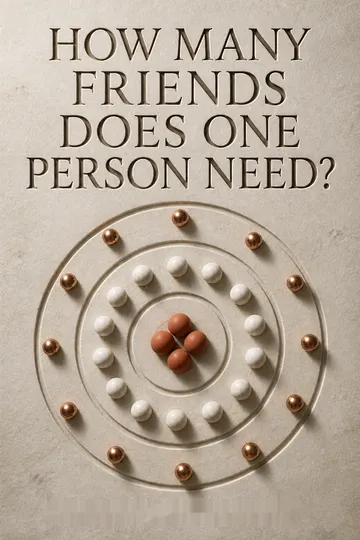
Social life has layers. Dunbar describes networks with an intimate core of about five people, a sympathy group of roughly fifteen, and wider circles of around fifty and 150. The outer limit, known as Dunbar’s Number, is an estimate of how many relationships people can maintain as meaningful social connections. These are averages, not quotas. Kin often make up about half of a person’s close network and tend to remain emotionally stable despite infrequent contact. Friendships, by contrast, usually need regular attention to stay close.
Love reallocates attention. In Dunbar’s survey, people in romantic relationships typically named four close ties rather than five, including their partner. The missing place often represented one friend and one family member pushed out of the innermost circle. About 70 percent of people in one cited study met a future partner through family, friends, or friends of friends, showing how networks also introduce and vouch for potential partners.
This model usefully reframes romance as a change to an existing social ecology. A new partnership does not simply add a person; it competes for time and emotional attention. That is a valuable prompt to protect friendships and family relationships rather than assuming they will maintain themselves. Still, the numerical layers should not be treated as hard biological limits. A person’s obligations, culture, health, and communication habits all affect how much contact is possible. The deeper point is about finite attention, not a fixed ceiling on the number of people one may care about.
Rejection hurts because social loss borrows the brain’s pain alarm
Exclusion registers sharply. In experiments using a computer ball-tossing game called Cyberball, participants showed increased activity in the anterior cingulate cortex when other players stopped including them. This region is also involved in processing physical pain. Dunbar argues that social rejection can activate an alarm system that makes us attend to a threat to an important relationship. Social pain is not imaginary simply because no tissue is injured.
Rifts are often personal. In a survey of relationship breakups, insults, scolding, missed important events, and rumors accounted for much of the reported conflict. Romantic partners were common sources of rupture, but relatives accounted for a large share too. The book also connects jealousy and threats of abandonment with coercion and violence, including severe cases of partner abuse. Attachment can protect a bond, but possessiveness is not evidence of love and can become dangerous.
The shared pain circuitry helps explain why exclusion can feel disproportionate to an outside observer: social belonging is not a decorative extra but a basic source of security. Yet overlapping brain activity does not mean that emotional rejection and bodily injury are identical experiences. That distinction matters, especially when neural findings are used to label ordinary distress as pathology. The discussion of jealousy also needs a firm ethical boundary. An evolutionary account may explain why possessiveness occurs, but it cannot justify control or violence. Explanation and excuse are different things.
A beloved built in the mind can feel real, and be exploited
The mind completes the picture. Dunbar compares romantic devotion to religious mysticism, where people describe intense longing and attachment to a divine figure. Brain-imaging research discussed in the book links thoughts about spiritual beings with regions used to reason about other minds. In religious ecstasy, researchers observed reduced activity in areas associated with spatial self-awareness. The experience can be meaningful to believers, but the brain evidence does not prove or disprove the existence of God.
Projection creates openings. Online, a person can fall for a profile and fill its gaps with an imagined partner. Dunbar recounts dating scams in which fraudsters build affection before requesting money. Digital networks can preserve contact with distant friends, but studies in the book found that online use did not enlarge close networks; typical Facebook friend counts remained near the same 120 to 130 range seen offline. Computer contact cannot provide every cue of face-to-face intimacy, especially touch.
The connection between spiritual devotion and online romance is not that they are equivalent, but that both involve the mind interpreting an incomplete or absent partner. Imagination is part of ordinary love, not a defect, yet anonymity gives a manipulator unusual room to exploit it. The book’s warning is therefore less about technology itself than about trust without verification. Digital communication can sustain a relationship across distance, while still falling short of shared presence. Religious experience deserves the same nuance: a neural description of an experience does not settle its personal or theological significance.
Human pairbonds may have begun as protection, not fatherly childcare
Four explanations compete. Dunbar considers pairbonds as a way for males to guard mating access, protect partners from predators, prevent infanticide, or help rear offspring. He rejects paternal childcare as the primary human origin, noting that human babies require long care but that women and grandmothers can provide substantial support. In hunter-gatherer studies, big-game hunting often yielded little food for the hunter’s own family because meat was shared across camp; it may also advertise strength and risk tolerance.
Protection is his leading theory. The hired gun hypothesis proposes that a female forms a bond with a male who can deter harassment or infanticidal rivals. This may have become more valuable as human communities grew and women faced more potential male aggressors. Dunbar treats the timing as uncertain: fossil evidence is indirect, and mating patterns appear to have shifted during human evolution. His conclusion is a hypothesis about origins, not a claim that all modern couples consciously seek protection.
The hired gun hypothesis is a provocative alternative to the familiar story that men pair with women chiefly to raise children. Its strength is that it asks what pressure pairbonding solved for both sexes, rather than assuming a modern family arrangement existed from the start. Its weakness is the difficulty of reconstructing prehistoric motives from animal comparisons and fossil anatomy. The explanation should therefore remain provisional. It also concerns a proposed evolutionary origin, not a prescription for present relationships, where women’s safety, autonomy, and partnership take many forms.
Analysis
Dunbar’s central achievement is synthesis. He places love poems, vole experiments, brain imaging, dating advertisements, social-network research, and evolutionary theory in one account of attachment. The result is a useful correction to two common simplifications: that love is merely a cultural script, or that one hormone explains it. The book instead presents love as a layered phenomenon, involving reward, attention, bodily cues, social cognition, and the ongoing allocation of time to relationships.
Its most practical insight may be that intimacy is not free. A partner enters a finite social world, friendships need maintenance, and rejection can register as a genuine threat. This makes love less like an isolated feeling and more like a relationship embedded in a network of obligations. The online discussion follows naturally: technology can preserve contact, but cannot manufacture unlimited closeness or guarantee the identity behind a profile.
The argument is strongest when it integrates independent kinds of evidence without pretending they are interchangeable. A brain scan measures neural activity, a personal advertisement measures self-presentation, and an animal model tests mechanisms under controlled conditions. Each illuminates a different part of the problem. They do not jointly provide a direct window into what another person feels.
The evolutionary conclusion is the most arresting and the most contestable. The hired gun hypothesis offers a coherent account of pairbonding as female protection from harassment and infanticide, but prehistoric social behavior is difficult to infer from fossil anatomy or present-day species. The book itself shows that mating systems vary, and that parental care, kin support, wealth, and local ecology can alter relationship strategies. Gendered averages should therefore be read as hypotheses about populations, not scripts for individuals. The enduring value of the book is not a final answer to why love exists, but a richer set of questions about how biology, culture, and social life shape the bonds people experience as personal and singular.
Review Summary
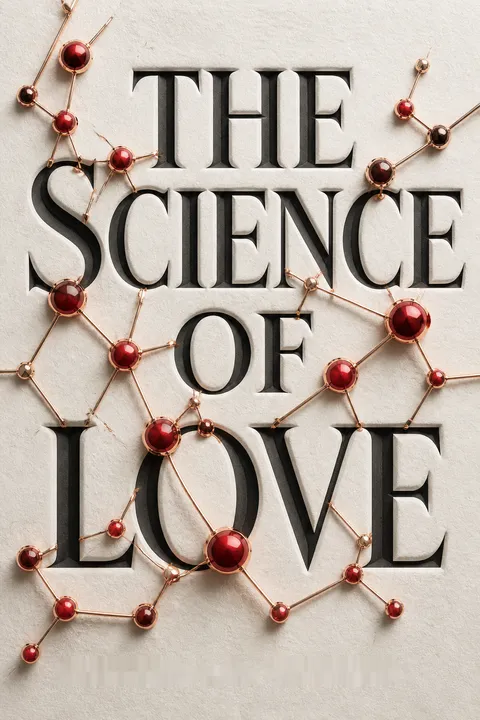
The Science of Love receives mixed reviews, with an average rating of 3.5/5. Readers appreciate Dunbar's scientific approach to love, covering topics like hormones, brain chemistry, and evolutionary psychology. Some find it insightful and well-researched, while others criticize its reliance on self-assessments and gender stereotypes. The book is praised for its accessibility but criticized for being repetitive and speculative at times. Readers value the interdisciplinary perspective but note that some arguments lack solid evidence. Overall, it's considered an interesting read, though not groundbreaking for those familiar with Dunbar's work.
People Also Read




Glossary
Triangular Theory of Love
Three dimensions of loveRobert Sternberg’s framework describes relationships through intimacy, passion, and commitment. Different levels of these three dimensions produce different relationship types, such as infatuation, companionate love, or complete love. It helps distinguish emotional closeness, desire, and the intention to sustain a relationship rather than treating every form of love as identical.
Scheherazade Effect
Verbal skill sustains attractionGeoff Miller’s term for the proposed role of language and storytelling in keeping a mate interested. It refers to Scheherazade, the storyteller in One Thousand and One Nights, who holds a king’s attention through continuing stories. Dunbar accepts that verbal skill can support courtship and relationship maintenance, while arguing that language also serves wider social-network needs.
Dunbar’s Number
Approximate social network limitAn estimate of the number of people with whom a person can maintain meaningful social relationships, commonly given as about 150. Dunbar describes this as the outer edge of layered networks, with smaller groups of intimates and close friends nested inside. It is a population-level estimate, not a precise limit that applies identically to every person.
theory of mind
Reasoning about others’ mindsThe ability to understand that other people have beliefs, intentions, and knowledge that may differ from one’s own. Dunbar connects this capacity to social competence and to the size of human networks. It supports predicting how someone may respond, interpreting behavior, and managing relationships that involve more than simple reactions to visible actions.
hired gun hypothesis
Pairbonding for female protectionDunbar’s proposed explanation for the evolution of human pairbonds. It suggests that females gained protection from harassment or infanticidal rivals by forming bonds with males who could act as guards. The hypothesis contrasts with accounts that treat male childcare or provisioning as the original reason for pairbonding, and remains an evolutionary interpretation rather than an established historical fact.
Westermarck effect
Reduced attraction after co-rearingThe proposed tendency for people raised together from early childhood to feel little sexual attraction toward one another. Named after anthropologist Edvard Westermarck, the effect is used to explain why some arranged childhood marriages or communal child-rearing systems have produced low sexual interest between the adults who grew up together. It is not described as completely reliable.
polygyny threshold
Wealth tipping point for polygynyThe point at which a woman may gain more by becoming an additional wife of a wealthy man than by being the sole wife of a poorer man. The concept links polygyny to inequality in male resources: substantial wealth differences can make sharing a husband advantageous relative to the available alternatives, though polygamy also carries costs.
FAQ
1. What is The Science of Love and Betrayal by Robin I.M. Dunbar about?
- Comprehensive exploration of relationships: The book investigates the biological, psychological, social, and evolutionary foundations of love, friendship, kinship, and betrayal.
- Interdisciplinary approach: Dunbar draws on neuroscience, anthropology, psychology, and evolutionary biology to explain how and why humans form, maintain, and sometimes lose social bonds.
- Focus on universality: The author argues that love and pairbonding are human universals, not just modern or Western constructs, and supports this with cross-cultural and historical evidence.
2. Why should I read The Science of Love and Betrayal by Robin I.M. Dunbar?
- Scientific insight into love: The book offers a rare, evidence-based perspective on love, moving beyond myths to explore neurobiology, psychology, and evolutionary theory.
- Practical relevance: Understanding the mechanisms behind love, trust, jealousy, and betrayal can help readers navigate their own relationships and social networks.
- Modern context: Dunbar addresses contemporary issues like online dating and social media, showing how ancient biological systems interact with today’s technology.
3. What are the key takeaways from The Science of Love and Betrayal by Robin I.M. Dunbar?
- Evolutionary roots of bonding: Pairbonding and social networks evolved to solve specific survival and reproductive challenges, with female-driven strategies playing a central role.
- Emotional intensity and exclusivity: Romantic love is uniquely intense and exclusive, often overriding other social bonds and requiring significant emotional investment.
- Fragility and resilience: Relationships are vulnerable to breakdown from social slights and betrayals, but strong social networks and emotional bonds are crucial for health and wellbeing.
4. How does Robin I.M. Dunbar define and explain romantic love in The Science of Love and Betrayal?
- Biological and psychological basis: Romantic love is rooted in a complex interplay of neurochemicals, including oxytocin, vasopressin, dopamine, and endorphins, which drive attachment and reward.
- Universal human experience: Dunbar demonstrates that falling in love is a cross-cultural phenomenon, not limited to any one society or era.
- Distinct from other bonds: Romantic love is more intense and exclusive than friendships or kinship, involving unique patterns of attention, emotional investment, and vulnerability.
5. What are the main biological mechanisms of love and bonding discussed in The Science of Love and Betrayal?
- Oxytocin and vasopressin: These hormones are central to pairbond formation, with oxytocin more influential in females and vasopressin in males, affecting trust and attachment.
- Dopamine and endorphins: Dopamine is linked to the exhilaration of love, while endorphins released through social interaction support long-term bonds by reducing stress and pain.
- Brain regions and pain: The anterior cingulate cortex processes both physical and social pain, explaining why rejection and heartbreak feel physically painful.
6. What evolutionary explanations for pairbonding and mating systems does Dunbar provide in The Science of Love and Betrayal?
- Hired gun hypothesis: Dunbar argues that pairbonding evolved primarily as a female strategy to protect offspring from infanticide and harassment, with males providing protection and, later, parental investment.
- Monogamy’s recent evolution: Evidence suggests strict monogamy is a relatively recent development, with earlier humans exhibiting more flexible mating systems.
- Social complexity and brain size: The evolution of larger social groups and increased social pressures drove the need for more complex social bonds and larger brains.
7. How does The Science of Love and Betrayal explain the role of attention and exclusivity in romantic relationships?
- Focused partner attention: Falling in love causes individuals to focus almost exclusively on their partner, reducing interest in others and actively downgrading potential rivals.
- Sensory cues and bonding: Experiments show that romantic involvement reduces sensitivity to rivals’ cues, such as smell, reinforcing exclusivity.
- Emotional and cognitive investment: The intense focus and emotional energy required make it difficult to maintain more than one romantic relationship at a time.
8. What social and psychological factors influence mate choice according to Robin I.M. Dunbar?
- Trade-offs and preferences: People balance criteria like age, attractiveness, status, and commitment, often compromising based on their own social and biological context.
- Sex differences: Women tend to prioritize status and commitment, while men focus more on youth and physical attractiveness, reflecting evolutionary reproductive strategies.
- Dynamic strategies: Mate preferences and choosiness adjust to social conditions, such as sex ratios and perceived market value.
9. What role do physical cues like facial features and body shape play in mate selection in The Science of Love and Betrayal?
- Indicators of health and fertility: Features like waist-to-hip ratio in women and facial masculinity in men signal fertility and genetic quality.
- Symmetry and genetic fitness: Bilateral symmetry is a subtle cue of good genes and developmental stability, influencing attractiveness and even social behaviors.
- Cycle-dependent preferences: Women’s preferences for certain male traits shift across the menstrual cycle, favoring genetic quality during ovulation.
10. How does Robin I.M. Dunbar describe the importance of social networks and friendships in human relationships?
- Layered social circles: Humans maintain social networks with layers of intimacy, from a core group of about five close friends to a broader network of around 150 meaningful contacts (Dunbar’s Number).
- Kinship vs. friendship: Kin ties are more stable and require less maintenance, while friendships need active effort and frequent contact to sustain closeness.
- Health benefits: Strong social networks are linked to better physical and mental health, providing emotional support and social capital.
11. What does The Science of Love and Betrayal reveal about the causes and patterns of relationship breakdown?
- Common triggers: Insults, neglecting important events, spreading rumors, and scolding are leading causes of breakups, threatening social status and self-esteem.
- Timing and gender differences: Most breakups occur between two and four years into a relationship, with men and women showing different patterns in who they break up with and when.
- Asymmetry in perception: Breakups are often experienced differently by each party, complicating resolution and understanding.
12. How does The Science of Love and Betrayal address the impact of technology and the Internet on modern relationships?
- Limits of online networks: Despite the reach of social media, humans maintain similar network sizes online and offline, constrained by cognitive and time limits.
- Risks of online romance: Internet dating can lead to rapid idealization and vulnerability to scams, as people fall in love with constructed images rather than real individuals.
- Importance of face-to-face contact: Physical presence and touch remain crucial for intimacy and satisfaction, with technology unable to fully replace in-person interaction.
About the Author


Download PDF
Download EPUB
.epub digital book format is ideal for reading ebooks on phones, tablets, and e-readers.








