

Key Takeaways
Treat Reconstruction as a second founding, not a postwar footnote
A new constitutional order. The Civil War destroyed slavery and preserved the Union, but Reconstruction changed what the Constitution meant. The Thirteenth Amendment abolished slavery, the Fourteenth established national citizenship and equal protection, and the Fifteenth barred racial discrimination in voting. Each also authorized Congress to enforce its provisions, giving the federal government a new role in protecting individual rights from state interference.
A process, not a date. These amendments changed the relationship between Americans and their national government, yet their promises were never self-executing. Foner calls the transformation a second founding because it revised the republic's basic commitments, while stressing that the struggle over equality did not end when the amendments were ratified.
The phrase second founding captures a crucial distinction: constitutional change can alter not only particular rules but also which level of government bears responsibility for rights. That is a shift in the operating logic of the state. Yet a new constitutional mandate is not the same as administrative capacity or political will. The amendments supplied tools, not guaranteed outcomes. Reading them as a founding also complicates the comforting idea that the United States began with a settled democratic design and merely expanded it. The book instead presents democracy as a contested construction, remade under pressure and still vulnerable to reversal.
Make abolition permanent by changing law, not relying on wartime orders
Freedom advanced in stages. Enslaved people began fleeing to Union lines at the start of the Civil War, forcing the question of emancipation onto the army and national government. Lincoln's Emancipation Proclamation, effective in 1863, declared about 3.1 million enslaved people free in areas still in rebellion. It did not apply to roughly 800,000 others, including people in border states and some Union-controlled areas, and its wartime basis left its durability uncertain.
Abolition required a new rule. The Thirteenth Amendment, ratified in December 1865, ended slavery throughout the country and removed the legal foundation on which slaveholding depended. The proclamation transformed the war's purpose and weakened slavery; the amendment made abolition nationwide and permanent.
The contrast between emancipation and abolition is a useful lesson in institutional design. An executive order can change policy quickly, especially in an emergency, while a constitutional amendment can make that change harder to reverse. But the amendment's passage depended on the wartime destruction of slaveholders' political power and on organized abolitionist pressure. Durable reform therefore emerges from both legal form and a changed balance of power. The narrative also corrects a familiar shortcut: a dramatic declaration can mark a turning point without immediately changing conditions for everyone it names.
Treat emancipation as a starting line for rights, not a finished answer
Freedom needed substance. Republicans debated whether ending bondage also meant access to courts, property, movement, education, family security, and the fruits of one's labor. Many understood freedom through the free-labor ideal: people should work by contract and keep what they earned. Black Americans pressed broader claims, including land, voting rights, equal treatment in public places, and protection from racial violence.
The Black Codes exposed the gap. After the war, southern legislatures restricted freedpeople's movement, occupations, and legal standing. Some required yearly labor contracts and used vagrancy prosecutions to force people into work. These laws showed why abolition alone could not secure meaningful liberty. The Thirteenth Amendment opened a constitutional path for federal action, but what freedom required remained contested.
This account makes freedom a question of practical capability, not simply legal status. A person formally released from coercion may still lack the means to choose work, protect family, or seek justice. That distinction remains analytically important: rights on paper can coexist with rules and institutions that make their exercise costly or impossible. The book also shows why a single definition of freedom was elusive. Some Republicans emphasized economic independence, while Black communities made claims that reached into political power and public life. The disagreement was not over whether freedom mattered, but over who could define its contents.
Scrutinize familiar constitutional language for loopholes with future costs
One exception endured. The Thirteenth Amendment permits involuntary servitude as punishment after a criminal conviction. The wording came from earlier antislavery laws and was barely debated when Congress adopted it. Some lawmakers later objected that it could enable slavery under another name, but efforts to clarify the exception did not change the Constitution.
The risk became concrete. Southern Black Codes criminalized vagrancy and labor-contract violations, then used fines and forced work to control freedpeople. After white supremacist governments regained power, expanded criminal laws fed convict leasing, in which prisoners were hired out to plantations, mines, and businesses. The amendment did not create imprisonment or prison labor, but its exception left a constitutional opening that could be exploited.
The history illustrates how inherited legal language can smuggle assumptions into a new constitutional settlement. Familiar wording may feel safe precisely because its implications have not been examined in the changed context. The criminal exception was not the same as the antebellum system of chattel slavery, and the book does not collapse those distinctions. Its warning is narrower and stronger: a provision designed for one setting can authorize coercion in another, especially when criminal law is applied unequally. Constitutional drafting therefore requires attention not only to a rule's stated purpose but also to the incentives and enforcement systems it permits.
Make birthright citizenship and equal protection national guarantees
Citizenship gained constitutional definition. Before the Fourteenth Amendment, the Constitution used the word citizen without clearly defining who qualified or what rights followed. The amendment declared nearly everyone born or naturalized in the United States to be a citizen, directly repudiating the Dred Scott ruling that Black people could not belong to the national political community.
Rights reached beyond citizenship. Section One barred states from abridging citizens' privileges or immunities, depriving any person of life, liberty, or property without due process, or denying any person equal protection. Its use of person as well as citizen mattered: some protections extended to residents who were not citizens. The language was broad and open to dispute, but it placed individual rights under national constitutional protection.
The amendment joins two ideas that are often treated separately: membership in the political community and protection under law. Birthright citizenship fixes a baseline of belonging, while the protections for persons prevent basic legal security from depending entirely on citizenship status. This architecture is powerful because it limits local governments' ability to decide who counts. Its general language also creates interpretive space, which can support claims its authors did not specifically anticipate. That flexibility is not a flaw by itself, but it makes enforcement and judicial interpretation central to whether universal language produces universal protection.
A voting amendment can forbid racial exclusion yet leave suppression machinery intact
The Fifteenth Amendment set a limit. It barred the federal government and states from denying or abridging citizens' voting rights on account of race, color, or previous enslavement. Congress debated a stronger amendment that would establish a broader national voting standard, but the final version left most voting qualifications to the states. Fear of opposition to wider suffrage, including voting by women and immigrants, helped narrow the proposal.
Formal neutrality could conceal exclusion. Lawmakers warned that literacy tests, property requirements, and other rules might block Black voters without naming race. After Reconstruction, southern states used measures such as poll taxes and tests administered by local officials to disenfranchise Black men. The amendment transformed the Constitution, yet its narrow wording left routes around its promise.
This is a classic design problem: a rule can prohibit a stated form of discrimination while leaving adjacent techniques untouched. When lawmakers focus on an explicit motive, institutions can shift toward formally neutral criteria with unequal effects. The amendment's limits also reflected political constraints, not simply confusion about equality. A stronger proposal might have been harder to ratify, but compromise created enforcement vulnerabilities. The enduring lesson is to assess rights protections by their functional reach: who can exercise the right in practice, and who controls the procedures that determine access?
The people excluded from Congress still shaped the Constitution's meaning
Constitutional change was popular politics. Black Americans organized conventions, published arguments, petitioned Congress, and claimed citizenship and equal rights well before the war. During Reconstruction, freedpeople attended political meetings, sought education, reunited families, and pressed for the vote. Their organizing influenced lawmakers, and Black male voters helped elect the southern legislatures that ratified the Fourteenth Amendment. Without those votes, ratification would not have been secured.
The struggle had limits. Women abolitionists helped drive the campaign for the Thirteenth Amendment, hoping abolition would advance equality more broadly. Yet the Fourteenth Amendment inserted the word male into its representation rule, and the Fifteenth protected voting rights only against racial discrimination. Black women and white women organized and argued, but remained excluded from the ballot.
The story challenges a legislature-centered account of constitutional authorship. People without seats in Congress still shape constitutional meaning by building movements, changing political incentives, and making claims that officials must answer. That broader view is especially important when formal records preserve lawmakers' words more readily than the arguments of ordinary citizens. At the same time, participation did not yield equal influence for all. Black men's new political power helped secure amendments, while women remained excluded from voting. The founding was more democratic than its predecessors, but its boundaries were drawn through compromise and hierarchy.
Courts can preserve constitutional words while draining their enforcement power
Judicial interpretation narrowed the amendments. In the 1873 Slaughterhouse Cases, the Supreme Court sharply limited the Fourteenth Amendment's Privileges or Immunities Clause, leaving it nearly unusable. In the 1883 Civil Rights Cases, the Court struck down federal protections against racial exclusion by private businesses, emphasizing that the Fourteenth Amendment addressed state action. In 1896, Plessy v. Ferguson upheld state-enforced racial segregation.
The consequences were practical. Congress had tried to protect Black Americans from unequal treatment, violence, and exclusion. Narrow rulings restricted those efforts, while the Court proved more receptive to claims that the Fourteenth Amendment protected corporations and property. Justice John Marshall Harlan dissented in major cases, arguing for a broader reading of national citizenship and equality.
The central point is not that courts simply discover a fixed meaning in constitutional text. They choose among plausible interpretations, and those choices allocate power and protection. A procedural distinction such as state action can appear clean in doctrine while obscuring how public policy, licensing, and official inaction shape private conduct. The cases also reveal asymmetry: constitutional language could expand protection for business interests while being read narrowly for Black citizens. This does not make legal doctrine irrelevant. It makes historical context and real-world consequences indispensable parts of evaluating doctrine.
Treat constitutional equality as a political struggle, not settled text
The amendments survived their defeat. After Reconstruction, white supremacist governments took control across the South, voting rights were stripped away, and courts narrowed federal enforcement. A racist historical account known as the Dunning School portrayed Reconstruction as corrupt Black rule and helped legitimize the retreat. Later scholarship rejected that portrait and recognized Reconstruction as a major, unfinished experiment in democracy.
Enforcement remains part of the founding. The civil rights movement used the existing amendments to challenge segregation and expand rights; it did not need a replacement Constitution. Foner argues that the amendments still offer possible grounds for protecting equal citizenship, but their meaning depends on political power and interpretation. Rights can be gained and withdrawn, so ratification is not the same as fulfillment.
The book's historical argument is also a warning about public memory. Interpretations of the past can legitimize present arrangements, as the Dunning School did for white supremacy, or reopen constitutional possibilities that had been suppressed. This makes history more than background for law: it is one of the arenas in which legal authority is formed. Still, recovering a broader interpretation does not itself guarantee reform. Courts, legislatures, and public movements operate within political constraints. The amendments matter because they preserve arguments and tools that remain available, not because constitutional promises automatically defeat organized opposition.
Analysis
Foner's central achievement is to show that the Reconstruction amendments are not three isolated clauses but a linked redesign of political membership, personal freedom, and national authority. The sequence matters. Abolition raised the question of what freedom required; citizenship and equal protection supplied a wider legal foundation; voting rights attempted to give the newly recognized citizens political leverage. Each step exposed the inadequacy of the previous one. The narrative therefore resists both triumphalism and simple failure: Reconstruction created a constitutional architecture for equality, while political resistance and judicial choices sharply limited its operation.
The book also changes the usual account of constitutional authorship. Congress drafted and ratified the amendments, but Black conventions, soldiers, freedpeople, abolitionists, women, and local political organizers helped determine what problems the amendments addressed. The Fourteenth Amendment's ratification depended on Black political participation in the South, even though Black Americans had no representatives in the Congress that approved it. This makes constitutional legitimacy more social than legislative records alone suggest. A useful analytical distinction is between textual achievement, institutional capacity, and durable political support. The amendments delivered the first. Enforcement legislation and federal intervention intermittently supplied the second. The third proved fragile. The withdrawal of national commitment allowed local power, violence, and judicial doctrine to hollow out rights without formally repealing the amendments. This pattern explains why constitutional language can remain authoritative while its practical meaning contracts.
Foner's insistence that constitutional meaning remains contested is persuasive, but it also places a burden on readers: historical possibility is not proof that every expansive interpretation is legally or politically attainable. The strongest implication is not that one interpretation resolves all disputes. It is that claims of narrow inevitability should be examined against the range of meanings available to the amendment's participants and against the consequences of choosing among them. The second founding left the nation with both a promise and a continuing argument over who must make that promise real.
Review Summary
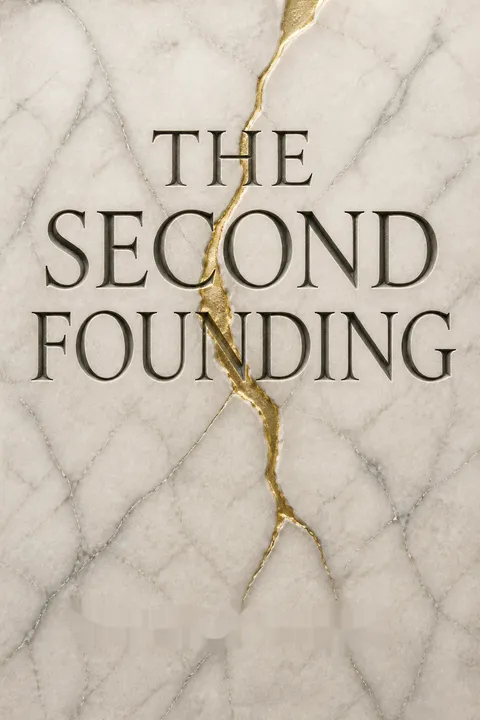
The Second Founding by Eric Foner examines the 13th, 14th, and 15th Amendments, arguing they constituted a "second founding" of the United States. Foner details the amendments' creation, implementation, and subsequent interpretation by the Supreme Court. Reviewers praise Foner's clear writing and thorough research, noting the book's relevance to current debates on civil rights and constitutional interpretation. Many consider it an important work that illuminates a crucial period in American history, though some find parts of the legal analysis dry. Overall, readers appreciate Foner's expertise and the book's concise yet comprehensive approach.
People Also Read




Glossary
second founding
Reconstruction's constitutional transformationFoner's term for the constitutional change produced by the Civil War and Reconstruction. The Thirteenth, Fourteenth, and Fifteenth Amendments abolished slavery, defined national citizenship and equal protection, and barred racial discrimination in voting. Together, they strengthened federal authority over individual rights and substantially revised the relationship between citizens, states, and the national government.
freedom national
Federal policy against slavery's expansionAn antislavery constitutional position that treated slavery as a local institution permitted only where state law established it. Under this view, the federal government could not abolish slavery within states, but slavery had no legitimate place in federal territories or other areas under national jurisdiction. Republicans used the idea to oppose slavery's expansion before the Civil War.
Black Codes
Postwar laws restricting Black freedomLaws enacted by southern governments after the Civil War to constrain the rights and opportunities of freedpeople. They limited movement, occupations, legal participation, and other freedoms. Some required Black men to sign labor contracts and used vagrancy prosecutions or fines to compel work. Their passage helped convince Congress that emancipation needed stronger federal protection.
criminal exemption
Convict labor exception to abolitionThe Thirteenth Amendment allows involuntary servitude as punishment for a crime after due conviction. The language was inherited from earlier antislavery measures and received little scrutiny during ratification. It did not recreate chattel slavery, but it left room for forced prison labor and was exploited alongside discriminatory criminal laws, including systems of convict leasing.
birthright citizenship
Citizenship based on United States birthThe principle, established in the Fourteenth Amendment, that nearly everyone born in the United States and subject to its jurisdiction is a citizen. It rejected the racial exclusion affirmed in Dred Scott and placed citizenship beyond ordinary legislative repeal. The jurisdiction language excluded, among others, children of foreign diplomats and people living within sovereign tribal nations.
Privileges or Immunities Clause
Protection for citizens' fundamental rightsPart of Section One of the Fourteenth Amendment, this clause prohibits states from abridging the privileges or immunities of United States citizens. Reconstruction-era lawmakers connected it to fundamental rights and, for some, the protections in the Bill of Rights. The Supreme Court's 1873 Slaughterhouse ruling interpreted it narrowly, greatly reducing its role in constitutional law.
state action
Government conduct triggering constitutional limitsThe doctrine that the Fourteenth Amendment generally restricts action by state governments and officials, rather than discrimination by private individuals or businesses alone. The Supreme Court used this distinction to invalidate federal efforts against private racial exclusion. Critics argued that the doctrine ignored government licensing, tolerance, or failure to protect people from private violence and discrimination.
popular constitutionalism
Public participation in constitutional meaningThe idea that constitutional meaning develops not only through courts and legislatures but also through public organizing, debate, petitions, newspapers, conventions, and political action. During Reconstruction, Black Americans and other groups used these forums to define rights and press claims. Their activity shaped the political context in which amendments were drafted, ratified, and contested.
Dunning School
Racist interpretation condemning ReconstructionA body of historical writing associated with Columbia professor William A. Dunning and his students, influential from the late nineteenth century through much of the twentieth. It portrayed Reconstruction as corrupt rule by supposedly incapable Black people and praised the restoration of white control. Foner explains how this interpretation helped legitimize Jim Crow and weaken support for Black political rights.
badges and incidents of slavery
Legacies attached to slaveryA constitutional concept referring to practices or conditions that mark or reproduce the subordination created by slavery, beyond the ownership of people itself. The Thirteenth Amendment's enforcement clause can support congressional action against such conditions. Courts adopted a narrow approach, while civil rights advocates argued that discrimination in work, housing, public access, and safety could carry slavery's continuing effects.
FAQ
What's The Second Founding about?
- Reconstruction Era Focus: The Second Founding by Eric Foner delves into the Civil War and Reconstruction period, emphasizing how these events reshaped the U.S. Constitution.
- Constitutional Amendments: It centers on the Thirteenth, Fourteenth, and Fifteenth Amendments, which abolished slavery, established birthright citizenship, and secured voting rights for black men.
- Legacy of Inequality: Foner argues that while these amendments were revolutionary, the struggle for equality continues, making the Reconstruction era relevant today.
Why should I read The Second Founding?
- Understanding American History: The book offers crucial insights into a pivotal era that laid the groundwork for modern American democracy and civil rights.
- Relevance to Current Issues: Foner connects historical events to contemporary issues of citizenship, voting rights, and racial equality, making it a timely read.
- Scholarly Perspective: As a leading historian, Foner provides a well-researched narrative that challenges traditional views of Reconstruction.
What are the key takeaways of The Second Founding?
- Constitutional Revolution: The Reconstruction amendments represent a "second founding" of the United States, fundamentally redefining citizenship and rights.
- Federal vs. State Power: These amendments shifted the balance of power, empowering the federal government to protect individual rights against state infringement.
- Ongoing Struggles: Foner emphasizes that the issues of race and equality initiated during Reconstruction continue to resonate in modern America.
What are the best quotes from The Second Founding and what do they mean?
- "Reconstruction never ended.": This quote encapsulates Foner's argument that the issues of race and equality established during Reconstruction are still relevant today.
- "The validity of the public debt... shall not be questioned.": This highlights the commitment to uphold the nation's financial obligations while rejecting Confederate debts, reinforcing national unity.
- "It made the liberty and rights of every citizen in every state a matter of national concern.": Reflects the transformative impact of the Reconstruction amendments on national protection of individual rights.
What are the Reconstruction Amendments?
- Thirteenth Amendment: Abolished slavery and involuntary servitude, except as punishment for crime, marking a significant societal shift.
- Fourteenth Amendment: Established birthright citizenship and equal protection under the law, ensuring all persons are entitled to the same rights.
- Fifteenth Amendment: Prohibits the denial of the right to vote based on race, color, or previous condition of servitude, securing political rights for black men.
How did the Civil War lead to the Reconstruction Amendments?
- Abolition of Slavery: The Civil War was fundamentally about ending slavery, necessitating constitutional amendments to formalize this change.
- Shift in Federal Power: The war expanded the federal government's role, leading to a redefinition of citizenship and rights.
- Political and Social Change: The war's outcome prompted a reevaluation of American values, pushing for a more inclusive definition of citizenship.
What role did African Americans play in the Reconstruction process?
- Political Mobilization: African Americans actively participated in the political process, influencing the drafting of the Reconstruction amendments.
- Military Service: Many black men served in the Union Army, establishing their claim to citizenship and rights post-war.
- Grassroots Activism: Black communities organized to advocate for their rights, demonstrating their agency in shaping the Reconstruction agenda.
How did the Dunning School influence perceptions of Reconstruction?
- Racist Interpretations: The Dunning School propagated the idea that Reconstruction was a failure due to the incompetence of black leaders.
- Lost Cause Ideology: This perspective romanticized the Confederacy and portrayed Reconstruction as chaotic, shaping public memory for decades.
- Shift in Historical Narrative: Foner argues that this view has been challenged by recent scholarship recognizing the achievements of Reconstruction.
What challenges did the Reconstruction Amendments face after ratification?
- Judicial Interpretation: The Supreme Court often interpreted the amendments narrowly, limiting their effectiveness in protecting African American rights.
- State Resistance: Southern states enacted Black Codes and other discriminatory laws undermining the amendments.
- Political Backlash: The rise of white supremacist groups and the withdrawal of federal troops led to the erosion of rights established during Reconstruction.
How does Eric Foner connect the Reconstruction era to contemporary issues?
- Ongoing Racial Inequality: Foner draws parallels between the struggles for civil rights during Reconstruction and current issues of racial inequality.
- Constitutional Relevance: He emphasizes that the principles established in the Reconstruction amendments continue to be debated in modern courts.
- Historical Lessons: Understanding the Reconstruction era is essential for addressing today's challenges related to citizenship and equality.
What is the significance of the phrase "equal protection of the laws" in the Fourteenth Amendment?
- Foundation of Civil Rights: Establishes a legal standard requiring states to treat all individuals equally under the law.
- Broad Application: Interpreted to apply to various forms of inequality, influencing landmark Supreme Court cases.
- Ongoing Legal Debate: Continues to be a focal point in discussions about the scope of rights and protections in American society.
What were the limitations of the Reconstruction Amendments as discussed in The Second Founding?
- Disenfranchisement of Felons: Allowed for disenfranchisement of individuals convicted of crimes, disproportionately affecting African Americans.
- Judicial Interpretation: Supreme Court's narrow interpretations limited the amendments' intended protections.
- Failure to Address Gender: The amendments did not extend voting rights to women, reflecting broader societal attitudes during Reconstruction.
About the Author
Download PDF
Download EPUB
.epub digital book format is ideal for reading ebooks on phones, tablets, and e-readers.








