

Key Takeaways
The secret piano preserved a self the regime tried to erase
A voice in the room. At three, Zhu Xiao-Mei watched movers struggle to fit her mother’s piano into their cramped Beijing home. Her mother rarely played it, but treated it with care. One stormy evening, she played Schumann’s Reverie for her daughter. The music opened a world that felt personally hers, and her mother began teaching her.
The piano was more than a path into music. Its history carried the family’s lost security, her mother’s artistic life, and a connection to cultures the new government distrusted. For Xiao-Mei, playing became a private relationship with an object that seemed to answer back, even as political suspicion darkened the household.
The piano’s force comes from its double life: it is both an instrument and a container for memory. Objects can anchor identity when institutions try to redefine a person, especially when they connect private experience to a practice that can be repeated. The memoir does not suggest that music makes deprivation harmless. Instead, it shows how a durable attachment can keep a sense of self available through upheaval. That distinction matters: resilience is not immunity to harm, but the preservation of something the harm cannot fully explain away.
When politics judges private thought, belonging becomes a tool of control
Class became a verdict. Under Mao, family origins could determine a student’s status and prospects. Xiao-Mei was labeled Chushen bu hao, meaning someone from a politically suspect family background. At school, students took part in public sessions where they praised approved behavior and criticized classmates. Dazibao, large-character wall posters, made accusation visible across schools and neighborhoods.
At fourteen, after joking about jumping from a roof and writing about Anna Karenina, Xiao-Mei was treated as politically dangerous. She had to deliver a public self-criticism, denouncing her reading, family, and love of Western music. Her teacher, Pan Yiming, stopped teaching her. What began as a child’s private distress was converted into evidence against her.
Public confession does more than punish an individual. It teaches everyone watching that private thoughts can be made legible, judged, and used to establish loyalty. Social pressure becomes especially powerful when belonging, education, and future opportunity depend on repeating the approved account. The memoir’s classroom scenes show this process at a formative age, before students have the experience to distinguish conformity from conviction. The account also cautions against treating propaganda as mere persuasion: these rituals operate alongside real penalties, so apparent agreement cannot be read as genuine consent.
Teach through strengths, then demand rigor without crushing curiosity
A weakness can be redirected. When Xiao-Mei was eleven, the Conservatory jury criticized her playing and worried about her small hands. Pan Yiming defended her, then showed her how small hands could move quickly and suit certain music. He taught her to relax, use her breath, and approach the keyboard with flexibility rather than force.
Pan’s encouragement did not mean easy standards. He assigned demanding exercises, Bach, and memorization, and asked her to read widely because musicians need more than technique. He also let her finish a piece after mistakes instead of stopping her midstream. His teaching joined careful correction with imagination: music needed an idea or feeling behind the notes, not display for its own sake.
Pan models a productive combination often missing from debates about education: psychological safety and high expectations can reinforce each other. He makes room for a student’s existing capacities, then uses precision and sustained work to expand them. This is not praise without standards, nor standards without care. His approach also gives the student ownership: she must discover what a musical phrase means rather than imitate a teacher’s manner. The method has limits, since encouragement cannot compensate for every structural barrier, but it shows how teaching can build agency instead of dependence.
A coercive system can turn its victims into agents of harm
Survival taught complicity. Xiao-Mei’s political awakening was shaped by fear, shame, and a desire to belong. She became hostile toward her parents because their background threatened her standing, and she did not return to see her grandmother after she was expelled from Beijing. Years later, in a labor camp, she accepted an order to watch a cellist, Shaohua, suspected of opposing the regime.
Xiao-Mei reported Shaohua after seeing her search confidential files. During a public denunciation, another student struck Shaohua, leaving her temporarily deaf. Only then did Xiao-Mei grasp the violence her report had helped unleash. Decades later, Shaohua forgave her, but forgiveness could not undo the harm or recover the years Xiao-Mei spent accepting the regime’s account of who deserved suspicion.
The memoir refuses a comforting split between innocent victims and monstrous perpetrators. Coercive systems narrow the available choices and make dissent dangerous, yet people can still contribute to harm within those constraints. Recognizing both facts is central to understanding moral injury, the lasting distress that can follow participation in acts that violate one’s values. The narrator’s honesty about her role gives the story unusual ethical weight. It also resists a simplistic lesson that every compromised act is freely chosen or equally culpable, since fear, age, and power shape the choices available.
Keep practicing in secret when the world says your art is forbidden
Music returned by fragments. The Shang shan xia xiang movement sent students and intellectuals from cities to the countryside for labor and political re-education. Xiao-Mei spent five years in camps, doing exhausting work under surveillance. After an illness, she heard an accordion and tried out a Chopin etude. That small encounter revived a desire she had thought buried.
Later, she persuaded her mother to send her family’s piano to Zhangjiakou. It arrived after weeks of uncertainty, battered and with many broken strings. Xiao-Mei repaired it as best she could, then practiced in a freezing room and secretly obtained forbidden scores. The camp officially allowed revolutionary model works, so musicians used that permission as cover for playing Bach, Chopin, and other composers.
This is not simply a story of a heroic artist resisting openly. Its power lies in the improvised, collective means of keeping culture alive: a mother finds a way to ship a piano, friends share scores, and a camp commander permits music without grasping what it means. Such small openings matter under rigid control. Still, the memoir does not romanticize the camp. Artistic practice offered a foothold in an inhumane setting, but it could not restore lost years, health, or freedom.
Empty the mind enough to hear a work's own direction
Attention before interpretation. In exile, Xiao-Mei began studying Chinese philosophy, encouraged by a letter from her father about finding serenity through Taoist texts. She applied this inward discipline to music, especially Bach’s Goldberg Variations. Rather than rush to impose an interpretation, she worked patiently until a tempo and sense of direction emerged from sustained attention.
She uses the term thrust for a work’s connected line of thought and forward motion. Its direction depends not only on melody and harmony but also on the pulse supplied by the bass. Her practice of “piano meditation” means working without a career goal or immediate reward, attending closely until the music becomes intuitive. For her, emptiness means clearing the mind, not treating the score as empty.
The idea connects musical interpretation to forms of contemplative attention: the performer listens before acting, then makes choices from a fuller awareness of the whole. This is a useful counterweight to both mechanical precision and self-display. Yet self-effacement should not be mistaken for the absence of interpretation. A pianist still decides how to shape sound, and the score does not dictate one inevitable performance. The memoir’s strongest version of the claim is that restraint and patience make interpretation more responsive, not that the performer can disappear entirely.
Master one score deeply, and gain a method for every score
Depth teaches transfer. In Boston, pianist and teacher Gabriel Chodos asked Xiao-Mei to study Bach’s Prelude and Fugue in B Minor. They worked on it for six months, examining the score in detail, even using a magnifying glass to check its markings. Chodos pressed her to understand how phrases begin, build, and breathe, rather than merely count beats or rely on technical speed.
Rudolf Serkin’s playing at the Marlboro Festival offered another lesson: musical structure could be exact and still communicate feeling. Xiao-Mei came to believe that deep exploration of one work develops habits that can be carried into others. Her teachers differed in temperament, but both treated serious musicianship as a combination of attentive study and generous communication.
The case for depth is stronger than a simple claim that fewer subjects are better. Concentrated study reveals relationships among details that quick exposure can miss, while repeated problem-solving builds a reusable way of listening. In that sense, one score becomes a laboratory for phrasing, structure, and judgment. The approach is not a substitute for breadth: musicians still need a wider repertoire and historical context. Its particular value is that breadth without close attention can leave a performer with many pieces and little understanding of how to investigate them.
A late artistic start can still become a serious career
Reinvention took years. After leaving China in 1980, Xiao-Mei arrived in the United States with little English and few resources. She cleaned houses, struggled with hunger, and worked restaurant jobs while trying to return to music. At thirty-three, she earned the New England Conservatory diploma she should have received much younger. In 1984, she moved to Paris and again had to start from almost nothing.
Her first major public success came at forty, when she performed the Goldberg Variations at a small Paris church. Friends, teachers, and hosts repeatedly offered practical support, from piano access to housing and concert opportunities. Her career did not follow the usual timetable, and it remained uncertain, but years of work and a network of allies helped make it possible.
The story expands the idea of a career beyond a smooth ladder of credentials and promotions. It shows how skill can survive interrupted institutions, while also revealing how much opportunity depends on other people’s material help. Late achievement is inspiring, but it should not become a demand that every displaced person overcome structural damage through exceptional will. Xiao-Mei’s persistence matters, and so do the mentors, friends, and patrons who made persistence practically possible.
Make music a gift to listeners, not a performance of power
The audience completes the act. Xiao-Mei came to see music not as a tool for political instruction or personal status, but as an offering that can reach another person. In a French prison, she planned to play only ten variations from Bach’s Goldberg cycle. The inmates asked her to continue, so she performed the entire work, then played Beethoven for a prisoner who recognized her from a radio broadcast.
She also performed in hospitals, retirement homes, and other places associated with hardship. Her experience under a regime that demanded obedience shaped her reluctance to impose a message on listeners. She wanted the music to invite attention and shared feeling, including from people with no formal musical training.
The prison concert gives a concrete picture of art as communication rather than status display. The work mattered because people chose to listen, responded, and asked for more. This account also suggests that cultural access should not be reserved for audiences already judged sophisticated. But music’s capacity to connect is not proof that it resolves political conflict or makes listeners morally better. Its contribution is more modest and still significant: it creates a shared experience that institutions of punishment or exclusion rarely provide.
Remember your complicity without mistaking guilt for repair
Memory needs more than remorse. Returning to Beijing, Xiao-Mei revisited the Conservatory and remembered Huabin Zheng, the caretaker students called Mama Zheng. He had cared for them, then died by suicide after being persecuted during the Cultural Revolution. The tree where he died had been removed. Xiao-Mei publicly restored his real name in her account and declared him innocent, something students had been unable to say at the time.
She also faced the harm she had done to Shaohua and the neglect of her grandmother. Apologies, forgiveness, and a headstone could honor the dead or ease a relationship, but none could return lost time. The memoir notes that China never held broad trials reckoning with Mao’s rule, leaving the historical record and public accountability incomplete.
Personal remorse can acknowledge damage, but it cannot substitute for institutional truth or public accountability. The memoir is powerful because it gives remembrance a specific task: name people whom political power erased, and state what could not safely be said when they were alive. Shaohua’s forgiveness is meaningful as an act between individuals, not as a verdict that the system’s crimes are settled. The distinction protects compassion from becoming an excuse for forgetting, and keeps moral repair larger than the relief of the person who feels guilty.
Rebuild what repression destroys by giving the next generation education
The return points forward. On a later visit to China, Xiao-Mei played Schumann’s Reverie for her aging mother, the piece her mother had played when she was a child. The family piano had survived political denunciation, a journey to the labor camp, and years of neglect. Its return to the room brought the story back to its beginning, but the family could not recover the years they had lost.
At the former camp, Xiao-Mei imagined founding a free school for the arts with former classmates. Scholarships would help students whose families could not afford conservatory training. The proposal answered what she considered one of the Revolution’s deepest harms: not only physical deprivation, but the removal of books, scores, teachers, and the possibility of intellectual growth.
The proposed school turns remembrance into a forward-looking obligation. A memorial preserves evidence of what happened; education can also rebuild the capacities that repression attacks, including curiosity, judgment, and access to artistic traditions. The distinction is important because the school remains a dream in the memoir, not an accomplished institution. Its force lies in the principle behind it: the response to destroyed learning should be to widen learning, not merely to celebrate survival.
Analysis
The memoir’s structure follows the piano as both object and measure of time. It enters the family home before Xiao-Mei understands what it is, disappears beneath political covers, travels to a labor camp, and returns to the family apartment near the end. That recurring object lets the narrative move between childhood, coercion, exile, and artistic maturity without reducing the book to a chronology of political events.
Its ethical center is more complicated than art triumphing over tyranny. Music sustains Xiao-Mei, but she also describes the ways she internalizes political doctrine, rejects her family, and helps endanger a friend. Her account gives agency and constraint equal attention: she was a young person subject to an enormous power imbalance, and she later accepts responsibility for actions that injured others. This tension makes the memoir a study of how political systems recruit ordinary people, not only a testimony about victimization.
The book’s connection between Bach and Laozi is best read as an interpretive affinity, not a claim that one tradition explains the other. Xiao-Mei finds in both an emphasis on flow, restraint, and attention to relationships among parts. That synthesis is personally persuasive because it grows out of her work as a pianist, though it cannot stand for every Chinese or Western listener. Likewise, the memoir offers vivid firsthand experience, not a comprehensive history of the Cultural Revolution. Its strongest historical contribution is intimate scale: the damaged body, the family divided, the teacher punished, the friend accused, and the piano hidden in plain sight.
The final turn toward a school gives the story a practical moral horizon. Remembrance matters, but so does restoring what political repression attacks: access to knowledge, skilled teachers, and room to develop an independent mind. Music cannot replace justice, yet it can model a form of attention and shared experience that coercive politics tries to suppress.
Review Summary
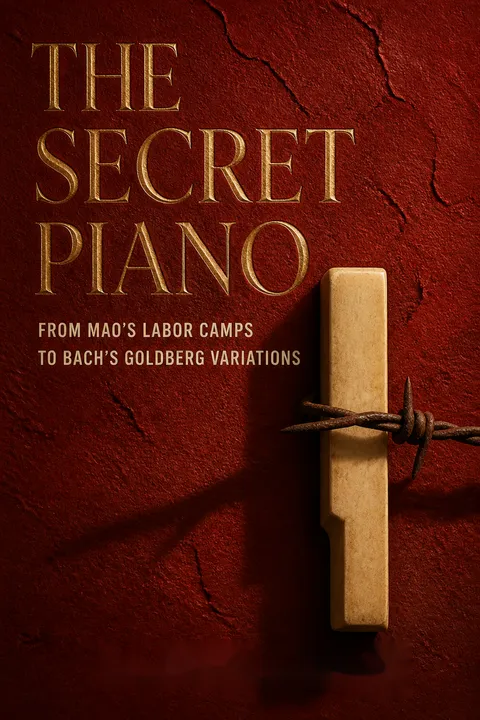
The Secret Piano is a moving memoir recounting Zhu Xiao-Mei's experiences during China's Cultural Revolution and her journey as a pianist. Readers praise the book for its poignant storytelling, historical insights, and reflections on music's power to heal and inspire. Many found the first half, detailing life in Mao's China, particularly compelling. While some felt the latter sections dragged, others appreciated the musical and philosophical discussions. Overall, reviewers were deeply touched by Zhu's resilience and her ability to reclaim her passion for music despite tremendous adversity.
People Also Read

Glossary
Chushen bu hao
Politically suspect family backgroundA label meaning a person came from a politically disfavored family background. During the period described, family origins could affect access to education, organizations, and employment. Xiao-Mei’s family connections to business and relatives abroad made her suspect by association, even when she had committed no political offense.
Dazibao
Public denunciation posterA large-character wall poster used during the Cultural Revolution to make accusations, political arguments, or calls to action public. Dazibao could spread a denunciation beyond a meeting and expose its target to public shame and danger. In Xiao-Mei’s story, such posters condemn teachers and accuse her family.
Shang shan xia xiang
Urban youths sent to countrysideA political movement that sent students and other city residents to rural areas to work and undergo ideological re-education. The phrase means going up to the mountains and down to the countryside. Xiao-Mei first joined these trips as a student and was later sent to labor camps far from Beijing.
Yangbanxi
Revolutionary model performancesThe model works promoted under Jiang Qing during the Cultural Revolution, including operas, ballets, and musical compositions centered on approved revolutionary subjects. They filled public programs after many Western works were banned. Musicians in Xiao-Mei’s camp sometimes used approved pieces as cover while practicing forbidden repertoire.
Fenpai
Post-camp job assignmentThe posting or placement assigned to someone leaving a labor camp. The assignment could shape a person’s future work and living conditions. In the memoir, a campmate’s attempt to escape affects the posting he receives, making the prospect of release more complicated than simply returning home.
piano meditation
Practice without external rewardXiao-Mei’s name for focused piano work undertaken without an immediate career goal, performance deadline, or expectation of recognition. The practice involves sustained attention to a score until its movement and meaning become clearer. She connects it with the calm, inward attention she develops through studying Chinese philosophy.
thrust
A score’s line and motionXiao-Mei’s term for the way a musical work’s reasoning and forward movement are connected. A performer searches for the line that carries the music beyond individual notes or measures, while attending to the bass as a source of pulse and direction. The term joins interpretation of meaning with the physical sense of musical motion.
Tao
The way underlying changeIn the Chinese philosophical texts Xiao-Mei studies, the Tao is an underlying way or process through which life and change unfold. Her understanding emphasizes humility, responsiveness, and acting without forcing outcomes. She applies this outlook to music by listening patiently for a work’s direction rather than imposing an interpretation too quickly.
FAQ
What's The Secret Piano about?
- Personal Journey: The Secret Piano is a memoir by Zhu Xiao-Mei, detailing her life from childhood in China during the Cultural Revolution to her career as a pianist in the West.
- Cultural Revolution Impact: It explores the harsh realities of life under Mao's regime, including the suppression of artistic expression and the persecution of intellectuals.
- Music as Salvation: Music serves as a refuge and means of self-expression for Zhu, highlighting its transformative power in providing hope and resilience amidst adversity.
Why should I read The Secret Piano?
- Unique Perspective: The memoir offers a rare glimpse into the life of a Chinese musician during a tumultuous period, providing insights into China's cultural and political landscape.
- Inspiring Resilience: Zhu Xiao-Mei's journey showcases perseverance and determination, illustrating how passion for music can help overcome challenging circumstances.
- Cultural Dialogue: The book encourages dialogue between Eastern and Western cultures, highlighting the universality of art in bridging cultural divides.
What are the key takeaways of The Secret Piano?
- Power of Music: Music is portrayed as a source of strength and solace, with Zhu's connection to the piano symbolizing her resilience and desire for freedom.
- Cultural Understanding: Zhu emphasizes the importance of appreciating different cultures, enriching her identity as an artist through cultural exchange.
- Personal Growth: The narrative highlights Zhu's evolution from a child in a repressive regime to a confident musician, underscoring the significance of self-discovery.
What are the best quotes from The Secret Piano and what do they mean?
- “Your footsteps along life’s path...”: Reflects the transient nature of life, emphasizing the importance of living authentically and cherishing personal stories.
- “I wanted to write... for those who had fallen victim...”: Highlights Zhu's motivation to document her experiences and honor those who suffered during the Cultural Revolution.
- “The piano was much more than an object...”: Illustrates Zhu's deep emotional connection to music, symbolizing her inner world and the solace it provides.
How does The Secret Piano address the theme of identity?
- Cultural Duality: Zhu navigates her identity as a Chinese woman and a Western musician, exploring the complexities of belonging to two cultures.
- Family Background: The memoir delves into the impact of Zhu's family history on her identity, highlighting societal perceptions' influence on self-worth.
- Artistic Identity: Zhu's journey as a pianist is central to her sense of self, allowing her to transcend limitations imposed by her upbringing and political circumstances.
What role does the Cultural Revolution play in The Secret Piano?
- Historical Context: The Cultural Revolution serves as the backdrop for Zhu's story, influencing her family's experiences and shaping her childhood.
- Personal Impact: Zhu's narrative reveals how the Cultural Revolution affected her education, family dynamics, and opportunities as a musician.
- Artistic Suppression: The book discusses the censorship of music and art, emphasizing the struggle for creative expression during this period.
How does Zhu Xiao-Mei describe her experiences during the Cultural Revolution?
- Harsh Realities: Zhu recounts the brutal conditions of labor camps, where she faced physical and psychological hardships but continued her musical studies in secret.
- Loss of Innocence: She reflects on how the Cultural Revolution stripped her generation of their youth and innocence.
- Resilience Through Music: Despite the trauma, music became a lifeline, helping Zhu and her companions reclaim their humanity.
What is the significance of the piano in The Secret Piano?
- Symbol of Freedom: The piano represents Zhu's longing for freedom and self-expression, serving as a refuge from life's harsh realities.
- Cultural Heritage: It embodies the intersection of Eastern and Western musical traditions, reflecting Zhu's journey as a musician.
- Emotional Anchor: The piano is portrayed as a confidant and companion, providing solace and strength throughout Zhu's tumultuous life.
How does Zhu Xiao-Mei's relationship with her family evolve throughout The Secret Piano?
- Initial Distance: Zhu's departure from China creates a rift with her family, particularly with her mother.
- Reunion and Healing: Upon returning to China, Zhu experiences mixed emotions, but her family's love helps bridge the gap created by years of separation.
- Mutual Understanding: The book illustrates growing understanding between Zhu and her parents as they share artistic passions and confront their pasts.
What is the significance of the Goldberg Variations in Zhu's life?
- Symbol of Perseverance: The Goldberg Variations represent Zhu's dedication to her craft, embodying her struggles and triumphs.
- Connection to Bach: Zhu describes the work as a source of comfort and inspiration, highlighting its emotional depth and complexity.
- Culmination of Growth: Performing the Goldberg Variations marks a pivotal moment in Zhu's career, symbolizing her growth as an artist.
How does The Secret Piano explore the theme of resilience?
- Overcoming Adversity: Zhu's journey is marked by numerous challenges, including political persecution and personal struggles, yet her resilience shines through.
- Finding Strength in Music: Music becomes a source of strength and healing, empowering Zhu to confront her circumstances and maintain hope.
- Cultural Resilience: Zhu's story highlights the resilience of Chinese culture, with her commitment to preserving musical traditions serving as a testament to art's enduring power.
What lessons can be learned from The Secret Piano?
- Value of Art: The memoir emphasizes art and music as vital forms of expression and healing, teaching readers to appreciate creativity's transformative power.
- Cultural Understanding: Zhu's experiences encourage embracing cultural diversity and seeking connections across different traditions.
- Personal Growth: Zhu's journey illustrates the significance of self-discovery and resilience, inspiring readers to pursue their passions and remain true to themselves.
Download PDF
Download EPUB
.epub digital book format is ideal for reading ebooks on phones, tablets, and e-readers.








