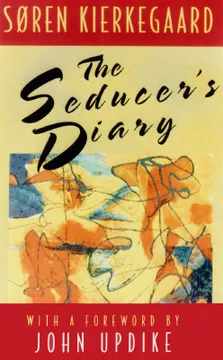


Plot Summary
Prologue
An unnamed compiler discovers Johannes’s diary in an unlocked desk, among papers that suggest he has turned his encounters into carefully designed performances. He recognizes Cordelia, whose letters he later inserts into the manuscript, and admits that the diary is not a plain record: Johannes reshapes events to savor them again.
The compiler is uneasy about having read the private papers, yet he preserves them. Before Johannes’s account begins, the reader is therefore given two witnesses: a man who treats seduction as art, and an editor who suspects that this art leaves real damage behind.
The frame makes reading itself ethically uneasy. Johannes turns private experience into a private spectacle, while the compiler turns that spectacle into a document for others. Neither voice is neutral: Johannes beautifies his choices, and the editor reconstructs a sequence from diary entries and undated letters. This layered testimony asks readers to notice the distance between a narrator’s mastery of language and his mastery of another person. Cordelia’s own writing offers a counter-record, though it, too, reaches us through a man who controls its placement.
The Green Cloak
On a Copenhagen promenade, Johannes catches sight of a young woman in a green cloak, but her image slips from his memory almost as soon as she passes. The failure sharpens rather than ends his interest. He searches the streets, studies chance encounters, and reacts to every green cloak as if it might restore the missing face.
When he sees her again walking alone near the lakes, he follows at a distance, trying to learn where she lives. A visit to a house along her route gives him another glimpse, but a spilled cup of tea keeps him inside while she disappears. His pursuit begins not with an exchange between them, but with his hunger to turn an incomplete impression into a story.
Johannes’s first attachment is to an image he cannot fully remember. That gap gives him room to substitute invention for knowledge: the less he knows about the woman, the more freely he can make her signify. His pursuit is already less a search for a person than a search for the conditions that will let him keep imagining her. The green cloak becomes a practical clue and a screen for projection. Chance appears to govern the encounters, but Johannes treats chance as material to be watched, interpreted, and eventually directed.
Cordelia's Narrow World
Johannes learns the woman’s name when her companions call her Cordelia. He discovers that she is the daughter of a deceased naval officer and lives with her aunt, in a household that keeps largely to itself. Cordelia visits the Jansen family, where Johannes arranges an introduction, but she answers his casual remarks with only polite reserve.
Her isolation frustrates his attempts to approach her directly, so he studies her routines and the people around her. He sees her as proud, imaginative, and sheltered from ordinary social life, qualities he interprets as both obstacles and opportunities. Rather than risk an open courtship, he waits for a route into the family that will make his presence seem natural.
The household’s seclusion gives Cordelia a life beyond Johannes’s immediate control, yet he reads it as a puzzle he is entitled to solve. His descriptions reveal how quickly observation becomes appropriation: her reserve is not simply a boundary but, in his account, a quality he can use. The family setting also exposes the asymmetry between them. Cordelia meets a new acquaintance; Johannes arrives with a theory of her character and a plan for access. His self-image as a perceptive student conceals the fact that she has not consented to become his study.
Edward Becomes a Tool
At the home of the Baxter family, Johannes finds Edward, the wholesaler’s son, already infatuated with Cordelia. Edward is too shy to act confidently, so Johannes befriends him, draws out his feelings, and encourages him to visit Cordelia. The arrangement gives Johannes a respectable reason to enter her aunt’s home.
While Edward attempts to win Cordelia’s attention, Johannes keeps the aunt occupied with earnest talk about farming and household matters. Cordelia notices his irony and the way he treats her like a child, but she cannot tell what he wants. Johannes listens to her responses and uses Edward’s courtship as a contrast, steering the room’s relationships while appearing to serve his friend.
Edward’s sincerity becomes useful precisely because it is uncalculated. Johannes can present himself as a helper while using Edward’s longing to create the circumstances he wants. In the drawing room, ordinary conversation becomes camouflage: the aunt hears practical talk, Edward hopes for intimacy, and Cordelia senses a disturbance without knowing its source. Johannes’s control depends on divided attention. He manages each person through a different version of himself, making manipulation look like friendship, reliability, or harmless eccentricity.
A Proposal in Disguise
Johannes spreads a rumor that he has fallen in love, letting it reach Cordelia through Edward. Her curiosity gives him an opening, and he decides to propose in deliberately conventional terms. He visits Cordelia while her aunt is away and asks for her hand, expecting surprise to do the work. Cordelia does not give an immediate answer; she refers him to her aunt.
The aunt approves, and Cordelia accepts her guidance. The engagement is established before Cordelia can make sense of what it means to her. Edward, who has helped Johannes gain access, is left angry and humiliated. Johannes treats the public bond not as a promise of marriage but as a device that can make private feeling more complicated.
The proposal’s force comes from its mismatch with Johannes’s usual performance. He uses a plain social ritual to create an event Cordelia cannot easily interpret, then relies on her aunt’s approval to convert uncertainty into commitment. The scene exposes the difference between formal consent and informed desire: Cordelia agrees within a family structure, while Johannes has already assigned the engagement a purpose she does not know. Edward’s anger is the immediate cost of Johannes’s strategy, but the deeper cost is that Cordelia’s first major choice has been arranged around someone else’s design.
Letters Shape Desire
Once engaged, Johannes begins cultivating a private emotional world that contradicts the public arrangement. His letters present him as transformed by love, then recast the engagement as useful secrecy rather than a promise of domestic life.
In person, he varies warmth with irony and distance, while directing Cordelia toward stories, music, and imagined scenes that intensify her feelings. At gatherings of engaged couples, he lets the conventional rituals make their own dull impression.
Cordelia grows more responsive to him, and her letters and gestures show that she is beginning to understand desire through the language he has supplied. Johannes considers this education a success: he wants her to feel that her new passion has arisen freely from within herself.
The letters let Johannes occupy Cordelia’s imagination without the limits imposed by his physical presence. Their romantic intensity is not simply an expression of feeling; it is a technique for producing feeling in someone else. The engagement supplies a public structure that he can privately undermine, so that security becomes tension and convention becomes a source of erotic charge. His claim to be helping Cordelia discover herself is especially revealing: he values her freedom only insofar as it produces the response he has planned. The language of liberation thus masks a method of control.
Cordelia Breaks the Bond
As Cordelia becomes more deeply involved, Johannes changes the rhythm of the courtship. He withholds the reassurance his letters have taught her to expect, grows cool in person, and allows her to feel that the engagement is an obstacle rather than a shelter. Cordelia begins to resist its public conventions and to resent the distance between the bond and the feelings she has developed.
Johannes has intended this reversal: he wants her to act from passion and believe the decisive movement is her own. On September 16, the engagement is broken, with Cordelia as the one who dissolves it. Johannes celebrates her new independence, while ensuring that the emotional terms of that independence still lead back toward him.
The reversal converts Johannes’s earlier pursuit into a test of Cordelia’s agency. He withdraws so that she must pursue, then interprets her response as proof that she is freely choosing him. This is a closed system: he designs the pressures, defines what each reaction means, and claims the resulting choice as authentic. Cordelia’s decision is real, but the circumstances that produce it have been deliberately shaped. The scene therefore resists a simple opposition between freedom and coercion. It asks how much freedom remains when another person has secretly arranged the choices through which it must express itself.
A Country House Prepared
After the engagement ends, Cordelia receives permission from her aunt to spend time with a family in the country. Johannes arranges for his servant Johan to accompany her and prepares a secluded house for her arrival. He furnishes the rooms with objects tied to her earlier experiences: a familiar lamp and mat, a piano displaying the Swedish melody she once played, and a book marked with myrtle.
The setting is designed to make her feel that memories and coincidences are gathering around her, though Johannes has placed each clue. He keeps himself absent from her first encounter with the house, believing that solitude will let her imagination work more powerfully. The retreat becomes the final stage of his carefully managed approach.
The country house makes architecture an instrument of persuasion. Johannes does not merely send Cordelia a message; he arranges a room so that familiar objects appear to speak for themselves. Because he stays out of sight, the design can masquerade as coincidence or as Cordelia’s own intuition. His attention to memory is psychologically astute, but it is also exploitative: he knows that recollection binds a feeling to a place, then manufactures the place that will bind her to him. The result is an environment in which private meaning has been prewritten by someone else.
Morning After the Tryst
On the night of September 24, Johannes travels by carriage to meet Cordelia at the country retreat. The diary presents the encounter as the culmination of the passion he has spent months directing. By the following day, his attitude has changed completely. He decides that Cordelia’s surrender has ended his interest, refuses to say goodbye, and resolves not to see her again.
He returns her later letters unopened. The diary closes not with a reckoning but with Johannes considering whether he could make a woman believe that she herself had tired of him. Cordelia’s letters, preserved by the compiler, record the confusion and pain his account refuses to examine. His final victory is therefore only his own version of events.
The climax exposes the violence hidden inside Johannes’s aesthetic vocabulary. He has treated resistance as the condition of desire, so intimacy does not fulfill the relationship for him; it removes the obstacle that made it interesting. His abrupt departure reveals that Cordelia’s development was never an end in itself. The returned letters make the ethical imbalance visible: he can close the story by stopping his attention, while she remains inside the meanings he helped create. The diary’s unfinished final speculation also denies genuine closure. Johannes converts the consequences of his conduct into another possible experiment.
Analysis
The story’s central conflict is not simply between a seducer and his victim. It is between two accounts of agency. Johannes insists that Cordelia must act freely, but he engineers the encounters, letters, silences, and social pressures through which she acts. He wants her desire to feel self-originating because that, for him, is the most refined form of possession. This paradox gives the diary its psychological force: control works best when it can be mistaken for spontaneity.
The diary form makes that paradox visible. Johannes’s careful descriptions turn people into images and feelings into evidence of his skill. Cordelia’s letters interrupt this aesthetic distance with consequences he cannot fully absorb: uncertainty, anger, hope, and continued attachment. The compiler’s presence sharpens the problem rather than resolving it, since he too selects and arranges the record. Readers must therefore distinguish between what happened and the stories each observer builds around it.
The work also tests the idea that emotional education is inherently liberating. Johannes describes Cordelia’s awakening as a gift, yet he treats her development as a project whose success he alone can measure. His language of freedom conceals a refusal to accept a relationship whose future another person might shape. When intimacy ends his interest, the contrast between his elaborate preparation and his abrupt withdrawal exposes the cost of making another person’s feelings into an aesthetic experiment. The lasting question is not whether Cordelia’s emotions are genuine, but whether a choice can remain wholly one’s own when someone else has secretly designed its emotional landscape.
Review Summary
Reviews of The Seducer's Diary are deeply divided. Many readers find the protagonist Johannes morally reprehensible—a calculating, manipulative misogynist who emotionally exploits the innocent Cordelia purely for sport. Others appreciate its philosophical depth, connecting it to Kierkegaard's broader aesthetic-versus-ethical framework and his real-life broken engagement with Regine Olsen. Some praise its psychological insight into desire, seduction, and narcissism, while others find it tedious and self-indulgent. John Updike's description—"a wound masked as a boast"—resonates throughout many reviews as an apt characterization.
People Also Read








Characters
Johannes
Aesthete of pursuitJohannes is an intelligent, socially capable observer who treats encounters as material for an art of timing, mood, and recollection. He enjoys not only attraction but the act of analyzing attraction, and he often values the imagined shape of an experience more than the other person’s independent understanding of it. His wit and composure let him move between intimacy and detachment without appearing inconsistent to himself. He describes his methods as a way to awaken another person’s possibilities, yet his need to direct every circumstance reveals a fear of unplanned mutuality. Johannes is most revealing when he calls manipulation freedom: he wants another person’s choice, but only after he has arranged the conditions that will produce it.
Cordelia Wahl
The guarded idealistCordelia is a young woman raised in a strict, sheltered household, with a vivid imagination and a proud independence that does not yet have a clear language for romantic feeling. Her reserve is not emptiness; she observes, responds to music and stories, and possesses a strong appetite for what exceeds ordinary social life. She is also capable of questioning the arrangements around her, especially when they begin to feel false or constraining. Johannes sees her as a rare character to be developed, but her inwardness cannot be reduced to his theories about femininity. Her importance lies in the tension between the person she is and the ideal he tries to make of her.
Edward Baxter
The earnest rivalEdward is the shy son of a wholesaler and a sincere admirer of Cordelia. He lacks Johannes’s social ease, but his awkwardness comes from genuine feeling rather than calculated performance. He trusts Johannes as a friend and adviser, unaware that his courtship is being used to create access and emotional contrast. Edward’s presence gives the story a plain, vulnerable form of affection against which Johannes can display his own sophistication.
Cordelia's aunt
Guardian of the householdCordelia’s aunt provides the household’s practical and moral structure. Respectable and protective, she trusts Johannes’s calm manners and steady attention to domestic subjects. Her approval carries weight for Cordelia, even though the aunt does not understand the private strategy unfolding around them. She represents the ordinary social judgment that Johannes learns to enlist rather than openly oppose.
The compiler
Uneasy keeper of evidenceThe unnamed compiler discovers Johannes’s papers and reconstructs the diary with Cordelia’s letters. He is troubled by the way he obtained them, yet he believes the documents expose the difference between Johannes’s polished account and the experience of those around him. His role makes him both witness and interpreter, reminding readers that even this corrective account is arranged by another observer.
Johan
The discreet attendantJohan is Johannes’s trusted servant, valued for carrying out instructions quietly and managing practical details. His work allows Johannes to extend his plans beyond direct encounters and to shape settings without being visibly present.
Cordelia's father
Absent naval patriarchCordelia’s deceased father was a strict naval officer. His discipline and the household history associated with him help explain her guarded upbringing and her distance from ordinary social pleasures.
Plot Devices
The nested diary
Frames a contested accountAn unnamed compiler presents Johannes’s diary as discovered papers, then inserts letters he received from Cordelia. The diary is not a neutral chronology: Johannes records events as scenes for later enjoyment, and the compiler must infer their order from recurring references and the letters. This structure gives Johannes room to aestheticize his behavior while allowing Cordelia’s writing to complicate his version. It also makes the reader assess two acts of narration, the seducer’s self-fashioning and the compiler’s uneasy reconstruction.
The engagement
Turns convention into leverageJohannes uses a socially approved engagement not as a step toward marriage but as a means of creating secrecy, expectation, and dissatisfaction. Its public legitimacy makes his private conduct harder for Cordelia to interpret, while the rituals of engaged life provide a contrast that he can use to make the bond feel restrictive. The arrangement also gives Cordelia a consequential decision to make, though Johannes has shaped the emotional pressures around it.
Letters and notes
Make absence persuasiveJohannes’s letters let him appear intensely devoted while remaining physically distant. He uses them to suggest a shared secret, guide Cordelia’s interpretation of her feelings, and heighten the effect of his silences. Short notes and carefully timed messages also make ordinary moments feel charged. Cordelia’s own letters, preserved by the compiler, provide a counterpoint to Johannes’s claims and show how differently the same relationship can be experienced.
Staged surroundings
Make memory feel fatedJohannes repeatedly treats place and circumstance as tools for shaping feeling. In the final country retreat, familiar objects, a melody, and a marked book are arranged to evoke Cordelia’s memories and suggest meaningful coincidence. Because Johannes stays hidden from the first impression, his planning can seem to her like an atmosphere she has discovered for herself. The setting turns his aesthetic theory into material practice.
Download PDF
Download EPUB
.epub digital book format is ideal for reading ebooks on phones, tablets, and e-readers.








