


Plot Summary
Michael's Sicilian Errand
In 1950, Michael Corleone reaches Palermo expecting to return to America after two years of exile. Instead, his father has ordered him to help Salvatore Guiliano, the island's most famous outlaw, escape to America. At lunch, Don Croce Malo, the Mafia's powerful Sicilian broker, says Guiliano no longer trusts him and reveals why Rome fears the outlaw: a secret record called the Testament could expose officials who once aided him.
Michael learns that the police chief, Inspector Velardi, is also supposedly cooperating, but the arrangement feels dangerous and false. Don Croce sends Michael to Montelepre to persuade Guiliano's parents to help. Michael agrees, though each new ally seems to conceal another allegiance.
The novel opens with Michael caught between two kinds of family duty. His father's command makes the mission binding, while his desire to return home gives him reason to distrust its delay. Don Croce's hospitality is itself political theater: food, courtesy, guards, and a shared table all make coercion look like kinship. The Testament immediately complicates the rescue, because Guiliano is not merely a fugitive but a threat to the state. Michael's caution establishes the book's central problem of knowledge: in Sicily, every promise may be sincere, strategic, or both.
Cheese at Four Crossroads
Seven years earlier, twenty-year-old Turi Guiliano lives in Montelepre, hoping to study and improve his family's fortunes. After an older Mafia-connected man humiliates him at a billiard table, Turi broods over his fear and carries a pistol on a black-market trip with his cousin Gaspare Pisciotta.
Returning through the mountains with cheese for Turi's family, they are stopped by carabinieri who demand their goods and papers. A smuggler arrives and bribes the sergeant, distracting the guards. Turi and Aspanu run; the sergeant shoots Turi through the belly. Turi fires back and kills him, then collapses. Aspanu finds him alive and drags him toward shelter, while the dead policeman makes retreat impossible.
Turi's transformation begins not with a grand political choice but with an ordinary need: food for a family that has little. The shooting makes state power intimate and arbitrary. He is wounded for an offense nearly everyone commits, while the sergeant's willingness to take a bribe exposes the law as another market. Turi's fear at the billiard table matters too. His later ideal of invulnerability grows from humiliation as much as from justice; he wants to prevent anyone from making him powerless again. The wound gives that wish a mythic explanation, but its source is painfully material.
The Monastery's Miracle
Aspanu carries the bleeding Turi to Abbot Manfredi's monastery, where the Abbot hides him and summons a doctor rather than deliver him to the police. The doctor expects the wound to kill him, but Turi survives weeks of care and rest. During recovery, he watches the monks work and learns that their holy institution also traffics in black-market goods and counterfeit relics.
He rejects an offer of protection from Don Croce, choosing instead to return to his family and make his own way. Aspanu kills the smuggler who had offered to help the police, taking his weapons as a warning to informers. When Turi leaves the monastery, he arms himself and enters the mountains with Aspanu, convinced he has been granted a second life.
The monastery gives Turi a threshold between the boy who was shot and the outlaw he chooses to become. Its charity saves his body, but its counterfeit relics teach him that institutions can sell belief while claiming to protect it. Turi's survival becomes more than relief: he interprets it as permission to escape the limits of ordinary morality. Aspanu's killing of the smuggler makes that change practical and shared. Their friendship is no longer only childhood intimacy; it is a pact sealed by violence, with Turi's purpose and Aspanu's appetite for action beginning to diverge.
The Barracks Break
After a police raid drives Turi and Aspanu from the Guiliano home, Turi attacks the carabinieri convoy in Montelepre, destroying a vehicle and helping the prisoners escape. He then studies the force sent to capture him and slips back into town disguised among a cartload of wine. Aspanu distracts the guards at the barracks gate while Turi enters with the cart.
They take the soldiers by surprise, unlock the cells, and release their neighbors along with bandits Terranova and Passatempo. When a wounded corporal lunges at Turi with a pistol, the gun misfires; Turi stops his men from killing him and locks the guards up safely. The exploit makes Turi a public hero and gives his small band weapons, recruits, and renown.
Turi's authority is established through a double performance: tactical deception against armed police and restraint toward a defeated enemy. The misfiring pistol feeds his belief that death cannot reach him, but his mercy toward the corporal is equally important. It distinguishes his emerging rule from simple revenge and gives the newspapers a story people want to believe. Yet the rescue also enlarges the problem it seems to solve. By freeing prisoners who remain hunted, Turi gathers followers while making a peaceful return to village life less possible. Heroism becomes an organization.
The Emerald and the Poor
Turi recruits Terranova and Passatempo into a band that will target the rich and share its proceeds with the poor. He halts government food trucks and distributes their cargo through local carters, winning support across the countryside. Then his men rob the Duchess of Alcamo, whose estate is guarded by the very Mafia that claims to protect her.
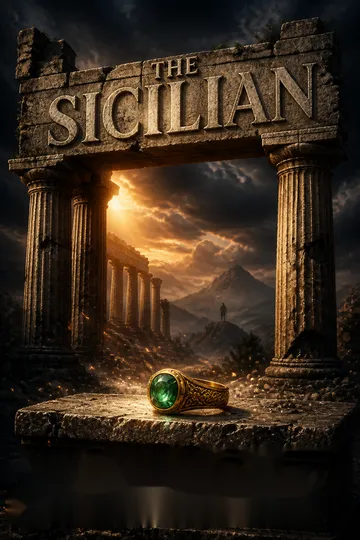
Turi takes her jewels, including an emerald ring, but negotiates their return through Don Croce so the goods can be converted into money quickly. He gives much of the ransom to widows, farmers, sick children, and newlyweds, keeping the ring as a personal emblem. The people begin calling him their king, while Don Croce sees a potential weapon and future ally.
Turi's Robin Hood reputation is built from logistics as much as generosity. He redirects food through familiar local networks, then turns stolen luxury into visible relief. The emerald complicates his self-image: he refuses personal profit from the ransom but keeps a trophy that makes power tangible. His charity wins affection, not political freedom, and the distinction will matter later. Don Croce recognizes the same danger and promise in Turi's popularity. Each man is building authority, but one expects loyalty to be negotiated through a hierarchy, while the other imagines it can be earned by serving the people.
A Prince in the Mountains
To demonstrate that wealth and rank cannot place anyone beyond his reach, Turi's men take Prince Ollorto from his guarded estate. Turi treats the Prince as an honored guest, arranges his insulin, feeds him well, and negotiates a ransom through Abbot Manfredi and Don Croce.
Their conversations expose the gulf between the Prince's cultivated privilege and the peasants who work his land. The Prince urges Turi to ally with Don Croce, arguing that together they could shape Sicily and resist the left.
Turi bristles at the advice but releases him after a large payment, even having his damaged English suit repaired. The kidnapping humiliates Don Croce, whose protection business has failed, and convinces Mafia chiefs that Turi's power must be checked.
The hostage episode lets Turi encounter privilege as a person rather than an abstraction. He can appreciate the Prince's manners and still reject the social order that made his wealth possible. Their courteous exchange also mirrors Turi's own political contradiction: he wants justice for peasants but exercises power over them through armed force. The repaired suit is a small but revealing gesture, expressing respect without reconciliation. For Don Croce, the kidnapping is more than lost revenue. It publicly demonstrates that his protection can be overridden, turning Turi's idealism into a direct challenge to the Mafia's claim to govern.
Rome's Dangerous Promise
Mafia chiefs demand that Don Croce crush Turi, but the Don asks for time to recruit him instead. Meanwhile, Stefan Andolini, known as Fra Diavalo, arrives seeking a place in Turi's band. Turi recognizes him as a likely spy, but Abbot Manfredi reveals Andolini is his son and persuades Turi to spare him; Andolini becomes a guarded link between the band and Don Croce.
After left-wing parties gain ground in Sicily, Don Croce brings Turi a proposal from Minister Trezza: help defeat the Communists and Socialists, and the government may pardon him. Turi accepts conditionally, insisting on proof. He sends Aspanu to meet Trezza and the Cardinal, while Hector Adonis urges him to document every bargain in a Testament.
This alliance is a study in compromised agency. Turi accepts a political task not because he trusts Rome, but because he sees the left as a threat to his religious and familial loyalties and hopes for legal return. The red-bordered pass given to Aspanu looks like a favor but can also become leverage or evidence of a secret relationship. Andolini's place in the band embodies the same unstable arrangement: useful precisely because he belongs to both sides. Adonis's proposal of a Testament recognizes that memory must be made portable if power can rewrite events.
Portella's Fatal Gunfire
On May Day 1948, Turi's men position machine guns above the Portella della Ginestra, intending to scatter a left-wing rally without casualties. Instead, the guns rake the crowd, killing fifteen people and wounding many more, including women and children.
Turi, absent while tending to Aspanu's illness, interrogates his commanders and cannot determine whether the deaths came from error or treachery. The massacre destroys his claim to have protected the poor.
Socialist organizer Silvio Ferra continues his work and is later seized and murdered by Guido Quintana's men, while villagers stay silent. The Christian Democrats win Sicily's election, but the government refuses Turi a pardon, citing the scandal. Turi understands that Don Croce has used the massacre to discredit him.
The massacre is the moral hinge of Turi's story because intention cannot shield him from consequences. He ordered intimidation, not slaughter, yet the authority to aim machine guns was his, and the dead cannot be restored by a verdict about who lowered the barrels. His shame is sharpened by the political use of the event: Don Croce benefits from a crime Turi cannot conclusively attribute. Silvio's murder then shows how terror works beyond the immediate violence. The villagers' silence is not consent; it is survival under a system where speech can endanger an entire family.
Six Dons at the Wall
After the election, thousands of peasants gather to claim uncultivated land from Prince Ollorto's estate under Italian law. Six Mafia chiefs ride along the boundary, intimidating them without making an explicit threat. Turi arrives with masked gunmen and orders the chiefs to dismount. When they refuse to leave, Aspanu shoots the horse beneath Don Siano; the others are taken captive.
Turi orders their execution in front of the crowd, then shoots each man himself. The peasants surge through the gates and begin claiming land, but Turi has made permanent enemies of the Mafia and of Don Croce. His attack achieves a concrete victory for the poor while crossing a line that leaves no prospect of reconciliation.
At the estate wall, law exists on paper while armed men decide who may use it. Turi's intervention makes the law briefly real, but only by replacing the Mafia's coercion with his own. The crowd's movement through the gate suggests liberation, yet it comes immediately after a public execution that makes Turi's authority inseparable from terror. His choice reveals the weakness of his political imagination: he can force a blocked door open, but he cannot build institutions that will keep it open after he leaves. Don Croce's response is now a matter of survival, not persuasion.
A Wedding Under Guard
Turi's long-standing affection for Justina Ferra, Silvio's younger sister, becomes urgent as Colonel Luca's forces tighten their hold on Sicily. He asks her father, Caesero, for permission to marry her, promising to provide for her if he dies.
The Abbot performs a secret ceremony in a ruined Norman castle, where Turi and Justina spend three days together. Their tenderness gives Turi a glimpse of life beyond the band, but danger interrupts the honeymoon: gunfire signals a clash with Luca's patrols.
Afterward Turi confronts Passatempo, whose machine gunners deliberately fired into the May Day crowd after accepting Don Croce's payment. Passatempo tries to attack him and Turi kills him. Andolini, who concealed the bargain, is spared under his father's protection.
Marriage gives Turi a future he has spent years treating as an abstraction. His careful arrangements for Justina reveal genuine responsibility, but secrecy also makes intimacy another security operation. The honeymoon's beauty cannot suspend the war; gunfire reaches the castle and pulls the couple back into its logic. Passatempo's confession supplies the answer Turi could not find after Portella, yet certainty does not absolve him of the massacre he ordered. Killing Passatempo restores a measure of truth while deepening the moral cost of command. Turi can punish the traitor, but he cannot undo the choice that gave the traitor a weapon.
The Black Madonna's Secret
In 1950, Michael waits at a fortified villa near Trapani with Peter Clemenza, while Don Domenic Clemenza controls the local territory. Stefan Andolini brings Justina, now pregnant, and Professor Adonis. She is secretly married to Turi, though few know it.
Michael and Peter arrange her passage to America by boat and plane; her message will confirm the route is safe. After she leaves, Adonis reveals that Maria Lombardo has given Michael a replica of her treasured black Madonna.
Inside its hollow body lies Turi's Testament, supported by official letters and records. Michael and Peter open the statue and read the evidence. Peter takes the Testament toward Tunis for delivery to Vito Corleone, while Adonis waits anxiously for Andolini, who has missed their meeting.
The Madonna joins private devotion to political evidence. Maria entrusts the Testament to Michael through an object that signifies family faith, while its hidden papers expose the state's less sacred bargains. Justina's departure is a practical act of love, but it also separates her from Turi at the moment he is closest to escape. Michael is increasingly implicated: by safeguarding the papers, he carries both the possibility of protection and the leverage they represent. Andolini's unexplained absence punctures the apparent security of the plan. Even a carefully built route depends on people whose loyalties cannot be inspected.
The Last Road West
Colonel Luca's Special Force arrests Turi's parents, imprisons hundreds of suspected supporters, and discovers the escape tunnels beneath Montelepre. The pressure strips away the band piece by piece. Terranova is killed in Palermo after visiting the woman and children he has secretly supported.
Turi tells the loyal Corporal Canio Silvestro to leave for England rather than die for him. Stefan Andolini, on his way to collect Adonis, is arrested by Inspector Velardi and shot when he tries to seize the Inspector's pistol.
Turi attempts to kill Don Croce in a raid on the Hotel Umberto, but the Don has been warned and escaped. With his forces scattered and his parents released, Turi heads south to meet Aspanu and Michael, carrying the hope of America and the unanswered question of betrayal.
The collapse of Turi's band is shown through losses that are not interchangeable. Terranova falls because he seeks one last human attachment; Silvestro is sent away because Turi wants at least one follower to have a life outside outlawry; Andolini dies inside the double world he has served. Turi's failed assault on Don Croce confirms that revenge cannot restore his former power. His departure is therefore not a triumphal escape but a narrowing of possibility. America remains a destination, yet the route depends on Aspanu, the childhood friend whose loyalty has been tested by years of divergence.
Selinus Betrayal
Aspanu has secretly agreed to help Don Croce and Inspector Velardi trap Turi, believing the outlaw's vendetta will destroy them both. Turi reaches the ancient ruins of Selinus before the planned meeting and finds Castelvetrano crowded with police. He changes course and waits at the fallback site, still expecting Aspanu.
When his friend arrives, Turi steps from hiding and welcomes him as in their childhood games. Aspanu raises his gun instead. Terrified that Turi will question him or remind him of their brotherhood, he fires and shatters Turi's hand and body. Turi pursues him briefly before collapsing. As he dies, he imagines running through the mountains with Aspanu, unaware that the man beside him has betrayed him.
The betrayal succeeds because Aspanu's fear is emotional before it is tactical. He has spent years resenting Turi's idealism and fearing the consequences of staying loyal, but the decisive terror is the possibility of being recognized as a brother even after choosing betrayal. Turi's childhood game at Selinus briefly restores their old intimacy, making the gunshot more than an ambush. His final imagined run exposes the distance between his belief and the facts: he dies still inhabiting the friendship that Aspanu has already abandoned. The myth survives by refusing the knowledge that would break it.
The Testament Stays Hidden
Police announce that Captain Perenze killed Turi in a firefight, concealing Aspanu's role. Michael and Peter Clemenza are arrested in Castelvetrano, then released when Don Croce intervenes with Minister Trezza. Michael returns to America and confronts his father, Vito Corleone, about the Testament.
Vito admits he promised Don Croce that the papers would not be published, in exchange for protection that would get Michael safely out of Sicily. He insists the escape itself was genuine and that Turi's decision to linger for revenge gave his enemies time.
Michael sees that his own reassurance to Aspanu, that the Testament was safe in America, may have helped make the betrayal possible. Vito keeps the documents to protect Turi's family and preserve leverage, leaving Michael alive but ashamed.
Michael's homecoming completes the mission in practical terms while undoing its moral simplicity. Vito's bargain is not a plot to kill Turi, but it makes survival depend on suppressing evidence and managing the people who hold power. Michael must confront his own participation: he reassured Aspanu about the Testament without understanding how that fact could alter the balance of trust. Vito's reasoning is coherent, protective, and compromised. The conflict between father and son is not between honor and evil, but between competing definitions of responsibility: expose wrongdoing and risk reprisals, or preserve living people by withholding the truth.
Sicily's Unfinished Legend
After Turi's death, Don Croce expands his control over land, water, markets, and building, while half a million Sicilians leave the island in search of work. Imprisoned for his crimes, Aspanu demands a pardon and threatens to expose the political dealings behind Portella.
Don Croce arranges for poisoned medicine to reach him through the prison pharmacy. Hector Adonis slips a final note onto Aspanu's body, making the death appear to be vengeance for betraying Turi. Later, Adonis meets Don Croce at Turi's grave.
The Don mourns the impossible son he never had, while Adonis imagines Turi and Aspanu living on in painted carts and village stories. The people remain under the Mafia's rule, but their dead outlaw becomes the legend they can still claim.
The ending refuses political repair. Don Croce's victory is measurable in monopolies, migration, and the exhaustion of peasants' hopes; Turi's victory exists only in memory and cultural circulation. Adonis helps disguise Aspanu's murder as the justice he once failed to deliver, revealing that even remembrance is being arranged by survivors. Yet the legends painted on carts escape Don Croce's accounting. The book does not present myth as a substitute for material change. Rather, it shows how a community denied power preserves a usable image of resistance, even when that image cannot feed or free it.
Analysis
The Sicilian world of the novel is governed by competing claims to legitimacy. Rome possesses laws and uniforms, the Mafia offers local judgment and protection, and Turi claims authority through generosity and personal courage. None is innocent. The state uses emergency powers against civilians, the Mafia protects its monopolies through violence, and Turi's campaign for the poor depends on armed coercion. His tragedy is not simply that a good man becomes violent. It is that his ethical aims are repeatedly made effective through the very means that corrupt them.
Turi's legend arises from concrete acts: food reaches villages, prisoners leave the barracks, and peasants cross an estate boundary after the Mafia chiefs are killed. Those actions matter, yet popularity cannot become durable reform. The people who love Turi hide him and pray for him, but they do not rise as a political body capable of replacing him. His faith in heroic leadership therefore reproduces dependence even as it challenges exploitation. The massacre at Portella exposes the limit most sharply: benevolent intention does not control the consequences of force, and the political actors around him can turn his own authority against him.
The parallel between Michael and Turi makes the ending more than a contrast between a living survivor and a dead idealist. Michael's mission begins as an effort to bring Turi to safety, but the Testament and Vito's bargain reveal that protection is also a form of control. Vito does not arrange Turi's death, yet he accepts silence as the price of keeping his son alive and his allies secure. The novel offers no clean moral refuge. It asks whether preserving vulnerable people can justify withholding truth, while showing how each successful compromise strengthens the system that made the compromise necessary. Turi survives as legend because the facts are buried; Sicily remains materially unchanged.
Review Summary
The Sicilian receives mostly positive reviews, with readers praising Puzo's masterful storytelling and vivid depiction of Sicilian culture. Many appreciate the character development and suspenseful plot, though some find it less engaging than The Godfather. The novel explores themes of loyalty, honor, and power through the story of Salvatore Giuliano, a Robin Hood-like figure in post-World War II Sicily. While some criticize the pacing and romanticism, most readers enjoy the immersive experience and Puzo's ability to bring Sicily to life.
Characters
Turi Guiliano
The outlaw idealistA handsome, bookish young Sicilian, Turi begins as a poor villager who hopes education can improve his family's life. A police shooting turns him into an outlaw, and his generosity toward the poor earns him a following larger than his band. He believes courage and personal fairness can repair a society governed by corruption, but he also becomes increasingly willing to kill in defense of that belief. His attachment to his mother, his tenderness toward Justina, and his loyalty to Aspanu remain powerful even as command isolates him. Turi's defining tension is that he wants to be a liberator while exercising the coercive power of a ruler.
Michael Corleone
The reluctant heirVito Corleone's youngest son, Michael arrives in Sicily after years of exile, eager to return to his family and newly emerging responsibilities in America. His wartime discipline and experience of violence make him observant, guarded, and difficult to charm with appearances. The mission to rescue Turi forces him to navigate loyalties he does not fully understand, while his concern for Turi's parents and pregnant wife gives the assignment a human weight beyond his father's orders. Michael is drawn to Turi's courage but is not naturally suited to the outlaw's faith in destiny. He measures danger carefully, yet must learn that caution can still make him part of another person's betrayal.
Gaspare Pisciotta
The wary second-in-commandTuri's cousin and lifelong companion, Aspanu is a slight, stylish man with a sharp wit, a calculating mind, and worsening tuberculosis. He loves Turi and serves as his most trusted lieutenant, but he distrusts political promises and doubts that Sicily's poor will ever risk a true revolt. Where Turi gives away wealth and imagines a transformed island, Aspanu values survival, pleasure, and a future that might belong to him alone. His cynicism is often perceptive, though it cannot protect him from the emotional force of their bond. Aspanu's deepest conflict is between the brotherhood that shaped him and the fear that loyalty will leave him with no life beyond the mountains.
Don Croce Malo
Sicily's shadow rulerThe immense, courteous head of the Sicilian Mafia, Don Croce rules through negotiation, patronage, political access, and carefully placed violence. He presents himself as a peasant host rather than a grand criminal, and his attention to food and courtesy is part of how he makes people feel recognized before binding them to his interests. He admires Turi's courage and wants to recruit him, but cannot accept a power that does not acknowledge his own. Don Croce thinks in generations and institutions; Turi thinks in obligations to the poor and his family. His affection can be genuine without ever becoming a reason to surrender control.
Hector Adonis
The scholar between powersA brilliant, very short professor of history and literature, Hector is Turi's godfather, teacher, and most important intellectual guide. His knowledge of Sicily's past gives Turi the heroic stories through which he understands himself, while his practical experience makes him aware of how dangerous those stories can be. Hector serves as an intermediary among Turi, Don Croce, and Michael, carrying information that could save or expose his godson. He is loyal, but he is also capable of compromise and concealment when survival demands it. His lifelong role is to interpret events, yet his greatest difficulty is recognizing when explanation has become complicity.
Justina Ferra
Turi's hidden futureThe daughter of Caesero Ferra and younger sister of Silvio, Justina falls in love with Turi when she is a child and grows into a determined young woman. Her beauty draws attention, but her courage and directness matter more: she accepts the risks of loving a fugitive and faces a dangerous journey to America while pregnant. Turi tries to protect her by keeping their marriage secret and limiting what she knows of his plans. Justina wants a shared life, not merely a place in his legend, and her presence makes his imagined future more concrete than any political promise.
Maria Lombardo Guiliano
The unyielding motherTuri's mother is fierce, religious, and shaped by the poverty she hoped to escape by returning from America to Sicily. She loves her son without confusing that love with innocence; she recognizes the danger around him and distrusts Don Croce's benevolence. Her grief and pride make her a strong influence on Turi, while her quiet intelligence helps protect the Testament. Maria measures every political plan against the safety of her family, but she also understands the dignity Turi finds in standing against injustice.
La Venera
The refuge behind the tunnelA widow whose bandit husband and young daughter died, La Venera becomes a trusted friend of Maria Lombardo and offers Turi shelter through a secret tunnel. Her account of her husband's hunted life warns Turi about the cost of outlawry. She offers warmth and physical intimacy, but she also sees how Turi's increasing carelessness with death differs from the man she first knew. Her loyalty is shaped by grief, desire, and a hard-earned understanding of what violence does to those left waiting.
Stefan Andolini
The double-bound gunmanA red-haired Sicilian known as Fra Diavalo, Andolini is a feared fighter with close connections to both Turi and Don Croce. His work as a messenger makes him useful to the band and exposes him to competing demands. He is the Abbot's son, a fact that gives him a personal bond capable of changing Turi's judgment of him. Andolini survives by reading danger and accommodating powerful men, though this constant balancing leaves him vulnerable to suspicion from every side.
Abbot Manfredi
The practical holy manThe head of a wealthy Franciscan monastery, Manfredi hides Turi after the shooting and helps him recover. His institution mixes religious life with black-market trade, and the Abbot himself sees charity, profit, and influence as compatible necessities. He grows fond of Turi and acts as a mediator, but his affection does not erase his self-interest. His secret parenthood of Stefan Andolini ties the monastery to the violent political world beyond its walls.
Canio Silvestro
The honorable armorerA former carabinieri corporal, Silvestro once tried to shoot Turi during the barracks raid, only for his pistol to misfire. Later he joins Turi's band as its weapons expert. His military habits and sense of duty make him a valuable organizer, while his courage earns Turi's trust. Unlike many bandits, Silvestro retains an instinct for lawful service and a life beyond violence.
Terranova
The gentle bandit chiefOne of Turi's subordinate band leaders, Terranova began as a farmer driven into outlawry when officials threatened his family's livelihood. He is clever and capable of violence, but his mild temperament makes him a natural negotiator and a generous distributor of stolen goods. He develops a tender attachment to a widow and her children, revealing the ordinary human needs that survive inside the bandit life.
Passatempo
The brutal lieutenantA squat, frightening outlaw, Passatempo joins Turi's band after being freed from prison. He is useful in raids and intimidation because his violence is immediate and credible. Turi tries to keep his brutality under discipline, but Passatempo's appetite for power and lack of remorse make him a dangerous subordinate. He represents the kind of bandit rule Turi claims to oppose.
Caesero Ferra
The cautious fatherJustina's father is a farmer and covert source of information for Turi's band. Caesero values his family's safety and understands the cost of political resistance, having watched his son Silvio become an organizer. He respects Turi and trusts him with Justina's future, but speaks plainly about the danger of marrying a fugitive. His caution is not cowardice; it is a father's attempt to keep his daughter alive.
Silvio Ferra
The land reform organizerA decorated veteran and socialist organizer, Silvio translates political reform into the practical hope of land, fair wages, and dignity for Sicilian laborers. He respects Turi but pursues a different path toward justice. His commitment to family and Catholic custom complicates the claim that socialism must erase Sicilian identity. Silvio's organizing makes him a threat to landowners and Mafia power.
Colonel Ugo Luca
The methodical commanderThe military commander assigned to suppress banditry, Luca studies Turi as a strategic opponent rather than dismissing him as a village criminal. He builds a large, disciplined force and targets the networks that sustain the band, including Turi's family and public reputation. His patience and attention to intelligence make him more dangerous than the local police Turi has outmaneuvered.
Frederico Velardi
The cold police chiefA northern Italian officer who heads Sicily's Security Police, Velardi believes in government authority and despises the corruption and private loyalties he encounters on the island. His polished manners conceal contempt for Sicilians and an appetite for control. He becomes entangled in the secret arrangements surrounding Turi, where official duty and political manipulation repeatedly collide.
Franco Trezza
The calculating ministerItaly's Minister of Justice, Trezza is an anti-Fascist Sicilian who understands both the government and the island's political pressures. He wants to keep the Christian Democrats in power and treats Turi's influence as a tool for achieving that end. His promises reflect the gap between individual good intentions and the compromises of state power.
Prince Ollorto
The cultivated landownerSicily's wealthiest nobleman, the Prince owns vast estates and depends on Mafia protection. As Turi's hostage, he proves courteous and curious, capable of seeing the humanity of men outside his class while remaining insulated from their economic realities. He urges Turi toward alliance and political accommodation, believing the island's elite can help shape its future.
Peter Clemenza
The Corleone escortA trusted Corleone lieutenant, Peter escorts Michael through Sicily and organizes the practical details of Justina's passage and Turi's planned escape. His warmth toward Michael sits alongside a soldier's attention to routes, weapons, and security. He understands the Corleone family's priorities and is prepared to act quickly when a plan begins to fail.
Don Domenic Clemenza
The Trapani power brokerPeter's older brother, Don Domenic is a respected local figure in Trapani who refuses to serve Don Croce. His rural dignity and independent code make him a useful host for Michael, Justina, and Adonis. Though powerful in his own district, he presents himself as a farmer rather than a ruler.
Father Benjamino Malo
The priestly intermediaryDon Croce's brother is a priest who carries messages between the Mafia leader and other Sicilians. His religious office gives him access and respect, while his family loyalty places him firmly in his brother's orbit.
Guido Quintana
The Montelepre enforcerA Mafia-connected local official, Quintana resents Turi's popularity and the loss of authority in Montelepre. He relies on threats, informers, and hired violence to protect the interests of the Friends of the Friends. His personal history with Turi makes their conflict especially intimate.
The Cardinal of Palermo
The church's political voiceA powerful churchman who uses religious authority to influence Sicilian politics. He offers promises that may help Turi's cause, but his position is tied to the Christian Democrats and the Church's institutional interests.
Vito Corleone
The strategic fatherMichael's father and head of the Corleone family, Vito gives his son the assignment to help Turi reach America. He values loyalty to old friends but places the survival of his own family first. His reasoning is patient and pragmatic, shaped by a lifetime of negotiating with forces he cannot fully control.
Plot Devices
The Testament
Evidence turned into leverageHector Adonis helps Turi keep a record of his history and secret dealings with the Mafia and the Italian government. Official letters and documents support the account, making the Testament dangerous to politicians who once used Turi's band for their own purposes. Its concealment inside a replica of Maria's black Madonna protects it from casual discovery and gives Michael a role in the final escape plan. The document promises to expose the state's complicity, but it also becomes a bargaining instrument whose secrecy can protect the living or shield the powerful.
The Sicilian code
Silence as social enforcementOmerta is the refusal to give authorities information, whether about the Mafia or crimes within one's own community. The code helps Turi survive because villagers, laborers, and relatives hide him or withhold what they know. It also protects Mafia power and prevents witnesses from challenging murderers such as Quintana. Its force is social as well as violent: people know that speaking can endanger their families, while silence can preserve the community's fragile routines.
The black Madonna
Faith conceals political evidenceMaria gives Michael a replica of her treasured Madonna, apparently as a devotional keepsake. The hollow figure carries the Testament, turning a household symbol of faith into a hiding place for records that could threaten the Italian government. The Madonna links generations of women who protect Turi while placing Michael in possession of the evidence. Its ordinary appearance is essential: the secret survives because the object is too meaningful to seem like a container for political documents.
The gold buckle
A visible emblem of ruleArmorer Canio Silvestro makes matching buckles bearing an eagle, a lion, and a circle that suggests Sicily between them. Turi wears his as a sign of command, and Aspanu sometimes wears the matching one. The object turns an outlaw band into a recognizable political image, carrying the men's self-conception into public legend. It is practical dress as well as heraldry: a small, portable claim to a sovereignty Turi hopes to create.
The escape tunnels
Family shelter beneath the streetTuri's family and trusted allies secretly dig routes connecting the Guiliano home to the mountains and to La Venera's house. The tunnels allow Turi to visit his parents without crossing streets watched by carabinieri, and they make ordinary domestic spaces part of his military infrastructure. Their existence reveals how deeply the state has entered private life: a son must travel underground to sleep in his childhood home. When discovered, the tunnels also provide Colonel Luca with evidence of the network supporting Turi.
FAQ
Synopsis & Basic Details
What is The Sicilian about?
- Exiled Son's Dangerous Mission: Michael Corleone, in exile in Sicily in 1950, is tasked by his father, Don Vito Corleone, with arranging the escape of the legendary bandit Salvatore "Turi" Guiliano to America.
- Bandit's Rise and Reign: The story flashes back to 1943, detailing Guiliano's transformation from a young peasant to a powerful outlaw who defies both the Italian government and the burgeoning Mafia, becoming a symbol of hope for the poor.
- Web of Power and Betrayal: The narrative follows Guiliano's exploits, his complex relationships with allies like Aspanu Pisciotta and Hector Adonis, and his dangerous dance with the cunning Mafia boss Don Croce Malo, all set against the backdrop of post-WWII Sicily's turbulent political landscape.
Why should I read The Sicilian?
- Epic Tale of Sicilian Identity: The novel offers a deep dive into the unique culture, history, and complex moral codes of Sicily, exploring themes of justice, honor, and the enduring struggle against oppression through the lens of a charismatic folk hero.
- Masterful Character Study: Puzo crafts compelling characters, particularly the enigmatic Turi Guiliano and his conflicted inner circle, providing psychological depth and exploring the human cost of power, loyalty, and betrayal.
- Intriguing Political Thriller: Beyond the banditry, the story weaves a complex plot involving the Mafia, the Italian government, and the Catholic Church, revealing the hidden power dynamics and political machinations that shaped post-war Italy.
What is the background of The Sicilian?
- Post-WWII Sicilian Turmoil: The story is set during a period of immense change in Sicily following the Allied invasion, the fall of Fascism, and the re-emergence of the Mafia, creating a power vacuum and fertile ground for figures like Guiliano.
- Historical Banditry Context: Guiliano's character is inspired by the real-life Sicilian bandit Salvatore Giuliano, who operated in the region during the same era, blending historical events with fictionalized narrative and legendary elements.
- Cultural and Political Landscape: The novel deeply explores the historical oppression of Sicilians by various foreign rulers and the resulting distrust of central authority, highlighting the cultural significance of figures who defy the state and the complex relationship between the people, the Mafia, and the Church.
What are the most memorable quotes in The Sicilian?
- "Life is a different history.": Don Croce tells Michael this, emphasizing that written history (like Guiliano's Testament) affects the world, but the lived experience, the immediate reality of power and survival, operates by its own, often brutal, rules, separate from documented truth.
- "So die all who betray Guiliano.": This chilling message, pinned to the bodies of executed informers and ultimately to Pisciotta, encapsulates Guiliano's ruthless enforcement of loyalty and the severe consequences for breaking omerta, defining his justice in blood.
- "I kiss your hand.": Guiliano's traditional greeting to Don Croce, a gesture of respect for the Don's power and the trust shown by meeting him, signifies Guiliano's understanding of Sicilian protocol and his strategic use of tradition even while defying the established order.
What writing style, narrative choices, and literary techniques does Mario Puzo use?
- Dual Narrative Structure: Puzo employs a frame narrative with Michael Corleone's 1950 mission enclosing the main story of Guiliano's rise from 1943, creating suspense and highlighting the historical context and inevitable fate of the bandit king.
- Mythic and Realistic Tone: The writing blends gritty realism in depicting poverty, violence, and political corruption with a mythic quality in portraying Guiliano as a larger-than-life hero, drawing on Sicilian folklore and legends like Charlemagne and Roland.
- Foreshadowing and Symbolism: Subtle hints and recurring symbols (like the black Madonna, the emerald ring, the mountains, and the ruins) are woven throughout the text, foreshadowing character fates and adding layers of meaning to the narrative themes of destiny, power, and betrayal.
Hidden Details & Subtle Connections
What are some minor details that add significant meaning?
- Painted Carts as Narrative Art: The vividly painted mule carts, initially just background color, later feature legends of Charlemagne and Roland, and eventually Guiliano himself, symbolizing how his story becomes woven into the fabric of Sicilian folklore and history, a living myth.
- Physical Quirks as Character Tells: Pisciotta's weak chest and coughing, initially seeming minor, underscore his physical vulnerability contrasting with his fierce spirit, and later, his inability to endure the physical and psychological strain of his choices, hinting at his eventual demise.
- Food and Eating Habits: Descriptions of characters eating (Don Croce's voraciousness, Guiliano's appreciation for simple meals, the shared meals in the mountains) are not just cultural details but reveal character, power dynamics, and moments of connection or tension, contrasting abundance with the pervasive poverty.
What are some subtle foreshadowing and callbacks?
- Guiliano's Early Fear: Turi's moment of fear facing Guido Quintana in the cafe, a seemingly small humiliation, is a callback to his youthful vulnerability and foreshadows the constant fear and wariness that will define his life as an outlaw, despite his outward bravery.
- The Black Madonna's Significance: Introduced as a treasured family heirloom, the black Madonna statue is later revealed to be the hiding place for the Testament, a subtle callback that elevates a personal, religious object into a crucial plot device and symbol of hidden truth.
- Adonis's Roland/Oliver Analogy: Hector Adonis's recounting of the Song of Roland, particularly the tragic bond and eventual death of Roland and Oliver, subtly foreshadows the intertwined fates and eventual fatal conflict between Guiliano and his closest friend, Pisciotta.
What are some unexpected character connections?
- Abbot Manfredi's Paternity: The Abbot, initially appearing as a pragmatic but holy man who shelters Guiliano, is later revealed to be Stefan Andolini's biological father, adding a layer of hidden familial connection within the network of outlaws and Mafia figures.
- Corporal Silvestro's Loyalty: The carabinieri Corporal who Guiliano spares during the jailbreak unexpectedly joins his band, demonstrating a complex bond formed through a moment of defiance and mercy, and highlighting the fluid nature of loyalty in Sicily.
- La Venera's Tunnel and Relationship: The widow La Venera, introduced as a friend of Guiliano's mother, becomes the secret recipient of an escape tunnel and later Guiliano's lover, an unexpected connection born of necessity and shared grief that provides him with a rare personal sanctuary.
Who are the most significant supporting characters?
- Hector Adonis: More than just a godfather, Adonis serves as Guiliano's intellectual mentor, connection to the outside world, and reluctant intermediary with Don Croce, embodying the conflict between traditional Sicilian values and the harsh realities of power.
- Corporal Canio Silvestro: His transition from dedicated carabinieri to loyal bandit armorer highlights the moral ambiguities of the story and provides Guiliano with a uniquely skilled and trustworthy follower whose perspective contrasts with the born criminals in the band.
- La Venera: Her tragic past as a bandit's wife and her relationship with Guiliano offer a poignant human perspective on the outlaw life, serving as a voice of caution and representing the personal cost of his choices on those who love him.
Psychological, Emotional, & Relational Analysis
What are some unspoken motivations of the characters?
- Pisciotta's Hidden Resentment: Despite his outward loyalty, Pisciotta harbors unspoken resentment towards Guiliano's inherent charisma and moral authority, feeling overshadowed and perhaps jealous of the love Guiliano inspires, which subtly fuels his eventual betrayal.
- Don Croce's Desire for Legacy: Beyond wealth and power, Don Croce is driven by an unspoken desire for a worthy heir (especially after his own son's defection) to carry on his empire, seeing in Guiliano a potential successor whose strength and popularity could legitimize his rule.
- Michael's Need for Validation: Michael's eagerness to complete his mission and return home is fueled by an unspoken need to prove himself to his father and family after his exile, seeking validation and a defined place within the Corleone hierarchy.
What psychological complexities do the characters exhibit?
- Guiliano's Idealism vs. Ruthlessness: Guiliano grapples with the psychological complexity of maintaining his idealistic vision of justice for the poor while committing acts of extreme violence and murder, leading to internal conflict and a hardening of his character over time.
- Pisciotta's Loyalty and Cynicism: Pisciotta embodies the complex duality of fierce personal loyalty to Guiliano alongside a deep-seated cynicism about human nature and the possibility of true change, creating internal tension that ultimately fractures under pressure.
- Don Croce's Paternalism and Cruelty: Don Croce exhibits a complex mix of genuine paternal affection (towards Michael, initially towards Guiliano) and ruthless pragmatism, capable of great generosity and exquisite cruelty, reflecting the contradictory nature of power in his world.
What are the major emotional turning points?
- Guiliano's Shooting and Transformation: Being shot over smuggled cheese is the pivotal emotional turning point for Guiliano, transforming his youthful idealism into a cold fury and a belief in his own invincibility, shedding his former self to embrace the outlaw path.
- The Portella della Ginestra Massacre: This event is a profound emotional shock for Guiliano, shattering his self-image as the protector of the poor and forcing him to confront the terrible consequences of his actions and alliances, leading to a period of deep introspection and rage.
- Pisciotta's Betrayal and Guilt: Pisciotta's decision to betray Guiliano is the ultimate emotional turning point for him, leading to overwhelming guilt and torment that consumes him, highlighting the devastating psychological cost of breaking the deepest bonds of loyalty.
How do relationship dynamics evolve?
- Guiliano and Pisciotta's Shifting Equality: Their relationship evolves from childhood friends and equals to one where Guiliano is the undisputed leader, creating subtle tension as Pisciotta grapples with his subordinate role despite his own cunning and bravery.
- Guiliano and Don Croce's Power Dance: Their dynamic shifts from potential alliance and paternal courtship by Don Croce to open enmity and a deadly game of strategy, reflecting their competing visions for Sicily and unwillingness to submit to the other's authority.
- Michael and Don Corleone's Strategic Bond: Michael's relationship with his father evolves from that of an exiled son following orders to a partnership built on shared understanding of power and pragmatism, culminating in the final lesson about survival over honor.
Interpretation & Debate
Which parts of the story remain ambiguous or open-ended?
- The Extent of Guiliano's Knowledge: It remains somewhat ambiguous how much Guiliano truly knew about the specific details of Pisciotta's betrayal or Don Croce's machinations in the final moments, leaving room for interpretation about his final thoughts and feelings.
- The True Nature of Pisciotta's Motives: While fear and resentment are presented as key drivers, the exact weight of each motive in Pisciotta's decision to betray Guiliano, and the depth of his internal conflict, are open to reader interpretation.
- The Long-Term Impact of the Testament: Although the Testament is secured by Don Corleone, its ultimate fate and whether it ever truly impacts Italian politics beyond its immediate threat remain an open question after the story concludes.
What are some debatable, controversial scenes or moments in The Sicilian?
- The Portella della Ginestra Massacre: The depiction of this historical event and Guiliano's involvement (or lack thereof, depending on interpretation) is highly controversial, particularly the debate within the story about whether it was a mistake, a deliberate act by Passatempo, or orchestrated by Don Croce to frame Guiliano.
- Guiliano's Execution of Passatempo: Guiliano's cold-blooded execution of his own chief, Passatempo, despite the man's long service, is a debatable moment that challenges the reader's perception of Guiliano's character and his claim to a higher moral code, highlighting the harsh necessities of his world.
- Michael's Final Acceptance of Betrayal: Michael's decision, influenced by his father, not to release the Testament and expose the truth about Guiliano's death is a morally debatable moment that questions the Corleone family's ethics and whether their pragmatism justifies betraying Guiliano's legacy and family.
The Sicilian Ending Explained: How It Ends & What It Means
- Guiliano's Betrayal and Death: Guiliano is betrayed by his closest friend, Aspanu Pisciotta, who leads him into a trap set by Don Croce, Colonel Luca, and Inspector Velardi in the ruins of Selinunte, where Pisciotta shoots and kills him in a moment of panic and fear.
- The Testament's Suppression: Michael Corleone, having received Guiliano's Testament, is instructed by his father, Don Vito, not to release it. Don Corleone had made a deal with Don Croce to ensure Michael's safe return in exchange for suppressing the document, which would have exposed government corruption and Don Croce's involvement.
- Meaning of the Ending: The ending signifies the triumph of pragmatic power and self-preservation over idealism and honor. Guiliano, the romantic hero fighting for justice, is ultimately defeated not by the state or the Mafia in open conflict, but by the treachery of his most trusted ally, orchestrated by the calculating forces of the established order (Don Croce and the government), while Michael learns his father's harsh lesson about survival in a world without true heroes.
The Godfather Series

About the Author

Download PDF
Download EPUB
.epub digital book format is ideal for reading ebooks on phones, tablets, and e-readers.








