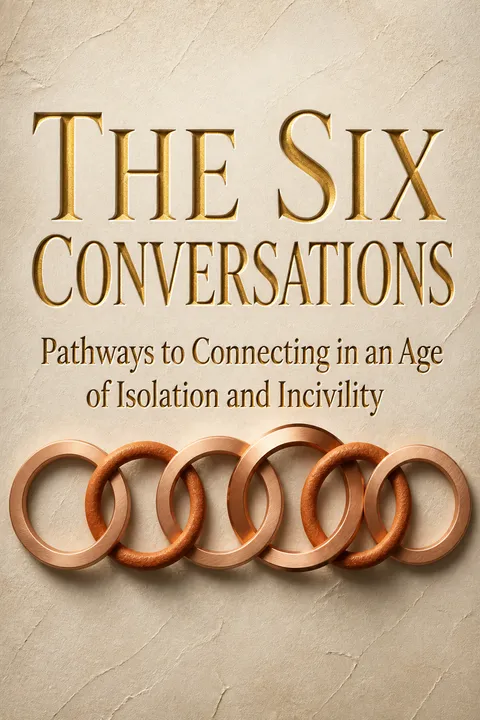


Key Takeaways
Treat conversation as the everyday path from isolation to warm relationships
Connection takes practice. Holleman begins with a question her students ask: if close relationships matter so much to well-being, how do people build them? The Harvard Study of Adult Development points to warm relationships as a major contributor to a good life. Yet the book cites surveys in which 61 percent of young people reported serious loneliness, and nearly half of American adults said they sometimes or always felt alone. The gap is not simply a shortage of people nearby. Many feel unseen, misunderstood, or without anyone to talk to.
Small exchanges can matter. As a professor, Holleman uses questions in class to help students learn one another’s names and share meaningful details. Her central claim is practical: everyday conversations can turn acquaintances into warmer connections when people ask, listen, and respond with care. This is a tool for connection, not a substitute for community support or treatment when loneliness has deeper causes.
The book’s strongest opening move is to treat conversation as a learnable social practice rather than a gift reserved for naturally charming people. That makes the problem less shameful and gives readers something concrete to try. At the same time, loneliness is not only a communication failure. Work schedules, disability, discrimination, caregiving, and weak community institutions can limit opportunities to connect. A useful reading keeps both scales in view: better conversations can improve the relationships available, while broader conditions determine who has time, safety, and access to build them.
Ask with curiosity, acceptance, care, and reciprocal openness
Four habits create warmth. Holleman calls these dispositions the Four Mindsets of a Loving Conversation: interpersonal curiosity, positive regard, investment, and mutual sharing. Curiosity means wanting to understand someone’s experience. Positive regard means approaching them with respect and goodwill rather than judgment. Investment means caring what happens after the conversation, such as checking on an interview or celebrating a friend’s news. Mutual sharing means offering something of one’s own, so the exchange does not become an interview.
The balance matters. Holleman describes walking with an engineering colleague whose interests differ from hers. The colleague asks about Holleman’s work, encourages her goals, follows up, and shares her own struggles. Their connection grows despite their different personalities and hobbies. A useful self-check is to notice which of the four habits comes naturally and which one is missing from a conversation.
The framework usefully distinguishes interest from care: questions alone can feel extractive if the asker has no goodwill or concern for the answer. It also explains why one-sided listening eventually feels less like friendship and more like an appointment. The four habits resemble the ingredients of a secure exchange: attention, acceptance, responsiveness, and reciprocity. They need not appear in identical amounts at every moment, however. A person in crisis may need more listening than disclosure, while trust and cultural norms shape what sharing feels safe.
Leave people encouraged, growing, or newly awed by what matters
Give the conversation a direction. Holleman proposes three aims: mutual encouragement, support for personal growth, and marveling. Encouragement means helping someone feel less alone or reminding them of strengths they may have overlooked. Growth-oriented talk helps people think through dreams, obstacles, and next steps, without taking over their decisions. Marveling means attending together to something vast, beautiful, mysterious, or meaningful.
Awe can widen attention. Holleman describes students sharing what fascinated them in their research, from space science to computing. Their curiosity drew classmates into questions and future collaborations. She also recounts an eight-week study in which older adults took weekly outdoor walks while being prompted to notice things that inspired awe. The book reports that awe can reduce self-focus and support social connection. The point is not to manufacture wonder, but to make room for it in ordinary talk.
These aims give conversation a richer purpose than exchanging information or filling silence. Encouragement supports belonging, growth talk can strengthen agency, and shared attention to something beyond the self can loosen the grip of personal preoccupations. Awe is especially interesting because it turns connection outward: two people can feel close while focusing on a landscape, an idea, or a mystery rather than scrutinizing each other. Still, not every conversation needs uplift. Grief, anger, or practical problem-solving may need honest attention before encouragement or wonder feels appropriate.
Trade outrage and conversational control for curiosity and dignity
Notice what poisons connection. Holleman identifies ten pitfalls: criticism, chronic complaining, unsolicited advice, self-absorption, divisiveness, insincere flattery, manipulation, codependence, gossip, and arrogance. These habits discourage people, crowd out their agency, or treat them as material for someone else’s purposes. Her account of social media adds a wider pressure: outrage-driven content can train people to expect conflict and approach disagreement as a contest.
Do not confuse kindness with silence. Holleman explicitly recognizes that anger and protest can be necessary when people confront injustice. Her concern is with daily interactions where mockery and shame close down the possibility of listening or change. When someone shares a problem, she suggests asking whether they want advice or questions that help them think. That small choice shifts the exchange from control toward support.
The distinction between public protest and interpersonal contempt is essential. A call for civility can be misused to protect powerful people from criticism, but the book does not require abandoning accountability. It asks whether a particular way of speaking serves its purpose. In close relationships, contempt and humiliation commonly invite defensiveness rather than reflection; direct, specific criticism can still be necessary when paired with respect and consequences. The useful test is not whether speech sounds pleasant, but whether it is truthful, proportionate, and aimed at repair or justice.
Give attention long enough to hear the story beneath the answer
Make listening visible. Holleman groups basic habits under the Four Ls: let others speak, listen, limit distractions, and love through your face. She recommends pausing instead of dominating every turn, putting phones away, and showing receptiveness through facial expression and posture. A two-minute limit on one person’s speaking is offered as a practice aid, not a rigid rule.
Listen for what matters. At a quiet lunch with strangers, Holleman asks a woman how she came to start a consulting business at age fifty. The answer opens into a story about discovering a passion and taking a risk. Holleman listens for the values beneath the story, then asks supportive follow-ups. She also describes recording friends’ important dates and concerns so she can check in. Attention becomes care when people can tell that their words were remembered.
This advice turns listening from a vague virtue into observable behavior: make room, remove distractions, and follow the thread that carries emotional or personal weight. Asking about a turning point often reveals more than requesting a status update because it invites narrative, not a verdict. Remembering details can also communicate regard, provided it remains discreet and consensual. Without that care, note-taking may feel like surveillance or a technique for influence. The ethical core is not collecting information. It is using attention to serve the person who shared it.
Assume people like you more than your anxious inner critic predicts
Anxiety distorts the aftermath. Holleman draws on research about the liking gap, a pattern in which people underestimate how much conversation partners enjoyed talking with them. Studies described in the book found this among strangers getting acquainted, new college roommates, and participants meeting in a personal development workshop. The gap could persist as new relationships formed. This challenges the familiar post-conversation verdict that a pause, awkward phrase, or nervous moment means the other person disliked you.
Share at a humane pace. Self-disclosure, or revealing personal information, can help new relationships feel closer. Holleman teaches students to practice sharing, including uncertainty and difficulty, rather than presenting a flawless image. She also notes that people often fear personal questions more than respondents actually mind them. Questions should still be offered with tact, and the other person should be free to decline.
The liking gap offers a useful correction to self-consciousness: people often spend more time evaluating their own performance than judging the person across from them. Reframing nerves as energy can make it easier to begin. But social confidence should not become a demand for constant vulnerability. Power differences, trauma, culture, and personal boundaries affect what disclosure costs. The sound principle is reciprocal permission: offer a little of oneself, invite rather than press, and let trust grow through the other person’s response.
Use six human dimensions to find your next honest question
A map for getting unstuck. The Six Conversations organize questions around social life, emotions, the body and physical surroundings, thoughts and learning, choices and action, and spiritual concerns. The author calls the last category volitional, meaning it concerns a person’s choices and ability to act. These are not six scripts to recite. They are different doors into what someone is experiencing.
Move beyond the first answer. If someone mentions grabbing coffee, a follow-up could ask who they met, how the morning felt, how sleep has been, what drew them to that café, what they chose to order, or whether coffee is part of a meaningful ritual. A question about a decision can lead to feelings, relationships, or faith. Follow the answer that feels alive, and share your own experience when it is your turn.
The categories work as a practical retrieval aid. Under social pressure, people often default to the same safe topics, so a mental map makes alternatives easier to find. The inclusion of bodily experience and choice is particularly valuable: people are not only thoughts and emotions, and asking what options remain can restore a sense of agency. The framework is broad enough to travel across settings, but its spiritual dimension will not fit every person’s worldview. Respectful curiosity means treating that category as an invitation, not an assumption.
Follow the other person's energy, not your favorite conversational track
Find the topic where someone opens up. Holleman calls familiar conversational habits default conversations. A person may gravitate toward ideas, feelings, friends, physical activities, decisions, or spiritual questions because that area feels natural to them. She recommends observing whether answers grow longer, speech becomes more animated, or the person leans in. Asking for the story behind an event or choice can reveal what they most want to discuss.
Let the other person lead. At a gathering, Holleman and her husband ask two healthcare workers about their work during the pandemic. Technical questions and questions about meaning receive brief answers. When Holleman asks about their emotions, both begin sharing fear, sadness, and difficult memories. The conversation changes because the question finally meets their need. The lesson is to notice, adjust, and linger where genuine engagement appears.
Adapting to another person’s preferred subject is an act of respect, and it can rescue a conversation from the asker’s own habits. The shift is also a useful check against mistaking personal enthusiasm for mutual interest. Yet reading someone’s energy is imperfect: quietness can signal fatigue, caution, or a communication difference, not disinterest. The most reliable adjustment combines observation with a direct, low-pressure check, such as asking whether the person wants to stay with the subject or move on.
Make conversation a practice of shared life, not polished performance
Connection includes giving and receiving. Holleman’s Christian account frames conversation as a way to honor another person, attend to their needs, and share one’s own life. She connects this to biblical teachings on humility, mutual care, and fellowship. Her example of Jesus speaking with a Samaritan woman presents conversation across social boundaries as a path toward truth, dignity, and belonging, rather than a transaction.
Begin despite awkwardness. Holleman recounts feeling self-conscious as she approached a student on campus, then finding that a simple greeting and questions about his break opened a friendly exchange. Her faith gives her courage to act even when she does not feel confident. Readers outside her tradition can still use the practical invitation: treat spiritual or ultimate questions as one possible area of human experience, and let the other person set the terms.
The book’s theological vision gives its communication advice a moral center: the other person is not an audience to win, but a life to encounter. That idea can resonate beyond Christianity as a commitment to dignity and mutual presence. The religious framing also makes clear that some of the book’s deepest claims depend on faith, rather than on relationship research alone. Keeping that distinction visible lets secular and religious readers learn from the conversational practices without being asked to treat every theological conclusion as a scientific finding.
Analysis
The book’s central contribution is a usable architecture for conversation. The Four Mindsets describe how to enter an exchange, the Three Fresh Goals clarify what it might offer, and the Six Conversations provide routes when talk stalls. Its stories keep the system human: an engineer and a writer build rapport across differences; a student who avoids conversation opens up around a favorite game; and healthcare workers speak when the questions finally meet their emotional reality. These examples show that successful connection is less about clever phrasing than attentive adjustment.
The framework is strongest at the interpersonal scale. It gives a person something to do tonight: ask a follow-up, remember an important event, put away a phone, or invite someone to describe a choice. Such practices can create recognition and reciprocity, but they cannot by themselves repair isolation caused by poverty, exclusion, overwork, or inaccessible community spaces. The book occasionally risks making the lonely person responsible for fixing a social problem through better conversation. Its own emphasis on communal care points toward a broader response: institutions and groups should also make time and safe opportunities for people to speak.
A second strength is its insistence that curiosity needs goodwill and mutual disclosure. Without those safeguards, questions become data collection, networking, or amateur therapy. The author’s warning against manipulation and advice-giving helps distinguish connection from conversational control. Still, the techniques require judgment. Personal questions and vulnerability can be generous in one setting and intrusive in another. The framework works best as a set of invitations, with consent, context, and boundaries governing how far a conversation goes.
Finally, the Christian vision is not decorative. It explains why Holleman sees attention, humility, and shared life as forms of love and service. Readers need not share that theology to use the practices, but recognizing the source of the book’s moral commitments makes its argument more accurate and more compelling.
Review Summary
The Six Conversations receives overwhelmingly positive reviews, with readers praising its practical wisdom on improving communication skills. Many find it transformative, helping them connect more deeply with others. Reviewers appreciate the book's biblical perspective, practical examples, and thought-provoking questions. Some readers note the book's religious content, which may not appeal to non-Christian audiences. Overall, readers find the book valuable for developing meaningful relationships and overcoming social barriers, with many recommending it as a must-read for personal growth and better interpersonal connections.
People Also Read










Glossary
The Four Mindsets of a Loving Conversation
Four dispositions for connectionHolleman’s framework for the attitudes that support warm conversation: interpersonal curiosity, positive regard, investment in the other person’s welfare, and mutual sharing. The mindsets are meant to work together. Questions without goodwill can feel instrumental, while listening without reciprocal sharing can make an exchange feel like an interview.
Three Fresh Goals for Conversations
Three aims for meaningful talkHolleman’s proposed aims for conversations that contribute to connection: mutually encourage one another, support personal growth, and help each other experience marvel or awe. They are not intended to replace practical purposes such as making plans or solving a problem. They give ordinary exchanges a direction beyond simply passing time or trading information.
The Six Conversations
Six paths for follow-up questionsA question framework that explores six dimensions of human experience: social relationships, emotions, physical life and surroundings, thoughts and learning, choices and action, and spiritual concerns. A speaker can move among these areas to find a meaningful follow-up, while paying attention to which topics the other person wants to explore.
Default conversations
Familiar conversational habitsThe topics a person habitually asks about or shares, often because those subjects feel natural or important to them. Holleman encourages readers to notice their defaults and identify categories they tend to avoid. Recognizing the pattern can help someone expand their range and connect with people whose preferred topics differ.
Ten Pitfalls to Avoid in Conversation
Habits that damage connectionHolleman’s list of conversational behaviors that can discourage others, limit their growth, or undermine wonder: criticism, complaining, advice-giving, self-absorption, divisiveness, flattery, manipulation, codependence, gossip, and arrogance. The list is intended for self-examination before being used to judge other people.
Four Ls
Four basics for better conversationA memory aid for letting others speak, listening, limiting distractions, and loving through one’s face. The habits make attention more visible and give conversation partners room to contribute. Holleman’s examples include avoiding interruptions, putting away a phone, listening for a person’s story and values, and showing receptiveness through facial expression.
liking gap
Underestimating another person’s likingA research term for the tendency to underestimate how much a conversation partner liked an interaction. Studies discussed by Holleman observed the pattern among strangers, college roommates, and people meeting in a workshop. The finding offers a counterweight to self-critical assumptions that a nervous or imperfect conversation was unwelcome.
positive regard
Respectful, accepting attentionA psychological term Holleman uses for approaching another person with respect, acceptance, and goodwill rather than trying to shame or immediately change them. In her account, positive regard helps people feel safe enough to share and can support confidence and motivation. It does not require approving every action or abandoning honest disagreement.
volitional
Related to choices and actionHolleman uses this term for the dimension of conversation concerned with a person’s ability to choose and act. Volitional questions ask what options are available, what decision someone made, or what next step they might take. The aim is often to help someone feel less trapped and more able to influence their situation.
awe walk
A walk focused on wonderA guided outdoor walk in which participants deliberately notice things that evoke wonder or a sense of vastness. Holleman discusses research in which older adults took brief weekly walks over eight weeks, with some prompted to seek awe. She uses the practice to illustrate how shared attention to nature can encourage positive emotion and connection.
FAQ
1. What is "The Six Conversations: Pathways to Connecting in an Age of Isolation and Incivility" by Heather Holleman about?
- Focus on Connection: The book addresses the epidemic of loneliness and social isolation, offering a practical guide to building meaningful relationships through better conversations.
- Six Conversations Framework: Holleman introduces six essential categories of conversation—social, emotional, physical, cognitive, volitional, and spiritual—to help readers connect more deeply with others.
- Four Mindsets and Three Goals: The book is structured around the Four Mindsets of a Loving Conversation and the Three Fresh Goals for Conversation, providing a holistic approach to communication.
- Christian Perspective: While rooted in biblical wisdom and Christian theology, the book’s principles are accessible and applicable to readers from all backgrounds.
2. Why should I read "The Six Conversations" by Heather Holleman?
- Combat Loneliness: The book offers actionable strategies to address the widespread problem of loneliness and disconnection in modern society.
- Practical Tools: Readers gain a toolkit of questions, mindsets, and conversational techniques that can be used in any setting—personal or professional.
- Improved Relationships: By applying the Six Conversations and Four Mindsets, readers can foster warmer, more meaningful connections with family, friends, colleagues, and even strangers.
- Faith-Based Encouragement: For Christian readers, the book provides a theological foundation for loving conversations, but its insights are valuable for anyone seeking deeper relationships.
3. What are the Six Conversations in Heather Holleman’s method, and how do they work?
- Six Human Dimensions: The Six Conversations are based on six aspects of human experience: Social, Emotional, Physical, Cognitive, Volitional, and Spiritual.
- Conversation Starters: Each category comes with sample questions to help initiate and deepen conversations, such as asking about someone’s friends (social) or what they’re learning (cognitive).
- Follow-Up Questions: The framework encourages moving between categories to keep conversations engaging and meaningful, preventing awkward silences or superficial exchanges.
- Universal Application: This method can be used with anyone—family, friends, coworkers, or strangers—to foster connection and understanding.
4. What are the Four Mindsets of a Loving Conversation in "The Six Conversations" by Heather Holleman?
- Be Curious: Approach others with genuine interest and a desire to learn about their lives and perspectives.
- Believe the Best: Assume positive intent and regard others with respect, admiration, and acceptance.
- Express Concern: Show investment in the other person’s well-being by caring about their challenges and successes.
- Share Your Life: Engage in mutual sharing, offering your own experiences and vulnerabilities to build trust and closeness.
5. What are the Three Fresh Goals for Conversation in "The Six Conversations"?
- Mutual Encouragement: Use conversation to uplift, support, and refresh one another, fostering a sense of belonging and hope.
- Aid Personal Growth: Help each other grow by discussing goals, dreams, and progress, and by offering support and accountability.
- Marvel Together: Cultivate awe and wonder in conversation, sharing moments of gratitude, worship, or fascination to deepen connection.
6. How does Heather Holleman address the current climate of isolation and incivility in "The Six Conversations"?
- Analysis of Loneliness: The book cites research on the epidemic of loneliness, especially among young people and in the wake of the COVID-19 pandemic.
- Incivility and Outrage Culture: Holleman discusses the rise of divisive, shaming, and reactive communication, particularly on social media, and its negative impact on relationships.
- Countercultural Approach: She advocates for a return to loving, patient, and kind conversations that build unity and understanding, drawing on biblical principles.
- Practical Intervention: The Six Conversations framework is presented as a practical antidote to the fragmentation and distrust prevalent in society.
7. What are some common pitfalls in conversation that "The Six Conversations" helps readers avoid?
- Ten Pitfalls Identified: The book lists ten conversational pitfalls: criticizing, complaining, advice-giving, self-absorption, divisiveness, flattery, manipulation, codependence, gossip, and arrogance.
- Discouragement and Disconnection: These behaviors discourage, thwart personal growth, and sabotage awe and connection in relationships.
- Self-Examination: Holleman encourages readers to reflect on their own conversational habits and make intentional changes.
- Positive Alternatives: By focusing on encouragement, growth, and marveling, readers can replace toxic patterns with life-giving communication.
8. How does "The Six Conversations" by Heather Holleman integrate Christian theology into its approach to conversation?
- Biblical Foundations: The Four Mindsets and Three Fresh Goals are rooted in scriptural teachings, such as Philippians 2:3–4 and 1 Corinthians 13.
- Jesus as Model: The book examines how Jesus modeled curiosity, positive regard, concern, and sharing in His interactions.
- Spiritual Conversations: One of the Six Conversations is explicitly spiritual, encouraging discussions about faith, meaning, and God’s activity.
- Universal Wisdom: While the book is faith-based, its principles are presented as universally beneficial, drawing on both biblical wisdom and social science research.
9. What practical advice does Heather Holleman give for starting and sustaining meaningful conversations?
- Use the Six Categories: Start with any of the six conversation categories and move between them to keep dialogue engaging.
- Ask Numbers-Based Questions: Simple questions involving numbers (e.g., “How long have you lived here?”) can break the ice.
- Practice the Four L’s: Let others speak, listen actively, limit distractions (like phones), and love through your facial expressions.
- Follow Up and Take Notes: Remember details from previous conversations and follow up, showing genuine investment and care.
10. How does "The Six Conversations" help readers overcome fear and self-consciousness in social interactions?
- Normalize Anxiety: The book explains that fear and excitement are similar feelings and that self-consciousness is common in conversations.
- The Liking Gap: Research is cited showing people are generally liked more than they think after conversations, encouraging readers to be less self-critical.
- Practice Vulnerability: Sharing personal stories and admitting awkwardness can actually foster intimacy and connection.
- Conversations by Faith: Holleman encourages readers to approach conversations “by faith,” trusting that God can use their efforts to bless others.
11. How can readers discover their own and others’ preferred conversation styles using "The Six Conversations"?
- Identify Default Modes: The book provides exercises to help readers recognize which conversation categories they naturally gravitate toward.
- Observe Energy and Interest: By watching for signs of excitement or engagement, readers can tailor conversations to others’ preferred topics.
- Ask Directly: Questions like “What do you wish people would ask you about?” can reveal someone’s favorite conversation category.
- Expand Conversational Range: Readers are encouraged to grow in less-used categories to connect more deeply with a wider range of people.
12. What are some of the best quotes from "The Six Conversations" by Heather Holleman, and what do they mean?
- “The best of life is conversation.” (Ralph Waldo Emerson): Highlights the central role of conversation in human happiness and fulfillment.
- “You can’t hate someone whose story you know.” (Margaret Wheatley): Emphasizes the power of curiosity and understanding in overcoming division.
- “Everyone is interesting, but it’s not up to them to show you—it’s up to you to discover it.” (Georgie Nightingall): Encourages proactive curiosity and engagement in conversations.
- “It’s hard to resist a generous question.” (Krista Tippett): Suggests that thoughtful, open-ended questions can unlock honesty and connection.
- “Where are you?” (Genesis 3:9): Used to illustrate God’s approach to drawing people out of hiding and into relationship, modeling the kind of loving inquiry we can practice with others.
Download PDF
Download EPUB
.epub digital book format is ideal for reading ebooks on phones, tablets, and e-readers.








