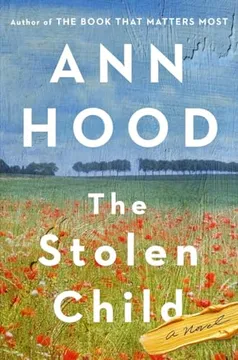


Plot Summary
A Glass for Luisa
In 1935, eighteen-year-old Enzo Piccolo3 is carrying glass tubes to his family’s Nativity workshop when he finds the opera singer Luisa Tetrazzini18 weeping over a failed love affair. Too shy to comfort her conventionally, he catches her tears in one of the tubes and keeps it. Years later, amid wartime hunger and mourning, he gathers more: his mother’s regrets, a bereaved neighbor’s sorrow, a stranger’s despair.
Enzo3 labels each vial and turns a neglected alcove behind the workshop into the Museum of Tears. After the war, actress Sofia Lazzaro lets him preserve tears of happiness, confirming that his collection can hold joy as well as pain. Enzo3 gives private feelings a place where they will not be dismissed or forgotten.
Enzo’s museum begins as an awkward act of care, not a grand artistic scheme. He cannot answer Luisa’s enormous question about love, but he can preserve evidence that she suffered. The vials make emotion tangible without pretending to explain it. Their labels also resist the pressure to turn individual pain into anonymous history. As the collection grows through war, hunger, and unexpected happiness, Enzo becomes a witness whose tenderness is expressed through craft, even when his family regards that tenderness as foolish.
Camille's Two Bundles
In 1917, American soldier Nick Burns2 spends weeks in a French trench, painting a sunny Charles River scene to keep his old life within reach. Camille Chastain,4 the pregnant owner of the farm, challenges his amateur art and his confidence, insisting she wants to become a painter rather than a wife and mother.
When German troops attack and fire spreads through the woods, Camille4 puts her newborn son Laurent3 and her small paintings into Nick’s2 arms, then runs into the smoke. Terrified and unable to decide how to protect them, Nick2 walks to a nearby village and leaves Laurent3 beside its well, using red paint to mark the child’s name and tucking paintings beneath him. Nick2 reaches friendly troops, but never learns who found the baby.
Nick’s decision is made in panic, yet its consequences outlast the battle by decades. He reduces an impossible choice to a practical gesture, leaving the child where someone might find him, but then walks away without confirming the outcome. Camille’s paintings and baby arrive together as a test of responsibility: Nick can carry both, but fear makes him choose the one he believes he can preserve. The scene establishes the novel’s central distinction between intending to save someone and accepting responsibility for what happens next.
A Life Diverted
At nineteen, Jenny Burns1 arrives at college expecting to share a room, books, and grand plans with her vivid roommate Vera.12 Instead, after a summer night with her high-school boyfriend Russ,13 she discovers she is pregnant.
Her mother11 sends her to a home for unmarried girls, where Jenny1 befriends other expectant teenagers but keeps her chosen name for the baby to herself. She gives birth to a daughter, names her Vera,12 and signs adoption papers without a photograph or the adoptive family’s identity.
Back home, she resumes work at an IHOP and buries herself in routines, unable to ask another young mother whether the loss ever eases. Italy becomes her private direction of escape, a future she can still imagine even when the rest of her life feels sealed.
Jenny’s loss is both intimate and socially managed. Adults arrange her pregnancy, placement, and return home as if removing the visible evidence will also remove grief. Her chosen name links the baby to the college life she had imagined, while the real Vera, her former roommate, becomes a measure of the self Jenny believes she has failed to become. Travel first functions as escape, but the desire to leave also preserves a capacity for choice that her circumstances have narrowed.
The War Comes Home
After returning from France, Nick2 marries Lillian,10 a kind woman whose steady affection gives him a chance at ordinary life. He never tells her about Laurent.3 When the Second World War revives his memories, nightmares spill into his days, he loses jobs, breaks household objects, and drinks alongside Lillian10 as she retreats into alcohol and loneliness.
In 1944, he writes Camille4 at the farm, asking her to contact him, but receives no answer. Years later, after Lillian10 demands that he confront whatever is tormenting him, Nick2 takes one of the tiny paintings to a New York dealer.
The dealer identifies Camille Chastain4 and finds another canvas in Paris, but learns she vanished before a planned exhibition. Nick2 returns home with no answer and cannot put the child3 behind him.
Nick’s silence protects him from judgment in the short term, but turns Lillian into an unwilling companion to a secret she cannot name. His guilt is not simply remorse over a past choice; it becomes a structure that shapes work, intimacy, and the possibility of a family. The paintings offer a route back to Camille, yet their survival cannot repair the damage caused by his refusal to speak. His failed search leaves him with evidence of her talent and no knowledge of her fate.
The Irishwoman Who Waited
In 1970, Irish travel writer Geraldine Walsh6 visits Enzo’s3 Museum of Tears and finds a connection neither expected. Their days in Naples become an urgent romance, but Geraldine6 returns to Dublin, where her husband Hugh, her job, and her familiar routines hold her in place.
She and Enzo3 exchange affectionate letters while she postpones returning. When his letters stop, Geraldine6 finally flies back, only to find that Enzo3 has died after eating contaminated mussels. His brother Massimo7 has shut away the museum because it hurts to see it.
Geraldine6 leaves an article about Enzo’s3 collection and adds her own vial and card. Back in Ireland, she remains with Hugh and later has a son, but each Christmas she builds an elaborate Nativity and grieves the life she failed to choose in Naples.
Geraldine’s delay is not a lack of feeling but a conflict between desire and the obligations that make change costly. Her travel writing gives her a profession built around motion, yet she remains unable to move toward the life she wants. Enzo’s museum offers her a vocabulary for grief, but not a way to reverse lost time. Her later Nativity turns memory into a domestic ritual: she can make room for Enzo in the home she kept, though she cannot make that home the one they might have shared.
The Burns Expedition
In 1973, Jenny1 meets graduate student Daniel5 at the IHOP after Chilean poet Pablo Neruda dies. Their night walking through Providence gives her a glimpse of the life she still wants, and Daniel5 proposes a meeting at Capri’s information kiosk the following August. Months later, while saving for Italy, Jenny1 sees an odd newspaper ad seeking a quiet, organized assistant with a passport.
Nick,2 now seventy-six and diagnosed with terminal cancer, hires her to travel to France and find the baby3 he left in 1917. Jenny’s mother11 confirms that Jenny’s own daughter12 was adopted by an unknown family believed to be in Florida. Jenny1 boards the plane carrying two searches: Nick’s2 need to learn Laurent’s3 fate and her own desire to recover a future.
The two journeys begin from different forms of unfinished attachment. Nick seeks proof that a decision made under terror did not destroy a child; Jenny seeks a life beyond the silence imposed after surrendering her daughter. Daniel’s appointment offers romance, but the practical job with Nick offers immediate movement and responsibility. By accepting it, Jenny does not resolve her grief. She gives it a direction and discovers that competence can be a form of hope rather than merely a trait rewarded by school.
Paris Names Camille
After a night flight to Paris, Nick2 takes Jenny1 to breakfast and shows her a small, vivid painting from France. He explains that its artist, Camille Chastain,4 is the baby’s3 mother, but collapses before he can tell the full story.
While he is hospitalized, Jenny1 visits a gallery specializing in women artists and meets its owner, Chloe Marchand. Chloe recognizes the painting’s style from another tiny canvas, depicting cows and a distant blue figure, and arranges a meeting with its owner.
The gallery’s records suggest Camille’s4 work is valuable precisely because she disappeared before her planned Paris show. Jenny1 returns to Nick2 with an address near Mézy and a new lead. Her first solo investigation proves that she can act in a foreign city without waiting for Nick2 to direct her.
Paris changes Jenny’s position in the expedition. At first she is an employee waiting for a plan; when Nick collapses, she becomes the person who must make one. Chloe’s interest validates both Camille’s work and Jenny’s ability to recognize what matters in it. The search is now carried not only by Nick’s guilt but by a woman’s attempt to restore another woman’s erased artistic history. Jenny’s growing independence emerges through concrete tasks: navigating streets, presenting the painting, and returning with a lead.
The Well Remembers
Near Mézy, veteran guide Charlie Reynolds9 takes Nick2 and Jenny1 across the old battlefield, where Nick2 recognizes the trench that once held him and Camille.4 At the restored farm, they find another small painting, preserved by the family who rebuilt Camille’s4 abandoned home.
In the village, elderly men recount competing versions of a baby3 found near the well: some say a soldier rescued him, others that a childless woman took him, and one tale turns him into an angel. At a café, Nick2 finally admits that he was the American who left Laurent3 there.
He explains that he feared dying and believed the village would be safer than the battlefield. Jenny1 argues that Camille4 trusted him with the baby,3 but Nick2 cannot yet accept that his choice might have helped anyone.
The village has converted a private event into folklore because the facts were missing and the child survived long enough to become a story. Nick’s confession disrupts that comforting distance: the abandoned infant was not a symbol but a person he carried and left. Jenny interprets Camille’s trust as evidence that Nick could act, while he remembers only the moment fear overwhelmed him. Their disagreement is not about whether he was frightened, but whether fear cancels the moral meaning of what he did afterward.
Conte's Beautiful Lie
Charlie9 continues helping Nick2 and Jenny1 as they trace the Italian platoon that reached the village. In Rome, officer Ermanno Conte14 receives them at his luxurious villa, where his wife Gia insists that she and her husband tell each other everything.
Conte14 dismisses the report of a baby3 as an absurd war story and claims the two other soldiers are dead. Nick2 collapses during the visit, but refuses to abandon the search. Charlie9 later finds that one supposed casualty, Aldo Mori,16 is alive in Tuscany.
Jenny’s1 photographs of Conte’s14 house become important when they inspect them more closely: two small paintings among his collection appear to be Camille’s.4 The images make Conte’s14 denial look deliberate and send the travelers toward Mori16 and the next surviving witness.
Conte’s estate stages wealth as a performance of certainty: the polished villa, elaborate meal, and confident denial all imply that the past has been settled. Yet Jenny’s casual photographs preserve what his speech tries to control. The camera becomes a tool of investigation precisely because it records the background while its user is focused elsewhere. Nick’s collapse exposes the cost of continuing, while his refusal to stop shows that the need for truth has become stronger than his instinct to retreat.
The Widow's Doorstep
In Tuscany, Aldo Mori16 refuses to discuss a baby,3 but Jenny1 spots a painting of pigs that seems to share Camille’s4 distinctive colors and distant blue mark. Back in Florence, her developed photographs reveal two more Camille canvases on Conte’s14 walls, confirming that the officer14 concealed her work.
The trail leads to Pietro, the last soldier they hope can explain what happened. In Naples, Pietro’s granddaughter Aria8 tells them he is dead, but his widow15 arrives while they are still in the apartment.
After hearing Nick2 describe leaving Laurent,3 she orders the Americans out in a fury. Nick2 reads her reaction as proof that the baby3 died because of him and, weakened and exhausted, decides to go home. Jenny1 cannot make him stay or make the widow15 speak.
The evidence advances while human testimony closes down. Camille’s paintings survive in private collections, but the soldiers and families around them have reasons to deny, forget, or protect their histories. Pietro’s widow becomes the emotional barrier Nick cannot cross: he reads her anger as a verdict because he has spent decades anticipating condemnation. The distinction between evidence and interpretation matters here. Her response proves that she knows something, but Nick’s guilt supplies the most devastating explanation before she confirms any facts.
The Missed Capri Date
Nick’s2 health worsens in Naples, and Jenny1 arranges a hospital transfer and a flight back to Rhode Island rather than leave him to travel alone. After he is safely home with his nephew’s care, Jenny1 realizes she has missed the August 25 appointment Daniel set at Capri’s kiosk. She takes a ferry there three days late, but the kiosk worker has no message and Daniel5 is nowhere in sight.
Returning to Naples, she refuses to treat the failed meeting as a reason to return home. Charlie,9 who has helped throughout the search, leaves a note saying goodbye. Jenny1 visits the presepe shop on Via San Gregorio Armeno, takes Enzo’s3 discarded cards and empty vials, and persuades Massimo7 to let her run the Museum of Tears for six months.
Jenny’s choice to stay is not yet a triumph; she makes it after losing both the mission’s original goal and the romantic appointment she had carried for a year. Sending Nick home honors her responsibility to him, while remaining in Naples honors a responsibility to herself. The missed kiosk meeting forces her to separate the future she wants from the guarantee that Daniel will be there. Taking over the museum transforms her habit of making lists into a concrete, imperfect undertaking rooted in the city that once existed only as a dream.
The Child Was Enzo
As Jenny1 begins restoring the museum, Aria8 visits before her father can arrive and brings a hidden pocket inside a baby blanket. The bundle contains a birth certificate, photographs, and Camille’s4 fading letter.
Aria8 explains that her grandmother longed for another child, and her sister Gia arranged for a newborn3 found near the French well to be brought to Italy. That child became Lorenzo, called Enzo,3 the younger brother of Massimo.7
The letter says Camille4 entrusted him to an American soldier,2 asked that he be loved, and included Nick’s2 identifying details so someone could tell him the baby3 was safe. It also reveals that Conte14 later stole Camille’s paintings. Jenny1 calls Nick2 in Rhode Island and tells him Laurent3 grew up loved, ending the uncertainty that ruled his life.
The revelation changes the meaning of Nick’s abandonment without erasing the danger of his choice. Laurent survived through a chain of people who acted after Nick left: Italian soldiers, Conte’s connections, Gia, and a woman who desperately wanted a child. Camille’s letter shows that she deliberately entrusted the baby and did not condemn Nick, while her paintings record the cost of the life she escaped. The truth arrives through domestic objects, a blanket and papers hidden within it, rather than through official history.
Daniel Comes to Capri
After telling Nick2 what she has learned, Jenny1 runs to Capri, still without knowing where to find Daniel.5 She waits at the information kiosk and then at a nearby café, convinced she has arrived too late. Daniel5 finally appears and explains that he had come to the appointed place every day, then paid the kiosk attendant to alert him if Jenny1 ever turned up.
He had missed her first visit while away on Ischia, but kept searching after she returned to Naples. Jenny1 accepts the life she once imagined with him, not as an escape from grief but as a choice made after building a direction of her own. Back in Naples, she and Daniel5 find Camille’s paintings stored in Nick’s2 suitcase and decide to keep them visible in every home they share.
The reunion resolves the romantic promise, but its emotional force depends on Jenny’s changed circumstances. She is no longer waiting for Daniel to make her life meaningful; she has claimed the museum, learned the truth, and chosen to remain in Naples before he appears. His repeated returns answer her fear that one missed moment makes connection impossible. Finding Camille’s canvases in Nick’s luggage then joins the novel’s two acts of preservation: Jenny keeps the art, while the museum keeps the stories attached to human feeling.
Analysis
The novel makes inheritance less a matter of blood than of what people do with fragile evidence. Nick2 inherits a decision he cannot undo; Jenny1 inherits a silence around her daughter;12 Enzo3 inherits a family workshop that has little room for his inwardness. Each must decide whether to preserve, conceal, or reinterpret what has been handed down. The book’s objects carry these choices: a vial holds a moment of grief, a canvas preserves an artist’s4 eye, and a blanket protects papers that might have changed a soldier’s2 life decades earlier.
The story also resists the idea that truth automatically heals. Nick2 receives the facts he has sought only after a long life shaped by the worst possible interpretation of his act. Camille’s4 letter releases him from a false conviction, but cannot give him the years he lost. Jenny’s1 recovery is more active. She does not wait for certainty about her daughter12 or for Daniel5 to appear before making a home and a vocation. Her museum is imperfect and precarious, but it converts attention into work.
Across its linked generations, the novel treats art as a form of witness rather than escape. Camille4 paints what war threatens to erase; Enzo3 gives tears a record; Jenny1 gathers both practices into a place where private emotion can be seen. Their work cannot restore the dead or repair every damaged relationship. It can, however, prevent a life from being reduced to rumor, shame, or silence. The novel’s hope is not that loss disappears, but that people can make something durable from the act of noticing it.
Review Summary
Reviews for The Stolen Child are largely positive, averaging 4 out of 5 stars. Readers praised the emotional depth, vivid settings in France and Italy, and the interwoven storylines across multiple timelines. Many found the multiple perspectives initially confusing but ultimately rewarding. The unlikely duo of curmudgeonly Nick and young Jenny were widely beloved, with the journey to uncover a lost child's fate resonating deeply. The audiobook narration by Jefferson Mays received particular praise. A few critics noted pacing issues, underdeveloped characters, and minor editorial errors.
People Also Read









Characters
Jenny Burns
The self-made seekerA bright young woman whose scholarship, college plans, and confidence are derailed by an unplanned pregnancy and adoption. Jenny is observant, disciplined, and hungry for a wider life, but she often measures herself against people she imagines are more sophisticated. Her attraction to Italy begins as escape from a small, disappointing home life. Work with Nick2 forces her to use her intelligence in unfamiliar places, and the Museum of Tears gives her a purpose that is hers rather than borrowed from a roommate or lover.
Nick Burns
The haunted veteranA former Harvard rower and World War I soldier, Nick begins as a man accustomed to confidence and easy success. Camille’s4 challenge in France exposes how little he has been tested, and his fear during the battle leaves him burdened by a decision he cannot discuss. In old age he is abrasive, grieving, and physically failing, yet the search forces him to revisit the moment he has avoided for most of his life. His tenderness survives beneath his harsh manner, especially when he recognizes Jenny’s1 determination.
Enzo Piccolo
The keeper of tearsA Neapolitan craftsman who helps his brother make elaborate Nativity figures, Enzo is gentle, imaginative, and chronically underestimated by the people closest to him. He notices what others pass by: a crying stranger, the exact shade of a feeling, the expressive possibilities of a tiny face. His Museum of Tears grows from this attentive temperament. Enzo’s emotional generosity is not the same as confidence; he struggles to assert himself, particularly around his forceful brother, but finds meaning in recording lives through art and memory.
Camille Chastain
The wartime painterA French artist living on a farm during World War I, Camille is fiercely committed to painting and impatient with the roles others expect her to accept. She creates vivid miniature canvases from the landscape around her, adapting her practice to wartime scarcity. Her confidence can sound severe, especially when she challenges Nick2, but it grows from years of work and a clear sense of what she wants. Camille is both an artist seeking recognition and a woman trying to make a life on terms she has chosen.
Daniel
The poetry-minded travelerA graduate student writing about Pablo Neruda, Daniel enters Jenny’s1 life through a unpaid IHOP bill and a long conversation after the poet’s death. He is romantic, intellectually curious, and given to turning shared interests into invitations and promises. His enthusiasm offers Jenny1 a glimpse of companionship built around art and travel, though she initially knows little about how reliable that promise will prove.
Geraldine Walsh
The restless travel writerAn Irish journalist who fights to move beyond routine features and win travel assignments, Geraldine is adventurous in work and cautious in her private life. She loves movement, unfamiliar places, and the possibility of remaking herself, but remains tied to a marriage and a familiar home even as her ambitions carry her across the world. Her encounter with Enzo3 reveals the distance between imagining change and choosing it.
Massimo Piccolo
The commanding older brotherEnzo’s3 older brother and partner in the family workshop, Massimo is handsome, capable, and accustomed to occupying the center of every room. He measures life through practical success and is often impatient with Enzo’s3 romantic ideas. His authority shapes the shop and the family, but his brusqueness coexists with genuine attachment to those close to him, especially his daughters8.
Aria
The artist's nieceMassimo’s7 daughter, Aria is thoughtful and artistically ambitious, with a quiet independence that distinguishes her from her father’s7 conventional approach to their craft. She admires Enzo’s3 emotional seriousness and experiments with contemporary figures that reflect her own tastes. Her interest in art and family history makes her a bridge between the workshop’s present and its buried past.
Charlie Reynolds
The battlefield guideAn American guide who leads veterans through the French battlefields, Charlie is warm, energetic, and capable in several languages. His easy sociability contrasts with Nick’s2 suspicion and helps keep the search moving through local records and personal contacts. He becomes a friend to Jenny1 as well as a practical ally, while his own feelings leave him vulnerable to disappointment.
Lillian Burns
Nick's patient wifeNick’s2 wife is affectionate, practical, and attentive to domestic rituals, from cooking and gardening to the small pleasures of travel. She tries to understand his moods without knowing their cause, and her own loneliness grows inside a marriage shaped by his silence. Lillian represents the ordinary shared life Nick2 wants but cannot fully inhabit while he keeps his wartime secret.
Jenny's mother
The anxious parentJenny’s1 mother values security, convention, and the appearance of a respectable life. Her fear for her daughter1 often comes out as criticism, and she treats the pregnancy as a catastrophe to manage rather than a grief to share. Yet she is not without care: she helps Jenny1 prepare for travel and eventually gives her room to leave.
Vera
The imagined ideal roommateJenny’s1 college roommate is theatrical, self-assured, and fluent in the cultural references that Jenny1 longs to know. Vera’s extravagant plans for their future briefly give Jenny1 a picture of who she might become. Their unequal friendship later persists in Jenny’s1 mind as an ideal she must learn to question.
Russ
Jenny's high-school boyfriendRuss is attractive, easygoing, and satisfied with a life Jenny1 has begun to outgrow. Their relationship combines adolescent affection with a mismatch in ambition. His carelessness around contraception has consequences that change Jenny’s1 plans, although he is not the person she hopes to build a future with.
Ermanno Conte
The wealthy former officerA former Italian officer who has turned military connections into a life of conspicuous comfort, Conte enjoys status, ceremony, and the company of people who defer to him. His polished hospitality makes him difficult to read, and his confidence encourages others to accept his account of the past.
Pietro's widow
The guarded witnessThe widow of an Italian soldier connected to the events in France, she is protective of her household and unwilling to welcome strangers asking painful questions. Her reserve suggests that war stories can remain active within a family long after the soldiers themselves are gone.
Aldo Mori
The Tuscan farmerAn elderly former soldier who lives on a working Tuscan farm with his sister. Mori is rooted in the land and wary of questions about the war. His household preserves traces of an earlier life through paintings that the family has kept without fully understanding their significance.
Everleigh Greer
The expatriate painterAn American artist who has left a conventional life in Texas for France, Everleigh is candid, independent, and comfortable with solitude. Her frank companionship gives Nick2 a glimpse of intimacy without the demands of his old marriage, and her own artistic life unsettles his belief that it is too late to begin again.
Luisa Tetrazzini
The grieving opera starA celebrated opera singer whom Enzo3 encounters crying in a Naples park, Luisa is vulnerable beneath her public fame. Her heartbreak gives Enzo3 the first vial in his collection and reveals how carefully he attends to the feelings hidden behind a renowned face.
Madeline
The keeper of Camille's farmA practical French woman whose family restored an abandoned farmhouse near Mézy, Madeline preserves a small painting found on the property. She has no grand theory about its maker, but her family’s care for the house keeps a vital fragment of Camille’s4 history within reach.
Plot Devices
The Museum of Tears
An archive of feelingEnzo3 stores tears in small glass vials and pairs each one with a written description of the person and the moment behind it. The collection gives sorrow, joy, and regret a physical record, linking people who never meet. It also offers Jenny1 a model for her own work: listening carefully, naming an emotion, and protecting its story from being discarded. The museum’s disorder and eventual restoration mark changes in who is willing to preserve other people’s pain.
Camille's Miniature Paintings
A trail through lost historyCamille4 paints small, vivid scenes of farms and fields, often including a distant blue figure. The canvases pass through several hands and surface in France, Tuscany, and Conte’s14 Roman collection. Their style helps Jenny1 identify them, while their locations expose links between people who deny knowing about Laurent3. The paintings are both evidence in the search and a record of Camille’s4 ambition, which the story of her disappearance threatens to erase.
The Baby's Blanket
A hidden family recordThe blanket in which Laurent3 was found contains documents and photographs that travel with him into his new life. Much later, its concealed pocket gives Aria8 the evidence needed to reconstruct the journey from France to Naples. The papers also preserve Camille’s4 request that her son3 be loved and her effort to identify Nick2. The blanket makes care and information travel together, even when the adults who possess them fail to pass the story on.
The Capri Appointment
A test of Jenny's hopeDaniel5 gives Jenny1 a specific date and place to meet him in Italy, turning an intense night in Providence into a promise she can carry while her life changes. The appointment offers a romantic future, but its fixed time also exposes Jenny’s1 fear that a missed chance will close every door. Her late arrival forces her to decide whether Naples is worth choosing without Daniel’s5 presence, before the promise is finally renewed.

Download PDF
Download EPUB
.epub digital book format is ideal for reading ebooks on phones, tablets, and e-readers.








