

Key Takeaways
Treat feelings as culture’s motive force, not noise around reason
Feeling starts the work. Damasio’s central claim is that cultural inventions arise not from intellect alone but from feelings that make a problem matter. Pain, illness, humiliation, and grief can prompt people to seek remedies; pleasure, affection, awe, and curiosity can draw them toward possibilities worth pursuing. Reason and language help devise and communicate solutions, but feelings recruit those abilities and help assess their effects.
Medicine makes the case. Early medicine was not merely an intellectual puzzle. Patients’ suffering and caregivers’ responses helped motivate efforts to diagnose disease, reduce pain, and improve treatment. The same pattern can be traced, Damasio argues, through moral rules, art, religion, science, and governance. Feelings are not always benevolent: desire for power and the pleasure of domination can also drive cultural action.
The argument usefully broadens motivation beyond fear and pain. Awe, play, affection, and the satisfaction of solving a puzzle can all make effort worthwhile, giving cultural invention a richer emotional engine than simple threat reduction. It also challenges a familiar picture of reason as an independent pilot, with feeling merely disrupting its course. A careful distinction remains important: feelings can motivate inquiry without guaranteeing sound conclusions. The same urgency that fuels a cure can fuel a crusade, and a vivid feeling may reflect personal stakes more than public evidence. The productive question is not whether feeling or reason should lead, but how they can correct each other.
See life regulation as a drive toward flourishing, not mere stability
Homeostasis means life management. Damasio uses the term for the processes that keep an organism alive and help it function in conditions that support growth and future life. This is broader than maintaining fixed internal settings. Living systems operate within workable ranges, and their regulation can support not only survival but a more effective, flourishing state.
Genes are not the starting point. Life on Earth appears to reach back about 3.8 billion years. Damasio favors a metabolism-first account, in which chemical processes capable of sustaining and repairing a cell preceded the genetic machinery that later helped regulate and transmit life. This remains an account of life’s origin, not a settled reconstruction. He connects the persistence of living things to Spinoza’s conatus, the tendency of each thing to continue in its existence.
This enlarged meaning of homeostasis shifts the biological picture from a thermostat holding still to an organism continually managing energy, repair, and opportunity. It also places genes within the history of life rather than treating them as the whole explanation for life’s beginnings. That is a powerful conceptual correction, especially when biology is used to discuss behavior. But the metaphor of life striving or wanting can smuggle intention into processes that Damasio says are not conscious. The account is clearest when “drive” means a pattern of regulation, not a hidden purpose. Its value is in tracing continuity without confusing biological function with deliberation.
Recognize social behavior long predates minds, morality, and human culture
Bacteria coordinate without thinking. Bacteria can sense nearby organisms through chemical signals, gather when resources are scarce, and use quorum sensing to coordinate group behavior. Some form protective films; others cooperate in defense. In experiments described by Damasio, groups that fought, cooperated, or avoided direct conflict could all persist across many generations. Bacteria can also exclude members that fail to contribute, despite their genetic relation.
Insects add another precedent. Ants, bees, wasps, and termites organize labor, build elaborate nests, and alter worker activity according to available resources. Their behavior resembles governance or a functioning economy, but Damasio stresses that it is largely fixed by evolved programs. These cases foreshadow social solutions; they do not demonstrate conscious moral reasoning or human culture.
The comparison unsettles the assumption that coordinated social life must begin with reflective minds. It also makes cooperation and conflict look like old biological problems, not uniquely human inventions. The important safeguard is Damasio’s distinction between resemblance and equivalence. A bacterial group can exclude a noncooperator, but that does not mean it has formulated a principle of fairness. Such examples are strongest as evidence of evolutionary precursors, not as miniature versions of human society. Used carefully, the comparison connects human institutions to life’s history while leaving room for language, deliberation, and cultural meaning to make human practices distinctive.
Understand the mind as body and brain making maps together
Images are mapped relationships. Damasio uses “image” broadly for a mental representation, not just a picture. Nervous systems map features of the outside world, such as a sound’s pitch or an object’s shape, and also map conditions inside the body. As nervous systems became more elaborate, these maps could be integrated into the changing contents of a mind.
The body is not a container. The brain developed as part of a living organism and helps coordinate that organism’s needs. Images of the outside world mingle with representations of the body’s internal state and its musculoskeletal frame. Damasio’s account therefore rejects the idea that a brain works like a detached computer receiving neutral data. Mind depends on the continuing interaction of nervous system and body, with the body’s internal condition contributing directly to mental life.
This embodied account helps explain why perception is never simply a detached inventory of external facts. A sound, a memory, or a decision is encountered by an organism with a body state, a history, and limited energy. The proposal also connects mental life to biological regulation without claiming that every cultural idea can be reduced to physiology. Its challenge is empirical precision: “body and brain work together” is compelling, but particular claims require careful evidence about which signals matter, when, and how. The framework is most useful as a research orientation, directing attention toward interactions that brain-only accounts can overlook.
Distinguish an emotion’s action program from the feeling it produces
Affect is the wider family. Damasio uses “affect” for feelings and for the processes that generate them. Emotions are action programs, such as fear or anger, that can change bodily activity and behavior. Feelings are the conscious mental experiences of bodily conditions. The two are related, but they are not identical.
Valence gives feelings their force. A feeling represents aspects of the body’s state and carries a positive, negative, or intermediate quality. Damasio calls this quality valence. Background homeostatic feelings can register general well-being or malaise; provoked feelings arise when sensory events or drives trigger bodily responses. A threatening sound, for instance, can trigger fear-related actions, followed by the conscious feeling of fear. Feelings can guide attention and learning, though they can also be misleading or obscured by illness and unusual mood states.
The distinction helps avoid treating an emotion label as a full account of experience. A person’s body may begin responding before the person can identify what is happening, while the felt experience gives the event personal significance. This also illuminates why affect can shape judgment without conscious permission. The account should not turn feelings into infallible health meters: bodily sensations can be ambiguous, and the book itself notes that feelings can miss disease or become unreliable in atypical states. Feelings are better understood as consequential signals than as verdicts. They deserve attention, followed by interpretation and, when necessary, outside evidence.
Treat consciousness as owned experience, not a spectator hidden inside the brain
Subjectivity gives experience an owner. Damasio describes consciousness through two linked features: a perspective that makes mental contents belong to a particular organism, and the integration of those contents into an experience. The perspective is supported by images of the body and its sensory portals, alongside the feelings that accompany mental activity. Consciousness is not a tiny observer sitting in a brain theater.
Experience is assembled across systems. Images, feelings, bodily perspective, and their integration depend on interacting brain regions and the body, rather than one special consciousness center. This account also places feeling near the heart of consciousness: a scene matters to its subject partly because it is experienced in relation to the subject’s own life. In Damasio’s view, that sense of ownership makes reflection and deliberate cultural invention possible.
The account is valuable because it treats subjectivity as something biology must explain, rather than dismissing it as an illusion or placing a miniature observer inside the head. It also links consciousness to practical capacities: experiences matter to an organism when they are felt as its own. The proposal does not, by itself, settle every philosophical question about why experience has a subjective quality. A plausible mechanism for perspective and integration is not automatically a complete explanation of lived experience. Still, tying ownership to bodily perspective and feeling gives inquiry a concrete route that abstract talk about information processing can lack.
Judge cultural solutions by felt outcomes, then revise them
Feelings monitor the remedy. Damasio describes feelings as motives for cultural invention, monitors of results, and participants in later adjustment. If treatment reduces pain, the patient’s changed experience helps reveal whether it worked. If the pain remains, the original problem has not been solved, regardless of how elegant the treatment appears on paper.
Culture is selected through people. Ideas and practices spread, persist, or disappear through interactions among groups, shaped by history, geography, power, and circumstances. A practice may improve life for some while harming others. Cultural selection is therefore not a clean contest in which the most helpful idea always wins. Damasio’s framework joins biological inheritance, which shapes human capacities, with cultural transmission, which carries practices and ideas across generations.
The feedback-loop model offers a practical test for institutions: do their claimed benefits show up in lived experience, and for whom? It connects cultural persistence to outcomes rather than treating tradition or clever design as proof of success. Yet felt benefit is not the only criterion for public judgment. Immediate relief can conflict with long-term welfare, and groups with greater power can make their own satisfaction count more heavily. The framework becomes stronger when feelings are treated as essential evidence, not the sole measure. Reason, historical knowledge, and attention to unequal consequences help determine whether an apparent improvement is durable and broadly shared.
Read art, religion, and science as feeling-driven answers to human trouble
Culture answers lived problems. Damasio traces tools, shelter, clothing, and medicine to needs people could feel, such as hunger, exposure, injury, and fear. He also connects grief and loss to religious beliefs, moral rules, and systems of justice, while recognizing that these responses can take on purposes beyond their origins.
Creation can begin around a fire. Fire made cooking possible and extended waking time after dark. Damasio draws on accounts of early human gatherings to imagine evenings used for conversation, storytelling, teaching, ritual, music, and repairing social bonds. Flutes from roughly 50,000 years ago show that music-making was established long before writing. Such inventions could console, delight, coordinate, or inspire. Their cultural lives grew beyond any single practical use.
This account gives cultural history a human motive without reducing every artwork or belief to therapy. A song may begin in consolation, yet acquire meanings that its original makers could not have anticipated. Likewise, a moral code can answer real injury while reflecting the politics of the group that writes it. The campfire example is memorable because it connects a technology to a new social setting, not just a new tool. It remains an informed reconstruction rather than direct access to prehistoric intentions. That distinction preserves the story’s explanatory power without presenting a plausible origin as proven fact.
Do not confuse a program that computes with a living, feeling person
An algorithm is not an organism. Damasio argues that algorithms can help build and operate living systems, but a living body is made of vulnerable, interacting biological material, not merely code. The substrate matters because feelings represent the condition of that body and its prospects. Changing the substrate would change what is being represented.
Performance is not experience. Artificial intelligence can perform tasks such as game-playing, pattern recognition, or diagnosis without demonstrating that it has feelings or conscious experience. Damasio therefore questions claims that a human mind could simply be copied into a computer or made immortal by transferring its code. A robot might imitate emotional behavior, but imitation alone does not show that it experiences emotion or has a living point of view.
The distinction between functional competence and felt experience is essential in debates about artificial intelligence. A system can produce impressive answers without that achievement proving that anything matters to the system itself. Damasio’s emphasis on biological embodiment also exposes a hidden assumption in mind-uploading proposals: that the information describing a person is interchangeable with the person’s lived experience. The caution cuts both ways. The book offers a strong argument about why biology matters, but it cannot establish that no other substrate could ever support experience. That question requires evidence, not confidence in either biological exclusivity or computational equivalence.
Build institutions that extend care beyond the self and the in-group
Homeostasis is naturally local. Damasio argues that the biological processes regulating an individual are centered first on that individual, and can extend to family or smaller groups more readily than to vast, diverse societies. Groups can therefore pursue incompatible interests, even when each believes it is protecting its own welfare. Cooperation on a large scale does not arise automatically from shared humanity.
Civilization requires deliberate work. Damasio sees education, accountable governance, and negotiation between feeling and reason as ways to support cooperation across differences. He is concerned that rapid, entertainment-driven media can leave people little time to assess information, while personalized feeds may reinforce existing beliefs. But he also recognizes that communication can enable public scrutiny and change. The challenge is to use those tools in ways that strengthen reflection and shared responsibility.
The scale mismatch is a useful explanation for why concern for one’s family can coexist with indifference toward strangers or future generations. It also puts institutions in a distinctive role: they must cultivate forms of cooperation that do not emerge reliably from personal feeling alone. The biological account should not be mistaken for a complete explanation of political crises. Economic interests, laws, histories, and media systems shape which feelings gain influence and whose welfare counts. Damasio’s emphasis on education and negotiation is strongest when it includes those structures. Cooperation is not just a sentiment to encourage; it also depends on rules and power arrangements that make fair cooperation possible.
Analysis
The book’s most useful move is to connect three scales that are often kept apart: the regulation of living bodies, the felt experience of individuals, and the institutions built by groups. Homeostasis supplies the biological continuity; feelings make conditions personally consequential; cultural intelligence converts that concern into tools, stories, and rules. This does not mean culture is simply biology in disguise. Damasio explicitly allows cultural practices to acquire histories and autonomy, while arguing that they remain motivated and evaluated by human affect.
The narrative’s strange sequence is central to its force. Socially effective behavior appears in bacteria and insects before minds capable of reflection. Nervous systems then enable image-making, feelings, and consciousness, opening a new kind of cultural invention. This chronology corrects a human-centered story in which intelligence creates social order from nothing. It also requires care: behavioral analogies across bacteria, insects, and humans illuminate recurring problems, but do not make those organisms equivalent in intention or moral life.
The most ambitious claims concern feelings and consciousness. Damasio offers a biologically grounded account of how bodily state, neural mapping, perspective, and integrated experience may combine. Its strength is explanatory direction: it identifies mechanisms and relationships to investigate rather than placing experience in a mysterious inner observer. Its limit is that a proposed mechanism does not by itself resolve why a process is experienced subjectively. The account is best read as a research program, not a final verdict.
The cultural argument also yields a practical tension. Feelings can reveal whether life is going well, yet individual and group interests often conflict, and felt satisfaction can coexist with harm to others. The book’s answer is not to suppress feeling in favor of abstract reason, but to improve their partnership through knowledge, reflection, and institutions. That makes its political hope demanding rather than sentimental: social cooperation must be built, monitored, and repeatedly repaired.
Review Summary
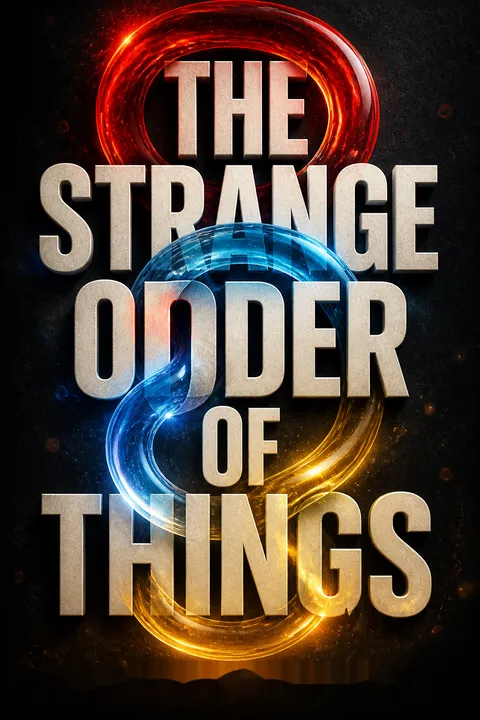
The Strange Order of Things by António Damásio explores how homeostasis—the body's drive to maintain equilibrium and flourish—underlies human feelings, consciousness, and culture. Reviewers praise Damásio's argument that feelings, as expressions of homeostatic processes, shaped cultural evolution from single cells to complex civilizations. The book traces how emotions predated genes and drove cooperation, creativity, and social systems. While many admire the first sections on neurobiology and evolution, several critics find the later philosophical discussions repetitive, overly dense, or insufficiently developed, particularly regarding artificial intelligence and transhumanism. Responses range from calling it "hugely important" to "pedantic" and "disappointing."
People Also Read

Glossary
Homeostasis
life regulationThe coordinated processes that maintain life by managing energy, repair, and internal conditions. Damasio uses the term broadly: regulation aims not only to keep an organism within survivable limits, but also to support flourishing and continuation into the future. In minded organisms, feelings provide conscious reports of aspects of this regulated state.
Conatus
persistence in beingA term associated with Spinoza for the tendency of each thing to continue in its existence. Damasio interprets it biologically as the persistence of living structures and functions against threats to their integrity. In this account, cells exhibit this tendency without conscious intention, while minded beings can experience and reflect on aspects of it.
Affect
feelings and their causesDamasio’s broad category for feelings and the processes that produce them. It includes bodily and mental states, along with drives, motivations, and emotions that can trigger changes in the organism. Affect is not limited to dramatic emotional episodes: background feelings and subtle responses also accompany ordinary mental activity.
Valence
felt positive or negative qualityThe positive, negative, or intermediate quality that makes a feeling pleasant, unpleasant, or somewhere between. In Damasio’s account, valence reflects how bodily conditions relate to the organism’s life prospects. It helps feelings guide attention and behavior, but it is not an infallible measure of health or long-term benefit.
Emotive response
bodily action responseA coordinated set of bodily and neural actions triggered by a stimulus or situation. Such responses can involve chemical release, changes in visceral activity, and movement. They are distinct from feelings: a feeling is the conscious experience of aspects of the body state that the response helps produce.
Subjectivity
personal point of viewThe process by which mental contents are experienced from the perspective of a particular organism and as belonging to that organism. Damasio links subjectivity to images of the body and its sensory perspective, together with feelings. It is a key component of consciousness, but not by itself the whole of conscious experience.
Cultural selection
survival of cultural practicesThe spread, persistence, alteration, or disappearance of cultural ideas and practices through social transmission. Damasio distinguishes this from genetic transmission while arguing that the processes interact. Cultural selection depends on outcomes, group histories, circumstances, and power, so beneficial practices do not automatically prevail.
Interoception
sensing the body's interiorThe sensing and reporting of conditions within the body, including the state of internal organs and their operations. Nervous pathways and chemical signals help convey this information to the brain. Damasio treats this monitoring as an important foundation for feelings, which represent aspects of the organism’s internal life.
Retroactivation
reconstructing images from memoryDamasio’s term for a process in which stored neural codes help reactivate the brain regions involved in forming an image. Recall therefore reconstructs an approximation of a previous experience rather than retrieving a fully preserved mental picture. The hippocampal system plays an important role in integrating memories of particular events.
About the Author
Other books by António Damásio


Download PDF
Download EPUB
.epub digital book format is ideal for reading ebooks on phones, tablets, and e-readers.








