

Key Takeaways
Use neurological oddities as experiments on the ordinary brain.
A symptom becomes a probe. After an arm is amputated, some people still feel it vividly. Ramachandran found that touching one patient’s face could produce precise sensations in different fingers of his phantom hand. The odd symptom exposed the brain’s persistent map of the body, and the way neighboring sensory maps can interact. A disorder was not merely a clinical puzzle. It became a clue to how healthy perception is built.
Simple tests matter. The book’s method is to observe a patient, form a specific explanation, and test it with the simplest useful experiment. A Q-tip, a mirror, or a carefully chosen picture can reveal a mechanism that a grand theory misses. Patient stories are compelling because they make abstract brain functions visible, though a single case is a starting point, not proof that everyone’s brain works identically.
What's valuable here is the use of unusual cases as natural experiments. A lesion or perceptual anomaly can reveal which abilities depend on which brain systems, much as a controlled perturbation reveals how a machine works. This approach also resists the assumption that a strange experience is either meaningless or mystical. The necessary caution is that unusual cases are selected precisely because they are unusual. They can generate sharp hypotheses, but broader samples and independent tests are needed before a proposed mechanism becomes a general account.
A mirror can retrain a brain that learned to keep a phantom still.
The brain learns paralysis. Some amputees feel their missing arm as frozen or painfully cramped. Ramachandran proposed that, in some cases, the brain had learned that commands to move the arm produced no movement, after a nerve injury left it paralyzed before amputation. That learned pattern could persist in the phantom.
Vision supplies feedback. In mirror visual feedback, a mirror makes the healthy hand appear where the missing one should be. When patients move both hands together, the phantom can seem to move too. One patient reported relief from years of cramping; another’s phantom and pain disappeared after practicing with the mirror. A controlled study described in the book found pain reduction after three weeks among eight mirror users, while placebo controls did not improve. Similar mirror methods were also investigated in stroke rehabilitation.
The mirror box makes a useful general point: the nervous system does not passively register the body, it continually tests expectations against incoming feedback. Visual information can alter the felt reality of movement, which connects rehabilitation to motor learning and predictive models of action. The clinical promise is real, but the book’s dramatic cases should not be mistaken for a guaranteed treatment. Phantom pain has multiple causes, and responses vary. The strongest lesson is methodological: a low-cost intervention can be tested rigorously rather than dismissed as an illusion.
Seeing is the brain's best-tested guess, not a retinal replay.
Perception interprets evidence. A patient called John could copy a detailed picture but could not identify what he was looking at. He could navigate around obstacles, yet mistook a carrot for a brush and could not recognize familiar faces. His condition, visual agnosia, showed that seeing shapes and knowing what they mean are separable abilities.
Different routes do different work. Ramachandran describes an older visual route that helps guide movement and a newer cortical route involved in recognition and conscious vision. A patient with damage to visual cortex could not consciously see a target, yet could point to it accurately, a phenomenon called blindsight. Illusions make the same point in healthy people: an unchanged drawing can suddenly look different because the brain is actively interpreting it, using assumptions about objects, light, and space.
This account anticipates a broader idea in cognitive science: perception combines sensory evidence with expectations, rather than copying the outside world like a camera. That helps explain why illusions are informative, not just entertaining. They expose the assumptions that usually make perception fast and useful. Still, calling perception a guess can sound more subjective than it is. The world constrains the interpretation, and most of the time those constraints work extremely well. The practical insight is to distinguish what the senses register from what the brain concludes.
Synesthesia exposes hidden links between sensation, symbols, and abstraction.
A private sensation can be tested. Synesthesia occurs when one kind of input reliably evokes another experience, such as colors accompanying numbers or musical notes. Ramachandran and his colleagues tested a number-color synesthete by showing her patterns made from different digits. She detected shapes hidden in the digits at roughly 80 to 90 percent accuracy, compared with about 50 percent for nonsynesthete controls viewing uncolored patterns. Her number-triggered colors behaved like perceptual features, not just verbal associations.
A proposed wiring explanation. The book suggests that cross-activation between nearby brain areas could help produce some forms of synesthesia. The author also connects such cross-sensory links to metaphor and creative association. That connection is suggestive, not settled: synesthesia is not the same thing as creativity, and the proposed shared mechanism remains a hypothesis.
The experiments are a strong example of turning introspection into measurable behavior. Instead of asking only whether someone truly sees color, the researchers test whether the reported color changes what the person can do. This strategy is useful well beyond synesthesia, because private experience often leaves public behavioral traces. The creativity claim needs more restraint. Unusual associations may broaden a person’s raw material for invention, but creative work also depends on knowledge, practice, and selection. A vivid neural association does not by itself make an idea valuable.
Imitation can make culture evolve faster than genes.
Actions can be simulated. Mirror neurons were first studied in monkeys. Some fired when a monkey performed an action, such as reaching for food, and also when it watched another monkey perform a similar action. Ramachandran argues that circuits of this kind may help observers infer intentions and imitate skills.
Learning becomes inheritance. If a useful technique can be copied and taught, it need not wait for a genetic change to spread. A tool-making trick or a new way to use fire could pass through a community and be improved across generations. The author proposes that increasingly sophisticated imitation helped turn culture into a fast-moving channel of adaptation. Mirror neurons are part of this account, not its entire engine. Human learning also depends on language, teaching, memory, and social settings.
The cultural-evolution argument is powerful because it shifts attention from individual intelligence to transmission. A discovery matters more when other people can reproduce it, teach it, and adapt it. This resembles cumulative knowledge in science, where later work builds on preserved results rather than restarting from scratch. The neural story should be treated more cautiously than the cultural one. Observing an action may activate related motor systems, but that alone does not establish a complete ability to understand another mind. Imitation is a network-level achievement, not a single-cell explanation.
Treat mirror neurons as a clue to autism, not its complete cause.
A proposed social mechanism. Autistic children can have difficulty with imitation, social engagement, and reading intentions. Ramachandran proposed that dysfunction in mirror-neuron circuits might help explain this cluster. In a small early study, autistic children showed a different pattern of mu-wave activity while watching actions than while making them. The book describes follow-up work and other studies that supported the possibility of atypical action-observation responses.
One account cannot cover everything. The author also proposes a distorted salience landscape, in which ordinary sights or sounds can provoke excessive arousal while socially important cues may draw little response. These are hypotheses about mechanisms, not a full explanation of autism. The book itself notes that mirror-neuron dysfunction does not account for every trait and that the evidence is not conclusive.
The strength of this hypothesis is its attempt to connect observable social behavior with a testable brain process, rather than blaming parents or treating the symptoms as inexplicable. Its risk is over-unification. Autism includes varied strengths, needs, and developmental patterns, so a single neural explanation is unlikely to fit every person. The distinction between a neural signal and a social ability also matters: a measure associated with action observation does not directly measure empathy or understanding. The most productive use of the idea is to guide specific tests while keeping the wider range of autistic experience in view.
Language may have grown from gestures through shared sensory maps.
Words may not begin arbitrarily. In the bouba-kiki experiment, people tend to match a rounded shape with a soft-sounding name and a jagged shape with a sharper-sounding one. The book reports that this association appears across people with different writing systems. Ramachandran treats it as evidence that the brain can map abstract qualities across sight, sound, and movement.
A possible bridge to speech. He proposes that gestures and mouth movements may once have been linked, allowing manual actions to help scaffold spoken words. He calls this proposed joint activation of movements synkinesia. Early word combinations without full grammar are called protolanguage. This account offers a possible route from gesture to speech, but it is a reconstruction, not a directly observed history. The surviving evidence cannot establish the precise path language took.
The proposal fits embodied accounts of thought, which emphasize that abstract ideas can grow from perception and action rather than appearing as disembodied symbols. Sound symbolism also shows that word forms are not always psychologically neutral. Yet a modern cross-sensory association cannot by itself prove that ancient speech arose in the same way. Languages contain many arbitrary word forms, and historical origins are hard to reconstruct without direct records. The strongest insight is narrower: shared patterns across senses may make some words easier to learn, remember, or invent.
Artists amplify the brain's perceptual habits instead of copying reality.
Art edits what matters. Ramachandran argues that visual pleasure can come from grouping related details, exaggerating a defining feature, creating contrast, or concealing enough to invite the viewer to complete an image. A caricature can look more recognizably like a person than a realistic portrait because it intensifies the features that distinguish that face. A simple outline can also draw attention by removing competing detail.
A proposal, not a final science. The book connects these perceptual effects to examples ranging from Indian sculpture to Monet and Picasso, and offers nine recurring principles for understanding aesthetic response. It distinguishes general aesthetics from art shaped by particular cultures. The proposal is that art can exploit the brain’s ordinary visual machinery, not that all art can be reduced to a checklist or that beauty is culturally identical.
The account is compelling when it makes predictions about attention and perception, such as whether a caricature draws the eye more strongly than a literal likeness. It connects art to vision without claiming that neural explanation cancels artistic meaning. But perceptual pleasure is not the whole of art. Historical context, convention, power, and an artist’s choices also shape what viewers value. A brain response can help explain why a form holds attention; it cannot, by itself, explain why a work matters to a community or becomes culturally consequential.
The self is a negotiated coalition, not a single inner witness.
Identity has components. The book examines unity, memory, body ownership, social awareness, choice, and self-awareness as distinguishable parts of the self. In telephone syndrome, a brain-injured patient could speak with his father by phone but became unresponsive when his father entered the room. In Capgras syndrome, a patient recognizes a loved one but feels no expected emotional familiarity and concludes that the person is an impostor. These cases suggest that recognition, emotion, and agency can come apart.
The brain resists mismatch. Ramachandran proposes that when different brain systems produce conflicting signals, the mind may construct a delusion to restore coherence. He calls this mismatch aversion. The idea helps organize otherwise baffling symptoms, but the self is not literally a set of independent switches. The cases reveal dependencies between processes, not a complete map of personhood.
This account resonates with research on memory and narrative identity: a sense of being the same person depends on linking bodily experience, remembered events, and social recognition. Neurological cases make those links unusually visible. They also caution against treating the self as a perfectly unified observer. Still, a breakdown in one component does not show that the person has disappeared. The language of a fragmented self can illuminate experience, but it can also obscure the patient’s remaining agency, relationships, and perspective. Clinical explanation should not become a judgment about who counts as a person.
Human uniqueness may be a cultural phase shift built from reused brain circuits.
Evolution reuses its materials. The book argues that human abilities did not require an entirely new brain part. Existing systems for perception, movement, and social learning could be elaborated and repurposed. Evolutionary biologists call a trait exaptation when a structure shaped for one use becomes useful for another. The parietal regions, for example, are linked in the book to bodily coordination, tool use, abstraction, and language-related abilities.
Small changes can transform a system. Ramachandran compares human origins to a phase transition: gradual changes may eventually make a system behave in a qualitatively new way. A brain capable of unusually rich imitation and long childhood could support cumulative culture, which then changes how people learn and adapt. This preserves our animal ancestry while explaining how cultural life can make human capacities distinctive. The proposed timing and mechanisms remain partly speculative.
The emphasis on repurposing is a useful antidote to stories in which evolution appears to design each ability from scratch. Biological innovations often come from altering existing structures, and cultural learning can magnify the effects of modest cognitive changes. The phase-transition metaphor captures how accumulated interactions may produce a sudden-looking shift, though it should not be mistaken for a demonstrated single event in human evolution. Fossils preserve fragments of behavior, not the inner workings of ancient minds. The framework is most persuasive as a research program that joins anatomy, development, and cultural history.
Analysis
The book’s distinctive method is to treat neurological patients as living tests of assumptions about the mind. A phantom limb, an inability to recognize a face, or a belief that a loved one is an impostor can separate processes that normally arrive as one seamless experience. The resulting explanations are memorable because each starts with an intimate human puzzle, then links it to anatomy and a testable prediction. This is an unusually effective form of public science writing: the case history supplies narrative, while the experiment supplies intellectual discipline.
Its strongest contributions are methodological and conceptual. Perception is shown as active interpretation, adult brains as changeable, and the self as dependent on interactions among body maps, emotion, memory, and social inference. The mirror-box story is especially clear because a modest visual trick becomes both a probe of brain organization and a possible rehabilitation tool. The book also insists that evolutionary history matters: present-day brain functions may have emerged by adapting older capacities to new uses.
The weakness is also visible in the book’s greatest strength. Ramachandran is a bold hypothesis-maker, and the elegance of a story can sometimes exceed the evidence for its mechanism. Mirror neurons, in particular, are used to connect imitation, empathy, autism, language, culture, and self-awareness. Those connections may be fruitful, but activity associated with observing actions does not by itself prove mind-reading or explain a complex developmental condition. Likewise, the proposed laws of aesthetics and the evolutionary account of language are better understood as research agendas than settled results.
The most faithful reading therefore holds two ideas together. Rare cases can expose real structure in the mind, and coherent explanations still need controls, replication, and competing hypotheses. The book’s enduring lesson is not that one neural circuit explains what makes people human. It is that careful experiments on the brain’s exceptions can make ordinary human capacities newly visible, while leaving room for culture, history, and unresolved mystery.
Review Summary
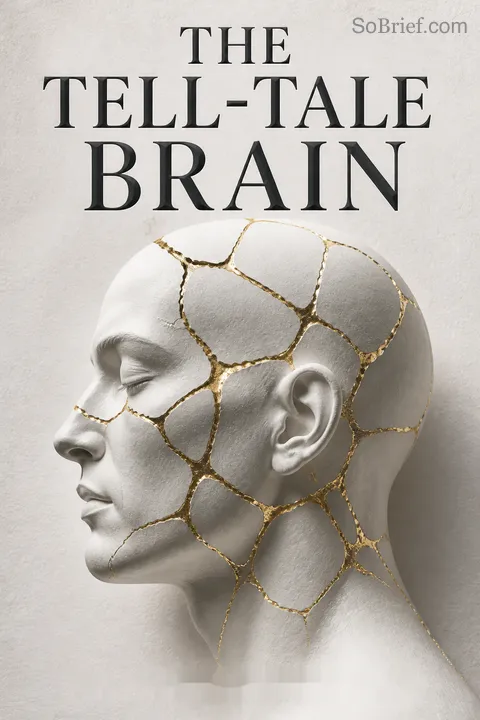
The Tell-Tale Brain explores human consciousness through neuroscience, examining brain abnormalities and injuries to understand normal functioning. Ramachandran discusses mirror neurons, phantom limbs, synesthesia, and autism, offering insights into language, aesthetics, and self-awareness. Readers praise the book's fascinating content and readability, though some find it repetitive or speculative. Critics note the author's self-aggrandizing tone and controversial views on human uniqueness. Despite these concerns, many consider it an engaging introduction to neuroscience, appreciating Ramachandran's creative approach to unraveling the brain's mysteries.
People Also Read




Glossary
Mirror visual feedback
Visual movement feedbackA technique that uses a mirror to make a healthy limb appear where a missing or impaired limb should be. The reflected movement can give the brain visual evidence that the affected limb is moving. Ramachandran describes its use in attempts to reduce phantom limb pain and support recovery after stroke.
Mirror neurons
Action observation cellsNeurons, or connected neural circuits, that respond both when an individual performs an action and when that individual observes a similar action performed by someone else. The book proposes that this activity may support imitation and the interpretation of intentions. The broader claims about empathy, language, and self-awareness are hypotheses, not established functions of a single neuron type.
Synesthesia
Crossed sensory experienceA condition in which a stimulus in one domain consistently evokes an additional experience in another. A person may experience particular numbers as colored, or sounds as having colors or shapes. The book presents behavioral tests suggesting that some synesthetic experiences act like perceptual responses rather than deliberate metaphors or ordinary memories.
Cross-activation
Linked activity between areasRamachandran’s proposed explanation for some forms of synesthesia. Under this account, activity in one brain region, such as one involved in processing numbers, also activates a neighboring or connected region involved in color. The result is an additional sensory experience. The book discusses both extra connections and reduced inhibition as possible routes.
Synkinesia
Linked movements across partsA term Ramachandran proposes for linked or echoed movements between body parts, especially connections between hand gestures and movements of the mouth or tongue. He suggests that such links may have helped gestures scaffold early speech. In the book, this is an evolutionary hypothesis rather than an established account of language origins.
Protolanguage
Early language without full syntaxA presumed early form of language that can convey meaning by combining words but lacks the flexible grammatical structure of modern human language. The book treats protolanguage as a possible transitional stage between simpler communication and full language, which includes function words and recursive sentence structure.
Exaptation
Repurposing an evolved featureThe use of a biological structure or ability for a function different from the one that shaped its original evolution. The structure may then be further modified for the new use. Ramachandran applies this idea to human brain functions, proposing that capacities developed for movement or perception could later support language, abstraction, or culture.
Mismatch aversion
Distress from conflicting signalsRamachandran’s proposed tendency for the brain to find contradictions among its own signals disturbing. In his account, a mismatch between recognition and emotional familiarity, or between bodily sensation and body image, can prompt discomfort or an implausible explanation that restores coherence. It is a proposed organizing idea for certain neurological symptoms.
Metarepresentation
Representation of a representationA higher-level representation created by processing more basic sensory or mental information. In the book’s account, metarepresentations let people organize objects and experiences into meaningful concepts that can be linked to language, memory, and deliberate thought. They are not inner pictures watched by a hidden observer, but further processing of information.
Salience landscape theory
A model of emotional importanceA proposed account of how the brain assigns emotional importance to things in the environment. Ramachandran suggests that altered connections among sensory regions, emotional systems, and the body’s arousal responses could make trivial stimuli seem overwhelming while socially important cues are overlooked. He uses the idea to address some features of autism, while recognizing that it requires further testing.
FAQ
What's The Tell-Tale Brain about?
- Exploration of Human Uniqueness: The book investigates what makes humans unique by examining the connections between the brain, mind, and body. It uses neurological phenomena and disorders to explore human consciousness and capabilities.
- Case Studies and Insights: V.S. Ramachandran shares case studies of patients with unusual neurological conditions, such as phantom limbs and synesthesia, to explore broader questions about perception and self-awareness.
- Interdisciplinary Approach: Combining neuroscience, psychology, and philosophy, the book offers a multidisciplinary perspective on the human experience, emphasizing the importance of understanding brain evolution.
Why should I read The Tell-Tale Brain?
- Engaging Narrative Style: Ramachandran writes in an accessible manner, making complex scientific concepts understandable for a general audience, with a storytelling approach that keeps readers engaged.
- Fascinating Case Studies: The book includes intriguing real-life examples that illustrate the complexities of the human brain and mind, providing context for scientific discussions.
- Insight into Human Nature: Readers gain a deeper understanding of creativity, consciousness, and the mind-body connection, provoking thought and inspiring curiosity about mental processes.
What are the key takeaways of The Tell-Tale Brain?
- Human Uniqueness: Humans possess unique cognitive abilities that have evolved over time, with brain structure and function setting us apart from other species.
- Neuroplasticity: The brain's ability to adapt and reorganize itself, even in adulthood, is crucial for recovery from injuries and understanding learning and skill development.
- Interconnectedness of Brain Functions: Different brain regions work together to create perceptions and experiences, shedding light on neurological disorders and human behavior.
How does V.S. Ramachandran explain synesthesia in The Tell-Tale Brain?
- Blending of Senses: Synesthesia involves the automatic, involuntary experience of one sensory pathway when another is stimulated, such as seeing colors when hearing music.
- Real Sensory Experience: Synesthetes genuinely perceive these experiences, as demonstrated through experiments measuring physiological responses like galvanic skin response (GSR).
- Genetic and Anatomical Basis: Cross-activation between adjacent brain areas responsible for different sensory modalities may cause synesthesia, influenced by genetic factors.
What is the significance of mirror neurons in The Tell-Tale Brain?
- Empathy and Social Understanding: Mirror neurons activate when performing or observing an action, playing a crucial role in empathy and understanding others' intentions.
- Cultural Transmission: They facilitate imitation, essential for cultural learning and the transmission of knowledge, contributing to the development of language and social skills.
- Evolutionary Significance: The evolution of mirror neurons may have been key in developing uniquely human traits, such as complex social interactions and communication.
How does The Tell-Tale Brain explain the concept of phantom limbs?
- Phantom Limb Phenomenon: Amputees often feel sensations in missing limbs because the brain retains a map of the limb, even after removal.
- Neuroplasticity in Action: The brain's ability to adapt is shown in patients who feel sensations in phantom limbs when their face is touched, demonstrating plasticity and new connections.
- Mirror Box Therapy: This technique helps alleviate phantom limb pain by creating the illusion of movement, helping patients regain control and reduce discomfort.
How does The Tell-Tale Brain link art and neuroscience?
- Aesthetic Laws: Ramachandran outlines universal laws of aesthetics that govern our appreciation of art, rooted in how our brains process visual information.
- Neural Mechanisms: Specific brain areas, like the angular gyrus, are involved in art perception and creation, highlighting the biological basis of aesthetics.
- Cultural Significance: While art appreciation is influenced by culture, underlying neural principles are universal, enriching our understanding of art.
What does The Tell-Tale Brain say about the evolution of language?
- Language as an Evolved Trait: Language evolved from earlier communication forms, closely tied to the evolution of the human brain and its structures.
- Role of Mirror Neurons: Mirror neurons may have contributed to language evolution by enabling imitation of sounds and gestures, essential for learning linguistic skills.
- Cognitive and Social Factors: Language reflects cognitive and social capabilities, with its interplay with thought and interaction central to understanding human uniqueness.
What are the best quotes from The Tell-Tale Brain and what do they mean?
- “Any ape can reach for a banana, but only humans can reach for the stars.”: Highlights human cognitive abilities and aspirations that set us apart from apes, emphasizing creativity and exploration.
- “The brain is an extraordinarily plastic biological system.”: Emphasizes the brain's adaptability and reorganization throughout life, crucial for recovery and learning.
- “Synesthesia is a genuine sensory phenomenon.”: Affirms synesthesia as a real experience, highlighting the complexity of human perception and brain function.
How does V.S. Ramachandran address the nature of self-awareness in The Tell-Tale Brain?
- Self-Recognition and Consciousness: Explores the neurological basis of self-awareness, examining how the brain constructs our sense of self through cases of disrupted self-recognition.
- Neuroanatomical Insights: Specific brain regions, like the prefrontal cortex, play crucial roles in self-awareness and introspection, providing insights into consciousness and identity.
- Philosophical Implications: Raises philosophical questions about the self and consciousness, inviting readers to ponder human existence complexities.
What is the significance of the Capgras syndrome in The Tell-Tale Brain?
- Disconnection of Recognition and Emotion: Capgras syndrome involves believing familiar individuals are imposters, due to a disconnection between visual recognition and emotional response.
- Neurological Basis: Damage to specific brain pathways can lead to this syndrome, illustrating the connections between perception, emotion, and identity.
- Implications for Understanding Identity: Raises questions about identity and emotional connections in recognition, exploring themes of self-awareness and human experience.
How does The Tell-Tale Brain relate art to neuroscience?
- Neural Responses to Art: Explores how brain areas respond to artistic stimuli, linking aesthetic appreciation to neural mechanisms.
- Cultural Evolution: Art has played a significant role in human evolution, shaping social structures and communication through shared experiences.
- Art as a Reflection of the Mind: Artworks reflect cognitive processes, revealing insights into human nature and consciousness.
About the Author
Other books by V.S. Ramachandran
Download PDF
Download EPUB
.epub digital book format is ideal for reading ebooks on phones, tablets, and e-readers.








