

Key Takeaways
Treat leadership as a choice to contribute, not a title to hold
Influence starts anywhere. The guide rejects the idea that leadership belongs only to charismatic people or students with official roles. A student can lead a committee without chairing it, improve a team without captaining it, or take responsibility for a problem in their community. Leadership is a set of learnable behaviors, expressed through relationships and action, rather than a position someone is granted.
The invitation is practical. The book’s research began by collecting thousands of accounts of people leading at their personal best. Across different ages, cultures, and settings, these stories shared recognizable patterns. The implication is not that everyone must lead constantly, but that anyone can choose to step forward when a group needs direction, initiative, trust, or encouragement.
What's useful about this definition is that it shifts attention from status to agency. A title can clarify responsibility, but it cannot guarantee that anyone will notice a problem or help a group respond. This view also makes leadership more teachable: observable actions can be practiced and discussed. The caution is that saying everyone can lead should not obscure unequal access to authority or resources. Informal influence matters, but institutions still need to make room for people without titles to be heard and supported.
Study your best leadership moment for behaviors you can repeat
Start with evidence from yourself. The Personal-Best Leadership Experience asks students to describe a specific project in which they helped others accomplish something they were proud of. They recall their role, the actions they took, setbacks, and what other people did in response. Then they identify the lessons and advice their experience offers. Formal authority is not required.
Look for recurring moves. When students share their accounts, facilitators help them notice common behaviors, such as communicating clearly, keeping the group focused, or helping people feel included. The guide’s five-practice model organizes these into a connected set of leadership activities: demonstrate shared values, imagine a better future, improve the way work gets done, help others contribute, and sustain effort through recognition. The model is a map for reflection, not a script for acting alike.
This exercise has a strong advantage over beginning with abstract leadership ideals: it grounds learning in an event the student can examine firsthand. That resembles reflective practice in fields where people improve by reviewing performance, identifying choices, and testing adjustments. It also reduces the temptation to imitate a famous leader’s personality. Still, a memorable success can be shaped by luck, favorable circumstances, or other people’s labor. Comparing several experiences and inviting peer perspectives helps separate repeatable behavior from a flattering story about oneself.
Make your values visible in choices, promises, and follow-through
Credibility is built in public. Before asking others to trust a direction, a leader needs to understand what they stand for and explain it in their own words. The guide also stresses that personal values alone are not enough: a group should discuss which principles it shares and what those principles mean in practice. The same value can mean different things to different people until they clarify it together.
Actions are the test. A leader who praises punctuality but regularly arrives late teaches a more powerful lesson than the speech does. The guide urges students to examine how they spend time, keep track of commitments, seek feedback about their impact, and address behavior that conflicts with agreed standards. If a promise cannot realistically be kept, declining it is better than casually damaging trust.
Values become useful when they guide decisions under pressure, not when they decorate a mission statement. This connects leadership credibility to consistency: people can make better predictions about a leader whose conduct matches their stated priorities. Shared values also create a basis for accountability that is less arbitrary than personal preference. The difficult question is who gets to define the group’s principles. Genuine agreement requires room for dissent, and apparent consensus can hide the fact that quieter members felt unable to disagree.
Describe a future that connects the group’s hopes to a common purpose
Make possibility concrete. A vision is not merely a list of tasks or a target number. It is a clear picture of how the group could become better and why that improvement matters. The guide asks leaders to imagine the details, communicate with energy, and explain the purpose behind the work. A class project, for instance, can be framed not just as a presentation to finish, but as a chance to produce work the team is proud to share.
Make it shared. Leaders need to learn what group members hope to gain and what they want the group to become. Those interests help shape a future people can recognize themselves in. The film example Invictus shows Nelson Mandela seeking to use South Africa’s rugby team and the 1995 World Cup as a point of connection in a divided country. The lesson is to invite participation, not simply announce a leader’s private dream.
A shared future can coordinate effort because it gives everyday tasks a reason beyond completion. The idea also aligns with self-determination theory, which emphasizes that motivation is stronger when people experience purpose and ownership rather than mere compliance. The guide’s emphasis on optimism is most persuasive when paired with listening and honest constraints. A vision that ignores people’s competing needs, or promises more than circumstances permit, can sound like salesmanship. Hope is a leadership resource when it remains connected to reality and collective choice.
Test improvements in small steps, then treat setbacks as information
Change begins with a question. Students are urged to look beyond habit and ask whether a familiar process could work better. The guide calls looking beyond one’s own experience “outsight”: seeking ideas from other people, groups, and settings. In its parking exercise, student teams generate possible solutions to a campus problem, then exchange ideas with another team and build on them.
Make risk manageable. Rather than wait for a perfect plan, leaders can break a large challenge into achievable steps. The guide calls these incremental advances “small wins.” They provide evidence of progress and let a group adjust before committing to a larger change. When an attempt fails, ask what the experience revealed and what to change next time. Challenge is not rule-breaking for its own sake; the point is improvement for the group’s benefit.
The combination of experimentation and small steps is a practical antidote to both inertia and grandiose plans. It resembles iterative design: try a limited intervention, observe what happens, and revise. Small tests can make uncertainty less intimidating while giving the group concrete information. But experimentation needs boundaries. A failed idea can be a learning opportunity when the costs are tolerable and responsibility is clear. In high-stakes situations, leaders should not romanticize risk or treat other people’s losses as harmless tuition.
Share authority so others gain the confidence and skill to lead
Trust is a working condition. A group cannot do its best when members feel dismissed, excluded, or unable to rely on one another. Leaders build trust by listening to different viewpoints, treating people with respect, and making cooperative goals and responsibilities clear. The guide’s blindfolded-square activity makes the issue tangible: a group must coordinate around a shared task with limited information, then reflect on how communication and participation shaped the result.
Give people real ownership. Delegating is not simply handing off chores while keeping every decision. Students are encouraged to let others choose how to complete meaningful work, support their decisions, and create opportunities for them to take leadership responsibilities. This may take longer than doing everything alone, but it develops competence and confidence across the group. The aim is to make the group less dependent on one person, not to make the leader indispensable.
This account treats empowerment as a capability-building process, not a motivational slogan. Autonomy gives people room to exercise judgment, while support and practice help them build the competence to use it. That combination is more likely to produce durable participation than delegation without guidance. It also exposes a common tension: leaders remain accountable for outcomes but cannot control every action. Clear roles, appropriate discretion, and opportunities to learn from mistakes make shared responsibility safer than either micromanagement or abandonment.
Recognize specific effort while the group is still doing the hard work
Notice what moves the group forward. Recognition matters most when it identifies a real contribution and explains why it helped. The guide recommends personalizing appreciation rather than relying on generic praise. A leader might publicly thank someone for including a quieter member in a project discussion, connecting the action to the group’s commitment to collaboration.
Celebrate along the way. Recognition is not reserved for a final banquet or certificate. Encouragement during difficult work, acknowledgment of milestones, and modest celebrations can help people feel valued and connected. The guide’s “Web of Appreciation” activity has each participant name someone’s contribution and pass along a ball of yarn, creating a visible network of recognition. Celebrations should reflect genuine achievements and shared values; elaborate praise that feels staged can weaken trust instead of strengthening it.
Specific recognition communicates two things at once: that an individual’s effort was seen and that the group understands what kind of contribution it values. This can reinforce belonging without making rewards the sole reason to participate. The emphasis on timing is important because appreciation after a project ends cannot support someone through its hardest stretch. Public praise, however, is not universally welcome. Leaders should learn whether a person prefers private thanks, public acknowledgment, or another form of recognition, and avoid turning appreciation into a popularity contest.
Use feedback as behavioral data, then practice one change at a time
Measure actions, not identity. The Student Leadership Practices Inventory, or Student LPI, asks students and observers to rate how often specific behaviors occur. It covers thirty behaviors across five practices, using a five-point frequency scale. In the 360 version, observers may include peers, teachers, coaches, or teammates. The guide recommends inviting eight to ten observers when possible, so the picture is not based on one person’s view.
Turn feedback into a plan. The report is a snapshot, not a verdict. Students compare their own ratings with observers’ views, choose one practice and one behavior to work on, decide how to demonstrate it, and make a commitment to someone else. The guide reports associations between more frequent use of these behaviors and assessments such as effectiveness, cohesion, and satisfaction. It also warns that greater awareness can initially lower a student’s scores, even when learning is underway.
The instrument’s behavior-based design is a strength: “How often did this happen?” is more actionable than a broad judgment about whether someone is a natural leader. Multiple observers can also reveal blind spots between intention and impact. Yet ratings remain context-dependent observations, not objective measures of a person’s worth or a causal guarantee of success. A student may behave differently across groups, and observers may have unequal opportunities to see that behavior. The most defensible use is developmental: examine patterns, ask what might explain them, and test a specific adjustment.
Keep taking responsibility for problems, while preparing others to carry the work
Turn concern into participation. The guide closes with Melissa Poe, who began an environmental club as a child with six members at her school. Kids F.A.C.E. expanded to more than 2,000 chapters in twenty-two countries and, by the account given, 500,000 members. At seventeen, Poe stepped aside and handed leadership to younger students because she wanted the organization to remain in young people’s hands. Her story joins initiative with succession: seeing a problem can prompt action, and action can bring others into the work.
Make development continuous. The Personal Leadership Journal turns learning into a repeating cycle: choose an action, reflect on what happened, and decide what to try next. It recommends S.M.A.R.T. actions, meaning specific, measurable, attainable, realistic, and timely. The guide also encourages feedback, coaching, progress checks, and an accountability partner. Leadership development is not complete when a workshop ends; it depends on applying and revising behaviors in real group settings.
Poe’s story gives the book’s broad claim about student leadership a concrete test: influence is not only the ability to start something, but the judgment to make room for successors. That connects leadership development with institutional continuity. A founder who remains the sole source of energy may build a successful project that cannot outlast them; transferring responsibility distributes both skill and ownership. The journal’s action-reflection cycle supports that transfer at an individual level. Its limitation is familiar: plans help, but time, authority, and organizational support determine whether practice can become routine.
Analysis
The book is best understood as a teaching system built around a research-derived model, rather than as a conventional argument or a collection of inspiring student stories. Its central contribution is to make leadership observable and teachable: clarify shared values, present an inclusive future, improve existing methods, build other people’s capacity, and sustain effort through meaningful recognition. The facilitation guide then translates those ideas into an instructional sequence, combining personal narratives, structured discussion, assessment, activities, and follow-up practice.
The sequence matters. Students begin with their own successful experience, which gives the model a personal reference point rather than asking them to accept an abstract theory. They then receive behavioral feedback and choose a limited development target. In this sense, the guide treats leadership as a cycle of action and reflection, not a set of traits bestowed on a few exceptional individuals. Its strongest practical insight may be that leadership is both relational and distributed: the leader’s work includes creating conditions in which others can contribute and grow.
The Student LPI supplies a measurement layer, but its results should be interpreted cautiously. The book reports that scores correlate with perceived effectiveness, cohesion, and related outcomes. Such associations are useful evidence that the behaviors matter, but they do not by themselves prove that the assessment causes better leadership or that every behavior has equal value in every setting. Observer feedback can also reflect limited contact, group norms, or differing expectations. The guide partly anticipates these concerns by treating reports as developmental snapshots rather than rankings.
A further tension runs through the model: leaders are asked to express conviction while also listening, share a vision while making it genuinely collective, and hold people accountable while granting autonomy. Those are not contradictions to eliminate. They are judgment calls that depend on context. The framework is most valuable when used as a vocabulary for examining those trade-offs, not as a checklist that guarantees exemplary conduct. Its practical promise is modest but meaningful: ordinary students can build influence by choosing behaviors, asking for feedback, and practicing them with other people.
Review Summary
Glossary
The Five Practices of Exemplary Leadership
Five learnable leadership practicesThe book’s research-based model for describing behaviors associated with effective leadership. Its five areas are expressing and living shared values, engaging people around a better future, pursuing improvement through initiative and learning, building trust and others’ capacity, and recognizing contributions to sustain group spirit. The model is intended as a developmental guide, not a fixed personality test.
Student Leadership Practices Inventory
Behavior-based leadership assessmentA thirty-item assessment designed to help students examine how frequently they demonstrate behaviors associated with the five leadership practices. The self-assessment can be paired with anonymous observer ratings from people who have seen the student in action. Results are intended to support reflection and behavior change, rather than to rank students or judge their underlying character.
Personal-Best Leadership Experience
Review of a successful leadership episodeA reflective exercise in which a student describes a specific project or undertaking where they helped others achieve an outcome they value. The student recalls their role, actions, difficulties, and results, then identifies lessons they can apply again. The exercise can include formal and informal leadership, including situations where the student had no official authority.
outsight
Ideas gathered beyond oneselfThe guide’s term for looking outside one’s own experience to find useful perspectives, practices, and solutions. A student leader might learn from another campus group, invite peers to propose alternatives, or study how a different team handles a similar challenge. Outsight widens the ideas available to a group instead of relying only on its existing habits.
small wins
Incremental signs of progressManageable advances that move a group toward a larger goal while making progress easier to see. Leaders break difficult work into achievable steps, recognize what has improved, and use each attempt to learn. Small wins can build confidence and momentum, while also giving a group chances to adjust before investing in a larger change.
S.M.A.R.T. actions
Structured action-setting methodA planning method the guide recommends for turning leadership intentions into concrete commitments. The letters stand for specific, measurable, attainable, realistic, and timely. Students use the prompts to define what they will do, how they will recognize completion or progress, and when the action will occur. The method supports deliberate practice by making intentions easier to act on and review.
A Longitudinal Study Examining Changes in Students’ Leadership Behavior
Study of student leadership over timeA study cited by the guide that examined students’ leadership behaviors from their first year through their senior year. It reported increased frequency of leadership behaviors over time and differences between seniors who had participated in a leadership development program and a comparison group who had not. The book presents the findings as evidence that formal development programs can contribute to student leadership growth.
FAQ
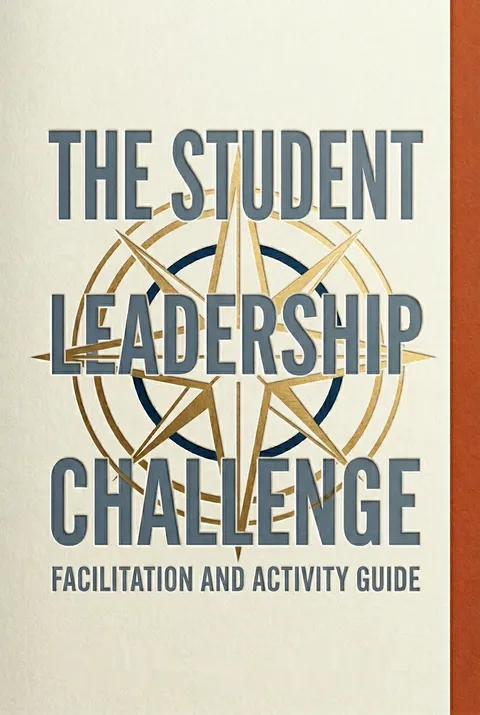
What is The Student Leadership Challenge by James M. Kouzes about?
- Comprehensive leadership framework: The book introduces The Five Practices of Exemplary Leadership®, a research-based model for developing leadership skills in students.
- Leadership as behavior: It emphasizes that leadership is about actions and relationships, not just positions or titles.
- Student-centered approach: The guide is tailored to help students mobilize others and achieve extraordinary outcomes in various settings.
- Practical tools included: It offers facilitation guides, activities, and self-assessment tools like the Student Leadership Practices Inventory (Student LPI).
Why should I read The Student Leadership Challenge by James M. Kouzes?
- Empowers all students: The book dispels the myth that leadership is reserved for a select few, showing every student can lead and make a difference.
- Evidence-based and practical: Grounded in over three decades of research, it translates leadership theory into actionable behaviors.
- Comprehensive resources: Readers gain access to tools like the Student LPI and Personal Leadership Journal for ongoing self-development.
- Inspires lifelong growth: It motivates students and educators to view leadership as a continuous journey requiring deliberate practice.
What are the key takeaways from The Student Leadership Challenge by James M. Kouzes?
- Leadership is accessible: Leadership is a set of behaviors anyone can learn and practice, not just a position.
- Five Practices model: The Five Practices of Exemplary Leadership provide a clear, actionable framework for effective leadership.
- Self-assessment and reflection: Tools like the Student LPI and Personal Leadership Journal support self-awareness and targeted growth.
- Collaboration and recognition: The book highlights the importance of enabling others and celebrating achievements to sustain motivation.
How does The Student Leadership Challenge by James M. Kouzes define leadership?
- Mobilizing others: Leadership is defined as “the art of mobilizing others to want to struggle for shared aspirations.”
- Focus on influence: It’s about inspiring and engaging people toward common goals, not about authority or position.
- Behavior and action: Leadership is demonstrated through specific, learnable behaviors.
- Embracing challenge: Effective leaders are willing to take risks, innovate, and learn from failures.
What are The Five Practices of Exemplary Leadership in The Student Leadership Challenge by James M. Kouzes?
- Model the Way: Leaders clarify values and set an example by aligning actions with those values.
- Inspire a Shared Vision: Leaders envision an exciting future and enlist others by appealing to shared aspirations.
- Challenge the Process: Leaders seek opportunities for innovation, take risks, and learn from mistakes.
- Enable Others to Act: Leaders foster collaboration, build trust, and empower others to act.
- Encourage the Heart: Leaders recognize contributions and celebrate achievements to sustain motivation.
How does the Student Leadership Practices Inventory (Student LPI) work in The Student Leadership Challenge by James M. Kouzes?
- 360-degree assessment: The Student LPI is a 30-item tool that gathers feedback from self, peers, and advisors on leadership behaviors.
- Behavior-focused: It measures how frequently students engage in actions aligned with The Five Practices.
- Guides development: Results help students identify strengths and areas for improvement, setting actionable goals.
- Reliable and research-backed: The Student LPI has strong psychometric properties and correlates with leadership effectiveness.
How does The Student Leadership Challenge by James M. Kouzes approach "Model the Way"?
- Clarify and affirm values: Leaders identify their personal values and align them with group values.
- Lead by example: Consistently acting in accordance with stated values builds credibility and trust.
- DWYSYWD principle: “Do What You Say You Will Do” is emphasized as the cornerstone of leadership credibility.
- Accountability: Leaders ensure group members uphold agreed-upon principles and standards.
What strategies does The Student Leadership Challenge by James M. Kouzes suggest for "Inspire a Shared Vision"?
- Envision the future: Leaders articulate a compelling and positive vision for what’s possible.
- Connect to aspirations: They link the vision to the interests and dreams of others, creating excitement and commitment.
- Communicate passionately: Leaders use stories, metaphors, and enthusiasm to make the vision vivid and inspiring.
- Foster shared purpose: The practice focuses on building unity around common goals.
How does The Student Leadership Challenge by James M. Kouzes develop "Challenge the Process"?
- Encourage innovation: Leaders are urged to seek new ways of doing things and to challenge the status quo.
- Take risks and learn: The book advocates for experimentation, learning from mistakes, and celebrating small wins.
- Break down big projects: Leaders are taught to divide large challenges into manageable parts to build momentum.
- Use “outsight”: Gathering ideas from outside one’s own experience broadens perspective and fosters creativity.
What does "Enable Others to Act" mean in The Student Leadership Challenge by James M. Kouzes?
- Build trust and collaboration: Leaders create an environment of mutual respect and shared decision-making.
- Empower others: They provide opportunities for others to lead and support their autonomy.
- Active listening: Leaders value diverse viewpoints and treat others with dignity.
- Develop competence and confidence: By supporting and encouraging others, leaders help them grow into leaders themselves.
How does "Encourage the Heart" sustain motivation in The Student Leadership Challenge by James M. Kouzes?
- Recognize contributions: Leaders provide meaningful appreciation for individual and group achievements.
- Personalize recognition: Tailoring acknowledgment to individuals’ preferences makes it more impactful.
- Celebrate milestones: Leaders find opportunities to celebrate both small wins and major accomplishments.
- Build community: Regular recognition and celebration foster a sense of belonging and shared purpose.
How can educators and facilitators use The Student Leadership Challenge by James M. Kouzes to teach leadership?
- Flexible curriculum: The book offers adaptable curricula for workshops, courses, and retreats.
- Experiential activities: It includes hands-on activities, movie discussions, and reflection exercises to deepen learning.
- Ongoing development: Tools like the Personal Leadership Journal and Student LPI support continuous growth.
- Facilitation guidance: The guide provides strategies for interpreting feedback, supporting emotional responses, and fostering accountability.
About the Author
Other books by James M. Kouzes



Download PDF
Download EPUB
.epub digital book format is ideal for reading ebooks on phones, tablets, and e-readers.








