

Key Takeaways
Define success by the life you inhabit, not the life you advertise
The polished version cracked. In 2018, Emma Gannon travelled to give a well-paid keynote, dressed for the success she had imagined. On the flight, a fellow passenger calmly said she felt content with what she had achieved. Gannon’s opposite reaction startled her: she was terrified of not achieving enough. After the talk, she returned to her hotel room and sobbed. Her busy career looked enviable from the outside, but she had neglected friends, rest, and a life beyond work.
The real measure is daily. The book argues that society sells a narrow picture of success, built from status, money, visibility, and milestones. Gannon’s interviews with more than 400 accomplished people showed that achievement does not automatically resolve loneliness, insecurity, or distress. Success needs a personal definition, grounded in how life feels and functions day to day.
What's striking is how the airplane conversation exposes the gap between achievement and sufficiency before the author can explain it away. The passenger's calm is not presented as proof that ambition is foolish, but as evidence that its value depends on what a person actually wants. This distinction resembles the difference between external validation and internal motivation: applause can confirm that a goal was reached without confirming that it was worth pursuing. The useful test is not whether a life looks impressive, but whether its ordinary routines are acceptable to the person living them.
Work hard, but stop treating effort as a guarantee of equal outcomes
Success has many inputs. Gannon rejects the promise that anyone can achieve anything simply by wanting it enough. Talent and persistence matter, but so do timing, luck, money, contacts, discrimination, and access to support. A refugee who becomes a barrister can inspire others, yet that exceptional story does not prove everyone faced the same barriers or had the same chances.
Effort still matters. Gannon does not argue that hard work is useless. She describes writing consistently while recognizing that a stranger’s decision, market conditions, and timing could determine whether her novel became a television project. Research cited in the book also reports that candidates with Chinese names needed 68 percent more applications than candidates with Western-sounding names to reach interviews. A fair account of success names both effort and advantage.
This account improves on both the meritocratic myth and its mirror image, fatalism. Recognizing unequal starting conditions makes outcomes more legible, while retaining the value of effort preserves agency. The distinction matters in workplaces: crediting luck need not erase skill, and recognizing barriers need not imply that every result is predetermined. One caution is that lists of advantages can become too broad to guide action. Their practical value comes when they help identify a specific obstacle, a resource to share, or a rule that can be changed.
Stop demanding constant happiness; make room for the full emotional weather
A good life has mixed weather. Gannon describes enjoying an ice cream in Copenhagen without feeling permanently happy. The moment brought pleasure, not a lasting emotional transformation. She argues that joy can be brief, while meaningful experiences often mix delight with fear, sadness, or nostalgia. Looking at old photographs with her husband, for example, brought gratitude for their shared past and sadness that their younger selves were gone.
Feelings carry information. The book challenges toxic positivity, the pressure to perform cheerfulness and treat difficult feelings as failures. It cites rising distress, including a finding that 74 percent of UK adults had felt overwhelmed by stress in the previous year. Gannon suggests noticing and naming emotions instead of suppressing them, while seeking professional help when distress becomes serious.
The distinction between momentary joy and permanent happiness is more than a vocabulary correction. It changes the standard by which a life is judged: a day can be worthwhile without feeling euphoric from morning to night. Emotional research broadly supports the usefulness of identifying feelings rather than simply pushing them away, though naming an emotion is not a substitute for treatment when symptoms are severe. The book is strongest when it resists turning acceptance into another performance standard. A person need not become serenely accepting of every hardship to stop pretending to be fine.
Protect rest, and judge goals by the life required to reach them
Output is not a full measure. Gannon describes a culture that prizes long hours, punishes pauses, and turns even rest into a task to complete efficiently. Her alternative is to treat rest as a real need, not a reward earned after every item is crossed off. She uses temporary routines, practical habits kept available for unsettled periods, such as a walk, a break from social media, or short timed writing sessions.
Value the doing. A milestone goal focuses on the endpoint, such as publishing a book. A process goal focuses on the activity that gets someone there, such as writing regularly and finding some satisfaction in it. The shift matters because most life is spent in the process, not at the finish line. Gannon also warns that constant output can make people unable to register what they have accomplished.
This section challenges a productivity culture that treats human limits as inefficiencies to be engineered away. Process goals offer a sounder measure because they connect action to repeatable behavior rather than a result partly controlled by other people. Still, rest cannot be reduced to a personal routine when job design, staffing, and income determine whether someone can take time off. The strongest implication is therefore both individual and institutional: people can practice boundaries, while employers must stop making recovery a private problem for workers to solve alone.
Build an identity that survives losing, changing, or leaving your job
A job is one part. Gannon’s turning point came when a massage therapist asked about her hobbies and she could think of nothing outside work. She had treated writing and career achievements as her whole identity, then realized that success had crowded out friendships, play, and other parts of herself. Work can be meaningful, but it cannot provide emotional care in return or guarantee lasting security.
Separate roles from worth. The book describes how personal branding can make a person feel like a product, especially when work depends on promoting a public image. Gannon recommends creating boundaries between roles, such as closing an office door at day’s end or using separate work and personal accounts. A broader identity, made up of relationships, interests, and values, can soften the blow when a career changes or disappoints.
A distributed identity is a form of resilience. When self-worth rests on one role, a setback at work can feel like a verdict on the whole person. Multiple sources of identity allow a disappointment to remain specific rather than total. Yet the separation is not always easy: for artists, caregivers, and people with precarious work, vocation and survival can be tightly linked. The aim is not to pretend work is unimportant, but to prevent employers, audiences, or professional metrics from becoming the sole authorities on a person's value.
Seek financial security, not endless wealth or fame as emotional insurance
Money matters, but has limits. Gannon is explicit that financial stability can improve health, safety, and freedom. The problem is the leap from “money helps” to “more money will make every part of life better.” She cites a 2010 study that found reported happiness rose with income up to a threshold, then showed little additional gain. Its estimated threshold was about $75,000 in the United States at the time, a figure that needs adjustment for inflation, location, and household needs.
Status is not connection. The book also questions celebrity and conspicuous consumption. Famous people may gain access and attention while losing privacy and trust. One study cited found that people displaying high-status goods were less appealing as potential friends than people displaying neutral markers. Money can buy comfort; it cannot guarantee belonging, purpose, or peace.
The distinction between security and excess is essential because arguments against materialism can sound glib to anyone facing rent, medical bills, or food costs. The book avoids that mistake by affirming money's real protective function before questioning its emotional promises. The cited income threshold should be treated as historical evidence, not a universal target: needs and costs vary dramatically. The deeper point is about marginal value. Once material resources are adequate, social connection and control over time may matter more than another visible purchase or status symbol.
Let ambition change shape, including downward, sideways, or toward service
The ladder is optional. Gannon’s ambitions once meant leaving her hometown, climbing professionally, and proving herself. Later, she found that a pay cut and a move into writing brought her closer to the life she wanted. She argues that a career can work more like a jungle gym than a ladder: a sideways move, a pause, or a lower-paid role can be progress if it improves the fit between work and life.
No is a form of choice. Olympic gymnast Simone Biles withdrew from competition to protect her wellbeing, challenging the belief that persistence always requires pushing through. Gannon also draws on the idea of a “company of one,” a business designed to remain deliberately small rather than grow at all costs. Ambition can mean contribution, stability, or having enough, not always expansion.
This is a persuasive correction to the assumption that every promotion is progress. Career decisions are multidimensional: authority, pay, autonomy, craft, and time do not always rise together. A lateral move may improve one dimension while reducing another, so the relevant question is which trade-off fits a person's priorities. The argument also benefits from distinguishing a freely chosen limit from a limit imposed by exclusion or exhaustion. Choosing enough can be liberating, but it should not be used to romanticize conditions that leave people with too few real options.
Question inherited milestones before organizing your life around their approval
The checklist is cultural. Gannon names familiar markers of a supposedly successful adulthood: a degree, a good job, a home, marriage, and children. She asks readers to separate inherited expectations from genuine desire. Her own decision not to have children is one example of how a person can love children and still not want parenthood. Other people may genuinely want the same milestone; the point is not to rank their choices, but to stop treating one path as compulsory.
Life includes in-between years. Between jobs, relationships, homes, or major decisions, people often feel pressure to produce a tidy answer to “How is life?” Gannon calls these uncertain intervals liminal spaces. They are not evidence of failure. She also urges celebration of milestones beyond weddings and babies, such as recovery, a new friendship, or simply building a life that fits.
Milestones serve a social function: they make lives easy to narrate and give communities shared occasions for recognition. Their danger is not that they exist, but that their visibility can make other choices seem deficient. This is especially consequential for people whose choices are already questioned, including those who are single, childfree, or changing careers. The book's invitation to celebrate alternative milestones is a practical cultural intervention. Individual self-acceptance helps, but recognition from friends and families can make less conventional lives feel genuinely livable.
Treat achievement as an event, not the doorway to a permanently better self
The finish line moves. After publishing her first book, Gannon expected her life to feel transformed. Instead, the launch passed, sales disappointed, and she felt much as she had before. This is the arrival fallacy: the mistaken belief that reaching a goal will produce lasting happiness. The same pattern appeared after other career milestones. Success brought real pleasure and opportunity, but no permanent escape from ordinary worries or personal pain.
Use the pause to recalibrate. The book describes “phase one” as pursuing conventional markers such as money, status, and career achievement, and “phase two” as reconsidering those markers in favor of inner contentment. This is not a compulsory sequence or a rejection of goals. It is an invitation to ask what a goal is meant to provide, identify the feeling beneath it, and find ways to experience more of that feeling in daily life.
The arrival fallacy explains why achievement can disappoint without making the achievement meaningless. Goals organize effort and can create genuine satisfaction, but they are poor containers for permanent identity change. The useful adjustment is not to lower every aspiration, but to stop assigning a single future event the task of repairing a whole life. The phase model is memorable, though it risks implying a neat progression. In practice, people can value security and inner contentment at once, and their priorities may shift repeatedly rather than move through a one-way transformation.
Analysis
The book’s central intervention is to treat success as a contested cultural story rather than a neutral measure of achievement. Gannon builds that case through a memoir-inflected sequence: a glamorous keynote ends in tears, interviews with accomplished people reveal private dissatisfaction, and familiar ideals of happiness, productivity, celebrity, wealth, ambition, and life milestones are examined in turn. The structure makes the argument emotionally credible. The reader sees not a detached critic of ambition, but someone who once wanted its rewards and discovered that they did not answer every need.
Its strongest contribution is the distinction between material advantage and emotional fulfillment. Money can reduce hardship without guaranteeing happiness; work can provide meaning while consuming identity; a milestone can matter without permanently changing the person who reaches it. The book also avoids reducing success to mindset alone. It repeatedly acknowledges privilege, discrimination, luck, caregiving burdens, and unequal access, making its call for personal agency more responsible than a simple “work harder” prescription.
The adaptation of success into a personal, revisable definition is useful precisely because it does not offer another universal formula. Its concrete prompts, such as identifying values, auditing exchanges of time and energy, and distinguishing process from milestone goals, turn reflection into possible decisions. Yet a tension remains: a book organized around self-examination can still place considerable responsibility on individuals to adapt to systems that make rest, security, and choice difficult. Naming structural barriers does not remove them. Readers with little control over work or finances may need collective protections as much as a new definition of success.
The book is best read as a framework for discernment, not an argument against achievement. It invites ambition while asking what it costs, whose approval it serves, and whether the ordinary life surrounding a goal is worth living. Its most durable insight is that success is not a final status conferred by outsiders. It is a set of choices that should remain answerable to lived experience, changing values, and the limits of a finite life.
Review Summary
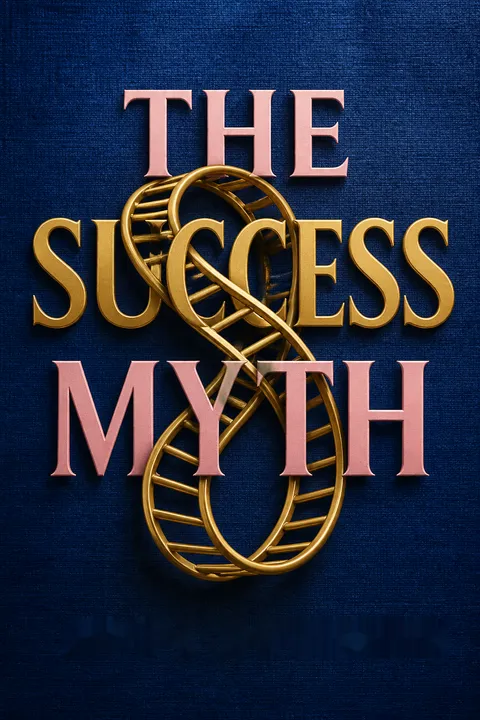
The Success Myth receives mixed reviews, with an average rating of 4.05 out of 5. Many readers find it insightful and relatable, appreciating Gannon's exploration of redefining success and challenging societal expectations. Some praise the book's accessibility and timeliness. However, critics argue it lacks diversity in perspectives, focusing too much on privileged individuals. Some readers feel the content is not groundbreaking or comprehensive enough. Despite these criticisms, many find the book thought-provoking and helpful in reassessing their own definitions of success and work-life balance.
People Also Read






Glossary
arrival fallacy
Achievement mistaken for lasting happinessA psychological trap in which someone expects reaching a goal or destination to create enduring happiness. After the achievement, ordinary worries and unmet needs remain, and the person may feel flat or disappointed. The term helps explain why publishing a book, earning a promotion, or reaching another long-awaited milestone can feel less transformative than anticipated.
productivity dysmorphia
Unable to register accomplishmentsA term used by journalist Anna Codrea-Rado for the experience of working intensely and completing substantial tasks while still feeling as if little or nothing has been done. The sense of achievement is obscured by an expanding workload and the assumption that more remains to be done. It can make people unable to appreciate their own output.
Temporary Routines
Flexible routines for unsettled periodsA set of personally useful habits kept available for times when life feels uncertain or overwhelming. Rather than imposing a permanent, rigid schedule, a person can temporarily use practices such as a walk, a break from social media, or timed writing to regain structure. The routines can be changed or dropped when circumstances shift.
Phase one
Pursuit of conventional success markersIn Donna Lancaster's model as presented by Gannon, phase one is the pursuit of externally recognized goals such as career achievement, money, a partner, or possessions. The phase can help people explore what they want, but it may not provide lasting contentment. It is not described as wasted time or a universally fixed age or life stage.
Phase two
Redefining success from withinThe second part of Lancaster's model describes reconsidering conventional measures of success and seeking contentment that is not dependent only on career, money, status, or possessions. It emphasizes noticing less visible forms of value, such as time, peace, and connection. People may reach this perspective at different times, and some may move between priorities.
spoon theory
A model of limited daily energyA metaphor introduced by Christine Miserandino to explain how people have different amounts of energy available for daily tasks. Each task uses a spoon, and someone with chronic illness or limited capacity may have fewer spoons than others. The idea helps explain why identical schedules can impose very different costs on different people.

Download PDF
Download EPUB
.epub digital book format is ideal for reading ebooks on phones, tablets, and e-readers.








