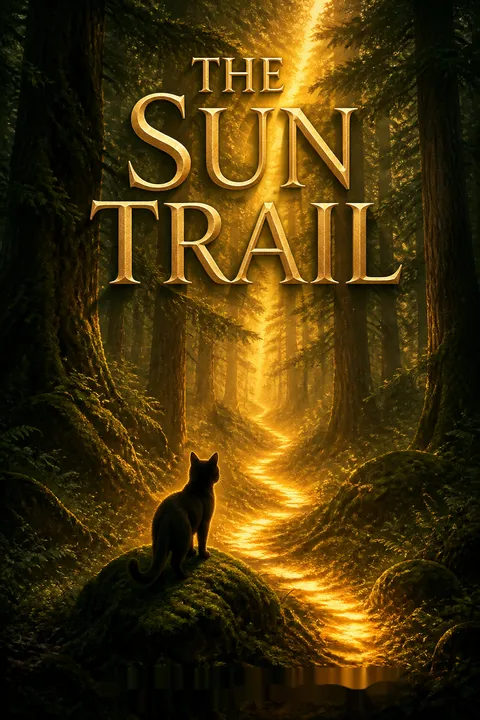


Plot Summary
Prologue
In the mountain Tribe’s vast cave, hunger has worn down even the old and the young. Stoneteller, the ancient healer who once knew life beside a lake, sees the cavern blaze with sunlight when night is falling.
The vision gives shape to Lion’s Roar’s suggestion that some cats leave the mountains, where prey and shelter can no longer sustain them all. Stoneteller decides to send a group east toward a warmer home, while she remains in the cave. Her choice begins as an answer to starvation, but it also asks the Tribe to trust a future no cat can yet see.
The vision turns a practical crisis into a question of how communities change without pretending that change is painless. Stoneteller cannot make the mountain feed more mouths, so her authority lies not in certainty but in recognizing when an old home has become untenable. Her decision to remain makes the migration a division of care rather than a rejection of the past. The sun is both a literal direction and a fragile promise: the cats must act before they can know whether hope has a destination.
The Sun Trail Appears
Gray Wing and his brother Clear Sky bring a hawk back to their cave, where hungry cats divide its scant meat. Gray Wing gives up his share for the Tribe; Clear Sky resents the sacrifice but follows his brother’s example. The failed hunts, crowded sleeping hollows, and kits begging over scraps make Stoneteller’s announcement feel less like an adventure than a last resort.
She says her vision points toward a sunlit place with food and room, and names Shaded Moss to lead those who leave. Clear Sky volunteers, eager for a new life, while Gray Wing cannot imagine abandoning the mountains or the family still there. The Tribe now faces a choice that will separate relatives as surely as the frozen peaks do.
The hawk establishes the ethical fault line between the brothers before the migration begins. Gray Wing treats food as a communal obligation, while Clear Sky sees the immediate cost of that generosity to already-starving hunters. Neither response is simply selfish or noble: both are strategies for survival under scarcity. Stoneteller’s vision changes the argument by introducing a future beyond the cave, but it cannot resolve disagreement. The Tribe’s crisis is material, yet its consequences are intimate: every decision about food and shelter becomes a decision about whose needs count.
Fluttering Bird's Last Winter
Gray Wing tries to keep his choice separate from Clear Sky’s, even as his brother presses Bright Stream to travel with him. During a hunt, Gray Wing catches a snow hare and tells Bright Stream he will remain, convinced his family needs him. Back in the cave, Quiet Rain carries food to Fluttering Bird, Gray Wing’s frail young sister, and finds that the kit will not wake.
Stoneteller cannot revive her with the few herbs she has left. Quiet Rain grieves beside the body, then asks Gray Wing to leave with Clear Sky so her remaining kits might have a better chance elsewhere. Fluttering Bird’s burial gives Gray Wing’s decision a cost he can no longer dismiss: staying is not automatically the same as protecting his family.
Fluttering Bird’s death makes deprivation visible as more than a background hardship. Gray Wing’s earlier belief that his hunting can hold the family together is confronted by the limits of individual effort. Quiet Rain’s reversal is psychologically precise: she first protects her surviving kit by keeping him close, then protects his future by sending him away. Her love does not disappear; it changes its form. Gray Wing’s eventual departure is therefore neither a simple rejection of home nor a clean heroic choice. It is an act of care made under conditions where every option entails loss.
A Vote at the Waterfall
As arguments over leaving sharpen, Lion’s Roar proposes a vote rather than allowing Stoneteller or Shaded Moss to decide alone. Each cat places a pebble for departure or remaining, and the leaving side wins by only a few stones. Gray Wing votes to stay, despite Quiet Rain’s hope that he will go; Clear Sky and Bright Stream choose the journey.
When the travelers set out, Gray Wing watches his brother disappear beyond the waterfall and remains with his mother and Jagged Peak. The next morning, Misty Water tracks Jagged Peak to Fluttering Bird’s grave, then finds his scent following the travelers’ trail. Quiet Rain sends Gray Wing after him. A blizzard delays the pursuit, but the vote has become a family emergency.
The pebble vote gives the Tribe a procedure for disagreement, not a way to eliminate it. Its narrow result protects the legitimacy of both choices: those who stay are not cowards, and those who leave are not abandoning the community without consent. Gray Wing’s vote exposes the difference between his public duty to the remaining cats and his private attachment to Clear Sky. Jagged Peak’s unilateral departure then tests the vote’s limits. Collective decisions can establish a path, but they cannot contain the people whose needs and loyalties keep moving.
Jagged Peak Follows
Gray Wing crosses the mountains alone, following Jagged Peak’s scent through snow and unfamiliar valleys. He finds his little brother trapped in a crevice while a young eagle tries to seize him. Gray Wing draws the bird’s attack, and Jagged Peak escapes the crack to help drive it back. Rather than force the kit home, Gray Wing agrees to take him to the travelers.
The journey tests them both: Jagged Peak helps pull Gray Wing from an icy stream, and later tracks the group’s trail across dangerous ground. They finally spot the travelers and reach them at a sheltered tree. Clear Sky welcomes his brothers, and Jagged Peak’s arrival reunites the family, though their mountain home is now behind them.
The pursuit reverses the brothers’ familiar roles. Gray Wing leaves as protector, but Jagged Peak’s quick thinking saves him from the stream and his tracking keeps them from walking into a collapsed path. The younger cat’s competence does not erase his vulnerability; it makes their dependence mutual rather than one-sided. Gray Wing also stops treating care as control. Instead of dragging Jagged Peak back to Quiet Rain, he accepts the kit’s determination and shares the danger with him. Their reunion with Clear Sky gives that choice emotional reward, while the distance already traveled makes return increasingly difficult.
The Eagle Takes Bright Stream
On a steep scree slope, eagles attack the travelers as loose stones slide under their paws. Clear Sky organizes a counterattack, using Gray Wing’s speed to draw birds away while a second group tries to bring one down. Bright Stream joins Gray Wing despite Clear Sky’s fear for her, since she is carrying their kits.
When Gray Wing injures his leg, Bright Stream turns back to help him. An eagle catches her and carries her into the sky before he can reach her. Clear Sky and the others kill another eagle, but the victory cannot undo her loss. Clear Sky blames Gray Wing for failing to save her; Gray Wing accepts the guilt, and the brothers continue east in grief.
The failed rescue binds the brothers through a shared loss that neither can yet interpret clearly. Gray Wing mistakes his inability to stop the eagle for proof of personal culpability, while Clear Sky directs grief outward because helplessness is harder to bear. Bright Stream’s choice to help Gray Wing is an expression of reciprocal care, not a tactical error that makes her responsible for what follows. The scene also complicates the group’s confidence in leadership: Clear Sky’s plan succeeds against one predator, yet the expedition remains exposed to chance. Survival is not proof that a decision was right.
Monsters Beyond the Mountains
The travelers descend into greener country, where rabbits, fish, and squirrels replace the mountains’ meager prey. They encounter huge sheep, then learn that the roaring creatures Stoneteller warned about race along black Thunderpaths. The cats cross one path in pairs, but a later crossing brings them into a Twolegplace, where the smell of monsters and the closeness of human dens make safe travel difficult.
Moon Shadow wanders off to hunt and is attacked by two well-fed kittypets; Gray Wing and the others drive them away. The encounter teaches the mountain cats that cats shaped by another life can still fight fiercely. They leave the settlement wary, carrying the lesson that unfamiliar territory has its own rules and rivals.
The lowlands overturn the travelers’ inherited assumptions one by one. Abundant prey does not equal safety, and housecats are not the helpless figures of mountain stories. The Thunderpaths make danger legible as a feature of the landscape: a cat can learn when to cross, but cannot negotiate with the passing machines. The encounter with the kittypets adds a social version of that problem. The newcomers are not the only cats with claims, habits, or reasons to defend a place. Adaptation here means revising knowledge, not merely acquiring new hunting skills.
Shaded Moss Falls
Seeking shelter, the cats enter a barn filled with stored grass, but a flock of sheep surges inside and forces them through a gap in the wall. The travelers press on through rain and woodland until dogs chase them toward a Thunderpath. Shaded Moss is struck by a passing monster as he emerges from the bushes.
Gray Wing stops the others from rushing into the road, and the cats carry their leader’s body to safety before laying him to rest under grass and branches. Rainswept Flower grieves for her father, while Clear Sky and Gray Wing remember Bright Stream. With their guide gone, the group continues under Tall Shadow’s steadier leadership, carrying the dead as part of the journey rather than leaving them behind.
Shaded Moss’s death converts the journey from a mission led by one trusted cat into a burden the group must carry together. The barn episode first punctures the travelers’ belief that shelter is automatically safe; the Thunderpath then makes the cost of unfamiliar rules irreversible. Gray Wing’s intervention protects the living, while the improvised burial gives the dead a place in a landscape where the Tribe has no customary grave. Tall Shadow’s leadership follows from responsibility rather than ambition. The group’s cohesion now depends on shared mourning and practical action, not merely on following a confident guide.
Highstones and Open Moor
After Shaded Moss’s burial, the travelers climb to Highstones, where the sunrise reveals open grass, woods, and a river below. They descend toward the moor, but the new country is not empty: Gorse and Wind challenge Gray Wing over hunting rights, and forest cats watch the newcomers from cover.
The group settles temporarily in a gorse-lined hollow, where rabbits offer easier hunting than the mountain prey. Gray Wing feels relief in the open sky, while Clear Sky is drawn to the trees. Their new territory can feed them, but it will not grant them a home without negotiation. The cats have reached the end of Stoneteller’s route, not the end of their decisions.
Arrival does not resolve the journey’s central uncertainty; it relocates it. The moor offers Gray Wing the openness his body and instincts trust, while the wooded territory attracts Clear Sky’s ambition and preferred hunting style. Gorse and Wind make clear that the land is already inhabited, so finding a home cannot mean simply claiming whatever appears useful. The first settlement is provisional in both geography and identity. Stoneteller’s vision brought the cats to a possible future, but the work of making that future livable belongs to the travelers themselves.
A Home Splits in Two
Three foxes raid the exposed moor hollow at night, injuring several cats before Gray Wing, Clear Sky, and Turtle Tail coordinate attacks that drive them away. The survivors debate moving into the forest, where cover and prey seem plentiful, and Tall Shadow lets the cats vote. Most choose the moor; Clear Sky, Moon Shadow, Quick Water, and Falling Feather leave for the trees.
Tall Shadow stays with Gray Wing and the others, then leads them to old rabbit tunnels that can shelter nests and herbs. The two groups separate without ending their kinship, but each now builds a different kind of community. The fox attack has made the need for shelter urgent, while the vote turns preference into a lasting division.
The second vote echoes the mountain decision, but the meaning has changed. The first divided cats who would share one community across distance; this one divides them into separate settlements, each with its own leader and priorities. The foxes make environmental security a real concern, while the tunnel discovery lets the moor cats answer danger without surrendering the open land they value. Tall Shadow’s authority rests on convening choice and adapting the camp, not on insisting that all cats want the same life. Separation becomes a form of pluralism, though it also creates conditions for later conflict.
Old Guilt, New Attachments
Gray Wing and Clear Sky gradually recover some closeness when Gray Wing saves his brother from falling into the gorge. They acknowledge that neither alone caused Bright Stream’s death, easing a guilt that had kept them apart. Meanwhile, Turtle Tail grows close to Bumble, a kittypet who offers warmth and food in the Twolegplace.
Gray Wing disapproves, but cannot stop Turtle Tail from choosing that life. He also becomes drawn to Storm, a self-reliant forest cat. When he hopes she will join him, Storm instead chooses Clear Sky, and Gray Wing swallows his disappointment. These relationships show the new territory’s central freedom and strain: cats can choose where to belong, but those choices rarely align neatly.
The repaired bond between the brothers begins when Gray Wing acts rather than argues: he catches Clear Sky before the gorge can take him. Their shared admission loosens guilt without erasing grief, making reconciliation possible without a false return to innocence. Turtle Tail and Storm then mirror the migration’s deeper question on a smaller scale. Each chooses a life Gray Wing would not choose for her, and his discomfort exposes how easily care becomes possessiveness. The book treats belonging as chosen and plural, but insists that freedom has emotional consequences for those left waiting.
Jagged Peak Is Cast Out
Jagged Peak falls from a tree while hunting in Clear Sky’s forest camp and breaks a hind leg. Dappled Pelt sets the bone with sticks and bindweed, but the injury heals badly, leaving him with a lasting limp. Clear Sky decides that Jagged Peak can no longer contribute enough to the group and orders him away.
Jagged Peak returns to Gray Wing’s moor camp, ashamed and afraid he cannot survive alone. Gray Wing welcomes him and helps arrange exercises with Cloud Spots. He confronts Clear Sky, who defends the expulsion as necessary leadership. Gray Wing sees that his brother’s idea of protecting a community now excludes the vulnerable, and their restored trust begins to fracture again.
Jagged Peak’s injury tests whether a community values members only for their measurable usefulness. Clear Sky frames exclusion as fairness to the group, but his rule ignores how dependence and contribution change across a lifetime. Gray Wing’s welcome is more than brotherly kindness: it is a competing model of social obligation, one that treats care as part of survival rather than a distraction from it. Jagged Peak’s shame shows how quickly an injured body can become an injured sense of worth. The conflict is not simply between two brothers; it is between rival definitions of what a community owes its members.
Fox's Death Ends Brotherhood
As prey grows scarce, Fox attacks Gray Wing in the forest for hunting near Clear Sky’s camp. Gray Wing fights to free himself and kills Fox with a desperate blow, although he did not intend to take the tom’s life. Clear Sky treats the death as a consequence of Gray Wing’s trespass and cuts off their relationship.
Storm, pregnant and tired of Clear Sky’s controlling protection and territorial rules, decides to leave for the Twolegplace. She blames his policies for turning a dispute over prey into bloodshed. Gray Wing urges Clear Sky to follow her, but Clear Sky chooses his camp and his authority instead. The brothers are separated again, now by a conflict over power as much as by grief.
Fox’s death is accidental in intention but not isolated in cause. Clear Sky’s boundary system gives an ordinary hunt the force of a political offense, and Fox acts as its enforcer. Gray Wing’s self-defense does not make the outcome clean, especially for Fox’s kin, but Clear Sky’s refusal to distinguish accident from attack reveals how authority can harden into self-justification. Storm recognizes the cost before Clear Sky does. Her departure is a rejection not of community itself, but of protection that denies her agency and turns shared territory into private property.
Thunder Survives the Collapse
Worried about Storm and her unborn kits, Gray Wing searches the Twolegplace and finds her living in an abandoned stone den. He later returns with a rabbit, but Turtle Tail rushes to warn him that the den is being demolished. Gray Wing reaches the rubble as the walls collapse and finds Storm dying beside her three kits. One ginger kit still breathes.
Turtle Tail helps Gray Wing carry the survivor away, and they name him Thunder. Gray Wing takes the kit to Clear Sky, who refuses to raise him, overwhelmed by guilt over Storm’s death. The rescue leaves Thunder alive but without a willing father, forcing Gray Wing to decide whether kinship means accepting a burden others reject.
The collapse brings the book’s two kinds of danger together: the environmental violence of the Twoleg world and the intimate consequences of Clear Sky and Storm’s estrangement. Gray Wing arrives too late to save Storm, repeating the helplessness he associates with Bright Stream, yet he can still rescue one life. Naming the kit gives survival a human-scale meaning without pretending that it repairs the loss. Clear Sky’s refusal springs from self-condemnation, not indifference, but its effect is still abandonment. Gray Wing must now distinguish compassion for his brother from responsibility to the child in front of him.
A Kit Finds a Family
Gray Wing carries Thunder to the moor hollow, where Tall Shadow’s cats debate whether the kit belongs among them. Some fear that Clear Sky may later demand him back or that caring for a newborn will strain the camp. Hawk Swoop, already expecting kits, offers to nurse him, and Jagged Peak points out that Thunder is their kin.
Gray Wing makes the question personal: if the camp refuses Thunder, it will lose him too. Tall Shadow asks for objections, and the cats ultimately accept the kit. Gray Wing takes Thunder to Hawk Swoop’s burrow and promises to raise him as his own. The journey ends not with a single home for all cats, but with a family made by deliberate care.
The ending answers the opening’s scarcity without suggesting that hardship has vanished. The moor cats must still weigh resources, risk, and competing obligations, but they refuse to make the newborn’s vulnerability a reason for exclusion. Gray Wing’s ultimatum is emotionally revealing: he has learned that care sometimes requires taking a public stand, not merely offering private comfort. Tall Shadow’s decision keeps the camp’s communal process intact, while Hawk Swoop makes kinship practical through nursing. Thunder’s acceptance does not reconcile the brothers, but it creates a living link across their divide.
Analysis
The Sun Trail treats migration as a social experiment conducted under pressure. Its opening scarcity makes the need for change undeniable, but it does not make any single response self-evidently correct. Gray Wing’s attachment to the mountains, Clear Sky’s appetite for a new territory, and Quiet Rain’s divided maternal duty each arise from legitimate needs. The stone votes make this conflict public and procedural, yet the cats’ later divisions show that a fair decision cannot make everyone want the same life.
The book’s most important contrast is between care as relationship and care as administration. Gray Wing tends to notice particular bodies: Fluttering Bird too weak to wake, Jagged Peak struggling to walk, Thunder too small to survive alone. Clear Sky increasingly thinks in terms of the group’s protection, boundaries, and contribution. His approach is not born from simple cruelty; fear and grief make order feel like a defense against further loss. But when rules decide that an injured brother has no place, the protective system begins to reproduce the vulnerability it was meant to prevent.
Landscape gives these ethical questions physical form. The cats must learn that a Thunderpath cannot be negotiated with, that a barn full of food can become a trap, and that a moor can be both open and exposed. Their changing homes reward different strengths, so no single habitat or social arrangement can meet every cat’s needs. The migrations therefore resist a tidy return to unity. Some cats choose the moor, others the forest, and Turtle Tail chooses domestic shelter.
Gray Wing’s final act of taking responsibility for Thunder does not restore the lost family or reconcile the brothers. It does, however, translate his central belief into communal action: vulnerability is a reason to provide care, not proof that someone has become useless. The new home is not discovered whole. It begins wherever the cats decide that another life belongs among them.
Review Summary
The Sun Trail receives mostly positive reviews, with readers praising its engaging story, well-developed characters, and exploration of clan origins. Many appreciate the new perspective on familiar Warrior Cats themes. Some criticize the love triangle subplot and perceived decline in series quality. Readers enjoy the emotional depth and moral complexity of characters like Gray Wing and Clear Sky. Common critiques include excessive hunting scenes and unrealistic cat behavior. Overall, fans are excited to continue the Dawn of the Clans series, while some prefer earlier arcs.
Characters
Gray Wing
The searching brotherA thoughtful mountain cat and the story’s central perspective, Gray Wing measures his choices by how they affect family and community. He is generous with food, cautious about abandoning familiar ground, and often slow to recognize his own desires. His strength is not fearlessness but sustained attention: he notices who is hungry, who is frightened, and who has been left out. That instinct can become self-blame, especially when danger defeats his efforts to protect others. As the Tribe encounters new habitats and competing ways of life, Gray Wing learns that loyalty need not mean keeping everyone together. He is most compelling when care demands action, even if it asks him to surrender comfort or certainty.
Clear Sky
The daring littermateGray Wing’s brother is an exceptional hunter and a bold advocate for leaving the mountains. Clear Sky tends to meet uncertainty by moving first: he leaps after prey, embraces unfamiliar territory, and wants to build a strong group around himself. His ambition grows from genuine concern for survival, but his confidence can turn into control when he believes only his judgment can keep others safe. The deaths and injuries around him intensify his protectiveness and his attachment to rules. He is neither a simple foil to Gray Wing nor a natural villain. The brothers share courage and love, but differ over whether safety comes from mutual care or firm authority.
Jagged Peak
The stubborn youngest brotherGray Wing and Clear Sky’s youngest brother is energetic, curious, and impatient to be treated as capable. His small size and inexperience make adults cautious, but he repeatedly proves observant and resourceful. Jagged Peak is proud of earning a place among hunters and can mistake bravery for invulnerability, especially when he sets out alone. He also has a generous streak, sharing prey and responding to the care others give him. His relationship with Gray Wing combines irritation, admiration, and deep trust; with Clear Sky, it exposes the tension between family loyalty and a leader’s rules. Jagged Peak’s determination makes him more than the protected younger sibling others assume him to be.
Turtle Tail
The quick-eyed friendA spirited, swift mountain cat, Turtle Tail is alert to the safety of the group and willing to speak when others retreat into silence. Her warmth and humor make her an easy companion, but she is not content to inherit the life Gray Wing expects for her. Curiosity draws her toward the Twolegplace and Bumble’s very different way of living. Her choices challenge Gray Wing’s tendency to decide what is best for those he loves. Turtle Tail’s friendship matters because she can comfort him and contradict him, sometimes in the same conversation. She represents independence not as rejection of affection, but as the right to choose a home that feels personally livable.
Stoneteller
The mountain healerThe elderly healer of the mountain Tribe, Stoneteller carries the memory of an earlier migration and the responsibility of interpreting signs for her people. Her vision of sunlight gives the starving cats a direction, though she does not pretend to know every danger awaiting them. She is compassionate toward the old, the young, and the grieving, and understands that leadership sometimes means accepting doubt while acting. Her choice to remain in the cave reflects devotion to the Tribe’s history as well as to the cats who cannot travel.
Quiet Rain
The grieving motherGray Wing, Clear Sky, and Jagged Peak’s mother is deeply attached to the mountain home that has sheltered her family. She is protective of her kits and reluctant to expose the youngest to a dangerous journey. Grief makes her more vulnerable, but it also sharpens her judgment about what her surviving sons need. Quiet Rain embodies parental care under scarcity: she wants to keep her children close, yet must consider futures she cannot share with them.
Shaded Moss
The steady migration leaderA respected, powerful mountain tom, Shaded Moss accepts the task of guiding a group into unknown country. He is careful with plans, attentive to younger travelers, and willing to listen to other cats’ suggestions. His authority rests on steadiness rather than display. As a father, he is especially mindful of Rainswept Flower, and his leadership gives the migrating cats structure while they learn how little they know about the world beyond their cave.
Bright Stream
The clear-eyed mateA capable hunter and Clear Sky’s beloved mate, Bright Stream is confident without being unthinking. She loves the mountains but considers a new home because she imagines a future family with Clear Sky. Her doubts are real, and she resists being hurried into a decision, yet she ultimately chooses the journey. Bright Stream’s courage includes tenderness: she notices when others need help and acts even when the group’s plans put her at risk.
Tall Shadow
The watchful organizerA reserved black she-cat with a gift for stealth, Tall Shadow is observant, pragmatic, and difficult to sway with excitement alone. She supports the migration and later takes responsibility for the cats who prefer the moor. Her leadership is shaped by attention to shelter, safety, and the needs of quieter members. Though wary of outsiders and conflict, she can revise a plan when circumstances demand it, making her a stabilizing presence in a group repeatedly forced to choose again.
Storm
The self-reliant forest catA silver tabby who knows the woods and Twolegplace, Storm is capable, independent, and quick to resist being treated as fragile. She helps Gray Wing navigate unfamiliar places, but her own decisions are not made for his comfort. Her relationship with Clear Sky reveals how affection can coexist with disagreement over authority and protection. Storm’s directness unsettles cats who expect gratitude or obedience from someone they help.
Bumble
The welcoming housecatA friendly tortoiseshell kittypet, Bumble offers Turtle Tail companionship, food, and shelter without demanding that she abandon her former friends. She regards life with Twolegs as comfortable and worthwhile, a perspective that challenges the mountain cats’ assumptions about freedom and safety. Bumble is frank, sociable, and unembarrassed by her size or domestic life. Her presence makes the Twolegplace more than a threat: it is also a home some cats might choose.
Thunder
The small surviving kitThunder is the young son of Storm and Clear Sky, born into a world divided between rival settlements and unfamiliar ways of life. At the beginning of his story he is entirely dependent on adult cats for warmth, food, and protection. His connection to Gray Wing and the two brothers makes him a living point of contact between families that no longer agree about how a community should work.
Dappled Pelt
The adaptable healerA delicate tortoiseshell with a strong interest in herbs, Dappled Pelt learns to make use of the plants and prey in each new environment. She is practical under pressure and willing to try unfamiliar methods, including fishing and caring for injured travelers. Her knowledge helps turn the expedition from a desperate flight into a community capable of settling somewhere new.
Cloud Spots
The careful observerA thoughtful black tom with white markings, Cloud Spots is measured in speech and attentive to practical details. He notices how the group’s needs change and contributes knowledge about injuries, herbs, and safe travel. He is less inclined than Clear Sky to impose a single solution, and his quiet cooperation makes him a dependable counterweight to more forceful personalities.
Moon Shadow
The restless hunterTall Shadow’s brother is energetic, boastful, and impatient with restrictions. Moon Shadow would rather test a new hunting ground himself than wait for a cautious plan, which brings him into avoidable trouble. He is not without courage or loyalty, but he often recognizes danger only after he has provoked it. His appetite for a different home helps propel the eventual division between the moor and forest groups.
Rainswept Flower
The determined daughterShaded Moss’s daughter is a perceptive tracker who learns to navigate the new country while carrying the weight of her father’s expectations. She grieves openly and is not always ready to trade mourning for action. Rainswept Flower’s emotional honesty helps the group acknowledge what its journey costs, while her practical skills help it keep moving.
Hawk Swoop
The bold young hunterAn orange tabby, Hawk Swoop is outspoken and eager to hunt. She becomes a committed member of the migrating group and is willing to take risks when prey or danger demands it. Her confidence can make her impatient, but she is also part of the next generation of family ties developing among the travelers.
Falling Feather
The fearless swimmerA young white cat, Falling Feather is gentler in manner than her bravery might suggest. She enters dangerous water to help another traveler and shows a natural ease around swimming. Her kindness helps bridge relations between newcomers, while her choice to explore life in the forest reflects a growing confidence in her own preferences.
Jackdaw's Cry
The growing young tomA young black tom, Jackdaw’s Cry is eager to prove himself and becomes an increasingly capable hunter. He is quick to support his companions, though his enthusiasm can outrun his caution. His close connection with Hawk Swoop points toward the new families forming as the mountain-born cats settle into separate homes.
Fox
Clear Sky's strict guardA large brown tom who joins Clear Sky’s forest group, Fox takes the camp’s boundaries seriously and is willing to enforce them physically. His loyalty to Clear Sky gives the leader’s rules force beyond words. He is also Petal’s brother, and their shared history shapes how he approaches danger and belonging.
Wind
The underground hunterA wiry brown moor cat, Wind hunts rabbits by following them underground. She is initially defensive of the territory she knows, but can become generous once newcomers approach her without hostility. Her specialized hunting style shows Gray Wing that survival may depend on skills the mountain cats never needed.
Gorse
The wary moor hunterA thin gray tom and Wind’s companion, Gorse is suspicious of unfamiliar cats who appear on his hunting ground. He is alert to competition but willing to share once he trusts a newcomer’s intentions.
Frost
The guarded forest newcomerA large white tom in Clear Sky’s group, Frost helps guard the forest camp. He is cautious toward outsiders and follows the boundaries Clear Sky establishes, representing the defensive culture taking shape there.
Petal
The wary forest sisterFox’s sister, Petal has grown up relying closely on her brother and is guarded around unfamiliar cats. She is a skilled climber and hunter, though she can underestimate her own abilities. Her bond with Fox shapes how she evaluates the offer of a larger community.
Shattered Ice
The blunt, steady hunterA gray-and-white mountain tom, Shattered Ice is direct and practical. He questions decisions he considers unsafe, helps his companions through difficult crossings, and favors workable shelter over romantic ideas of a perfect home.
Plot Devices
Stoneteller's sunlight vision
A direction through hungerStoneteller’s vision of bright sunlight points the starving Tribe toward a possible home beyond the mountains. It supplies an image and a direction, not a map or guarantee. This distinction keeps the prophecy from solving the journey in advance: the cats still have to vote, travel, interpret hazards, and decide where they belong. The vision also carries the memory of the Tribe’s earlier migration from the lake, linking the present emergency to a history of survival through change.
Pebble votes
A ritual for shared choiceThe Tribe uses stones to register whether cats want to stay or leave. The device turns a divisive argument into a visible collective decision and allows the minority to act without being branded disloyal. When the cats later vote on moor or forest, the repeated ritual shows that their community carries its decision-making practice into a new land. A vote cannot prevent grief or later disagreement, but it gives competing preferences a recognized place.
The sunward trail
A journey into new choicesThe route eastward gives the migrating cats a shared goal while exposing them to unfamiliar prey, predators, Twoleg structures, and other cats. Each obstacle tests the group’s assumptions and adds practical knowledge: where monsters travel, how to cross water, and which shelters are unsafe. The trail also gives the book its structure, carrying Gray Wing from a cave where survival seems impossible to a landscape where the harder question is how different cats can live together.
The prey-sharing custom
A portable communal bondIn the mountain Tribe, cats take turns eating shared prey so hunters, elders, and kits can all receive a portion. The custom expresses a communal ethic without erasing the stress of scarcity; Gray Wing and Clear Sky still disagree about what fairness costs. As the cats settle in new territories, sharing remains a remembered practice and a standard against which leaders’ decisions can be judged. It makes the conflict over Jagged Peak’s usefulness more than a family quarrel, because it challenges the group to decide whether care is a resource or a duty.
Changing habitats
Survival demands new skillsThe cats move through mountains, moor, forest, Twolegplace, river crossings, and underground warrens. Each habitat rewards different abilities and produces different ideas of safety. Gray Wing trusts open ground and speed, while Clear Sky favors the forest’s cover and prey; Wind’s rabbit-burrow hunting and Bumble’s sheltered domestic life expand the range of possible homes. The environment is not mere scenery. It presses the cats to adapt, and its physical dangers expose the consequences of refusing to revise a familiar way of living.
Warriors: Dawn of the Clans Series
About the Author
Other books by Erin Hunter



Download PDF
Download EPUB
.epub digital book format is ideal for reading ebooks on phones, tablets, and e-readers.








