

Key Takeaways
Choose a teammate whose presence makes hardship more survivable.
A partner changes the odds. The book treats choosing a partner as a decision with consequences for health, money, focus, and future plans. A poor relationship can consume attention and energy like a persistent crisis. A good one can help both people endure challenges they could scarcely manage alone. The author illustrates this with Kevin and Janette, whose adult child faced severe mental illness. Hospitals, financial strain, and late-night emergencies tested their family, but their partnership became a source of strength rather than another problem to solve.
The upside matters, too. The author cites research associating stable marriage with better health, longer lives, and higher earnings for men. His point is not that marriage guarantees success, but that the partner you choose can either support your life or steadily narrow it.
What's compelling is the shift from judging romance by intensity to judging it by what the partnership makes possible under pressure. In social science, close relationships are often understood as a form of practical support: they can share burdens, coordinate action, and help people regulate stress. Kevin and Janette's story makes that infrastructure tangible. Still, a relationship should not be assessed only by its economic return or its usefulness to one partner. The deeper measure is reciprocal: do both people have more room to live well, especially when circumstances become difficult?
Trace your romantic patterns before mistaking familiarity for compatibility.
Old strategies travel forward. The book calls deep assumptions about oneself and others “core beliefs.” They often begin as sensible ways to cope with childhood circumstances, then continue shaping adult choices long after those circumstances have changed. Mike learned to earn affection by serving others. Sarah learned to demand attention through anger. Together, they recreated a painful pattern: he worked harder for approval, she raised the bar, and both felt rejected.
The author likens Mike's intermittent moments of approval to unpredictable rewards, which can make a person keep trying despite repeated disappointment. Notice your own early warning signs: compulsively fixing other people's problems, accepting disrespect to avoid rejection, or repeatedly pursuing partners who feel familiar but leave you diminished. Pause, name the impulse, and choose a different response.
This account connects relationship choices to attachment learning and reinforcement: behaviors that once helped a child secure attention can become automatic adult strategies. Its useful distinction is between understanding a pattern and excusing it. Childhood history can explain why a dynamic feels compelling, but it does not make that dynamic inevitable. The behavioral approach is especially practical: a recurring impulse can be treated as information, not an instruction. One caution is that a familiar pattern does not, by itself, prove that a partner is unhealthy. The test is how both people behave and whether they can change the cycle.
Compare the lives your values would build, not just your chemistry.
Attraction cannot settle priorities. Chris and Sofia seemed well matched: his political ambition energized her, and her calm nature steadied him. Over time, however, he wanted public life, career growth, and frequent events, while she increasingly wanted family, home, and quiet. Each assumed the other's early flexibility meant lasting agreement. Their conflict was not simply about schedules; it reflected different ideas about what a satisfying life should contain.
The book distinguishes enduring values from temporary goals and suggests examining work, family, leisure, intimacy, money, health, community, and personal growth. Money, for example, may represent security to one person and freedom to another. Partners need not want identical lives, but they should understand the daily consequences of their priorities and whether those priorities can coexist.
Values work resembles decision analysis: it surfaces the criteria people are using before a high-stakes choice becomes difficult to reverse. It also improves ordinary conversation, since disagreements about spending or weekends often conceal competing needs for safety, autonomy, or connection. The book is right that attraction can encourage projection, making people assume they share priorities they have not actually discussed. Yet values are not fixed labels, and a couple does not need perfect alignment. The stronger question is whether each person can revise plans, negotiate trade-offs, and support the other's meaningful commitments without accumulating resentment.
Keep your purpose visible instead of shrinking to preserve attraction.
Direction supports self-respect. The author argues that a sense of purpose helps men maintain confidence, contribution, and connection beyond a romantic relationship. Work is one possible source, but purpose can also come from family, community, or another demanding commitment. A partner deserves an honest picture of how a person spends time and what responsibilities matter to him, rather than discovering those priorities after making major commitments.
The warning runs both ways. A man who abandons his aims to prevent a partner's disappointment may become resentful, while someone who gives a relationship no real time may leave a partner feeling neglected. The book's advice is to explain priorities early, maintain a life outside the couple, and make room for her commitments as well. Purpose is not a license to ignore a partner; it is part of the life the couple must negotiate.
This insight aligns with research on autonomy and competence: people tend to function better when they can pursue meaningful goals and experience themselves as capable contributors. It also challenges a common romantic fantasy, that devotion requires dissolving individual identity. The practical balance is more demanding than simply defending work or status. A job can be meaningful, but it can also become an excuse for emotional absence. Purpose should therefore be evaluated by both its contribution and its costs, with each partner able to describe what time, care, and compromise the chosen life requires.
Watch how she handles friction, not how charming she is at dinner.
Pressure reveals coping skills. The book's maturity test is not whether someone is cheerful or polished on a date, but how she responds to ordinary setbacks, disagreement, and other people's needs. Damon began questioning his relationship when, during a family health emergency, Jennifer shifted the conversation toward her cat's medication. The moment mattered because it fit a broader pattern: her minor crises repeatedly displaced other people's serious concerns.
The author highlights five useful abilities: insight into one's own behavior, emotional nuance, resilience, healthy responsibility, and self-maintenance. Emotional nuance means being able to feel hurt or angry without turning a partner into an all-good or all-bad character. Resilience means handling feelings while also taking practical steps. No one demonstrates these skills perfectly. The relevant evidence is whether a person notices harmful patterns and makes sustained efforts to change them.
The emphasis on observed behavior is a useful corrective to first impressions, which are shaped by charm, attraction, and deliberate self-presentation. Everyday disappointments can provide a more informative sample of coping than a polished date. The five abilities also resemble components of emotional regulation and adaptive problem-solving, not a demand for a partner without vulnerabilities. A single lapse should not become a diagnosis or verdict. Context matters: grief, illness, exhaustion, and unequal power can all affect behavior. The clearest signal is a repeated pattern, followed by accountability and repair.
Choose curiosity and directness over mind-reading and stored resentment.
Clear talk prevents hidden debt. The book's test of communication is whether partners can speak plainly, ask questions, and stay engaged when feelings are hurt. Samantha became hostile when Jared surprised her with his friends at a football game, but the incident exposed a larger problem: she had trouble trusting people and reacting constructively when she felt let down. With work, she recognized the pattern rather than insisting that Jared alone was responsible.
Directness matters on both sides. In another example, a woman silently sacrificed career opportunities for her husband's ambitions until resentment eventually overwhelmed the marriage. Her husband ignored signals that she was unhappy. The lesson is to invite honest disagreement, take concerns seriously, and check in before small concessions become a hidden ledger. Assertiveness is not domination. It is making preferences and limits clear enough that a couple can negotiate them.
Curiosity interrupts the familiar escalation in which one person assumes bad intent and the other responds defensively. Relationship research often describes a demand-withdraw cycle: one partner presses harder for engagement while the other retreats, making both feel less understood. Questions and clear requests can interrupt that loop, but they cannot replace good faith. Directness must be safe enough to use, and listening must include a willingness to change behavior. The book's insistence on shared responsibility is valuable here: communication is a pattern two people create, even when each person remains accountable for their own actions.
Support recovery, but never become someone else's treatment plan.
A diagnosis is not the whole story. The author discusses depression, anxiety, addiction, unresolved emotional injuries, and personality disorders as problems that can strain a relationship when left unmanaged. He draws an important distinction: mental health does not mean having no struggles; it means being willing to face them and seek appropriate help. A partner can listen, encourage treatment, and offer practical support, but cannot do another person's recovery work for them.
Addiction may be especially difficult to recognize because a partner can begin covering missed obligations, making excuses, or avoiding friends to hide the problem. The book also describes “experiential avoidance,” using substances or compulsive behaviors to escape painful feelings. Its recommendation is to seek accurate information and professional help, and to set a boundary if the person repeatedly refuses treatment. Relapse can occur; honesty and renewed engagement matter.
This framing usefully separates compassion from responsibility for another adult's behavior. It also reduces stigma by treating treatment-seeking as a practical response rather than a moral failure. A further distinction is essential: a person experiencing mental illness is not automatically unsafe or unsuitable as a partner. The relevant questions concern impact, accountability, available support, and whether the relationship remains safe for both people. Partners should not diagnose each other from a checklist. Clinicians can assess symptoms and treatment needs, while boundaries help determine what a loved one can realistically provide.
Wait through ordinary life before combining homes, money, or legal ties.
Time improves the evidence. Early infatuation can make habits that later irritate seem charming. The book cites research suggesting the intense honeymoon phase often lasts about 12 to 18 months, while warning that its duration varies. It recommends allowing that phase to pass, then spending additional time observing how the relationship works in everyday life before making hard-to-reverse commitments.
The author calls unplanned escalation “playing house ”: moving in for convenience, sharing bills, taking on pets or purchases, then continuing toward marriage mainly because disentangling feels difficult. He draws on research about couples who “slide” into commitments rather than deliberately deciding. The practical safeguard is to state clearly whether the relationship is dating, engaged, or committed, and to discuss living arrangements and finances before they become shared by default.
This is a strong application of decision theory: delay can have value when new information is likely to arrive and the choice is costly to reverse. Ordinary routines, competing obligations, and disagreements reveal more than a sequence of special dates. Still, a calendar is not a reliable character test. A year cannot guarantee compatibility, and a shorter courtship does not prove a mistake. The more general principle is to avoid letting convenience create obligations that neither person has consciously chosen. Deliberate commitment is different from simply accumulating shared expenses.
Leave repeated harm before sunk costs become your reason to stay.
The past cannot repay itself. The book warns against staying in a damaging relationship merely because years, money, or effort have already been invested. This is the sunk-cost fallacy: letting unrecoverable past costs dictate a present decision. The author recommends checking troubling impressions against several sources, including one's own intuition, trusted friends and family, and repeated observable behavior.
Other reality checks include asking what role one plays in recurring relationship problems and resisting the urge to rescue a partner who refuses responsibility. Jim Florentine's history of pursuing women in crisis illustrates how a repeated pattern may continue until someone confronts its source and seeks help. None of these checks makes a breakup easy, and outside opinions are not automatically correct. Their purpose is to help distinguish evidence from wishful thinking before a costly commitment deepens.
The strongest feature here is the combination of internal and external checks. People are prone to confirmation bias, so a trusted observer can notice patterns that attraction or fear obscures. At the same time, friends may have their own biases, and intuition can reflect either accumulated insight or old defensiveness. Neither should be treated as a verdict. The book's sunk-cost reminder is especially useful because it redirects attention from “How much have I invested?” to “What choice best protects well-being from this point forward?” Safety concerns deserve particular urgency.
Make commitment explicit, then protect both partners' practical interests.
Good relationships need upkeep. The book argues that choosing well is only the beginning. Partners still need kindness, respect, and attention after the initial excitement fades. A simple habit is to ask whether the other person wants empathy or help solving a problem. Another is to raise recurring arguments before they harden into contempt, and to preserve time for friends, health, and meaningful work.
For marriage or cohabitation, the author also recommends discussing finances and legal arrangements before a crisis. The book describes premarital counseling as a preventive investment and discusses prenuptial or cohabitation agreements, while noting that laws differ by location and that legal advice is not one-size-fits-all. These measures do not replace trust. They make expectations explicit and reduce the chance that affection, inertia, or confusion will decide practical matters for the couple.
The pairing of everyday care with practical planning is productive: affection does not remove the need for clear agreements, and paperwork cannot manufacture affection. Premarital counseling can create a structured setting for discussing money, conflict, children, and expectations before urgency takes over. Legal protections should be tailored by qualified local counsel and framed as clarity for both partners, not as a prediction of betrayal. The book's most durable point is stewardship. A relationship remains healthier when each person keeps contributing, checking assumptions, and addressing small strains before they become entrenched.
Analysis
The book's central contribution is to recast partner choice as a problem of uncertainty, attention, and reversibility. Rather than promising a formula for finding a perfect spouse, it asks readers to inspect their own learned patterns, clarify the life they intend to build, observe how a potential partner handles friction, and postpone commitments until the evidence improves. Its strongest practical ideas are behavioral: look for repeated actions rather than polished claims, discuss values in terms of daily choices, and distinguish deliberate commitment from inertia.
The framework is most persuasive when it remains about reciprocal skills. Curiosity, emotional regulation, honesty, resilience, and responsibility matter in any close partnership. The stories make these qualities concrete, especially Mike and Sarah's mutually reinforcing insecurity and Chris and Sofia's mismatch in how they wanted to spend their lives. The book also correctly emphasizes that a partner's unmanaged problems can impose real opportunity costs, while avoiding the simplistic claim that hardship itself makes someone unfit.
Its limitations arise when broad empirical patterns become prescriptions about men and women. Evolutionary explanations, claims about gendered communication, and descriptions of family courts are presented with more confidence than the evidence summarized here can always support. Many findings are correlational, culturally contingent, or dependent on measurement. A screening checklist can also encourage confirmation bias if ordinary conflict is treated as proof of pathology. The more defensible use is not to diagnose a date, but to notice recurring behavior, ask questions, and set boundaries.
Read as a risk-management manual rather than a gender manifesto, the book offers a useful discipline: do not let attraction, fear of loneliness, or accumulated investment substitute for evidence. Apply its standards to both partners, preserve room for change, and treat safety, kindness, and mutual agency as minimum conditions rather than bargaining chips.
Review Summary
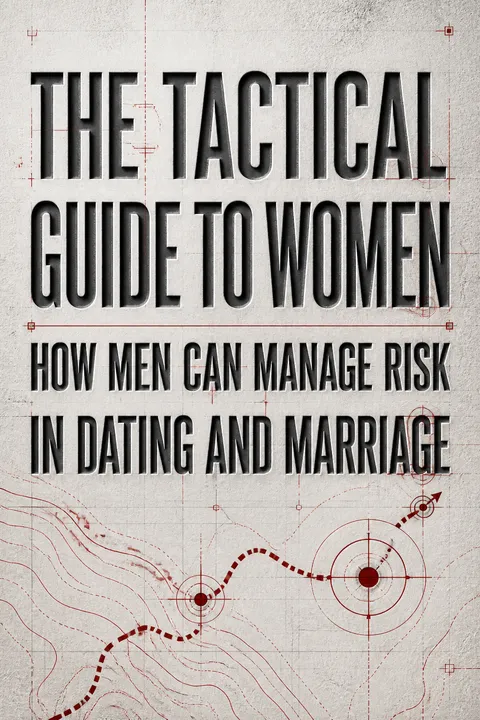
The Tactical Guide to Women receives high praise for its pragmatic approach to relationships. Readers appreciate its focus on self-improvement, risk management, and identifying compatible partners. The book's emphasis on emotional maturity, stability, and clear communication resonates with many. Some find the divorce-related content biased, but overall, the book is lauded for its insightful, research-backed advice. Men and women alike find value in its perspective on healthy relationships, with many wishing they had read it earlier in life.
People Also Read







Glossary
Bright Triad
Three partner qualitiesThe book's shorthand for three broad qualities it recommends looking for in a long-term partner: clarity in communication, emotional maturity, and stability in managing mental and emotional challenges. It is a screening lens, not a diagnostic instrument. The author uses it to organize questions about how someone handles conflict, responsibility, and everyday stress.
core beliefs
Deep assumptions guiding choicesCore beliefs are basic assumptions about oneself, other people, and relationships, often formed through early experience. They can shape attraction and behavior without conscious awareness. The book argues that beliefs such as “affection must be earned” may once have helped someone cope, yet can later steer them toward relationships that repeatedly confirm the same fear.
Big Ten
A personal values inventoryThe Big Ten is the author's practical inventory for clarifying how a person wants to live. It covers career, leisure, caregiving, family, intimate relationships, community, religion or spirituality, education and development, health, and friendship. The author adds finances and physical intimacy as further areas couples should discuss, even though these extend the original list.
values traps
Detours from chosen prioritiesValues traps are patterns that pull people away from what they say matters. The book identifies avoiding painful thoughts and feelings, pursuing secondary rewards such as money or approval, and keeping up appearances. These detours can make a person choose short-term comfort or social acceptance at the expense of a meaningful life or compatible relationship.
retreat-pursuit pattern
Escalating conflict cycleA recurring conflict dynamic in which one partner seeks to discuss an issue while the other withdraws to escape the discomfort. Each response intensifies the other's anxiety: pursuit can prompt more retreat, and retreat can provoke more pursuit. The book notes that this pattern is often gendered in its examples, but the roles can occur in any couple.
experiential avoidance
Escaping difficult inner experiencesExperiential avoidance is using actions or habits to get away from painful thoughts and feelings rather than addressing them. The book gives examples such as drinking, shopping, overworking, or compulsive behaviors. These actions may provide immediate relief, but can create longer-term harms and delay practical problem-solving or emotional recovery.
playing house
Sliding into shared commitmentsPlaying house describes a gradual move into shared obligations without a clear decision about the relationship's future. Moving in for convenience may lead to shared purchases, bills, pets, and other ties that make separation harder. The term captures how inertia can create a level of commitment neither partner deliberately chose.
white knighthood
Rescuing troubled partnersWhite knighthood is the pattern of pursuing or staying with a distressed partner in the belief that love, guidance, or sacrifice will rescue her. The book argues that this can conceal a rescuer's own need to feel indispensable and can replace mutual partnership with supervision. Support is distinct from taking responsibility for another adult's recovery.
FAQ
What's "The Tactical Guide to Women" about?
- Purpose of the book: "The Tactical Guide to Women" by Shawn T. Smith is a guide for men on how to manage risk in dating and marriage by choosing the right partner. It emphasizes the importance of understanding oneself and recognizing the qualities of a good partner.
- Focus on risk management: The book provides strategies to avoid common pitfalls in relationships, such as marrying the wrong person, and offers insights into the characteristics of women who are likely to succeed in long-term relationships.
- Bright Triad concept: It introduces the concept of the "Bright Triad," which includes clarity, maturity, and stability as essential traits in a partner.
- Practical advice: The book combines psychological insights with practical advice to help men make informed decisions about their romantic relationships.
Why should I read "The Tactical Guide to Women"?
- Avoid costly mistakes: The book helps men avoid the emotional and financial costs associated with choosing the wrong partner by providing a framework for evaluating potential partners.
- Improve relationship skills: It offers insights into effective communication and conflict resolution, which are crucial for maintaining healthy relationships.
- Understand female psychology: The book provides a deeper understanding of female psychology and behavior, helping men navigate the complexities of romantic relationships.
- Empowerment through knowledge: By understanding the principles outlined in the book, men can make more informed decisions and build fulfilling, long-lasting relationships.
What are the key takeaways of "The Tactical Guide to Women"?
- Self-awareness is crucial: Understanding one's own history, values, and purpose is essential for making wise relationship choices.
- Bright Triad traits: Look for partners who exhibit clarity, maturity, and stability, as these traits are indicative of a successful long-term relationship.
- Avoid impulsive decisions: Take time to get to know a partner beyond the honeymoon phase to ensure compatibility and reduce risk.
- Communication and assertiveness: Effective communication and assertiveness are vital for resolving conflicts and maintaining a healthy relationship dynamic.
What is the "Bright Triad" in "The Tactical Guide to Women"?
- Clarity: This involves clear communication, reliability, and the ability to express oneself constructively, especially during conflicts.
- Maturity: Emotional maturity is characterized by resilience, insight, and the ability to handle life's challenges without resorting to drama or impulsivity.
- Stability: Mental and emotional stability are crucial for a partner to manage personal issues effectively and contribute positively to the relationship.
- Importance of the triad: These traits are essential for a partner to succeed in a long-term relationship and minimize the risk of emotional and financial turmoil.
How does "The Tactical Guide to Women" suggest managing risk in relationships?
- Understand personal history: Recognize how past experiences influence current relationship choices and work to overcome any negative patterns.
- Evaluate partner's traits: Use the Bright Triad as a framework to assess a partner's suitability for a long-term relationship.
- Avoid playing house: Be intentional about relationship milestones and avoid sliding into commitments without clear intent.
- Use time wisely: Allow relationships to develop over time, especially beyond the honeymoon phase, to ensure compatibility and reduce uncertainty.
What are the most common blunders in relationships according to "The Tactical Guide to Women"?
- Rushing into commitments: Making impulsive decisions about cohabitation or marriage without fully understanding a partner's character.
- Ignoring red flags: Overlooking warning signs of incompatibility or instability due to infatuation or wishful thinking.
- Playing house: Sliding into a pseudo-marriage arrangement without clear intent, leading to entanglements that are difficult to escape.
- Neglecting self-awareness: Failing to understand one's own values and purpose, which can lead to choosing incompatible partners.
What advice does "The Tactical Guide to Women" offer for avoiding self-deception in relationships?
- Heed red flags: Pay attention to warning signs and don't ignore them in favor of wishful thinking.
- Listen to others: Take advice and observations from friends and family seriously, as they can offer valuable outside perspectives.
- Trust intuition: Respect your gut feelings about a partner, as they often reflect subconscious insights.
- Be honest about behavior: Acknowledge and address any negative behavior patterns in a partner rather than making excuses.
How does "The Tactical Guide to Women" address the concept of "playing house"?
- Definition of playing house: Entering into a cohabitation arrangement without clear intent, often leading to unintended commitments.
- Risks involved: Playing house can lead to increased chances of divorce or separation due to lack of dedication and clear boundaries.
- Importance of intention: The book emphasizes the need for intentional decision-making in relationships to avoid sliding into commitments.
- Alternatives to playing house: Encourages traditional courtship and taking time to understand a partner before making significant commitments.
What are the signs of a healthy relationship according to "The Tactical Guide to Women"?
- Effective communication: Partners should be able to express themselves clearly and resolve conflicts constructively.
- Shared values: Compatibility in values and life goals is crucial for long-term relationship success.
- Mutual respect: Both partners should respect each other's individuality and support each other's personal growth.
- Emotional stability: A healthy relationship involves partners who manage their emotions well and contribute positively to the partnership.
What are the best quotes from "The Tactical Guide to Women" and what do they mean?
- "The costliest relationship mistakes are often the easiest to avoid." This quote emphasizes the importance of being mindful and intentional in relationship decisions to prevent avoidable mistakes.
- "Men simply make better romantic decisions when their spiritual houses are in order." It highlights the significance of self-awareness and personal growth in making wise relationship choices.
- "Women who succeed in marriages and partnerships have some basic, identifiable traits." This underscores the importance of recognizing the Bright Triad traits in potential partners for successful relationships.
- "In romance, as in driving, speed kills." This quote warns against rushing into commitments and stresses the value of taking time to understand a partner fully.
How does "The Tactical Guide to Women" suggest handling conflicts in relationships?
- Constructive communication: Focus on clear and calm communication, avoiding personal attacks and tangential arguments.
- Use of timeouts: Implement timeouts during heated arguments to allow both partners to cool off and return with a solution-focused mindset.
- Inquisitiveness: Encourage curiosity and understanding of each other's perspectives to resolve conflicts effectively.
- Assertiveness: Both partners should express their needs and desires clearly to prevent resentment and misunderstandings.
What role does self-awareness play in "The Tactical Guide to Women"?
- Foundation of decision-making: Self-awareness helps men understand their own values, history, and purpose, which are crucial for making informed relationship choices.
- Avoiding past mistakes: By recognizing patterns from past relationships, men can avoid repeating the same mistakes and choose better partners.
- Enhancing relationship skills: Self-awareness improves communication and conflict resolution skills, leading to healthier relationships.
- Empowerment: Understanding oneself empowers men to set boundaries and make decisions that align with their long-term goals and values.
About the Author
Other books by Shawn T. Smith

Download PDF
Download EPUB
.epub digital book format is ideal for reading ebooks on phones, tablets, and e-readers.








