

Plot Summary
Roosevelt Gate Falls
Tehran, November 1979. Charlie Harper, a young American diplomat who loves Iran and speaks fluent Farsi, runs toward the U.S. Embassy as thousands of students surround it. He is unarmed, inexperienced, and unable to reach the trapped staff.
When a mob recognizes him as American, he escapes notice by claiming to be French. A pickup truck smashes through the main gate, and the crowd floods the compound. Charlie sees consular workers attacked, then returns to his apartment and his pregnant wife, Claire.
Radio reports confirm the embassy has been seized. Listening to a Marine frequency, Charlie hears staff trapped in a vault and documents being destroyed as attackers try to break in. He realizes the assault is no passing protest and decides they must flee.
Charlie’s affection for Iran is not naive in itself; the catastrophe exposes how easily cultural intimacy can be mistaken for political understanding. His language skills let him pass through the crowd, but they cannot make him safe inside a revolution that has turned identity into a verdict. The radio links his private apartment to the embassy’s collapsing defenses, transforming distant news into an immediate calculation about Claire and their unborn child. His decision to leave marks the first rupture between the life he imagined as a diplomat and the life events now demand.
The Shirazis Open Their Door
Charlie and Claire try to escape Tehran, but their car is trapped among students who smash a window, drag Claire toward the street, and set the vehicle alight. Charlie shoots two attackers to get her free, then carries her to a stolen van and avoids the hospitals, where he fears the regime will find them. With Claire bleeding and losing consciousness, he turns to his neighbor, cardiologist Mohammad Shirazi.
Mohammad brings the Harpers to the Canadian Embassy, where its medical team saves Claire but cannot save the baby. As Claire recovers, Mohammad and his wife, Nasreen, stay beside the grieving couple. Charlie insists the Shirazis must be included in any escape plan, since helping the Americans has put them in danger too.
The fire makes Charlie’s moral predicament physical: survival requires violence, yet each act of survival leaves a consequence he cannot undo. The Shirazis’ help reverses the expected division between American and Iranian, neighbor and enemy. Mohammad’s choice is not an abstract statement of compassion; it places his family at risk and gives the Harpers a chance to live. Claire’s lost pregnancy becomes the first lasting cost of the revolution in their intimate life. Charlie’s insistence that the Shirazis leave with them turns gratitude into obligation, a bond that will shape the next generation.
A Movie Cover Story
With the Americans sheltered at the Canadian Embassy, Charlie and the Shirazis face a country in which escape may mean execution if their identities are discovered. Charlie and Claire help develop a cover that presents the group as Canadian filmmakers scouting locations for a Hollywood production.
The CIA creates the appearance of a real company, complete with offices and industry notices, while the escapees memorize their invented biographies and rehearse for questioning. Jack Zalinsky oversees the operation.
In January 1980, the group passes through Tehran airport using false Canadian papers and boards a flight to Geneva. The plan succeeds, and the Shirazis reach safety with the Harpers. Their survival becomes a family history David will later inherit without understanding its full emotional price.
The escape depends on performance, but the disguise is more than a clever trick: it shows how identity can become a tool of survival when a state makes truth dangerous. The fabricated film production needs real infrastructure and rehearsed personal histories, so the characters must inhabit a fiction together before they can return to ordinary life. Charlie’s insistence on including the Shirazis converts a rescue into a reciprocal act. The family bond that follows is built not by shared ancestry but by a decision made under pressure, and its memory will later bind David and Marseille before either knows what it means.
A Boy Meets the Mahdi
In 1989, ten-year-old Najjar Malik hears that Ayatollah Khomeini has died and wonders whether the revered leader could have been the long-awaited Twelfth Imam. Outside his home in Samarra, older boys beat Najjar over a family debt.
A small, unknown boy drives them away by confronting them with Qur’anic teachings, then reveals intimate details of Najjar’s family and predicts his future as a scientist who will marry Sheyda Saddaji. Najjar accepts the promise that he has a special part in preparing for the Promised One.
Years later, after witnessing a family murdered during a Baghdad kidnapping, Najjar encounters a beggar who correctly names the place he secretly wishes to visit and alters his written answer. These experiences pull him back toward belief in the Mahdi.
Najjar’s early encounters give private pain a cosmic explanation. Orphaned and fearful of divine punishment, he is especially vulnerable to a figure who knows his history and promises that his life has a destined purpose. The stranger’s intervention also makes religious authority feel personal rather than institutional: it arrives in the street, in the moment a frightened child needs protection. Later, the beggar’s apparent knowledge renews Najjar’s belief just as political violence has unsettled it. The novel makes prophecy emotionally persuasive by tying it to recognition, rescue, and the hope that suffering is not random.
The Island Before Everything
In 2001, sixteen-year-old David Shirazi joins his father and brothers on their first fishing trip to a remote Quebec island. Charlie Harper brings his daughter Marseille, disrupting David’s expected boys-only weekend. At first David resents her presence, then they discover a shared ease in the old cabin they explore together.
They argue over politics, trade stories, and grow close. When their floatplanes fail to arrive, the group is stranded for days. Marseille asks David about their parents’ escape from Iran, and he finally tells her the story.
Their growing intimacy culminates in a sexual encounter. The pilots return only after the September 11 attacks shut down North American air travel. Marseille learns her mother, Claire, worked in the World Trade Center; the family’s loss abruptly ends the brief world the teenagers had made together.
The island’s isolation lets David and Marseille briefly step outside the identities inherited from their families. Their bond develops through shared attention and conversation, not through the political histories that surround them, until Marseille’s question about the escape forces those histories back into view. The delayed planes first seem comic and inconvenient, then become the mechanism that keeps them together long enough to change each other. September 11 collapses private intimacy into public catastrophe. David’s first love is therefore inseparable from grief, and the memory of the island becomes both a refuge and a wound.
A Cell Becomes a Recruiting Office
After Claire’s death, Charlie Harper withdraws with Marseille to Oregon, and David’s attempts to contact her go unanswered. He grieves, his grades collapse, and he fights classmates who insult him for being Muslim.
After one fight lands him in juvenile detention, Jack Zalinsky visits and recruits him for the CIA, exploiting David’s intelligence, language ability, and desire to avenge Claire and punish Osama bin Laden. David accepts. He studies bin Laden’s life, graduates early, and receives a fabricated German-Canadian identity as Reza Tabrizi.
The Agency sends him through university, language study, and covert training, preparing him to move through Muslim communities without revealing his American identity. David gains a mission, but the secrecy begins separating him from the family he hopes to protect.
David’s recruitment turns grief into a usable instrument. The Agency offers purpose precisely when his private life feels unmanageable, but it does not heal his loss; it gives that loss a target and a timetable. His anger at anti-Muslim harassment also sharpens his divided position: he is an American defending his country while being treated as foreign at home. The constructed identity of Reza Tabrizi formalizes a split that already exists between public belonging and private truth. The mission promises agency, yet its central method is deception, placing David’s need for connection in conflict with the work that gives him direction.
Hosseini Inherits the Revolution
After Khomeini’s death, Hamid Hosseini rises to become Iran’s Supreme Leader, convinced that his duty is to avenge his mentor and prepare for the Twelfth Imam. His private history reveals the cost of that conviction. During the Iran-Iraq War, he took his three young sons to a military base, where they were issued plastic keys and sent through minefields as child volunteers.
Years later, his wife condemns the sacrifice and refuses to accept his claim that their deaths were an honor. Hosseini beats her and kills her when she rejects his religious justification. He hides the violence behind authority and continues to believe that death in service of the coming Mahdi is sacred. His private certainty now commands a nation.
Hosseini’s political power is rooted in an intimate refusal to grieve. He converts the deaths of his sons into proof of devotion, because admitting that their sacrifice was wrong would expose his own responsibility and fracture the faith sustaining him. His wife’s dissent threatens not merely his authority but the story he tells himself about fatherhood, religion, and history. Violence becomes a means of protecting that story. The novel presents fanaticism not as a lack of conviction but as conviction insulated from correction, able to rename cruelty as obedience and private guilt as public duty.
The Nuclear Mission Changes
Years into his CIA career, David is working through a mobile-phone company in Pakistan to identify al Qaeda operatives when senior officer Tom Murray redirects him to Iran. The CIA fears Tehran is developing nuclear weapons and that Israel may attack before diplomacy can stop it.
David initially resists, believing his purpose is to hunt bin Laden, but he accepts after seeing how a regional war could devastate civilians and the world economy. His colleague Eva Fischer joins him under a commercial cover.
Before leaving the United States, David visits his parents and learns his mother has advanced cancer. He also receives a letter from Marseille, now a teacher, asking to meet in Syracuse. He departs for Iran carrying both obligations and no honest way to explain them.
The reassignment forces David to revise the revenge narrative that has organized his adult life. Hunting bin Laden was emotionally legible: one enemy, one loss, one imagined act of justice. Iran presents a less personal danger, but one whose scale makes his original mission seem narrow. His mother’s illness and Marseille’s unexpected letter pull him toward the very attachments his career has trained him to postpone. The choice to leave anyway is not evidence that he cares less; it shows how duty can become a form of avoidance when a person cannot bear the helplessness of staying with someone who may die.
Mina's Card Opens a Door
David and Eva’s first meeting with Iran Telecom executive Abdol Esfahani collapses when he learns Eva is a woman and storms away. David sends her back to Dubai, then follows Esfahani to a mosque and persuades him to reconsider the company’s contract.
Esfahani agrees to meet again, and the company’s president, Daryush Rashidi, welcomes David as a returning Iranian. The pair press him to accelerate the installation of monitoring software and request twenty secure satellite phones.
David secretly enters the new contacts into his tracked phone, giving the CIA access to calls among Iranian officials. Mina, Esfahani’s secretary, slips David a card with a mosque address, helping him find the executive after the meeting fails and keeping the operation alive.
The failed meeting exposes how the operation’s commercial cover is governed by social rules that the CIA has underestimated. David succeeds not by confronting Esfahani’s prejudice directly but by adapting his performance to what the executive wants to believe about an Iranian Muslim colleague. That compromise gives the operation access while narrowing Eva’s role, creating a moral and professional cost inside the team. Mina’s small intervention matters because she acts within the limited space available to her. The new phone contacts turn ordinary business exchanges into intelligence, making the technology itself a channel through which the regime’s private intentions can surface.
The Mountain Turns to Light
Najjar has spent years helping his father-in-law, nuclear official Mohammed Saddaji, believing he is building civilian power. That confidence erodes when Saddaji stages the beheading of an Iraqi scientist accused of spying, and Najjar recognizes the victim as the man whose family he once saw murdered.
A Christian broadcast unsettles him further by presenting Jesus as the route to forgiveness rather than a distant prophet. After Saddaji dies in a car bombing, Najjar’s fever carries him onto a mountain road, where Jesus appears and calls him to follow.
Sheyda and her mother, Farah, report a similar vision. The family leaves Hamadan for Tehran; the earthquake then destroys their apartment building, killing its occupants. Their departure saves them and confirms to Najjar that he must break with the world Saddaji built.
Najjar’s crisis begins as an ethical fracture before it becomes a religious conversion. He cannot reconcile his father-in-law’s secret violence with the civilian project he thought he served, and the execution makes complicity impossible to ignore. The vision of Jesus offers him not a new political program but a different account of guilt, mercy, and human worth. His family’s matching experience prevents the event from remaining a private fantasy and gives them a shared basis for action. Their flight from Hamadan turns belief into practical obedience, while the earthquake makes the difference between trust and delay a matter of life and death.
Birjandi Names the Deception
In earthquake-struck Hamadan, David meets Alireza Birjandi, a blind scholar whose books made him a leading authority on the Twelfth Imam. Birjandi tells David that he has privately become a follower of Jesus and believes the Mahdi is a deceiver whose miracles are meant to mislead.
He also reveals that Iran tested a nuclear warhead beneath the mountains, causing the earthquake, and that eight more weapons remain. The warheads lack missile delivery systems but can be moved by ship or truck.
Birjandi says the weapons were dispersed after the test and identifies Najjar Malik, Saddaji’s son-in-law and deputy, as the best source for locating them. David passes the intelligence to Zalinsky, who finally accepts that Iran has crossed the nuclear threshold.
Birjandi changes the novel’s interpretive frame: the signs that appear to confirm the Mahdi’s arrival may instead be evidence of deception. His testimony also joins the spiritual argument to a concrete intelligence crisis, since the earthquake is not simply an omen but the physical result of a nuclear test. The scholar’s blindness makes his authority paradoxical: he cannot see the world physically, yet he claims to discern the meaning others miss. David, meanwhile, must decide whether to trust a source whose conclusions challenge both his cover identity and the assumptions of his own agency.
The Phones Find Najjar
As the Twelfth Imam’s circle forms a secret Group of 313 and seeks hundreds of encrypted phones, David delivers an initial batch and learns that Esfahani’s uncle is General Jazini of the Revolutionary Guard. The CIA intercepts calls showing that officials urgently want Najjar.
David reaches the scientist during prayers at the Imam Khomeini Mosque, where Najjar offers Saddaji’s laptop, hard drives, and files in exchange for asylum for his family. He explains that the records document Iran’s weapons program and plans for nuclear attacks against Israel and the United States. By chance, Najjar’s family escaped the raid on their motel, but they remain in danger. David agrees to help and drives him toward a CIA safe house.
The satellite phones are both a technical breakthrough and a moral trap: David’s success at enabling communications also gives the regime a more efficient way to organize its apocalyptic project. Najjar’s defection interrupts that process from within, but his offer is not merely informational. He places his family’s safety in David’s hands and risks being judged as a traitor by the only political world he has known. The mosque encounter compresses the novel’s competing loyalties into one meeting: faith, intelligence, family, and national survival all demand action before either man can know the full cost.
A Road Paid in Blood
Iranian forces trace Najjar’s abandoned phone and raid the motel where his family had been staying, while David learns that they are not there. A roadblock closes around the two men as David drives through Tehran. He evades police by causing a pileup, steals a service revolver, and fights officers who pursue them on foot.
David kills two in the exchange and nearly shoots a frightened little girl before seeing her clearly. Najjar leaves the car to protect the child, then reunites with David at an apartment building. The men find a running Renault and continue toward Karaj. At a safe house, David uploads Saddaji’s files to Langley. A private plane arrives, and Najjar reunites with his family before flying out of Iran.
David’s extraction plan becomes an ethical emergency when every delay risks Najjar’s capture. The firefight shows the difference between the clean language of covert work and its bodily consequences: David survives, but civilians and police are placed in danger, and a child comes close to becoming another casualty. Najjar’s decision to protect the girl echoes the compassion that first drew him toward Jesus, even as it complicates their escape. The successful flight does not make the violence disappear. It secures the evidence and the family, while leaving David inside Iran with the consequences of the choice he made.
The Mahdi Claims Mecca
After revealing himself to Hosseini and Iran’s senior leaders, the Twelfth Imam demands a pledge of loyalty and outlines a plan to build an army of ten thousand fighters. He orders the creation of a tightly divided network of 313 followers and demands that Iran’s nuclear weapons program move quickly.
Then, amid a vast gathering in Mecca, he appears publicly beside Saudi Arabia’s king and other regional leaders. He announces that Iran has successfully tested a nuclear weapon, that the weapons are now under his command, and that Iran, Saudi Arabia, and the Gulf states will unite as the core of a new caliphate.
He presents this as a project of peace while threatening annihilation against any country that attacks it. The regional crisis becomes an international emergency.
The public spectacle transforms private apocalyptic belief into geopolitical leverage. The Mahdi speaks the language of unity and peace, but his authority rests on nuclear weapons and the threat of mass destruction. The contradiction is central: he offers an end to division by demanding total submission, and promises security by making retaliation limitless. Mecca gives his claim religious visibility while the Saudi king’s presence signals that the political balance has shifted, willingly or under pressure. The scene also closes the distance between prophecy and policy. What officials once treated as ideology now governs military plans and millions of lives.
Syracuse Cannot Hold Him
David returns to Syracuse after Zalinsky tells him his mother is dying. He visits her in the hospital, then meets Marseille for breakfast before she flies home. She explains that she lost their baby after the Canada trip and that her father forbade contact, blaming David and his Iranian family.
She also shares records showing Claire had miscarried during the 1979 crisis, a pain her parents never discussed. David learns that Charlie had worked for the CIA, deepening the connection between their families.
They admit how much their bond has mattered, but David cannot tell Marseille what he is doing or promise when he will return. A call from Zalinsky interrupts their reunion: the president personally orders David back to Washington, leaving the Iran crisis unresolved.
The reunion gives David something his covert life has denied him: a chance to hear the missing history from the person who lived it. Marseille’s account reframes years of silence as trauma and paternal control rather than simple rejection, while the miscarriage links their private loss to the earlier losses of their parents. Yet intimacy does not restore the past. David cannot fully disclose his life, and the presidential order makes the limits of his agency unmistakable. The novel ends with emotional recognition but no personal resolution, mirroring the larger crisis: truth has surfaced, but the forces set in motion remain active.
Analysis
The novel makes belief politically consequential by showing how an interpretation of prophecy can govern both private life and state action. Hosseini’s expectation of the Mahdi does not remain a mystical hope; it informs recruitment, communications, military planning, and the pursuit of nuclear weapons. Najjar’s crisis runs in the opposite direction. His scientific work first appears separate from religious certainty, then becomes impossible to separate from the violence hidden inside it. David stands between these worlds as an operative trained to trust documents and observable facts, yet the intelligence he needs arrives through people whose experiences exceed his framework.
The book’s recurring question is not simply whether miracles occur, but how people judge the authority behind them. The Twelfth Imam’s apparent signs gain political force because they answer the public’s hunger for order, justice, and deliverance. Birjandi’s argument insists that spectacle alone cannot establish goodness; the character of the message matters. This distinction gives the thriller its spiritual stakes while also exposing how easily a desperate population can be governed through promises of rescue.
Family history supplies the counterweight to grand political narratives. Charlie’s choice to save the Shirazis creates a bond that outlasts exile, while David and Marseille inherit its unresolved losses. Najjar’s commitment to his wife and child makes defection a personal risk rather than a strategic abstraction. Across both generations, love interrupts the claims of ideology, though it cannot protect anyone from every consequence. The ending deliberately refuses closure: David reconnects with Marseille, learns that his mother may be dying, and is called back to national duty just as the Iranian crisis intensifies. His private life and the geopolitical emergency remain unfinished, each demanding a sacrifice the other cannot erase.
Review Summary
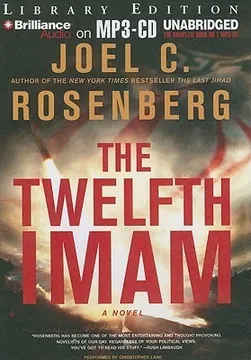
The Twelfth Imam receives mixed reviews, with some praising its fast-paced thriller elements and exploration of Islamic eschatology, while others criticize its Christian evangelical overtones and perceived anti-Muslim bias. Readers appreciate Rosenberg's research and writing style but are divided on the supernatural elements and abrupt ending. Many compare it to the Left Behind series, noting its focus on end-times prophecy. The book's political themes and portrayal of Middle Eastern conflicts garner both praise and criticism, with some finding it thought-provoking and others dismissing it as fear-mongering.
People Also Read

Characters
David Shirazi
Persian American prodigyBorn in the United States to Iranian parents, David is a gifted linguist and student who wants both to belong and to distinguish himself. He is observant, disciplined, and capable of remembering details others overlook, but grief can turn his intelligence toward anger and self-punishment. His sense of duty is genuine, though he often mistakes secrecy for strength and postpones emotional obligations until they become urgent. David’s central tension is between the identities he performs and the attachments that make him more than a role. His affection for Marseille and his loyalty to his parents expose the human cost of living behind a carefully managed cover.
Najjar Malik
The searching physicistAn Iraqi-born Persian physicist raised in Samarra, Najjar is brilliant, disciplined, and deeply shaped by childhood loss. He seeks certainty in religious learning and takes seriously the idea that his life has been chosen for a higher purpose. His scientific ambition and family devotion make him valuable to powerful people, yet they also place him at the point where personal loyalty collides with moral responsibility. Najjar is not naturally cynical; he wants to believe that faith, work, and sacrifice can make the world just. His story is driven by the difficult work of testing those beliefs against what he sees.
Marseille Harper
David's first loveThe only child of Charlie and Claire Harper, Marseille is imaginative, quick-witted, and drawn to music, theater, poetry, and teaching. She is frank about her convictions and more emotionally perceptive than David first recognizes. Her family’s history is a guarded subject, leaving her to assemble her identity from silences, old records, and the stories other people remember. Marseille values connection but is cautious about asking for it after repeated losses. Her warmth does not erase her resilience; she can name pain plainly while still hoping that honesty may reopen a relationship she once believed was gone.
Hamid Hosseini
Iran's devoted rulerA longtime confidant of Ayatollah Khomeini, Hosseini is a disciplined believer whose political identity grows from loyalty to his mentor and an intense expectation of the Twelfth Imam. He interprets events through religious obligation and views compromise with perceived enemies as spiritual failure. His capacity for organization makes him a formidable leader, while his certainty narrows his ability to recognize suffering as anything other than necessary sacrifice. Hosseini’s private grief and public authority are closely entangled: he needs a grand account of history in which pain has a purpose, and he expects those around him to submit to that account.
Dr. Alireza Birjandi
The blind scholarBirjandi is a renowned scholar of Shia eschatology whose learning has made him an adviser to Iran’s leaders. Blind from birth, he depends on memory, listening, and the intellectual labor of those around him. He is patient with sincere questions but carries a private grief that has unsettled the certainty his scholarship once provided. Birjandi’s authority comes less from political power than from the depth of his inquiry and his willingness to reconsider what he has taught. His encounter with David brings together a life spent interpreting prophecy and a personal search for a faith that can answer suffering.
Jack Zalinsky
David's CIA mentorA veteran CIA officer, Zalinsky is methodical, guarded, and deeply invested in the people he recruits, even when he expresses care through orders rather than tenderness. He prizes operational discipline and verifiable evidence, having watched intelligence failures damage public trust. His mentorship gives David a path out of self-destruction, but it also asks him to accept a life built on concealment. Zalinsky’s greatest strength is his ability to plan several moves ahead; his weakness is that experience can harden into resistance when an unfamiliar explanation does not fit his framework.
Eva Fischer
The field strategistEva is an experienced CIA operative with strong language skills, technical resourcefulness, and a clear sense of professional competence. She understands how easily a cover can fail and how much depends on small details, from phone encryption to the way a foreign colleague is perceived. Eva is loyal to the mission but not passive within it; she challenges decisions that undervalue her abilities and makes independent judgments under pressure. Her partnership with David develops through shared danger and practical trust, allowing each to compensate for the other’s blind spots without erasing their differences.
Charlie Harper
The devoted Iran handCharlie is a young American diplomat whose love of Persian culture and language draws him toward service in Iran. Idealistic but not foolish, he believes patient engagement can create understanding between nations. His instincts become protective and decisive when Claire is threatened, revealing a capacity for courage that his diplomatic training never prepared him to use. Charlie is also a loyal friend: his relationship with the Shirazis is built through trust tested under extreme pressure. As a father, he wants to protect Marseille from the history that shaped him, though silence can leave her feeling excluded from her own family story.
Claire Harper
The Harper family's anchorClaire is Charlie’s intelligent, capable wife and a Foreign Service professional in her own right. She is practical enough to challenge his assumptions and perceptive enough to understand that his reassurances may conceal fear. Her pregnancy makes the danger in Tehran intensely personal, while her friendship with Nasreen gives her a place in Iranian daily life beyond diplomatic work. Claire values candor and competence, but crisis forces her to rely on others when control is impossible. She is an emotional center for Charlie and Marseille, shaping the family’s understanding of love, loss, and what remains unsaid.
Mohammad Shirazi
The neighbor who healsMohammad is a respected cardiologist, generous host, and neighbor to the Harpers in Tehran. He is a Muslim and an Iranian who refuses to let political upheaval erase personal responsibility. His medical skill and composure make him a practical source of help, while his friendship with Charlie shows how trust can grow across national and religious lines. Mohammad’s devotion to his family is balanced by a willingness to take risks for people he cares about. He represents the life the Shirazis built through work, hospitality, and loyalty rather than ideology.
Nasreen Shirazi
The generous neighborNasreen is Mohammad’s wife and the mother of David and his brothers. Warm, hospitable, and attentive, she welcomes Claire into Persian domestic life and offers care without demanding that it be repaid. Her cooking and friendship give the Harpers a glimpse of ordinary Tehran beyond political crisis. As a mother, Nasreen is proud of her sons but also aware of the distance that grows between parents and adult children. She wants David close, not because she doubts his abilities, but because she understands that success can become another form of absence.
Sheyda Saddaji Malik
Najjar's steadfast wifeSheyda is the daughter of nuclear scientist Mohammed Saddaji and the wife of Najjar Malik. She is affectionate, steady, and strongly attached to family, but she is not merely sheltered by those bonds. She can question what she has been taught and act with courage when events demand it. Her love for Najjar makes her a source of emotional stability, while her relationship with her father places her between personal loyalty and difficult truths. Sheyda’s responsiveness to spiritual questions complements Najjar’s more analytical temperament.
Mohammed Saddaji
The brilliant nuclear chiefSaddaji is a gifted Persian nuclear physicist who has worked in both Iraq and Iran and commands the respect of colleagues for his intelligence and ambition. His family loyalty is genuine, particularly toward his daughter Sheyda, and he values Najjar’s technical ability. Yet his professional brilliance exists alongside an intense political and religious agenda, making him difficult for those around him to read. Saddaji believes scientific work can alter the balance of power and restore greatness to his country. His confidence in that goal shapes both his public career and his private relationships.
Farah Saddaji
Sheyda's devoted motherFarah is Sheyda’s mother and Saddaji’s wife, a woman whose devotion to her family is matched by a strong inner life. She is caring and observant, with a tenderness that becomes especially important when the family faces grief and danger. Farah’s religious convictions are sincere, but she is not immune to doubt when belief is used to excuse cruelty. Her relationship with Sheyda is intimate and supportive, offering her daughter a model of courage grounded in love rather than authority.
Daryush Rashidi
The telecom power brokerRashidi is the polished president of Iran Telecom, a businessman whose influence comes from his ability to manage people as well as infrastructure. He is more diplomatic than his operational deputy and understands that technical modernization can expand political power. Rashidi is attentive to appearances, strategic relationships, and the advantages of trust. His genial manner does not make him politically neutral; he sees business as part of a larger national and religious project.
Abdol Esfahani
The suspicious telecom deputyEsfahani oversees technical operations at Iran Telecom and is the first major Iranian official David must persuade. He is suspicious of outsiders and quick to react when he feels that religious or cultural norms have been disregarded. Beneath his volatile manner is a capable administrator who understands the importance of communications infrastructure. Esfahani prizes loyalty and discretion, and he tests people by watching what they do when a negotiation becomes uncomfortable. His connections reach beyond the company, giving his decisions consequences well outside ordinary business.
Mina
The overlooked secretaryMina is Esfahani’s secretary, a shy and conscientious employee who is often treated as an extension of her employer’s authority rather than as a person with judgment. She is careful with procedure and anxious about making mistakes, but she can recognize when someone needs help. Her small acts of initiative matter because she works close to the systems and people the CIA is trying to reach. Mina’s modest position gives her little formal power, yet her choices can open or close an important door.
William Jackson
The pressured U.S. presidentJackson is the president of the United States, responsible for weighing intelligence, diplomacy, and military risk as Iran’s nuclear program advances. He prefers to prevent a regional war through pressure and negotiation, but he cannot ignore the possibility that delay will make conflict unavoidable. The novel presents him mainly through the decisions and demands that reach David’s team. His role embodies the difficulty of acting on uncertain intelligence when the cost of both action and inaction may be enormous.
Ahmed Darazi
Iran's calculating presidentDarazi is Iran’s president and a close political partner of Hosseini. He is strategic, confident in his reading of American weakness, and skilled at presenting the regime’s ambitions as manageable. His political instincts favor opportunity and timing, while his religious commitment aligns him with the expected return of the Mahdi. Darazi’s position lets him translate spiritual conviction into government policy and international theater.
Ali Faridzadeh
The defense ministerFaridzadeh is Iran’s defense minister and a senior member of the leadership circle. He oversees military priorities and communicates the state of the nuclear program to Hosseini. Direct and ambitious, he values readiness and measurable progress. His confidence in technical reports gives the political leadership an apparent basis for escalating its plans.
Mohsen Jazini
The Guard commanderJazini commands Iran’s Revolutionary Guard Corps and belongs to the inner security structure surrounding the country’s leaders. He is a military organizer whose importance lies in connecting strategic decisions with force and communications. His family ties also intersect with Iran Telecom, giving the business network a direct link to state power.
Ayatollah Ruhollah Khomeini
The revolutionary mentorKhomeini is the revolutionary leader whose return to Iran reshapes the country and whose ideas continue to guide Hosseini and Najjar. Charismatic and uncompromising, he presents political struggle as a religious duty and becomes a symbol larger than his own life. His legacy reaches the younger characters through sermons, stories, and the expectations placed on them by those who followed him.
Plot Devices
Reza Tabrizi's cover identity
A life built from liesDavid enters Iran as Reza Tabrizi, a German-Canadian technology consultant whose invented family history explains his language skills and his return to his ancestral country. The CIA backs the identity with documents, employment, a Munich address, and a carefully rehearsed biography. The cover allows David to approach Iran Telecom without openly identifying himself as American, but it also complicates his private life. He must lie to his parents, to Marseille, and to the people he hopes to recruit. The alias is both protection and emotional cost: the better David performs it, the harder it becomes to speak honestly as himself.
The satellite phones
A wire into powerDavid’s contact directory is linked to intelligence systems that can begin monitoring new numbers as he enters them. The secure satellite phones he supplies to Iranian officials appear to solve a communications problem, while their distribution gives the CIA access to conversations among members of the regime’s inner circle. The phones also serve the Twelfth Imam’s growing organization, so the same technology advances both sides’ plans. Their importance lies in this double use: a device presented as a commercial delivery becomes an instrument for tracking the people who are preparing a nuclear conflict.
The Group of 313
Prophecy becomes an organizationThe Twelfth Imam’s followers organize around a religious tradition that associates his return with 313 chosen supporters. Hosseini and his allies turn that expectation into a practical network, recruiting officials, military figures, and business leaders while keeping separate cells from learning one another’s identities. The structure gives a prophecy administrative form and lets the movement prepare in secrecy. It also explains the demand for secure phones and the subsequent plan to assemble a much larger fighting force. The device becomes dangerous because belief is no longer merely private conviction; it supplies a chain of command.
Saddaji's digital files
The evidence in a laptopSaddaji’s laptop, external hard drive, and backup discs contain records of the nuclear program that Najjar can offer to the Americans. The files turn suspicions into actionable evidence, including information about weapons, testing, and plans for moving warheads. Their physical portability makes them both a route to exposing the program and a danger to anyone carrying them. David must protect Najjar while getting the data out of Iran, and the CIA must assess what the records mean before a strike occurs. In the story, the files are proof that political claims can be tested against documents.
The rival messiahs
Faith becomes a testThe novel places reports of the Twelfth Imam’s appearances and miracles beside visions of Jesus experienced by Najjar, Sheyda, Farah, and others. The competing claims force characters to decide what counts as divine authority: fulfilled predictions, miraculous healing, sacred texts, or the ethical character of the one making the claim. Birjandi’s knowledge of Shia prophecy and his reading of the Bible give David a way to question what Iranian leaders present as proof. This device drives both the spiritual conflict and the political plot, since belief in the Mahdi shapes the regime’s nuclear ambitions.
Download PDF
Download EPUB
.epub digital book format is ideal for reading ebooks on phones, tablets, and e-readers.








