

Key Takeaways
Treat light as a biological input, not merely something that helps you see
Different wavelengths do different jobs. The book describes five kinds of biologically active light: blue light helps set the body clock, ultraviolet light enables vitamin D production, far-infrared light warms tissue, and red and near-infrared light may influence cellular activity. The author argues that indoor life changes the timing and mix of light people receive, a condition he calls mal-illumination.
A device is not sunlight. Sunlight supplies a broad spectrum, including wavelengths a red-light panel does not provide. The book presents red and near-infrared devices as a way to deliver selected wavelengths, not as a replacement for daylight, morning light, or the separate role of ultraviolet light.
What's useful here is the shift from treating light as scenery to treating it as an environmental signal. That makes timing and wavelength part of the health conversation, rather than reducing exposure to a simple question of brightness. The distinction between a targeted device and sunlight also matters: a panel cannot reproduce all the functions of outdoor light. The book's broad language about modern light deficiency is less secure than its basic point that different wavelengths have different biological effects.
Think of red light as a cellular signal, not a miniature sunburn
A wound-healing surprise. In the 1960s, Hungarian researcher Endre Mester used a weak red laser while trying to destroy tumors in hamsters. It failed to kill the tumors, but the animals' surgical wounds healed faster than those in untreated animals. The book presents this accidental observation as an early step toward photobiomodulation, the use of light to alter biological activity.
Two proposed routes. Red and near-infrared photons may interact with cytochrome c oxidase, a mitochondrial enzyme involved in making ATP, the cell's usable energy. The light may also create a small, temporary stress that prompts cellular defenses. The book treats the mitochondrial pathway as central, while acknowledging that researchers have not settled every detail.
The hamster experiment makes a useful distinction between light as a destructive force and light as a signal. The same general stimulus can produce different outcomes depending on wavelength, intensity, tissue, and dose. The proposed mitochondrial pathway offers a plausible bridge from photons to cellular effects, but a plausible mechanism does not by itself establish a useful treatment for a particular disease. The most responsible reading keeps the mechanism interesting while treating clinical results as a separate question.
Let shared cell biology explain broad claims, but judge each benefit separately
One mechanism, many tissues. The book links red and near-infrared light to changes in energy production, inflammation, circulation, and tissue repair. Because skin, muscle, nerves, and organs all depend on functioning cells, the author argues that this could help explain research across areas such as wound healing, skin appearance, pain, and exercise recovery.
The evidence is uneven. The book discusses human studies for some uses, including skin and athletic performance, but many claims involving neurological disease, autoimmune conditions, or organ health rely on early studies, small trials, or animal research. A mechanism that applies broadly does not make every claimed outcome equally established, and results for one tissue or condition cannot automatically be transferred to another.
A shared biological pathway can make a wide range of findings coherent, which is a strength of the book's explanatory approach. It can also make the intervention sound more universal than the evidence warrants. The useful habit for readers is to separate three questions: does light change a cellular marker, does that change improve a measurable outcome, and does the outcome matter to patients? The book offers a map of possible applications, but readers should not mistake the map for equal proof across the territory.
Use light to support training, not to replace the work of training
Exercise is the stronger partner. The book describes red and near-infrared light as a possible way to improve muscle readiness, recovery, and adaptation when paired with exercise. In one eight-week study of 30 healthy men, the training-only group increased strength by about 14%, while the group combining training with light increased it by nearly 25%. The combined group also gained almost twice as much quadriceps size.
Fat loss still needs a deficit. Some studies cited in the book report larger reductions in body fat or waist measurements when light accompanies exercise. The author cautions that light may release fat from cells, but it does not ensure that the released energy is used. Without a broader diet and activity pattern that produces net fat loss, the body can store it again.
The most practical interpretation is additive, not magical: light may alter the response to a training program, while the training still supplies the central stimulus. The reported study is striking, but its specific sample, equipment, and protocol matter; it cannot promise the same result to every athlete or casual exerciser. The book is strongest when it treats light as a possible amplifier of behaviors already known to matter, rather than as a shortcut around them.
Find the useful dose; more light can mean less benefit
Light has a dose window. The book calls the pattern a biphasic dose response: too little light may do little, a moderate dose may help, and too much may reduce the effect. It compares this to exercise, where a manageable stress can prompt adaptation but excessive stress can undermine it. Dose depends on power density, exposure time, distance, wavelength, and the tissue being treated.
Start conservatively. The author's general guidance is roughly 3-15 joules per square centimeter for skin or surface goals and 10-40 for deeper tissues, with shorter distances generally used for deeper targets. These are guide ranges for particular devices, not universal medical prescriptions. He advises starting at the low end, especially for people with significant fatigue or poor health, and reducing exposure if fatigue or headaches follow.
The dose-window idea is a valuable antidote to the assumption that a stronger treatment must work better. It also shows why dosing instructions cannot be detached from a device's measured output and the distance used. The practical complication is that real-world equipment and treatment goals vary, so a single range can create false precision. Readers should treat the figures as the author's framework for cautious use, not as proof that a given dose is effective or appropriate for a specific condition.
Buy by verified output and usable coverage, not impressive wattage claims
Specs can mislead. The book says a device's advertised wattage may not match the light that reaches the body. It recommends checking wavelength, measured power density, treatment area, and warranty, rather than choosing by price or marketing language alone. A small, weak device may require long sessions and cover little skin, while a more powerful panel can illuminate a broader area from farther away.
LEDs can be an option. The book argues that LEDs can produce effects comparable to lasers when wavelength and power density are similar, so a costly medical laser is not automatically necessary. Its brand rankings and prices, however, are specific to its 2018 publication. The author disclosed commissions associated with some recommended devices, so those product recommendations should not be treated as current, independent buying advice.
The strongest consumer lesson is to ask what reaches the target, not what the box says it emits. That principle applies well beyond light devices: marketing specifications often describe capacity, while users care about delivered performance. The disclosure of commissions is also relevant because recommendations and commercial incentives can coexist. It does not by itself invalidate the technical comparisons, but it gives readers a reason to verify measurements independently and to separate enduring selection criteria from dated product rankings.
Match wavelength to depth: red for surfaces, near-infrared for deeper targets
The main difference is penetration. The book's most researched ranges are about 630-680 nanometers for red light and 800-880 nanometers for near-infrared. Both may affect similar cellular pathways, but near-infrared penetrates deeper into tissue and is presented as the better choice for muscles, joints, glands, and the brain. Red light is visible; near-infrared is mostly invisible.
Choose for the intended target. For skin-focused uses, the author gives red light a possible advantage because more of its energy remains near the surface. For brain-focused uses, he favors near-infrared, while noting that hair blocks light and that the skull reduces the amount reaching the brain. Mixed panels can cover multiple goals, but no wavelength choice guarantees a clinical benefit.
This is a useful rule of thumb because it translates a technical spectrum into a decision about target tissue. It also prevents a common category error: assuming that a visible red glow means the light is reaching a deep structure. Still, penetration is not the same as effective treatment. The amount delivered at the target, the response of that tissue, and the quality of the outcome all matter. The book's wavelength guidance helps narrow choices, but it cannot replace condition-specific evidence.
Keep light therapy adjunctive, especially when treating illness or sensitive tissue
Promise is not permission. The book describes possible uses ranging from pain and skin concerns to thyroid disorders, brain conditions, and cancer. It also warns against shining light directly on a cancerous tumor and says experimental cancer use belongs under physician supervision. For eye exposure, it recommends caution, particularly for people with eye conditions, and advises consulting a clinician.
Do not change care on your own. The book is explicit that its guidance is educational, not a substitute for diagnosis or treatment. That caution matters for claims involving medication, autoimmune illness, fertility, and neurological disease, where the consequences of delaying established care can be serious. A device session should not become a reason to stop medication, postpone evaluation, or treat a medical condition without qualified advice.
This is the boundary that makes the book's enthusiasm safer to use. A low-risk, noninvasive intervention can still create risk if it encourages people to abandon effective care or to treat a serious condition based on preliminary findings. The distinction between wellness experimentation and medical treatment should remain clear, especially when the target is the brain, eyes, thyroid, or a tumor. In practice, the more consequential the diagnosis, the more important it is to involve a qualified clinician.
Analysis
The book's central contribution is a change in category: light is presented not only as something the eyes detect, but as an input that can influence cellular biology. That reframing helps readers understand why a specific wavelength might affect skin, muscle, or nerve tissue without treating the device as a drug in disguise. The explanation is especially memorable when anchored in Mester's accidental wound-healing observation and in the proposed interaction between photons and mitochondrial energy production.
Its main challenge is the distance between a coherent mechanism and a confident catalogue of outcomes. The book gathers research across different wavelengths, devices, doses, tissues, populations, and study designs, then places many of those findings under one broad biological story. That synthesis is useful for generating hypotheses, but it risks making preliminary evidence for one application sound like confirmation of another. Human outcomes, animal findings, laboratory mechanisms, and personal reports deserve different levels of confidence.
The dosing discussion is a practical strength because it rejects the idea that more exposure must be better. Yet the very number of interacting variables makes a universal home protocol difficult to justify. Device output, distance, treatment area, target depth, and individual sensitivity all affect what a session means. A precise-looking number is not necessarily a precise dose at the relevant tissue.
The commercial context also matters. The author discloses commissions tied to some device recommendations, and the 2018 product comparisons are historical rather than timeless. That disclosure enables informed judgment, but readers should prioritize the transferable criteria, including wavelength, measured output, and coverage, over specific brand rankings. The soundest conclusion is neither that red light is a miracle nor that it is empty hype. It is a promising area of research with plausible mechanisms, some encouraging human findings, substantial variation in evidence, and a clear need for proportionate claims and medical caution.
Review Summary
The Ultimate Guide to Red Light Therapy receives mostly positive reviews, praised for its comprehensive, evidence-based approach to explaining red light therapy benefits and applications. Readers appreciate the practical advice on device selection and usage. Some criticize repetitiveness and sales-like tone. Many report positive experiences with red light therapy, citing improvements in energy, pain relief, and skin health. Critics question the lack of inline citations and potential bias in device recommendations. Overall, reviewers find the book informative and useful for those interested in exploring red light therapy.
People Also Read



Glossary
Photobiomodulation
Light-driven biological changePhotobiomodulation is the use of light, commonly red or near-infrared, to alter biological activity in cells and tissues. The book uses the term for effects that may include changes in mitochondrial energy production, inflammation, circulation, and repair. It is broader than laser treatment because LEDs and other suitable light sources may also be used.
Cytochrome c oxidase
Mitochondrial light absorberCytochrome c oxidase is an enzyme in the mitochondrial respiratory chain, which helps cells produce ATP. The book describes it as a light-absorbing target for red and near-infrared photons. One proposed mechanism is that light changes how the enzyme interacts with oxygen and nitric oxide, supporting more efficient cellular energy production.
Hormesis
Adaptation to mild stressHormesis is the process by which a temporary, limited stressor prompts biological adaptations that can improve resilience. The book compares red and near-infrared light exposure to exercise: a modest stimulus may trigger cellular defense and repair responses, while excessive exposure can overwhelm those responses. The concept helps explain why dose matters.
Biphasic dose response
Benefit peaks within a dose windowA biphasic dose response describes a pattern in which a stimulus produces little effect below a certain level, a stronger response within a useful range, and a weaker or negative response when the dose becomes excessive. In the book, it explains why too much red or near-infrared light may reduce the benefits of an otherwise useful exposure.
Power density
Light power per areaPower density, also called irradiance, measures how much light power reaches a given area, commonly expressed in milliwatts per square centimeter. It changes with distance from the device and is used with exposure time to estimate dose. The book warns that advertised wattage does not necessarily reveal the actual power density at the body.
FAQ
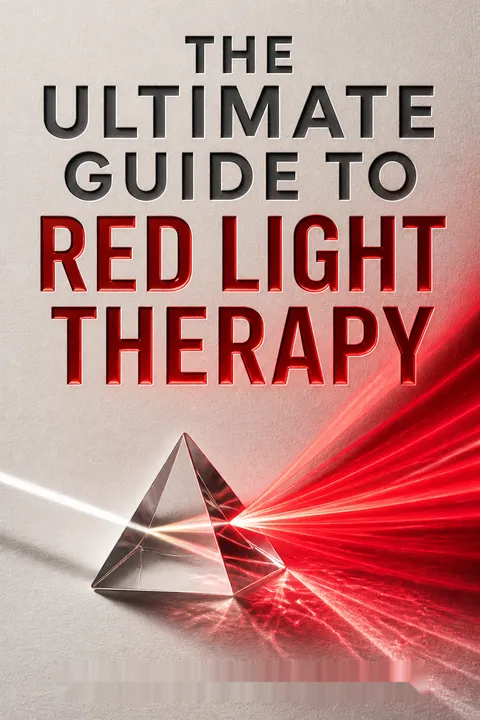
What’s "The Ultimate Guide to Red Light Therapy" by Ari Whitten about?
- Comprehensive science and application: The book explores the science, history, and practical uses of red and near-infrared (NIR) light therapy for anti-aging, fat loss, muscle gain, performance, and brain health.
- Light as a nutrient: It introduces the idea that specific light wavelengths are essential nutrients for human cells, much like vitamins and minerals.
- Historical to modern context: The guide traces light therapy from ancient heliotherapy to modern photobiomodulation, including NASA’s use of LED red light.
- Practical advice: Readers receive detailed instructions on how red/NIR light works, its benefits, dosing, and how to choose effective devices for home use.
Why should I read "The Ultimate Guide to Red Light Therapy" by Ari Whitten?
- Evidence-based approach: The book is grounded in over 3,000 scientific studies, making it a reliable resource for understanding red/NIR light therapy.
- Accessible explanations: Ari Whitten breaks down complex science into understandable language without sacrificing accuracy.
- Practical, actionable benefits: Readers learn how to use red/NIR light therapy at home for improved energy, skin health, recovery, and more.
- Cutting-edge insights: The book covers emerging research on how light interacts with mitochondria, water in cells, and even dietary chlorophyll.
What are the key takeaways from "The Ultimate Guide to Red Light Therapy"?
- Light is essential: Red and NIR light are vital for optimal cellular function and overall health.
- Wide-ranging benefits: Therapy can improve skin, fat loss, muscle gain, brain function, pain, inflammation, and wound healing.
- Proper dosing is crucial: Both underdosing and overdosing reduce effectiveness; the book provides clear dosing guidelines.
- Device quality matters: High-power, well-designed devices are necessary for meaningful results, and the book helps readers choose wisely.
What are the five types of "bioactive" light humans need according to Ari Whitten?
- Blue light: Regulates circadian rhythm and hormone cycles, impacting sleep and mood.
- Ultraviolet (UV) light: Enables vitamin D synthesis, crucial for bone and immune health.
- Far-infrared light: Produces heat, improving circulation and cellular function.
- Red light: Stimulates mitochondria for increased energy (ATP) and cell repair.
- Near-infrared (NIR) light: Penetrates deeper tissues, boosting mitochondrial function and reducing inflammation.
How does red and near-infrared light therapy work at the cellular level in Ari Whitten’s method?
- Mitochondrial activation: Red/NIR photons are absorbed by cytochrome c oxidase, enhancing oxygen use and ATP production.
- Nitric oxide modulation: Therapy displaces nitric oxide, restoring efficient mitochondrial respiration.
- Hormetic stress response: Light induces mild stress, activating antioxidant and anti-inflammatory pathways, similar to exercise.
- Additional mechanisms: May alter water viscosity in cells and interact with chlorophyll metabolites to further boost energy.
What are the main health benefits of red and near-infrared light therapy in Ari Whitten’s book?
- Skin rejuvenation: Stimulates collagen and elastin, reducing wrinkles, scars, and UV damage.
- Fat loss and muscle gain: Promotes fat release and improves muscle recovery and strength.
- Brain and cognitive enhancement: Increases brain energy, reduces inflammation, and supports neuroprotection.
- Pain relief and healing: Alleviates chronic pain, reduces inflammation, and accelerates wound and tissue repair.
What are the key concepts and principles of red light therapy dosing in "The Ultimate Guide to Red Light Therapy"?
- Power density and dose: Effective therapy requires 20-200 mW/cm², with doses of 3-50 J/cm² depending on tissue depth.
- Distance matters: Light intensity decreases with distance; closer distances are better for deep tissues, farther for skin.
- Biphasic dose response: Both too little and too much light reduce effectiveness; optimal dosing is essential.
- Start low, increase gradually: Begin with lower doses, especially for sensitive individuals, and adjust as needed.
How deep does red and near-infrared light penetrate the body according to Ari Whitten?
- Variable by tissue and wavelength: NIR penetrates deeper than red light, with 808 nm being most effective for depth.
- Technical penetration depth: Light intensity falls to 37% at 3-6 mm, but some light reaches several centimeters deep.
- Brain penetration: NIR can reach up to 40 mm through the scalp and skull, enabling brain treatments.
- Device power and distance: Penetration also depends on device strength and how close it is to the body.
What are the differences between red light and near-infrared light in therapy as explained by Ari Whitten?
- Wavelength and visibility: Red light (630-680 nm) is visible; NIR (800-880 nm) is invisible.
- Depth of penetration: NIR penetrates deeper, making it better for muscles, organs, and brain; red light is best for skin.
- Power and cost: NIR LEDs are more powerful and expensive; many devices combine both for broader effects.
- Placebo effect: Visible red light may have a stronger placebo effect due to its visibility.
What types of devices and brands does Ari Whitten recommend in "The Ultimate Guide to Red Light Therapy"?
- High-power LED panels: Brands like Red Rush360 and Platinum Therapy Lights BIO-300/BIO-600 are recommended for high irradiance and large treatment areas.
- Device size and efficiency: Larger panels treat bigger areas faster; small handheld devices are less efficient.
- Specialized devices: VieLight Neuro is suggested for brain therapy, and photopuncture kits for acupuncture points.
- Device quality: High-quality, medical-grade devices are necessary for effective therapy.
How often and how long should red/NIR light therapy sessions be according to Ari Whitten?
- Frequency: 3 to 7 sessions per week are optimal, with daily or every-other-day use common.
- Session duration: Deep tissue treatments require 2-7 minutes at 6 inches or 5-10 minutes at 12 inches; skin treatments need shorter times at greater distances.
- Start low, adjust as needed: Begin with lower doses and fewer sessions, especially for those with health issues.
- Avoid overuse: More than one session per day is usually unnecessary and may reduce benefits.
What safety considerations and side effects are discussed in "The Ultimate Guide to Red Light Therapy" by Ari Whitten?
- Extremely safe: Red/NIR light therapy is safer than UV light or excessive exercise, with rare side effects.
- Possible side effects: Overdosing can cause fatigue or headaches, especially in sensitive individuals.
- Eye safety: Generally beneficial for eyes at low doses, but avoid prolonged high-dose exposure and never use lasers on eyes.
- EMF exposure: EMF emissions are low and decrease with distance; some devices feature ultra-low EMF technology for added safety.
About the Author

Download PDF
Download EPUB
.epub digital book format is ideal for reading ebooks on phones, tablets, and e-readers.








