

Plot Summary
A Will Becomes a Trial
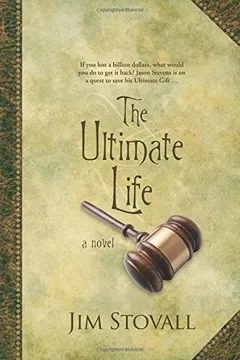
Judge Stanford Davis opens a courtroom battle over the estate of Red Stevens, whose grandson Jason has completed a year of lessons in exchange for control of a vast charitable trust. Red’s children and grandchildren challenge the will, hoping to claim Jason’s share as well as the fortunes they have already inherited.
Jason appears with an inexperienced lawyer, Jeffrey Watkins, until Red’s longtime attorney and friend, Theodore Hamilton, strides in from a long absence. Hamilton reveals that anyone contesting the will risks forfeiting their existing inheritance if it stands.
The case becomes an all-or-nothing contest: the relatives could take Jason’s trust, or their own fortunes could be transferred into it. Davis rules that Jason must prove, gift by gift, that he has learned Red’s lessons and can pass them on.
The courtroom frame turns a family dispute into a public examination of what wealth can and cannot prove. The heirs arrive with legal power and money, while Jason’s right to the trust depends on demonstrated conduct. Hamilton’s appearance changes the balance, but the forfeiture clause changes the emotional stakes: the family is no longer merely asking for more. Their attempt to discredit Jason now threatens what they already possess. Davis’s decision to review the lessons one by one makes judgment itself part of the story. He must decide whether Red’s unconventional will expresses a real purpose, not simply whether its clauses can be read literally.
A Fence Starts a Park
The heirs’ lawyer, L. Myron Dudly, argues that Jason has never held a job and that a month building a fence on Gus Caldwell’s Texas ranch cannot qualify him to manage billions. Gus counters that the quality of a worker matters more than the task, but Davis still gives Jason thirty days to prove the lesson himself.
Jason remembers the derelict city block near the courthouse, where residents had long hoped for a park. He gathers discarded utility poles and starts fencing the empty lot.
Teenagers, neighbors, and local businesses join in, clearing rubble, planting grass and trees, and adding playground equipment. When Jason returns to court, the park stands as the result of shared effort. Davis accepts it as proof that Jason understands work and can inspire it in others.
The park makes the first lesson visible: work is not reduced to wages or a résumé. Jason begins with material already at hand, then his action gives other people a reason to contribute skills and labor. That distinction matters because his wealth has previously insulated him from earning or building anything himself. The project does not show that he can personally perform every specialized task. It shows that he can recognize a need, begin, and help others organize around a goal. The court becomes a witness to an outcome rather than a judge of abstract intention, and the abandoned lot’s transformation establishes a model Jason will use again.
Fifteen Hundred Dollars
After the work ruling, Jason receives fifteen hundred dollars for his ranch labor and must decide how to use it. He helps Scouts close a fundraising gap, keeps a mother’s car from repossession, gives parents money for Christmas presents, buys heart medicine for an elderly couple, and pays for a worker’s car repair.
The repair costs more than the amount allotted, so Jason adds three hundred dollars of his own. Dudly treats the overspending as proof of incompetence, but Davis rules that Jason honored the purpose of the task.
Over the next month, Jason meets single mothers and helps them form a childcare co-op, arrange legal documents, reduce debt, and attend financial classes. The mothers appear in court to show the program’s reach, and Davis accepts Jason’s ability to put money to practical use.
The first round of giving tests money at the scale of immediate need: a car, medicine, a child’s holiday, a chance to travel. Jason’s extra three hundred dollars matters because he treats the assigned sum as a means of helping someone, not a limit that excuses him from care. The larger co-op shifts the lesson from private generosity to shared capacity. Jason does not pretend to be a lawyer or financial expert; he brings in people who know how to help. His competence therefore lies less in controlling money than in connecting resources, expertise, and people whose needs had been handled in isolation.
Friendship Without a Price
Dudly questions whether Jason’s wealthy acquaintances are friends or simply beneficiaries of his spending. Jason admits that his old companions have disappeared since his assets were frozen, leaving the court uncertain about his understanding of friendship.
Red’s video then reveals that Hamilton once donated a kidney to save Red’s life, a sacrifice the two men kept private for decades. For his next test, Jason reconnects with David Reese, a blind friend he met earlier, and visits David’s students. Together they organize calls from the students to elderly residents who are lonely.
The work creates new connections, and letters from the residents describe the comfort those calls bring. Jason admits the students recognized his voice from the news, but the friendships do not depend on anonymity. Davis rules that Jason has learned to help people become friends.
The court’s first uncertainty about friendship exposes the limits of Jason’s old social world: money could attract company without establishing mutual dependence. Hamilton’s kidney donation offers a counterexample grounded in physical risk, not social performance. Jason’s later project does not manufacture intimacy or guarantee that strangers will become close. It creates repeated opportunities for attention, especially between blind students and older people who have been left alone. The distinction is psychologically important: friendship cannot be awarded like an inheritance, but conditions for friendship can be cultivated. Jason’s growth appears in his willingness to participate without being able to control what others feel in return.
Books Behind Bars
For the learning lesson, Jason travels to a remote South American village where Red established a library. He helps reorganize its books and discovers that residents borrow them for villages far beyond the library itself. During the trip, drug lords kidnap Jason and imprison him.
Other prisoners pass him pages from books in Spanish; he struggles to decipher them, but reading gives him a connection to the world beyond his cell. Back in court, Dudly emphasizes Jason’s poor school record and his inability to speak the local language. Davis weighs those failures against Red’s idea that learning is a continuing process, then gives Jason time to teach the lesson.
Jason recruits Tom, a devoted teacher, and brings athletes, a businessman, and a race-car driver to Saturday classes in the park. Their demonstrations make fractions, geometry, economics, and science meaningful to children who had stopped attending school.
This lesson separates learning from credentials without pretending that knowledge is effortless. Jason’s years of academic disengagement remain real, and his time in prison makes the value of even partial access to a book concrete. The library’s circulation beyond the village also shows learning moving through a community rather than staying in an institution. Jason’s Saturday School applies that insight by connecting classroom subjects to experiences children already recognize. He does not replace Tom or claim formal teaching expertise. Instead, he helps the teacher make the curriculum legible and worth attending. Learning here is both receptive, the prisoner reading scraps, and social, the children discovering why school might matter.
Emily Changes the Measure
Red sends Jason to encounter people facing serious problems. In a park, Jason meets Emily, a young girl with terminal cancer, and her mother, Alexia. As Emily’s condition worsens, Jason sees her continue to find joy and courage rather than letting fear define every moment.
He grows close to Emily and Alexia, and Emily’s illness changes his understanding of love and of what it means to live with suffering. When Jason tells the court what he learned, Alexia weeps and even Dudly accepts the evidence without attack.
For the month’s practical test, Jason and Alexia contact hospitals, clergy, and care homes, offering to sit with parents whose children are dying or have died. They meet seven families, sharing experiences that no general advice can substitute for. Davis finds Jason has learned to turn painful knowledge into support for others.
Emily’s influence does not make illness useful or soften its cost. Instead, her response gives Jason a model of how a person can remain present to life while facing what cannot be repaired. His relationship with Alexia grows from shared attention to Emily, not from an easy romance detached from grief. The follow-up work extends that experience carefully: Jason and Alexia do not promise recovery or closure to other parents. They offer the recognition that comes from having faced a similar loss. The court’s changed tone, including Dudly’s restraint, shows that emotional evidence can alter the behavior of even a hostile proceeding without erasing conflict.
Family Beyond Blood
Jason spends a month at the Red Stevens Boys’ Home in Maine, where boys without reliable family ties have built a supportive community among themselves. Their shared work, play, and encouragement teach him that family is not limited to a conventional household.
Dudly counters that Jason has been ashamed of Red and is now in court against his own relatives, making him seem unqualified to speak about family. Jason admits the distance but explains that the boys helped him understand how people can create belonging where it is missing. Davis accepts Red’s broad definition and gives Jason a month to pass the lesson on.
Jason and Alexia bring together parents grieving children, allowing families who have already endured loss to support those newly facing it. The group becomes a chosen family grounded in shared care, and the court recognizes it as a meaningful form of kinship.
The lesson asks whether belonging is defined by descent or by what people reliably do for one another. Jason’s conflict with his relatives makes the question more than theoretical, while the boys’ home offers a lived alternative to the family ideal he has failed to experience. The grief group carries that alternative into a different setting: unrelated parents become a source of support because they understand one another’s pain. The court’s ruling does not deny the legal or emotional importance of biological ties. It recognizes that blood alone cannot guarantee care, and that people can build bonds through sustained responsibility.
Laughter Finds David
Jason’s earlier friendship with David Reese, a blind man with a quick sense of humor, becomes the center of the laughter lesson. David testifies about how jokes help ease the discomfort people often feel around blindness, allowing strangers to relax and meet him as a person.
Dudly tries to dismiss David’s humor as a staged performance, but the courtroom itself loosens as David makes the lawyer and the room part of the joke. Jason then looks for people who could use laughter and visits a senior center, where residents often gather to discuss pain and loneliness.
He starts a Monday circle in which they share funny memories and recent mishaps instead. The residents’ administrator reports better rest, reduced medication use, and improved well-being on those days. Davis rules for Jason, recognizing that he helped the residents notice humor already present in their lives.
David’s humor changes the social conditions around disability without pretending that blindness is easy. The jokes interrupt other people’s anxiety and let David guide the encounter, rather than remain its object. Jason carries this principle to the senior center, where he does not prescribe cheerfulness or deny physical pain. He changes the structure of a familiar gathering so residents can attend to another part of their experience. The reported health improvements give the practice practical consequences, but the deeper shift is in attention: shared laughter makes room for people to relate beyond complaint, without demanding that suffering disappear first.
Dreams Leave the Box
Red asks Jason to identify what he wants from life. Jason decides that he wants to help young people who do not recognize what is possible for them, and to carry Red’s lessons forward. Dudly argues that this ambition conveniently leads to control of the trust, but Davis finds the dream consistent with Red’s stated purpose and asks Jason to share it.
Jason gathers children from the Saturday School and asks them to write down their hopes. An eight-year-old wants to play shortstop for the Yankees; others picture becoming an astronaut, actor, businessperson, or president.
Dudly points out how unlikely some of these outcomes are. Jason explains that the immediate value lies in the children having a future to imagine at all. Their written dreams become evidence that the Saturday School has opened a wider horizon, and Davis accepts Jason’s ability to pass on the lesson.
The children’s ambitions are not treated as forecasts. Their importance is that they disrupt the assumption that present conditions define the limits of a life. Jason has to distinguish his own dream from a convenient claim to wealth, and he does so by connecting it to work already underway with the students. The courtroom challenge also reveals a tension between probability and possibility: Dudly asks whether the children will achieve their specific goals, while Jason focuses on what imagining a goal enables them to do now. Dreams become an initial act of agency, not a promise that circumstance will cooperate.
Thirty Days of Giving
Red’s giving task requires Jason to offer something of himself each day, not spend money supplied by his grandfather. Jason finds a parking space for an elderly couple, shares an umbrella, gives blood, helps neighbors, reads to blind students, serves at a soup kitchen, assists a Scout troop, walks shelter dogs, and joins a camping trip despite having never camped.
His list continues through practical favors, volunteer work, and time spent with others. Dudly questions the small monetary value of these acts, but Jason argues that giving himself is harder to measure than managing a bank account.
For the next month, he encourages the single mothers in the childcare co-op to save, spend responsibly, and donate regularly. They pool modest contributions toward a community center with childcare facilities in the park. Their first pledge prompts a public show of support, and Davis rules that Jason has passed on the lesson.
The daily acts strip generosity of the prestige that can accompany a large check. Jason’s gifts are deliberately varied, from blood donation to baking, because giving requires attention to the specific need in front of him. The community center extends this logic: the mothers do not wait until they are individually wealthy enough to matter. Pooling their money lets small contributions become a shared project, while the saving and spending framework makes giving part of financial agency rather than an occasional sacrifice. The story’s distinction is not between money and kindness, but between giving as self-directed participation and giving as inherited obligation.
The Golden List Endures
Red passes Jason a practice called the Golden List: each day, he records ten things he appreciates. Dudly challenges Jason’s earlier ingratitude toward Red and his family, but Jason produces a diary filled with entries, explaining that he has filled two earlier books.
He reads a list that includes the park, the single mothers, his friends, Hamilton, Alexia, and Emily. Davis accepts that gratitude has become a continuing habit rather than a task completed once. Jason later speaks about the practice at his university’s homecoming, where alumni begin writing their own lists.
The university responds by creating a Red Stevens Memorial Scholarship for a student from the Saturday School. The new scholarship links gratitude to a concrete opportunity for a young person, and the court accepts Jason’s effort to pass the practice on.
The diary gives gratitude duration and evidence. Jason’s former entitlement was not simply a bad attitude; it shaped what he could notice, including the care and sacrifice offered by people around him. Listing ten things each day trains attention toward relationships and opportunities that wealth had made seem automatic. The scholarship is a consequential extension rather than a reward for Jason: alumni convert renewed appreciation into educational support for a child from the park program. This movement from private record to public resource shows how gratitude can redirect privilege. It does not erase Jason’s past, but it changes what he does with what he has received.
Emily’s Day Remains
Asked to imagine the last day of his life, Jason plans a day of gratitude, friends, family, and time with Emily. Under Dudly’s questioning, he reveals that he had also intended to spend the afternoon at a park, museum, and sailboat with her, but left those plans out because she is gone.
Her absence makes the exercise more than a schedule: it reminds the courtroom that some people do not have an unlimited supply of days. For the practical test, Jason partners with the Crossroads Center, which helps hospice patients experience a day they have long wanted.
He arranges a motorcycle-sidecar ride for a centenarian, an ocean visit for a terminally ill woman, and a concert meeting for another patient. The center also begins teaching the lesson at the Saturday School. Davis accepts Jason’s work, and Jason recognizes that learning to value a day remains ongoing.
Dudly’s challenge exposes the emotional omission in Jason’s plan: the afternoon was not forgotten but belonged to a person he cannot bring back. Emily’s absence gives the gift a precise cost, turning a hypothetical last day into a question about attention while someone is still present. Jason’s partnership with the Crossroads Center avoids treating these experiences as grand gestures he alone can provide. The patients’ wishes are particular, and each is met through practical coordination. Extending the lesson to children prevents it from being reserved for people near death. The point is not to live every day as a spectacle, but to stop postponing what makes it matter.
Love Completes the Lessons
For Red’s final lesson, Jason explains how love shaped each earlier gift: respect for work, care in using money, friendship freely offered, lifelong learning, and the ability to face problems without abandoning people. He connects family, laughter, dreams, giving, gratitude, and the use of each day to the same principle.
Dudly then asks whether Jason loved Red while Red was alive. Jason admits that he did not know how to love his grandfather or anyone else then, and the admission briefly gives the heirs hope. Jason adds that Red’s posthumous lessons taught him to love and to value the love he had received.
During recess, Davis watches Red’s final video, in which Red acknowledges his failures and affirms his love for Jason. The judge rules that Jason meets the will’s terms, but gives him thirty days to demonstrate that he can pass love on.
Love functions as the interpretive key to the previous lessons, not as a separate sentimental reward. Jason’s answer is compelling precisely because it does not revise his past into a more flattering story: he admits he failed to love Red while Red was alive. Red’s video cannot undo that failure, but it gives Jason a truth he can receive after the opportunity for ordinary reconciliation has passed. The court’s decision recognizes the will’s unusual timing while still requiring evidence of practice. Love must move outward from the inheritance, or it would remain a private feeling detached from the responsibilities the trust carries.
Jason Gives Back the Inheritance
On the final court day, Hamilton submits a motion that Jason asks Davis to accept. Jason apologizes to his family for years of disrespect and asks them to forgive him. He has also arranged for the relatives to retain their inherited assets regardless of the verdict, rather than face forfeiture under the will’s contest clause.
His choice transforms the case: he does not use Red’s plan to punish those who opposed him. Jason then asks Davis to marry him and Alexia. Davis awards Jason control of the charitable trust, satisfied that he has completed and can carry forward Red’s twelve gifts, while the motion protects the family’s existing inheritance.
The legal contest ends without Jason surrendering the trust or stripping his relatives of their wealth. His final act makes the inheritance an instrument of reconciliation rather than a prize taken from defeated kin.
Jason’s motion is the decisive test because it asks whether he will apply love when the law gives him leverage. The contest clause had made the family’s risk real, but Jason chooses not to convert that risk into retaliation. His gesture does not erase their opposition or claim that reconciliation is already complete; it changes the material conditions under which reconciliation might become possible. The resolution also distinguishes stewardship from possession. Jason accepts control of the trust, yet releases the power to make his family’s losses the measure of his victory. The verdict therefore answers the book’s central legal question through conduct rather than a technical reading alone.
Epilogue
A few days later, Davis marries Jason and Alexia in the urban park that Jason and the neighborhood built together. The gathering brings together the single mothers and their children, students from the school for the blind, senior citizens, Saturday School children, the Stevens family, Hamilton, Margaret Hastings, Watkins, and even members of Dudly’s law firm.
The crowd that once watched a family fight over an estate now witnesses Jason begin a family of his own. The park, first built as proof of work, becomes the setting for a shared celebration and a future shaped by the relationships Jason has learned to value.
The wedding gathers the story’s scattered communities into one place without pretending that a ceremony resolves every old wound. The park carries the history of the case in physical form: residents built it, the mothers helped fund its next stage, and the children learned there. Holding the marriage there makes Jason and Alexia’s commitment part of a wider network rather than a private conclusion to a public trial. Even Dudly’s colleagues attend, suggesting that the legal antagonism has not permanently defined everyone involved. The ending shifts the emphasis from what Jason inherits to whom he chooses to stand beside as he begins using it.
Analysis
The novel gives its moral argument a legal form. Rather than asking readers to accept Jason’s transformation because he has heard Red’s wisdom, it repeatedly requires him to act, gather other people, and face examination. The courthouse supplies an external measure, while Davis’s own reflections show that judgment is never entirely detached from a judge’s life and assumptions.
Red’s wealth is both the instrument of the plot and the source of its damage. He recognizes that money delivered without time, work, or gratitude helped produce Jason’s immaturity, yet his will answers that failure through another elaborate structure of control. The book does not fully resolve this contradiction. Instead, Jason’s choices gradually shift the emphasis from money itself to what it can enable: a park, childcare, education, hospice experiences, and social connection.
The repeated projects also resist the fantasy of the solitary benefactor. Jason starts the fence, but neighbors complete the park. He does not teach every class, manage every legal issue, or create friendship on demand. His growth consists partly in learning to invite people with the right knowledge and to recognize the capacities already present in a community. This is why the tasks often succeed through collaboration rather than personal mastery.
The final inheritance question tests whether those lessons survive when Jason has power over people who opposed him. By returning his family’s existing assets, he refuses to turn the will’s punitive clause into revenge. The gesture does not erase estrangement or guarantee repair, but it changes what the family can do next. The ultimate life described by the book is therefore not simply a life of generosity. It is a life in which resources, attention, and authority are repeatedly redirected toward relationships that can continue after the giver is gone.
Review Summary
The Ultimate Life receives mixed reviews, with an average rating of 4 out of 5. Many readers find it inspirational and value its life lessons, while others criticize its repetitiveness and discrepancies with the first book. Positive reviews praise the humor, character development, and impactful messages about appreciating life. Critics point out inconsistencies between the book and its predecessor, as well as forced emotional scenes. Some readers recommend it as an annual read for its simple yet powerful reminders about living a fulfilling life.
People Also Read


Characters
Jason Stevens
The reluctant heirRed Stevens’s grandson, Jason begins as a wealthy young man who has received comfort without learning what his resources cost or what they can do. His past includes estrangement from his grandfather and little discipline in school or work. The court case forces him to demonstrate the lessons Red designed, while the monthly tasks place him among people whose needs cannot be solved by money alone. Jason’s defining psychological shift is from entitlement to participation: he learns to notice other people, accept help, and give time as well as resources. His uncertainty remains important; he does not become an expert at everything, but increasingly knows when to collaborate and when to admit what he has not yet learned.
Red Stevens
The absent teacherA self-made business magnate and Jason’s grandfather, Red is a powerful presence despite dying before the courtroom proceedings begin. He built an immense fortune, but recognizes that providing money without time or guidance has harmed his family. His recorded lessons and carefully constructed will are an attempt to reach Jason after ordinary conversation has failed. Red’s character holds a tension between genuine generosity and control: he wants Jason to grow, yet designs a demanding path and a legal structure that places the family’s fortunes at stake. His memories reveal how strongly he values work, friendship, learning, and giving, and how much regret he carries about the relationships his ambition could not repair.
Stanford Davis
The searching judgeJudge Davis presides over the estate case and narrates its proceedings. He takes the duty of representing the intentions of the dead seriously, yet the unusual will requires him to judge demonstrations of character as well as legal documents. His long experience gives him caution, and his private reflections with his wife Marie reveal a man willing to examine his own assumptions about friendship, family, work, and gratitude. The case gradually affects how he lives outside the courtroom, not just how he rules within it. Davis is neither a detached machine nor an impulsive advocate; he works to balance legal standards with the human purposes that Red’s will tries to express.
Theodore J. Hamilton
Red’s steadfast advocateHamilton is Red’s longtime lawyer and closest friend, an accomplished advocate who returns from travel to represent Jason. His calm confidence contrasts with Dudly’s theatrical aggression, and his humor helps keep the courtroom from becoming entirely governed by fear. Hamilton knows Red’s intentions because he helped create and carry out the will, but he does not simply ask the judge to trust his authority. He supports Jason through each hearing and lets the young man’s actions provide the evidence. His history with Red gives the story its most concrete portrait of friendship as loyalty expressed through costly, private care.
Alexia
Jason’s partner in griefAlexia is Jason’s fiancée and the mother of Emily. Her connection with Jason begins through the time he spends with her daughter, and grief becomes a shared foundation for their relationship. Alexia is not simply a romantic reward for Jason’s growth; she participates in the work of supporting parents facing the illness or loss of a child. Her presence during court proceedings makes Jason’s testimony emotionally accountable to another person’s experience. She brings tenderness and resolve to the relationship, and her willingness to build a future with Jason is tied to the difficult lessons they have learned together.
L. Myron Dudly
The heirs’ polished counselDudly represents Red’s relatives as they challenge the will. He is polished, ambitious, and skilled at turning Jason’s inexperience into courtroom pressure. His arguments repeatedly reduce the lessons to measurable credentials, money, or legal definitions, which makes him an effective opponent even when his clients’ motives appear self-serving. Hamilton’s teasing punctures Dudly’s dignity, but Dudly continues to press the case and occasionally shows restraint when testimony becomes difficult to attack. He represents a legal approach that treats inheritance as a right to be maximized, while the proceedings force that approach to confront the human consequences of the family’s choices.
Emily
A young source of courageEmily is Alexia’s young daughter, whose serious illness brings Jason into close contact with her and her mother. She changes the way Jason understands courage, joy, love, and the value of time. The story does not present her as a lesson detached from personhood; Jason remembers her as someone he loves and misses. Her influence also leads him and Alexia to support other parents facing the illness or loss of a child.
Gus Caldwell
The ranch mentorGus is a rancher and longtime associate of Red who supervises Jason’s first work assignment. His plainspoken confidence gives Jason a practical introduction to labor and pride in doing a job well. Gus’s testimony helps the court see that building a fence can reveal a worker’s habits and character, even if the task itself seems modest.
David Reese
The laughing friendDavid is a blind young man Jason meets and befriends. He teaches at a school for blind students and uses humor to ease other people’s awkwardness without pretending that blindness brings no difficulty. His presence helps Jason understand both friendship and laughter as forms of mutual connection, not services one person performs for another.
Margaret Hastings
Hamilton’s trusted aideMargaret works closely with Hamilton and is a familiar presence beside him in court. She supports Jason through the hearings and helps connect legal knowledge with practical assistance for the single mothers. Her steady, gracious presence offers a quieter form of loyalty than Hamilton’s courtroom performance.
Jeffrey Watkins
Jason’s young lawyerWatkins is an inexperienced attorney who initially represents Jason when Hamilton is unavailable. His nervous appearance makes him an easy target for the opposition, yet he contributes useful legal help to the single mothers’ program. He represents a person whose limited experience does not prevent him from providing valuable work when he is willing to learn and collaborate.
Marie Davis
The judge’s closest friendMarie is Judge Davis’s wife and longtime companion. Their shared routines and teasing give the judge a private counterweight to the solemnity of court. She helps him reflect on the meaning of family and friendship, and her playful gesture with a comic disguise gives him a personal experience of the laughter lesson.
Sarah Stevens
Jason’s estranged motherSarah is Jason’s mother and one of the relatives contesting Red’s will. In a television interview, she presents the dispute as a family matter while defending the inheritance for Red’s descendants. Her public manner suggests how wealth and social polish can obscure the emotional distance within a family.
Jack Stevens
A wealth-seeking heirJack is one of Red’s sons and has already inherited substantial wealth. His willingness to join the challenge to Jason’s trust illustrates how a large inheritance can still feel insufficient when comparison and desire govern a person’s sense of security.
Bill Stevens
A public defender of heirsBill is Red’s younger son and a member of the family opposing Jason in court. He presents the challenge as protection of rightful inheritance, even as the stakes make the family’s financial interest plain. His media appearances help turn the private dispute into a public spectacle.
Tom
The devoted teacherTom teaches at the struggling inner-city school attended by children Jason meets in the park. He cares deeply about his students but sees how little relevance they find in ordinary lessons. He works with Jason to connect school subjects to sports, business, and science demonstrations.
Scott
The steadfast court reporterScott records the proceedings and belongs to Judge Davis’s close-knit courtroom team. He faces cancer with composure, earning the judge’s admiration. His presence helps make the courthouse feel like a community of people who rely on one another.
Jim and Paul
The court’s steady bailiffsJim and Paul maintain order in Davis’s courtroom. Jim is approachable and calming, while Paul’s imposing size can defuse tense situations before they escalate. Together they are part of the judge’s trusted working family.
Judge Eldridge
Davis’s judicial mentorJudge Eldridge is Davis’s late mentor, remembered through a portrait and the principles he taught. His advice encourages Davis to wait before deciding, giving the judge a source of steadiness when the evidence is unclear.
Plot Devices
The twelve-gift will
A yearlong character testRed’s will structures Jason’s inheritance around twelve lessons, including work, money, friendship, learning, problems, family, laughter, dreams, giving, gratitude, a day, and love. Each lesson has a task Jason must complete, followed by a court hearing where he must show both that he has learned it and that he can pass it on. This device gives the novel its episodic rhythm while making each community project part of the larger case. The gifts are not independent moral slogans: later lessons reinterpret earlier ones, and the final lesson asks Jason to connect them through love.
The forfeiture clause
A legal all-or-nothing trapThe will threatens relatives who contest it with losing the inheritances they have already received if the will is upheld. That clause turns their attempt to claim Jason’s trust into a risk to their own wealth. It gives the courtroom proceedings a winner-take-all structure and makes each ruling consequential beyond Jason’s personal fortune. The clause also creates a moral test for Jason: the law gives him the power to benefit from his relatives’ failed challenge, but the meaning of love ultimately depends on what he chooses to do with that power.
Red’s recorded lessons
A voice reaching beyond deathRed records video messages explaining the purpose behind each gift and recounting experiences from his own life. The videos give Judge Davis and the reader access to Red’s intentions, but they do not automatically prove that Jason has learned anything. The tasks and the court hearings test the difference between hearing advice and acting on it. The recordings also let Red address Jason after a lifetime in which wealth and distance kept them from speaking honestly, making the messages both practical instruction and an imperfect form of belated contact.
The urban park
A visible community classroomThe vacant block near the courthouse becomes a park after Jason begins fencing it and residents join the work. The park serves as a recurring place for the Saturday School, community gatherings, and projects organized by the single mothers. It turns an abstract claim about work into a physical result and gives later lessons a shared setting. Its meaning changes as more people contribute: it is first evidence of Jason’s initiative, then a space where others teach, learn, give, and imagine futures.
The Golden List
A daily practice of attentionRed teaches Jason to record ten things he is grateful for each day, passing on a practice he learned from a traveling companion. Jason’s diary allows the court to see that gratitude has continued beyond the assigned month. It also changes the way he notices the people and opportunities around him. When Jason shares the practice at his university, alumni respond by creating a scholarship for a student from the Saturday School, turning private attention into a public benefit.
Download PDF
Download EPUB
.epub digital book format is ideal for reading ebooks on phones, tablets, and e-readers.








