

Key Takeaways
Treat marketing as a profit system, not a collection of ads
Start with the whole system. Kennedy defines marketing as matching a message to the right people through suitable media and methods, then judging success by profitable results. The work starts before choosing an advertisement: clarify the offer, identify likely buyers, select how to reach them, and measure what the investment returns after costs. Cheap exposure is not automatically efficient exposure.
Small businesses need precision. A large company may spread risk across many locations; a small firm can feel every wasted dollar. The book urges owners to manage marketing closely, test assumptions, and account for what each channel actually produces. Its opening customer stories illustrate the intended prize: more predictable sales, control over whom to serve, and less dependence on constant manual selling.
The system view is stronger than the familiar advice to simply advertise more. It links strategy, delivery, and financial accountability, much like operations management links production decisions to measurable output. The useful question is not whether a campaign attracted attention, but whether it created profitable customers who remain valuable. Yet attribution can be difficult: one advertisement may prompt a search, a conversation, and a later purchase. Treating every sale as the work of a single channel can create false certainty, so measurement should inform judgment rather than replace it.
Give buyers a reason to choose you beyond convenience or price
Differentiate before promoting. A unique selling proposition, or USP, is the distinct position and benefit that gives a buyer a reason to select one business over alternatives. Kennedy suggests surveying competitors' claims because crowded categories often reveal a chorus of nearly identical promises. The task is to find a truthful point of distinction that matters to a particular customer, not merely invent a slogan.
Domino's made delivery memorable. The book credits the chain's promise of fresh pizza delivered within a precise time, backed by a guarantee, with helping it stand apart and grow. Other businesses can differentiate through specialization, service packaging, premium quality, or a compelling offer. A service can become easier to understand when organized into named packages or memberships with defined prices and benefits.
Differentiation works partly by reducing the buyer's comparison burden. A clear position makes a complicated choice easier to recognize, while a focused customer promise can help an organization align its own service around that promise. The Domino's example also reveals a limitation: competitors can copy a visible feature, and guarantees can become liabilities if delivery cannot keep pace. Durable distinction therefore depends less on clever wording than on capabilities, customer experience, and continued proof that the promise is real.
Guide prospects through need, solution, seller, value, and immediate action
Build the argument in order. Kennedy's five-step buying sequence moves a prospect from awareness of a need, to choosing a solution, to choosing a provider, to accepting the price and value, and finally to acting. A message can fail by starting too far ahead. For instance, an advertisement for a solution may be irrelevant if the audience does not yet recognize the problem it addresses.
Make the next step explicit. The book's chiropractic example says a practice should first establish why a problem matters, then explain why its treatment is a credible option, then present the practitioner and offer. It also insists on a clear request: book an appointment, call, visit, or respond. A health-fair booth that answered questions but never invited people to schedule exams generated activity without a defined conversion.
This sequence resembles decision design: people need to understand the problem, see a plausible remedy, trust the source, and know what to do next. It is especially useful when an audience is unfamiliar with a category. But the sequence is not universal. Experienced buyers may already know the problem and solution, so repeating every step wastes attention. The marketer's task is to diagnose the audience's starting point. Explicit calls to action remove ambiguity, while alarm-based messaging deserves restraint because fear can motivate attention without supporting informed choice.
Aim your budget at buyers already primed to want what you sell
Find the receptive crowd. Targeting means choosing who receives a message instead of broadcasting it indiscriminately. Kennedy distinguishes geography, demographics, and affinity or association, while also emphasizing psychographics: attitudes and habits that shape a person's likely response. A carpet cleaner mailed the same offer to two areas, but response rose from less than one-quarter of one percent to more than 2.5 percent after he selected neighborhoods whose residents showed pride in their homes.
Look for urgency, too. The book's term NOW buyer describes someone with a specific reason to purchase soon, such as a move, an inheritance, or an approaching anniversary. Businesses can study current customers, inspect local areas, use relevant lists, and participate in associations to find such prospects. More precise targeting may justify spending more per qualified person because fewer resources are wasted on poor fits.
The carpet-cleaning comparison is a useful reminder that the right audience can matter more than endlessly revising creative. It also shows why behavioral clues can outperform broad demographic categories. In modern practice, however, targeting needs a privacy and fairness check. A proxy that predicts buying interest may also encode exclusion or misclassify people. Precision is not automatically ethical or accurate. The strongest approach combines observable customer behavior with transparent data use and continual checks that the selected audience can genuinely benefit from the offer.
Make every important claim easier to believe than to doubt
Assume skepticism. Kennedy argues that buyers may distrust even legitimate bargains, guarantees, and testimonials because they suspect hidden conditions or fabricated praise. His rule is to support the claims in a sales case with more than bare assertion. Evidence can include customer stories, photographs, numbers, associations, demonstrations, and clear explanations of the guarantee.
Show the change. A Phoenix car salesman covered his office walls with photographs of customers beside their cars, including repeat buyers and several members of the same families. Prospects could see a record of relationships rather than hear the seller merely claim to be trustworthy. The book also recommends testimonials that explain the customer's earlier problem and subsequent outcome, selected to address specific doubts among the intended audience.
This is a practical application of social proof: people use others' visible experience to judge a choice whose quality they cannot yet verify. Evidence becomes more persuasive when it answers a concrete objection and resembles the prospective buyer. Still, testimonials are not neutral evidence. They can overrepresent unusually happy customers, omit typical results, or create misleading expectations. Transparent sourcing, representative outcomes, and compliance with disclosure rules matter. Proof should clarify what a product can reasonably do, not use emotional force to make weak claims seem certain.
Make every customer touchpoint tell the same quality story
Presentation changes meaning. A supermarket displayed fresh fish in neat packages, but customers associated fresh fish with the loose display at a fish market. When the same fish was also shown on ice, sales more than doubled. The product had not changed; the signals around it had. Kennedy applies the same idea to advertising, staff behavior, premises, packaging, and the experience after purchase.
Remove contradictions. One personal-care seller reduced refunds and increased net sales after replacing plain packaging with more polished materials, faster delivery, and follow-up reassurance. A business should decide what customers ought to perceive, then check whether each visible and practical detail supports that impression. Cleanliness, waiting areas, staff knowledge, and even how an invoice is presented can reinforce or undermine the promised level of quality.
Customers infer invisible qualities from visible cues. Packaging, orderly spaces, and competent interactions act as signals when the buyer cannot inspect the service in advance. This makes experience design part of marketing rather than decoration. The fish example is especially persuasive because the underlying product stayed constant. Yet polished presentation cannot compensate indefinitely for poor performance. If the signal promises more than the service delivers, it creates a credibility gap and may increase disappointment rather than trust.
Keep the business interesting with visible, timely change
Interest needs renewal. Kennedy uses heat to mean sustained public interest that keeps customers engaged, talking, and returning. A business can create it through new products, seasonal promotions, events, recognition, or timely connections to news and entertainment. The Pet Rock story illustrates the power of a novel idea amplified by publicity: its creator sold a million units by Christmas after trade-show interest and extensive media attention.
Build participation. The book's Silly Bandz example describes children collecting and trading shaped bands, which gave owners a reason to involve friends. The commercial lesson is that a product can spread when using it naturally includes social participation. But heat can fade quickly. Kennedy therefore favors regular change and concentrated bursts of activity over assuming that customers will stay interested because they once bought.
Novelty attracts attention, while participation can make customers part of distribution. That combination helps explain why a simple object can become socially meaningful beyond its practical use. The counterweight is operational: fads can disappear before a business has recovered its investment, and constant launches can exhaust customers and staff. Sustainable novelty is better grounded in genuine customer interests than in manufactured urgency. A company should test the scale of a promotion against inventory, service capacity, and the likely life of the trend.
Build wealth by increasing each customer's value, not just acquisition
Treat customers as assets. Total Customer Value, or TCV, is the full value a customer can contribute over the relationship, including repeat purchases and referrals, rather than the revenue from one transaction. Kennedy warns against investing heavily in new-customer acquisition while neglecting existing buyers. The book reports that 68 percent of customers who leave cite perceived indifference, making appreciation and follow-up central retention tasks.
Grow the relationship deliberately. Businesses can encourage larger purchases, more frequent purchases, a broader range of services, and referrals. Reed's Dairy held a family event attended by roughly 3,000 people, using tours, food, games, and community gathering to thank current customers while introducing the business to their guests. The event treated customer connection as more than a discount or loyalty card.
The shift from transactions to relationship value changes what a business chooses to measure. Repeat behavior, referrals, and customer feedback can reveal whether the company is earning durable trust, not merely generating first purchases. The community event also demonstrates that retention can be experiential and social. However, customer lifetime value is a forecast, not a fact. It depends on assumptions about future behavior and costs, so firms should avoid using a high projected value to justify overspending or intrusive attempts to keep customers who wish to leave.
Turn good service into referrals by earning, asking, and recognizing
Referrals need a process. Kennedy's EAR Formula names three actions: earn referrals through service customers genuinely value, ask customers to introduce others, and recognize or reward the people who do. Satisfaction alone may not prompt a recommendation; the customer must have a reason and an easy way to share the experience.
Make the experience talk-worthy. A children's dentist redesigned the office for young patients, called families after treatment, and offered distinctive touches such as patient photos and a bicycle reward for completed home-care reports. The book says the practice grew tenfold in a year through word of mouth. The point is not to copy those exact gestures, but to identify what the target customer would find unusually considerate, then invite introductions and thank people who make them.
Referral systems combine service design with social behavior. A memorable experience gives customers material to discuss, while a direct request makes the desired action socially legible. Recognition can reinforce participation, especially when it feels personal rather than transactional. The dentist's growth figure is an anecdote, not a universal forecast, and extravagant rewards can attract people motivated by incentives rather than genuine confidence. Referral programs work best when they amplify authentic advocacy and preserve the trust that made someone willing to recommend the business in the first place.
Give customers a credible reason to buy now
Make urgency believable. A short-term sales surge can come from a discount, premium, contest, special event, or payment plan, but buyers need to understand why the offer exists. Kennedy suggests explaining a slow season, excess inventory, a factory incentive, or a benefit reserved for loyal customers. An unsupported dramatic discount can look suspicious, while a plausible reason makes the offer easier to evaluate.
Work the customers already known. The book recommends contacting inactive buyers and unconverted prospects with a specific offer and deadline. It also describes turning inbound phone calls into leads: an auto-parts store trained staff to collect callers' contact details and follow up, eventually converting more than half of those callers into customers. Partnerships can extend reach by introducing one business to another's existing customers.
A deadline helps people prioritize, but the reason behind it determines whether urgency feels informative or manipulative. The strongest promotions connect a real business constraint to a clear customer benefit. The phone example also highlights a frequently missed asset: inquiries that do not convert immediately can still be useful if follow-up is respectful and permission-based. That practice should include a simple way to decline future contact. A short-term lift is valuable only when the resulting customers are profitable and the promotion does not train the market to wait for discounts.
Keep only media that earns its budget, including online channels
Use tools without worshipping them. Kennedy treats websites, email, social platforms, print, direct mail, and telephone as different delivery tools governed by the same basic marketing logic. He warns against adopting a channel merely because it is fashionable or inexpensive. The book cites a 2010 survey in which restaurant owners used social media far more often than consumers reported following restaurants, illustrating the danger of confusing business activity with customer attention.
Combine, then measure. A website can capture inquiries or support a sale, but the book's tests found that offering a phone response alongside a website produced substantially more responses than website-only campaigns. It also advocates using follow-up, partner audiences, and direct customer outreach where they perform. The guiding discipline is to compare channels by results and net profit, while avoiding dependence on a single platform.
The durable point is media neutrality: no channel is automatically effective because it is new, old, cheap, or widely used. A channel's value depends on audience fit, execution, and what it costs to produce a customer. The book's figures and platform examples reflect its 2011 publication context, so they should not be treated as current benchmarks. Contemporary marketers need fresh tests and should account for privacy rules, platform changes, and indirect effects such as brand recognition that may not appear in immediate-response data.
Analysis
Kennedy's central contribution is to make marketing an operating discipline rather than a decorative function. His recurring chain is coherent: develop a distinctive and credible promise, direct it toward people likely to care, present it in a form they understand, make action easy, and invest according to the returns. The examples move the argument from abstract claims into observable choices, such as changing a fish display, selecting a better mailing area, or capturing information from incoming calls. The book's most valuable correction is its insistence that customer retention, referrals, and experience belong inside marketing, not in separate departments labeled service or operations.
The framework is strongest when it treats business as a system of testable hypotheses. A weak response may indicate poor targeting rather than weak copy; customer hesitation may reflect mistrust rather than price; a promise may be undermined by the in-person experience. This diagnostic stance can prevent owners from repeatedly changing the most visible element while ignoring the actual bottleneck.
Some of the author's confidence needs qualification. Case studies demonstrate possibility, not typical results, and the period-specific media data cannot establish present-day channel performance. Several examples also lean on fear, social pressure, dramatic discounts, or bold claims. Those tactics may attract attention, but they risk manipulation when evidence, scarcity, or urgency is overstated. Ethical marketing requires that differentiation be true, testimonials representative, and follow-up welcome. The book's most durable lesson is therefore not to maximize persuasion at any cost. It is to coordinate a truthful promise with relevant evidence, useful service, and accountable measurement. That combination can create growth without confusing noise, novelty, or raw lead volume with durable business value.
Review Summary
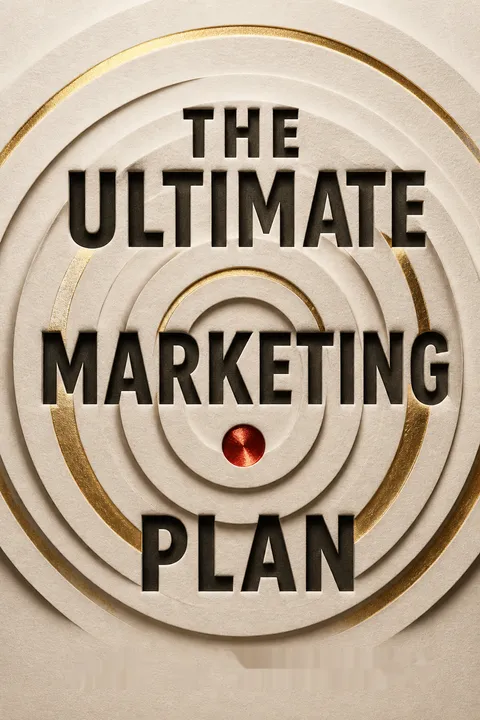
The Ultimate Marketing Plan receives mixed reviews, with an average rating of 4.10/5. Many readers praise its practical advice on developing a unique selling proposition, targeting the right audience, and using testimonials effectively. Some find Kennedy's direct-response marketing strategies valuable, while others criticize the book for being outdated and overly focused on self-promotion. Several reviewers note that the book serves as a good introduction to marketing principles, particularly for small business owners and entrepreneurs.
People Also Read









Glossary
Unique Selling Proposition (USP)
Distinct reason to chooseA business's stated position and central benefit that distinguish it from competing or imagined alternatives. A USP answers why a prospective customer should choose this particular provider. It may be based on a product feature, service, price, audience, location, experience, or other meaningful difference, but it must be supported by what the business actually delivers.
Selling in a vacuum
A message without nearby competitionKennedy's term for presenting a sales message in a setting with little immediate competition for the prospect's attention. Direct mail is his primary example: unlike a directory or search page full of alternatives, it can give one seller space to deliver a complete argument. The phrase describes a marketing advantage, not a literal absence of other choices.
NOW buyer
Buyer with immediate needA prospective customer whose circumstances create a reason to purchase soon rather than postpone. Examples in the book include people relocating, receiving an inheritance, or marking an important anniversary. Identifying these buyers can help a business focus outreach on people with both a timely reason to act and the means to buy.
Preponderance of proof
More evidence than assertionThe book's standard for supporting a marketing case: provide enough evidence that the buyer has multiple reasons to believe the claims. Evidence may include testimonials, photographs, demonstrations, statistics, or respected associations. The idea is to avoid relying on a single unsupported promise, while ensuring that the evidence is relevant and accurately represented.
Perception congruency
Consistent customer signalsThe alignment of a business's intended image with what customers experience across its advertising, premises, staff, packaging, sales process, and follow-up. If a company promises premium quality but provides careless service or shabby presentation, customers receive conflicting signals. The concept treats each contact with the business as part of the same overall impression.
Heat
Sustained customer interestKennedy's specialized term for the attention and conversation that keep customers interested in a business and encourage them to return or tell others. He associates heat with novelty, timely promotions, publicity, participation, and frequent change. It is not identical to sales: interest is presented as a condition that can help produce sales, referrals, and visibility.
Total Customer Value (TCV)
Full value over timeThe value a customer contributes across the whole relationship, rather than the amount earned from a single transaction. In the book's usage, this can include purchase size and frequency, continued patronage, additional products or services, and referrals. TCV encourages businesses to consider retention and relationship quality when deciding how much to invest in acquiring or serving customers.
EAR Formula
Referral growth sequenceA three-part approach to generating customer referrals: earn them through service customers value, ask customers to introduce others, and recognize or reward those who do. The framework treats referrals as behavior a business can encourage and manage, rather than as an unpredictable bonus. Its first requirement is a customer experience worth recommending.
Host/parasite marketing
Reach through another businessA partnership in which one business with an established customer base, the host, introduces a complementary offer from another business, the so-called parasite. The second business compensates the host or otherwise makes the arrangement worthwhile, while taking responsibility for the offer and customer satisfaction. The strategy gives the marketer access to an existing audience instead of building one entirely from scratch.
Other People’s Customers (OPC)
Customers reached through partnersKennedy's shorthand for the value of gaining access to customers already gathered by another business or platform. Rather than paying to find every prospect independently, a marketer can arrange an introduction, promotion, or sales relationship with an organization whose customers may also want the offer. The concept depends on relevance, trust, and a mutually beneficial arrangement.
FAQ
What's "The Ultimate Marketing Plan" by Dan S. Kennedy about?
- Comprehensive Marketing Guide: The book provides a detailed guide on creating an effective marketing plan that targets the right audience, communicates a compelling message, and builds a strong brand.
- Focus on Practical Strategies: It emphasizes practical, real-world strategies over academic theories, making it accessible for business owners and entrepreneurs.
- Step-by-Step Approach: Kennedy outlines a step-by-step approach to developing a marketing plan, covering everything from identifying the right message to choosing the appropriate media.
- Real-Life Examples: The book includes numerous real-life examples and success stories to illustrate the effectiveness of the strategies discussed.
Why should I read "The Ultimate Marketing Plan"?
- Proven Strategies: The book offers proven marketing strategies that have been successfully implemented by various businesses, as evidenced by the testimonials included.
- Actionable Advice: It provides actionable advice that can be applied immediately to improve marketing efforts and increase sales.
- Broad Applicability: The strategies are applicable to a wide range of businesses, from small local shops to large corporations.
- Expert Insights: As a bestselling author and marketing expert, Dan S. Kennedy shares insights that can help businesses achieve significant growth.
What are the key takeaways of "The Ultimate Marketing Plan"?
- Unique Selling Proposition (USP): Developing a strong USP is crucial for differentiating your business from competitors and attracting the right customers.
- Targeted Marketing: Identifying and focusing on the right target audience is essential for maximizing marketing efficiency and effectiveness.
- Proof and Credibility: Building trust with potential customers through testimonials, guarantees, and other forms of proof is vital for successful marketing.
- Continuous Innovation: Keeping your marketing fresh and engaging by constantly introducing new products, services, or promotions is key to maintaining customer interest.
How does Dan S. Kennedy define marketing in "The Ultimate Marketing Plan"?
- Right Message, Right People: Marketing is about getting the right message to the right people using the right media and methods.
- Profitability Over Affordability: Kennedy emphasizes the importance of profitable marketing investments rather than just affordable ones.
- Customer Relationship Focus: The ultimate goal of marketing is to create and maintain strong customer relationships that lead to increased sales and brand loyalty.
- Real-World Application: The definition is grounded in practical application rather than academic theory, focusing on what works in the real world.
What is the Unique Selling Proposition (USP) according to "The Ultimate Marketing Plan"?
- Differentiation Tool: A USP is a way to differentiate your business from competitors by highlighting unique benefits or features.
- Core Marketing Message: It serves as the core message around which all marketing efforts are built, making it crucial for effective communication.
- Customer Attraction: A strong USP attracts the right customers by clearly communicating why they should choose your business over others.
- Examples Provided: The book provides examples of successful USPs, such as Domino's "30 minutes or less" delivery promise, to illustrate its importance.
How does "The Ultimate Marketing Plan" suggest building credibility with customers?
- Use of Testimonials: Leveraging customer testimonials to provide social proof and build trust with potential customers.
- Guarantees and Proof: Offering guarantees and other forms of proof to reassure customers about the quality and reliability of your products or services.
- Association with Reputable Brands: Associating your business with well-known and respected brands or individuals to enhance credibility.
- Visual Evidence: Using before-and-after photos or other visual evidence to demonstrate the effectiveness of your products or services.
What role does customer perception play in "The Ultimate Marketing Plan"?
- Perception as Reality: Kennedy emphasizes that customer perception is reality, and businesses must manage it carefully to ensure positive impressions.
- Consistent Experience: Ensuring that every aspect of the customer experience, from marketing materials to in-store interactions, aligns with the desired brand image.
- Attention to Detail: Small details, such as cleanliness and staff appearance, can significantly impact customer perception and should not be overlooked.
- Congruency Across Touchpoints: All customer touchpoints should convey a consistent and congruent message to reinforce the desired perception.
What are some of the best quotes from "The Ultimate Marketing Plan" and what do they mean?
- "Marketing is about getting the right message to the right people via the right media and methods—effectively, efficiently, and profitably." This quote encapsulates the essence of effective marketing, emphasizing the importance of targeting, messaging, and profitability.
- "The difference between being a professional salesperson and a professional visitor is asking for the order." This highlights the importance of being proactive and assertive in sales efforts to achieve results.
- "There is always something you can do." This encourages business owners to be resourceful and proactive in finding solutions to marketing challenges.
- "If you stand for nothing, you'll fall for anything." This underscores the importance of having a clear mission and values to guide marketing efforts and build a strong brand.
How does "The Ultimate Marketing Plan" address the use of online and offline marketing?
- Integrated Approach: Kennedy advocates for an integrated approach that combines both online and offline marketing strategies for maximum effectiveness.
- Online Media as Tools: Online media are viewed as tools that should be used strategically and profitably, not just because they are trendy.
- Offline Media's Continued Relevance: Despite the rise of digital marketing, traditional offline media like direct mail and print advertising still play a crucial role.
- Profitability Focus: The book emphasizes the importance of measuring the return on investment for both online and offline marketing efforts.
What is the role of innovation in "The Ultimate Marketing Plan"?
- Constant Change: Kennedy stresses the importance of constant innovation to keep marketing efforts fresh and engaging for customers.
- New Products and Services: Regularly introducing new products or services can help maintain customer interest and drive sales.
- Adapting to Trends: Businesses should be aware of and adapt to current trends and news events to stay relevant and capture customer attention.
- Creative Marketing: Innovative marketing strategies, such as unique promotions or partnerships, can set a business apart from competitors.
How does "The Ultimate Marketing Plan" suggest handling customer complaints?
- Diplomatic Approach: Handling complaints diplomatically and with a focus on resolution can prevent negative word-of-mouth and retain customers.
- Structured Process: Having a structured process in place for addressing complaints ensures consistency and effectiveness in resolving issues.
- Customer Feedback: Actively seeking and using customer feedback to improve products, services, and customer experiences.
- Preventive Measures: Implementing preventive measures to reduce the likelihood of complaints and enhance overall customer satisfaction.
What are the benefits of customer appreciation events according to "The Ultimate Marketing Plan"?
- Strengthening Relationships: These events help strengthen relationships with existing customers by showing appreciation and fostering loyalty.
- Community Building: They create a sense of community among customers, enhancing their connection to the brand.
- Referral Opportunities: Such events provide opportunities for customers to bring friends and family, potentially leading to new customer acquisitions.
- Positive Publicity: Well-executed events can generate positive publicity and word-of-mouth, further promoting the business.
About the Author
Other books by Dan S. Kennedy





Download PDF
Download EPUB
.epub digital book format is ideal for reading ebooks on phones, tablets, and e-readers.








