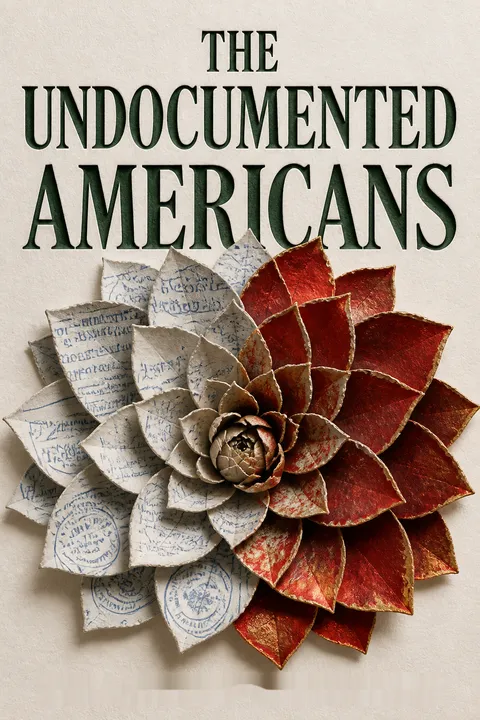


Key Takeaways
Tell undocumented lives in full, not just as labor, victims, or inspiration
Beyond a single label. Villavicencio writes against familiar stories that make undocumented people either useful workers, helpless sufferers, or exceptional young achievers. Her subjects include day laborers, housekeepers, parents, lonely men, organizers, and people with irritating habits and private dreams. The book began with her own experience as an undocumented Harvard student, but she rejects the expectation that her first book should turn her family into a tidy tale of hardship overcome.
A deliberate closeness. She reports through relationships, interprets Spanish herself, and changes names, places, and physical descriptions to protect people. She also questions what she can responsibly claim, especially when reconstructing a life from partial memories. The result is nonfiction that treats voice, uncertainty, and trust as part of the reporting, not decoration.
What's distinctive is the refusal to make likability the price of recognition. The subjects do not have to be exemplary to deserve attention, a principle that applies well beyond immigration reporting. Social science often gains clarity by grouping people into categories, but categories can erase variation inside them. This book makes that cost visible. Its intimate method also carries a real responsibility: readers must be able to distinguish reported fact from reconstructed scene. The author's open acknowledgment of altered identifying details and interpretive translation helps make that boundary part of the story.
Treat day laborers as skilled professionals, not idle bodies on corners
Skill under pressure. On Staten Island, employers recruit day laborers from street corners, where workers negotiate rates and compete for jobs. A 2006 survey found that 75 percent of respondents identified as undocumented, two-thirds supported families through this work, and 85 percent wanted more permanent jobs. Their trades range from carpentry and welding to electrical work and masonry. Yet employers may withhold pay, deny breaks, or leave workers stranded at remote sites.
Protection changes the terms. Worker centers bring this informal labor market indoors and provide bathrooms, water, dispatchers, training, and help negotiating rates. During Hurricane Sandy, day laborers cleared debris and repaired homes, often before public services arrived. Staten Island organizer Pedro Ituralde says his brigades helped 240 families. The work built relationships, although some homeowners accepted free labor without hiring the workers afterward.
The contrast between skill and precarity exposes how institutions decide whose expertise counts. A labor market can rely on workers' knowledge while leaving them without the protections that make skilled work safer or more fairly paid. Worker centers function as practical infrastructure, not merely as advocates: they reduce information gaps between employers and workers and create a place to resolve disputes. Their effectiveness, however, cannot replace enforceable labor law. Organizing can improve bargaining power, but it cannot make employers' obligations voluntary without leaving workers exposed.
Remember the undocumented responders who cleaned Ground Zero and paid with their health
Service without safeguards. After September 11, undocumented immigrants were recruited through informal networks to clean Ground Zero. Milton Vallejo describes twelve-hour shifts for $60 a day, flimsy masks, and a paycheck that bounced. The site contained dust and hazardous materials, and workers entered basements and other dangerous spaces without adequate protection. Many later suffered respiratory illness, cancer, anxiety, depression, and post-traumatic stress.
Recognition had paperwork barriers. The government created programs to compensate victims and treat cleanup workers, but proving employment could be especially difficult for undocumented people whose jobs left little paper trail. Some deaths were also hard to document because employers feared penalties for hiring undocumented workers. The book shows how workers could be welcomed when labor was urgently needed, then disappear from official records and public memory.
This account makes recognition look less like a tribute and more like an administrative test. A person can contribute to a shared emergency and still be excluded when institutions define evidence through documents that informal work rarely produces. That problem is familiar in disaster relief, where official systems often reach people with stable addresses, records, and advocates first. The book's distinction between visible service and durable protection is important: public praise cannot compensate for unsafe work, inaccessible treatment, or missing records. The strongest memorial includes accountability, not only remembrance.
When healthcare is inaccessible, desperation becomes a dangerous substitute for care
Need finds a way. In Miami, Julieta describes buying inexpensive medicines from pharmacies that serve uninsured immigrants, sometimes without a prescription. Neighbors and relatives also share medications. These strategies can ease immediate pain, but they leave people without reliable diagnosis or medical supervision. The book does not present alternative remedies as a charming cultural preference. It asks what choice means when mainstream treatment is financially or legally out of reach.
A family's impossible choice. Salome's husband, Harrison, was turned away by hospitals and cancer centers after the family disclosed that he lacked legal status. They paid for treatment when they could and turned to a naturalist who promised help. Salome understood that the remedies would not cure him, but they gave the family something to try when conventional care was unavailable. His illness, and his death at 46, expose how exclusion can make false hope feel like the only remaining option.
The central distinction is not simply between conventional and alternative medicine. It is between choosing among treatments and being shut out of the choice altogether. That distinction helps explain why a remedy can carry emotional value even when its medical claims are weak: it offers action in a situation where institutions offer refusal. At the same time, the book avoids treating every informal provider as benevolent or safe. Compassion should not romanticize unregulated care. The more durable response is access to affordable diagnosis and treatment, with room for patients' own beliefs.
Make public warnings usable by people who fear the officials delivering them
A warning can misfire. Flint's water crisis unfolded in a city already weakened by factory closures, poverty, and shrinking public services. Notices about lead were published in English, while some undocumented residents avoided opening their doors to canvassers because they feared immigration enforcement. When uniformed National Guard members distributed information and supplies, that fear could deepen. Some residents learned about the poisoned water from relatives in Mexico who had seen Spanish-language news.
Distrust had evidence. Residents described rusty, foul-tasting water and said officials had dismissed their concerns. One family reported receiving identical lead test results for multiple relatives, further undermining confidence in the testing process. When the author returned, free bottled water was ending even though pipe replacement remained incomplete. The crisis shows that information and aid are not accessible simply because a government has announced or distributed them.
Flint demonstrates that trust is not a personality trait citizens owe the state. It is a judgment shaped by past encounters, the credibility of evidence, and the risks attached to accepting help. In public health, a technically accurate warning still fails if its messenger appears dangerous or its language is inaccessible. Agencies should design outreach with affected communities, use trusted local organizations, and separate health services from enforcement where possible. A limit remains: distrust can persist even after institutions change their behavior, so rebuilding it requires visible follow-through, not just better messaging.
Count the children and spouses left behind when deportation removes a parent
The departure is not the ending. Javier Quintanilla had lived in the United States for 16 years and checked in with immigration authorities as required. He was nevertheless deported, leaving his wife, Patricia, and four children in rural Ohio. The household lost its only driver and one income. His teenage stepson took on adult responsibilities, while the younger children struggled with sleep, appetite, school, and the absence of their father.
Costs spread through a family. The book cites research finding that family income can fall by about 70 percent after a parent's deportation and that citizen children whose parents are detained or deported experience higher rates of post-traumatic stress than peers. These consequences continue after the airport scene that often ends news coverage. Separation reshapes who cares for children, who earns money, and what a family's future can look like.
The family story reframes deportation as a policy that reallocates hardship, not merely a legal action against one person. Children may be citizens and still bear the emotional and economic consequences of a parent's removal. This is a useful corrective to measures of enforcement that count arrests and departures but not disrupted caregiving, lost income, or children's distress. The account also resists treating every family as identical. Javier's deportation has particular effects because of the family's rural isolation, limited transportation, and the children's ages. Policy consequences become clearest at that household scale.
Turn solidarity into shared power, not a rescue fantasy
Care takes organization. In Miami, housekeepers formed Mujeres en Solidaridad to teach workers about rights and gender-based violence. A subgroup, You Are Not Alone, met immigrants waiting at immigration appointments with water, coffee, phone chargers, and a human witness. In Connecticut, a church offered Leonel Chávez sanctuary after he faced deportation. The congregation informed immigration authorities of his presence, while family, organizers, and religious leaders supported his case and daily life.
Help requires humility. Villavicencio also recognizes that her instinct to bring Flint teenagers to New York and steer them toward college reflected her own faith in social mobility. The young people did not share her ambitions. Their refusal forced her to see how easily assistance can become a plan imposed on someone else. Solidarity is strongest when people closest to a problem shape the response.
These examples distinguish solidarity from charitable attention. Practical support matters, but so does who sets the agenda and who bears the consequences. The author's self-critique is especially valuable because good intentions can conceal assumptions about what a better life must look like. Participatory organizing offers a corrective: people affected by policy are not only recipients of services but interpreters of local needs. Still, shared power is difficult to achieve when legal status, money, and professional expertise are unevenly distributed. Humility does not erase those differences, but it makes them harder to ignore.
Plan for immigrant aging before hard labor exhausts the family safety net
The work has an afterlife. The book describes older immigrants whose bodies have been worn down by years of manual labor, while their legal status excludes them from many forms of security. The author notes that about 10 percent of undocumented people are over 55, and that many pay into Social Security without being eligible for its benefits. They may have no retirement plan, home, or health insurance. Day laborer Octavio describes loneliness and plans to return to Guatemala after helping his children establish their lives.
Children inherit the gap. Villavicencio fears becoming the caregiver and financial safety net for her aging parents. She also sees how gender expectations can place more of that duty on daughters. This burden complicates the familiar story of immigrant parents sacrificing for their children: the children may then spend adulthood trying to repay a debt no single person can settle.
A life-course perspective reveals costs that disappear when immigration is discussed only through employment or border policy. Work can support a family for decades while leaving the worker with little protection when strength declines. The book also identifies an intergenerational transfer of risk: public systems exclude parents, so children become informal pension plans and care providers. Family devotion can be sustaining, but it should not be treated as a substitute for social provision. Gender matters here too, since the expectation that daughters will absorb care can turn affection into an unequal obligation.
Restore the dead to human memory, not to a convenient moral category
A life exceeds its reputation. After Hurricane Sandy, undocumented day laborer Ubaldo Cruz Martinez drowned in a flooded basement. People who knew him remembered him as homeless and alcoholic, and some were reluctant to discuss him. Villavicencio reconstructs his final moments around his attempt to care for an injured squirrel as the water rose. She then questions the certainty of the scene and asks what it means to tell such a story responsibly.
Complexity is a form of respect. Ubaldo is neither turned into a model immigrant nor reduced to his drinking and isolation. The book's wider portraits make the same demand of living people: a worker can be skilled and exploited, a parent loving and imperfect, a neighbor lonely and generous. To remember someone fully is to refuse the tidy categories that make their life easier for outsiders to judge.
The episode joins narrative ethics to public memory. Records often preserve the most administratively legible parts of a life, while ordinary acts of tenderness vanish. Reconstructive storytelling can return texture, but it also risks making uncertainty feel like fact. The author's explicit question about what happened is therefore more than a stylistic flourish; it asks readers to hold both the human claim and the limits of evidence. A humane account need not pretend to know everything. It can acknowledge uncertainty while still challenging a community's impulse to let stigma define a person's final meaning.
Analysis
The Undocumented Americans is a hybrid of memoir, reported narrative, and political witness. Its organizing structure is geographic: Staten Island, Ground Zero, Miami, Flint, Cleveland, and New Haven. Yet its deeper structure is cumulative. Each place reveals a different institution that depends on undocumented people while treating them as peripheral: labor markets, disaster response, healthcare, public administration, immigration enforcement, and family support. The result is not a single argument about immigration policy so much as a map of how exclusion becomes ordinary.
The book's most important formal choice is its refusal of the clean, detached voice traditionally associated with journalism. Villavicencio is a daughter, a former undocumented child, an interpreter, a friend, and sometimes an advocate. That proximity supplies knowledge unavailable to a distant observer, including the tones, jokes, fears, and private contradictions that generic reporting often strips away. It also makes the ethics of representation part of the subject. Altered identifying details protect people, while the author's visible uncertainty about reconstruction reminds readers that intimacy does not grant omniscience.
The book is especially persuasive when it links policy to material consequences. A worker without records becomes harder to compensate; a resident afraid of uniforms may miss a public health warning; a deported parent leaves a family with less income and more care work. These are not abstract side effects. They are mechanisms through which legal exclusion travels into bodies, homes, and memory. The portraits resist a familiar bargain in which immigrants must appear heroic to deserve compassion.
The narrative also exposes a tension in advocacy: the urge to help can reproduce the helper's assumptions about success. Villavicencio's own reflections on education, rescue, and family obligation prevent the book from presenting solidarity as morally uncomplicated. Its final claim is less that outsiders can save people than that attention, protection, and shared responsibility matter. The book asks readers to see undocumented people not as an issue to solve, but as neighbors whose lives already shape the country around them.
Review Summary
The Undocumented Americans receives mostly positive reviews for its raw, compassionate portrayal of undocumented immigrants' experiences. Readers appreciate Villavicencio's unique voice and the important stories she shares. However, some criticize the book's structure, finding it an uncomfortable mix of memoir and reportage. Many praise the author's writing style and ability to humanize her subjects, while others find her personal interjections distracting. Despite mixed opinions on the execution, most agree the book offers valuable insights into the lives of undocumented Americans and is a necessary read.
People Also Read






Glossary
DACA
Temporary protection for some arrivalsDeferred Action for Childhood Arrivals is a program that offers certain undocumented people who arrived in the United States as children temporary protection from deportation. The book describes the author's own participation and the importance of DACA to young people in immigrant families. It does not provide permanent legal status to recipients or automatically protect their parents.
TPS
Temporary protected statusTemporary Protected Status is a designation that allows eligible people from designated countries to remain and work in the United States temporarily when conditions make return unsafe. The book discusses Haitian immigrants facing the possible loss of this protection after the 2010 earthquake. The uncertainty surrounding expiration leaves families unsure whether their lives and work in the United States can continue.
ITIN number
Tax identification without an SSNAn Individual Taxpayer Identification Number is an IRS-issued number used by people who cannot obtain a Social Security number to meet tax obligations. The book notes that undocumented immigrants can use ITINs to pay taxes, even though paying into public systems does not necessarily make them eligible for the benefits those systems provide.
worker centers
Support and advocacy for workersWorker centers are community organizations that support workers in informal or poorly protected industries. In the book, centers help day laborers negotiate rates, connect with employers, access restrooms and other basic resources, learn about workplace rights, and seek help when employers exploit them. They provide collective support in a labor market where workers often face employers individually.
sanctuary
Shelter from immigration enforcementIn the book, sanctuary refers to an immigrant facing deportation living in a church that publicly identifies its role and relies on a policy against immigration officers entering places of worship. Sanctuary is not simply hiding someone. It requires a congregation, family, and organizers to provide shelter, advocacy, and daily support while the person's legal case continues.
botanicas
Herbal and religious supply shopsBotanicas are shops that sell herbs and may also stock religious objects, books, oils, soaps, and other goods associated with spiritual practices such as Santería and vodou. The book describes immigrants visiting them for remedies when conventional healthcare is difficult to obtain. Such shops are not necessarily regulated as medical providers, so products sold there are not a substitute for supervised diagnosis and treatment.
James Zadroga 9/11 Health and Compensation Act
Medical and compensation lawThe James Zadroga 9/11 Health and Compensation Act established support for medical treatment and compensation for people affected by the September 11 attacks, including cleanup workers. The book describes undocumented workers receiving care through designated programs while facing practical barriers to proving where they worked, documenting symptoms, and accessing compensation.
wet foot, dry foot policy
Former Cuban migration ruleThe wet foot, dry foot policy was a former U.S. approach to Cuban migration. As described in the book, Cubans intercepted at sea could be returned, while those who reached U.S. soil could remain and pursue routes to permanent residency and citizenship. The policy ended in 2017 and shaped Miami's immigration landscape and distinctions among Latin American immigrant communities.
FAQ
What is "The Undocumented Americans" by Karla Cornejo Villavicencio about?
- Personal and Reported Stories: The book blends the author’s own experiences as an undocumented immigrant with deeply reported stories of other undocumented people across the United States.
- Focus on Everyday Lives: Rather than centering on “model immigrants” or DREAMers, Villavicencio highlights the lives of day laborers, housekeepers, construction workers, and others who are often overlooked.
- Creative Nonfiction Approach: The narrative is a mix of memoir, investigative journalism, and creative nonfiction, with names and details changed to protect sources.
- Themes of Trauma and Resilience: The book explores trauma, mental health, family separation, and the resilience of undocumented communities in the face of systemic neglect and hostility.
Why should I read "The Undocumented Americans" by Karla Cornejo Villavicencio?
- Unique Perspective: Villavicencio offers an insider’s view as one of the first undocumented immigrants to graduate from Harvard, providing authenticity and emotional depth.
- Unfiltered and Honest: The book rejects sanitized or inspirational immigrant narratives, instead presenting raw, complex, and sometimes uncomfortable truths.
- Broader Understanding: It challenges stereotypes and expands the conversation about immigration beyond policy debates and media soundbites.
- Literary and Poetic Style: The writing is both lyrical and direct, making it a compelling read for those interested in narrative nonfiction and social justice.
What are the key takeaways from "The Undocumented Americans" by Karla Cornejo Villavicencio?
- Undocumented Lives Are Diverse: There is no single immigrant experience; undocumented people are not just workers or victims, but individuals with unique stories, dreams, and flaws.
- Systemic Neglect and Exploitation: The U.S. government and society often exploit, neglect, or actively harm undocumented communities, as seen in responses to disasters like 9/11, Hurricane Sandy, and the Flint water crisis.
- Mental Health and Trauma: The psychological toll of being undocumented—fear, anxiety, depression, and generational trauma—is a recurring theme.
- Community and Solidarity: Despite adversity, undocumented people build strong support networks and find ways to care for each other and their families.
How does Karla Cornejo Villavicencio approach storytelling and reporting in "The Undocumented Americans"?
- Blending Genres: She combines memoir, journalism, and creative nonfiction, often blurring the lines between them.
- Protecting Sources: Names, places, and details are changed to protect the identities of vulnerable subjects.
- Translation as Art: Villavicencio translates interviews with the nuance of a literary translator, aiming to capture the full humanity and voice of her subjects.
- Rejecting Objectivity: She acknowledges her own biases and emotional involvement, writing from a place of shared trauma and solidarity.
Who are some of the key people and communities featured in "The Undocumented Americans" by Karla Cornejo Villavicencio?
- Day Laborers in Staten Island: The book opens with stories of Latinx day laborers, their struggles, and the support they find in worker centers.
- 9/11 Cleanup Workers: Villavicencio profiles undocumented immigrants who worked at Ground Zero, many of whom now suffer from chronic illnesses.
- Undocumented Women in Miami: She highlights the experiences of women navigating healthcare, alternative medicine, and activism.
- Families in Flint and Cleveland: The book covers undocumented families affected by the Flint water crisis and children coping with parental deportation in Ohio.
What unique challenges do undocumented immigrants face, according to "The Undocumented Americans" by Karla Cornejo Villavicencio?
- Lack of Legal Protections: Undocumented workers are vulnerable to wage theft, abuse, and dangerous working conditions without recourse.
- Barriers to Healthcare: Many cannot access insurance or affordable medical care, leading to reliance on alternative medicine or going without treatment.
- Fear of Authorities: Interactions with police, ICE, or even aid workers can be fraught with fear, leading to isolation and missed opportunities for help.
- Aging and Retirement: Older undocumented immigrants face poverty, lack of social safety nets, and uncertainty about where and how they will age.
How does "The Undocumented Americans" by Karla Cornejo Villavicencio address the concept of the "American Dream"?
- Challenging the Myth: The book questions the validity of the American Dream for undocumented people, showing how it often leads to disillusionment and hardship.
- Intergenerational Sacrifice: Many parents endure grueling labor and separation in hopes of a better future for their children, but the payoff is uncertain.
- Redefining Success: Villavicencio suggests that dignity, community, and survival are more meaningful measures of success than assimilation or material gain.
- Highlighting Contradictions: The narrative exposes how the American Dream is often inaccessible or even harmful to those who are undocumented.
What role does mental health and trauma play in "The Undocumented Americans" by Karla Cornejo Villavicencio?
- Chronic Stress: The constant threat of deportation, discrimination, and instability leads to anxiety, depression, and PTSD among undocumented people.
- Generational Impact: Childhood separation, family trauma, and the pressures of being a “model immigrant” have lasting psychological effects.
- Stigma and Silence: Mental health struggles are often hidden due to cultural stigma and lack of access to care.
- Personal Reflection: Villavicencio openly discusses her own diagnoses and how her experiences as an undocumented person have shaped her mental health.
How does "The Undocumented Americans" by Karla Cornejo Villavicencio critique media and political narratives about immigrants?
- Rejecting Stereotypes: The book pushes back against the “heroic DREAMer” and “criminal alien” tropes, insisting on the complexity of real lives.
- Media Erasure: Villavicencio notes how undocumented people are often invisible in mainstream coverage, except as victims or threats.
- Political Exploitation: She critiques how both parties use immigrants as symbols or bargaining chips, rarely addressing their actual needs.
- Demand for Nuance: The author calls for more honest, nuanced, and respectful storytelling about undocumented communities.
What are some of the most powerful quotes from "The Undocumented Americans" by Karla Cornejo Villavicencio, and what do they mean?
- “This book is for everybody who wants to step away from the buzzwords in immigration, the talking heads, the kids in graduation caps and gowns, and read about the people underground. Not heroes. Randoms. People. Characters.”
- This quote encapsulates the book’s mission to humanize undocumented people beyond political slogans and media clichés.
- “Being deportable means you have to be ready to go at any moment, ready to go with nothing but the clothes on your body.”
- It highlights the constant precarity and lack of security in undocumented life.
- “We’re all fucking sick. It is a public health crisis and it’s hard to know how to talk about it without feeding into the right-wing propaganda machine…”
- Villavicencio addresses the hidden epidemic of mental and physical illness in undocumented communities, and the difficulty of discussing it publicly.
- “If I reach every child of immigrants at an early age, I can make sure every child becomes me. And if they don’t, I can be everyone’s child.”
- This reflects the author’s sense of responsibility and solidarity with other children of immigrants.
What methods and advice does Karla Cornejo Villavicencio offer for writing about undocumented communities in "The Undocumented Americans"?
- Prioritize Safety and Consent: Change names, places, and identifying details to protect sources from legal or personal harm.
- Translate with Care: Approach translation as a literary act, preserving the tone, humor, and personality of interviewees.
- Reject Objectivity: Embrace subjectivity and emotional truth, especially when writing from within a community.
- Honor Complexity: Avoid flattening people into symbols or statistics; instead, portray them as full, complicated human beings.
How does "The Undocumented Americans" by Karla Cornejo Villavicencio redefine what it means to be an “undocumented American”?
- Beyond Legal Status: The book argues that being an “undocumented American” is about lived experience, not just paperwork or lack thereof.
- Claiming Belonging: Many subjects identify as New Yorkers, Michiganders, or simply as part of their communities, regardless of citizenship.
- Dignity in the Margins: The narrative insists on the dignity, agency, and individuality of people who are often relegated to the shadows.
- Collective Memory and Legacy: Villavicencio suggests that reclaiming the stories of the undocumented is a way to honor their lives and resist erasure.

Download PDF
Download EPUB
.epub digital book format is ideal for reading ebooks on phones, tablets, and e-readers.








