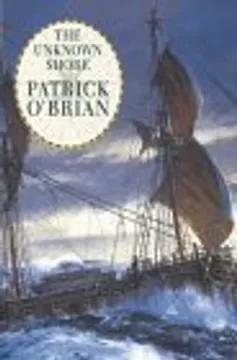


Plot Summary
Tobias Chooses the Sea
At Plashey, Tobias Barrow1 has been raised as an experiment by Mr Elwes,3 a wealthy surgeon who bought him as a child and subjected him to relentless lessons, beatings, and Spartan privation. Tobias1 has kept his tenderness for animals and his appetite for natural history, but Elwes’s3 new fiancée, Mrs Ellis, orders his creatures destroyed and presses for his removal.
Tobias1 learns that his indenture still binds him, yet Elwes3 has tried to have it cancelled. The guardian’s3 willingness to be rid of him breaks Tobias’s1 last loyalty. He tells Jack Byron,2 his childhood friend and a young naval officer, that he intends to run away to sea. Jack2 agrees to help, turning escape into a shared venture.
Tobias’s rebellion begins not as a bid for freedom in the abstract, but as a defense of the living things that have given his isolated life meaning. Elwes treats education as ownership: knowledge is something to impose, and a child something to shape. Tobias’s refusal is quieter and more radical. He does not reject learning; he rejects the power that has tried to dictate what learning is for. Jack, by helping him leave, converts affection into action. Their friendship bridges two sharply different forms of upbringing, one conventional and privileged, the other coercive and solitary.
London Loses Tobias
Jack2 and Tobias1 ride toward London, where Jack2 hopes family influence will win them places in Commodore Anson’s secret Pacific expedition. Tobias1 first shocks Jack’s2 patron, Cousin Brocas, by attacking hereditary privilege, then wanders alone through the city and is robbed.
Jack2 lures the press gang to the Monument with turkeys, knowing the spectacle will draw Tobias,1 and the gang catches him as he flees. Surgeon Mr Eliot6 examines Tobias1 at Surgeons’ Hall and discovers that his anatomical skill outweighs his strangeness.
The Navy Office offers him a warrant for the Wager, a storeship, rather than the larger warship he expected. Jack2 receives a midshipman’s place on the same vessel. Tobias1 has escaped Elwes,3 but his new life begins inside another hierarchy.
London tests the pair’s assumptions about how a person gets a place in the world. Jack sees patronage as a practical tool and expects connections to open doors; Tobias’s argument with Brocas exposes the moral cost of that system. Yet Tobias is not simply rescued by merit. Jack’s theatrical turkey scheme and Eliot’s influence make his appointment possible, while the Navy’s needs determine the modest vessel he receives. The episode’s comedy depends on real vulnerability: Tobias cannot read the city’s dangers, and Jack cannot control the institutions he hopes to use. Their new freedom is conditional from the outset.
Aboard the Wager
In Portsmouth, Jack2 and Tobias1 report to the Wager and meet its surgeon, Mr Eliot,6 who gives Tobias1 a cramped berth in the cockpit. Tobias1 promptly gets lost in the ship’s dark lower decks, while Jack2 discovers that the Wager’s crew includes pressed men, inexperienced landsmen, and officers who distrust one another.
Their departure is repeatedly delayed. When the squadron finally sails, rough weather stretches the passage to Madeira to forty exhausting days. Tobias1 learns the routines of shipboard medicine and grows used to the moving deck, even as Jack2 worries over the overloaded, awkward Wager and her undisciplined company.
At Madeira, the men briefly enjoy shore leave, but news of a captain’s illness and the coming reshuffle of commands makes their place in the expedition uncertain again.
The ship gives Tobias what he sought, but not the open, orderly world he imagined. His scientific curiosity flourishes amid cramped quarters and danger, while basic practical knowledge, such as finding his way aboard, must be learned from scratch. Jack sees the Wager through the professional code of a sailor: a vessel is only as dependable as its crew and command. Tobias sees a floating habitat and future field of study. Their differing attention is useful, but it also leaves them exposed to risks that one friend can recognize and the other cannot.
Cheap Takes Command
At Madeira, Tobias’s1 blunt manners bring him into conflict with Captain Cheap,7 whose harsh reputation Jack2 already knows. The Wager continues south under Captain Kidd, then reaches St Julian after the squadron has been battered by storms and separated from the Pearl.
The Pearl returns with grim news: Captain Kidd is dead, and a powerful Spanish force is waiting ahead. Seniority gives the Wager to Cheap,7 who drives his new crew hard as they prepare the guns for battle.
Jack2 understands why the expedition must carry its siege equipment toward the rendezvous; the crew sees only a captain7 who punishes quickly and distrusts advice. When Cheap7 rebukes midshipman Morris, Tobias1 tries to explain a bird-related mishap and earns the captain’s7 lasting hostility.
The change of command turns a difficult voyage into a conflict over who has the right to interpret danger. Cheap treats discipline as a tool for survival, but his severity makes obedience feel like submission rather than shared purpose. Jack can understand the military logic behind the route without mistaking it for kindness. Tobias, whose candor has served him among scholars and patients, fails to recognize that rank changes the meaning of an interruption. The Spanish threat intensifies the crew’s fear, but the deeper danger is already aboard: the Wager’s authority is brittle before the worst conditions arrive.
The Wager Breaks Apart
After rounding the Horn, relentless storms destroy the Wager’s masts and rigging, while scurvy weakens most of the crew. The squadron disappears in fog and gales, leaving Captain Cheap7 to steer toward the secret rendezvous with a crippled ship.
Jack2 supports that decision because the Wager carries the expedition’s heavy guns. When a fallen yard and a sudden glimpse of land reveal that the ship has been driven into an uncharted gulf, the crew works to wear her away from shore. A worsening gale pushes the Wager into breakers.
She loses her rudder and is driven between rocks, where she grounds and begins to flood. Many men escape in boats, but Tobias1 stays behind to haul sick patients from the rising water. Jack2 finds him barely alive among the wreckage and gets him ashore.
The wreck is not a single stroke of bad luck. It is the accumulated consequence of an expedition sent too late, a heavily burdened ship, damaged equipment, illness, and navigational uncertainty. Jack’s commitment to the rendezvous is professionally coherent, yet it cannot restore the Wager’s lost capacity. Tobias’s rescue of patients reveals a form of duty that the naval hierarchy cannot easily measure: he continues working after the ship’s command structure has effectively collapsed. The sea strips away the imagined prize voyage, leaving the survivors with the harder question of how to remain responsible to one another when the vessel that organized their lives is gone.
A Colony of Wreckage
On the desolate island, the survivors shelter in a wrecked cutter, scavenge from the Wager, and stretch spoiled provisions with plants and shellfish. Tobias1 lies comatose for weeks after his head is injured; Jack2 keeps watch over him and feeds him dog meat mixed with antiscorbutic plants when he wakes.
With scant food and no clear plan, the camp divides. The gunner Bulkeley12 and other sailors challenge Cheap’s7 authority, while deserters form a separate settlement and the purser hoards supplies.
Cheap’s7 severity deepens the distrust. When he shoots the popular midshipman Cozens9 after a mutiny dispute, the men’s remaining affection for their captain7 gives way to open plotting. They begin rebuilding the longboat as a schooner, intending to leave the island without him.
The island turns naval order into a daily argument about food, authority, and who deserves to survive. Cheap’s powers remain legally intact, but legality cannot feed people or make them trust him. The men’s factions are not merely ideological: hunger and unequal access to stores give each grievance material force. Jack tries to stand apart from the politics, believing the habits of service will return once the crew reaches open water. Tobias, less invested in naval custom, attends to bodies and immediate needs. Their different instincts expose the central problem: a rule-bound institution can outlast the ship that made its rules enforceable.
Jack Turns Back
When the schooner launches, Jack2 sees Captain Cheap7 and Lieutenant Hamilton11 left behind on shore. The men who planned the departure have seized control, and Jack’s2 trusted shipmates are hidden below. He cannot accept the captain’s7 abandonment.
Taking Tobias1 and a small group in the barge, Jack2 rows back to the island, despite the gunner’s12 orders and the risk of being trapped with the mutineers. The returning party brings spare canvas and restores Cheap7 and Hamilton11 to the group.
Cheap7 thanks them, then immediately reasserts his rank and rations. Jack2 recognizes the contradiction: the captain7 is in the right about being deserted, yet remains difficult to follow. The survivors now have boats, a fragile alliance, and a northward route that may still fail.
Jack’s return marks a decisive break with his attempt to avoid the island’s politics. He does not return because he admires Cheap or expects reward; he acts because leaving a captain behind would violate the obligations that give his naval identity meaning. That choice is ethically clear but practically awkward. Cheap receives rescue as both a man in danger and a superior whose authority he believes must be restored. Jack’s compassion does not erase the captain’s flaws, and his loyalty does not demand affection. The episode separates moral duty from personal approval, a distinction that becomes essential as the survivors face increasingly desperate choices.
The Cape Turns Them Back
Cheap7 leads a first attempt north in the rebuilt longboat and smaller boats, but the route around the capes is blocked by violent seas and a powerful tide-race. The overloaded barge cannot pass, and the survivors return to Wager Island with their provisions dwindling.
Winter closes in; men discuss drawing lots for food, and even the remaining wild plants are failing. Lieutenant Hamilton11 finds a water-damaged cask of beef on the shore and shares it, briefly easing the hunger. Soon two canoes arrive.
One group refuses contact, but a Spanish-recognized Chonos chief,13 carrying a royal baton, offers to guide the castaways toward settlements farther north. Cheap7 accepts, promising him the barge and its contents. The survivors leave the island again, now dependent on a guide13 whose motives they cannot confidently read.
The failed passage changes the problem from escape by seamanship to dependence on people whose knowledge the Europeans do not possess. Cheap’s decisions still shape the group, but the coast has proved stronger than command. Hamilton’s decision to share the beef contrasts with the captain’s possessiveness and offers a brief model of authority grounded in generosity. The Chonos chief becomes both a possible route to rescue and a source of uncertainty. Tobias’s imperfect Spanish and the crew’s ignorance of local customs make interpretation precarious. Survival now requires more than endurance: it requires accepting that the strangers know the country better than the castaways do.
A Guide With His Own Price
The chief13 takes Cheap7 and Jack2 ahead by canoe, while Tobias1 and the others wait on shore. When the men steal the barge and seize Manuel,14 the chief’s13 enslaved companion, the chief13 suspects murder and nearly abandons the English.
Manuel14 returns on foot, and Jack’s2 valuable fowling-piece persuades the chief13 to resume guiding them. Jack2 and Tobias1 endure a brutal journey among coastal communities: some women feed Jack2 and shelter him, while their chief beats one woman and later kills a child over a spilled basket of shellfish.
The survivors rejoin the larger migration, but their hosts regard them as burdensome outsiders. The journey carries them through rivers, islands, and portages. In a flooded forest, Jack2 loses the bundle of seal meat he was carrying for Cheap,7 then retraces his steps with Tobias1 to recover it.
The guide is neither a simple savior nor a transparent villain. He bargains, protects his interests, and treats the castaways according to a social world they cannot read. The episode refuses the comfort of turning every local encounter into either benevolence or cruelty: the women’s hospitality is real, as is the violence they endure. Jack’s horror at the child’s killing reveals that his own moral limits remain intact even when hunger has narrowed his attention. Tobias’s return with Jack to recover the food binds their friendship to practical care, not merely shared history.
The Canoes Leave Them
After reaching a lake, Jack2 and Tobias1 discover that the canoes have departed without them, carrying Cheap7 and the others onward. They spend the night cold and hungry, then find a different Indigenous community gathered around a dying chief.
The people take them north but offer little welcome, treating the two sailors as unlucky intruders. Jack2 and Tobias1 follow their customs as best they can, including preserving shell offerings that they had unknowingly insulted. Eventually the canoes reach the coast and reunite them with Cheap,7 Campbell,10 and the remaining survivors.
Hamilton11 chooses to stay with the Taitao people rather than continue under the chief’s13 authority. The rest crowd into a large canoe, and in a snowstorm Jack2 steers away from the breakers, bringing them at last to Chiloe.
Repeated separation makes rescue feel less like a steady ascent and more like a series of temporary permissions. The travelers survive because they observe, adapt, and accept help, but none of these acts guarantees safety. Tobias’s attention to custom, however incomplete, begins to matter as much as his attention to natural history. Jack’s steering in the final storm is an earned return to his professional competence, but it cannot bring everyone together: Hamilton makes his own choice to remain behind. The book treats survival as a collective achievement built from decisions that do not always produce a collective future.
Food Returns to Chiloe
After months of hunger, Jack,2 Tobias,1 Cheap,7 and Campbell10 reach a settled village on Chiloe, where local families feed and shelter them. The cacique’s13 claim to influence proves useful, but the Chilotans do not grant him the same standing he assumed.
The survivors surrender as prisoners of war, and their hosts treat them with striking kindness while Spanish officials decide what to do. Cheap7 and Hamilton11 retain their commissions and are sent toward Santiago; Jack,2 Tobias,1 and Campbell10 are treated as ordinary seamen because they lack the necessary papers.
In the towns, Tobias’s1 unusual medical methods and Jack’s2 careless irreverence produce scandalous stories. The weary castaways have escaped the wilderness, but they are now dependent on a distant administration that moves at its own pace.
The return of food does not restore the travelers to their former selves. Their bodies recover faster than their social identities: officers retain status through documents, while Jack and Tobias are reduced to ordinary seamen because their papers are missing or never existed. The Chilotans’ hospitality complicates the simple division between enemy and ally. They feed men who arrived as potential invaders, while Spanish bureaucracy imposes a slower, less personal form of captivity. Tobias and Jack also carry their habits into a new culture, where scientific improvisation and joking can be misread as sorcery or insult.
Captives Become Residents
In Santiago, Dr Gedd18 takes the castaways into his home and shares his limited means with them. Tobias1 helps with medical visits and studies the local natural world; Jack2 spends his days at parties and learns the pleasures of Chilean music and dancing.
Both men repeatedly assume that an exchange will soon return them to England, but months pass and they become familiar fixtures in the city. News from Europe raises and then dims their hopes. Tobias’s1 experiments with animals bring him dangerously close to the Inquisition, and Gedd18 sends him away to stay with another family.
Jack’s2 flirtation with the governor’s daughter, Luisa, gives her father a reason to accelerate the prisoners’ transfer. Don José19 arranges their passage on a French frigate, ending their comfortable but indefinite captivity.
Santiago offers a paradoxical refuge: the prisoners are safe enough to form routines, but comfort makes the indefinite wait easier to normalize. Tobias rebuilds his life through work, study, and observation; Jack fills the suspended time with social pleasure. Their different strategies echo the contrast established at home, but captivity has altered their stakes. The promise of exchange becomes a phrase they use to postpone confronting uncertainty. Don José’s intervention is personal rather than bureaucratic, prompted by domestic embarrassment as much as compassion. Their release therefore comes through a human relationship, not through the formal process they had been waiting for.
The Long Way Home
The French frigate Lys takes the prisoners from Valparaiso, but a leak forces her back to port before she can round the Horn. On the second attempt, the crew discovers that they have almost no fresh water. They ration a quart a day, cross the Horn, and eventually detour toward the Caribbean. Near Hispaniola, Captain Cheap7 spots a recently discarded beef cask and suspects British warships are close.
Two cruisers pursue the Lys, but the French frigate slips away in the night and the prisoners wake to an empty horizon. They cross the Atlantic in a chaotic convoy, wait in France for permission to travel, then board a Dutch vessel that dishonestly sails past Dover. Jack2 recognizes a British patrol ship and signals for rescue.
The return voyage reverses the book’s original promise of discovery. The Pacific had offered new species and imagined treasure; the Atlantic passage is a test of water, weather, and patience. Jack and Tobias are no longer simply newcomers to the sea, yet they remain passengers in systems they cannot control. Their near-capture by British cruisers is particularly bitter: freedom appears within sight, then vanishes because the Lys escapes. Jack’s recognition of the patrol vessel finally turns accumulated naval experience into a practical way home. The journey insists that survival does not end when the greatest danger passes; delay and dependence continue to exact their own price.
Home, Not Quite Unchanged
The British patrol ship carries the survivors to Dover, but the homecoming begins in rain, borrowed clothes, and an argument with a Dutch skipper who has taken them past their destination. Jack2 and Tobias1 reach London by hired horses, evading turnpikes because their money is nearly gone.
At Marlborough Street, Jack2 discovers that the family house has closed and that his cousin Isabella has married Lord Carlisle. A linen-draper points them to the wedding celebration in Soho Square.
Jack2 is welcomed by his sister, while Tobias1 pushes past the doorman and searches for Georgiana.4 He finds her among the guests and greets her with the old intimacy of their childhood. Tobias1 has returned with collections and theories; Jack2 has returned to a family that has continued without him.
The homecoming offers reunion without pretending that absence has frozen the world in place. The closed house and changed marriages make London strange in a way the Pacific never was: the old relationships have continued, but outside the travelers’ reach. Jack responds first to family recognition and the promise of supper; Tobias searches for Georgiana, whose bond with him survived through memory and shared curiosity. Their different priorities remain legible after everything they have endured. The final gathering does not resolve every future, but it restores them to a social world where affection can again be chosen rather than negotiated for survival.
Analysis
The novel makes survival less a contest between brave individuals and hostile nature than a test of what remains useful when institutions lose their material foundations. Naval rank governs life aboard the Wager, but the wreck cannot be solved by rank alone. Captain Cheap7 retains legal authority, yet food, trust, and practical competence determine whether anyone follows him. Jack’s2 loyalty is tested by a commander he does not like; Tobias’s1 medical care persists even when the ship and its routines are collapsing. Their differing strengths become complementary precisely because neither can master the crisis alone.
The book also treats knowledge as plural. Jack2 knows how a ship handles wind and water, while Tobias1 notices species, symptoms, and small changes in the landscape. The Indigenous guides13 possess the local geography that neither man can infer from naval experience. Their knowledge does not make them morally uniform or automatically benevolent, and the Europeans’ dependence does not dissolve cultural difference. The narrative’s sharpest reversals come when familiar assumptions fail: a ship can be a prison, an enemy can be generous, and a learned man can be helpless in a city or aboard a vessel.
Food supplies the story’s material grammar. The difference between a viable voyage and a desperate one is often a cask, a fish, or a patch of edible plants. Scarcity reveals social character without turning every choice into a clean moral lesson. People share, hoard, argue, and adapt under pressures that make their motives difficult to separate. By ending with reunion rather than triumph, the novel honors the cost of endurance. Jack2 and Tobias1 return to a home that has changed while they were gone, carrying neither the fortune nor the grand adventure they expected, but a hard-won knowledge of dependence, duty, and the limits of control.
Review Summary
The Unknown Shore receives mixed reviews, averaging 4.15/5. Fans of O'Brian's Aubrey-Maturin series widely recognize protagonists Jack Byron and Tobias Barrow as prototypes for Jack Aubrey and Stephen Maturin. Many praise the novel's dry humor, immersive historical detail, and compelling survival narrative following the wreck of the HMS Wager. Critics note uneven pacing, underdeveloped secondary characters, and occasional racist depictions of indigenous peoples. Most agree the book is best appreciated by existing O'Brian fans, offering fascinating insight into the genesis of his beloved later series.
People Also Read



Characters
Tobias Barrow
The patient naturalistTobias is a brilliant, awkward young naturalist and medical apprentice whose childhood under Mr Elwes3 has left him learned but socially unpracticed. Animals, anatomy, and close observation give him both pleasure and a way to order an unpredictable world. He rarely notices how his bluntness affects other people, and naval rank makes little instinctive sense to him. His friendship with Jack2 gives him a companion who can translate conventions without demanding that Tobias become conventional. Under pressure, Tobias’s attention to bodies and living things becomes a practical form of courage. He is not fearless: heights, the sea, and unfamiliar social rules frighten him. What distinguishes him is his willingness to keep looking and working while afraid.
Jack Byron
The loyal young sailorJack is a warm, talkative young naval officer whose connections help him move through institutions that Tobias1 finds bewildering. He loves ships, poetry, good food, and the prospect of prize money, but his ambitions are tempered by an instinctive loyalty to people in his care. Jack understands rank and convention because he has been raised within them, yet he does not always confuse obedience with moral judgment. His patience with Tobias1 is affectionate rather than patronizing, though he sometimes tries to shield his friend from embarrassment. As danger strips away the privileges of family and service, Jack’s seamanship and sense of obligation become his most reliable resources.
Mr Elwes
The controlling tutorA wealthy surgeon and eccentric experimenter, Elwes believes that a child can be remade through relentless instruction. He purchases Tobias1 and subjects him to an ambitious education that prizes mastery over affection. His genuine scientific skill sits uneasily beside his vanity and cruelty. Elwes is most threatening when he treats his theories as permission to control another person’s life.
Georgiana Chaworth
The fearless childhood friendGeorgiana is Jack2 and Tobias’s1 lively cousin, a spirited girl who prefers climbing trees, playing games, and caring for animals to behaving as her mother expects. Her affection for both young men is rooted in shared childhood rather than social calculation. She sees Tobias’s1 oddness without treating it as a reason to withdraw, and her attachment to Jack2 is equally direct. Georgiana represents the familiar, affectionate world the two friends leave behind.
Mr Chaworth
The reluctant family allyJack’s2 well-meaning cousin and Tobias’s1 guardian, Mr Chaworth is a country gentleman whose politics and fishing enthusiasms can overwhelm his judgment. He will not openly endorse Tobias’s1 escape, but he finds discreet ways to help. His affection is real, though constrained by reputation and public office.
Mr Eliot
The curious ship surgeonEliot is an experienced naval surgeon with a strong appetite for anatomy and experiment. He recognizes Tobias’s1 unusual medical ability and gives him room to learn. His bedside manner mixes genuine concern with eccentric theories about how belief affects illness. On ship, he is more authoritative and impatient than he appears ashore, but his concern for patients is not a performance.
Captain Cheap
The severe commanderCheap is a career naval officer who regards command as a serious duty and expects obedience from everyone beneath him. His high standards can be valuable under pressure, but his suspicion and harshness estrange the people whose cooperation he needs. He is physically vulnerable and emotionally guarded, with a rigid sense of rank that shapes nearly every relationship aboard the Wager.
Mr Bean
The quiet lieutenantBean is the Wager’s reserved lieutenant, an experienced seaman whose hesitant speech can make him seem less capable than he is. He avoids needless display and does not share Cheap’s7 appetite for severity. His position between the captain7 and the crew gives him little freedom to express his doubts openly.
Cozens
The boisterous midshipmanCozens is a large, exuberant midshipman who loves practical jokes, drink, and the company of the lower deck. His behavior can be disruptive, but his courage and quick reactions make him more than a comic nuisance. The crew’s affection for him reflects their hunger for warmth and vitality in a ship governed by strain.
Campbell
The aggrieved seamanCampbell is a conscientious Scottish seaman who feels that class and national prejudice have kept him from the standing he deserves. His seriousness and tendency to interpret slights personally make him difficult company, but his seamanship is dependable. He is drawn to discipline and competent command, even when others distrust the people exercising it.
Mr Hamilton
The steadfast marine officerHamilton is an army officer serving with the Wager’s marines. Reserved, disciplined, and a capable shot, he retains a strong sense of duty even as the expedition’s hierarchy weakens. His conduct toward the crew is shaped by proper pride and an instinct for fairness, rather than a desire to dominate.
William Bulkeley
The anxious gunnerBulkeley is the Wager’s gunner, a skilled officer whose fear of the ship’s condition feeds a growing conviction that he understands the danger better than the captain7. He can act well in a sudden emergency, but prolonged uncertainty makes him talkative and politically ambitious. His confidence becomes especially influential among sailors already distrustful of Cheap7.
The Chonos chief
The bargaining guideThe chief is a Spanish-recognized Indigenous leader who knows the southern coast and its routes far better than the castaways. He bargains carefully and values useful goods, especially firearms. His shifting confidence and difficult communication make him hard to trust, but his knowledge offers the survivors a chance to travel beyond the island.
Manuel
The chief’s companionManuel is the Chonos chief’s13 enslaved companion, a baptized Indigenous man whose return helps repair a dangerous misunderstanding. He knows the local route and remains largely subject to the chief’s13 decisions. His presence reveals the unequal relationships hidden inside the castaways’ only available alliance.
Augustus Keppel
Jack’s naval connectionKeppel is Jack’s2 young naval friend and an important source of introductions. Sociable and well connected, he tries to help Jack2 secure a better posting. His involvement shows how much advancement in the Navy depends on family influence as well as ability.
Mr Ransome
The blunt midshipmanRansome is an experienced midshipman and a friend of Keppel’s15, known for plain speech and practical good sense. He takes Tobias1 sightseeing in London and helps Jack2 navigate the press-gang’s customs. His easy competence contrasts with Tobias’s1 unfamiliarity with urban and naval life.
Don Manuel de Guiro
The generous Spanish officerDon Manuel is a Spanish naval officer whose family has been treated well by the English squadron. He responds to the prisoners with gratitude rather than national hostility and offers them meaningful financial help. His generosity challenges the prisoners’ assumptions about an enemy and reveals his pride in returning humane treatment.
Dr Gedd
The hospitable exileGedd is a Scottish physician living in Santiago, where he has built a practice and cultivated an extraordinary cactus garden. He gives the castaways shelter despite his limited means. His generosity is practical and unshowy, though he worries about Tobias’s1 risky experiments and Jack’s2 careless habits.
Don José
The powerful governorDon José governs Chile with considerable authority and an instinct for managing problems before they disturb his household. He is capable of kindness toward the English prisoners, but his decisions are shaped by political convenience and family concerns. His position connects private entanglements to the prisoners’ uncertain status.
Plot Devices
Tobias’s indenture
A legal tetherTobias’s indenture binds him to Mr Elwes3 despite Tobias’s1 wish to leave. It gives his escape an immediate obstacle and explains why the adults around him must help indirectly. In London, the document also becomes the proof that allows Mr Eliot6 to have Tobias1 examined and appointed to the Navy. The same piece of paper therefore links coercion to opportunity: it records the authority that trapped Tobias1, then helps establish a route away from it.
The Wager
A fragile floating societyThe Wager is both a ship and a compressed social order. She carries officers, pressed men, soldiers, stores, and the expedition’s siege equipment, while her mixed purpose as warship and storeship creates practical and political tensions. Her poor condition and divided crew anticipate the breakdown of order after the wreck. Once the ship is lost, the survivors must rebuild their society from its stores, habits, and conflicts, proving that the vessel’s structure mattered as much as its physical hull.
Natural history
A survival instrumentTobias’s1 scientific habits begin as private pleasure: he watches birds, collects specimens, and studies anatomy. At sea, that attention becomes useful in medical work and in recognizing unfamiliar plants and animals. His learning does not make him socially adept, nor does it spare him from danger, but it gives him a way to notice distinctions others overlook. Jack’s2 seamanship and Tobias’s1 observation solve different kinds of problems, making their friendship a practical partnership as well as an emotional one.
Food and stores
The price of survivalThe expedition’s stores shape nearly every major decision. The Wager carries trade goods, weapons, and provisions, but wreckage, spoilage, hoarding, and scarcity steadily reduce what the survivors can use. Food becomes a measure of power: leaders ration it, factions contest it, and chance discoveries briefly restore hope. The changing value of provisions also exposes character. Generosity, discipline, and selfishness become visible through who shares, who hoards, and who risks a journey to find something edible.
Indigenous guidance
A route through uncertaintyThe Chonos chief13 and the Indigenous communities the castaways encounter know the waterways, portages, and coastal conditions that the Europeans cannot navigate alone. Their help is never a simple guarantee of rescue: agreements depend on goods, social expectations, and the guides’ own priorities. Tobias’s1 limited language and the sailors’ unfamiliarity with local customs create repeated misunderstandings. The encounters force the castaways to recognize that their survival depends on knowledge beyond their naval maps and command structures.
Download PDF
Download EPUB
.epub digital book format is ideal for reading ebooks on phones, tablets, and e-readers.








