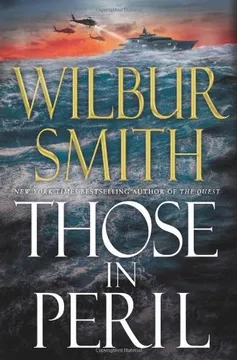


Plot Summary
A Debt in the Desert
At Bannock Oil's remote Abu Zara fields, security chief Hector Cross welcomes Hazel Bannock, the company's formidable new owner, while privately remembering the insurgent he killed three years earlier. Anwar died after Hector stopped a bomb attack on the pipeline, but used his final breath to promise that the blood feud would continue.
Hector's past gives the warning weight: he has survived war zones, court-martial scrutiny and repeated attacks on the oil installations. Hazel arrives as a different kind of force, a former tennis champion who fought her way into control of her late husband's empire. She distrusts Hector's record and blunt methods. He, in turn, recognizes that the danger around her has a history he does not yet understand.
The opening binds corporate security to an older, personal logic of retaliation. Hector sees threats as immediate tactical problems, while Anwar's dying words insist that violence outlasts the battle in which it began. Hazel's arrival supplies a counterweight: she has gained power through calculation rather than force, yet depends on the protection of a man whose methods she questions. Their first encounter therefore establishes both the practical conflict and a deeper disagreement about what responsibility looks like when danger is real.
The Steward's Hidden Signal
Hazel leaves her nineteen-year-old daughter Cayla aboard the family yacht, the Amorous Dolphin, as it sails from Cape Town toward the Seychelles. Cayla has met Rogier Marcel Moreau, a handsome French steward whom she has helped secure a place on the crew, and she conceals their affair from her mother.
Rogier's identity is manufactured: he was born Adam Abdul Tippoo Tip and has been sent by his grandfather to infiltrate the yacht. He plants a concealed transponder, allowing a pirate dhow to track the ship's position and speed. Cayla reads Rogier's attention as intimacy, unaware that he is using her trust to guide an armed operation. The yacht's routine annual voyage gives the attackers a predictable target and a timetable.
The deception works because it attaches itself to a recognizable adolescent need: Cayla wants to be treated as an adult, but has little experience distinguishing intimacy from control. Her mother interprets her as protected and innocent, while Cayla actively manages a secret life. Rogier exploits both versions of her. The transponder converts private trust into military intelligence, making the betrayal more than romantic manipulation. It gives the attackers precise knowledge of the yacht while allowing Cayla to believe the danger is outside her relationship.
The Dolphin Goes Dark
After tracking the Dolphin across the Indian Ocean, Rogier signals his uncle Kamal Tippoo Tip's attack boats. The pirates climb aboard at night, kill Captain Franklin and senior crew members, and bind the surviving sailors. Rogier helps them seize control, then removes Cayla's phone SIM after she manages to send Hazel a warning about armed intruders.
The attackers transfer the crew and Cayla to their dhow, load the yacht with explosives, and scuttle it to erase evidence. They also steal jewelry and valuable paintings, though the artwork proves to be carefully made copies. Cayla is taken toward the pirate stronghold in Puntland, while Hazel, still at the oilfield, receives only a truncated message and cannot reach the ship.
The seizure turns a family voyage into a hostage crisis through a rapid collapse of ordinary protections. The ship's trained crew and sophisticated communications cannot compensate for an insider who knows its routines. Cayla's brief warning matters because it preserves a trace of agency, but Rogier's removal of the SIM isolates her again. Sinking the yacht also attacks Hazel's ability to know what happened: without a wreck or survivors, uncertainty becomes a weapon that can exhaust her before any ransom demand arrives.
A Mother's Last Resort
Hazel races back toward Washington and uses her political connections to search the waters, but satellites and a diverted destroyer find only wreckage and one lifejacket. Officials begin treating the disappearance as a likely sinking; Hazel refuses to accept that Cayla is dead because of the warning she received.
Remembering Hector's offer of help, she calls him in Abu Zara. He rejects the tidal-wave explanation, notes that no ransom has arrived, and suspects the attackers are waiting until they reach safe territory.
He summons Hazel back to the oilfield, where he establishes a secure operations room and asks for every detail she can recall. Fear forces Hazel to set aside her pride and let Hector turn her panic into a working investigation.
Hazel's power has limits: political access can mobilize search assets, but it cannot produce knowledge when the evidence is deliberately destroyed. Her refusal to accept the official conclusion is not simply maternal intuition; the message gives her a concrete reason to distrust it. Hector's brisk skepticism offers a different form of care, one that refuses consolation in favor of inference. Their alliance begins when Hazel accepts that dependence need not erase her authority, and Hector learns to treat her grief as information rather than an obstacle.
The Flowers Claim Their Prize
Hector learns that the Dolphin's annual route and Cape Town stop made its capture predictable, and a Swiss records search reveals that Cayla vouched for the new steward. A birth certificate links Rogier to the name Adam Abdul Tippoo Tip, though the name means little to Hector at first. Then Al Jazeera reports that a group calling itself the Flowers of Islam has taken Cayla and the crew, claiming the yacht was destroyed.
The broadcast confirms she survived the seizure, but gives no location. Hector warns Hazel that public appeals and premature negotiations could endanger her daughter. He proposes playing along with the captors while Cross Bow operatives Tariq Hakam and Uthmann Waddah go undercover to search for the hostage's whereabouts.
The captors' announcement is both evidence and theater. It gives Hazel the crucial fact that Cayla is alive, while withholding the location that would make rescue possible. Hector understands that information is being rationed to shape the family's behavior. His caution frustrates Hazel, but it prevents her from confusing a public claim with a usable lead. Meanwhile, the false identity begins to unravel through mundane records, showing how bureaucratic details can expose a conspiracy that military surveillance cannot yet locate.
Ten Billion for Cayla
After weeks without a lead, the kidnappers send a dated photograph proving Cayla is alive, followed by a video designed to force Hazel into paying ten billion dollars. It shows the captive being sexually assaulted and humiliated while Adam presents himself as powerless to stop the men.
Hector recognizes the performance as coercion, not a genuine negotiation, and tells Hazel the ransom is both beyond her personal means and unlikely to buy Cayla's release. He orders her to stall the captors and prepares a small rescue force for a night parachute insertion. Hazel trains alongside the team, proving her athleticism and marksmanship are more than memories of her tennis career. The operation waits on Tariq and Uthmann to find the stronghold.
The video is constructed to make a mother experience helplessness as a spectacle, turning private suffering into leverage. Hazel's impulse to pay is emotionally intelligible, but Hector sees that the demand is not a price with a reliable exchange attached. His refusal to promise an easy solution can seem cold, yet it protects their capacity to act. Hazel's training marks a shift from passive witness to disciplined participant, although Hector later has to keep her out of the assault itself for Cayla's safety.
The Oasis Has a Door
In Baghdad, Uthmann stays with his brother Ali, a jihadist organizer, while Tariq travels into Puntland and reaches the village of Ameera. There he finds his cousin Daliyah, now a servant at the fortified compound known as the Oasis of the Miracle. She confirms that Cayla is imprisoned there and describes the abuse she has endured.
Tariq promises to take Daliyah with him if she guides the rescue party inside. Before the operation, he explains the terrain, including a deep ravine that vehicles cannot cross. Hector, Hazel, Paddy O'Quinn and their team prepare the insertion from an abandoned Ethiopian airstrip. The plan depends on Daliyah's knowledge, Tariq's local experience and a helicopter waiting beyond the fortress.
Daliyah changes the rescue from a speculative raid into a plan grounded in local knowledge, but her help carries personal risk. Tariq's promise to protect her is not a tactical convenience alone; it draws his family ties into the operation. The ravine functions similarly, turning geography into a potential advantage against a larger force. The preparation also depends on trust, especially Hector's judgment about who needs to know what. That trust will soon be tested by someone he regards as a brother.
A Rescue Betrayed
Hector's team parachutes into Puntland and follows Daliyah through a little-used entrance behind the fortress kitchens. They kill two guards quietly and find Cayla feverish, malnourished and barely able to walk. Hector identifies himself through small details about her mother and her horse, then carries her out.
Outside, the team discovers that Uthmann has betrayed them: he has killed the four Cross Bow men left guarding the fallback position and gone to warn Adam. Tariq recognizes what happened, but only after the bodies are found. The rescuers leave the fortress with Cayla and Daliyah, knowing that the enemy now has their route and will pursue them. Hector's confidence in his closest operative has become a danger of its own.
The rescue is a narrow success, and its emotional center is not the breach but Cayla's fragile recognition of safety. Hector uses intimate family facts to reach her when fear has made ordinary reassurance useless. The discovery of the dead guards immediately contaminates that relief. Uthmann's betrayal matters because it exploits the habits of trust that made the team effective; Hector had once relied on him without hesitation. The scene reframes loyalty as a vulnerability when the people sharing danger do not share the same allegiance.
The Ravine's Narrow Mercy
Hector carries Cayla across the desert toward Tariq's ravine, while Sheikh Khan Tippoo Tip and Adam pursue with trained hunting dogs. Cayla helps save Hector when the pack attacks, firing his pistol at the animals. They reach the ravine, but Uthmann fires a rocket-propelled grenade at the extraction helicopter, killing pilot Hans Lategan and destroying the aircraft.
Hazel has flown in against Hector's orders and reunites with Cayla amid the wreckage. With the planned escape gone, the group doubles back, crosses the ravine and takes a truck from a pursuing party. Sheikh Khan confronts Hector in the vehicle and is killed. The survivors head for the coast, carrying little water and no certainty that a second escape route will hold.
Cayla's act of defending Hector reverses her earlier position as someone who must simply be carried. It does not erase her trauma, but gives her a consequential action at the moment the rescue plan breaks apart. Hazel's arrival offers reunion and renewed danger at once. The loss of the helicopter strips away the operation's clean exit, forcing the group into improvised choices. Sheikh Khan's death removes one source of threat, but not the system of armed followers that can continue the pursuit.
Ronnie's Burning Wake
At the coast, Hector signals Ronnie Wells, the veteran marine commander waiting offshore in his fast attack boat. Pirate craft converge on Ronnie before he can reach the beach. He turns to fight, using his bow guns and grenades to destroy several boats, but the attackers overwhelm his crew.
Wounded and unable to escape, Ronnie detonates grenades against the boarding party, destroying the boat and himself rather than be captured. Hector watches the blast from shore, then abandons the beach rendezvous.
The group steals a battered passenger bus in Lascanood and blends into a crowded convoy, while Tariq and Daliyah guide them toward an old mountain road. They pass through militia checkpoints and a public punishment square before reaching the route to Ethiopia.
Ronnie's death is a costly consequence of Uthmann's intelligence and demonstrates that a rescue plan can be compromised well beyond its original target. His final action prevents the pirates from taking the boat, but gives the survivors no practical rescue. Hector must absorb the loss while keeping the group moving. Their disguise in the bus turns anonymity into protection, yet the public punishments they witness expose the civilian world surrounding the conflict. Escape is not a clean passage from violence, but a route through other people's vulnerability.
The Bus Through the Pass
The crowded bus carries the fugitives through checkpoints until Adam and Uthmann recognize Cayla and give chase. Hector's men return fire, disable the pursuers' truck and steer the bus onto the neglected mountain road.
Their vehicle is hit and stops at a rockslide, where the group takes cover as Adam's fighters attack from below and the cliffs. Hector and his remaining men hold the position with dwindling ammunition. Paddy O'Quinn finally reaches them from the Ethiopian side with armed trucks and heavy machine guns, scattering the attackers.
They cross into Ethiopia and reach the waiting Hercules. Cayla is reunited with Hazel and taken for medical care; Tariq survives his wound. The first rescue ends, but several of Hector's closest men are dead.
The bus sequence makes escape depend on the ordinary crowd and on a neglected road rather than superior equipment. Once Cayla is recognized, the anonymity fails, and the route becomes a siege. Hector's leadership is reduced to a few immediate decisions about where to stand and how long to hold. Paddy's arrival is not a miraculous reversal so much as the payoff to a fallback plan set up earlier. The survivors reach safety, but their losses prevent rescue from being mistaken for restoration.
A Home Reassembled
In Houston, Hazel places Cayla with psychiatrist Thelma Henderson and supports her through surgery and treatment for injuries sustained in captivity. Hector stays in Abu Zara to hand Cross Bow Security to Paddy, while Hazel offers to buy the company and appoints Hector to a senior role at Bannock Oil.
Cayla later returns to Colorado, abandons the art studies her mother chose for her and enrolls in veterinary school to work with horses. At Henry Bannock's ranch, she welcomes Hector into the family and presses Hazel to accept the life she wants. Hazel and Hector marry. Their new household forms around care, work and Cayla's slow recovery, although the violence in Puntland has not ended.
Recovery here is practical and relational rather than a return to the life Cayla had before. Therapy, surgery, education and the familiar horses at the ranch give her different ways to reclaim choice. Hazel must also revise her role as protector: pushing Cayla toward a predetermined future was another form of control, even when motivated by love. Hector's entry into family life gives both women support, but the unresolved danger from Puntland remains outside this repaired domestic world.
Tariq's Second Blood Debt
When Hector and Hazel return to Abu Zara to celebrate a new oil project, they learn that Tariq's wife Daliyah and their infant son have died in a house fire. Tariq reveals that the blaze was deliberate, and Hector understands that Uthmann arranged it. The family had been living under another name to stay hidden.
Tariq goes to Gandanga Bay, confirms Uthmann now serves Adam as a powerful lieutenant, and returns with a private resolve to avenge his family. Hector cannot promise to prevent him from acting, but keeps him on Cross Bow's payroll. Over the following years, Cayla continues her studies, Hazel and Hector build their life together, and Tariq's absence becomes a quiet warning that the feud is still active.
The fire shows that the first rescue did not end the violence; Uthmann can reach beyond the battlefield and attack the intimate spaces people create to survive. Tariq's grief is made more dangerous by the fact that he has no public recourse and understands the pursuit as an obligation to his dead. Hector's support respects that choice without pretending it is healing. The passage of years gives the threat a deceptive quiet, suggesting that unresolved revenge can remain dormant while ordinary life appears to resume.
The Bannock Family Grows
Cayla finishes veterinary school near the top of her class and begins a relationship with medical student Simon Cooper. Hazel accepts that her daughter can choose her own future, and Cayla later helps persuade Hector to propose. Hazel and Hector marry in a lavish Texas wedding, with Cayla as bridesmaid, then travel on an extended honeymoon.
For a time, the family enjoys the life Cayla had once expected to lose: ranch visits, fishing, and plans for a future with Simon. The affection is real, but it does not cancel what happened in captivity. Cayla's recovery gives her room to make choices again, while Hazel and Hector build a partnership that joins the oil business to a shared family life.
Cayla's improvement is measured not by forgetting the assault but by the return of agency: she chooses a profession, a partner and a place in her mother's life. Hazel's acceptance marks a significant change from directing her daughter to listening to her. The wedding is a public celebration, but its emotional force comes from the private work that made it possible. This fragile happiness matters precisely because it is not presented as proof that trauma has vanished.
Two Heads Returned
During Hector and Hazel's honeymoon, Grace Nelson is murdered at her South African home and her severed head is taken. At the same time, Cayla disappears from veterinary school. Hector and Hazel race to Cape Town, where Grace's brother John confirms the killing, then search for Cayla from the air. Back in Houston, they find two preserved heads waiting in Hazel's bathroom: Grace's and Cayla's.
A message explains that two more deaths are owed in the blood feud. Police later recover Cayla's decapitated body near the university. Hazel collapses under the loss, and Hector realizes Adam has used distant accomplices to make his threat reach their home. The personal feud has become a continuing campaign against anyone the couple loves.
The attack destroys the assumption that distance, wealth and security can keep danger at bay. The severed heads turn the home into a delivery point for the enemy's message, collapsing the boundary between public conflict and private mourning. Hector's inference that the killings are part of the same feud gives the bereaved couple a target, but does not reduce the grief to a tactical problem. Hazel's loss is specific and irreparable; her decision to act later will arise from that loss, not from any promise that vengeance can restore what was taken.
The Golden Goose Bait
Hector argues that attacking Adam's fortress again would repeat the losses at the Oasis, so Hazel proposes drawing him out with the Golden Goose, Bannock Oil's enormous gas carrier. They hide weapons, three amphibious assault vehicles, heavy cannons and more than a hundred operatives inside its reconfigured cargo spaces.
Tariq returns undercover to Gandanga Bay to map the pirate fleet, the prisoner compounds and Uthmann's movements. Hazel's lookalike Nastiya Voronova will impersonate her, while Vincent Woodward serves as Hector's double.
The company publicizes the Goose's valuable cargo, route and the couple's supposed presence aboard. Adam's greed and desire for revenge are expected to override caution. The plan is dangerous because its success depends on the pirates believing every part of the deception.
The Goose turns the machinery of corporate wealth into an instrument of counterattack. Hazel's idea does not defeat Adam by matching his brutality; it exploits his appetite for spectacle, money and personal triumph. Yet the plan requires other people to inhabit danger in her place, especially Nastiya, whose resemblance makes her a human decoy rather than a mere disguise. The elaborate hidden spaces emphasize a theme of visibility: the public sees a tanker, while the enclosed interior contains a force prepared to change what that image means.
Gandanga Bay Falls
Kamal's pirates board the Golden Goose, bind the crew and capture Nastiya and Vincent, believing them to be Hazel and Hector. Nastiya resists Kamal, while the real team waits concealed. Adam arrives by helicopter with Uthmann piloting, but Uthmann recognizes the doubles and flees.
The hidden force attacks: Hector's team takes the bridge, the cannons scatter the pirate boats, and the assault vehicles land to free captured sailors. Kamal and Adam retreat into the ship's service tunnels with Nastiya, but Hector and Paddy use the vessel's gas-control system to corner them.
Kamal is killed, and Adam is captured alive. Hector and Tariq pursue Uthmann ashore; Tariq avenges Daliyah and their son. The pirate stronghold is broken and the prisoners are released.
The ambush succeeds because it coordinates several kinds of power: performance, surveillance, concealed mobility and force. Nastiya's survival is not passive; she uses her training to resist when the disguise exposes her to danger. Uthmann's recognition briefly punctures the operation's carefully built illusion, but the hidden team has enough flexibility to continue. The liberation of the prisoners widens the mission beyond private revenge, though the action remains morally compromised by the lethal means used to achieve it.
The Debt Is Paid
Aboard the Golden Goose, Hazel claims the right of retaliation for Cayla and Grace and shoots Adam after Hector presents the killings as crimes even by the law Adam professed to follow. The convoy turns over the surviving captured ships and their crews to the United States Navy. Hector and Hazel recover more than two billion dollars from Adam's accounts and arrange for most of it to return to the shipowners and insurers he robbed.
They rebuild their life, support Paddy and Nastiya's marriage, and visit Cayla's grave at the Colorado ranch. There, Hazel admits she has stopped taking birth control and wants another child. Hector agrees. Their future does not erase Cayla or Grace; it gives grief a place beside the possibility of new life.
The execution closes the feud's immediate cycle, but the book does not present it as equivalent to recovering Cayla or Grace. Hazel's choice is framed as duty and personal justice, a conclusion that remains ethically uneasy because she must become an executioner to answer the murders. Returning the stolen funds extends the resolution beyond vengeance toward repair for other victims. The final wish for a child is not substitution without remainder; it is an attempt to make room for attachment after loss, while preserving the memory of the people who cannot return.
Analysis
Those in Peril links two forms of power that rarely share a moral vocabulary. Hazel's authority comes from corporate judgment, wealth and the capacity to mobilize institutions; Hector's comes from tactical competence and a willingness to kill. Their alliance begins because conventional power cannot locate Cayla, but the rescue gradually asks whether private violence can produce anything resembling justice. The answer remains uneasy. The Tippoo Tip clan disguises greed and domination as religious duty, while Hector's team uses force in the name of protection. The novel distinguishes these motives, but does not make the distinction ethically effortless: civilians are endangered, loyal operatives die, and Hazel ultimately has to enact the punishment she believes necessary.
The family plot gives that violence its cost. Cayla's captivity exposes the risks of a mother's idealized protection and a daughter's desire for independence; her recovery requires Hazel to let her choose a future rather than dictate one. Hector's transformation is similarly relational. A man who has organized his life around command learns to become a partner and a father figure, while his bond with Hazel makes him vulnerable to losses he cannot solve through skill. Tariq's grief demonstrates the danger of treating revenge as obligation, and the final execution of Adam offers no restoration of the dead.
The Golden Goose is the novel's central image of visible wealth concealing armed purpose. It turns a corporate asset into a theatrical trap, but also shows how completely the protagonists must adopt the enemy's logic of deception and force to reach their objective. The book's strongest emotional resolution is therefore not Adam's death. It is the choice to return stolen money, preserve the memory of Cayla and Grace, and imagine a child without pretending that a new life can replace them. Survival is not absolution; it is the difficult continuation of attachment after violence.
Review Summary
Reviews of Those in Peril are largely negative, averaging 3.69/5. Long-time Wilbur Smith fans express significant disappointment, citing implausible plots, flat characters, stilted dialogue, and gratuitous sexual violence. Many consider it his worst work, contrasting it unfavorably with beloved series like the Courtneys and Ballantynes. Critics highlight problematic portrayals of Islam and Muslims, excessive graphic content, and an unconvincing romance. Positive reviews praise its fast pace and suspenseful action sequences, with some enjoying it as light entertainment despite its flaws.
People Also Read

Characters
Hector Cross
The battle-tested protectorHector owns Cross Bow Security and leads its armed operations for Bannock Oil. A former soldier whose decisions in combat have left him morally contested, he trusts preparation, clear orders and the people who have earned a place beside him. His closest relationships are built through shared danger, especially with loyal operatives such as Tariq and Uthmann. Hazel initially sees him as an impulsive killer, while he regards her as a formidable employer whose courage is less visible than her wealth. His self-sufficiency has kept him emotionally guarded, but the demands of protecting Hazel and Cayla draw out a capacity for tenderness and family responsibility he did not expect.
Hazel Bannock
The unyielding oil baronHazel leads Bannock Oil after the death of her much older husband, Henry. A former world-class tennis player, she combines athletic discipline with financial instinct and a fierce need to direct the world around her. Her devotion to Cayla is profound, though her instinct to protect can blur into control, particularly when choosing her daughter's education. She is accustomed to being the most capable person in the room and initially distrusts Hector's blunt methods. Beneath her public authority lies a woman who has endured years of loneliness. Her resilience is practical: she works, trains, plans and keeps making decisions even when fear threatens to overwhelm her.
Cayla Bannock
The searching young heirCayla is Hazel and Henry Bannock's nineteen-year-old daughter, raised amid extraordinary wealth and her mother's high expectations. She can be impulsive, vain and accustomed to getting her way, but those traits coexist with emotional hunger and a desire to make adult choices without parental supervision. Her interest in horses is more genuine than the art studies Hazel has selected for her. Cayla's relationship with her mother is loving but complicated by Hazel's protective idealization of her. She wants intimacy and independence at once, a tension that makes her vulnerable to people who appear to offer both. Her affection for animals and her quick humor reveal a spirited self beneath the privilege.
Adam Tippoo Tip
The pirate warlordAdam is a young heir within the Tippoo Tip clan, a family whose power rests on piracy, wealth and a history of violence. He seeks his grandfather's approval and interprets inherited grievances as sacred obligations. Religious language gives his ambition a public justification, while his appetite for control shapes the way he treats captives and subordinates. Adam is drawn to displays of status and to the idea that fear can establish legitimacy. His connection to Hector's past places him inside a feud older than his own authority. He is not simply a battlefield commander; he uses propaganda, ransom and spectacle to make distant enemies feel personally exposed.
Uthmann Waddah
The trusted field operativeUthmann is an experienced Arab operative who has worked beside Hector for years. He is intelligent, controlled and highly capable in the field, with a deep understanding of local languages and networks. Hector trusts him as a brother, and that closeness gives Uthmann unusual access to plans and people. His professional composure makes him difficult to read, while his relationships with family and political allies pull him across competing loyalties. Uthmann's fear of open water contrasts sharply with his reputation as a fearless fighter, revealing the vulnerability beneath his competence. He is a reminder that shared history does not guarantee shared allegiance.
Tariq Hakam
The steadfast local guideTariq is an Arab operative who served with Hector in Iraq and later became one of his closest friends. He is a skilled interpreter, tracker and guide, with deep knowledge of Puntland and a careful awareness of how information travels through family and community. His faith is sincere, and he is wary of outsiders who treat local people as interchangeable. Tariq's bond with Hector is built on repeated acts of trust, but he retains his own judgment and private concerns. His courage is quiet rather than theatrical. He understands that survival often depends on patience, listening and knowing when a seemingly ordinary family connection can open a way forward.
Daliyah
The courageous inside guideDaliyah is Tariq's cousin and a servant at the fortress near the Oasis of the Miracle. She knows the compound's passages and routines because she has lived and worked close to its center of power. Fear has taught her caution, but her compassion for another young captive outweighs the danger of helping Tariq. She contributes more than local access: her observations guide the rescue team through an overlooked entrance and away from a prepared trap. Daliyah's decisions are grounded in practical courage, not a wish to become a warrior. She understands the costs of resistance and acts with that knowledge rather than in ignorance of it.
Paddy O'Quinn
The quick-tempered commanderPaddy is a former SAS soldier who now serves Hector in Cross Bow Security. A sharp planner and forceful commander, he has a temper that once damaged his military career, but his judgment and loyalty make him indispensable. He uses humor to puncture tension and hides his tenderness behind rough banter. Paddy respects Hector while challenging decisions he considers reckless, especially when the people he loves are at risk. His relationship with Nastiya reveals a more vulnerable side, though he remains a professional under pressure. He is a practical leader who knows that courage without logistics is only another way to lose good people.
Anastasia Voronova
The fearless decoyNastiya is a Russian former model trained by Spetsnaz, recruited for her striking resemblance to Hazel. Her beauty is immediately visible, but it is not her most important attribute: she is disciplined, physically formidable and comfortable maintaining silence under pressure. She can perform a role convincingly without confusing the performance with her identity. Hazel's initial wariness gives way to friendship as the two women work together, and Nastiya's affection for Paddy adds a personal stake to the operation. She refuses to be treated as a fragile substitute, insisting through her actions that she understands the danger and has chosen to face it.
Ronnie Wells
The veteran sea commanderRonnie is a former Royal Marine sergeant-major and an expert in small attack craft. As Hector's senior man at the coastal terminal, he is meticulous, experienced and proud of his aging vessel's capabilities. He has spent so much of his life among military crews that Cross Bow has become his closest community. His humor is dry, but beneath it sits a concern about whether age has made him expendable. Hector's respect for Ronnie is demonstrated through the renewal of his contract. He represents the competence and loyalty of the older generation of professionals who have built their identities around service.
Sheikh Khan Tippoo Tip
The patriarch of vengeanceSheikh Khan is the aging leader of the Tippoo Tip clan and Adam's grandfather. He treats inherited status as moral authority and frames his family's losses as debts that must be repaid through violence. His rule depends on fear, religious prestige and the obedience of younger men. The old Sheikh is both a political patriarch and a family tyrant, shaping Adam's ambitions by promising him status if he carries out the clan's vengeance. He sees mercy as weakness and cruelty as an instrument of order. His influence demonstrates how a personal grievance can be transmitted as a public ideology.
Kamal Tippoo Tip
The pirate fleet commanderKamal is Adam's uncle and commands the pirate boats that operate from Gandanga Bay. He is an experienced sailor who can disguise a modern attack force beneath the appearance of traditional coastal trade. Kamal follows Adam's authority but expects rewards for his own service and takes personal offense when challenged. His command style mixes maritime skill with intimidation. The contrast between his competence at sea and his volatile treatment of captives makes him dangerous in close quarters. Kamal's ambitions remain subordinate to the larger clan hierarchy, but he is an important link between Adam's political power and the pirate fleet that sustains it.
Grace Nelson
Hazel's formidable motherGrace is Hazel's mother, a dignified South African matriarch who lives on the wine estate her daughter bought for her. She is cultivated, socially perceptive and unafraid to judge the people Hazel brings into her family. Her pride in Hazel is tempered by a belief in good manners and standards, which gives her authority without requiring wealth or office of her own. Grace's closeness to Cayla makes her part of the family's emotional center. She represents the history Hazel carries from Cape Town, including the sacrifices that enabled Hazel's early ambitions.
Dave Imbiss
The electronics specialistDave is a former US infantry captain who left the army with combat experience and a strong technical skill set. He handles computers, communications and surveillance, giving Hector's field plans an electronic and logistical backbone. His youthful appearance conceals a resilient professional shaped by personal disappointment as well as military service. Dave does not dominate the room, but he is quick to translate an idea into the equipment and information needed to make it workable. His competence illustrates how modern security work depends on both physical courage and technical expertise.
Cyril Stamford
The veteran ship captainCyril is a retired US Navy captain brought out of retirement to command the Golden Goose. He is proud of his naval service and family history, but remains practical enough to adapt when a situation turns dangerous. His knowledge of ships and their systems becomes essential to the operation's hidden design. Cyril can perform the unremarkable manner of a merchant captain when that is safer than showing his full capability. Personal grief has not dulled his sense of duty; instead, it gives his willingness to confront the pirates a private urgency.
Simon Cooper
Cayla's thoughtful partnerSimon is a medical student at Colorado University and Cayla's boyfriend. He is intelligent, easygoing and interested in more than his chosen profession, including history, politics and fishing. Hazel initially judges him by his family's business rather than his character, while Hector recognizes his steadiness. Simon's affection for Cayla is sincere, and he respects her ambitions without trying to take control of them. He belongs to the ordinary future Cayla hopes to build.
Nella Vosloo
The daring transport pilotNella is an experienced South African pilot who flies a Hercules transport with her husband, Bernie. Blunt, physically imposing and technically assured, she handles dangerous landings and parachute operations with confidence. Her generosity is matched by a practical understanding of the costs of keeping an aircraft and crew available. Nella recognizes Hazel's fear as a mother's fear and offers support without condescension. She is a professional whose warmth and irreverence make her an important ally.
Bernie Vosloo
The discreet cargo pilotBernie is Nella's husband and co-pilot, an experienced transport pilot accustomed to carrying difficult cargo into remote regions. He is cautious about abandoning paying work, but Nella's commitment and Hector's offer bring him into the operation. His knowledge of rough airstrips and improvised logistics makes the Hercules a credible part of the rescue plan. Bernie is less flamboyant than Nella, though he shares her nerve and professional skill.
Henry Bannock
The absent family patriarchHenry is Hazel's late husband and Cayla's father, a billionaire oilman who built the company Hazel now leads. He was older than Hazel and had both the resources to support her and the judgment to recognize her business ability. His mausoleum and family traditions keep his memory present in Hazel and Cayla's lives. He remains an emotional reference point for the family, but his legacy is more than wealth: it includes the work, expectations and affection passed on to those who survive him.
Plot Devices
The Hidden Transponder
Tracks the yacht's routeRogier plants a concealed transponder aboard the Amorous Dolphin. It transmits the yacht's location and movement to a receiver operated by the pirate dhow, allowing the attackers to calculate an interception instead of searching blindly across open water. The device turns a personal betrayal into operational intelligence. Later, records about the extra crew member and his false identity help Hector reconstruct how the pirates found the yacht. Its purpose is not merely to locate the vessel, but to make the captors' timing and approach appear almost impossibly precise.
The Blood Feud
Makes old killings currentHector's past encounters with the Tippoo Tip family generate a cycle of retaliation that reaches well beyond the original combat. The clan treats the deaths of its members as a debt inherited by younger relatives, while Hector initially understands each clash as a separate security incident. This history motivates the capture of Cayla, the attacks on Hector's circle and the later effort to draw Adam into a confrontation. The feud operates as both plot engine and psychological trap: it makes every act of violence appear to demand another, while pushing its participants to mistake revenge for closure.
Hostage Media
Turns suffering into leverageThe captors use televised claims, photographs and a video sent through Cayla's phone to control what Hazel knows and how quickly she can act. Each message offers a partial fact, such as proof that Cayla is alive, while withholding the location needed for a rescue. The ransom demand and staged presentation of Cayla are designed to make Hazel feel that payment is the only available response. Hector reads the communications as performances intended to manipulate time and emotion, then uses Hazel's replies to keep the channel open while operatives search for the stronghold.
The Golden Goose
Conceals a counterattackHazel's valuable gas carrier becomes bait for Adam's greed and appetite for revenge. Hidden compartments hold an armed force, amphibious assault vehicles, surveillance equipment and concealed cannons. Publicity makes the ship's route, cargo and supposed passengers visible to the pirates, while the concealed interior keeps the actual plan invisible. The vessel's size provides room for the force and equipment needed to attack Gandanga Bay once the pirates commit themselves. Its disguise depends on Adam believing that he is seizing an undefended prize rather than entering a prepared trap.
The Doubles
Keep key targets concealedNastiya is selected to resemble Hazel, while Vincent Woodward is chosen to pass as Hector during the pirate boarding. Their impersonations allow the real leaders to remain hidden and keep Adam's attention fixed on the apparent captives. The plan requires more than resemblance: Nastiya studies Hazel's appearance and mannerisms, and the team relies on the pirates' limited ability to distinguish outsiders. The doubles' role creates genuine risk, since capture subjects them to the violence meant for the people they represent. Their presence is essential to making the Golden Goose appear to deliver exactly the prize Adam expects.


Download PDF
Download EPUB
.epub digital book format is ideal for reading ebooks on phones, tablets, and e-readers.








