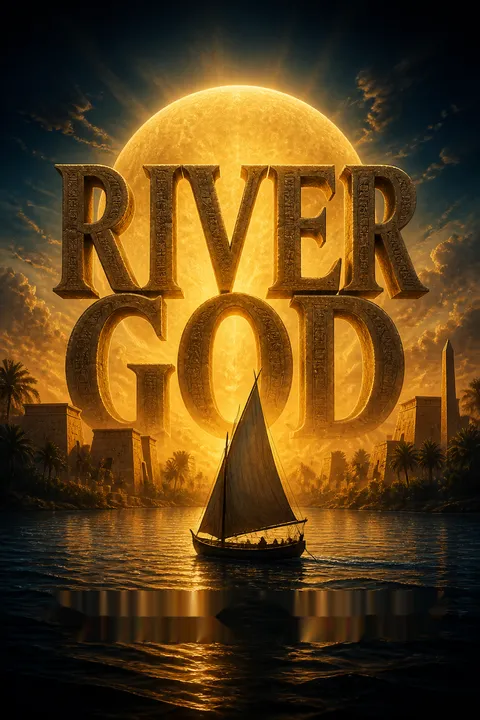


Plot Summary
The Daughter of Waters
At fourteen, Lostris joins a hippopotamus hunt led by Tanus, the handsome commander whose courage she has admired since childhood. When a wounded bull charges their galley, Lostris falls onto its bloody back. Tanus leaps after her, kills the beast underwater, and brings her safely aboard. Taita, Lostris's brilliant eunuch tutor and devoted guardian, has designed Tanus's powerful bow and helped make the hunt possible.
That night, Taita discovers the young lovers kneeling together in Hapi's temple. They pledge themselves to each other and ask him to win her father's consent. He knows their hope is doomed: Lostris's father, the grand vizier Intef, secretly hates Tanus and has spent years undermining his family.
The hunt makes the love story physical before it makes it political. Lostris and Tanus survive together through trust and daring, while Taita's inventions quietly enable the heroics he cannot perform himself. His affection is more complicated: he wants their happiness, yet feels the ache of loving Lostris without possibility of return. Their vow is both sincere and dangerously absolute. Taita's foreknowledge gives the scene its tension, because the reader sees that their private promise has already entered the machinery of state power.
A King Nearly Drowns
Returning to Thebes, Tanus spots Pharaoh Mamose's enormous barge drifting helplessly toward the wharf. He leaps aboard, takes command of its panicked crew, and uses his galley to turn it safely into the current.
At the Festival of Osiris, Taita's elaborate pageant becomes real when Intef's executioner, Rasfer, dismembers the actor playing Osiris. Lostris sings as Isis, and the audience believes the bloodshed is part of the performance.
Tanus then defeats Rasfer in a rigged sword fight and uses his closing speech to accuse Egypt's rulers of corruption, military weakness, and neglect of the poor. Mamose sentences him to death for sedition, but delays the execution for two years and orders him to destroy the outlaw bands terrorizing the country.
Public spectacle becomes a weapon with consequences Taita cannot control. The pageant's staged divine violence helps conceal a real execution, while Tanus's genuine speech breaks the protective silence around political failure. His courage is inseparable from his bluntness: he names truths that the court already knows but cannot safely hear. Mamose's sentence is both punishment and reluctant delegation. By making Tanus responsible for restoring order, the king converts a popular critic into an instrument of the very state he challenged.
A Marriage Made Hostage
Intef discovers Lostris's secret pledge and punishes Taita with the whip for supporting Tanus. At the same time, he recognizes an opportunity in Mamose's desperate need for a son. The king's search for a virgin bride has been shaped by Taita's medical advice and by Lostris's starring role as Isis. Intef arranges their marriage, intending the child she bears to secure his own political future.
At the wedding, Lostris rejects the gold and land her father offers and demands Taita as her gift. Intef cannot refuse without exposing his dependence on the slave who manages his secrets, so Taita leaves his household with her. Lostris is now the king's wife, but she has chosen the one person who can help her endure the loss of Tanus.
Intef treats intimacy as a resource to be owned, managed, and traded. His daughter's marriage is not a family decision but a political investment, and Taita's value lies partly in how much of Intef's hidden life he knows. Lostris's demand for Taita is a small act of self-determination within a public ceremony she cannot refuse. It also reveals the limits of rescue: Taita can accompany her into captivity, but cannot yet free her from the crown's demands.
The Queen's Desperate Bargain
After the wedding, Lostris refuses food and asks Taita for poison rather than share the king's bed. He secretly gives her a sleep-inducing dose instead, then persuades Mamose to abstain for ninety days while Taita treats his ailments and becomes useful at court. Intef, meanwhile, tries to kill Taita with poisoned milk; the dose kills his beloved animals, but Taita survives.
He stages his own death, disguises himself as a priest, and leaves to find Tanus. Unable to reach Lostris, he discovers that Tanus has vanished into despair. On the road, they find a murdered family, including a young girl, and Tanus turns his grief into action. Their pursuit of the killers becomes the beginning of the campaign that can save both men and Lostris.
Taita's deceptions are acts of care, but they also reveal his willingness to manipulate everyone, including those he loves, when he believes survival is at stake. Lostris's refusal is not merely fear of an unwanted husband; it is grief sharpened into a claim over her own body. Tanus's despair mirrors hers, while the murdered family gives his pain an outward direction. The novel repeatedly makes private suffering consequential by forcing characters to act on it.
Akh-Horus Hunts the Shrikes
Taita and Tanus ambush a band of Shrike raiders, but first see the family they murdered: a father, a pregnant mother, and their daughter. Tanus kills the raiders and helps Taita fake his own death, then takes a small force to pursue the larger outlaw clans.
Taita equips the soldiers with disguises as enslaved women, allowing them to travel through territory watched by Shrike spies. When Shufti demands a ransom, Tanus captures and publicly whips him instead. At Gallala, more than a thousand Shrikes surround the Egyptian camp.
The disguised soldiers attack from inside the encirclement, helping Tanus's smaller force break the siege. He spares some prisoners for information, and the tale of Akh-Horus, a godlike enemy of the bandits, spreads across Egypt.
The campaign joins Taita's ingenuity to Tanus's martial skill, but the victory is morally rough. They use terror, deception, and overwhelming violence against men who themselves terrorize the countryside. Taita's horror at the murdered family keeps the campaign from feeling like a clean adventure: justice begins as grief, and can easily become vengeance. Akh-Horus is an identity created by rumor as much as by action. The people need a protector powerful enough to seem supernatural, and Tanus's deeds give that hope a human face.
The Spider's Treasury Opens
Lostris's grief leaves her near death, but Taita returns to Elephantine, proves Tanus is alive, and persuades her to eat again. After she survives an assassin's cobra, she learns the truth about Intef's crimes and sends Taita back to help Tanus.
Tanus finishes his mission and returns at the next Festival of Osiris with captured Shrike barons, including Basti, who confirms that Intef engineered the ruin of Tanus's father. Taita testifies that he carried Intef's orders and knows where his hidden wealth lies.
When Rasfer tries to kill him, Tanus stops the attack. The secret treasury proves Taita's accusation. Intef escapes before execution, but Pharaoh strips him of his titles and restores Tanus's family honor. Taita later ends Rasfer's suffering on the gate.
The exposure of Intef depends on two kinds of evidence: testimony from the people he exploited and the material wealth he concealed. Taita's memory turns private complicity into public proof, while Tanus's restored inheritance answers a wound that had shaped his life. Yet justice remains incomplete. Intef escapes, and Rasfer's death is not a triumph but a mercy granted by the same healer who had once been his victim. The scene refuses a simple division between vengeance and compassion.
A Storm Reunites Them
After Lostris recovers, Taita guides her to Tanus during a violent sandstorm. They reunite in an ancient tomb, where the storm traps them for two days and their long-denied love finally becomes physical. Taita waits outside, wounded by jealousy but unwilling to abandon them. When they return to court, he protects their secret.
Lostris becomes pregnant by Tanus, but Mamose needs a male heir and Taita claims the child is the king's. The king accepts the explanation, raises Lostris to chief consort, and names her regent for the child. Taita also receives royal honors. Lostris tries to free him, but he tears up the deed of emancipation because freedom would separate him from her.
The tomb shelters a reunion that is both an act of love and a breach of political reality. Taita's jealousy does not cancel his loyalty; he creates the conditions for the lovers to meet, then chooses their happiness over his own comfort. His lie protects Lostris and the unborn child, but it also makes the family structure dependent on silence. The freedom deed exposes a paradox in Taita's life: legal liberty would cost him the intimacy and purpose he has built through service.
The Heir Nobody Names
Lostris gives birth to a vigorous boy, Memnon, whose true father is Tanus. Mamose publicly recognizes the child as his own and heir, then elevates Lostris to queen and regent. Taita becomes Memnon's tutor, while Tanus, now a senior general, is appointed to train him in arms. In private, father and son form a bond without being told its biological truth.
Lostris uses her new influence to keep Tanus near the court and to establish hospitals and hostels for the poor. Mamose grows more generous and begins correcting some abuses, but the old rivalry with the northern pretender continues. Taita's inventions improve the army's equipment, while he and Lostris preserve the secret that holds their family together.
Memnon's public identity is a political fiction that becomes emotionally real through daily care. Mamose acknowledges him as an heir, Tanus teaches him as a father would, and Taita protects the secret without letting it diminish the boy's place. Lostris's authority expands through a combination of charm, competence, and maternal leverage. The result is a fragile household in which love depends on a story everyone agrees to tell, even as the child grows into the role that story has given him.
A Crown Raised in Defeat
Years pass. Tanus wins a campaign at Asyut, but a new eastern invader, the Hyksos, overruns the northern kingdom with horses and chariots. The old general Nembet dismisses Tanus's warnings and forces him to meet them in open ground at Abnub.
Taita sees the enemy's wheeled vehicles and recurved bows for the first time, then recognizes how they will break Egypt's formations. Hyksos chariots tear through the army, killing tens of thousands. Tanus saves a remnant by reaching the Nile, but Pharaoh Mamose is struck by an arrow.
As the fleet retreats, Mamose dies despite Taita's surgery. He names Lostris regent and charges her to preserve his body for burial. The defeated survivors carry her and Memnon south, with the Hyksos advancing behind them.
Abnub is not simply a defeat of numbers. Egypt's military imagination has failed to anticipate a technology that changes distance, speed, and the shape of battle. Nembet's pride turns institutional conservatism into catastrophe, while Tanus's tactical caution arrives too late to avert it. Mamose's death makes the political burden personal: Lostris must protect a child, a kingdom, and a promise to the dead. The river remains their only defensible road, but it is also carrying them away from home.
The Nile Becomes an Exile Road
Taita's improvised treatment cannot save Mamose, so he preserves the king's body in brine while Lostris keeps her vow to provide a royal burial. The Hyksos capture Asyut and threaten Thebes. When Taita works the Mazes of Ammon-Ra, he sees a green river with two heads and a goddess calling Lostris south. She chooses flight rather than surrender.
Tanus delays the enemy while Taita loads the fleet, the people, and Mamose's coffins. The evacuation nearly collapses when panic overtakes the crowd, but Tanus reaches Lostris and Memnon before the Hyksos can seize them. Taita's chariot rescues them from a pursuit, and he turns the captured enemy horses against their riders. The fleet escapes south with the royal family and its people.
The vision gives religious form to a decision already forced by military reality. Lostris does not flee because she has abandoned Egypt; she frames exile as the means by which Egypt might survive. Her vow to preserve Mamose's body complicates that choice, forcing Taita to carry the dead king alongside the living. The chariot rescue makes Taita's inventions part of the escape, but also shows how private loyalty can alter a military retreat. Their new society begins as a moving archive of people, tools, and promises.
The River's Long Southward Loop
The fleet crosses the cataracts by hauling ships through the rapids with ropes, horses, and thousands of people. Lostris marks the passage with an obelisk promising a return. Farther south, the exiles find fertile islands, timber, game, and gold.
Taita improves the chariot with stronger spokes and develops water-lifting wheels, while Memnon grows into a gifted driver and commander. The court establishes relations with the Shilluk and brings many into its army, though conquest also makes other local people slaves.
The Nile's course loops west before turning south again, and Lostris bears two daughters while the family claims the pregnancies as divine gifts from the dead Mamose. The tomb of Pharaoh is built in the mountains, but the journey keeps drawing the exiles farther into unknown country.
The expedition is at once a refuge and a project of state-building. Taita's engineering and Memnon's military education turn survival into preparation for a return, while the obelisk fixes that intention in stone. The narrative also exposes the empire's moral blind spot: the exiles oppose foreign domination while reproducing slavery and conquest in Cush. Their prosperity is real, but it is built through the same hierarchies that structured Egypt. The river's loop becomes a physical image of history's delay, a route that moves away from home while preserving the hope of reaching it.
A Captive at Adbar Seged
While searching for a secure tomb site, Taita, Tanus, and Memnon encounter the Ethiopian ruler Arkoun and his daughter, Masara. Taita is captured after a skirmish and taken to Arkoun's fortress, Adbar Seged. His medical skill earns him better treatment, and his gift for languages lets him learn the court's customs.
Masara, herself held as a political hostage, asks him about Memnon, whose promise to return has become her hope. Taita tells her how to reach her father, Prester Beni-Jon, if she escapes, and she shares the route with him. After two years in captivity, Taita escapes during a battle, reaches Beni-Jon's stronghold, and negotiates horses, safe passage, and military aid in exchange for freeing Masara.
Captivity narrows Taita's world to a fortress, but his skills create openings that brute force cannot. He earns influence by healing, then converts that standing into language, intelligence, and a diplomatic bargain. Masara's hope rests on a brief encounter and a promise, much as Lostris's once did. Taita recognizes the danger of such hope, yet chooses to protect it. His negotiations link personal rescue to statecraft, making a marriage and a herd of horses part of the same political exchange.
The Mountains Take Tanus
Memnon leads an Egyptian and Shilluk force against Adbar Seged, using the mountain path and the confusion of Arkoun's retreat to reach Masara. Tanus faces Arkoun on the narrow stone causeway.
Arkoun's blue steel sword pierces Tanus's chest, but Tanus traps the weapon in his shield and forces Arkoun over the precipice. The fortress falls, Masara is freed, and the two young people recognize the promise they have carried for years. Tanus dies from his wound after entrusting Memnon and Lostris to Taita's care.
Taita and Kratas secretly place Tanus's body in Pharaoh's golden coffin and move Mamose into a simpler one, allowing Tanus the royal resting place Taita believes he deserves. The exiles return to Qebui with Masara and the captured horses.
The causeway makes the duel a literal test of balance, and Tanus wins only by turning his enemy's superior weapon into a trap. His death completes the exchange between generations: Memnon receives the sword, the command, and the responsibility Tanus carried. The body swap is an act of love that violates royal protocol, while also restoring dignity to a man denied the throne he might have taken. Masara's rescue gives Memnon a future, but the cost is the loss of the father who shaped him without being able to claim him.
The Horses Turn North
Back at Qebui, Lostris and Memnon reassemble the army for a return to Egypt. Taita perfects durable chariot wheels and recruits Shilluk soldiers, while the exiles secure gold and supplies. Lostris's health deteriorates as she carries another pregnancy, but she refuses to abandon her people.
Memnon and Masara marry, binding Egypt to Prester Beni-Jon's kingdom and bringing thousands of Ethiopian horses into the alliance. The Nile floods, and the army prepares to cross the desert bight toward the second cataract.
Meanwhile, Taita arranges for the gnu herds to infect the Hyksos horses with the Yellow Strangler, a disease that crippled Egypt's own herds earlier. The plan succeeds, weakening Salitis's chariot force and giving the returning army a chance to fight on more equal terms.
The return is made possible by accumulated knowledge, not a sudden reversal of fortune. Taita's wheel design, the Shilluk infantry, Ethiopian horses, and the disease plan each answer a weakness revealed earlier in the story. Lostris's insistence on bringing her people home gives these innovations a political purpose, but her failing body sets a limit on what she can personally witness. The marriage of Memnon and Masara is both intimate and strategic: the relationship that began as a promise now secures an alliance capable of supporting a nation.
The Return to Thebes
After crossing the desert bight, Memnon brings his army down through the first cataract and reaches Elephantine. Egyptian soldiers serving the Hyksos defect, and the city rises against its occupiers.
Taita's spies report Salitis's forces moving south, while the Yellow Strangler has left many of their horses unable to fight. Before battle, Memnon leads his chariots against Apachan's weakened divisions, then uses the Shilluk to break the Hyksos infantry. Apachan dies by Memnon's blue sword, and the remaining Hyksos retreat toward Thebes.
The city opens its gates to the returning army. Memnon enters as Pharaoh Tamose, while Taita goes back to Elephantine to bring Lostris home. Her long journey is complete, but the illness within her has worsened beyond cure.
The return pays off the long apprenticeship of the exiles. Memnon combines chariot speed, intelligence gathered by Taita, and the Shilluk's disciplined infantry rather than relying on one weapon alone. His victory is not a miraculous restoration but the result of adapting to the Hyksos methods that once shattered Egypt. Yet political success does not reverse private loss. Tamose enters Thebes as king, while the woman whose vow sustained the return is too ill to share the victory fully.
The Queen's Last Vision
Taita carries Lostris back to Thebes, where she sees the city she has spent decades trying to regain. The growth in her womb is a fatal tumor, not a child, and no medicine can remove it. She asks Taita to work the Mazes one last time. His vision shows the cobra and vulture united after a century of war, promising that Egypt will eventually be joined under the blue banner.
Lostris accepts that she will not live to see it. She dies at dawn in Taita's arms, having entrusted her children and her people to him. Taita prepares her body for burial, paints her tomb himself, and leaves the record of their lives beside her, while Memnon begins the work of ruling the reclaimed kingdom.
Lostris's death closes the private arc without pretending that political restoration can repair every loss. Her final vision offers a future beyond her lifetime, but it does not spare her the knowledge that she will not see it. Taita's care returns the story to its intimate beginning: he is once again the guardian who tends Lostris through pain and records what she cannot carry forward. The chronicles themselves become his answer to mortality, preserving a life that official history would otherwise reduce to a queen's title and a political vow.
Epilogue
The author's note frames Taita's account as a transcription of scrolls discovered in 1988, when archaeologists opened a tomb on the west bank of the Nile. The tomb's murals named a queen unknown to the historical record, but its burial goods had been removed long before. Ten sealed alabaster jars later yielded the scrolls.
The author explains that the text was adapted for modern readers, including changes to measurements and vocabulary. The note leaves the central question deliberately unsettled: whether Taita's extraordinary chronicle is a recovered history or an invention hidden inside one.
The note turns the novel's central device, Taita's written testimony, into a puzzle about evidence. Archaeological discovery lends the story the texture of documentary history, while the missing treasure and unrecorded queen preserve room for invention. The supposed scrolls do not simply authenticate the narrative; they make the reader confront how history is assembled from fragments, interpretation, and desire. The frame also extends Taita's role beyond his lifetime. His record survives as an artifact, just as he intended, but its truth remains dependent on the judgment of whoever reads it.
Analysis
River God makes invention and loyalty the practical tools of survival. Taita is not a warrior, yet he shapes nearly every military turning point through engineering, medicine, intelligence, and storytelling. His inventions matter because he observes closely: a wheel breaking apart becomes a design, a foreign weapon becomes a lesson, and the behavior of an animal becomes a strategy. The novel treats knowledge as accumulated experience rather than abstract brilliance.
Its political argument is less comfortable. Lostris and Tanus resist tyranny, but their own state relies on slavery, hereditary rule, and military conquest. Taita can expose Intef's corruption while remaining inside the institutions that made him powerful. The exiles' victories do not make them innocent; they make them capable of governing. That tension gives the story more substance than a simple contest between civilization and barbarism.
The book also asks what makes a family. Memnon is publicly Mamose's heir, privately Tanus's son, and emotionally shaped by Taita. Masara becomes part of that family through a childhood promise that grows into a political alliance. These bonds are sustained by concealment, but concealment is not presented only as deceit. It is sometimes the shelter that lets love survive until it can act openly.
Taita's first-person chronicle is both testimony and self-portrait. His vanity, jealousy, and strategic manipulations complicate his claims to impartiality, yet his attention to bodies, machines, animals, and grief makes him a perceptive witness. His account preserves the people official monuments might erase. The final promise of Egypt's future is therefore double: it belongs to the returning dynasty, but also to the storyteller who ensures that its private costs are remembered.
Review Summary
River God receives high praise for its vivid portrayal of ancient Egypt, compelling characters, and gripping narrative. Many readers are captivated by the protagonist Taita, finding him a fascinating and multi-talented character. The book's historical accuracy is debated, with some appreciating the immersive world-building while others criticize anachronisms. Critics note the melodramatic elements and unrealistic perfection of some characters. Despite these criticisms, most readers find it an engaging, epic adventure that transports them to a richly imagined ancient world.
People Also Read
Characters
Taita
The queen's ingenious guardianTaita is Lostris's tutor, physician, engineer, artist, and closest confidant. Enslaved and castrated as a youth, he has made knowledge his means of influence and affection his private vulnerability. He designs weapons and machines, reads people with the precision of a scribe, and cares for animals and children with unusual tenderness. His devotion to Lostris is loving but unreciprocated, and he must repeatedly choose between his longing to remain near her and the demands of protecting her. Proud, observant, and often vain, he can be manipulative when he believes the stakes require it. His first-person account is brilliant, but his self-importance and emotional investment make him a partial, rather than neutral, witness.
Lostris
Egypt's compassionate regentLostris is the daughter of Intef and the lifelong love of Tanus. Her beauty attracts attention, but her education, political instincts, and warmth give her influence beyond appearance. She can be impulsive and stubborn, especially when love or the welfare of ordinary Egyptians is at stake, yet she learns to use her position with increasing skill. Taita has cultivated her mind from childhood, and she trusts him deeply, even when she resists his cautions. Her devotion to Tanus coexists with a genuine sense of duty to the people she governs. She represents a form of authority grounded in personal loyalty and practical compassion, rather than fear alone.
Tanus
The soldier who will not betrayTanus is a celebrated commander, the son of Pianki, and Lostris's beloved. Taita's closest friend, he is brave, physically formidable, and unusually able to inspire loyalty in soldiers and ordinary citizens alike. His instinct is to speak plainly and act decisively, virtues that can become liabilities when politics demands patience or concealment. He rejects power gained through treason, even when accepting it might solve the crises surrounding him. Tanus loves Egypt as both a homeland and a cause, but the same code of honor that makes him admirable also restricts his choices. His military life is inseparable from his tenderness toward Lostris and the family he cannot publicly claim.
Intef
The elegant political predatorIntef is Lostris's father and Egypt's powerful grand vizier. Handsome, charming, and patient, he uses courtesy as camouflage for ambition. He trusts systems he can control and people only when he has leverage over them. His dependence on Taita's intelligence and administrative skill is matched by his willingness to exploit Taita's vulnerability. Intef sees marriage, loyalty, and public office as instruments for building power, not as obligations with independent moral weight. His rivalry with Tanus reaches back to the fortunes of their fathers, and his ability to disguise personal envy as political necessity makes him especially dangerous.
Pharaoh Mamose
Egypt's anxious old kingMamose rules Upper Egypt during a period of division and decline. He is cautious, insecure about the survival of his dynasty, and preoccupied with building a tomb that will secure his passage into the afterlife. Yet he is not merely weak or selfish. He can be kind, curious, and capable of listening when an argument reaches him, and he grows genuinely attached to Lostris and Memnon. His rule reflects the burden of a sacred office held by a man poorly suited to military command. He needs an heir and trusts the people around him, sometimes too readily, because he wants stability more than confrontation.
Memnon, later Tamose
The heir raised by warriorsMemnon is the son of Lostris and Tanus, though the court recognizes him as Mamose's heir. Taita educates him, while Tanus trains him in arms and command without revealing their blood relationship. Curious, bold, and quick to learn, Memnon is drawn to horses, weapons, and the practical challenges of leadership. He grows up among soldiers, sailors, and exiles rather than in the protected isolation of a palace. His affection for Masara begins in childhood, and his eventual authority rests on both inherited legitimacy and earned loyalty. He is shaped by a double inheritance: Lostris's political purpose and Tanus's military code.
Masara
The hostage who chooses loveMasara is the daughter of Prester Beni-Jon, an Ethiopian ruler, and grows up under the control of rival powers. Her first meeting with Memnon is brief, but she holds fast to his promise and learns Egyptian from Taita while confined in Arkoun's fortress. She is intelligent, observant, and emotionally courageous, not simply a prize exchanged between kings. Her connection to Memnon becomes both a love story and a political alliance between Egypt and Ethiopia. Masara's patience is not passivity. She uses whatever knowledge and trust she can build to preserve a future beyond her captivity.
Kratas
Tanus's loyal battle captainKratas is Tanus's trusted lieutenant and a blunt, cheerful soldier who thrives on danger. His loyalty is personal before it is political, and he follows Tanus through defeats, campaigns, and exile. Though not a subtle strategist, he is dependable in battle and respected by the troops. Taita often uses his affection for Lostris and Tanus to persuade him to act. Beneath his rough humor, Kratas has a strong instinct for courage and comradeship.
Rasfer
Intef's brutal executionerRasfer commands palace guards and serves as Intef's executioner. Massive, cruel, and resentful of Taita, he enjoys using his physical strength to humiliate those who cannot fight back. His power depends on obeying a stronger patron, which makes his brutality both personal and institutional. He is also an experienced fighter, dangerous precisely because he combines violence with discipline.
Hui
The horsewise former raiderHui begins as a captured member of the Shrikes and proves himself valuable through loyalty, nerve, and an unexpected knowledge of horses. He adapts quickly to military life and becomes an officer under Tanus. His experience as a groom gives Taita the practical help needed to tame and manage the horses that transform Egyptian warfare. Hui's swagger can be irritating, but his skills repeatedly make the difference between an idea and a working plan.
Salitis
The Hyksos conquering kingSalitis leads the Hyksos invasion with a new style of warfare built around horses, chariots, and recurved bows. His forces move quickly and exploit weaknesses in Egyptian formations, while his personal confidence makes defeat difficult to imagine. He is also pragmatic enough to adopt Egyptian customs after conquest. Salitis is less a single-minded villain than a ruler who recognizes the military and political advantages of taking Egypt.
Apachan
Salitis's chariot commanderApachan commands the Hyksos chariot forces and represents the tactical threat that first overwhelms Egypt at Abnub. His strength lies in coordinated speed and the use of weapons from moving vehicles. He is a disciplined military opponent whose presence forces Memnon and Taita to adapt their own methods.
Nembet
The stubborn old admiralNembet is an elderly admiral whose authority rests on seniority and tradition. He resents Tanus and repeatedly rejects his younger rival's caution. His faith in classical battle formations blinds him to the threat posed by Hyksos chariots. Nembet is not simply incompetent; he embodies the danger of a military institution that treats experience as unquestionable wisdom.
Aton
The palace's knowing chamberlainAton is a royal chamberlain and fellow eunuch who becomes a trusted friend to Taita. He moves easily through court life, gathering information and helping Lostris establish herself among the royal household. His gossip, access, and loyalty make him a valuable source of intelligence. Beneath his theatrical manner is a genuine concern for the people he serves.
Pianki
Tanus's ruined noble fatherPianki, Tanus's father, was a respected noble whose generosity and trust made him vulnerable to political enemies. Taita remembers him as a man of honor whose fall shaped Tanus's sense of duty and justice.
Aqer
The restless young nobleAqer is a privileged young noble who becomes resentful of Lostris's leadership and the hardships of the expedition. When given a dangerous mission, he discovers an ability to serve that his earlier ambition had concealed. His shifting loyalties show how purpose can redirect a person who might otherwise become a threat.
Prester Beni-Jon
Masara's powerful fatherPrester Beni-Jon rules an Ethiopian state and is Masara's father. He is a formidable rival to Arkoun, but also a political leader capable of bargaining when his daughter's safety and his kingdom's interests demand it. His alliance with Lostris and Memnon brings horses and military support into their struggle.
Arkoun
The fortress king of AksumArkoun is an Ethiopian ruler who holds Masara as a political hostage in the nearly impregnable fortress of Adbar Seged. He is vain, violent, and proud of his blue steel sword, yet his power depends on an elaborate local balance of hostages, raids, and rival claims to kingship.
Tehuti
Lostris's elder princessTehuti is one of Lostris's daughters and grows up within the travelling royal household. Taita cares for her alongside Memnon and her younger sister, while her presence makes the family's private tenderness visible amid military and political upheaval.
Bekatha
Lostris's younger princessBekatha is Lostris's younger daughter. Her birth during the long southern exile deepens Taita's sense of family and gives the queen another child to protect as she continues to lead her people.
Remrem
A loyal chariot commanderRemrem is one of Tanus's steadfast officers and later commands troops in the returning army. He is a disciplined soldier who repeatedly accepts dangerous assignments and remains loyal through defeat, exile, and the campaign to reclaim Egypt.
Astes
A trusted field commanderAstes is a veteran officer who remains with Tanus despite opportunities for promotion elsewhere. He commands troops in the campaign against the Shrikes and later serves among the returning army's most reliable leaders.
Hapi
The river's divine guardianHapi is the divine embodiment of the Nile and the patron of Lostris. Egyptians credit Hapi with the annual flood that sustains their farms, and the river's power becomes central to the family's survival. Hapi represents nature as a force that can shelter, nourish, or obstruct human plans.
Plot Devices
The Mazes of Ammon-Ra
A costly window on fateTaita's ivory divination pieces require a drugged ritual and drain his physical strength. The visions he receives shape major decisions: Lostris's patience, the escape south, and later the expectation that Egypt will eventually reunite. Their meanings are never wholly transparent, so Taita and Lostris interpret them through the needs and hopes of the moment. The Mazes function less as a simple prediction machine than as a source of authority that lets Taita persuade people to take risks they might otherwise reject.
The Hawk Seal
Royal power carried in one handThe small blue hawk statuette gives its bearer Pharaoh's authority to recruit men and resources and act in the king's name. Mamose entrusts it to Tanus when he orders him to suppress the Shrikes. The seal lets Tanus build a campaign beyond the reach of ordinary officials, while its return later proves that he has fulfilled the king's command. It turns a punishment into a temporary commission and gives the outlaw campaign legal force.
The Blue Sword
A weapon that changes the balanceThe Ethiopian sword is made from a blue, exceptionally hard metal that cuts through bronze. Tanus first sees it in Arkoun's hands and realizes its value; Memnon later receives it from Tanus. It embodies the technological gap between cultures, while its passage from one generation to the next carries a personal inheritance alongside the military one. The blade is not magical, but its unfamiliar strength gives it an almost supernatural reputation among those who face it.
Horses and Spoked Chariots
The technology of returnThe Hyksos chariot first appears as the weapon that destroys Egypt's traditional army. Taita studies its wheels, then develops lighter vehicles with spoked wheels and better materials. The horses he captures, breeds, and trains make those designs useful. Chariots become the key to Egypt's return, while the Yellow Strangler disease, which earlier devastated Taita's herd, is deliberately used against the Hyksos horses. The device links observation, invention, animal care, and military adaptation across the novel.
The River and Its Floods
A road, refuge, and clockThe Nile controls the characters' food, travel, and political choices. Its floods make harvests possible, determine when ships can pass the cataracts, and repeatedly open or close routes of escape. Taita measures its movement, while Lostris treats it as the living presence of Hapi. The river's course takes the exiles farther from Egypt before turning them homeward, making geography itself part of the plot's long delay and eventual return.
FAQ
Synopsis & Basic Details
What is River God about?
- Epic Egyptian Saga: River God is a sweeping historical epic set in ancient Egypt, narrated by Taita, a brilliant and multi-talented eunuch slave. The story follows his unwavering devotion to his young mistress, Lostris, daughter of the Grand Vizier Intef, and her forbidden love for the heroic warrior Tanus.
- Love, Betrayal, and Exile: The narrative plunges into a world of political intrigue, as Intef's ruthless ambition clashes with the lovers' desires, leading to Lostris's forced marriage to the weak Pharaoh Mamose and Tanus's banishment. The kingdom faces internal corruption and the looming threat of the Hyksos invasion.
- Survival and Rebirth: When Egypt falls to the Hyksos, Taita, Lostris (now Queen and Regent), and Tanus lead a desperate exodus south along the Nile into the uncharted lands of Cush. Their journey is a testament to human resilience, marked by Taita's ingenuity, the forging of a new army, and the enduring hope of returning to reclaim their homeland.
Why should I read River God?
- Unforgettable Narrator: Taita, the eunuch slave, is one of literature's most unique and compelling voices. His blend of genius, vanity, deep love, and cynical observation offers a rich, often darkly humorous, perspective on ancient Egypt and the human condition. His first-person narrative and unreliable memory makes River God a truly immersive experience.
- Sweeping Adventure & Intrigue: The novel delivers grand-scale action, from thrilling hippopotamus hunts and epic battles against the Hyksos to intricate court conspiracies and daring escapes. It's a story packed with political intrigue and betrayal, forbidden romance, and the struggle for survival against overwhelming odds.
- Rich Historical Tapestry: Wilbur Smith meticulously recreates the world of ancient Egypt, blending historical detail with vivid imagination. Readers are transported to a time of pharaohs, gods, and the life-giving Nile, offering a fascinating glimpse into a bygone era, its customs, beliefs, and technological innovations.
What is the background of River God?
- Divided Egypt's Decline: The story is set during a turbulent period of ancient Egypt, approximately 1780 BC, when the kingdom is weakened by a vacillating Pharaoh Mamose and internal strife, with a "false Pharaoh" ruling in Lower Egypt (the Delta). This division makes Egypt vulnerable to external threats.
- Technological Stagnation vs. Innovation: Egyptian society is portrayed as advanced in arts, architecture, and medicine (thanks to Taita), but stagnant in military technology, relying on traditional infantry and river galleys. This contrasts sharply with the Hyksos invaders, who introduce revolutionary chariots and recurved bows, forcing Egypt to adapt or perish.
- Cultural and Geographical Context: The narrative deeply embeds itself in the geography of the Nile, from the fertile riverine valley to the harsh deserts and the unexplored lands of Cush (modern-day Sudan and Ethiopia). Egyptian religious beliefs, social hierarchy (including slavery), and daily life are vividly depicted, providing a rich cultural backdrop for the epic journey.
What are the most memorable quotes in River God?
- "I am Taita, who was once the slave of Lord Intef. I have aught that I wish to show Your Majesty.": This quote marks Taita's pivotal moment of defiance and revelation before Pharaoh, where he risks everything to expose Intef's treachery. It encapsulates his courage, his deep knowledge of Intef's secrets, and his unwavering loyalty to Lostris and Tanus, setting the stage for Intef's downfall and the subsequent events of the River God plot.
- "I have loved only two men in my life... and you were one of those. Perhaps in the next life, the gods will treat our love more kindly.": Uttered by Lostris to Taita on her deathbed, this poignant quote reveals the profound, complex, and often unacknowledged depth of her affection for her eunuch slave. It highlights the themes of unrequited love, sacrifice, and the enduring emotional bonds that transcend societal norms and physical limitations in River God.
- "We will return. Wait for us. We will return.": This powerful declaration by Queen Lostris and young Prince Memnon to their people as they embark on their exile into Cush, becomes the rallying cry and central promise of the entire saga. It embodies the themes of hope, resilience, and the unwavering determination to reclaim their homeland, driving the entire River God narrative towards its eventual "Return and Reckoning."
What writing style, narrative choices, and literary techniques does Wilbur Smith use?
- First-person narrative and unreliable memory: Smith employs a first-person perspective through Taita, a highly intelligent but deeply biased and often vain character. This narrative choice allows for intimate psychological insight into Taita's complex motivations and observations, while also inviting readers to question his interpretations and self-aggrandizement, adding layers to the River God analysis.
- Vivid Sensory Detail and Action-Oriented Prose: Smith's writing is characterized by rich, immersive descriptions that appeal to all senses, particularly in action sequences like hunts and battles. His prose is direct, energetic, and propulsive, ensuring a fast-paced and engaging reading experience, a hallmark of his adventure novels.
- Foreshadowing and Prophecy: The narrative is heavily laced with foreshadowing, often through Taita's prophetic dreams and his use of the Mazes of Ammon-Ra. This technique builds suspense and a sense of destiny, guiding the plot while also exploring themes of fate versus free will in River God.
Hidden Details & Subtle Connections
What are some minor details that add significant meaning?
- Taita's Animal Companions: Taita's deep connection with animals, from his cats and dogs to his falcons and gazelle, is a recurring motif. Their poisoning by Intef is not just a cruel act but a profound personal violation for Taita, fueling his rage and resolve for vengeance more than any physical pain inflicted upon himself. This detail highlights Taita's emotional vulnerability and the depth of his capacity for love, extending beyond humans.
- The Blue Crocodile Standard: Tanus's regimental standard, the Blue Crocodile, initially seems a mere military emblem. However, it subtly foreshadows his eventual role as a protector against the "crocodile" of corruption (Intef) and the "dragons" of the Hyksos. It also connects to the Nile's symbolism, representing both danger and the lifeblood of Egypt, which Tanus is sworn to defend.
- Lostris's Water-Stool: The invention of the water-flushing toilet for Lostris, initially a whimsical detail, becomes a symbol of Taita's devotion and ingenuity in improving her daily life. Later, her casual demonstration of it to Pharaoh Mamose inadvertently sparks his carnal interest, setting in motion the chain of events that leads to her marriage and the subsequent exile, revealing how seemingly minor comforts can have major plot consequences in River God.
What are some subtle foreshadowing and callbacks?
- Taita's Castration Trauma: The vivid recounting of Taita's castration by Rasfer at Intef's command, triggered by his memory of Alyda, serves as a powerful callback to Intef's inherent cruelty and foreshadows the extreme lengths he will go to punish perceived disloyalty or threats to his power. This personal history explains Taita's deep-seated hatred for Intef and his unwavering protectiveness of Lostris, influencing his actions throughout River God.
- The "Talisman of Seth" Necklace: Intef's cynical gift to Taita—a necklace made from Taita's own severed manhood—is a macabre callback to his castration and a constant reminder of Intef's sadism. Its later appearance as a prop in the Pageant of Osiris, where Seth presents it to Pharaoh, subtly foreshadows Intef's role as the "Akh-Seth" figure, the embodiment of evil and betrayal, linking personal trauma to grander thematic conflicts in River God.
- Pharaoh's "Heifer" Joke: When Pharaoh Mamose jokingly asks Taita if he has found the "heifer" (virgin) he suggested for an heir, it's a lighthearted moment that subtly foreshadows Lostris's eventual role as that very virgin. This seemingly innocent exchange highlights the king's preoccupation with succession and inadvertently sets the stage for Lostris's tragic marriage, demonstrating how casual remarks can carry significant weight in the unfolding River God plot.
What are some unexpected character connections?
- Taita and Rasfer's Shared History: Beyond their immediate animosity, Taita and Rasfer share a dark, intimate history rooted in Taita's castration. Taita's medical treatment of Rasfer after the duel, despite his hatred, reveals a professional code that transcends personal feelings, creating a complex dynamic. This connection underscores the pervasive cruelty of Intef's regime and the unexpected ways characters are bound by past traumas in River God.
- Lostris's Influence on the Common People: While Lostris is a queen, her genuine compassion and willingness to listen to the woes of ordinary citizens forge an unexpected and powerful connection with the populace. This bond is crucial during the exile and the eventual return, as her people's unwavering loyalty, born from her kindness, becomes a significant force against the Hyksos and a testament to her leadership in River God.
- Hui's Nomadic Past: Hui, initially a Shrike bandit, reveals a surprising past as a "syce" (groom) captured by horse-people beyond the Euphrates. This unexpected background makes him Taita's invaluable partner in understanding and training the Hyksos horses, forming a crucial alliance that directly impacts Egypt's military future. His unique skills bridge cultural divides and highlight the theme of adaptation in River God.
Who are the most significant supporting characters?
- Aton, the Royal Chamberlain: Aton, a fellow eunuch and Taita's friend, serves as a vital source of court intelligence and a discreet ally. His position allows him to navigate the treacherous palace politics, providing Taita with crucial information about Pharaoh's moods and intentions, and later facilitating Taita's schemes to protect Lostris and Memnon. His loyalty and network are indispensable to the protagonists' survival in River God.
- Tiamat, the Safaga Merchant: Tiamat, whose leg Taita saved, becomes a key logistical and intelligence asset. His gratitude and strategic position at the Red Sea trade hub provide the exiles with vital supplies, information on the Shrikes, and a secure base for their operations. His character highlights the importance of unexpected alliances and the far-reaching consequences of Taita's medical skills in River God.
- The Shilluk Tribesmen: These Cushite warriors, initially encountered as primitive tribes, are transformed by Tanus into formidable infantry regiments. Their innate fighting spirit, loyalty to Tanus (whom they see as a god), and unique combat style become a cornerstone of the Egyptian army. Their integration into the military force underscores the theme of adaptation and the forging of a new, stronger Egypt from diverse elements in River God.
Psychological, Emotional, & Relational Analysis
What are some unspoken motivations of the characters?
- Taita's Quest for Validation: Beyond his devotion to Lostris, Taita is driven by an unspoken desire for recognition and validation, particularly from those who scorn his eunuch status. His relentless pursuit of knowledge, his ingenious inventions, and his strategic manipulations are partly a means to prove his worth and intellect in a society that often dismisses him, adding depth to his Taita motivations in River God.
- Intef's Deep-Seated Envy: Lord Intef's hatred for Tanus stems not just from political ambition but from a profound, unspoken envy of Tanus's inherent nobility, popularity, and physical prowess—qualities Intef lacks despite his power. This envy, rooted in his own insecurities, fuels his relentless persecution of Tanus and his family, making him a truly complex villain in River God.
- Lostris's Need for Agency: Despite her outward compliance with her father's and Pharaoh's will, Lostris harbors an unspoken desire for personal agency and control over her own destiny. Her daring acts, her secret love for Tanus, and her later strong leadership as regent are all expressions of this deep-seated need to defy the constraints placed upon her as a woman of her era, revealing her inner strength in Lostris character analysis.
What psychological complexities do the characters exhibit?
- Taita's Paradoxical Vanity and Self-Loathing: Taita is acutely aware of his physical beauty and intellectual superiority, often expressing vanity. Yet, he simultaneously carries deep psychological scars from his castration, leading to moments of profound self-loathing and a constant struggle to assert his "manhood" through intellect and action. This internal conflict makes his Taita psychological analysis a central element of River God.
- Tanus's Stubborn Honor vs. Pragmatism: Tanus is defined by an unyielding code of honor and loyalty, even when it leads to self-destruction (e.g., refusing to betray Pharaoh). This admirable trait is also a psychological rigidity that Taita often struggles against, forcing Tanus to make difficult choices between his principles and the survival of those he loves, highlighting the complexities of Tanus motivations.
- Pharaoh Mamose's Desperate Search for Immortality: Pharaoh Mamose's obsession with an heir and his elaborate funerary preparations reveal a deep psychological fear of oblivion and a desperate need for eternal legacy. His weakness as a ruler is contrasted with his personal vulnerability and his poignant desire for a son, making him a more sympathetic, albeit flawed, figure in River God.
What are the major emotional turning points?
- Lostris's Forced Marriage: The moment Lostris is married to Pharaoh Mamose, despite her love for Tanus, is a devastating emotional turning point. It shatters her youthful dreams and forces her into a life of duty and sacrifice, marking the end of her innocence and the beginning of her transformation into a resilient queen. This event profoundly impacts the Lostris character arc and the central love triangle and forbidden desire in River God.
- Taita's Pets' Poisoning: The deliberate poisoning of Taita's beloved animals by Intef is a critical emotional turning point for Taita. It ignites a cold, calculating rage that transcends his usual intellectual detachment, solidifying his resolve for vengeance against Intef and driving his subsequent actions with a new, ruthless determination. This moment reveals the depth of Taita's emotional capacity and his commitment to justice in River God.
- Memnon's First Elephant Hunt: Prince Memnon's participation in the elephant hunt, culminating in his courageous act of saving Taita and Tanus, is a major emotional turning point for the young prince. It marks his transition from boy to warrior, earning him the respect of his father (Tanus, unknowingly) and the army, and solidifying his identity as a future leader. This event is crucial for Memnon's character development in River God.
How do relationship dynamics evolve?
- Taita's Shifting Role with Lostris: Taita's relationship with Lostris evolves from nursemaid/slave to confidant, advisor, and surrogate father, and eventually to a deeply loving, almost spousal, bond (though unconsummated). His unwavering devotion and her increasing reliance on his wisdom highlight a unique, profound connection that transcends societal roles and forms the emotional core of River God.
- Tanus and Memnon's Unacknowledged Father-Son Bond: The dynamic between Tanus and Memnon is a poignant evolution from mentor/pupil to a deep, unspoken father-son relationship. Despite Tanus's ignorance of his true paternity, his pride in Memnon's achievements and Memnon's admiration for Tanus create a powerful bond that shapes Memnon's development as a warrior and leader, a key aspect of Tanus and Memnon relationship analysis.
- The Complex Interdependence of the Exiles: The relationship dynamics within the exiled Egyptian community transform from a rigid hierarchy to a more interdependent collective. The shared hardships and common goal of survival foster a sense of unity, where individuals like Taita, Tanus, and Lostris, despite their differing roles, rely on each other's unique strengths, illustrating the theme of collective resilience in River God.
Interpretation & Debate
Which parts of the story remain ambiguous or open-ended?
- The True Nature of Taita's Powers: While Taita performs seemingly miraculous feats of healing, invention, and prophecy through the Mazes of Ammon-Ra, the narrative often leaves the exact source of his powers ambiguous. Is he truly divinely gifted, or is his genius a combination of keen observation, scientific understanding, and psychological manipulation? This ambiguity invites readers to debate the role of magic versus intellect in River God symbolism and Taita's abilities explained.
- The Extent of Divine Intervention: The gods are frequently invoked and appear to intervene in the story (e.g., Horus aiding Tanus, Hapi raising the Nile). However, Taita, the narrator, often provides rational or scientific explanations for these events, or attributes them to his own machinations. This leaves the reader to interpret whether the gods are active participants or merely a framework for human actions and beliefs, a central debate in River God themes.
- The Long-Term Fate of the New Egypt: While the novel concludes with the successful return and initial victories against the Hyksos, Taita's final vision of "one hundred seasons" of war and striving leaves the ultimate future of Egypt open-ended. It suggests that the struggle for freedom and unity is a continuous cycle, implying that even triumph is temporary and requires ongoing vigilance, prompting discussion on River God ending meaning.
What are some debatable, controversial scenes or moments in River God?
- Taita's Justification of Slavery: As a slave himself, Taita's philosophical defense of slavery as a necessary institution for societal order and progress (e.g., "Freedom is a privilege, not a right") is a highly controversial aspect. This challenges modern ethical sensibilities and forces readers to confront the historical context and the complex morality of the ancient world, sparking debate on River God themes and Taita's morality.
- The Portrayal of the Shilluk Tribes: The depiction of the Shilluk as "savages" who practice infanticide and ritualistic cannibalism, later "tamed" and integrated into the Egyptian army, can be seen as culturally insensitive. This raises questions about the narrative's colonial undertones and the author's portrayal of non-Egyptian cultures, inviting critical discussion on River God cultural context.
- The Graphic Violence and Cruelty: The novel contains numerous scenes of graphic violence, torture, and sexual assault (e.g., Rasfer's actions, the Shrike's atrocities, the elephant hunt). While contributing to the realism of a brutal era, some readers may find these depictions gratuitous or exploitative, prompting debate on the author's choices and their impact on the River God reading experience.
River God Ending Explained: How It Ends & What It Means
- Taita's Ultimate Act of Loyalty and Deception: The novel culminates with Taita's audacious act of switching Pharaoh Mamose's mummy with Tanus's, ensuring Tanus receives a royal burial and Lostris unknowingly fulfills her oath to her true love. This final deception, driven by Taita's profound love and loyalty, is the ultimate expression of his character, cementing his role as the master manipulator and protector in River God ending explained.
Ancient Egypt Series

Download PDF
Download EPUB
.epub digital book format is ideal for reading ebooks on phones, tablets, and e-readers.








