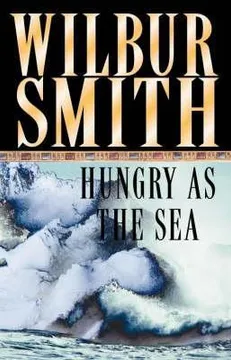


Plot Summary
A Prince Without a Fleet
Nicholas Berg comes aboard the Warlock exhausted, newly divorced, separated from his son, and stripped of the shipping empire he built. After Christy Marine’s founder died, Duncan Alexander displaced him; Berg accepted the troubled towage and salvage subsidiary rather than surrender his remaining stake.
The Warlock is his own design, but its former captain, Mackintosh, has just been killed when a tow cable snapped. First Officer David Allen and Chief Engineer Vin Baker watch their new owner carefully, while the flamboyant cook Angel tries to feed him back to health.
Berg announces that the company will operate independently as Ocean Salvage. He has two tugs, serious debt, and little room for failure. Then a coded distress call arrives from the Antarctic.
Berg’s return to the sea is not a simple homecoming. He has chosen the Warlock because it is the one place where his competence still has a material form: steel he designed, a crew he must lead, and work whose results cannot be disguised by corporate maneuvering. His grief remains private, but the ship makes withdrawal impossible. The debt attached to Ocean Salvage also turns every decision into a wager on whether his professional instincts can outlast his personal defeat.
The Antarctic Distress Call
The radio officer, Spiers, recognizes the distress call as coming from Golden Adventurer, a Christy Marine cruise ship trapped in Antarctic ice. Berg deciphers the company’s coded messages and learns that the liner has suffered underwater damage, lost power, and is taking on water.
Christy Marine orders the captain not to hire a salvager without permission, protecting its own insurance interests rather than putting rescue first. Berg asks his Bermuda agent, Bach Wackie, where the competing tugs are.
Most are too far away, but Jules Levoisin’s French tug, La Mouette, may be racing south. The Esso oil-rig tow would bring Ocean Salvage money it badly needs. Berg knows abandoning it could ruin his new company, but orders the Warlock out of Cape Town anyway.
The emergency forces Berg to choose between solvency and the kind of judgment that made him a master mariner. Corporate authority treats rescue as a contract to be controlled; Berg sees that the delay itself may cost lives. His decision is neither pure altruism nor pure ambition, since a successful salvage could save his company. The novel establishes this entanglement early: ethical action and financial self-interest often point in the same direction, making motive harder to separate than the choice itself.
The Race Against Levoisin
Warlock races through immense Southern Ocean seas, but Baker limits the engines to protect them from damage. Berg confronts the chief engineer, and their argument becomes a fight in the engine room. Baker finally agrees to raise power, not because Berg has won by rank, but because he has explained the race against Levoisin.
As the liner’s position worsens, the wind and current push it toward Cape Alarm, where grounding could kill passengers who cannot survive the Antarctic cold. Berg keeps radio silence to hide Warlock’s position from La Mouette.
When Levoisin finally broadcasts, he claims to be ahead. Berg recognizes the Frenchman’s misleading position report and calculates that Warlock still has the advantage. The race now depends on reaching the liner before it is abandoned.
Berg’s authority becomes credible through conflict rather than ceremony. Baker’s resistance is grounded in engineering responsibility, while Berg’s impatience comes from the lives and financial risks converging ahead. Their fight exposes the danger in treating command as unquestioned obedience, but their later cooperation shows how quickly blunt confrontation can establish trust among people who must rely on one another. The ocean’s force makes the argument consequential: a wrong power setting can be as dangerous as a wrong moral decision.
The Raft Outside the Convoy
Golden Adventurer’s captain, Basil Reilly, prepares to abandon ship as the liner drifts toward shore. The evacuation turns disastrous when the sea-anchor rope parts: one lifeboat is smashed against the hull, another is wrecked, and crew members are swept away. Among the passengers is Samantha Silver, a marine biologist and expedition guide who keeps her assigned raft’s occupants moving and warm.
The raft breaks free during the tow. Warlock intercepts its faint emergency signal, but it lies far off the direct route to the liner. Berg’s officers protest that Levoisin may reach the prize first. Berg orders the course changed to search for the raft, accepting the risk to his salvage claim because its occupants may still be alive.
This decision gives the novel’s maritime code a practical test. Berg cannot honor the principle of saving lives at sea without surrendering an advantage he has spent days protecting. The choice also shifts the crew’s perception of him: his earlier silence looked like cold calculation, but here he accepts a measurable loss to answer a distress signal. Samantha’s leadership inside the raft mirrors Berg’s command on the tug, though neither knows the other exists yet.
The Iceberg Takes Its Due
Warlock searches through fog and towering ice while the raft’s occupants weaken from cold, hunger, and seasickness. Samantha starts the emergency beacon and keeps trying to rouse the passengers, but several die before the tug finds her. When Warlock’s foghorn reaches the raft, the sound triggers a fracture in the huge iceberg beside it.
A mountain of ice breaks loose and crushes the raft. Berg spots a red life jacket beneath the broken ice and dives into freezing water to reach its wearer. He and Allen haul the limp figure aboard. Angel cuts away the soaked clothing and discovers that the apparent young man is Samantha. She survives, but she is the only person from her raft to be recovered alive.
The rescue makes chance as visible as courage. Berg’s decision brings Warlock to the raft, but the same environment that guides the search destroys it at the last moment. His dive is a response to an individual body within a catastrophe too large to master. Samantha’s survival is not framed as proof that effort conquers nature; it is a narrow escape made possible by attention, physical risk, and a signal that nearly fails.
The Wound Beneath the Water
Warlock reaches Golden Adventurer after Levoisin has beaten it to the scene, but the French tug refuses the dangerous salvage terms once it sees the liner hard aground. Berg secures the contract with Christy Marine and begins work before the storm worsens. He and Baker dive beneath the ice to inspect a long gash in the liner’s hull and the flooded engine room.
The damage is too extensive for cement, so Berg plans to haul a padded collision mat into place from inside the ship. The first dive nearly kills Baker when his breathing gear tears and a current drags him beneath the hull. Berg releases his own weight belt, saves Baker, and loses their guide line in the process.
The divers’ ordeal converts professional knowledge into bodily vulnerability. Berg’s plan depends on a collision mat, messenger lines, and exact timing, but none of those tools protects him when Baker’s equipment fails. Saving Baker costs Berg the simple route back to the surface and requires improvisation under ice. Their partnership becomes more than a clash of temperaments: Berg risks himself for the engineer whose judgment he had challenged, while Baker’s technical skill remains essential to the work.
Six Million for the Rescue
Berg threads a wire through Golden Adventurer’s flooded engine room and out through the hull, then uses it to pull the heavy collision mat over the gash. Baker restores power, and his pumps empty the liner while Allen’s ground tackle holds it against the weather. Warlock then hauls the ship off the pebble beach in a hurricane, steering it past Cape Alarm’s rocks.
Reilly brings the survivors to safety at Shackleton Bay, though the evacuation and lost raft have cost lives. After the liner is towed to Cape Town and repaired enough for the trip home, Lloyd’s awards Ocean Salvage six million dollars. The judgment gives Berg money to meet his debts and keep his second tug, Sea Witch, moving toward completion.
The award measures more than the dramatic pull from the beach. It recognizes the voyage made without guaranteed payment, the repair undertaken in dangerous conditions, and the people carried away from the Antarctic coast. Yet financial survival does not erase the losses of the evacuation. Berg’s success is therefore substantial but not clean: his business has a future, while the sea has taken crew members and passengers who cannot be included in any settlement.
A Wave at Cape St. Francis
Before Berg leaves Cape Town, Samantha catches him at the airport and asks him not to disappear without saying goodbye. He takes her to Cape St. Francis, where they surf together and begin a passionate relationship shaped by their shared attention to the sea. Berg then travels to France and visits the St. Nazaire shipyard.
There he sees Golden Dawn, the enormous tanker he originally designed, and discovers that Duncan has reduced its safety systems to cut costs. Berg’s private happiness is now set beside a public danger, and Samantha’s scientific work gives her a way to understand what that danger could mean. Their relationship deepens, but his business and his unresolved history with Chantelle keep pulling him away.
Samantha offers Berg a form of attention his professional life has trained him to postpone. Their connection is built not only on attraction but on a shared vocabulary of waves, animals, and environmental damage. The contrast with Golden Dawn is telling: the surf rewards sensitivity to changing conditions, while Duncan’s tanker design tries to force efficiency by stripping away safeguards. Berg’s new intimacy does not remove his old obligations; it makes the cost of returning to them more visible.
Golden Dawn’s Missing Safeguards
In London, Chantelle asks Berg for help because Duncan controls her Christy Marine voting shares and the family trust. Berg hires financial investigator Claud Lazarus, whose findings show that Duncan has pledged company stock, stretched insurance cover, and built Golden Dawn with fewer safety systems than Berg designed.
The ship has one propeller, one boiler, and pod tanks that cannot propel themselves. Lazarus also uncovers its ten-year contract to carry cadmium-rich crude from El Barras to a refinery in Galveston.
Samantha explains that a spill could poison marine life and people across the Gulf Stream. Berg begins warning lenders and insurers, while Samantha and ocean scientist Tom Parker try to make environmental groups and officials take the danger seriously.
The threat expands from corporate misconduct to ecological exposure. Duncan’s cost-cutting is not merely a private financial risk, because the cargo connects the ship’s fragile engineering to coastlines, fisheries, and communities far from the boardroom. Lazarus provides evidence, while Samantha translates chemical concentration into biological consequence. Together their knowledge reveals how technical design, finance, and environmental harm are bound into one system, even as each institution tries to treat its own part as separate.
The Lie at Miami
After Berg agrees to help Chantelle, she draws him into an intimate reunion at Cap Ferrat. He regrets it, but Samantha hears from Chantelle that she and Berg are remarrying and that his earlier relationship with her was only a passing distraction. Hurt, Samantha leaves on research work without explaining herself.
Berg later reaches her in Miami, admits that he loves her, and wins a guarded reconciliation. He tells her about the danger to Golden Dawn, then promises to return after he handles the crisis. Meanwhile, he delays selling Ocean Salvage to a group of Gulf investors so he can keep both tugs under his control. The choice costs him a lucrative deal, but leaves him able to respond if the tanker fails.
Berg’s affair with Chantelle exposes the difference between desire and loyalty in a way neither can easily contain. Samantha’s departure is not a simple romantic misunderstanding: it follows a real breach that Berg cannot undo by insisting that his feelings are sincere. Their reconciliation becomes credible only when he accepts that love does not erase the harm. His decision to delay the sale also gives his private commitments a practical consequence, preserving the resources he may need to protect Peter and the tanker’s threatened surroundings.
Clams Sound the Alarm
Samantha’s lab uses clam heartbeats as sensitive indicators of pollution, letting her demonstrate how chemicals such as cadmium affect marine life. She and Tom Parker organize opposition to Golden Dawn’s cargo, but officials and broadcasters give the issue little attention. Their team takes the university research vessel Tricky Dicky into the Florida Straits to confront the tanker and publicize its cargo.
Samantha’s plan is to force Golden Dawn to slow down and face the environmental protest. On the tanker, Captain Randle sees the small vessel too late to avoid it easily. The protest has brought the danger into view, but it has also placed Samantha and her colleagues directly in the path of a ship too large to maneuver quickly.
Samantha’s scientific method gives evidence a form that can travel beyond specialist circles, but evidence alone does not command public attention. The protest is partly a response to that failure: the researchers make themselves visible where the cargo is moving. Their action is brave, but its physical risk is real, and the size difference between Tricky Dicky and Golden Dawn turns symbolic confrontation into a seamanship emergency. The novel neither dismisses activism nor romanticizes it as safe.
The Dicky Blocks the Giant
As Tricky Dicky turns across Golden Dawn’s path, its throttle linkage snaps, leaving the small boat unable to accelerate away. Samantha climbs into the engine room and operates the controls by hand, restarting the diesel while the tanker bears down. Captain Randle orders an emergency maneuver to avoid crushing the protesters.
The sudden reversal puts extreme strain on Golden Dawn’s already damaged main shaft, which breaks; the tanker loses its propeller and drifts without control. Tricky Dicky is battered by the passing hull and wake, but its crew survives. Golden Dawn’s own engineer is killed by the catastrophic shaft failure. The accident confirms that Duncan’s cheaper design cannot withstand the demands he has imposed on it.
The collision links protest and engineering failure without making the activists the cause of the tanker’s deeper weakness. Samantha’s quick intervention keeps Tricky Dicky moving, while Randle’s attempt to avoid killing its crew triggers a system already compromised by an overheated bearing and inadequate backup machinery. Responsibility is distributed, but not evenly: Duncan’s decisions created the vulnerability, and the emergency merely exposed it. The episode turns abstract safety warnings into immediate bodies, damage, and lost control.
Hurricane Lorna Turns
Berg learns that Golden Dawn has broken down near Bermuda and that Hurricane Lorna is changing course toward the Florida Straits. He cancels a planned sale of Ocean Salvage and orders the Warlock to run at high power, while Jules brings Sea Witch toward the same waters.
Duncan initially offers daily hire instead of a no-cure-no-pay salvage contract. Berg pressures the United States Coast Guard, which warns Duncan that an uncontrolled tanker carrying toxic crude may be seized. Duncan finally accepts Berg’s contract.
Warlock reaches Golden Dawn as the hurricane closes in. Berg boards the tanker, where he finds his son Peter and Chantelle, then orders passengers and nonessential crew transferred to the tug before the worst of the storm arrives.
Berg’s decision to keep his tugs is a direct rejection of a safer financial future in favor of responsibility he cannot delegate. The Coast Guard’s intervention shows that the danger has become public, but the agency’s leverage depends on the same facts Berg has been assembling: cargo, location, and loss of control. Once aboard, Berg’s motives converge. He is salvage master, father, and the person best able to judge the ship’s condition, so the roles reinforce rather than compete with one another.
Three Tanks Against the Storm
With Peter and Chantelle safely transferred, Berg keeps Captain Randle, a few seamen, and Duncan aboard Golden Dawn. Warlock tries to tow the crippled tanker away from shore, but the hurricane snaps the main cable. Randle is killed when flying glass breaks through the bridge, and Berg realizes the tanker’s weakened hull may split.
During a brief calm in the storm’s eye, Sea Witch and Warlock reappear. Berg orders them to detach the four cargo pods before the wind returns. Warlock takes the two port tanks in tandem; Sea Witch secures one starboard tank. The fourth tank remains trapped in the collapsing frame, its crude leaking into the water. Berg and his crew race to sever the connection before the hurricane reaches them again.
The eye offers a pause, not safety. Berg uses it as working time, converting a damaged ship into separate cargo units that the stronger hulls of his tugs might still control. His plan is a response to the weakness Duncan built into Golden Dawn: the central structure cannot survive the storm, but the pods may be saved if detached quickly. The deaths aboard the tanker make the urgency more than an engineering puzzle. Every minute of delay narrows the difference between recoverable cargo and an uncontrolled spill.
The Fireball at Sea
As the final starboard tank jams in Golden Dawn’s twisting frame, one seaman is crushed when the deck shears. Berg cuts the tandem tow so Sea Witch can escape with the tank already secured. Duncan, refusing to accept the loss of his ship, lights a distress flare and throws it onto the leaking crude. The oil catches; the growing fire forces Berg to leap to Sea Witch while Duncan remains aboard and dies in the blaze.
Heat turns the ruptured cargo into a massive fireball that consumes the tanker and disrupts Hurricane Lorna’s circulation. The tugs survive with three tanks, carrying most of the cargo away from the storm. A quarter-million tons burn, and the smoke contaminates land, but emergency measures prevent human deaths.
Duncan’s final act is both an attempt to control the ending and a refusal to surrender control at all. He has spent the novel treating risk as something that can be priced, shifted, or hidden; the flare makes that logic physically irreversible. Berg’s counterchoice is to save the tanks he can and cut the connection that would drag Sea Witch down with the wreck. The fireball prevents a larger ocean-wide disaster, but its toxic fallout makes the rescue a grim reduction of harm, not a clean victory.
A Different Kind of Fleet
In Galveston, Sea Witch delivers its tank and Warlock, under David Allen’s command, has already brought in the two port tanks. The surviving cargo is worth tens of millions, securing Ocean Salvage’s future. Berg has not yet signed away the company to the Gulf investors.
He has also accepted Tom Parker’s invitation to join the University of Miami as an ocean-science associate, bringing practical maritime experience to environmental work. The fireball’s pollution has killed livestock across parts of Florida, a consequence the book does not soften, but emergency action has prevented human deaths.
Berg’s future now includes both the salvage business and Samantha’s scientific campaign. His final ambition is no longer only to build a bigger fleet, but to influence how ships and cargo are handled.
The resolution does not suggest that one successful rescue can repair the ocean or cancel the costs of industrial risk. Berg’s action has limited the scale of the disaster, while the animal losses and inland contamination remain. His new academic role gives his maritime knowledge a different use: instead of merely recovering value after failure, he can argue for standards before ships sail. The ending joins personal and professional change without making either a substitute for the other. Samantha’s work and Berg’s experience become complementary forms of stewardship.
Analysis
Hungry as the Sea places its adventure plot inside a contest over who is allowed to define risk. Berg and Duncan are both ambitious men, and both understand that ships are built from calculations as much as steel. Their difference is not that one seeks profit and the other does not. Berg also needs money, competes fiercely, and wants recognition for his designs. The distinction emerges in what each is willing to treat as expendable. Duncan assumes that engineering safeguards, crew welfare, and environmental protection can be discounted when the projected return is large enough. Berg’s repeated choices show that some costs cannot be transferred to insurers, shareholders, or distant coastlines without moral consequence.
The novel’s ships make this argument concrete. Golden Dawn’s defects are not abstractions; they become a failed bearing, a lost propeller, a hull breaking under storm pressure, and toxic cargo escaping into the sea. By contrast, the Warlock’s and Sea Witch’s robust systems give their crews a chance to improvise without making them invulnerable. Expertise matters, but it works only when design respects the conditions it must meet. The sea is neither moral judge nor scenic backdrop. It is the physical reality that exposes the difference between a sound plan and a profitable fantasy.
Berg’s private life follows a related movement. After losing his company and family, he initially treats self-control as protection. Samantha challenges that posture through her scientific curiosity, her direct emotional presence, and her refusal to give up her own vocation. His affair with Chantelle shows that professional success cannot by itself repair old attachments or undo harm. Reconciliation requires Berg to accept that affection does not erase betrayal. By the end, his identity widens beyond captain and owner: he chooses to bring practical experience into environmental research. The conclusion offers no clean absolution. Three tanks are saved, a larger catastrophe is limited, and pollution still kills animals. Responsibility begins not with claiming victory, but with refusing to call reduced damage harmless.
Review Summary
Hungry as the Sea receives mixed reviews, with an average rating of 4.01/5. Readers praise Smith's vivid descriptions of maritime adventures, salvage operations, and environmental concerns. The book's fast-paced action and technical details are highlights for many. Some criticize the romantic subplots and character development as stereotypical or unrealistic. The novel's portrayal of sea rescues and storms is particularly commended, though some find the later parts of the story less engaging or overly dramatic.
Characters
Nicholas Berg
Exiled salvage captainA gifted shipbuilder and salvage master, Berg has spent much of his life measuring himself through difficult work and visible achievement. Losing Christy Marine, his marriage, and daily contact with his son leaves him depleted, but the Warlock gives his abilities somewhere to go. He is controlled, strategic, and often emotionally guarded; the people around him can mistake that reserve for indifference. His decisions reveal a more complicated man: ambition matters deeply to him, yet he will risk money and professional advantage to answer a distress call or protect lives. The sea is both his livelihood and his clearest moral landscape, where judgment has immediate consequences.
Samantha Silver
Marine scientist and guideA young marine biologist with a doctorate and a research fellowship, Samantha guides passengers through the Antarctic and studies the health of the oceans. Her warmth makes her a source of courage to frightened people, but she is no fragile optimist: she can lead a raft, challenge a captain, and defend her research with conviction. Her affection for Berg grows alongside her insistence on keeping her own scientific life. Samantha’s work makes environmental damage legible through evidence, while her emotional openness exposes how easily devotion can become vulnerability. She brings curiosity and moral urgency into a world dominated by commercial calculations.
Duncan Alexander
Ruthless corporate tacticianChristy Marine’s chairman, Duncan is a polished financier who believes that swift decisions and reduced costs can turn a failing market into a profitable opportunity. He is intelligent, persuasive, and willing to take extraordinary risks, but his confidence encourages him to treat human lives and environmental hazards as acceptable entries in a balance sheet. His rivalry with Berg is personal as well as corporate, and he is especially sensitive to comparison with the man he displaced. Duncan’s capacity for charm makes his ruthlessness harder to see until the consequences of his choices become impossible to contain.
Chantelle Alexander
Heiress caught between loyaltiesArthur Christy’s daughter, Berg’s former wife, and Duncan’s wife, Chantelle is beautiful, socially assured, and accustomed to having influence. She is capable of real tenderness, particularly toward her son, but has also used charm and emotional intimacy to pursue what she wants. Her trust in Duncan’s control of Christy Marine places the family’s wealth and Peter’s future at risk. Chantelle’s conflict is not simply romantic: she must confront the consequences of surrendering authority over the company she inherited. Her attachment to Berg remains potent, complicating every practical request she makes of him.
Peter Berg
Seafarer’s lonely sonNicholas and Chantelle’s twelve-year-old son, Peter is formal, observant, and already fascinated by ships. Restricted visits with his father leave affection entangled with self-conscious manners; he wants closeness but has learned not to assume it. On Golden Dawn, he studies its machinery and safety systems with an earnestness that earns the crew’s respect. His presence gives Berg’s conflict a personal urgency, while his own interest in seamanship links him to his father without reducing him to a symbol. Peter is trying to find a place in a family divided by adult decisions.
Jules Levoisin
Veteran salvage rivalThe French master of La Mouette, Jules taught Berg much of what he knows about salvage work. He is competitive, theatrical, and shrewd about contracts, but the rivalry between the two men rests on genuine affection and professional respect. Jules understands both the hazards of the sea and the psychology of a distressed ship’s captain. He is quick to recognize a worthy opponent and does not confuse losing a contract with losing a friendship.
David Allen
Earnest first officerThe Warlock’s First Officer is experienced despite his youthful appearance. Allen begins cautiously around Berg, but his competence becomes clear during the race south and the difficult handling of Golden Adventurer. He will question a decision when he believes lives are at stake, then carry it out once Berg has made his judgment. His mix of conscience, discipline, and growing confidence makes him a natural leader among the younger officers.
Vin Baker
Combative chief engineerWarlock’s Australian chief engineer, Baker is protective of his engines and unimpressed by authority that ignores mechanical limits. His bluntness and physical toughness initially bring him into conflict with Berg, but his engineering judgment proves indispensable. Baker works best when treated as a skilled professional rather than a subordinate to be overruled. Beneath the insults and jokes, he is loyal to his crew and proud of a machine that must survive conditions no ordinary ship can endure.
Angel
Cook and shipboard medicWarlock’s flamboyant cook has theatrical manners, a gift for feeding tired sailors, and enough medical training to treat injuries aboard ship. Angel sees through the crew’s bravado and often gives practical care in a disarming style. He tends to both Baker and Berg after their fight and later helps treat those rescued from the sea. His warmth gives the ship a domestic center amid machinery, cold, and danger.
Spiers, called the Trog
Reclusive radio operatorThe Warlock’s solitary radio officer is a master of communications who can monitor several frequencies and decode the company signals Berg designed. His cave-like radio room suits his antisocial habits, but his work repeatedly supplies the information on which the ship’s decisions depend. Spiers is not a conventional team player, yet his concentration and technical skill make him essential whenever distance, secrecy, or weather obscures the truth.
Basil Reilly
Veteran liner captainThe experienced master of Golden Adventurer is responsible for hundreds of passengers and crew in conditions that steadily strip away the ship’s comforts and options. Reilly is practical, humane, and willing to make painful decisions when the vessel can no longer be saved by its own crew. His preparation for evacuation reflects the discipline of a captain who knows that morale and logistics can matter as much as courage.
Captain Randle
Ambitious tanker masterRandle commands Golden Dawn and has been chosen by Duncan for his specialized tanker training and loyalty. He is competent and attentive to his ship, but his authority is repeatedly constrained by the chairman’s commercial demands. When emergencies arrive, Randle must decide how much of his own judgment he can exercise against an owner determined to meet a deadline. His position exposes the tension between a captain’s responsibility for a vessel and a company’s power over it.
Tom Parker
Ocean scientist and mentorA senior marine scientist at the University of Miami, Parker studies ocean life and helps Samantha turn research into environmental advocacy. He is energetic, blunt, and wary of rhetoric that might undermine a sound argument. Parker values practical action but also insists on defining what a protest can realistically achieve. His confidence in Berg rests on more than reputation: he sees a businessman who understands shipping and is willing to apply that knowledge to environmental problems.
Charles Gras
Shipyard engineer and confidantA senior engineer at the St. Nazaire shipyard, Gras knows Berg’s original design for Golden Dawn and is willing to show him how the completed vessel differs from it. His technical candor places him in a difficult position, but he values sound engineering over corporate convenience. Gras’s information helps Berg understand that Duncan’s financial restructuring has altered the ship’s safety, not merely its appearance.
Claud Lazarus
Financial investigatorA discreet specialist in financial and industrial investigations, Lazarus can trace share movements, insurance arrangements, and corporate cash flows with unusual precision. He is physically frail and socially eccentric, but his memory and access to records make him formidable. Lazarus gives Berg a map of Christy Marine’s hidden risks, though the information requires careful interpretation rather than blind trust.
Bernard Wackie
Pragmatic shipping agentBerg’s Bermuda-based agent coordinates contracts, vessel positions, communications, and business decisions across oceans. Wackie is alert to commercial realities and willing to challenge Berg when a plan threatens the company’s finances. His operational network helps turn Berg’s instinct into action, especially when a ship’s location or condition must be inferred from scattered reports.
James Teacher
Hard-bargaining maritime lawyerBerg’s London solicitor specializes in maritime law and knows how to turn a salvage claim into leverage. Teacher is shrewd and persistent, managing negotiations with Christy Marine and the Gulf investors. His legal work gives Berg options that seamanship alone cannot provide, though his professional fees remind Berg that even victory has a cost.
Mackintosh
Warlock’s former captainThe captain who dies in a tow-cable accident before Berg arrives, Mackintosh is remembered by his crew as a capable tug master and a friend. His death creates the vacancy that brings Berg aboard and makes the dangers of salvage work immediate from the opening pages.
Ken
Golden Adventurer officerA young officer aboard Golden Adventurer, Ken is attentive to Samantha and has been pursuing a closer relationship with her. During the evacuation, he helps passengers on the exposed deck, showing the kindness and nerve demanded of the ship’s crew.
Hank Petersen
Tuna researcher and helmsmanA University of Miami researcher studying bluefin tuna, Petersen joins Samantha’s environmental action aboard Tricky Dicky. His scientific expertise does not make him an experienced ship handler, and the protest forces him into a far more dangerous role than his fieldwork normally requires.
Sally-Anne
Researcher and activistOne of Samantha’s fellow researchers, Sally-Anne helps organize the Florida Straits protest and supports the team’s public campaign. She is practical and committed, sharing Samantha’s determination while recognizing the danger when their small vessel faces Golden Dawn.
Plot Devices
Lloyd’s Open Form
Salvage with uncertain paymentThis no-cure-no-pay contract lets a salvager undertake a rescue without a fixed fee, with compensation later determined by the value recovered and the danger faced. The contract gives Berg a way to compete with La Mouette and later forces Christy Marine to accept his terms. It also makes the physical rescue inseparable from a financial contest: success could save Ocean Salvage, while failure could leave Berg with the cost of a long voyage and no award.
Warlock and Sea Witch
Tools built for impossible seasBerg’s powerful salvage tugs carry specialized winches, cable systems, fire equipment, and duplicate controls that allow work from different parts of the vessel. Their speed and maneuverability shape the race to Golden Adventurer, while the heavier engines and tug handling make it possible to tow the detached cargo tanks. The ships are not just settings for action: their design embodies Berg’s belief that a vessel should be built to meet the sea rather than rely on luck.
Golden Dawn’s cargo and design
A corporate shortcut becomes ecological riskGolden Dawn is built to carry four immense cargo pods, but Duncan cuts safety systems, reduces propulsion, and leaves the pods dependent on tugs. Its first cargo is cadmium-rich crude, a poison that can be carried far through the ocean if a tank ruptures. Samantha’s clam experiments give the danger a biological measure, while Berg’s inspection of the ship exposes the connection between the risky design and Duncan’s financial strategy.
Ice, current, and Hurricane Lorna
Nature sets the rescue’s limitsThe Antarctic icefields, Cape Alarm’s shore, the Gulf Stream, and Hurricane Lorna repeatedly alter what the characters can see, reach, or control. Currents push damaged ships toward land; fog hides vessels and signals; ice can crush a raft or puncture a hull. Later, Lorna drives Golden Dawn toward the Florida coast and overwhelms the tow. The changing weather is not a simple antagonist. It makes skill necessary while reminding the sailors that skill cannot guarantee mastery.
Clam heartbeat tests
Pollution made visibleSamantha measures the heartbeat of clams exposed to small concentrations of contaminants. The altered rhythms provide an inexpensive, sensitive way to detect pollution that conventional laboratory equipment might miss or make prohibitively costly to monitor. The experiments connect scientific observation to public argument, helping Samantha explain the danger of cadmium-rich crude. The device also gives her an independent source of authority: she does not rely solely on Berg’s commercial knowledge or on claims made by oil companies.


Download PDF
Download EPUB
.epub digital book format is ideal for reading ebooks on phones, tablets, and e-readers.








