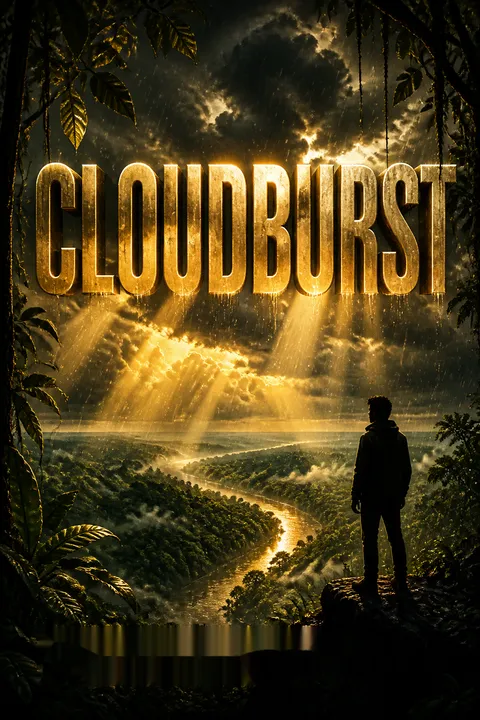


Plot Summary
Turbulence Over the Rainforest
Fourteen-year-old Jack Courtney is flying to the Democratic Republic of Congo with his parents, Janine and Nicholas, and his lifelong friend Amelia. His parents hope to influence a coming vote that could protect rainforest from mining; Jack is more excited about seeing gorillas.
A storm diverts their airliner hundreds of kilometres from Kinshasa, and at the unfamiliar airport a thief snatches Nicholas’s briefcase, taking their passports and money with it.
Jack remembers the banned rooftop tennis-ball game that honed his aim, then ricochets a golf ball off a terminal wall into the motorcyclist’s face. The thief crashes and drops the case. Jack saves the family’s travel documents, but his father’s grateful praise makes him uncomfortable rather than proud.
Jack’s first decisive act is both skillful and accidental, a pattern that complicates his confidence from the outset. He can respond brilliantly under pressure, yet he does not experience success as uncomplicated proof of his worth. His parents’ conservation mission gives the trip moral stakes, while his own interest in wildlife remains tentative. The airport rescue briefly places Jack in the role of protector, but his unease around Nicholas signals an older wound beneath the adventure. The story begins by making competence visible before explaining why Jack mistrusts it.
The Race Mark Never Finished
Jack’s discomfort with his father’s praise comes from a race four years earlier. At ten, he challenged his older brother Mark to run home after winning races at school. Mark had always been talented but generous, often letting Jack win; that day he agreed to race in earnest. As they crossed the road, a speeding Mini struck a parked car, which crushed Mark against a garden wall.
Jack reached his brother before their mother, but Mark died. His parents tried counselling, reassurance, and ordinary kindness, yet Jack decided the dare had caused the accident. Nicholas’s attempts to forgive him only deepened the boy’s certainty that he had done something unforgivable, leaving father and son unable to meet each other openly.
The accident establishes Jack’s private logic: if he can identify the moment that caused catastrophe, he can treat guilt as a form of control. His blame is emotionally coherent, though not objectively justified, because a child often prefers self-accusation to helplessness. Nicholas’s gentle efforts become painful precisely because they imply forgiveness, a verdict Jack refuses to accept. This history also shapes his response to later danger. Jack does not simply want to be useful; he is driven to prevent another moment in which someone he loves is harmed while he stands nearby.
Caleb Joins the Safari
Pilot Joseph Kahora gets the family from the diverted airport to Kinshasa, where Jack discovers that Xander, his easygoing boarding-school friend, has arrived from Nigeria. Janine and Nicholas leave to lobby influential figures, while the three teenagers are meant to prepare for their safari.
At dinner, Nicholas’s brother Langdon dismisses their conservation campaign and defends his mining company as responsible. His son Caleb, older than Jack and quick to sound worldly, argues that corruption makes environmental rules useless.
Since Caleb’s work placement has not yet begun, Langdon arranges for him to join the safari. Jack dislikes Caleb’s condescension, especially when Caleb competes for Amelia’s attention, but agrees to the plan because refusing would hurt his mother.
The family conflict gives the ecological stakes a personal shape. Janine and Nicholas believe legislation can restrain exploitation; Langdon presents commercial self-regulation as the practical alternative, while Caleb borrows his father’s certainty to perform adulthood. Jack’s irritation with Caleb is not merely rivalry. Caleb’s confidence exposes Jack’s own hesitation, particularly around his friends and his parents. The safari is designed as an education in what is at risk, but it also becomes an involuntary test of authority: the teenagers must decide whose judgment deserves trust when parental power, commercial interest, and local knowledge disagree.
Carols Among the Chimpanzees
In Goma, safari guide Innocent introduces Jack and his friends to his daughter Patience, a confident young tracker, and leads them into the forest to find chimpanzees. They watch a troop, including the alpha male Bingo, until armed poachers emerge and take Innocent’s ranger radio.
As Innocent tries to negotiate, the poachers notice the frightened teenagers and the exchange grows more dangerous. Jack cannot fight or flee without abandoning his friends, so he starts singing Christmas carols in an exaggerated, ridiculous manner.
Xander and then Amelia join him. Their unexpected performance breaks the poachers’ threatening composure; the leader lets the group pass. Once safe, Caleb argues that the poachers should be tracked rather than simply reported, and Jack agrees to go after them with Innocent.
The carol episode turns Jack’s apparent foolishness into a form of tactical imagination. He cannot overpower armed adults, so he changes the emotional script of the encounter, creating a moment in which the poachers can retreat without losing face. The tactic is risky, not a universal lesson about confronting violence, but it demonstrates Jack’s instinct for improvisation when formal power offers no protection. The scene also distinguishes kinds of courage: Innocent manages danger through experience, Xander supports Jack, and Caleb seeks a more dramatic opportunity to lead. Their competing responses foreshadow the costs of confusing decisiveness with judgment.
A Snare Turns the Trail
Innocent reluctantly follows the poachers with Jack and Caleb, while Marcel, the armed former soldier and expert tracker, escorts Xander, Amelia, and Patience back toward camp. The two groups reach a distant poacher camp near nightfall; Innocent records its position so rangers can intercept the hunters. He and the boys retreat through the dark and spend a miserable night beneath a makeshift plastic shelter.
At dawn, Caleb rushes ahead in the wrong direction and steps into a snare. Jack cuts the rope with Caleb’s machete, freeing him. Back at camp, Innocent recommends ending the trek, but Caleb presses to continue to the gorillas. Though exhausted and uneasy, Jack accepts, and the group sets out the next morning.
The snare makes the poachers’ threat concrete: traps injure indiscriminately, and the forest’s danger does not depend on a face-to-face confrontation. Jack’s rescue of Caleb briefly reverses their rivalry, but Caleb cannot receive help without feeling diminished, so gratitude curdles into defensiveness. Jack, meanwhile, keeps choosing action partly because he wants to prove that he is not a passive witness to harm. His decision to continue is less a clear-eyed risk assessment than a mixture of conviction, fatigue, and pressure. The adventure repeatedly tests whether moral urgency can be separated from the desire to appear brave.
Spenser Charges the Visitors
The group finds a gorilla family without its silverback, Spenser, and learns that the infant Redmond is badly injured. When Spenser charges to defend his troop, Innocent tries to pull Caleb out of his path. Xander is knocked down and breaks his leg; Innocent suffers a deep cut to his neck and dies despite Jack’s efforts to stop the bleeding.
Caleb insists the charge was not supposed to become dangerous, but Jack finds Caleb’s bloodied machete and understands that its blade caused Innocent’s wound as the guide intervened. Jack quietly cleans the blade and returns it to Caleb rather than expose him. The group leaves Patience beside her father until rangers arrive, carrying the injured Xander back through the forest.
The attack destroys the comforting distinction between good intentions and harmless consequences. Caleb believes he is helping the infant, but his insistence on approaching overrides Innocent’s knowledge and puts everyone at risk. The silverback is defending his family, not acting as a villain, and the humans’ tragedy comes from entering a situation they cannot control. Jack’s decision to conceal the machete’s role reveals an uneasy compassion: he sees Caleb’s guilt, but also repeats his own old habit of taking responsibility for another person’s actions. Patience’s grief makes the cost of their excursion impossible to reduce to a lesson or a statistic.
The Empty Hotel Promise
Marcel, Jack, and Amelia get Xander to a hospital in Goma, where doctors confirm a broken tibia and fit him with a cast. Back in Kinshasa, Langdon meets them instead of Jack’s parents. He says Janine and Nicholas have gone east to inspect mining operations, then keeps the teenagers at the hotel while he handles business. When he later admits they never reached his mine, Jack insists on reporting them missing.
Detective Hubert takes the report and promises to search, though Amelia worries that Langdon has steered the police toward a weak response. She and Xander persuade Jack that waiting is not enough, but before they can act, a helmeted courier delivers an envelope addressed to him. Inside is a lock of Janine’s hair and a ransom demand.
The hotel becomes a place where apparent safety intensifies helplessness. Jack is surrounded by guards, phones, and adults with authority, yet none of those systems can tell him where his parents are. Langdon’s calm explanations encourage delay, while Amelia’s scrutiny and Xander’s practical doubts push Jack to test what he is told. The ransom note changes absence into deliberate coercion: the hair makes the threat intimate, transforming Janine’s body into evidence addressed to her son. Jack must now decide whether obedience is protection or another way of surrendering agency.
Hair Beneath Leopold’s Horse
The note demands 75,000 dollars and warns Jack not to contact the police again. He calls the kidnappers before informing Langdon, who argues that paying would invite further demands. The caller proves the threat is real by letting Nicholas speak briefly; Jack hears his father urge him to follow instructions.
Langdon asks for time to investigate, but Xander persuades him to make the money available so the family retains a choice. On Friday, Jack leaves an envelope beneath Janine’s headscarf at the foot of Leopold’s statue in the national museum.
Langdon and the teenagers return to the hotel expecting his parents. They do not arrive. A lead from the safari guide Marcel points instead to Yannick Mugalia, the brother of their dead guide Innocent.
The ransom sequence exposes a clash between abstract strategy and immediate attachment. Langdon treats payment as a precedent that could weaken his position; Jack hears his father’s fear and experiences the demand as a concrete chance to save him. Xander’s persuasion does not settle the moral question, but it prevents Langdon’s principle from eliminating the family’s options. The failed exchange deepens Jack’s distrust of assurances and makes local knowledge more valuable than institutional reassurance. The connection to Yannick also links the missing parents to the earlier safari, so Innocent’s death continues to shape events beyond the forest.
Marcel’s Road East
Amelia traces Yannick’s travel office, but its neighbour explains that the brothers worked together and that Yannick has gone to Goma after Innocent’s death. Marcel agrees to help the teenagers search east, leading Jack and Amelia by motorbike toward Langdon’s Canonhead complex.
A guard intercepts them at the mine and locks them inside a metal shipping container. Jack spots Caleb’s distinctive green boots through a peephole, and Amelia reaches him by phone. Caleb returns with help and frees them.
He then explains that Canonhead processes minerals brought in from smaller, unauthorized mines, including sites inside protected land. Locals carry ore in by vehicle or on foot, while the central operation makes the supply appear legitimate. Caleb offers to help find Jack’s parents and expose the truth.
Caleb’s disclosure marks a shift from borrowed cynicism to moral perception. He has learned that the mine’s orderly machinery does not make its supply chain ethical; it can conceal extraction happening beyond the visible pit. His willingness to speak carries personal risk because his father controls the company and his position within it. Jack’s search also changes scale here. He is no longer only trying to recover his parents; he is assembling evidence about the economic network that may have put them in danger. The container’s heat makes that secrecy physical, enclosing the teenagers inside the mine’s hidden system.
Children Beneath the Mine
Caleb takes Jack, Amelia, and Marcel to one of Canonhead’s unofficial suppliers, a hand-dug pit worked by adults and children. Jack photographs the workers, while Amelia records their names and circumstances. They meet Beno, a six-year-old whose parents have died and who now works beside his uncle.
The images document how ore reaching Langdon’s large facility begins in dangerous, impoverished conditions. Before the group can learn whether Jack’s parents passed through, Langdon arrives with his driver.
He praises Jack’s initiative, but refuses to let him continue searching independently and orders everyone back to Canonhead. Jack recognizes that the delay may matter: the summit vote on Article 16B is approaching, and his parents’ evidence could change its outcome.
The mine makes the cost of extraction legible through individual bodies rather than abstract supply figures. Beno’s age and loss cut through the language of efficiency that surrounds industrial operations, while Jack’s camera converts witnessing into a form of documentation. Photography cannot rescue the children on its own, but it can make their labour harder to deny. Langdon’s sudden appearance changes the scene from investigation to containment. His insistence on taking charge may look protective, yet it also restricts the teenagers’ movement at the precise moment evidence and political timing begin to converge.
Caleb Turns on Langdon
At Canonhead, Langdon keeps Jack and Amelia under his control and refuses to send them back to Kinshasa. Caleb challenges his father, who strikes him. Caleb responds with a series of blows that knocks Langdon down; when Langdon attacks again, Jack and Amelia help subdue him. Caleb tells them to leave with Marcel, who has prepared the motorcycles.
They ride through the night and contact Xander, who is waiting in Kinshasa. Xander has obtained the hotel’s security footage of the ransom courier, but the helmet hides the man’s face. Jack recognizes the courier’s distinctive bow-legged walk as Langdon’s driver. That clue turns suspicion toward Langdon, while the photographs from the child mine give the group evidence beyond the ransom scheme.
Caleb’s fight is not a clean triumph over paternal authority. It is a rupture produced by years of domination and by his own shame over Innocent’s death. His violence creates a short-lived opening, but leaves him behind to face the consequences. Jack and Amelia escape because Caleb chooses to act for someone else, not because he has suddenly become invulnerable. The CCTV clue is similarly imperfect: a gait is suggestive, not proof. The group must combine physical evidence, motive, and political context instead of mistaking a single suspicion for certainty.
The Driver’s Bandy Gait
Back in Kinshasa, Jack, Amelia, and Xander study the courier footage and connect the helmeted figure’s walk to Langdon’s driver. Jack and Amelia borrow a motorcycle, watch Langdon’s home, and follow his SUV to a guarded warehouse.
Langdon’s driver hands a cooler to one of the armed guards before leaving. Jack suspects his parents are inside, but the guards and floodlights block an approach. He smashes one light with a carefully aimed stone, slips along the dark side of the building, and hears Janine calling out from within.
Trapped until morning as the guards search, he reunites with Amelia, who gets him away on the motorcycle. Meanwhile, Xander has sent Jack’s mine photographs and Amelia’s detailed report to Martin Mukwege, chairman of the Mining and Conservation Committee.
This section fuses Jack’s two central kinds of evidence: the driver’s walk links Langdon to the ransom, while the cooler and the guarded building point toward the prisoners. Neither clue alone proves the whole scheme, so Jack acts on a compelling but unconfirmed inference. His stone throw reprises the airport rescue, now with deliberate purpose and much higher stakes. Yet he cannot reach his mother by force; he must endure the night and depend on Amelia’s return. Xander’s quiet work carries another form of courage, turning field observations into a record capable of entering public debate.
A Vote Before the Rescue
After little sleep, Jack and Amelia reach the People’s Palace and wait for Martin Mukwege, whom Xander has identified as the committee chair. Jack stops the politician’s limousine, and Amelia explains their case in French.
Mukwege confirms that he has received the photographs and report, and that the evidence is circulating ahead of the Article 16B vote. He tells them to wait for him after the proceedings. The teenagers cannot wait indefinitely: they return to the warehouse and find its guards gone.
Jack and Amelia break the lock with the fallen floodlight pole, find a key inside, and open the inner room. Janine and Nicholas are alive. Mukwege arrives soon after and tells the reunited family that the vote has passed, bringing stricter protections for national parks and an investigation into child labour.
The rescue and the political result arrive through different kinds of action. Jack and Amelia refuse to mistake official attention for immediate safety, returning to the warehouse when the promised help is delayed. Meanwhile, their evidence reaches a decision-making body because Xander preserved and transmitted it, and Mukwege treats the photographs as testimony rather than decoration. The passing of Article 16B offers real consequence without suggesting that legislation instantly repairs exploitation. Jack’s family reunion is therefore not a private ending isolated from the public crisis. The children’s choices have helped move a political process, even as larger enforcement remains uncertain.
The Family’s False Story
At Langdon’s home, Jack accuses his uncle of arranging the kidnapping, but Nicholas dismisses the charge. Langdon then reveals that Nicholas helped stage his and Janine’s disappearance, believing Jack too naïve to uncover the plan.
The scheme was meant to keep Janine from challenging the mining operation and to contain the evidence before the vote; Langdon boasts that they should have confined the children as well. Janine realizes her husband was involved and strikes him. Jack, supported by Amelia and Xander, tells Nicholas that he and his mother want no further contact.
Caleb is absent, punished at a mine after turning against his father, but has told Xander he accepts the consequences. Jack’s loyalty shifts decisively from family name to the people who chose honesty and protection.
The final revelation overturns the story’s apparent division between a corrupt uncle and a trustworthy father. Nicholas’s betrayal is especially devastating because Jack’s long effort to earn his approval has been built on a false picture of their relationship. The staged disappearance also makes the environmental conflict intimate: Janine’s advocacy was not merely opposed by outside interests but sabotaged within her own family. Jack’s rejection of his father is not a triumphal escape from grief. It is a boundary drawn after trust has become impossible, with Amelia and Xander present as chosen witnesses to the truth.
Epilogue
Jack, Janine, and Amelia return to London without Nicholas. As Janine begins to deal with the consequences of the conspiracy, Jack packs his father’s belongings and keeps the small wooden elephant Mark carved, leaving the ivory one behind.
The image brings his brother’s memory close again, but Jack and his mother begin imagining a different kind of journey, this time with Amelia and Xander. Jack suggests exploring the sea, a future shaped by curiosity rather than danger and secrecy.
The epilogue refuses an easy restoration. Janine and Jack are home, but Nicholas’s absence has altered the household, and the practical act of packing his things makes the rupture tangible. The two elephants concentrate the book’s moral and emotional inheritance: Mark’s handmade wooden carving carries affection and imperfect human effort, while the ivory object represents beauty purchased through harm. Jack’s choice to keep one and discard the other is not simply symbolic; it lets him decide what deserves a place in the family’s future. The proposed sea trip offers hope without claiming that grief or betrayal has vanished.
Analysis
Cloudburst builds its adventure around a tension between seeing harm and accepting responsibility for what one sees. Jack begins as a boy who doubts his own competence and interprets accidents through the guilt he carries about Mark. In the DRC, that habit first makes him eager to intervene, then forces him to confront the difference between useful action and self-dramatizing risk. The forest scenes insist that animals are not props in a human adventure: Spenser’s charge is a defense of family, and the human visitors must learn to read boundaries they do not control.
The political plot widens this lesson. Langdon’s company appears modern and orderly, yet it depends on ore from dangerous informal mines where children work. The contrast between a mechanized headquarters and hand-dug pits shows how respectable surfaces can conceal violent supply chains. Jack’s photographs matter because they connect what he witnesses to an institution able to act, but the book does not suggest that witnessing alone repairs injustice. Evidence needs interpreters, political access, and enforcement.
The family betrayal makes the environmental conflict emotionally intimate. Nicholas’s participation in Janine’s disappearance reveals that private loyalty can be manipulated by the same interests that exploit public resources. Jack’s final refusal to preserve the family’s appearance of unity is painful but clarifying. His growth is not a mastery of danger; it is a more discerning form of agency, grounded in collaboration with Amelia, Xander, Marcel, and Caleb when they choose to act responsibly. The ending leaves grief and political work unfinished, while showing Jack that truth can be carried forward by people willing to document it, share it, and stand beside one another.
Review Summary
Cloudburst receives mixed reviews, with an average rating of 3.67 out of 5. Many readers praise its fast-paced adventure and environmental themes, finding it suitable for young adults. Some appreciate the character development and African setting. However, some adult readers express disappointment, not realizing it's aimed at a younger audience. Critics note that while the plot is engaging, the writing style may be overly simplified. Overall, it's viewed as an exciting read for tweens and early teens, with potential to appeal to reluctant readers.
Characters
Jack Courtney
Haunted young adventurerJack is observant, resourceful, and more sensitive to danger than he lets on. He often acts before he can fully explain his reasoning, then questions whether the outcome was luck rather than ability. His instinct is to help, but he struggles to separate responsibility from blame and tends to distrust praise from his father. Jack is drawn to photography because it lets him study the world carefully, even when direct involvement frightens him. His friendship with Amelia and Xander gives him room to challenge his own assumptions, while the trip forces him to decide whose needs and truths deserve his loyalty.
Amelia
Brilliant, blunt companionAmelia has been Jack’s closest friend since infancy. A competitive swimmer with a formidable memory, she gathers facts quickly and uses logic to test claims that others accept too easily. Her directness can sound tactless, especially when she is anxious or trying to help, but it comes from a deep preference for clarity over comforting uncertainty. She is resilient, physically capable, and more emotionally perceptive than she sometimes appears. Her bond with Jack rests on familiarity and honesty, while her friendship with Xander gives the group a steady counterweight to Jack’s impulsive hunches.
Xander
Calm persuasive friendXander is Jack’s boarding-school friend, raised between the United Kingdom and Nigeria. Relaxed in manner and skilled at reading adults, he asks questions that make people feel heard and often wins cooperation without appearing to push. He is multilingual, socially confident, and inclined to look for a practical path through trouble. His optimism is not passivity: he recognizes when waiting has stopped being useful and helps turn scattered information into a plan. Xander’s friendship with Jack is warm and dependable, while his easy rapport with Amelia helps the three friends function as a team.
Janine Courtney
Determined conservation advocateJanine, Jack’s mother and Nicholas’s wife, co-founded the Courtney Conservation Foundation after leaving finance. She approaches environmental advocacy with energy, preparation, and a willingness to challenge powerful business interests. Her concern for wildlife is connected to a broader concern for people whose lives are shaped by extraction and political corruption. Janine can be forceful and occasionally preachy, but her convictions are grounded in sustained work rather than display. She wants Jack to see the threatened world for himself and to understand that protecting it is a practical responsibility, not an abstract slogan.
Nicholas Courtney
Reserved conservation founderNicholas is Jack’s father, Janine’s conservation partner, and Langdon’s brother. A former investment banker, he is accustomed to making plans and keeping a controlled public manner. He supports the Foundation’s work, though his emotional reserve has made it difficult for Jack to accept his care. Nicholas is protective of his family and careful about risk, traits that can appear reassuring or controlling depending on the circumstances. His relationship with Jack is shaped by a painful history neither has found an easy way to discuss.
Mark Courtney
Gifted older brotherMark is Jack’s older brother, talented across sports, schoolwork, music, and practical skills. He is modest and generous, often making room for Jack to succeed rather than insisting on winning himself. Their closeness is complicated by Jack’s admiration and envy, which make ordinary sibling competition feel unusually charged. Mark remains central to how Jack understands risk, guilt, and his own responsibility toward others.
Caleb Courtney
Defensive mining heirCaleb is Jack’s older cousin and Langdon’s son. He performs maturity through confident opinions, branded gear, and a readiness to take command, but beneath that posture he is sensitive to status and eager for approval. Caleb has grown up around mining wealth and the assumption that his father’s business is legitimate. His interactions with Jack are competitive, and his attention to Amelia can make the rivalry sharper. He is capable of courage and practical leadership, though he sometimes mistakes assertiveness for sound judgment.
Langdon Courtney
Powerful mining uncleLangdon is Nicholas’s brother, Caleb’s father, and the owner of a prominent mining company in the DRC. He is charismatic, self-assured, and fond of treating his own opinions as practical realism. He regards Janine and Nicholas’s campaign as naïve interference and defends business interests through polished claims about responsible mining. Langdon is accustomed to having money, influence, and family ties reinforce one another. His relationship with Caleb is demanding, and his polished hospitality can obscure how firmly he expects others to obey.
Innocent
Ranger and safari guideInnocent is a former soldier who becomes a ranger and guide because he loves the wildlife and landscapes of his country. Gentle, observant, and practiced at managing risk, he combines professional caution with a deep desire to show visitors what the forest contains. He is Patience’s father and trusts her abilities as a tracker. Innocent’s experience makes him wary of both armed poachers and careless tourists, though he continues to believe that helping people see the forest can build support for its protection.
Patience
Fearless young trackerPatience is Innocent’s daughter and apprentice, a small, steady-eyed girl whose confidence in the forest exceeds that of the visiting teenagers. She carries equipment, reads the terrain, and notices changes others overlook. Her competence is not presented as a novelty; she is a capable member of the guiding team, learning work that matters to her family and community. Patience’s composed manner can conceal how closely she watches the adults around her.
Marcel
Veteran tracker and rangerMarcel is a former soldier, experienced tracker, and Innocent’s colleague. He carries a rifle but relies as much on patience and close observation as on force. Quietly competent, he understands the forest’s dangers and the pressures facing those who protect it. Marcel gives practical aid without demanding admiration, and he communicates care through his actions as much as through words. His working relationship with Innocent and his concern for Patience anchor him in the ranger community.
Martin Mukwege
Conservation committee chairMartin Mukwege chairs the Mining and Conservation Committee connected to the Article 16B vote. Imposing in stature but attentive in manner, he takes evidence seriously and understands that policy debates have consequences beyond the assembly chamber. He is willing to listen to young people when they bring concrete documentation rather than simply asking to be believed. Mukwege represents a rare point of access between local realities and national decision-making.
Yannick Mugalia
Missing travel operatorYannick is Innocent’s brother and co-owner of a travel business that arranges trips in the DRC. He helps coordinate the Courtneys’ journeys and is connected to the local guiding network. His absence after the safari complicates Jack’s search and illustrates how grief and disrupted communication can obscure a trail.
Joseph Kahora
Resourceful charter pilotJoseph is the neatly dressed pilot who flies the Courtneys from their diversion airport to Kinshasa. He is confident in the air and willing to take on urgent charter work. His precision and calm provide a brief measure of reliability in a journey where travel plans and safety are repeatedly uncertain.
Detective Hubert
Kinshasa missing-persons detectiveDetective Hubert receives Jack’s report that his parents are missing. He is courteous, patient, and accustomed to working through the limits of local communications and police resources. His manner gives Jack some reassurance, while Amelia’s questioning keeps the teenagers alert to the difference between a sympathetic response and a complete investigation.
Francis
Canonhead driverFrancis drives at Canonhead and knows the routes and people connected to the mine’s suppliers. He is attentive to Caleb’s authority and useful in moving the teenagers toward the smaller mining sites. His scarred face and cautious manner suggest a life shaped by hard conditions, but he is defined chiefly by his practical knowledge of the region.
Plot Devices
Jack’s camera
Turns witnesses into evidenceJack brings his camera to the DRC to photograph wildlife, but it becomes a record of human exploitation as well. At the unofficial mine, he photographs children working beside adults, including Beno, a six-year-old whose parents have died. Amelia adds names and details, turning the images into a more useful account than isolated pictures. Xander sends the photographs and report to Martin Mukwege before the Article 16B vote, allowing evidence from the pit to enter the political debate. The camera cannot directly protect the children or rescue Jack’s parents, but it preserves what powerful businesses would prefer to keep out of view.
The ransom note
Makes absence actionableA helmeted courier delivers Jack a note containing a lock of Janine’s hair, a demand for 75,000 dollars, and a threat against his parents. The hair makes the kidnapping feel immediate and personal, while the museum drop beneath Leopold’s statue gives Jack a concrete task. The kidnappers’ instructions also isolate him by warning him away from the police. When the payment fails to bring his parents home, the ransom exchange becomes a clue rather than a solution. Its staged appearance helps conceal who is directing the kidnapping.
Article 16B
Gives the search a deadlineThe proposed legislation would restrict mining in and around national parks, making it the focus of Janine and Nicholas’s conservation campaign and Langdon’s business interests. Its scheduled vote gives Jack’s search a deadline: evidence has to reach decision-makers before the debate concludes. The vote also connects apparently separate events, from child labour in small pits to the polished operation at Canonhead. As a political mechanism, Article 16B makes clear that environmental harm is not only a matter of individual villains; it is also shaped by rules, enforcement, and who gets heard.
The GPS coordinates
Makes hidden routes traceableInnocent records the poachers’ position so park rangers can predict where they will travel next. Later, coordinates from Canonhead’s suppliers reveal that some mines lie inside protected areas. Amelia compares the locations with maps, while Jack photographs the GPS screen at the child labour site. The device turns the forest and its supply chains into something that can be mapped, checked, and acted upon. It does not replace local expertise: Innocent, Marcel, and the people who know the terrain give the numbers meaning.
Caleb’s machete
Leaves a trace of responsibilityCaleb carries a new machete into the forest, partly as equipment and partly as an attempt to look capable. When Spenser charges, Caleb drops it. Jack later recognizes the blade as the source of Innocent’s fatal neck wound, making the object a physical trace of how Caleb’s decision to advance created danger for the guide. Jack wipes the blade and returns it rather than reveal what he has understood. The machete therefore holds two competing meanings: a tool for moving through difficult terrain and an instrument that exposes the consequences of careless authority.

Download PDF
Download EPUB
.epub digital book format is ideal for reading ebooks on phones, tablets, and e-readers.








