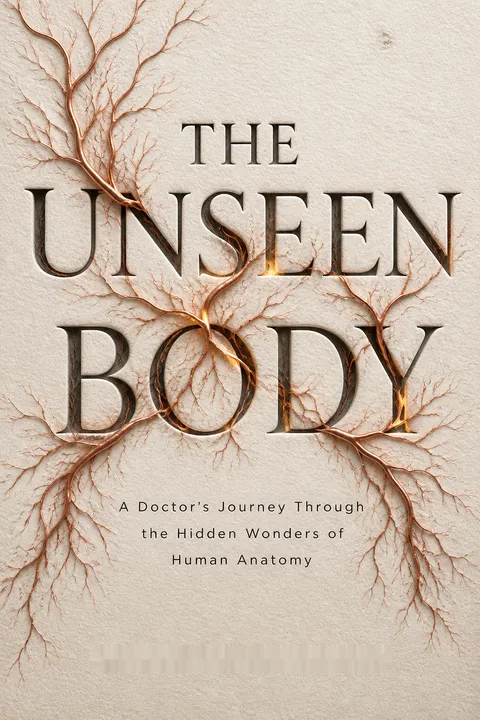


Key Takeaways
Study the living body as an ecosystem, not a parts catalog
Parts need their partners. Medical school taught Reisman to memorize organs one by one. But a cadaver could not show how they cooperate in life. During surgery on a crash victim, the warmth, movement, and bleeding of living organs revealed distant systems working together. The ecology of the body is the view of organs as interdependent parts of a whole, each helping maintain homeostasis, the body’s internal balance. This perspective also helps explain why a failing liver can affect the kidneys, brain, and circulation, even when the connections are not obvious.
Knowledge can deepen empathy. Reisman cared for Juan, whose liver failed after a rare reaction to an antibiotic. After a transplant, Juan returned to the hospital transformed. Knowing what his illness had meant gave the doctor a view of the struggle behind a healthy appearance.
What's striking is how this account treats anatomy as a study of relationships, not merely a naming exercise. Systems biology makes a similar move: properties such as balance, resilience, and failure emerge from interactions among components. The ecological analogy is useful because it encourages clinicians to look for cascading effects rather than isolated defects. It also clarifies how expertise can support empathy: recognizing a pattern of illness helps a doctor imagine what a patient has endured. The analogy has limits, though. Organs do not behave like independent species, and biological interactions can be measured and tested. The metaphor opens inquiry; it does not replace mechanism.
Follow the flow, then map where the blockage disrupts the whole
A diagnosis is a map. Reisman compares medicine with foraging: both demand distinguishing look-alikes by noticing small clues and understanding their setting. A mushroom’s identity depends partly on its habitat and recent weather; disease, too, has geographical and seasonal context. The same habit of observation helped him recognize Jared’s heart attack. Jared’s electrocardiogram showed a regional disturbance, pointing toward a blocked coronary artery, not simply any cause of chest pain.
Trace the interrupted route. A heart attack is a plumbing failure: a clot blocks blood flow to heart muscle. Cardiac arrest is an electrical failure in which the heart stops beating. Reisman’s plumber colleague finds a building blockage by locating which branch lost water. Reading an EKG similarly requires knowing which region of the heart each signal represents. The question is not only what failed, but where the flow was interrupted.
This is a practical model of diagnostic reasoning: combine local evidence with a map of how the system is organized. It resembles fault detection in engineering, where a failure’s location is inferred from which outputs change and which remain normal. It also explains why expertise often looks like intuition. The expert is not guessing freely, but recognizing a pattern against a richly learned map. A caution follows: similar symptoms can arise from different causes, and maps can be incomplete. A useful pattern should direct further testing, not become a substitute for it.
Treat anatomical flaws as trade-offs, and honor the patient's choices
The throat is a risky junction. Food and air pass through the same narrow region before separating into the esophagus and windpipe. Safe swallowing requires coordinated action by more than twenty muscles and five cranial nerves. When dementia, stroke, or Parkinson’s disease weakens that coordination, food and saliva can enter the lungs and cause aspiration pneumonia.
Medicine cannot erase every risk. Suzanne, an elderly patient with Alzheimer’s, repeatedly developed pneumonia after aspirating. Thickened food and careful feeding reduced risk, but could not eliminate it; a feeding tube would not guarantee protection either. Her daughter followed Suzanne’s stated wish to avoid machines and invasive treatment. A friend with ALS chose feeding and breathing tubes for different reasons: his mind remained clear, and he valued time with family. The same bodily failure can call for different care because patients value different outcomes.
The throat illustrates a central tension in evolution: bodies are shaped by inherited developmental pathways, not designed from scratch for perfect safety. Its arrangement is hazardous, yet swallowing protections usually work, and the same vulnerability can mark a natural end to prolonged decline. The ethical lesson is equally important. Medical capability does not settle whether an intervention is worthwhile. Advance directives help translate a person’s values when speech and memory fail, though family members may still interpret them differently. Good care therefore combines anatomical knowledge with a careful account of what a particular person considers a life worth living.
Question disgust: bodily waste can diagnose, protect, and even heal
Waste carries evidence. As a medical student, Reisman found black, tarry stool during a rectal exam. It pointed to bleeding higher in the digestive tract, and a scope later found a bleeding stomach ulcer. Stool can reveal disease, but it can also spread infection. In India, Reisman learned that diarrheal disease kills hundreds of thousands of children each year, while clean water, soap, and simple rehydration can prevent many deaths. Bathroom customs, including using water rather than toilet paper, reflect different cultural and material circumstances.
The microbiome can be medicine. Antibiotics can destroy helpful gut bacteria, leaving room for a dangerous C. difficile infection. In fecal microbiota transplant, screened stool from a healthy donor restores microbial diversity in a patient’s colon. In the researcher’s trial described here, the treatment cured 87 percent of patients after one course and 92 percent after a second.
Disgust is not just a private reaction. It can shape what people will discuss, what treatments they accept, and which bodily materials society classifies as useful or repellent. This story shows how medical practice can revise those categories when evidence changes. The microbiome also makes a useful distinction between a pathogen and an ecosystem: eliminating microbes indiscriminately can damage defenses that depend on microbial variety. Still, the reported transplant results concern difficult, recurrent C. difficile cases, not a general license to ingest stool or treat unrelated illness. The lesson is to challenge taboo with evidence, not to replace evidence with novelty.
Protect biological rhythms from schedules that ignore light and sleep
The body keeps time. The circadian rhythm is the roughly daily cycle that coordinates sleep and waking with the outside world. Light entering the eyes affects the pineal gland’s release of melatonin, helping signal when the body should prepare for sleep. Reisman’s early medical shifts gradually changed his routine, while morning sunlight helped align his internal timing with the workday.
Hospitals can disrupt recovery. Residents routinely woke patients for rounds, vital signs, and medication schedules, often without considering whether the interruption was necessary. Sleep loss can worsen health and contribute to delirium, especially in frail patients. After caring for Ted, a young man dying of cancer, Reisman stopped waking terminal patients unless there was a compelling reason. He also tried to reduce unnecessary overnight checks and offer earplugs. Genital rhythms follow a different calendar: menstruation’s monthly cycle pauses when pregnancy begins.
This section links individual biology to institutional design. Chronobiology studies how light, sleep, and daily timing influence bodily processes, while hospitals often organize work around staff convenience rather than patients’ clocks. The result is a revealing mismatch between what medicine knows and what its routines reward. Protecting sleep can be understood as a low-risk intervention, but not every interruption is avoidable: monitoring can be essential for unstable patients. The useful question is therefore not whether to disturb sleep, but whether each disturbance has enough clinical value to justify its cost.
Altitude changes what counts as normal, including how the brain works
Context changes the diagnosis. In Nepal’s Himalayas, headache, nausea, and fatigue often meant acute mountain sickness, not a sea-level emergency. Reisman developed symptoms himself while working in Manang. A gradual ascent, generally no more than 1,600 feet a day, gives the body time to acclimatize, though it cannot guarantee protection.
Watch coordination, not just discomfort. Severe brain swelling, called high-altitude cerebral edema, can impair balance, judgment, and speech. A heel-to-toe walking test helped Reisman identify trekkers who needed to descend. One woman who seemed intoxicated improved after coming down several thousand feet. The chapter also explores the unsettled boundary between brain and mind through a Buddhist nun who said meditation helped her know herself, and a psychiatrist who understood mental experience as the work of interacting brain regions.
The mountain clinic makes a powerful point about diagnostic baselines. A low oxygen reading or breathlessness can signal crisis at sea level, yet become ordinary in a high-altitude environment. Medicine must therefore interpret measurements within a person’s setting and recent history. The discussion of consciousness extends that humility to the brain: describing neural processes does not automatically explain subjective experience. The book offers competing views rather than a final answer, which is appropriate. Introspection and neuroscience illuminate different aspects of experience, and neither alone settles how mental life arises.
Read the body's surfaces as evidence, not decoration
The outside reports from within. Skin is an active organ with layers that protect, heal, and help regulate temperature. Reisman learned to read those layers while turning a deer hide into buckskin, then applied the same knowledge to human wounds. In an Arctic child with peeling skin, the appearance of deeper layers helped distinguish a staphylococcal toxin from a more dangerous disorder affecting the skin and mucous membranes.
Small signs can redirect care. A patient’s pupils helped Reisman identify an opioid overdose, which improved quickly after naloxone. A normal-looking eye did not rule out metal inside a worker’s eyeball; a CT scan found what direct inspection could not. Cold fingers can signal impaired blood flow, while eye contact can tell a patient whether a doctor is attending to them. Surfaces offer clues, but they do not reveal everything.
The body’s boundary is also an information system. Skin, pupils, and temperature make internal conditions observable without opening the body, a fact that gives physical examination its enduring value. The hide-tanning story adds a craft perspective: understanding layers is useful both for repairing material and for recognizing injury. Yet visual skill has limits. Fred’s eye looked deceptively normal despite a penetrating fragment, so observation needed imaging to complete the assessment. The strongest clinical reasoning pairs direct perception with tools, and treats each as a source of evidence rather than an infallible verdict.
Treat fat as biology shaped by place, history, and unequal care
Fat has different jobs. In Arctic Alaska, Iñupiat families traditionally relied on whale, seal, and other animal foods in a landscape with few plant staples. Animal fat supplied more than half of their calories and offered energy in a harsh climate. Research described in the book suggests that some northern populations have genetic adaptations that help them use omega-3 fats. A rapid shift toward processed foods and less physical work changed that environment within generations.
Blame is a poor treatment plan. Obesity involves many interacting factors, including genetics, stress, sleep, and different kinds of body fat. Reisman’s patient Natalie needed urgent care for blocked leg arteries, but her size exceeded the limits of scanners, beds, and available transport. The resulting delays exposed a health system built around assumptions about typical bodies, not simply a patient’s individual choices.
The Arctic example unsettles the idea that a food or body type has one universal meaning. Nutrition is shaped by ecology, culture, genetics, and access, while medical advice often compresses that complexity into personal discipline. Obesity stigma can then obscure both biology and infrastructure, as Natalie’s case makes painfully concrete. This does not mean every dietary pattern is harmless or that individual behavior is irrelevant. It means explanations and treatment should account for context, and that hospitals must plan for the bodies they actually serve rather than treating equipment limits as moral judgments.
Respect mucus as both defense and the material holding tissues together
Consistency is protection. Mucus coats the body’s openings, keeping them moist and helping carry microbes and debris outward. In the lungs, tiny hairs move mucus toward the throat, where it can be swallowed or expelled. Cystic fibrosis disrupts salt and water movement, making mucus unusually thick. Cristian, a teenager with the disease, spent each morning using inhaled treatments and a vibrating vest to clear his lungs and prevent infection.
The body is not watery soup. Mucus also exists between cells as part of the extracellular matrix, a network of fibers and gel that supports tissue, carries messages, and affects how cells interact. The book estimates that this material accounts for about 15 percent of adult body weight. This hidden structure helps explain why the body is cohesive and resilient, not merely a collection of cells floating in water.
The mucus chapter corrects an intuitive but incomplete picture of the body as mostly liquid water. Biological function depends on materials with different textures and roles, including gels that lubricate surfaces and matrices that organize cells. In tissue engineering, this distinction matters because cells need a supportive environment, not just the right cell type. The same substance can protect when its consistency is balanced and obstruct when it is not, as cystic fibrosis demonstrates. The image of mucus as the body’s glue is memorable, though the extracellular matrix is chemically diverse and cannot be reduced to mucus alone.
Let nature challenge medical taboos, but test every inherited rule
Old remedies can return transformed. Michael’s thumb was nearly severed when a dog’s leash tightened around it. Surgeons restored arterial flow, but blood could not drain through damaged veins. Leeches applied to the swollen thumb removed blood and, more importantly, left behind hirudin, a substance in their saliva that prevents clotting. The treatment bought time for the veins to recover. Research on leech saliva also helped inspire blood-thinning medicines, even though indiscriminate bloodletting was once harmful.
Rules can outlive their reasons. A US regulation bans selling animal lungs for human food after inspectors found dust, spores, and stomach contents in samples. The author argues that these findings showed animals had breathed, not necessarily that the lungs were diseased. The ban remains in place partly because little pressure exists to reconsider it. What counts as medicine, food, or contamination can reflect history as well as evidence.
Nature is not automatically benevolent, but it is a vast archive of biological solutions. Leeches evolved a way to keep blood flowing, and clinicians can adapt that mechanism to a specific surgical problem. The same section asks readers to distinguish a sound safety rule from one that persists through habit or administrative inertia. That distinction demands evidence, not suspicion of regulation: contamination can matter, and the absence of public complaints is not proof of safety. The broader lesson is disciplined curiosity, open to unexpected therapies while requiring each claim and prohibition to withstand scrutiny.
Analysis
The book’s deepest method is learning to notice. Reisman moves from field naturalist to physician by treating the body as a landscape whose clues only make sense in context. Across the chapters, several recurring patterns organize that landscape: flow explains circulation and obstruction, boundaries explain infection and protection, rhythm connects physiology to the day and the life cycle, and layers make both diagnosis and repair possible. These are not presented as a single formal system, but together they offer a practical way to look beneath appearances.
The travel narrative is more than decoration. The Himalayas make ordinary measures of illness relative; Arctic foodways expose the limits of universal nutrition advice; and medical practice in India reveals how sanitation and access shape outcomes. Place becomes a variable in physiology and in the meaning assigned to bodies. This is a useful corrective to medicine’s tendency to treat the body as if it existed apart from culture, climate, infrastructure, and personal history.
The strongest stories also complicate the fantasy of medicine as a clean contest between expertise and disease. Suzanne’s throat cannot be repaired into safety, while her daughter’s knowledge of her wishes guides the final decision. Natalie’s case shows how a patient can be failed by equipment and logistics even when clinicians recognize the emergency. The book’s argument about empathy is therefore grounded in practice: medical knowledge can help someone see the experience hidden behind a symptom, but care also requires listening and institutional capacity.
A limit follows from the book’s vivid anecdotal form. Individual patients make mechanisms memorable, but one case cannot establish how common a condition is or prove that a treatment will work broadly. The narrative is most persuasive when it distinguishes observation from explanation, as with uncertain links between organs or the unresolved nature of consciousness. Its lasting contribution is not a replacement textbook. It is a habit of looking for connections, questioning inherited assumptions, and remembering that every body is both biological material and a life being lived.
Review Summary
Readers generally praise The Unseen Body for its engaging, accessible exploration of human anatomy through personal anecdotes and travel experiences. Many appreciate the author's unique perspective as a doctor and adventurer, finding the book informative and entertaining. Some criticize the writing style as overly poetic or self-important, while others note factual inaccuracies. The book's blend of medical knowledge, patient stories, and global adventures resonates with most readers, though some find it lacking in depth for those with existing medical knowledge.
People Also Read
Glossary
ecology of the body
Organ interdependenceA way of understanding the body by looking beyond individual organs to their relationships and effects on one another. As in an ecological system, a change in one part can influence distant parts. Reisman uses this perspective to connect symptoms, organ function, and the person whose body they inhabit.
mucus elevator
Airway clearance systemThe lung’s self-cleaning process in which microscopic hairs lining the airways move mucus upward toward the throat. The mucus carries dust, microbes, and other material out of the lungs, where it can be coughed up or swallowed. The mechanism depends on mucus having a workable balance of water and other components.
Fecal microbiota transplant (FMT)
Restores gut microbesA treatment that transfers carefully screened stool from a healthy donor into a patient’s digestive tract. Its purpose is to restore helpful gut microorganisms that may have been depleted, especially after antibiotics, and to prevent harmful bacteria such as C. difficile from taking over. In the book, it is described as an emerging option for recurrent, difficult-to-treat infection.
acute mountain sickness (AMS)
Illness from rapid ascentA collection of symptoms that can follow travel to high altitude, particularly when the body ascends faster than it can adjust. Common symptoms described in the book include headache, nausea, fatigue, poor appetite, and insomnia. Rest, medication, gradual acclimatization, and descent when symptoms worsen are central to managing the condition.
high-altitude cerebral edema (HACE)
Dangerous brain swellingA severe form of altitude illness in which swelling in the brain disrupts its function and can become life-threatening. Signs can include impaired balance, confusion, and altered behavior. Reisman describes balance testing as a way to detect concerning brain dysfunction and descent as an urgent treatment.
extracellular matrix (ECM)
Support outside cellsThe material surrounding and between the body’s cells. It includes fibers and a gel-like ground substance that supports tissues, helps organize cells, and provides a medium for nutrients, waste, and signals to move. Reisman emphasizes that this often-overlooked material is a substantial part of the body, not merely empty space between cells.
hepatorenal syndrome
Liver-related kidney failureA serious condition in which kidney function deteriorates in a person with severe liver disease, even when tests do not reveal a direct problem within the kidneys. The name describes the organs involved, but the underlying relationship is not fully understood. The syndrome illustrates how failure in one organ system can accompany dysfunction in another.
hirudin
Leech-derived blood thinnerA substance in leech saliva that prevents blood from clotting. It helps a leech feed by keeping its meal liquid, and in medical leech therapy it also prolongs bleeding from the bite after the leech detaches. Research into hirudin contributed to the development of blood-thinning treatments.
Download PDF
Download EPUB
.epub digital book format is ideal for reading ebooks on phones, tablets, and e-readers.








