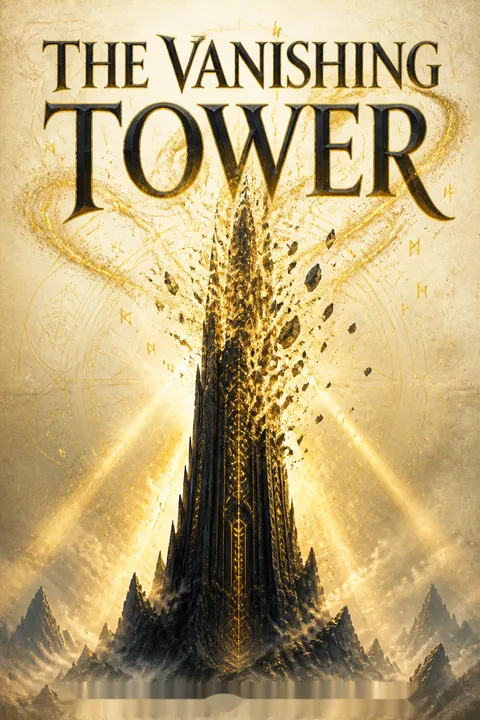


Plot Summary
The Oonai Take Flight
Elric of Melnibone and his companion Moonglum slip ashore in Lormyr, hoping to find Theleb K’aarna before the Pan Tangian sorcerer can escape again. On the road toward the capital, a flock of shape-changing Oonai attacks. Elric calls on his patron, the Chaos Lord Arioch, but Arioch declines to intervene.
The creatures kill both horses and seize Elric and Moonglum in their coils, carrying them north through the snow. Elric has no spell ready to free them, so he searches his memory for an older bargain between his ancestors and Fileet, the Lady of the Birds. Their capture turns a pursuit into a struggle to survive, and leaves Elric to rely on a power he cannot command with certainty.
Elric’s dependence on supernatural power is both practical and humiliating: he invokes Arioch as a servant seeking aid, only to discover that the god’s interests outrank his survival. The refusal exposes the limits of the bargain that shapes Elric’s identity. His attempt to recall the pact with Fileet points toward another inheritance, one rooted in an obligation kept across generations rather than a patron’s appetite for allegiance. The episode makes the chase emotionally unstable. Elric is not simply hunting an enemy; he is discovering that the powers he serves may abandon him precisely when he needs them most.
Birds Over the Snow
Suspended above the frozen steppe, Elric finally remembers the invocation to Fileet. Birds fill the sky, attack the Oonai, and free both men from the creatures’ grasp. Eagles even catch Elric and Moonglum as they fall, but the pair land far from their route and their horses are gone. They trudge south without food or shelter until exhaustion drops them in the snow.
A lone castle stands nearby, its gate open and its great hall warmed by a fire. Inside, Moonglum finds food and wine, while Elric recovers beside the hearth. Their search for equipment leads them to a furnished tower room and a sleeping woman whose likeness to Elric’s lost Cymoril leaves him shaken.
The rescue does not restore the old journey; it leaves Elric and Moonglum stranded in a landscape where survival depends on accepting unexplained hospitality. Elric’s success comes from inherited reciprocity, not command: the birds answer an old compact, while Arioch answered only with refusal. The castle’s fire and provisions offer bodily relief, but the sleeping woman turns shelter into a psychological trap. Her resemblance to Cymoril draws Elric toward a past he has spent years trying not to reopen. His impulse to flee shows how grief can make even a possible source of help feel dangerous.
Myshella's Midnight Appeal
At an inn in Alorasaz, the sleeping woman appears to Elric in a dreamlike visit and identifies herself as Myshella, the immortal Empress of the Dawn. She explains that Theleb K’aarna has joined Prince Umbda, ruler of the strange Kelmain, to conquer Lormyr. Her enchantment keeps her from acting for long, so she sends Elric alone to her island palace, Ashaneloon, for a golden pouch that may stop the invasion.
A mechanical bird carries him across the boiling sea. At the palace, Elric defeats the guardian demon with Stormbringer and takes the pouch, but also finds a pulsing jewel in the creature’s remains. He does not yet know that the jewel may be the Nanorion, a stone able to wake those trapped in deathlike sleep.
Myshella’s appeal gives Elric a cause beyond his private pursuit, but he accepts it chiefly because it converges with his hatred of Theleb K’aarna. That distinction matters: his actions may protect a country without making him a believer in its safety or Myshella’s principles. The mechanical bird and the demon’s strange heart make the quest feel less like a conventional rescue than a chain of objects whose meaning Elric has not yet earned. His choice to take the jewel as well as the pouch is an act of attention amid violence, a small moment of curiosity that will prove more consequential than his conscious plan.
The Noose of Flesh
Elric returns to Castle Kaneloon to find the Kelmain Host advancing across the snow. Moonglum has been brought there by Myshella, who remains asleep under Theleb K’aarna’s spell. Elric recognizes the demon’s heart as a possible Nanorion and uses an old rune to wake her. When Kelmain advance riders break into the castle, he kills them and marches out to face the larger army.
Stormbringer feeds on the attackers, but its power eventually stops sustaining him; Elric is overwhelmed and captured. Myshella wakes in time to scatter the pouch’s contents over the besieging host. The Noose of Flesh rises around the Kelmain and consumes them, including Prince Umbda and Theleb K’aarna, or so Elric believes.
Elric’s apparent victory depends on two forms of power that remain morally uncomfortable: the sword’s appetite and Myshella’s terrifying weapon. His brief rampage against the Kelmain gives him strength, but it also carries him past the point where he can govern his own survival. The Noose of Flesh saves Lormyr by annihilating an entire host, making protection inseparable from horror. Elric refuses the identity of a public savior, insisting that vengeance, not duty, drove him. That denial may be sincere, but it also shields him from confronting how often his private motives produce consequences for others.
The Ring Goes Missing
After leaving Kaneloon, Elric and Moonglum travel through Old Hrolmar on their way toward Tanelorn. Elric confronts a group of wealthy gossips who trade malicious stories about him, while Moonglum’s attempt to help two women escape an exploitative master risks bringing the city watch down on them.
The women are part of a scheme: hired attackers ambush the pair, and one woman steals the Ring of Kings from Elric’s hand before he is knocked unconscious. At dawn, a dying thief identifies Urish, the Beggar King of Nadsokor, as the one who ordered the theft. Moonglum urges Elric to let the ring go, but Elric turns away from their planned journey and sets out for Nadsokor to recover it.
The theft makes an old symbol of inherited authority suddenly intimate and vulnerable. Elric’s response is not merely practical: the Ring of Kings connects him to his ancestors and supports his sorcery, but it also represents a lineage he has repeatedly tried to escape. Moonglum sees the risk more clearly and argues for preserving their larger plan; Elric chooses the ring anyway. Their disagreement is a compact portrait of their friendship. Moonglum can question Elric’s judgment without abandoning him, while Elric’s fixation reveals how grief and identity often disguise themselves as necessity.
Inside the Beggar King's Trap
Disguised as beggars, Elric and Moonglum enter Nadsokor after dark. Elric knows Urish’s hoard is dangerous, but the seemingly empty palace conceals a trap: Theleb K’aarna and Urish emerge with limbo ghouls that drain Elric’s strength.
Urish sentences him to the Punishment of the Burning God and has him thrown through a magical barrier into a labyrinth. There Elric meets Checkalakh, a fire-being imprisoned by the Lords of Law. Elric fights the weakened god with Stormbringer, taking its energy until Checkalakh dies.
The force nearly destroys Elric from within, but Donblas, the Justice Maker, intervenes and heals him. Moonglum, who escaped by hiding in refuse, finds Elric in the tunnels and reveals that Theleb K’aarna has gone to attack Rackhir’s caravan.
The labyrinth turns Urish’s civic punishment into a collision between competing cosmic systems. Elric enters as a condemned outsider, then discovers that the Burning God is also a prisoner, summoned by mortals and trapped by divine law. Defeating Checkalakh does not feel like a clean triumph: Stormbringer transfers more power than Elric’s body can bear. Donblas’s intervention contrasts with Arioch’s earlier indifference, but it is no simple conversion, since Elric remains aligned with Chaos. The rescue instead complicates his loyalties, showing that aid may come from a power he does not serve and that divine categories cannot fully contain his choices.
The Elenoin Descend
Elric and Moonglum leave Nadsokor to warn Rackhir the Red Archer, whose caravan carries supplies to Tanelorn. They arrive as Urish’s beggars surround the wagons and Theleb K’aarna summons the Elenoin, terrifying sword-wielding beings that resemble red-haired women. The Elenoin slaughter Carkan and many of Tanelorn’s warriors.
Without his stolen Ring, Elric cannot use his usual sorcery, but he cuts off an Elenoin’s head, takes its hair, and soaks it in a beggar’s blood to invoke the Grahluk, the Elenoin’s ancient enemies. The Grahluk attack and destroy the Elenoin, then kill themselves once their purpose is fulfilled. The surviving caravan is saved, while Theleb K’aarna escapes back toward Nadsokor.
Elric’s intervention is a hard-won compromise between sword and sorcery. Without the Ring, he cannot summon the force he first wants, so he improvises through knowledge of old enmities and a grisly ritual. The Grahluk solve the immediate problem but are not allies in any human sense; their single purpose ends in self-destruction. That outcome echoes Elric’s own fear of being used as an instrument in struggles whose larger purpose he cannot understand. The rescue also costs the caravan dearly. Victory here is not restoration but the prevention of total defeat, with survival purchased through violence that leaves no one untouched.
Arioch Wears a Demon
The survivors ride back to Nadsokor, where Urish begs Elric to destroy the demon guarding his treasure. Rackhir tests it with arrows, but the creature absorbs them, and Urish attacks with his cleaver. The weapon shatters; the demon swallows the Beggar King. It then reveals itself as Arioch, who had taken the demon’s place to demonstrate his power and reproach Rackhir for rejecting Chaos.
After Arioch vanishes, Elric breaks open Urish’s hoard and recovers the Ring of Kings. Theleb K’aarna has fled toward the Forest of Troos, leaving Elric with the chance to pursue him. Instead, he accepts Rackhir’s invitation to Tanelorn, still burdened by grief and uncertain whether its peace can hold him.
Arioch’s appearance converts a practical obstacle into a test of allegiance. The god stages Urish’s greed and defeat as a lesson for Rackhir, trying to make neutrality look like weakness. Yet Rackhir refuses the offered moral binary, while Elric says little and retrieves the ring that restores his own power. The scene distinguishes freedom from mere independence: Elric can reject a patron’s demands, but he still relies on the tools and inheritance that make him formidable. His choice to go to Tanelorn rather than chase Theleb K’aarna suggests exhaustion, not reconciliation. He has recovered the ring, but not a stable sense of purpose.
The Desert Calls Elric
After a month in Tanelorn, Elric remains unable to settle. He rides alone into the Sighing Desert, abandons his horse, and walks into the heat seeking death. Myshella finds him and revives him with a potion. She explains that Theleb K’aarna survived the Noose of Flesh and has found ancient devices in the Forest of Troos.
With Chaos’s help, he has activated one that can break the barriers between planes and bring an alien force against Tanelorn. Myshella directs Elric toward the device, warning him that its power is unfamiliar. Elric resists being drawn into another cause, but his concern for his friends and hatred of Theleb K’aarna overcome his wish to disappear. He kisses Myshella before setting out across the desert.
Elric’s attempt to die is not presented as a triumphant declaration but as an action that would abandon a horse, friends, and obligations he cannot sever. Myshella’s arrival exposes the tension between his conscious wish for oblivion and his continuing responsiveness to other people. Her account of Theleb K’aarna’s survival also punctures the apparent closure of the earlier victory: vengeance has not ended the danger. Elric’s kiss reveals tenderness, but also his anxiety about intimacy, especially because Myshella recalls Cymoril. His renewed journey is neither pure heroism nor pure compulsion. It is a choice made under the pressure of attachments he claims to despise.
Three Heroes, One Fate
Elric discovers Theleb K’aarna beside a machine sealed in a crystal vessel. The sorcerer activates it, opening a breach through which enormous reptilian creatures and their riders from the plane of Pio emerge. Elric charges the device, but passing through its crystal boundary carries him into another world instead.
There he meets Corum, a maimed prince fighting Chaos, who explains that Elric has arrived in a different plane of existence. The two encounter Erekose, a black-armoured warrior who recognizes them as other incarnations of himself and remembers countless lives.
The three realize that they share one identity across different worlds and eras. Corum needs their combined strength to rescue his guide from the Vanishing Tower, and Elric agrees, hoping the rescue will give him a way to protect Tanelorn.
The cross-world revelation enlarges Elric’s private anguish into a pattern: his struggle may be one expression of a recurring identity rather than a singular biography. Erekose experiences this knowledge as torment, because memory multiplies responsibility without explaining its purpose. Elric, who already doubts the meaning of his actions, recognizes in him a frightening version of his own condition. Corum offers a practical task, the rescue of a friend, but it is also a reprieve from impossible abstraction. The scene makes the multiverse concrete through bodies, weapons, and competing duties. Rather than solve the question of fate, it shows how action remains possible inside uncertainty.
The Vanishing Tower Falls
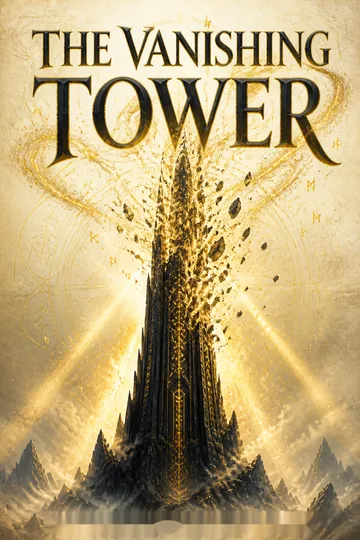
The three heroes find the Vanishing Tower and enter before it shifts planes. Its master, Voilodion Ghagnasdiak, attacks them with yellow globes that release winged, tiger-headed creatures. The heroes discover that only the monsters’ own scythes can wound them.
When Corum, Erekose, and Elric link arms, their strength rises as though they have become one fighter; together they defeat the creatures and destabilize the tower. They free Corum’s guide, Jhary-a-Conel, who retrieves the Runestaff and leads them through shifting worlds back to Elric’s desert.
Jhary gives Elric bronze banners and quartz arrows for the fight against the Pio invaders. He sends Corum and Erekose onward, while Elric returns to the machine and throws in a vial that destroys it before racing toward Tanelorn.
The tower makes the revelation of shared identity physically useful: linking arms turns a metaphysical claim into coordinated strength. Yet the heroes do not merge into sameness; each keeps his own purpose, wounds, and uncertainty. Jhary’s practical gifts translate their strange journey into a means of protecting Tanelorn, while the Runestaff supplies a route home. Destroying the machine is equally important. The heroes do not merely seize a weapon from Theleb K’aarna; they remove the device that could reopen the breach. The episode treats knowledge as responsibility: understanding a tool’s danger obliges its destruction, even when it might offer further power.
Tanelorn's Last Defense
Elric reaches Tanelorn as the Pio creatures approach its walls and Myshella lies captive across Theleb K’aarna’s saddle. He gives Rackhir and Moonglum the bronze banners, which form a wall of light that turns aside the invaders’ weapons, then takes the quartz arrows into the air on Myshella’s metal bird.
His arrows strike the Pio riders, whose uncontrolled mounts carry them away; the rest are killed or scattered. The banners save Tanelorn, but Theleb K’aarna has already cut Myshella’s throat.
She tells Elric that the Chaos Lords will no longer aid the sorcerer, then dies. The metal bird carries her body away. Elric refuses a potion that might dull his memories and rides toward Tanelorn, finally shouting his rage at the gods who keep drawing him into their wars.
The final defense separates military success from emotional repair. Elric saves Tanelorn because Jhary’s gifts and his friends’ actions give him a workable strategy, but he arrives too late to save Myshella. Her death exposes the limit of the heroic bargain: competence can alter events without granting control over loss. Elric’s refusal of Rackhir’s memory-dulling potion matters because it rejects peace purchased through erasure, even though memory is the source of his torment. His final rage does not resolve the cosmic conflict or make him stronger. It gives voice to the cost of being repeatedly conscripted into it.
Analysis
The Vanishing Tower follows Elric through three linked crises, each of which tests a different claim he makes about himself. In Lormyr, he insists that vengeance, not concern for the realm, motivates him, even as his actions help Myshella defeat the Kelmain. In Nadsokor, he pursues the Ring of Kings as a practical necessity, but the theft also exposes how fiercely he remains attached to the lineage he repudiates. In Tanelorn, he longs for peace and even walks into the desert seeking death, yet turns back whenever another person’s danger calls him into action.
This contradiction is not a flaw the narrative resolves. Elric’s motives are mixed, and the consequences of his choices exceed his intentions. Stormbringer makes that gap bodily: it grants strength by consuming lives, leaving Elric both empowered and compromised. The gods mirror this arrangement on a larger scale. Arioch treats loyalty as a claim on Elric, Donblas intervenes across an opposing allegiance, and neither Law nor Chaos offers a stable moral home. Tanelorn’s neutrality becomes a fragile alternative, not a cure for the conflicts its inhabitants inherit.
The encounter with Corum and Erekose sharpens the story’s deepest anxiety. Elric may be one expression of an identity repeated across worlds, condemned to struggle without understanding why. Yet the three heroes’ shared strength arises through cooperation rather than hierarchy, suggesting a momentary answer to the isolation of that fate. The answer remains limited. Elric returns to his own world, destroys the device, saves Tanelorn, and still cannot save Myshella. His final outcry rejects neither the world nor his responsibilities; it names the anger of someone who continues to act while refusing to call the suffering just. The book’s hard insight is that meaningful action need not come from pure motives, and that successful action cannot guarantee peace.
Review Summary
The Vanishing Tower received mixed reviews, with many praising its imaginative world-building and exploration of the multiverse concept. Readers appreciated the character development of Elric and the intriguing philosophical elements. However, some found the plot repetitive and criticized the reliance on deus ex machina. The book's shorter length and focus on action were generally well-received. Many considered it an improvement over previous installments, particularly enjoying the inclusion of other Eternal Champion incarnations and the visit to Tanelorn.
People Also Read


Characters
Elric of Melnibone
Albino oath-bound wandererElric is the last lord of Melnibone, a pale, introspective warrior whose physical weakness is sustained by the soul-drinking sword Stormbringer. He pursues Theleb K’aarna from a mixture of vengeance, habit, and a restless need to give his life direction. His bond with Moonglum is his most durable human attachment, while his memories of Cymoril make new intimacy feel perilous. Elric is sworn to Chaos but distrusts the gods who claim him, and his actions repeatedly cross the boundaries between personal motive and public consequence. He wants peace and sometimes death, yet keeps answering the dangers that threaten his friends.
Moonglum
Elric's steadfast companionMoonglum is an Eastlander, quick-witted and practical, who travels beside Elric through pursuit, captivity, and battle. He worries about their money, argues against needless risks, and often notices the human cost of Elric’s choices before Elric does. His humor protects him from despair without making him indifferent; in Nadsokor, he is appalled by the city’s cruelty even as he follows Elric’s plan. Their bond mixes affection with friction. Moonglum does not simply admire Elric’s power, and his willingness to challenge him gives their friendship a grounded, intimate counterweight to the gods’ grand designs.
Theleb K’aarna
Vengeful Pan Tangian sorcererTheleb K’aarna is a sorcerer of Pan Tang whose pursuit of power is entangled with jealousy and unrequited desire for Queen Yishana. Elric’s repeated interference turns his ambitions into personal vendetta, while his willingness to bargain with Chaos lets each defeat drive him toward more dangerous methods. He recruits strange allies and uses ancient knowledge without understanding its larger consequences. Theleb is not driven by conquest alone: he imagines that domination will win him the love and recognition he believes Elric has taken from him. His emotional dependence gives his grand schemes a narrow, human motive.
Myshella
Immortal defender of LawMyshella, called the Empress of the Dawn, is an ancient sorceress who protects Lormyr and serves Law. She acts through spells, an enchanted sleep, and the mechanical bird that carries her between distant places. Her dealings with Elric combine genuine affection with an awareness that his loyalties and grief make him difficult to reach. Myshella values heroes who resist Chaos, but she does not mistake their motives for purity. Her connection to Elric is complicated by his resemblance between her and Cymoril, and by her own habit of recruiting those she loves into causes larger than themselves.
Rackhir
Red Archer of TanelornRackhir is a former warrior-priest who has renounced service to the gods and settled in Tanelorn. Still an accomplished archer and a trusted friend of Elric, he seeks a life outside the war between Law and Chaos. His calm does not mean passivity: when Tanelorn’s caravan is threatened, he organizes its defense and accepts help from Elric. Rackhir’s refusal to choose a supernatural master makes him a useful contrast to Elric, whose identity is bound to the powers he questions.
Urish
Seven-fingered Beggar KingUrish rules the ruined city of Nadsokor through fear, custom, and possession of a closely guarded hoard. He hates Elric for an earlier theft and treats revenge as a matter of public law, demanding that Elric be formally sentenced. His alliance with Theleb K’aarna reflects opportunism more than loyalty: he wants his enemy delivered into his hands while keeping control of his own treasure. The contrast between Urish’s elaborate authority and Nadsokor’s degradation gives his court a grotesque political order.
Arioch
Elric's fickle Chaos patronArioch is a powerful Lord of Chaos and Elric’s supernatural patron. He addresses Elric as a favored servant but refuses his plea for help when the Oonai attack, showing that divine affection does not guarantee practical protection. Later, Arioch uses the form of a demon to confront Elric and Rackhir, pressing his claim that service to Chaos is superior to neutrality. His beauty and power make him compelling, but his interests remain larger than the survival or comfort of any single mortal.
Corum Jhaelen Irsei
Maimed prince from another planeCorum is a prince with an alien hand and eye, drawn into a struggle against Chaos across different planes of existence. He summons Elric to help rescue his imprisoned guide, Jhary-a-Conel, and understands that their meeting is part of a wider pattern of heroes. Corum is earnest and purposeful, but he does not possess complete knowledge of the forces guiding him. His quest connects Elric’s immediate danger to a multiversal conflict without reducing the human importance of friendship.
Erekose
The many-lived championErekose is a black-armoured warrior who remembers many lives and recognizes Elric and Corum as other incarnations of himself. The knowledge burdens him: he has fought across ages but cannot explain the purpose of the cycle. He seeks Tanelorn as a possible route back to the woman and world he loves. Erekose’s experience makes visible the cost of an identity repeatedly shaped by war, and his alliance with Elric turns their otherwise abstract kinship into shared physical strength.
Jhary-a-Conel
Companion to championsJhary is Corum’s guide, a resourceful traveler who has moved among different heroes, eras, and planes. Though held by Voilodion, he understands more than his captor about the Vanishing Tower and the objects in its vault. He directs the three heroes toward the Runestaff and gives Elric weapons suited to the Pio invaders. His wit and practical knowledge turn an impossible journey into a series of usable choices.
Prince Umbda
Leader of the Kelmain HostPrince Umbda leads the golden-skinned Kelmain, an unfamiliar people recruited by Theleb K’aarna for his campaign in Lormyr. He speaks a language unknown to Elric and the other Young Kingdoms, marking the distance between his forces and the lands they invade. His alliance gives Theleb K’aarna an army large enough to threaten Myshella’s stronghold.
Donblas
Justice Maker of LawDonblas is a Lord of Law associated with justice and restraint. He once imprisoned the Burning God beneath Nadsokor and later intervenes when Elric is overwhelmed by the energy he has taken from that god. His aid complicates the assumption that Elric’s Chaos allegiance makes him unreachable to Law.
Checkalakh
Imprisoned Burning GodCheckalakh is a fire-being and Lord of Chaos, trapped in a labyrinth beneath Nadsokor after answering the pleas of the city’s former inhabitants. His long imprisonment has weakened him, yet his flames and hunger make him a deadly opponent. His predicament reveals how mortals and gods can both become instruments of forces they did not choose.
Voilodion Ghagnasdiak
Captor in the shifting towerVoilodion is a powerful dwarf who inhabits the Vanishing Tower and captures travelers to relieve his loneliness. He uses yellow globes to release monstrous servants and assumes that his guests cannot challenge him. His imprisonment in a fortress that moves across planes has turned isolation into a habit of domination.
Queen Yishana
Theleb's distant belovedYishana is the queen of Jharkor and a figure whose affection Theleb K’aarna covets. She is not present in the main events, but his imagined future with her helps explain why his sorcery becomes bound to jealousy and conquest. Elric has previously been close to her, a fact that intensifies Theleb’s resentment.
Carkan
Tanelorn's fallen defenderCarkan is a former Pan Tangian who has left his old allegiance and joined the peaceful community of Tanelorn. He rides with Rackhir’s caravan and stands among its defenders when the beggars and Elenoin attack. His presence shows how Tanelorn gathers former warriors who have chosen a different life.
Brut of Lashmar
Towering caravan warriorBrut is a massive, blond warrior traveling with Rackhir’s caravan. He helps organize the caravan’s defense against the beggars and the summoned Elenoin. His size and readiness for battle make him a practical defender of Tanelorn’s provisions.
Plot Devices
Stormbringer
Power with a priceStormbringer is Elric’s immense black runesword, a conscious weapon that kills and draws the souls of those it strikes, then transfers their vitality to him. It allows the physically frail Elric to survive battles and perform sorcery, but its aid is never neutral: the sword has its own appetite, and the energy it provides can intensify Elric’s violence or overwhelm his body. In this story it helps him fight the Oonai, the demon at Ashaneloon, the Kelmain, and the creatures in the Vanishing Tower. Its power also fails when it is sated, reminding Elric that he does not fully control the source of his strength.
The Ring of Kings
Ancestral power and identityThe Ring of Kings is an heirloom worn by Elric’s forebears. It serves as a sign of his royal lineage and supports the sorcery inherited through Melnibone’s old bargains with supernatural beings. Urish’s agents steal it in Old Hrolmar, diverting Elric from his planned journey to Tanelorn and leaving him without a key source of magical authority. Elric recovers it from Urish’s hoard after the caravan battle. The ring’s importance is both practical and psychological: Elric’s attachment to it expresses his continuing connection to a lineage he has otherwise rejected.
The Nanorion
Awakening the enchantedThe Nanorion is a magical stone said to awaken the dead or those held in a deathlike sleep. Elric finds it in the remains of the guardian demon at Ashaneloon and carries it back to Myshella’s castle. There, the stone and an old Melnibonean rune allow him to break Theleb K’aarna’s enchantment and wake Myshella in time to act against the Kelmain Host. The object echoes Elric’s earlier inability to awaken Cymoril, linking a practical tool in the present to the grief that still shapes his decisions.
The Doomed Folk's machine
A breach between planesThe ancient machine is a metal device held inside a crystal vessel, recovered by Theleb K’aarna from the Forest of Troos. With help from the Lords of Chaos, he activates it to break the barriers between planes and summon the reptilian people of Pio and their mounts. When Elric strikes at the vessel, he passes through its boundary into another plane and meets Corum and Erekose. Jhary-a-Conel later uses the Runestaff to guide the heroes back, and Elric destroys the machine with a vial before returning to Tanelorn. The device turns a local invasion into a threat to the structure of the multiverse.
The bronze banners and quartz arrows
Weapons against PioJhary-a-Conel finds the bronze banners and quartz arrows in Voilodion’s vault and gives them to Elric for the defense of Tanelorn. Unfurled along the city walls, the banners create a barrier of golden light that repels the Pio riders’ streams of fire. The arrows can pierce the riders, disrupting their control over their enormous mounts and sending the creatures fleeing. These objects are not Elric’s usual weapons or sorcery; they let him answer an alien technology with artifacts designed for that particular danger. Their use connects the Vanishing Tower rescue directly to the final defense.
Elric Chronological Order Series
About the Author
Other books by Michael Moorcock
Download PDF
Download EPUB
.epub digital book format is ideal for reading ebooks on phones, tablets, and e-readers.








