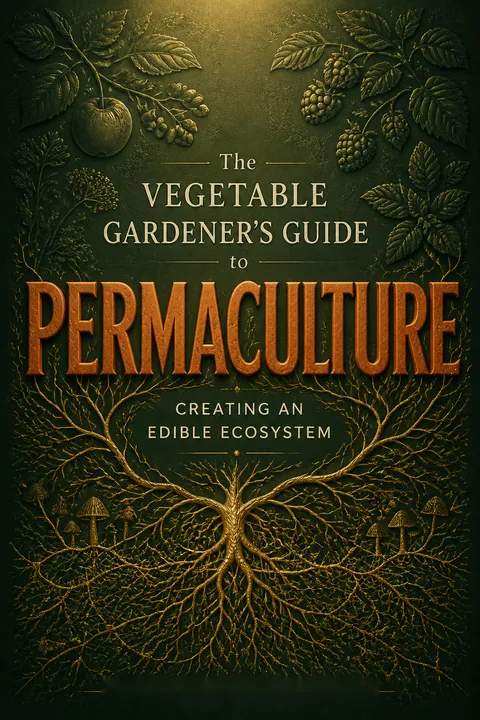


Key Takeaways
Design an edible ecosystem, not a vegetable plot with nature kept outside.
Change the starting point. Permaculture combines ecology, landscape design, and food growing. Instead of treating a garden as rows of crops that need constant correction, it builds relationships among plants, soil life, water, animals, and people. The aim is to grow food while making the garden more fertile and useful over time, with less reliance on digging, purchased inputs, and pest control. The approach can fit a balcony, a small yard, or a larger site, though the design changes with the place.
Let nature do more. Shein draws on natural farming traditions, including Masanobu Fukuoka’s practice of asking which interventions could be avoided. In this view, a garden is not a finished picture but a living system that grows, produces, and returns material to the soil.
The useful shift is from asking, “What should be planted here?” to asking, “What relationships could make this place productive?” That question brings maintenance into the design itself: shade can protect a crop, fallen leaves can feed soil, and plant diversity can support pollinators. It also makes the promise of “less work” conditional rather than automatic. Establishing a diverse garden takes observation, planning, and sometimes substantial labor. The strongest version of the idea is not effortless gardening, but work that builds assets instead of repeatedly undoing damage.
Study sun, slope, water, and daily routines before planting.
Read the site first. Observe where sunlight falls across seasons, how wind moves, where rain collects, and which areas stay wet, dry, hot, or shaded. Note buildings and neighboring trees, too. A soil test can reveal pH, nutrients, and possible contaminants, while a simple drainage test helps identify compacted or slow-draining ground. Local gardeners and nearby gardens can tell you which varieties actually thrive in the area.
Design for real use. Shein spent a year watching a yard that flooded in winter and had a shaded vegetable patch. He replaced much of the lawn and unproductive planting with food crops, and used sheet mulch to address the flooding. Herbs and frequently picked crops belong near the kitchen; less-visited plantings can go farther away.
This is a form of applied fieldwork: gather evidence before committing resources. The practice resembles good architecture and engineering, where sunlight, drainage, and use patterns shape the plan rather than being treated as inconveniences afterward. Observations also prevent a common mistake: copying a successful garden without copying the conditions that made it successful. A full year of monitoring may be impractical for renters or people facing urgent food needs. Even a short log of sun, rainfall, and use can improve decisions, provided it is treated as a starting point rather than a complete site survey.
Make every fruit tree the center of a cooperative plant community.
Build a guild. A fruit tree guild is a planned group of plants around a fruit or nut tree, selected to perform different jobs. Nitrogen-fixing plants support fertility; living mulches shade soil and limit weeds; deep-rooted nutrient accumulators bring minerals closer to the surface; and flowering plants attract pollinators and predatory insects. The combinations should suit local conditions rather than follow a universal recipe.
Stack useful layers. A food forest extends the same idea across a site, with canopy trees, smaller trees, shrubs, herbs, roots, ground covers, vines, and fungi sharing space. The familiar Three Sisters planting offers a compact example: corn supports beans, beans help supply nitrogen, and squash shades the soil. In a home garden, these relationships can produce more kinds of food without demanding a separate bed for every crop.
The design goal is functional diversity, not simply visual variety. Each plant earns its place by producing food, improving soil, attracting beneficial life, or making another plant easier to grow. This resembles engineering with multiple-use components: a tree can provide fruit, shade, habitat, and mulch, so one element serves several needs. The caveat is that proximity does not guarantee cooperation. Plants still compete for light, water, and nutrients, and vigorous species can overwhelm a guild. Observation and pruning are part of the design, not evidence that the design failed.
Slow rain and store it in soil before it runs away.
Treat runoff as a resource. Roof water can be directed into barrels, tanks, or garden basins. On sloping land, swales are level-bottomed ditches dug along contour; they slow runoff so water can soak into the soil. The excavated earth forms a downhill berm that can be planted to hold the ground and use the stored moisture. In dry climates, sunken beds can gather rain around crops. Mulch and drip irrigation further reduce water loss.
Follow the water. Watch the site during heavy rain to see where water enters, pools, or escapes. Shein contrasts this with drainage systems designed only to send stormwater away, which can contribute to erosion and carry sediment into waterways. Greywater from showers, baths, and washing can also irrigate plants, but systems and local rules vary, so check regulations and use an appropriate setup.
Water design is landscape-scale thinking brought down to the backyard. The useful principle is to manage where water moves, how fast it travels, and where it can be absorbed, rather than treating irrigation as the only water question. This connects gardening to watershed stewardship: many small decisions about runoff shape what reaches streets and streams. But water-harvesting structures require sound placement. A poorly designed swale can create drainage problems or instability, especially on steep slopes. The book’s emphasis on measurement matters; contour should be measured rather than guessed, and complex sites merit local expertise.
Feed the soil with the garden's leftovers instead of digging it bare.
Keep fertility circulating. Healthy soil depends on organic matter and the organisms that break it down. Compost returns kitchen scraps, leaves, and plant trimmings to the garden. A useful pile balances green, moist material with dry brown material, air, and water; the target is damp like a wrung-out sponge, not soggy. Shein gives a rough carbon-to-nitrogen balance of 30 to 1 as a guide for active composting.
Cover and protect. Mulch suppresses weeds, retains moisture, and becomes soil as it decomposes. Sheet mulching uses layers of paper or cardboard and organic matter to smother lawn or weeds without tilling. Cover crops, such as fava beans or buckwheat, protect unused beds and add biomass. In Shein’s dry-summer garden, he used at least four inches of mulch to keep clay soil workable.
Soil building is the book’s clearest example of turning an output into an input. Food scraps and prunings are not useless leftovers if the garden has a route for returning them to fertility. This circular design reduces dependence on imported materials and makes soil care visible rather than mysterious. It also challenges the idea that tidy, exposed beds are necessarily well managed. Still, compost recipes are starting points, not guarantees. Materials differ, and too much moisture, insufficient air, or contaminated feedstock can cause problems. The practical lesson is to monitor the pile and the soil, not to follow a ratio mechanically.
Mix crops and perennials so pests or weather cannot erase everything.
Spread the risk. Polyculture means growing several kinds of plants together instead of relying on one crop. Shein describes growing twelve to fifteen plant species or varieties in a bed. If slugs damage lettuce, less appealing plants may still produce a harvest. The book points to the Irish Potato Famine as a warning about dependence on one widely grown potato variety, while noting that thousands of potato varieties are cultivated in the Andes.
Make room for permanence. Perennial crops return year after year, disturb soil less, and can provide early spring food. A garden can combine fruit trees, shrubs, perennial vegetables, annual crops, and flowers, with plantings adjusted to local climate and available space. Some crop loss is part of supporting wildlife, but habitat for pollinators, birds, and pest predators can help keep the garden’s relationships in balance.
Diversity functions as both ecological support and a practical hedge against uncertainty. A mixed garden is less exposed to the failure of a single crop, and it can provide different harvests across seasons. The same logic appears in portfolios and supply chains: concentration can be efficient until conditions change. Diversity is not a magic shield, however. Several crops can share the same vulnerability, and a crowded planting can intensify competition or make harvesting harder. The more useful measure is functional diversity: include plants with different roles, seasons, and tolerances, then keep the combinations that work in the actual site.
Save seed from the plants that thrive in your exact place.
Select for local success. Saving seed lets gardeners choose plants for flavor, hardiness, and performance under their own conditions. Keep seed from healthy plants with desirable traits, then share extra with neighbors. Open-pollinated varieties can produce offspring similar to their parents, while hybrid seeds may not come true to type. The book’s example is a saved ‘Sungold’ tomato seed that produced a plant with poor-tasting fruit, unlike the original hybrid.
Know what can cross. Some plants pollinate themselves, while others cross through insects or wind. Related varieties flowering together can produce mixed seed; brassicas such as broccoli, cabbage, and kale are one example. Corn is especially difficult for small-scale seed saving because wind carries its pollen, and the book recommends at least 200 plants to reduce inbreeding. Begin with crops that are easier to keep true, such as many beans and peas.
Seed saving turns gardening into a form of long-term selection. A gardener is not merely choosing from a catalog but gradually favoring plants suited to a particular patch of soil and pattern of weather. It also preserves knowledge: a seed shared with a name, history, and growing notes carries more than genetic material. The caution about crossing is essential because saving seed does not automatically preserve a variety. Isolation, timing, and population size matter. Seed saving works best as a patient community practice, with clear labels and realistic expectations about which crops can be maintained reliably.
Treat surplus as a reason to build community, not accumulate more.
Make abundance social. Permaculture’s ethics include care for the earth, care for people, and fair share. Growing food can serve household needs while also creating opportunities to share produce, seeds, skills, and labor. Shein describes community seed libraries where people take small quantities of locally saved seeds and return seed after growing them. Produce swaps and volunteer days let neighbors exchange harvests and work.
Connect needs and outputs. A community garden can turn unused land into food and a place to learn. At a Petaluma Boys and Girls Club, volunteers replaced a lawn with a layered garden, planted fruit trees and habitat plants, and redirected roof water. Shein also describes a nursery that trained and employed people facing homelessness. These projects make the garden’s yields material, educational, and social.
The book treats sharing not as a charitable extra but as part of the garden’s design. That matters because harvests arrive unevenly: one household may have too many plums while another has space, labor, or skills to trade. Seed libraries and work parties create repeatable ways to connect those resources. They also build local knowledge that cannot be supplied by a planting diagram alone. Yet fair sharing depends on access to land, time, tools, and decision-making. Community gardening is strongest when participation is genuinely reciprocal and when the people doing the work help shape what the project grows.
Build in stages, then edit the garden as evidence arrives.
Start with a plan, not perfection. Shein’s design process moves from assessment to vision, concept, action plan, and re-evaluation. A vision names what the garden should provide; the concept places its major elements; the action plan specifies materials, plants, costs, and sequence. Plant long-lived trees and windbreaks first, then fill the open spaces with smaller plants and annual crops.
Let feedback change the design. Zones help place crops and structures according to how often they need attention. Herbs and salad greens belong close to the home, while less frequently visited plantings can be farther away. Shein’s own garden changed as he learned: a struggling tree collard was removed from a shaded bed, while raspberries found a more productive place at the edge. Reassessing each year turns setbacks into information.
This process avoids two traps: waiting for a flawless master plan and treating the first plan as permanent. The garden becomes a sequence of testable decisions. That is a powerful model for any project under changing conditions: make a workable move, observe its effects, and revise. Staging also limits the risk of investing heavily in infrastructure before the site is understood. The challenge is to distinguish useful feedback from temporary noise. One poor season may not justify removing a plant, while repeated failure in the wrong microclimate is meaningful evidence. Keeping dated notes makes that judgment less dependent on memory.
Analysis
This is both a practical gardening manual and an argument about how people should relate to land. Its strongest organizing idea is that a garden can be designed as a network of exchanges: plants make shade or mulch, animals eat pests and create manure, compost returns discarded material to soil, and people circulate food and knowledge. The result is not simply a list of sustainable techniques. It is a different definition of garden productivity, one that counts resilience, soil improvement, habitat, and community alongside harvest weight.
The book’s most useful contribution is its insistence on site-specific observation. Concepts such as guilds, food forests, zones, and swales become less like fashionable labels when tied to sunlight, drainage, household routines, and local crop varieties. Shein’s own garden provides an applied narrative: a flood-prone lawn and shaded vegetable patch become a layered edible space through observation, sheet mulching, tree planting, and repeated adjustment. That sequence makes the ecological design process legible to beginners.
The manual also has limits. Its many species recommendations and techniques span climates that cannot be treated as interchangeable, and some projects require technical skill, significant materials, or local regulatory knowledge. The book recognizes local adaptation, but readers still need to verify plant suitability, water rules, soil contamination, and invasive potential. Its enthusiasm for stacking functions should not be mistaken for a promise that every element will cooperate. Competition, pests, and maintenance remain real.
The deeper lesson is therefore not to reproduce a model garden, but to learn a method: observe, connect needs to outputs, begin at manageable scale, and revise from evidence. Permaculture is most persuasive when understood as a design discipline that joins ecological reasoning with ordinary household decisions. A small garden can express that discipline without becoming a miniature farm or adopting every technique in the book.
Review Summary
The Vegetable Gardener's Guide to Permaculture receives mixed reviews, with an average rating of 3.84/5. Readers appreciate its visually appealing layout and accessible introduction to permaculture concepts. Many find it helpful for beginners, particularly those in warmer climates. However, some criticize its lack of depth and limited applicability to colder regions. The book is praised for its practical tips, beautiful photographs, and clear explanations of permaculture principles. While some experienced gardeners find it too basic, others value its fresh perspective on sustainable gardening practices.
People Also Read

Glossary
Permaculture
Ecological design for livingAn approach to designing food production and human spaces around ecological relationships. In this book, it combines sustainable agriculture, landscape design, and ecology, with emphasis on observing local conditions, building soil, growing diverse plant communities, reusing resources, and sharing yields. Its ethical foundation is care for the earth, care for people, and fair share.
Polyculture
Several crops grown togetherThe practice of growing diverse plants together so that the planting can provide several kinds of yield and support ecological relationships. The Three Sisters planting, with corn, beans, and squash, is a familiar example: the plants occupy different forms of space and contribute different functions. Polyculture contrasts with a monoculture, where a single crop dominates a large area.
Fruit tree guild
Support plants around a treeA planned grouping of edible and useful plants organized around a fruit or nut tree. Supporting plants may fix nitrogen, cover soil, draw nutrients from deeper layers, or attract beneficial insects. Guilds are designed to suit local conditions and are intended to make the planting more productive and less dependent on repeated outside inputs.
Food forest
Layered edible plantingA diverse garden modeled on the vertical structure of a forest. Its layers can include tall trees, smaller trees, shrubs, herbs, roots, ground covers, vines, and mushrooms. The design aims to use sunlight, soil, water, and vertical space efficiently while combining crops and other useful plants into a productive ecosystem.
Stacking
Combining yields in spaceA design practice that increases the yield of an area by combining plants, animals, structures, or planting times. Physical stacking places plants in different vertical layers, as in a food forest. Timing can also be stacked, such as growing cool-season crops beneath deciduous trees while their branches are bare and sunlight reaches the ground.
Sectors
External forces affecting a siteA planning tool for mapping outside energies that influence a garden, including sun, wind, rain, flooding, fire risk, wildlife, neighboring buildings, and noise. A sector map helps gardeners notice which influences can be welcomed, redirected, or buffered. It is commonly drawn over a basic property map to inform placement of plants and structures.
Permaculture zones
Placement by frequency of useA way to organize a site according to how often people visit or maintain its different areas. Zone 0 represents the home and the people who live there; Zone 1 is closest and most frequently tended; Zones 2 through 4 are progressively less intensively used; Zone 5 represents wilderness. Boundaries are flexible and depend on the site.
Hugelkultur
Woody raised growing moundA method of building a planting mound from woody material such as logs, branches, and other garden debris, covered with soil, compost, or mulch. The buried wood decomposes gradually and can retain moisture, while the mound provides a place to grow crops. It repurposes material that may be too bulky or slow to break down in an ordinary compost pile.
Sheet mulching
Layered weed-smothering mulchA no-till method of preparing ground by covering existing vegetation with overlapping cardboard or newspaper and layers of organic materials such as compost, manure, leaves, straw, or woodchips. The covering blocks light and decomposes over time, helping convert lawns or weedy areas into planting beds. The book recommends making layers deep enough to smother the underlying growth.
Dynamic nutrient accumulators
Deep-rooted mineral gatherersPlants with roots that reach into deeper soil layers and take up minerals that may be less available to shallow-rooted plants. When their leaves are cut, dropped as mulch, or composted, some of that organic material returns to the garden’s surface layer. Examples discussed in the book include comfrey, dandelion, chicory, borage, and yarrow.
Vermiculture
Composting with red wormsThe conversion of organic material into compost by red worms, especially Eisenia fetida, in a managed bin. The worms consume kitchen scraps and bedding, producing castings used as a soil amendment. Vermiculture can suit gardeners with limited space or those who do not want to turn a conventional compost pile; bins need appropriate moisture, temperature, and food.
FAQ
What's "The Vegetable Gardener's Guide to Permaculture" about?
- Overview: The book is a practical guide to creating an edible ecosystem using permaculture principles. It focuses on integrating sustainable agriculture, landscape design, and ecology to create abundant gardens.
- Permaculture Focus: It emphasizes working with nature to design gardens that thrive with minimal intervention, using techniques like polyculture plantings and fruit tree guilds.
- Author's Experience: Christopher Shein shares his extensive experience in permaculture gardening, offering insights from his work in community gardens and as a permaculture educator.
- Comprehensive Guide: The book covers everything from soil building and choosing crops to designing permaculture gardens and engaging with the community.
Why should I read "The Vegetable Gardener's Guide to Permaculture"?
- Practical Advice: The book provides actionable steps for gardeners of all levels to implement permaculture techniques in their gardens.
- Sustainability Focus: It offers a sustainable approach to gardening that reduces labor and resource use while increasing yields.
- Community Engagement: The book emphasizes the importance of community in permaculture, encouraging readers to share resources and knowledge.
- Inspiration and Education: Readers will find inspiration in the author's personal stories and gain a deeper understanding of ecological gardening.
What are the key takeaways of "The Vegetable Gardener's Guide to Permaculture"?
- Permaculture Principles: The book outlines the twelve principles of permaculture, such as observing and interacting, catching and storing energy, and using small and slow solutions.
- Design Strategies: It provides detailed guidance on designing permaculture gardens, including assessing the site, mapping sectors, and planning zones.
- Soil Health: Emphasizes the importance of building healthy soil through composting, mulching, and using cover crops.
- Community and Sharing: Highlights the role of community in permaculture, encouraging practices like seed sharing and community-supported agriculture.
What are the best quotes from "The Vegetable Gardener's Guide to Permaculture" and what do they mean?
- "Thoughtful and protracted observation, not thoughtless and protracted labor." This quote by Bill Mollison emphasizes the importance of understanding natural systems before taking action in the garden.
- "Permaculture is a ten-thousand-year-old, cutting-edge technology." This highlights the blend of ancient wisdom and modern innovation in permaculture practices.
- "To share willingly with others, we must feel we have enough." Reflects the permaculture ethic of fair share, promoting abundance and generosity within communities.
- "The state of the soil is often the best measure for the health and well-being of society." Stresses the critical role of soil health in sustainable agriculture and community resilience.
How does Christopher Shein define permaculture in "The Vegetable Gardener's Guide to Permaculture"?
- Sustainable Agriculture: Permaculture combines sustainable agriculture, landscape design, and ecology to create self-sustaining ecosystems.
- Working with Nature: It encourages gardeners to work with natural processes rather than against them, reducing the need for external inputs.
- Design Philosophy: Permaculture is a design philosophy that uses natural ecosystems as models for creating productive and resilient gardens.
- Ethical Foundation: It is built on ethical principles of earth care, people care, and fair share, promoting ecological and social responsibility.
What are the twelve principles of permaculture outlined in "The Vegetable Gardener's Guide to Permaculture"?
- Observe and Interact: Understand your site and local conditions before making changes.
- Catch and Store Energy: Use resources efficiently to ensure availability during scarcity.
- Obtain a Yield: Ensure that your garden provides tangible benefits, such as food or community connections.
- Apply Self-Regulation and Respond to Feedback: Adapt to changing conditions and learn from mistakes.
- Use and Value Renewable Resources: Prioritize sustainable and renewable inputs in the garden.
- Produce No Waste: Reuse and recycle materials to minimize waste.
- Design from Patterns to Details: Use natural patterns as templates for garden design.
- Integrate Rather than Segregate: Create beneficial relationships between garden elements.
- Use Small and Slow Solutions: Focus on gradual, sustainable changes rather than quick fixes.
- Use and Value Diversity: Cultivate a variety of plants to enhance resilience.
- Use Edges and Value the Marginal: Maximize productivity by utilizing all available space.
- Creatively Use and Respond to Change: Embrace change as an opportunity for growth and learning.
How does "The Vegetable Gardener's Guide to Permaculture" suggest building healthy soil?
- Composting: Use a mix of green and brown materials to create nutrient-rich compost.
- Mulching: Apply organic materials like straw or woodchips to retain moisture and suppress weeds.
- Cover Crops: Plant cover crops to add organic matter and nutrients to the soil.
- No-Till Methods: Avoid disturbing the soil structure by minimizing digging and plowing.
What is a polyculture garden according to "The Vegetable Gardener's Guide to Permaculture"?
- Diverse Plantings: A polyculture garden involves growing a variety of plants together to create mutually beneficial relationships.
- Natural Model: It mimics natural ecosystems, reducing the need for chemical inputs and increasing resilience.
- Higher Yields: Polycultures often result in higher yields in less space compared to monocultures.
- Reduced Maintenance: By integrating plants that support each other, polyculture gardens require less maintenance.
How does "The Vegetable Gardener's Guide to Permaculture" address community involvement?
- Seed Libraries: Encourages the creation of community seed libraries to share and preserve local plant varieties.
- Volunteer Days: Suggests organizing volunteer days for communal gardening projects and skill-sharing.
- Community Supported Agriculture: Promotes CSA models to support local farmers and provide fresh produce to communities.
- Produce Swaps: Recommends organizing produce swaps to share garden abundance and build community connections.
What are fruit tree guilds as described in "The Vegetable Gardener's Guide to Permaculture"?
- Central Element: A fruit tree guild centers around a fruit or nut tree, with supporting plants arranged in layers.
- Supporting Layers: Includes nitrogen fixers, living mulches, nutrient catchers, and insect attractors to support the central tree.
- Cooperative Planting: Plants are chosen for their ability to work together, reducing the need for external inputs.
- Customizable Design: Guilds can be tailored to local conditions and personal preferences, offering flexibility in design.
How does "The Vegetable Gardener's Guide to Permaculture" suggest using water in the garden?
- Water Harvesting: Capture rainwater from roofs and store it in cisterns or rain barrels for later use.
- Greywater Systems: Recycle household wastewater for irrigation, following local regulations.
- Swales and Infiltration: Use earthworks like swales to slow, spread, and sink water into the landscape.
- Efficient Irrigation: Implement drip irrigation systems to minimize water waste and ensure consistent moisture.
What role do mushrooms play in permaculture according to "The Vegetable Gardener's Guide to Permaculture"?
- Soil Health: Mushrooms contribute to the soil food web by breaking down organic matter and adding nutrients.
- Bioremediation: Certain mushrooms can help clean contaminated soil and water through natural filtration processes.
- Edible Crop: Mushrooms provide a nutritious food source that can be grown in shady, damp areas of the garden.
- Low Maintenance: Once established, mushrooms require minimal care and can thrive in a variety of growing mediums.
Download PDF
Download EPUB
.epub digital book format is ideal for reading ebooks on phones, tablets, and e-readers.








