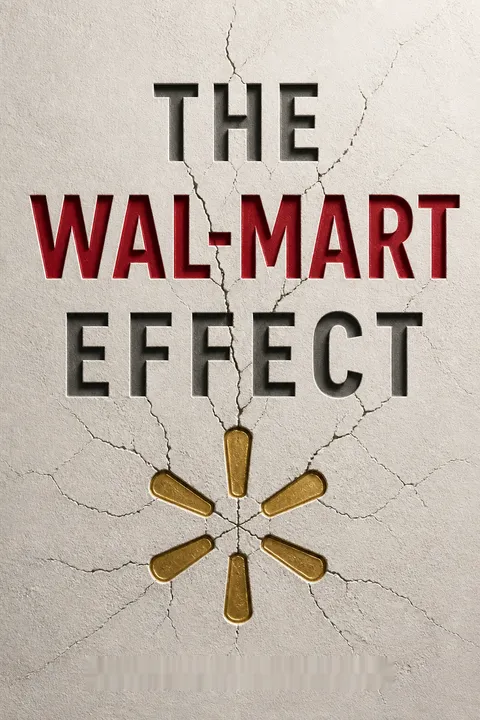


Key Takeaways
Treat small savings as economic force, not harmless shopping trivia
Small changes travel far. Wal-Mart’s influence starts with routine choices and tiny cost cuts. In the 1990s, it pressed deodorant makers to remove the cardboard box around each container. The box added no value for shoppers, but it cost about five cents, used shelf space, and required materials and shipping. Multiplied across millions of purchases, a few pennies became hundreds of millions of dollars in savings and a lasting reduction in packaging. The same logic helped Wal-Mart become the country’s leading grocer after starting with just nine supercenters in 1990.
The reach is the point. Fishman calls this cascade of changes the Wal-Mart effect: the consequences of a retailer using its scale and relentless cost pressure to reshape products, suppliers, competitors, communities, and shoppers’ ideas of what things should cost. The effects can be useful, damaging, or both.
The deodorant box is a miniature lesson in systems thinking: a small decision becomes consequential when repeated across a vast network. This is why judging a corporation by a single price or product misses the structure of its influence. Scale turns ordinary transactions into a kind of private rule-making. Yet scale alone does not establish whether an effect is good. The same leverage can remove waste or push costs onto workers and communities. The useful question is not simply whether a change saves money, but who receives the savings, who bears the disruption, and what the price leaves out.
Thrift becomes dangerous when discipline outruns judgment
A culture built on pennies. Sam Walton taught managers to treat payroll, inventory, and everyday spending as measurable responsibilities. A young store manager who exceeded his payroll budget by just $20 a week lost a new assistant. The lesson was to run the store as if the money were one’s own. That discipline helped Wal-Mart operate at lower cost than rivals: its selling, general, and administrative expenses averaged 17.5 percent of sales, compared with Target’s 20.6 percent.
The virtue can invert. The same pressure to control costs appeared in lawsuits alleging unpaid work, sex discrimination, and employees locked inside stores overnight. The allegations arose in a company where local managers faced strict labor budgets and performance targets. Fishman’s point is not that thrift is inherently abusive, but that a valuable principle can become a permission structure when results matter more than the people producing them.
Wal-Mart’s cost culture illustrates a classic organizational hazard: a metric can begin as a useful proxy for good management, then become the goal itself. Payroll discipline can prevent waste, but if managers are rewarded for reducing labor cost without equal scrutiny of working conditions, the measure invites harmful shortcuts. This is a problem of governance, not merely individual character. The company’s early values of accountability and hard work remain powerful, but mature organizations need counterweights: independent review, safe ways to report misconduct, and incentives that measure how results are achieved as well as what they cost.
Use Wal-Mart's scale without mistaking dependence for partnership
Scale can lift small firms. Jonathan Fleck’s Makin Bacon dish, invented with his daughter, became a national product after Wal-Mart ordered 200,000 units. Wal-Mart gave Fleck steady volume and access to detailed sales data. Its orders also helped keep his nearby U.S. factory running efficiently, allowing him to offer the dish to other retailers at lower prices. Fleck estimated that without Wal-Mart’s volume, the product would cost at least 50 percent more at smaller stores.
Efficiency can spread. Sara Lee’s Wal-Mart team found ways to use trucks returning from Florida with empty space and to ship underwear in more manageable cases. The changes reduced the companies’ combined distribution costs by 1.5 to 2 percent and improved store availability. These accounts show real gains, but the relationship is asymmetric: Wal-Mart supplies access and volume, while suppliers must adapt to the retailer’s requirements and can lose a crucial customer if the arrangement ends.
These examples complicate the idea that a powerful buyer only extracts value. A large, predictable customer can help a small manufacturer finance production, make better use of capacity, and spread efficiencies across its other sales. In supply-chain terms, reliable demand can reduce uncertainty and wasted inventory. But that benefit carries concentration risk: a supplier may become organized around one customer’s systems, timing, and data. Calling this a partnership can obscure the difference in bargaining power. The practical lesson for firms is to use the scale and learning while preserving other customers, production options, and enough independence to survive a change in the buyer’s plans.
When one buyer dominates, its price becomes a rule, not a signal
A bargain can distort a market. Wal-Mart turned Vlasic’s gallon jar of pickles into a signature deal at $2.97. The jar sold rapidly, but it threatened sales of the smaller, more profitable pickle products. Vlasic’s employees disagreed about how much pressure the retailer applied, but the company feared losing broader Wal-Mart business if it raised the price. After two and a half years, Wal-Mart ended the promotion, saying the deal had damaged the category.
Buyer power has a name. Monopsony is a market condition in which a dominant buyer has unusual power over its suppliers. In Fishman’s account, Wal-Mart’s size could make a price reflect the retailer’s strategy more than the underlying supply and demand for a product. Supplier silence made this influence hard to examine: companies feared that speaking openly could endanger their business.
Prices usually help coordinate markets because they communicate information about scarcity, demand, and cost. A dominant retailer can weaken that signal when it uses a product as a promotional symbol, rather than pricing it to reflect the economics of production. The pickle example shows how a price can shape consumer expectations and supplier choices beyond a single transaction. Still, the supplier is not without agency: Vlasic chose to participate, and its motives included preserving access to a major account. Understanding buyer power therefore requires examining both sides, especially where dependence makes a nominally voluntary deal difficult to refuse.
Protect what makes your product worth more than its shelf price
A supplier can refuse. When Jim Wier took control of Snapper, he ended the company’s sales through Wal-Mart, giving up nearly 20 percent of its business. He believed that repeated price reductions would eventually require changes to quality and features, undermining Snapper’s reputation with independent dealers and customers. The company instead emphasized durable mowers, careful testing, and dealer service, including setup and repair.
The market still sets the pace. Snapper remained highly focused on productivity, modernizing its factory and producing more models with fewer workers. Its leaders did not treat domestic manufacturing as a sentimental cause; they argued that the plant remained competitive. The harder challenge was consumer perception. Once a low price becomes the reference point, a better-made product can look like a ripoff, even when the price reflects real differences in materials, service, or lifespan.
Snapper’s choice is a useful strategic distinction between competing on price and competing on value. A company cannot preserve a premium identity merely by insisting that its product is better; it must make the difference visible through reliability, service, design, or a customer experience that matters. The story also shows why niche strategies need capable channels. Independent dealers supplied expertise and maintenance that big-box self-service did not. Yet refusing a dominant retailer is not a universal formula. It worked because Snapper had another route to customers and a defensible product distinction, conditions many suppliers may not have.
Measure the jobs as carefully as the savings
Evidence makes trade-offs visible. Economist Emek Basker found that Wal-Mart’s arrival lowered prices on many goods by 1.5 to 3 percent in the short run, with larger long-run declines in some estimates. Her employment study found an initial rise of about 100 retail jobs in a typical county, but only about 50 additional retail jobs after five years, despite a new store employing hundreds. Four small retailers closed within five years, and wholesale employment also declined, leaving a net gain of roughly 30 jobs.
The wider effects are harder to count. Another study estimated that Wal-Mart’s presence reduced the pace of poverty decline in U.S. counties during the 1990s. A separate analysis argued that official grocery inflation figures missed some price effects from supercenters. These studies answer different questions, use historical data, and reveal why claims about jobs, prices, and prosperity need careful measurement rather than slogans.
The strongest contribution of this research is not a verdict for or against Wal-Mart, but a method: define the outcome, build a comparison, and distinguish correlation from impact. A store can create jobs inside its walls while displacing jobs elsewhere, so counting hires alone gives an incomplete picture. Likewise, lower prices are a genuine benefit, but they do not show who loses income or whether the gains persist. The studies also have boundaries: county averages can conceal differences among workers, and results from one period do not automatically describe another. Good policy needs both transparent data and careful attention to distribution.
Trace cheap goods to the workers and ecosystems absorbing their costs
Low prices can omit costs. In the book’s reporting, farmed Chilean salmon sold at Wal-Mart for $4.84 a pound while its production raised concerns about ocean waste and factory workers’ conditions. A million densely confined salmon could produce waste comparable to that of 65,000 people, according to an environmental advocate cited by Fishman. The book also describes a Bangladeshi garment worker who said she earned 13 cents an hour and faced severe mistreatment while making clothes for U.S. retailers. Those claims illustrate what a shelf price cannot reveal.
Audits do not guarantee protection. Wal-Mart reported thousands of factory inspections in 2004, but only 8 percent were unannounced. Serious violations were still recorded at many inspected factories. The point is not that every low-cost product hides abuse, but that codes and inspections must be judged by conditions workers experience, not by the existence of a compliance program.
This is an externalities problem: part of a product’s cost is borne by people or ecosystems outside the sale, so the checkout price understates the total burden. Supply-chain standards can make those costs more visible, but monitoring is difficult when production is distant, subcontracted, and fast-changing. The salmon and garment cases also demand careful evidentiary language: reported allegations and documented violations are not interchangeable, and neither proves that every supplier behaves similarly. The broader insight remains compelling. A buyer with enormous purchasing power can shape production standards, but meaningful accountability requires independent verification, worker access to reporting channels, and consequences for repeated violations.
A bargain feels virtuous, making its hidden trade-offs easy to ignore
Savings are real. Fishman estimated that shoppers saved about $30 billion in 2004 through Wal-Mart’s lower prices, including roughly $22 billion on groceries. For a family spending $500 a month on food, a 15 percent grocery savings would amount to $900 over a year. That is not an abstract benefit for households with tight budgets. At the same time, the savings do not reveal what happened to a displaced shop, a factory job, or a supplier’s margin.
Shopping can feel like a moral choice. Research in Oklahoma City found that some shoppers who disliked Wal-Mart’s effects still visited frequently and spent heavily there. Low prices offered a sense of prudence, even as the shopping experience could be exhausting and the consequences troubling. Fishman’s comparison with Southwest Airlines shows that price alone does not explain public affection: customers also respond to service, personality, and whether the business seems to treat people fairly.
The shopper’s dilemma resembles a collective-action problem. Each household has a clear, immediate reason to choose the cheaper item, while the costs of lost jobs or environmental damage are dispersed and difficult to connect to any one purchase. Moral appeals alone rarely overcome a concrete budget constraint. Better decisions require institutions that make hidden costs legible and offer credible alternatives, rather than placing the entire burden on individual shoppers. The comparison with Southwest is also useful: efficiency need not feel hostile. A company’s treatment of customers and workers shapes whether low prices are experienced as a shared gain or as a bargain extracted from someone else.
Make corporate power answerable, then judge reform by changed operations
Listening changed the company’s approach. In the 2011 update, former CEO Lee Scott describes meeting critics and discovering that Wal-Mart had more than a communications problem: it had substantive problems to address. The company began treating sustainability as an extension of its efficiency mission. Examples included new U.S. supercenters designed to use 30 percent less energy than comparable older stores, wind power for hundreds of stores in Mexico, and a supplier goal to reduce product packaging by 5 percent between 2008 and 2013.
Good intentions need scrutiny. Wal-Mart also developed tools to track packaging and chemical ingredients, and invited competitors to see some energy-saving designs. These efforts could spread improvements through vast supply chains. But the book cautions that the same cost pressure can undermine labor standards, product quality, or environmental goals if savings remain the only measure of success. Transparency and sustained results matter more than a new corporate story.
The sustainability turn is most persuasive where environmental improvement aligns with operational efficiency: less packaging, lighter shipments, and lower energy use can reduce waste and expense together. That alignment gives reform a route through an organization built around cost discipline. The harder test comes when responsible production requires spending more or accepting slower growth. Corporate commitments therefore need public targets, independent measurement, and disclosure of setbacks, not just visible pilots. The book’s argument for transparency is central: when a company’s decisions shape whole markets, the public needs enough information to assess those decisions and distinguish durable change from a well-designed campaign.
Analysis
Fishman’s central achievement is to make corporate scale concrete. The book does not treat Wal-Mart as a villainous abstraction or a neutral shop with unusually low prices. It follows the chain from a small design decision, such as removing deodorant packaging, through supplier operations, employment, consumer expectations, and public policy. The result is a portrait of market power as something exercised through ordinary transactions, often without an explicit order or a dramatic confrontation.
The argument is strongest when it holds benefits and harms in view at once. Lower prices deliver measurable gains to households, while job displacement, weakened supplier margins, and environmental damage are often dispersed across places and people far from the shopper. That asymmetry helps explain why the benefits are easy to celebrate and the costs hard to organize around. It also clarifies why consumer choice alone may not provide adequate accountability when suppliers and local communities have limited bargaining power.
The book’s evidence is deliberately mixed: interviews provide human texture, while academic studies test claims about prices, jobs, poverty, and inflation. Those methods complement each other, but they do not erase uncertainty. Some studies cover particular periods or geographic units, and a supplier’s story cannot stand in for every supplier. The book is strongest when it treats such evidence as a reason to ask better questions, not as a final universal answer.
Its 2011 sustainability update extends the same logic in a hopeful direction: a retailer capable of pushing costs down can also press suppliers to reduce waste and environmental harm. That possibility is real, but alignment with savings is not guaranteed. The enduring lesson is institutional: concentrated private power can improve coordination at enormous scale, yet the public needs transparency and countervailing standards to ensure that efficiency does not simply relocate its costs. Wal-Mart is not just a company to approve or condemn. It is a test of whether democratic societies can see, measure, and govern the consequences of market power they actively reward.
Review Summary
The Wal-Mart Effect explores the company's impact on the American economy and global marketplace. Fishman presents both positive and negative aspects of Wal-Mart's business practices, including lowering consumer prices and streamlining supply chains, but also putting pressure on suppliers and potentially harming local economies. The book is praised for its balanced approach and thorough research, though some readers found it repetitive. Many reviewers noted that the book changed their perspective on Wal-Mart and encouraged them to consider the broader implications of their shopping choices.
People Also Read









Glossary
Wal-Mart effect
Retail power reshaping marketsThe broad consequences of Wal-Mart’s scale and cost discipline across retail, manufacturing, communities, and consumer behavior. The effects include lower prices and supply-chain efficiencies, as well as pressure on suppliers, displaced businesses and jobs, and altered expectations about quality and value. The phrase is not inherently positive or negative; its meaning depends on the effect being examined.
Wal-Mart economy
Life organized around low pricesFishman’s term for the wider system associated with relentless low prices: consumer spending driven by bargains, retail work with limited pay or security, and production increasingly sourced from low-wage countries. It captures anxiety that cheaper goods may carry social costs that shoppers do not see, while also acknowledging how difficult it is for consumers to resist the savings.
monopsony
Dominant buyer powerA market condition in which one buyer, or a small number of buyers, has unusual influence over suppliers because it controls access to a large share of demand. In the book, Wal-Mart’s size gives it leverage over prices and supplier decisions. The concept parallels monopoly, which describes concentrated power on the selling side of a market.
Retail Link
Wal-Mart supplier sales databaseWal-Mart’s proprietary system that gives suppliers detailed information about sales of their products in its stores. Vendors can use the data to track where and when items sell, identify stock problems, and plan promotions or inventory. The system can help suppliers make better decisions, while also requiring them to analyze information in service of Wal-Mart’s business.
category captain
Supplier advising on a product categoryA supplier selected to analyze an entire merchandise category at a retailer, including competing brands, and recommend assortments, shelf arrangements, or displays that may improve sales. Wal-Mart’s use of category captains shifts analytical work to suppliers and gives the retailer specialized advice, while raising questions about conflicts of interest and how recommendations are evaluated.
everyday low price
Stable, continuously low pricingA retail pricing approach that keeps prices consistently low instead of alternating between a regular price and temporary promotional discounts. Wal-Mart asks suppliers to account for discounts across the year and build them into a lower ongoing price. The approach can smooth demand and simplify shopping, but it also makes price increases difficult even when supplier costs rise.
GreenWERCS
Chemical ingredient review programA Wal-Mart initiative described in the book that asks companies selling household cleaning and chemical products to disclose their ingredients. The information is used to assess potential environmental and human-health impacts and encourage suppliers to choose less harmful substances. The program applies Wal-Mart’s purchasing influence to product composition, not only to price and packaging.
packaging scorecard
Supplier packaging trackerAn online tool Wal-Mart developed for suppliers to register products and track packaging changes against the company’s reduction goals. Its influence comes partly from giving Wal-Mart buyers information they can consider when choosing which products to stock. The tool turns packaging efficiency into a factor in supplier relationships alongside price and delivery performance.
FAQ
What's The Wal-Mart Effect about?
- Exploration of Influence: The book examines how Wal-Mart, as the largest retailer globally, has transformed the American economy and retail landscape.
- Pricing and Power: It delves into Wal-Mart's "Everyday Low Prices" strategy and its effects on suppliers, competitors, and consumers.
- Community Impact: The book discusses the broader implications of Wal-Mart's presence, including job creation and destruction, and effects on local businesses.
Why should I read The Wal-Mart Effect?
- Insightful Analysis: Charles Fishman provides a well-researched view of Wal-Mart, essential for those interested in economics, business, or consumer culture.
- Real-Life Stories: The book includes compelling anecdotes and interviews that make complex economic concepts relatable.
- Critical Perspective: It encourages readers to think critically about the cost of low prices and the hidden consequences of shopping at big-box retailers.
What are the key takeaways of The Wal-Mart Effect?
- Power of Scale: Wal-Mart's immense buying power allows it to dictate terms to suppliers, leading to lower prices for consumers but challenges for manufacturers.
- Job Dynamics: While creating jobs, Wal-Mart often does so at the expense of existing businesses, leading to a net loss of retail jobs in surrounding areas.
- Sustainability and Change: The book discusses Wal-Mart's focus on sustainability and its attempts to reshape its image and practices in response to criticism.
What are the best quotes from The Wal-Mart Effect and what do they mean?
- “We didn’t need to tell our story better. We needed a better story.”: Reflects Wal-Mart's realization that it must improve its practices and image.
- “Every time you see the Wal-Mart smiley face, whistling and knocking down the prices, somewhere there’s a factory worker being kicked in the stomach.”: Highlights the unseen human cost of Wal-Mart's low prices.
- “You have to start out listening.”: Underscores the importance of understanding criticism and engaging with stakeholders for positive change.
How does Wal-Mart's pricing strategy affect suppliers?
- Pressure to Lower Prices: Wal-Mart demands annual price reductions, leading to cost-cutting measures that compromise product quality.
- Impact on Manufacturing: Suppliers often outsource production to countries with lower labor costs, resulting in U.S. job losses.
- Supplier Relationships: Suppliers feel compelled to comply with Wal-Mart's demands, creating a cycle of dependency.
What is the "Wal-Mart effect"?
- Definition of the Concept: Refers to Wal-Mart's significant impact on pricing, product availability, and the retail landscape.
- Economic Ripple Effects: Describes how Wal-Mart's practices influence suppliers, competitors, and the economy, often leading to lower prices.
- Cultural Shifts: Encompasses changes in consumer behavior and expectations due to Wal-Mart's dominance.
How does The Wal-Mart Effect address sustainability?
- Shift in Focus: Discusses Wal-Mart's initiatives to improve sustainability and reduce environmental impact.
- Influence on Suppliers: Wal-Mart uses its scale to push suppliers toward sustainable practices, leading to broader changes.
- Long-Term Strategy: Fishman argues that Wal-Mart's commitment to sustainability could redefine its role and improve its image.
How does Wal-Mart affect local businesses?
- Market Disruption: Wal-Mart's arrival often leads to the closure of local businesses unable to compete with its low prices.
- Job Losses: For every Wal-Mart that opens, several local businesses may close, resulting in significant job losses.
- Economic Dependency: Local economies can become overly reliant on Wal-Mart, leading to a lack of marketplace diversity.
How does The Wal-Mart Effect address labor practices?
- Wage Issues: Discusses how Wal-Mart's focus on low prices results in low wages, leading to reliance on public assistance.
- Working Conditions: Highlights reports of poor working conditions, including long hours and inadequate health benefits.
- Union Relations: Examines Wal-Mart's resistance to unionization and its impact on employee rights.
What are the environmental implications of Wal-Mart's practices?
- Sustainability Concerns: Raises questions about the environmental impact of Wal-Mart's supply chain.
- Resource Consumption: Discusses how demand for low prices can lead to unsustainable practices.
- Corporate Responsibility: Argues that Wal-Mart has a responsibility to implement sustainable practices.
How does Wal-Mart's global expansion affect local economies?
- Job Migration: Details how outsourcing manufacturing jobs to countries like China leads to U.S. job losses.
- Market Control: Wal-Mart imposes its pricing and operational standards on local suppliers, undermining local businesses.
- Cultural Impact: Wal-Mart's presence can lead to cultural homogenization as local businesses struggle to compete.
How does The Wal-Mart Effect suggest consumers can respond to Wal-Mart's practices?
- Informed Choices: Encourages consumers to be aware of their shopping habits' implications and support local businesses.
- Advocacy for Change: Suggests consumers advocate for better labor practices and environmental standards.
- Balancing Value and Ethics: Emphasizes balancing low prices with ethical considerations regarding labor and environmental impact.
About the Author
Other books by Charles Fishman

Download PDF
Download EPUB
.epub digital book format is ideal for reading ebooks on phones, tablets, and e-readers.








