

Key Takeaways
Read a health crisis as a summons to change, not a verdict
A life abruptly overturned. Mark Mincolla describes years of worsening pain, weakness, tremors, and cognitive problems after a period of intense work and personal stress. He reports testing positive for Lyme disease, mycoplasma, and Epstein-Barr virus. In July 2018, he fell and could not move for more than fourteen hours. Hospital treatment, medication, and rehabilitation helped him regain function; he also practiced prayer and meditation and followed dietary and herbal regimens. He says his recovery took eighteen months.
A personal interpretation. Mincolla saw the crisis as a reckoning with overwork and a lifelong habit of caring for others while neglecting himself. The experience forced him to confront whether he wanted to keep living. He understood recovery as a spiritual transformation, not simply a return to his former life.
The memoir gives the book an emotional anchor: its call to change comes from a practitioner who became seriously ill, not from an abstract promise of control. His reflection on self-neglect may help readers notice how relentless caregiving and overwork narrow a life. But illness should not be treated as evidence of personal failure or spiritual debt. The account also includes hospital care and rehabilitation, and a recovery story cannot establish which factors caused improvement. Its strongest lesson is the value of listening, seeking support, and reassessing an unsustainable life.
Cultivate superconsciousness as spiritual practice, not a medical guarantee
A wider frame of awareness. Mincolla calls superconsciousness the merging of personal awareness with a boundless Universal mind. He contrasts it with the conscious mind, which attends to the present; the subconscious, where accessible memories and habits are stored; and the unconscious, where painful material may be blocked. Superconsciousness is his spiritual account of awareness beyond the separate, ego-centered self.
A practice, not a measurement. He recommends mindfulness throughout the day, alongside meditation, prayer, and trance, as ways to quiet the drive to control every outcome. He invokes research on Tibetan monks practicing Tummo meditation as an example of unusual mind-body effects. Such findings may prompt questions about attention and physiology, but they do not demonstrate that a Universal mind exists or that spiritual practice can produce miraculous cures.
The framework has a practical strength even for readers who do not accept its metaphysics: it asks people to notice when attention is trapped in fear, self-judgment, or compulsive effort. That resembles contemplative traditions that distinguish awareness from the thoughts passing through it. The boundary between spiritual interpretation and empirical finding matters, however. Meditation can influence attention and stress responses; claims about access to unlimited power or universal consciousness go beyond what those effects establish. Holding both points in view preserves the practice without turning it into a scientific promise.
Use visualization to rehearse action, not to guarantee a miracle
Expectation shapes experience. The book argues that belief and imagination can influence the body and behavior. Mincolla cites placebo and nocebo effects, in which expectations can contribute to beneficial or harmful experiences, and research in which imagined piano practice activated brain responses associated with playing. He also describes a study reporting a 14 percent increase in muscle strength among people who visualized exercise, compared with a 30 percent increase among people who physically trained.
Make the image useful. Mincolla treats visualization as a step toward making an intended outcome real. A grounded application is to picture a specific action, such as completing a practice session, then do it. Mental rehearsal can support preparation and confidence. It cannot, by itself, establish that thoughts control genes, guarantee a desired outcome, or replace treatment for serious illness.
Mental rehearsal is most persuasive when understood as preparation rather than supernatural causation. In sport and rehabilitation, imagining a movement can engage some of the same motor systems used in performing it, making visualization a plausible supplement to practice. Expectancy can also shape symptoms and effort, though its effects vary by person and condition. The distinction is crucial: an expectation may change how someone feels or behaves without changing the underlying disease. A useful visualization therefore ends in a concrete behavior, not a promise that reality must comply.
Interrupt stress by returning your attention to the present breath
Stress changes the body's priorities. Drawing on Hans Selye's account of the general adaptation syndrome, Mincolla explains how a perceived threat can activate the body's fight-or-flight response. Adrenaline and cortisol prepare the body for immediate action. That response can be protective in an emergency, but prolonged stress can strain sleep, attention, and physical well-being. The book also points to information overload and constant connectivity as sources of persistent tension.
Practice a brief reset. Mincolla recommends slowing the breath and directing attention to the sensations of breathing. He also presents HeartMath's Quick Coherence technique: take several slow breaths while recalling a person or experience that evokes care. The goal is to shift attention out of rumination and into a calmer state, not to eliminate every source of stress or treat a disease through breathing alone.
The useful insight is that stress is not just a busy calendar. It is a bodily state that can persist after an immediate threat has passed. Slow breathing and attention to the present offer accessible ways to interrupt that cycle, and research on paced breathing supports its potential to influence autonomic arousal. Still, stress is one contributor to health, not a universal explanation for illness. Social conditions, infection, genetics, and many other factors matter. Treating a breathing exercise as a reset rather than a cure keeps the practice both practical and appropriately modest.
Stop earning love through caregiving that erases your own needs
Care can become self-abandonment. Mincolla describes growing up as a peacemaker and carrying that role into adulthood. He became a caregiver, initiator, and apologizer, often putting his own needs last. During his illness, some people he expected to support him did not, while family and friends helped with basic care. He came to see receiving help and developing a kinder relationship with himself as necessary parts of recovery.
Separate generosity from depletion. In the book's vocabulary, self-contempt includes shame and the belief that worth must be earned through achievement or service. Mincolla argues that self-love makes more sustainable compassion possible. A practical translation is to ask whether care is freely chosen or driven by fear of disappointing others, then set a boundary or request support when needed.
This is one of the book's most recognizable human insights: giving can look virtuous while concealing an inability to receive. Research on caregiving and burnout likewise shows that sustained demands without adequate support can carry emotional costs. Self-respect does not require abandoning others; it can make care more durable by preventing resentment and exhaustion. The caution is that self-contempt should not be treated as the root cause of disease. Shame deserves attention and support, but it is not a diagnosis or a moral explanation for someone's illness.
Let hardship teach you without pretending every wound was necessary
Opposites can belong together. Mincolla draws on Taoist ideas of yin and yang to argue that pain and joy, loss and renewal, are parts of a larger whole. He describes his own brokenness as an opening that made room for a changed sense of self. In Hindu terms, he presents karma as the lessons linked to actions and moksha as liberation from suffering. The framework encourages readers to look for meaning in difficult experiences rather than seeing them only as dead ends.
Meaning is not a verdict. Some patients, he reports, came to regard illness as a teacher. That interpretation can help people make sense of suffering, but the book's spiritual claim that hardship is designed or karmically earned is not established fact. The practical lesson is to seek meaning if it helps, while refusing to blame people for what happened to them.
Meaning-making after adversity can support resilience. Psychological research on post-traumatic growth describes how some people report new priorities, closer relationships, or greater appreciation after painful events. That does not mean trauma is beneficial or required for growth, and growth can coexist with ongoing distress. Mincolla's language of wholeness is most humane when it allows pain to be acknowledged without demanding gratitude for it. A person may learn from a wound without believing the wound was deserved, cosmically arranged, or necessary.
Treat nutrition as support, never as a substitute for medical care
Food matters, but claims need sorting. Mincolla recommends limiting highly processed foods and emphasizing vegetables, fruit, legumes, and other minimally processed options. He argues that personal food sensitivities and inflammatory responses can differ, and describes using Electromagnetic Muscle Testing, or EMT, to assess foods and organ function. EMT involves testing muscle resistance directly or through a surrogate and interpreting changes as signs of compatibility or imbalance.
Anecdotes are not clinical proof. The book recounts patients whose symptoms or diagnoses reportedly improved after dietary and supplement programs. These stories explain why Mincolla values individualized nutrition, but they do not show that EMT can diagnose disease or that a diet cured cancer, Parkinson's disease, or other serious conditions. Readers with significant symptoms should seek qualified medical assessment and discuss dietary changes with their care team.
The emphasis on diet as one part of health is reasonable; food patterns can affect cardiovascular and metabolic risk, and individual preferences or medically confirmed intolerances can matter. The diagnostic leap is a different matter. Muscle-testing methods such as EMT are not established substitutes for laboratory tests, allergy evaluation, imaging, or neurological examination. Patient anecdotes also cannot separate a treatment's effect from concurrent care, natural variation, or reporting bias. The book's own account includes hospital care and rehabilitation, underscoring why nutrition and contemplative practices should complement, not displace, evidence-based medicine.
Build superconscious living from presence, wholeness, and intentional practice
A compact path for daily life. Mincolla organizes his approach around three objectives: recognize an immortal dimension of self, seek deeper wisdom, and access personal power. His Five Cardinal Tenets are a practical summary of the worldview: know the natural way of life, embrace the whole, balance energy, act from inner source, and expand awareness. He also recommends a brief heart-focused exercise: breathe slowly while recalling someone or something loved.
From exercises to habits. The book's larger aim is not occasional meditation alone, but a mindful quality carried into ordinary decisions. Readers can translate that aim into small routines: pause before reacting, notice the breath, choose what information to absorb, and offer care without abandoning personal needs. The book interprets these practices as alignment with Universal consciousness; they can also be used without accepting that explanation.
The framework's value lies less in proving a cosmic theory than in giving scattered practices a shared direction: pay attention, reduce reactivity, and relate to oneself and others with care. That combination connects contemplative attention with emotional regulation and prosocial behavior. The grand terms may invite more certainty than the evidence supports, yet the behaviors remain accessible when stripped of metaphysical obligation. A reader can test whether pausing, breathing, and setting boundaries improve daily choices without deciding that the Universe is literally responding.
Analysis
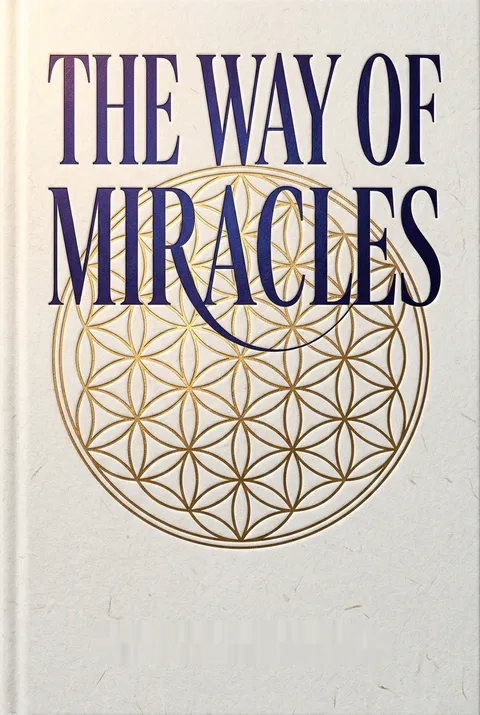
The Way of Miracles is a hybrid of memoir, spiritual instruction, and alternative-health advocacy. Its narrative hinge is Mincolla's own collapse: a practitioner who had advised others on health becomes severely impaired, then interprets recovery as both physical rehabilitation and a transformation in how he lives. That story gives urgency to the book's central proposal: people can cultivate a wider awareness, loosen ego-driven control, and participate more actively in healing and meaning.
Its most useful ideas are often practical and modest. Attention to breathing, visualization as rehearsal, emotional self-awareness, supportive relationships, and reflection on overwork can help people respond more deliberately to stress. The book's language of wholeness also offers a framework for holding loss and renewal together, provided it does not turn suffering into evidence of personal fault.
The main challenge is that the text repeatedly moves from plausible mind-body observations to much larger claims. Expectancy can influence subjective symptoms and behavior; mental imagery can support motor practice; stress can affect physiology. Those findings do not demonstrate that consciousness alters external reality through quantum mechanics, that thoughts control genes, or that spiritual practice produces miraculous disease reversal. Quantum terms such as observer effect are used beyond what standard physics establishes about human intention and everyday events. Likewise, personal case histories, including accounts of cancer and neurological recovery, cannot establish treatment efficacy without controlled evidence.
The book is most responsibly read in layers. Its memoir and contemplative practices can prompt useful questions about purpose, presence, and self-neglect. Its dietary suggestions may inspire discussion with a clinician. Its claims about energetic diagnosis, karmic causes, and cures require skepticism, especially where delaying conventional care could be dangerous. The title's promise is strongest as a spiritual invitation to live with attention and hope, not as a literal guarantee that belief can overcome disease.
Review Summary
The Way of Miracles receives enthusiastic reviews, with readers praising its comprehensive approach to accessing superconsciousness through mental, physical, and spiritual practices. Reviewers appreciated the packed information requiring slow absorption, powerful exercises including muscle testing, and practical tools like an alkaline/acid food chart. The book covers topics from heart intelligence to quantum physics, offering ancient Tibetan exercises, Chi Gong techniques, and nutritional guidance including Mediterranean diet recommendations for anti-inflammatory health and longevity.
People Also Read



Glossary
Superconsciousness
Universal awarenessMincolla's term for a state in which personal awareness merges with what he calls the Universal mind. He presents it as a source of expanded perspective, spiritual connection, and transformative potential, cultivated through practices such as mindfulness, prayer, meditation, and trance. It is a spiritual framework, not an established medical diagnosis or scientifically verified source of unlimited healing power.
Dis-ease
Underlying inner imbalanceMincolla uses dis-ease to describe a state of stress, emotional conflict, or perceived imbalance that he believes may precede or contribute to physical disease. The hyphen distinguishes this proposed inner condition from a diagnosed illness. The book's usage is a holistic interpretation, not evidence that psychological distress is the cause of every disease.
Lucid stillness
Calm, clear awarenessA state Mincolla describes as serene, alert awareness, in contrast to restless or confused thinking. He presents it as a byproduct of superconsciousness and a way to interrupt negative emotional reactions. In practical terms, the idea resembles deliberate pausing and present-focused attention, though the book assigns it a spiritual significance beyond those observable practices.
Transpectancy
Expectation of transformationMincolla's term for an expectation that meaningful transformation can occur. He uses it to describe the confidence and intention he believes support healing and personal change. The concept combines positive expectancy with a spiritual account of transformation. It should not be confused with proof that belief alone changes disease outcomes or guarantees a desired result.
Electromagnetic Muscle Testing
Muscle resistance assessmentA method Mincolla calls EMT, in which muscle resistance is tested directly or through a surrogate while foods, organs, or glands are named. He interprets changes in resistance as information about energetic balance, food compatibility, or organ function. EMT is not an established substitute for validated diagnostic tests, allergy assessment, or examination by a licensed clinician.
Three Integral Objectives
Three spiritual aimsMincolla's trio of aims for superconscious development: recognize an immortal dimension of self, illuminate divine wisdom, and access unlimited power. The sequence presents spiritual identity and discernment as foundations for personal transformation. These objectives are philosophical and devotional, rather than measurable clinical goals or a validated therapeutic protocol.
Five Cardinal Tenets
Five guiding principlesMincolla's framework for living in what he calls superconscious alignment. Its principles are to know the natural way of life, embrace the whole, balance energy, flow from inner source, and expand the mind. The tenets bring together his spiritual and health philosophy, but do not constitute a clinical method with demonstrated treatment outcomes.
Soul imprinting
Lasting spiritual influenceMincolla's name for the proposed lasting influence of intense experiences on the soul and, in turn, on present patterns of thought, feeling, or illness. He includes events such as trauma, sudden death, reunion, or enlightenment, and connects the idea to past-life beliefs. Soul imprinting is a metaphysical concept, not an established psychological or medical mechanism.
Mutual compatibility of opposition
Opposites within wholenessMincolla's description of the idea that apparent opposites, such as light and darkness or pain and joy, are interdependent parts of a larger whole. Drawing on Taoist duality, he uses the concept to encourage a less polarized view of difficult experiences. It offers a philosophical lens, but does not mean every harmful event is necessary, deserved, or beneficial.
Download PDF
Download EPUB
.epub digital book format is ideal for reading ebooks on phones, tablets, and e-readers.








