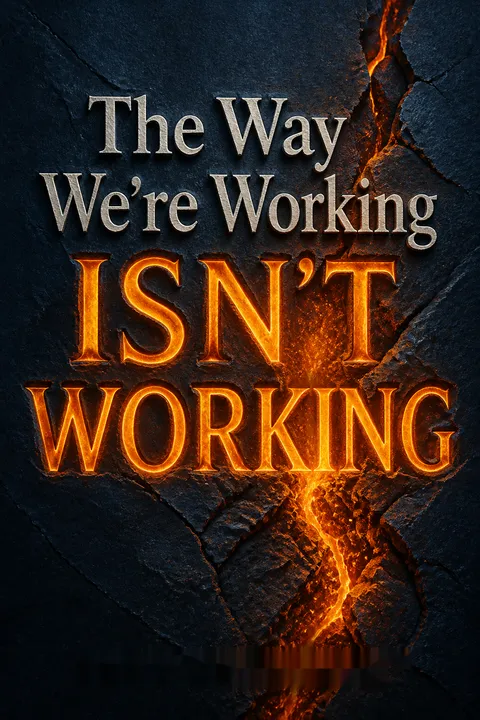


Key Takeaways
Treat energy, not hours, as the scarce resource behind performance
Work runs on energy. Schwartz argues that people are not machines built for continuous output. Sustainable performance depends on spending and renewing energy across four needs: physical sustainability, emotional security, mental self-expression, and spiritual significance. The usual workplace bargain, time exchanged for pay, overlooks these needs and leaves people depleted even when they are technically capable.
The cost is measurable. In the book’s survey of more than 12,000 workers, 64 percent reported sleeping less than seven to eight hours, 73 percent struggled to focus on one thing, and 80 percent said they spent too much time reacting to immediate demands. The alternative is not simply working fewer hours. It is bringing more usable energy to the hours worked.
The model’s strength is that it joins personal habits to the conditions organizations create. Fatigue, distraction, and disengagement are not merely individual defects when schedules, incentives, and norms systematically produce them. At the same time, energy language should not obscure power: workers often cannot choose their workload, hours, or recovery time. The framework is most useful when it guides both personal experiments and workplace redesign, rather than turning structural problems into another employee self-improvement assignment.
Alternate demanding work with real recovery instead of stretching effort indefinitely
Excellence has intervals. In Anders Ericsson’s study of young violinists, the most accomplished players practiced about 24 hours a week, usually in sessions of no more than 90 minutes. They also slept more and took more naps than the least accomplished group. Their advantage was not endless effort, but concentrated practice followed by recovery. Schwartz applies the same pattern to work: focus intensely for a bounded period, then stop and refuel.
Try a work sprint. Protect one 75- to 90-minute block for a demanding task, silence messages, and take a genuine break afterward. Accountants in an Ernst & Young pilot used focused work periods and afternoon exercise breaks during tax season. They reported renewed concentration and were often able to finish earlier. Recovery is part of the work cycle, not a prize for finishing everything.
This reframes rest as a performance input rather than a reward, a distinction that can change how teams plan demanding work. It also explains why a long day can contain surprisingly little high-quality effort: hours at a desk do not guarantee absorbed attention. Still, 90 minutes is a guide drawn from particular research and examples, not a universal biological timer. The practical principle is to notice when concentration and judgment are waning, then recover before strain becomes the default.
Replace willpower promises with precise rituals that remove daily negotiation
Make behavior automatic. The book describes rituals as specific actions repeated at set times until they require less conscious effort. This matters because resisting temptation and making repeated choices can consume attention. In Roy Baumeister’s cookie-and-radish experiment, participants asked to resist cookies gave up sooner on a difficult puzzle than participants allowed to eat them. Schwartz uses this to argue that relying on willpower alone is a fragile change strategy.
Specify the plan. In studies of implementation intentions, people were more likely to complete a task when they named when and where they would do it. Start with one or two changes, define a clear time and place, and choose an action to perform rather than a temptation to resist. If change keeps stalling, examine what the old behavior protects, such as feeling in control or avoiding difficult work.
The key design insight is to move effort from the moment of temptation into the setup of the behavior. That principle applies well beyond productivity: a planned response can make a desired action easier to repeat under stress. The book’s limited-resource account of willpower is best treated as a practical model, not a complete explanation of self-control. People differ, and context matters. A ritual can reduce friction, but it cannot solve a workload or environment that makes the behavior genuinely impossible.
Protect sleep, movement, and steady meals as the platform for clear work
Start with the body. Schwartz treats physical energy as the base that supports thinking, emotional steadiness, and purpose. The book cites a seven-to-nine-hour sleep recommendation and research linking short sleep with weaker attention, mood, and health. In one study it discusses, medical interns working 24-hour shifts made substantially more errors than interns working shorter shifts. The message is blunt: cutting sleep to gain work time can compromise the quality of that work.
Refuel deliberately. Regular movement helps build capacity and can also refresh attention. The book’s nutrition advice emphasizes avoiding long stretches without food followed by oversized meals, and choosing meals that provide steadier energy. A Ford executive who added breakfast and small snacks reported fewer afternoon energy crashes and less overeating at night. These practices are supports, not guarantees of peak performance or substitutes for medical advice.
The physical habits are persuasive partly because they are concrete: bedtime, movement, and meal patterns can be observed and adjusted. They also interact, since an exhausted person may find exercise harder, while inactivity can make work feel more draining. The chapter’s claims about particular diets, meal frequency, and exact exercise prescriptions should be read with more caution than its broader case for sleep and regular movement. Individual health needs vary, and the book’s examples are not a personalized treatment plan.
Pause at the trigger, then test the story before defending your worth
Separate event from interpretation. Schwartz calls an event that provokes a predictable negative reaction a trigger. He argues that perceived disrespect or devaluation often lies beneath anger, anxiety, and defensiveness. His practical rule is to delay the action that feels most compelled, giving the body time to settle before responding.
Check what is known. Jake, seeking investment for a business, assumed an investor had ignored his calls and written him off. In fact, the investor’s reply had been caught by a spam filter after his phone was stolen. Jake’s observations were real; his conclusion was not. Writing down verifiable facts separately from the story about them can create room for another explanation. Realistic optimism means acknowledging difficult facts while choosing a constructive response, not pretending everything is fine.
This is a useful bridge between emotional regulation and sound judgment. A pause can prevent a temporary sense of threat from turning into a damaging email, accusation, or withdrawal. The facts-versus-story distinction also encourages curiosity without requiring passivity. A person may indeed be treated unfairly, and repeated harm should not be explained away as a misunderstanding. The method works best as a test of interpretation, followed by direct action when the evidence supports a real problem.
Make people feel valued without lowering standards or hiding conflict
Respect fuels effort. The book argues that feeling appreciated and secure affects both performance and the willingness to stay. In a Towers Perrin survey of about 90,000 employees, only 38 percent believed senior managers were genuinely interested in their well-being. Schwartz’s examples show how value can be missing at every level: intensive-care nurses felt overlooked by surgeons, while surgeons felt overlooked by hospital administrators.
Pair challenge with recognition. Leaders can set demanding expectations while noticing genuine contribution and giving clear feedback. At Sony Pictures, senior colleagues used a shared cue, the word Code, to signal that someone wanted a more honest account of what was really being felt or needed. This helped surface concerns that polite avoidance left unresolved. Appreciation is not flattery, and candor is not permission to humiliate. The aim is to address problems while preserving the other person’s dignity.
The section treats recognition as part of the conditions for good work, not as decorative morale management. That is especially valuable where employees must speak up about mistakes, overload, or poor decisions. A leader’s emotional tone carries unusual weight because authority shapes what feels safe to say. Yet warmth alone cannot compensate for unfair pay, unreasonable demands, or inconsistent decisions. Respect becomes credible when it appears in both everyday interactions and the systems that govern people’s work.
Give one important task your full attention before the inbox claims the day
Switching has a cost. Schwartz challenges the popular idea that people can do several demanding things at once. The brain shifts attention between tasks, and those transitions take time. In one study cited in the book, switching between two problems took participants 25 percent longer than completing them in sequence. A separate study found that computer programmers often needed substantial time to return to a task after an interruption.
Choose the priority first. The book’s practice of doing the most important task first begins by deciding in advance what deserves concentrated attention. Schedule a bounded morning block, turn off email, silence calls when possible, and tell colleagues when interruptions are acceptable. This is not a demand to ignore urgent responsibilities. It is a way to stop treating every incoming message as equally important and every response as equally time-sensitive.
Attention is both a personal capacity and a scarce shared resource. An employee cannot protect focus if an organization rewards instant replies, schedules meetings without breaks, and treats availability as proof of commitment. The advice is strongest when paired with explicit team norms, so one person’s concentration does not become another person’s unanswered dependency. Prioritization also requires judgment: a single important task is a useful anchor, but real jobs still involve coordination, service, and interruptions that cannot simply be switched off.
Pair analytical discipline with quiet incubation to make better ideas
Creativity needs two modes. Schwartz distinguishes focused, stepwise analysis from broader attention that notices patterns and makes unexpected connections. He describes creative work as a sequence: define a question, gather relevant knowledge, let it incubate, recognize a possible insight, and test that insight. The process is not pure inspiration. Original ideas depend on knowing enough about the problem to see what might fit together.
Make room to step away. The book’s drawing exercise asks readers to copy an upside-down sketch without naming the objects. The altered task discourages familiar shortcuts and invites close observation. Schwartz also describes writers and executives finding useful ideas during walks or other breaks, after consciously struggling with a problem. Quiet time does not guarantee a breakthrough, but it provides an alternative to endlessly pushing at the same line of thought.
The practical value lies in protecting different kinds of thinking, rather than expecting every useful idea to appear in a meeting or at a screen. Analysis can clarify a problem; stepping away can loosen habitual interpretations; testing turns a hunch into something usable. The book’s left-brain and right-brain vocabulary is a simplified map, not a reason to assign whole personalities or abilities to one hemisphere. Its deeper point is about switching between disciplined detail and open, integrative attention.
Measure contribution, then grant autonomy over when and how work happens
Judge outcomes, not presence. Schwartz argues that organizations often confuse time at a desk with value produced. At Chubb Insurance, employees were allowed to design nonstandard schedules around their work. The book reports improvement in timely customer contact and benefit payments. At Best Buy, a Results Oriented Work Environment gave corporate employees freedom over when and where they worked, provided their responsibilities were met; the cited research found lower turnover in participating groups.
Make freedom accountable. Autonomy works best when employees and managers agree on clear deliverables and how success will be assessed. It does not mean that every role can be done remotely or on any schedule. It does mean asking whether fixed hours, constant monitoring, and unnecessary meetings improve the work, rather than assuming that visibility equals productivity. Leaders also need to model boundaries and protect breaks if they want recovery to be taken seriously.
Autonomy can turn trust into a practical operating principle: people gain discretion, while managers focus on agreed results. That arrangement can also expose a hidden problem, because vague goals make hours an easy substitute for meaningful evaluation. Flexibility is not equally available in every occupation, and team members may have different bargaining power or caregiving needs. Fair implementation therefore requires transparent standards and attention to who gets flexibility, who absorbs extra work, and whether the promised outcomes are realistic.
Turn personal values into daily service, not corporate slogans
Values require action. The book distinguishes values, which describe who a person or organization hopes to be, from virtues, which are those values expressed in behavior. A values statement is hollow if leaders act against it. Schwartz points to Enron’s lofty language alongside its misconduct as a stark example of the gap between stated ideals and lived practice.
Connect purpose to ordinary work. A motor-vehicle-office clerk explained that her job mattered because it helped her support her son’s education. Her purpose changed how she treated customers, even though the job itself was routine. Individuals can compare what they say matters with where they actually spend time and energy, then choose one behavior to close the gap. Organizations can do the same by connecting their work to a contribution beyond short-term profit.
Purpose is most credible when it changes decisions, not just the language used to describe them. The clerk’s example shows that meaning can come from the reason someone performs a task and the care brought to it, rather than the prestige of the role. But service can also be used to excuse overwork or ask employees to supply meaning that an employer does not support materially. A sound purpose must be joined to humane conditions, honest leadership, and room for people to meet their own needs.
Analysis
The book’s central move is to replace the clock as the primary unit of performance with the person’s changing capacity to act. That shift links physiology, attention, emotion, habit, organizational design, and purpose in one account. Its most useful implication is practical: exhaustion and distraction are not solved by exhorting people to care more. Work must be arranged so effort can be concentrated and recovery can occur. The book also makes an unusually strong case that managerial behavior is part of the employee’s energy environment, not a separate topic called culture.
The framework’s breadth is both its appeal and its limitation. Sleep, food, exercise, emotional security, creativity, and purpose are treated as interacting resources, which helps readers see patterns rather than isolated symptoms. But a coherent model can make different kinds of evidence appear more unified than they are. The book sometimes moves from specific studies to broad prescriptions, and its detailed nutritional advice and simplified brain-hemisphere language warrant more caution than its general claims about rest, attention, and trust. Its business cases are instructive, though they are not controlled demonstrations that one intervention alone caused each company outcome.
The strongest reading is therefore neither as a universal formula nor as a personal optimization checklist. It is a design principle: match the demand to human capacity, build recovery into the work, and make the stated values visible in incentives and conduct. Individuals can experiment with rituals and boundaries, but leaders control many of the conditions that make those practices possible. The book’s enduring challenge is to evaluate work by durable value created, not by how continuously people appear to be spending themselves.
Review Summary
The Way We're Working Isn't Working receives mostly positive reviews for its comprehensive analysis of modern work culture and productivity. Readers appreciate its insights on balancing physical, emotional, mental, and spiritual needs for optimal performance. The book offers practical advice on improving work habits, managing energy, and fostering a healthier work environment. While some find the content repetitive or obvious, many praise its well-researched approach and potential to transform both individual and organizational practices. Critics note the book's focus on corporate settings and occasional lack of consideration for diverse circumstances.
People Also Read




Glossary
Energy Audit
Personal energy assessmentAn assessment used by the Energy Project to examine how a person manages physical, emotional, mental, and spiritual energy. Its questions address habits such as sleep and exercise, emotional state at work, ability to focus, sense of purpose, and influence on colleagues. The aim is to make the costs of current routines visible enough to support deliberate change.
Ultradian cycles
Waking energy rhythmsRecurring fluctuations in alertness and fatigue that occur within a day. The book describes a roughly 90-minute period of rising and falling attention and argues that people benefit from breaks rather than pushing through signs such as restlessness, irritability, and wandering focus. It uses the term to support work periods followed by deliberate renewal.
Implementation intentions
Specific action plansPlans that specify when and where a person will perform a behavior, often linking a situation to a chosen response. Rather than relying on a general intention such as exercising more, a person defines a concrete occasion for acting. In the book, such precision reduces repeated decisions and makes follow-through more likely.
Immunity to change
Hidden resistance to changeA framework developed by Robert Kegan and Lisa Lahey for identifying the competing commitments and fears that can undermine a person’s stated goal. Someone may sincerely want to focus, for example, while also protecting a sense of control by constantly checking messages. Making the hidden commitment and its underlying assumption explicit can help clarify the resistance.
Realistic optimism
Hope grounded in factsA way of responding that acknowledges the facts of a difficult situation while maintaining a hopeful, active orientation toward possible outcomes. It differs from denial because it does not erase obstacles or guarantee success. The book presents it as a basis for sustained effort, learning, and constructive choices under uncertainty.
Continuous partial attention
Perpetual divided attentionLinda Stone’s term for keeping one main activity loosely in view while continually scanning for something more important. The book applies it to habits such as checking messages during conversations or meetings. The pattern can create a feeling of staying connected, but it fragments concentration and may leave other people feeling ignored.
FAQ
What's The Way We're Working Isn't Working about?
- Energy Management Focus: The book emphasizes managing four key sources of energy—physical, emotional, mental, and spiritual—to enhance workplace performance and satisfaction.
- Critique of Work Culture: Schwartz critiques the modern work ethic of "more, bigger, faster," arguing it leads to burnout and disengagement rather than productivity.
- Practical Solutions: Offers actionable strategies for individuals and organizations to reclaim energy and improve work-life balance.
Why should I read The Way We're Working Isn't Working?
- Addressing Workplace Issues: Tackles common issues like employee disengagement and burnout prevalent in fast-paced work environments.
- Research-Backed Insights: Schwartz uses multidisciplinary research to support his claims, making the advice credible and applicable.
- Framework for Change: Provides a structured approach to improving work habits and organizational culture, valuable for individuals and leaders.
What are the key takeaways of The Way We're Working Isn't Working?
- Four Energy Needs: Identifies four primary energy needs—sustainability (physical), security (emotional), self-expression (mental), and significance (spiritual).
- Importance of Renewal: Emphasizes regular renewal through breaks, sleep, and physical activity to maintain high energy and focus.
- Cultural Shift: Advocates for valuing results over hours worked, fostering a culture that supports employee well-being.
What specific methods does Tony Schwartz recommend for managing energy?
- Energy Audits: Conduct personal energy audits to assess energy management across the four dimensions.
- Scheduled Breaks: Take regular breaks, ideally every 90 minutes, to recharge and maintain productivity.
- Mindful Eating: Eat smaller, more frequent meals to stabilize blood sugar levels and sustain energy.
How does The Way We're Working Isn't Working define the concept of "pulsing"?
- Natural Rhythms: Humans are designed to "pulse," alternating between intense activity and renewal, similar to athletes.
- Avoiding Burnout: Recognizing these rhythms helps avoid continuous work pitfalls, leading to exhaustion and decreased performance.
- Practical Application: Integrate pulsing into daily routines by scheduling focused work sessions followed by intentional breaks.
What role does sleep play in energy management according to Schwartz?
- Foundation of Energy: Sleep is the cornerstone of physical energy, essential for cognitive function, emotional stability, and health.
- Recommended Duration: Adults need between seven to nine hours of sleep per night for optimal functioning.
- Consequences of Deprivation: Insufficient sleep leads to decreased productivity, impaired cognitive function, and increased health risks.
What are the emotional quadrants mentioned in The Way We're Working Isn't Working?
- Four Emotional States: Performance Zone (high positive energy), Renewal Zone (calm and relaxed), Survival Zone (high negative energy), Burnout Zone (exhausted and disengaged).
- Impact on Performance: Emotional state significantly influences performance, with the Performance Zone being most conducive to productivity.
- Managing Triggers: Provides strategies for recognizing and managing emotional triggers to maintain a positive state.
How does Schwartz suggest organizations can create a culture that supports energy management?
- Leadership Modeling: Leaders should model energy management behaviors, like taking breaks and prioritizing well-being.
- Flexible Policies: Implement policies allowing flexible work hours and encourage renewal practices, such as exercise and naps.
- Focus on Results: Shift focus from hours worked to results produced, fostering trust and accountability.
What is the significance of values in The Way We're Working Isn't Working?
- Core to Identity: Values define who we aspire to be and guide actions, serving as an internal compass during challenges.
- Alignment with Purpose: Values link to a sense of purpose, fueling motivation and engagement.
- Reflection on Values: Regular reflection on values maintains alignment between actions and beliefs, fostering accountability and integrity.
What does The Way We're Working Isn't Working say about the relationship between purpose and performance?
- Purpose Fuels Energy: A clear purpose beyond self-interest energizes individuals and organizations, enhancing engagement and performance.
- Collective Purpose: Shared purpose fosters community and collaboration, driving innovation and resilience.
- Personal Responsibility: Encourages aligning work with values and purpose for greater satisfaction and effectiveness.
How does The Way We're Working Isn't Working suggest organizations can improve focus?
- Policies for Focus: Create clear policies around e-mail and meetings to minimize distractions, enhancing engagement and productivity.
- Encouraging Breaks: Promote regular breaks and renewal periods to maintain focus and energy levels.
- Supportive Environments: Design workspaces that facilitate concentration, acknowledging the impact of the physical environment on focus.
What are the best quotes from The Way We're Working Isn't Working and what do they mean?
- "The way we’re working isn’t working.": Highlights the need for change in work habits and culture.
- "Human beings are not designed to run like computers.": Emphasizes recognizing natural rhythms and the need for renewal.
- "The ultimate measure of our effectiveness is the value we create.": Underscores focusing on results rather than hours worked.
Download PDF
Download EPUB
.epub digital book format is ideal for reading ebooks on phones, tablets, and e-readers.








